
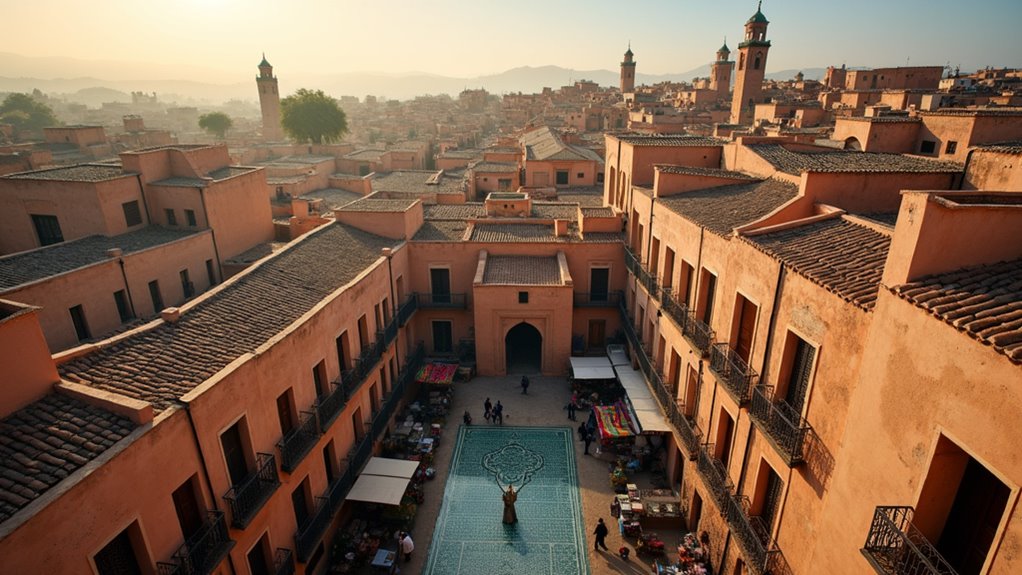
You’ll find Fes isn’t just Morocco’s cultural capital—it’s a living museum where ancient traditions thrive alongside modern life. This imperial city offers experiences you can’t get anywhere else, from watching leather being hand-dyed using centuries-old techniques to exploring the world’s oldest continuously operating university. Whether you’re working with a tight budget or have room to splurge, these eleven activities will help you uncover the authentic soul of this fascinating destination.
- Explore the Fes El-Bali Medina Through Bab Boujloud
- Visit Al-Qarawiyyin Mosque and University
- Marvel at Bou Inania Madrasa’s Marinid Architecture
- Watch Coppersmiths at Work in Place Seffarine
- Experience the Chouara Tanneries From Above
- Pay Respects at the Mausoleum of Moulay Idriss II
- Discover Traditional Crafts at Nejjarine Museum
- Haggle Through the Medina’s Historic Souks
- Take in City Views From the Marinid Tombs
- Wander the Mellah Jewish Quarter
- Stay Overnight in a Traditional Riad
- The Sum Up
Explore the Fes El-Bali Medina Through Bab Boujloud
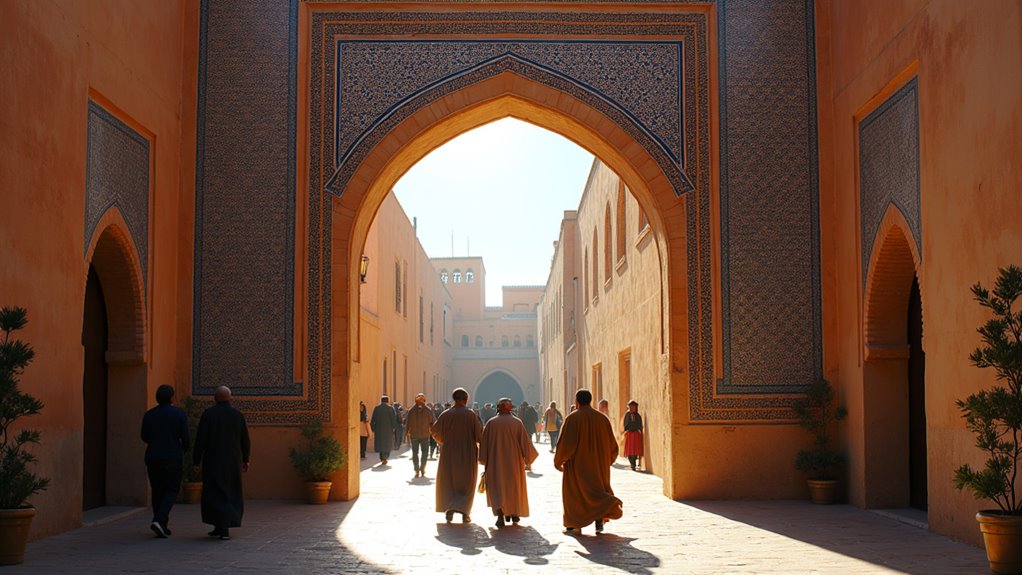
When you step through Bab Boujloud’s striking blue and green archway, you’re entering one of the world’s oldest living medieval cities through its most iconic gateway. Built in 1913, this “Blue Gate” opens onto a maze of narrow alleys where you’ll discover centuries-old riads, bustling souks, and artisan workshops.
Don’t miss the famous Chouara Tannery – climb to nearby terraces for stunning views of the colorful dyeing vats. You’ll find skilled craftsmen working with wood, metal, and textiles in workshops that’ve operated since medieval times.
Navigate toward the Zawiya of Moulay Idris II, Fez’s founder’s shrine, deeper in the medina. As you wander through the winding streets, you’ll encounter traditional riads with their distinctive central courtyards that provide cool, peaceful escapes from the bustling medina atmosphere.
The souks offer affordable spices, textiles, and traditional jewelry. Expect to get lost – it’s part of the authentic experience.
Visit Al-Qarawiyyin Mosque and University
Step into Al-Qarawiyyin Mosque and University, where you’ll witness over 1,150 years of continuous worship and learning in what’s recognized as one of the world’s oldest operating universities.
Founded in 859 CE by Fatima al-Fihri, this massive complex accommodates 22,000 worshippers, making it Africa’s largest mosque.
You’ll admire the stunning hypostyle architecture featuring 21 prayer hall aisles, intricate zellij mosaics, and carved cedar wood details.
The central courtyard showcases beautiful fountain pavilions inspired by Granada’s Alhambra. The main entrance features Bab al-Ward, the northern gate with its beautifully decorated stucco vestibule.
Don’t miss the ornate Almoravid-era mihrab with its muqarnas dome and the historic 10th-century minaret.
While non-Muslims can’t enter the prayer areas, you can appreciate the exterior architecture and peek through doorways to glimpse the interior’s magnificence during your medina exploration.
Marvel at Bou Inania Madrasa’s Marinid Architecture
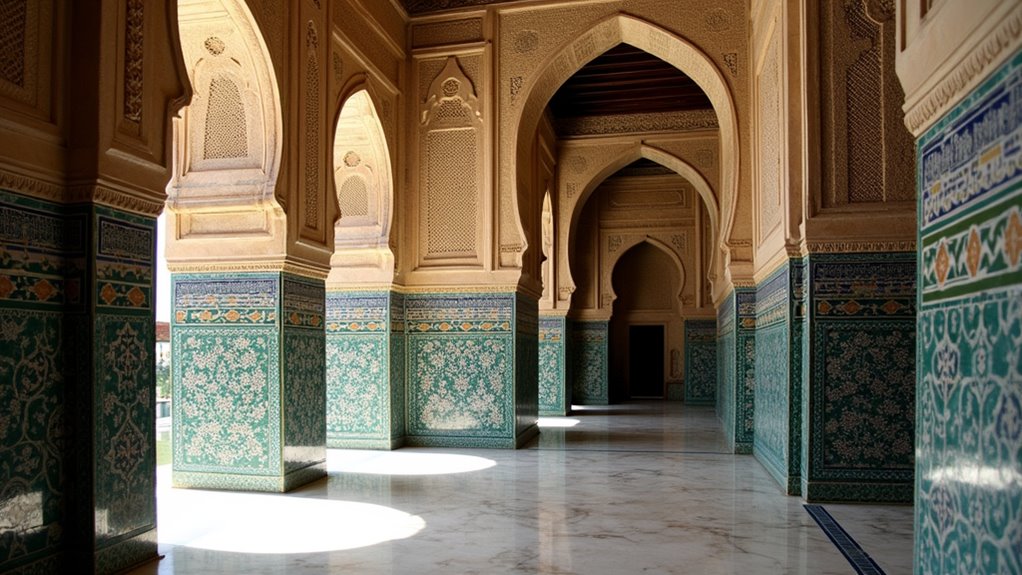
Built between 1350 and 1355 CE by Marinid Sultan Abu Inan Faris, Bou Inania Madrasa stands as the dynasty’s architectural masterpiece and your best opportunity to witness Morocco’s finest Islamic craftsmanship up close. You’ll enter through an impressive façade featuring 13 carved cedar wood consoles and intricate zellij tilework that’ll leave you speechless.
The central courtyard showcases Morocco’s signature geometric patterns in carved stucco and marble, while Kufic inscriptions tell the building’s history. The complex originally served to train Islamic scholars in law and jurisprudence, reinforcing religious orthodoxy throughout the Marinid empire.
What makes this madrasa unique is its minaret – it’s the only madrasa in Fez that doubles as a congregational mosque. Don’t miss the prayer hall’s exquisite details and the historic water clock.
Entry costs around 20 dirhams, making it an affordable cultural highlight.
Watch Coppersmiths at Work in Place Seffarine
From the quiet contemplation of Bou Inania‘s sacred spaces, you’ll find yourself drawn to the rhythmic hammering that echoes through the medina’s narrow streets. Follow these sounds to Place Seffarine, where master coppersmiths called maalems shape gleaming metal into teapots, trays, and decorative pieces using centuries-old techniques.
This small square offers one of the medina’s few open-air spaces, letting you watch artisans heat and hammer copper sheets before applying intricate engravings. The constant metallic percussion creates the medina’s heartbeat, and you can observe this living UNESCO-recognized heritage for free. Many craftsmen now focus on restoring objects rather than creating entirely new pieces due to rising material costs.
Grab mint tea at nearby Café Abdullah while watching the craftsmen work. The square sits above Bab Rcif gate, making it easily accessible as you explore Fez’s historic craft district.
Experience the Chouara Tanneries From Above
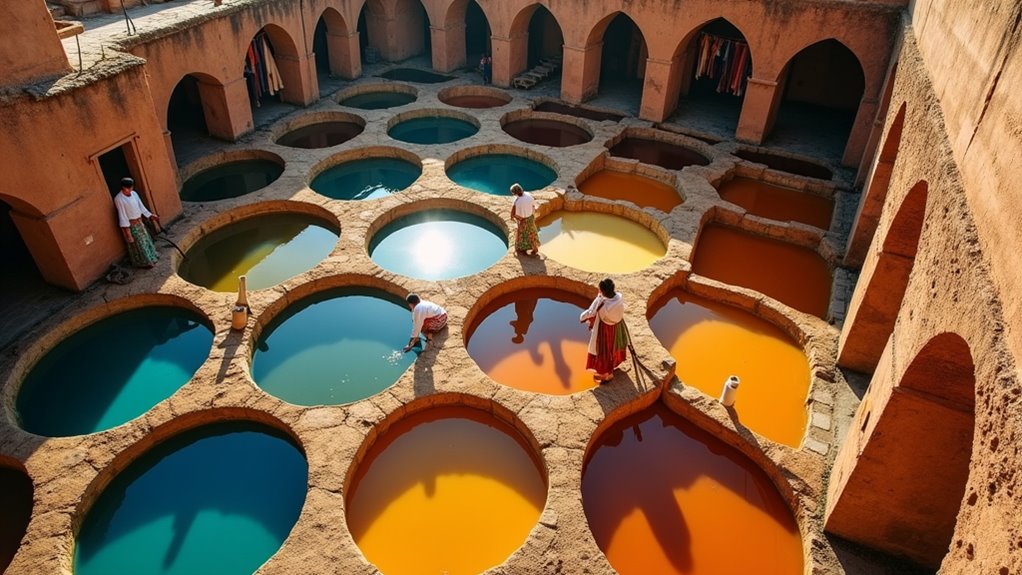
While the copper hammering fades behind you, another sensory adventure awaits at the famous Chouara Tanneries, where you’ll witness nearly 1,000 years of leather-making tradition from elevated terraces surrounding the ancient stone vats.
You’ll access viewing platforms through leather shops that advertise free terrace visits—just navigate the maze-like interiors to reach the best vantage points. From above, you’ll see workers waist-deep in vibrant dye-filled pits, transforming animal hides using medieval methods with pigeon feces, cow urine, and natural dyes.
The intense smell’s part of the authentic experience, though shopkeepers often offer mint leaves for relief. Visit early morning for the most active scenes and vibrant colors. The facility showcases traditional craftsmanship that has remained completely unchanged for centuries, making it a living museum of Moroccan leather-making heritage.
There’s no entrance fee, but expect sales pitches for leather goods produced onsite.
Pay Respects at the Mausoleum of Moulay Idriss II
After exploring the bustling tanneries, you’ll find spiritual solace at the Mausoleum of Moulay Idriss II, one of Morocco’s holiest shrines dedicated to the founder and patron saint of Fez. Located in the heart of Fes el-Bali’s Sacred District, this 1,200-year-old site attracts thousands of daily visitors seeking blessings from the ruler who founded Fez in 810.
While non-Muslims can’t enter the interior, you’ll still appreciate the stunning green-tiled roofs and intricate woodwork from outside. The mausoleum’s accessible 24/7 for Muslim pilgrims, creating a continuous stream of devotees. The shrine becomes especially vibrant during the annual moussem festival, Morocco’s most important Sufi celebration featuring guild processions and week-long festivities.
Visit nearby Marche Verte square to observe the spiritual atmosphere and admire the Alaouite architectural style that Sultan Moulay Ismail commissioned in the early 18th century.
Discover Traditional Crafts at Nejjarine Museum
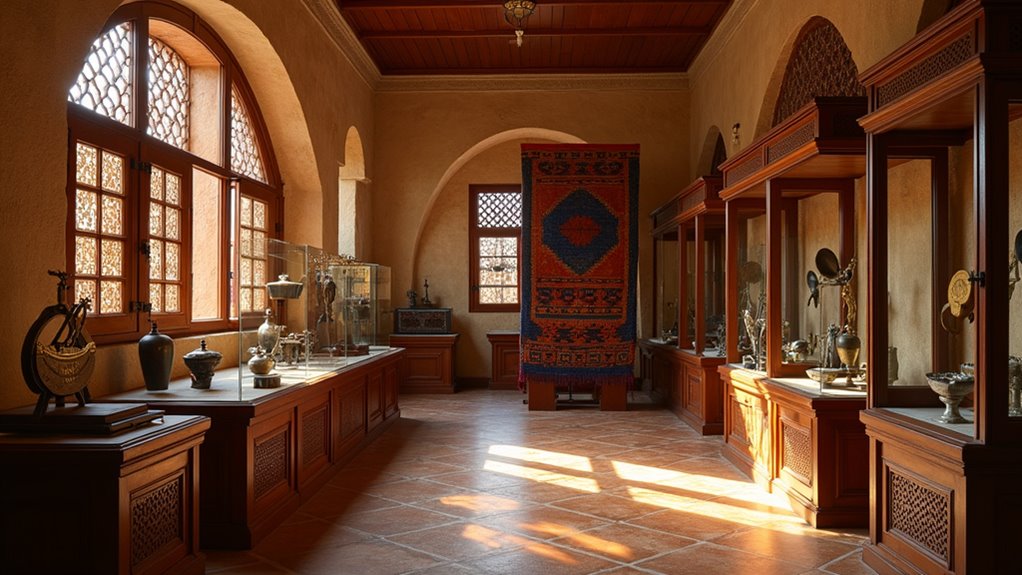
Once you’ve soaked in the spiritual atmosphere of Moulay Idriss II’s mausoleum, head to the Nejjarine Museum to explore Morocco’s finest collection of traditional woodcraft. Located in a restored 18th-century fondouk near Henna Souk, this gem costs just 20 dirhams to enter.
You’ll discover centuries-old carved chests, intricate doors, prayer beads, and traditional instruments like ouds and darbukas spread across three floors. The building itself showcases stunning cedar woodwork and zellij tilework around a central courtyard.
Visit on weekday mornings for smaller crowds, and budget about 30 minutes to explore thoroughly. Don’t miss the rooftop terrace for panoramic medina views and mint tea.
The surrounding Carpenters’ Square lets you watch artisans continuing these ancient traditions. The museum’s collection showcases native Moroccan woods including cedar and thuya, highlighting the country’s rich natural resources used in traditional craftsmanship.
Haggle Through the Medina’s Historic Souks
From the Nejjarine Museum, plunge into Fes medina’s legendary souks—a 540-acre maze of over 9,000 narrow alleys where haggling isn’t just expected, it’s an art form.
You’ll discover specialized districts: Souk Attarine buzzes with saffron and cumin vendors, while Seffarine Square echoes with coppersmiths hammering medieval-style crafts.
Start negotiations at half the asking price and stay patient—vendors expect multiple rounds of bargaining.
Focus on yellow babouches, handwoven carpets, or aromatic spices for authentic purchases.
Navigate carefully as mules transport goods through pedestrian-only lanes.
Visit mornings for peak energy, wear sturdy shoes for cobblestones, and carry small bills for smoother transactions. These artisan workshops showcase metal engraving arts on gold, silver, and copper that have been preserved for centuries as part of the medina’s living cultural heritage.
Remember: polite persistence beats confrontational tactics every time.
Take in City Views From the Marinid Tombs
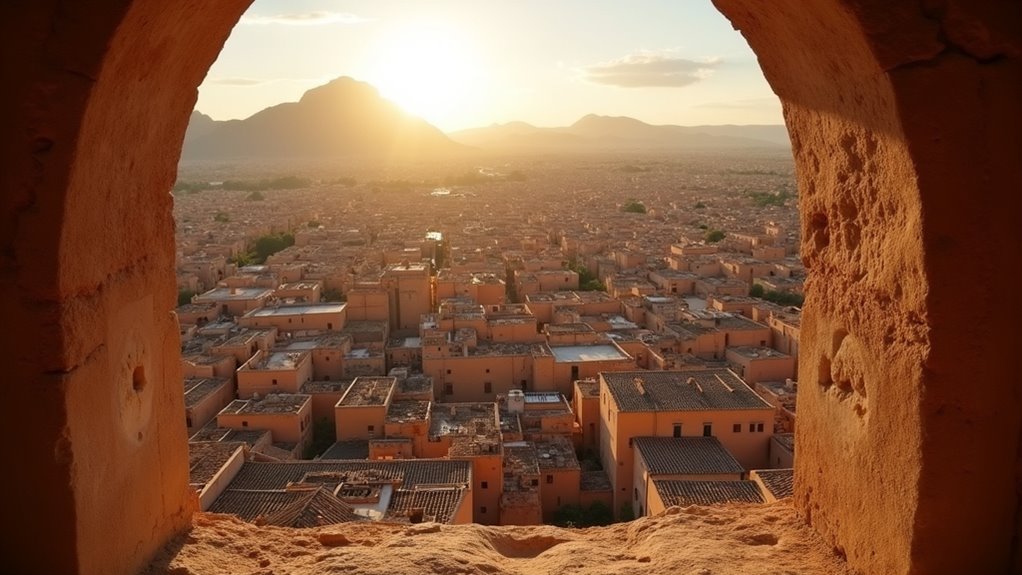
When the medina’s narrow alleys start feeling claustrophobic, escape to the Marinid Tombs perched on a hill above Fes el-Bali for the city’s best panoramic views.
You’ll climb past skeletal ruins of 14th-century royal burial chambers—once grand monuments for Morocco’s Marinid dynasty rulers, now weathered and unmarked after centuries of decay.
The real draw isn’t the crumbling tombs themselves, but the spectacular cityscape they overlook. From this vantage point, you’ll spot Fez’s key landmarks sprawling across the historic medina, framed by surrounding hills.
The site once housed a fortified palace called al-Qula during the Marinid period, though little remains of these original royal structures today.
There’s no entrance fee, interpretive signs, or crowds—just you and an expansive view that puts the ancient city’s maze-like layout into perspective. It’s the perfect spot for photos and catching your breath.
Wander the Mellah Jewish Quarter
Just south of the royal palace, you’ll discover the Mellah—Morocco’s first official Jewish quarter, established in 1438 and now a fascinating blend of crumbling grandeur and living history.
You’ll notice the distinctive architecture immediately: outward-facing balconies with wrought-iron details and Art Deco influences that contrast sharply with the inward-facing courtyards elsewhere in Fez.
Walk down Rue Boukhessissat to see ornate Jewish houses and former boutiques.
Don’t miss the restored Ibn Danan and Slat al Fassiyin synagogues, which now function as both active places of worship and free museums.
The Jewish cemetery at the southern edge offers a peaceful retreat with thousands of whitewashed graves.
While the Jewish community has largely emigrated, their architectural and cultural legacy remains beautifully preserved. The quarter’s name derives from the Arabic word for salt, reflecting its origins in Fez’s historic salt trade area.
Stay Overnight in a Traditional Riad
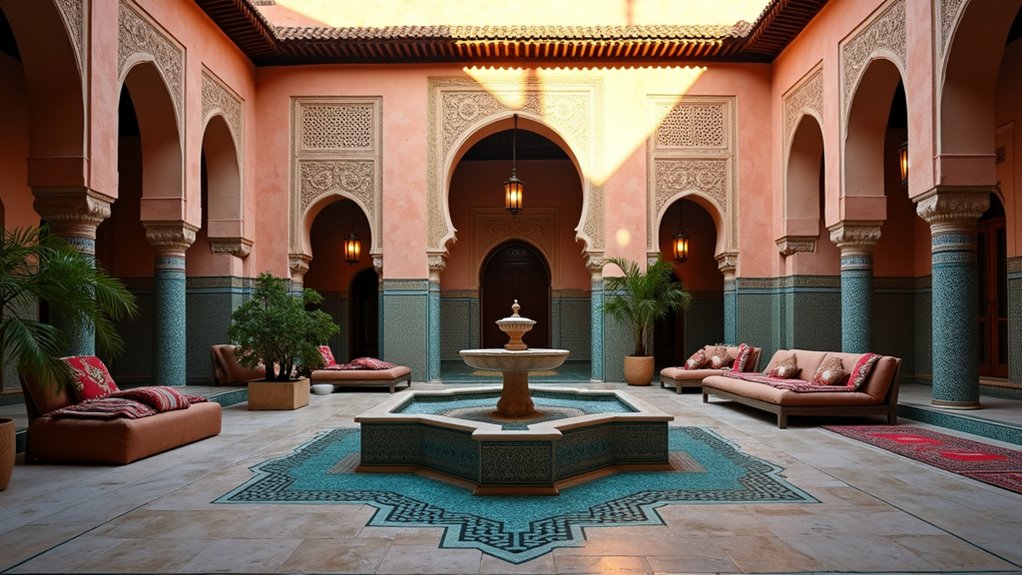
Where better to experience authentic Moroccan hospitality than in a centuries-old riad tucked within Fes el-Bali’s maze-like streets? These converted historic houses offer intimate accommodation with just 4-10 rooms, ensuring personalized service you won’t find in large hotels.
You’ll sleep surrounded by intricate zellige tilework, carved cedar details, and tranquil central courtyards with fountains. Most riads feature rooftop terraces with panoramic medina views – perfect for breakfast or sunset relaxation.
The location’s unbeatable: major attractions like Bou Inania Madrasa and Chouara Tannery are within walking distance.
Budget options start around 60€ per night, while mid-range riads (100-160€) often include cooking classes or guided tours. Many offer hammams and serve traditional Moroccan cuisine. Unlike dar houses, true riads are built around a central garden rather than just a simple patio.
You’re staying where Fes’s historical elite once lived.
The Sum Up
You’ve got an incredible adventure waiting in Fes without breaking the bank. Start early to beat crowds and heat, wear comfortable walking shoes for those medina cobblestones, and don’t forget to negotiate prices in the souks. Pack a camera for stunning shots from the Marinid Tombs, and consider staying in a budget riad for the full authentic experience. Fes will captivate you with its rich history, vibrant culture, and unforgettable memories.