
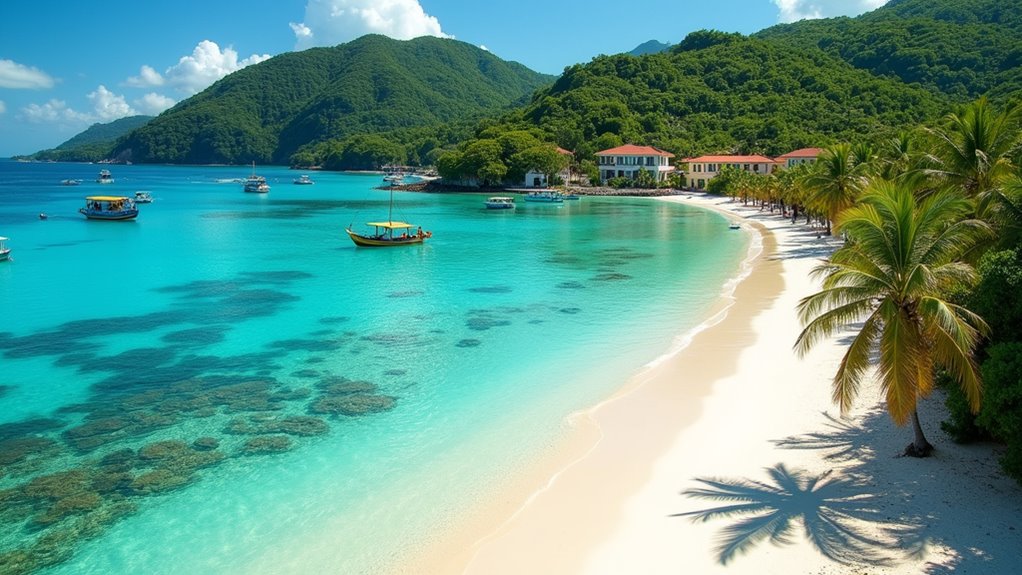
You’ll find Grenada offers incredible diversity from Grand Anse Beach‘s free white sand relaxation to snorkeling the world’s first underwater sculpture park at Molinere Bay. Hike through rainforest to Seven Sisters Falls for just EC$5, explore the volcanic crater lake at Grand Etang National Park, and visit historic Fort George overlooking colorful St. George’s. Don’t miss authentic cultural experiences at working plantations, traditional rum distilleries, and bean-to-bar chocolate factories that showcase the island’s rich heritage and sustainable practices.
- Relax on Grand Anse Beach and Explore Quieter Coves
- Snorkel or Dive the Underwater Sculpture Park at Molinere Bay
- Hike to Seven Sisters Falls Through Dense Rainforest
- Tour Grand Etang National Park and Crater Lake
- Visit Multiple Waterfalls Including Concord and Annandale Falls
- Explore Historic Fort George and Colorful St. George’s Town
- Experience Working Spice and Cocoa Plantations at Belmont Estate
- Learn Traditional Rum-Making at River Antoine Distillery
- Take a Bean-to-Bar Chocolate Tour at Local Factories
- The Sum Up
Relax on Grand Anse Beach and Explore Quieter Coves
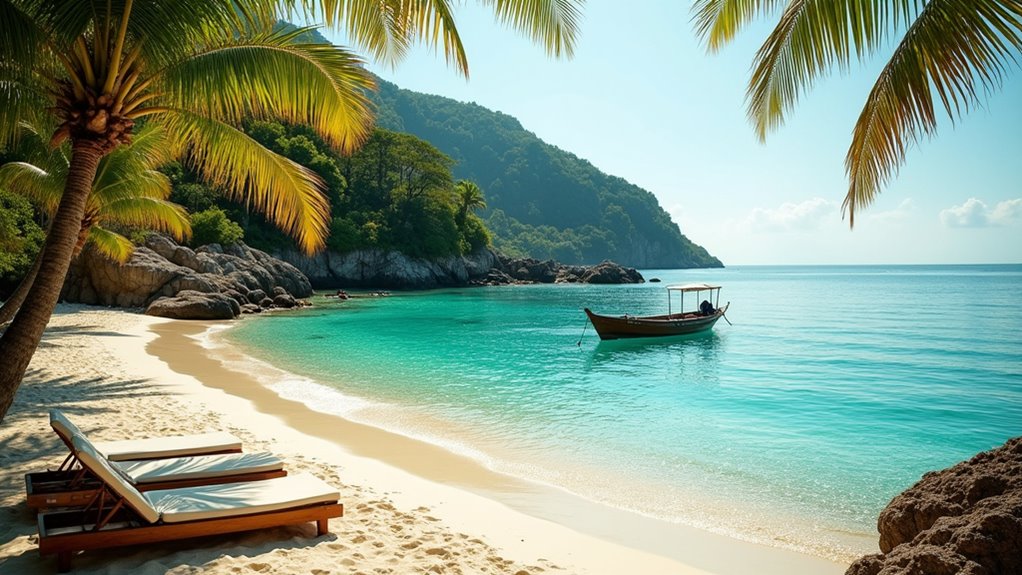
Start your Grenada beach experience at Grand Anse Beach, a stunning two-mile crescent of white sand and turquoise water that won’t cost you a penny to access. You’ll find free parking, bathrooms, and changing rooms at main entrances. Rent sun loungers for around US$15 or relax under natural palm shade for free. Sample local rum punches at beachside bars and browse craft stalls behind the beach for authentic Grenadian souvenirs.
For quieter experiences, head to the southern end near Blue Horizons resort or visit early morning when crowds are thinner. The beach offers free Wi-Fi throughout the area for those who need to stay connected.
Take a short taxi ride to nearby Morne Rouge (BBC Beach) for a more secluded alternative with calmer waters and fewer vendors, perfect for peaceful swimming and snorkeling.
Snorkel or Dive the Underwater Sculpture Park at Molinere Bay
While Grand Anse offers excellent surface swimming, Grenada’s most unique aquatic experience lies beneath the waves at Molinere Bay.
This bay is home to the world’s first underwater sculpture park. Created by Jason deCaires Taylor in 2006, this incredible collection of 75 life-size sculptures sits just 5-8 meters deep, making it perfect for snorkeling or beginner diving.
You’ll find unforgettable pieces like “Vicissitudes,” featuring 26 children holding hands, and “Grace Reef,” with 16 female figures cast from local Grenadian women.
The sculptures double as artificial reefs, attracting colorful marine life while reflecting authentic Caribbean culture. The artwork is crafted from pH-neutral cement specifically designed to encourage coral growth and marine life attachment.
Reach the site via a 10-15 minute boat ride from St George’s.
Scuba tours cost around $80-200, though snorkeling offers an equally magical experience at lower cost.
Hike to Seven Sisters Falls Through Dense Rainforest
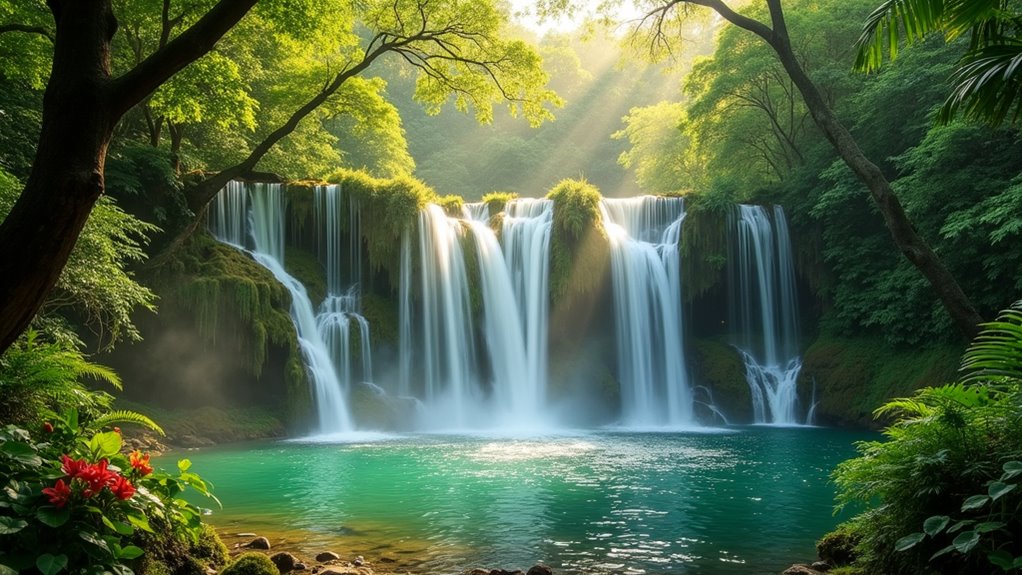
Deep in Grenada’s central rainforest, the Seven Sisters Falls trail offers one of the island’s most rewarding hikes for just a few dollars. You’ll pay about EC$5 at the estate entrance near Grand Etang, where locals provide walking sticks and trail guidance.
The 1-1.5 mile descent follows a steep, sometimes muddy path through dense jungle with bamboo groves and frequent bird sightings.
After 30-60 minutes of hiking, you’ll reach the first two cascading waterfalls with crystal-clear swimming pools. The cold water provides perfect post-hike relief, and experienced guides can lead you to all seven falls via rock scrambling. Along the way, you’ll spot tropical fruits like bananas and pineapples growing in the lush vegetation.
Listen for monkeys in the bamboo and bring sturdy shoes—the clay soil becomes slippery after rain, making the uphill return challenging.
Tour Grand Etang National Park and Crater Lake
Just a short drive from the Seven Sisters Falls, Grand Etang National Park centers around a mystical crater lake that sits 530 meters above sea level in Grenada’s misty highlands. You’ll pay just US$2.50 entrance fee to access this 3,000-acre rainforest reserve, Grenada’s oldest protected area since 1906.
The circular lake fills an extinct volcanic caldera surrounded by mahogany and cedar forests. While swimming isn’t permitted, you can picnic along the banks and spot playful mona monkeys.
Take the short Visitor Centre-Forest View Trail for Atlantic Ocean vistas, or challenge yourself with the 2.8-mile Mount Qua Qua trail for panoramic views. The Mount Qua Qua hike takes approximately 20–30 minutes through dense rainforest terrain. The cool, misty conditions provide relief from coastal heat while you explore cloud forests filled with orchids, ferns, and over 40 bird species.
Visit Multiple Waterfalls Including Concord and Annandale Falls
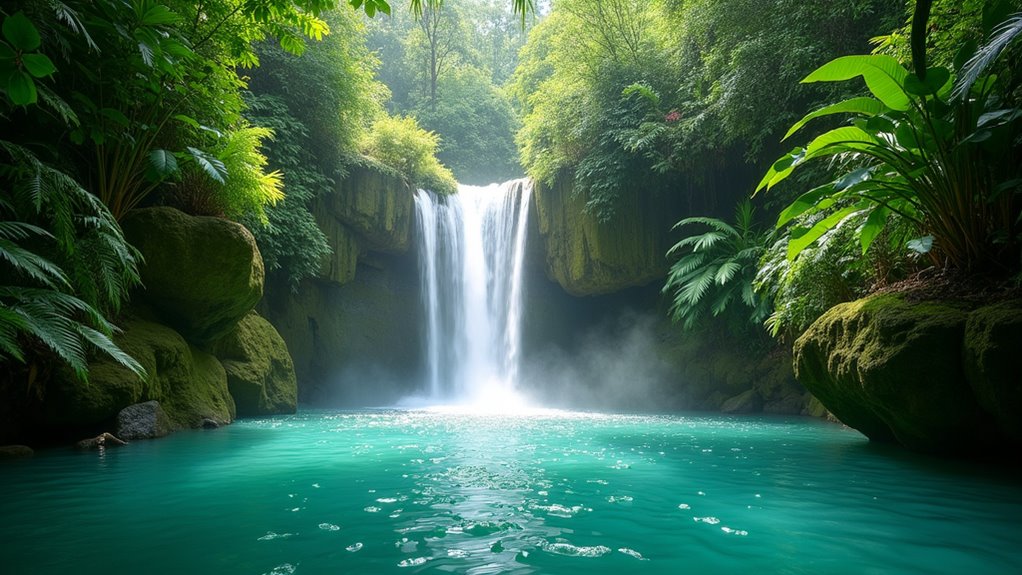
Grenada’s collection of waterfalls offers you budget-friendly adventures within minutes of St. George’s. Annandale Falls provides the easiest access with paved walkways and short stairs leading to swimming pools, making it perfect for quick visits between other activities.
For a more adventurous experience, drive the winding mountain road to Concord Falls, where you’ll find a dramatic 65-foot cascade and deeper swimming holes. Evening visits may reveal magical fireflies dancing around the tropical vegetation, creating an enchanting atmosphere.
At Concord, hire local guides to reach the upper waterfalls through river crossings and jungle trails. You’ll witness cliff-jumpers performing for tips while surrounded by nutmeg trees and tropical vegetation.
Both locations charge modest entrance fees and offer changing facilities. Visit early morning or late afternoon to avoid tour bus crowds, especially during cruise ship days.
Explore Historic Fort George and Colorful St. George’s Town
Perched 175 feet above St. George’s Harbour, Fort George offers sweeping views of the colorful capital and Caribbean Sea. This 300-year-old bastion fort houses historic cannons and classic European fortification features like ramparts and firing galleries. You can freely explore stone passages, stairways, and lookout points for excellent photo opportunities.
Below, St. George’s charms with red-tiled roofs, pastel buildings, and the horseshoe-shaped Carenage harbor. Walk the steep streets connecting the waterfront to colonial churches on surrounding ridges. Don’t miss the central spice market for affordable local produce and culture.
Access the fort via steps near Sendall Tunnel or the ridge road. The fort currently serves as police headquarters while maintaining public access to key areas. Combine your visit with heritage walking tours that include market stops and waterfront exploration for maximum value.
Experience Working Spice and Cocoa Plantations at Belmont Estate
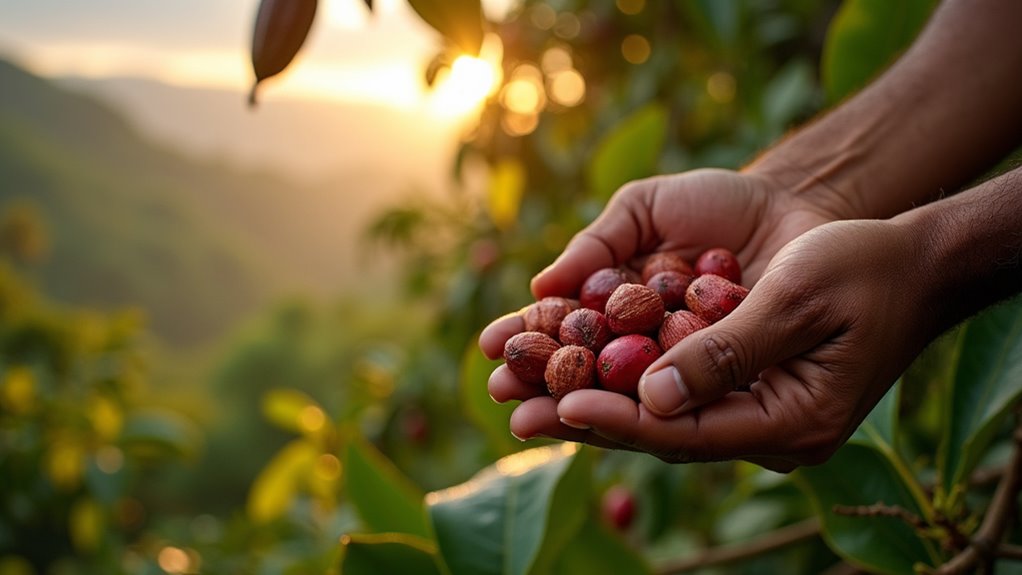
While most visitors taste Grenada’s famous spices at markets, you’ll gain authentic insight into the island’s agricultural heritage by visiting Belmont Estate, a 300-year-old working plantation in northern St. Patrick. This locally-owned, 400-acre estate transforms colonial history into educational agritourism.
You’ll witness the complete cocoa-to-chocolate process, from tree harvesting to the traditional “dancing of the cocoa” polishing method. The guided plantation tours cover fermentary operations, drying sheds, and on-site chocolate factory producing organic tree-to-bar products.
Walk through spice gardens growing nutmeg, cinnamon, and ginger while learning sustainable farming practices. The estate museum documents plantation social history, and you can sample goat cheese from their dairy. The estate features historic structures including a large bell that once coordinated plantation operations. Tours typically cost $15-25, making this an affordable way to understand Grenada’s agricultural traditions firsthand.
Learn Traditional Rum-Making at River Antoine Distillery
Since 1785, River Antoine Distillery has operated as the Caribbean’s oldest functioning watermill-powered rum distillery. You’ll witness authentic 18th-century production methods that haven’t changed in over two centuries.
You’ll see the massive waterwheel grinding fresh sugarcane, then follow the juice through five copper boiling pans before natural eight-day fermentation in concrete tanks.
The wood-fired pot stills produce Rivers Rum at around 75% ABV—some of the Caribbean’s strongest commercial rum. The distillery operates with minimal modern technology, using no pasteurization, cultured yeast, or temperature-controlled equipment.
Tours cost just a few dollars and include tastings of their overproof rum, though pace yourself since it’s incredibly potent.
Visit during cane season for full operations, and don’t miss watching the simple bottling process using a basic cooler as the filling tank.
Take a Bean-to-Bar Chocolate Tour at Local Factories
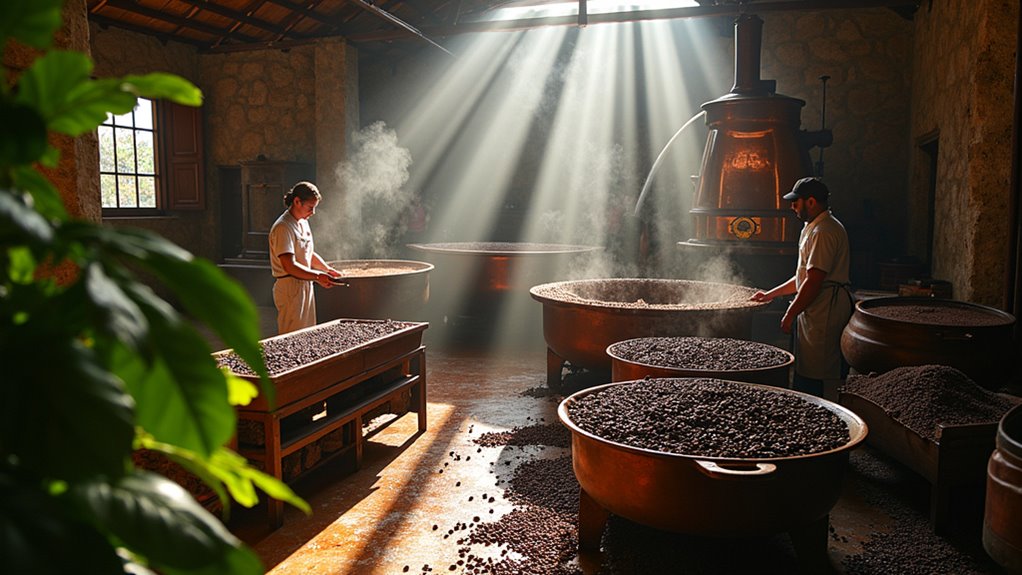
Five tree-to-bar chocolate estates across Grenada let you trace cocoa’s entire journey from pod to finished bar, offering an affordable way to understand why this island once dominated Caribbean cocoa exports. You’ll witness harvesting, fermenting, drying, roasting, grinding, conching, tempering, and molding processes using prized Trinitario beans known for complex flavors.
Start at Grenada Chocolate Company, founded in 1999 as a pioneering cooperative producing organic dark chocolate using solar power. Their house-sized facility offers intimate tours with tastings.
Belmont Estate provides all-encompassing tree-to-bar experiences, showcasing hand-sorting stages and three-month aging processes. The tours often include sampling unique chocolate varieties and body butter made from cocoa, adding an unexpected wellness element to your visit.
Consider visiting Crayfish Bay, Jouvay Chocolate, or Taste ‘D’ Spice for spice-infused varieties.
Creating a chocolate trail across multiple factories contrasts artisanal versus industrial methods while supporting local value-added production.
The Sum Up
You’ll find Grenada offers incredible value when you prioritize free activities like hiking to waterfalls and exploring beaches. Book plantation tours directly to save money, and you’ll gain authentic insights into local culture. Don’t miss sampling street food in St. George’s—it’s budget-friendly and delicious. Travel during shoulder season for lower accommodation costs. Most importantly, engage with locals at markets and rum shops; they’ll share hidden gems that guidebooks can’t offer you.