
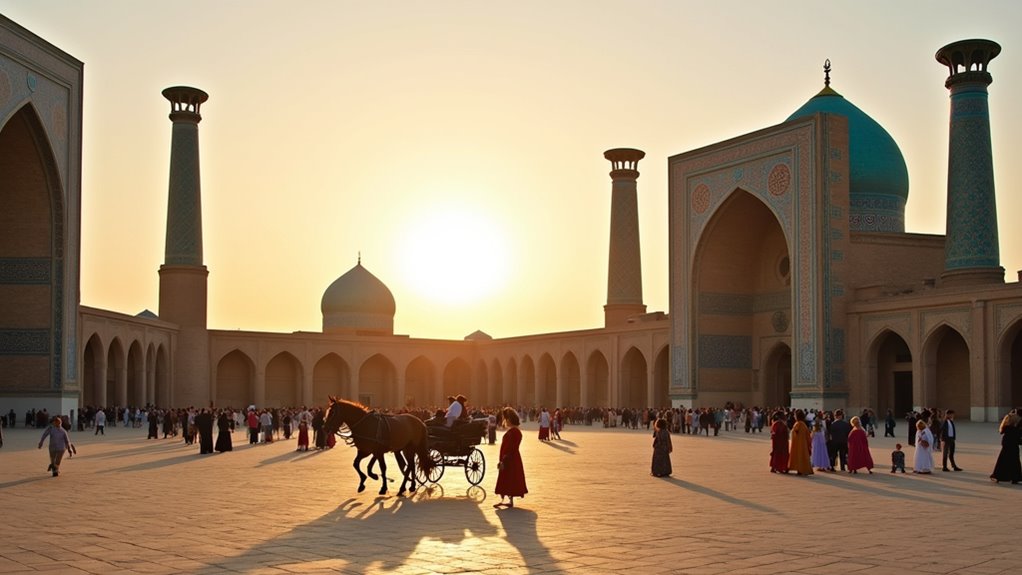
You’ll discover that Isfahan offers remarkable experiences without breaking your budget, from witnessing sunrise prayers echo through ancient mosque domes to joining locals who gather nightly under historic bridges for impromptu music sessions. The city’s UNESCO sites don’t charge hefty entrance fees, and many of the most memorable moments happen simply by timing your visits right and knowing where the locals spend their evenings. Here’s how you can experience Isfahan’s magic while respecting both your wallet and Persian traditions.
- Walk the Magnificent Naqsh-e Jahan Square at Golden Hour
- Marvel at the Acoustic Magic Inside Shah Mosque
- Catch Morning Light Inside Sheikh Lotfollah Mosque
- Climb Ali Qapu Palace for Square Views and Music Room Acoustics
- Photograph Chehel Sotoun’s Forty Columns Reflection
- Browse the Traditional Crafts in Qeysarieh Bazaar
- Stroll Si-o-se-pol Bridge at Sunset
- Listen to Traditional Singers Under Pol-e Khaju Bridge
- Explore the Persian Gardens and Frescoes at Chehel Sotoun
- Shop for Handicrafts in the Square’s Two-Story Arcades
- The Sum Up
Walk the Magnificent Naqsh-e Jahan Square at Golden Hour
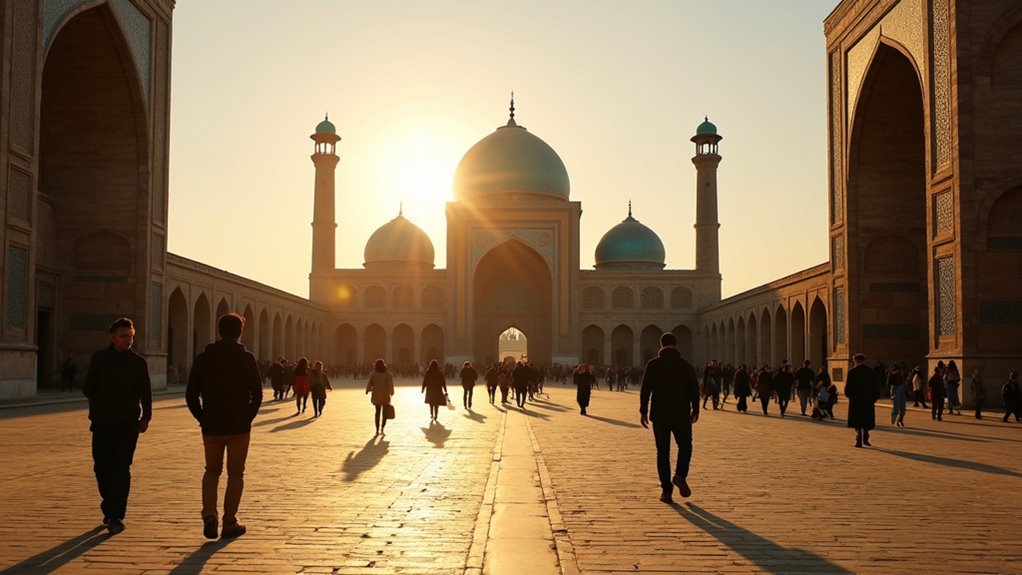
When the afternoon sun begins its descent over Isfahan, you’ll discover why Naqsh-e Jahan Square transforms into one of Iran’s most mesmerizing experiences. This UNESCO World Heritage site, measuring 560 by 160 meters, becomes a photographer’s paradise as golden light illuminates the intricate blue tilework of Sheikh Lotfollah and Imam mosques.
You’ll want to climb Ali Qapu Palace’s terrace for panoramic views—the entrance fee is minimal, offering incredible value. The square’s 45-degree orientation perfectly captures late afternoon sunlight, creating dramatic shadows across symmetrical pools and pathways.
As temperatures cool, locals gather for evening strolls, giving you authentic culture. The warm light enhances the Safavid-era architecture’s details, making this the ideal time to appreciate Shah Abbas I‘s magnificent 17th-century urban planning masterpiece. The square’s design incorporates traditional Persian garden elements that further enhance its visual appeal during these golden hours.
Marvel at the Acoustic Magic Inside Shah Mosque
As you step beneath the soaring central dome of Shah Mosque, you’ll discover one of Isfahan’s most mesmerizing secrets—an acoustic phenomenon that’s been amazing visitors for over 400 years.
Stand on the marked stone at the prayer hall’s center and clap softly or whisper—you’ll hear multiple distinct echoes bouncing off the 52-meter-high double-layered dome and intricate mosaic tiles.
This isn’t accidental magic; Safavid architects deliberately engineered these acoustics so imams could address large congregations without amplification.
Visit during quiet hours outside prayer times for the best experience.
Try singing a short phrase to hear how your voice carries throughout the hall. The mosque’s stunning turquoise tilework creates a breathtaking backdrop as you experience this acoustic wonder.
It’s completely free to test this architectural marvel, making it one of Isfahan’s most accessible yet extraordinary attractions.
Catch Morning Light Inside Sheikh Lotfollah Mosque
Just steps away from Shah Mosque’s acoustic wonders, Sheikh Lotfollah Mosque offers a completely different sensory experience—one best captured in the gentle embrace of morning light.
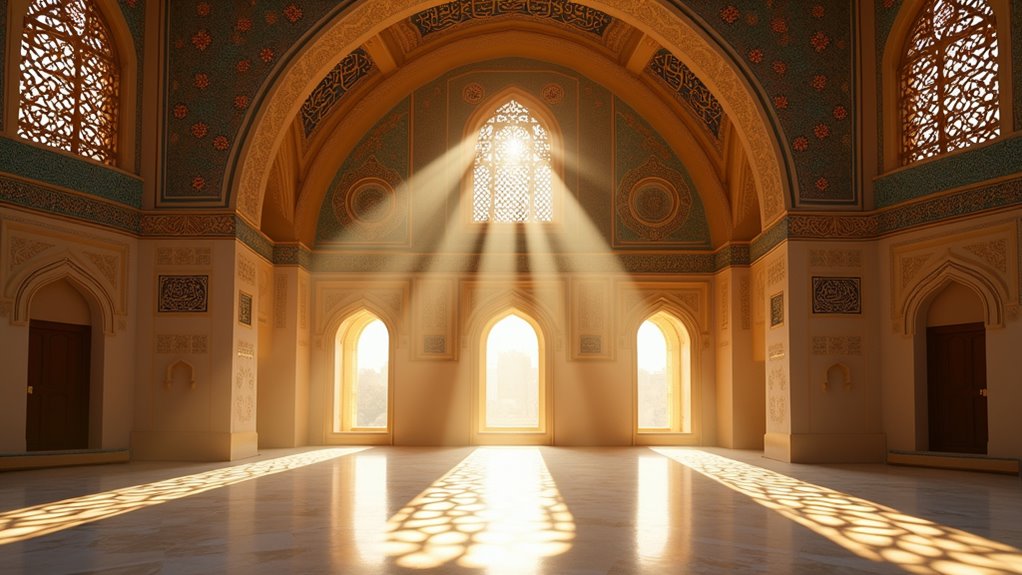
You’ll want to arrive between sunrise and 10 AM when the mosque’s famous color-shifting dome transforms from pale dawn hues to warm gold and orange. The seven-color mosaic tiles react dramatically to sunlight angles, creating an ever-changing canvas overhead.
Plan to reach the entrance 30-60 minutes before opening (typically 8-9 AM) to secure early entry. Weekday mornings offer fewer crowds and better photo opportunities.
As light streams through the entrance iwan and clerestory windows, you’ll witness intricate shadow patterns dancing across calligraphic inscriptions and floral tilework—a free light show that rivals any paid attraction. This intimate mosque was originally designed for private royal prayers during Shah Abbas I’s reign, which explains its unique layout without traditional minarets and the large courtyard typical of public mosques.
Climb Ali Qapu Palace for Square Views and Music Room Acoustics
Six stories of narrow spiral staircases await you at Ali Qapu Palace, but the climb rewards visitors with Isfahan’s most commanding views of Naqsh-e Jahan Square and access to one of Iran’s most acoustically innovative rooms.
You’ll reach the third floor’s 18-columned balcony first, where panoramic vistas showcase the square’s magnificent scale and neighboring Sheikh Lotfollah and Imam mosques.
Continue climbing to the sixth floor’s Music Hall, where deep circular niches create extraordinary acoustic effects—clap your hands to experience the unique sound resonance. This Safavid-era innovation once entertained royalty with musical performances.
The palace costs minimal entry fees, making it an affordable way to appreciate both Isfahan’s urban planning genius and architectural acoustics while capturing Instagram-worthy shots of the world’s second-largest city square. The structure features a large central dome that crowns this six-story architectural masterpiece combining Persian and Islamic design elements.
Photograph Chehel Sotoun’s Forty Columns Reflection
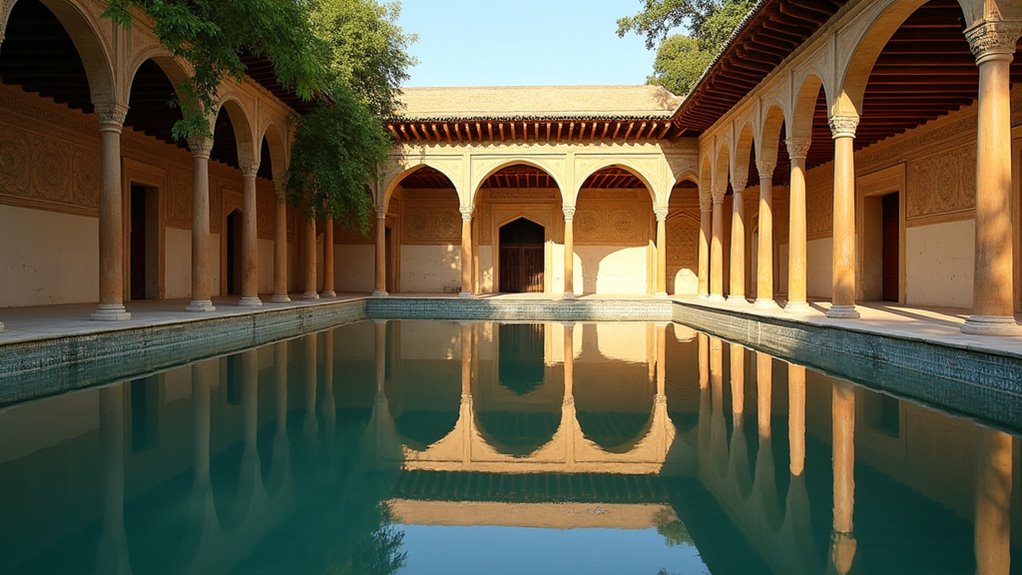
Visit during golden hours for ideal lighting and clearest reflections. You’ll need calm, windless conditions for that perfect mirror effect, so plan accordingly. The stone lion heads supporting each column add symbolic depth to your shots.
Inside, explore intricate Safavid frescoes and the dazzling Hall of Mirrors, though flash photography isn’t permitted to protect the delicate artwork. The palace spans approximately 60,000-70,000 square meters, making it a spectacular complex to photograph from multiple vantage points.
The symmetrical Persian garden provides excellent framing opportunities. Consider hiring the on-site photographer for professional-quality images if your budget allows.
Browse the Traditional Crafts in Qeysarieh Bazaar
Since the Qeysarieh Bazaar has served as Isfahan’s premier trading center for over four centuries, you’ll discover an authentic showcase of Persian craftsmanship that hasn’t succumbed to tourist commercialization.
Navigate the labyrinthine layout to find specialized sections selling Isfahan carpets, intricate khatam inlay work, and hand-hammered copperware.
Don’t miss the jewelry quarter’s exquisite silverware or the textile crafts featuring turquoise embroidery and cashmere.
Budget-conscious shoppers should embrace bargaining—it’s expected, especially for carpets and handicrafts.
Prices reflect genuine craftsmanship quality rather than tourist markup.
Allow four hours for thorough exploration, as the maze-like structure reveals hidden workshops where artisans practice centuries-old techniques. The bazaar’s tree-like structure features intersections called Char-Su, meaning four directions, with gardens and open areas that provide peaceful respites from shopping.
Between shopping, sample traditional Iranian cuisine like saffron rice and aromatic stews at local eateries within this architectural masterpiece.
Stroll Si-o-se-pol Bridge at Sunset
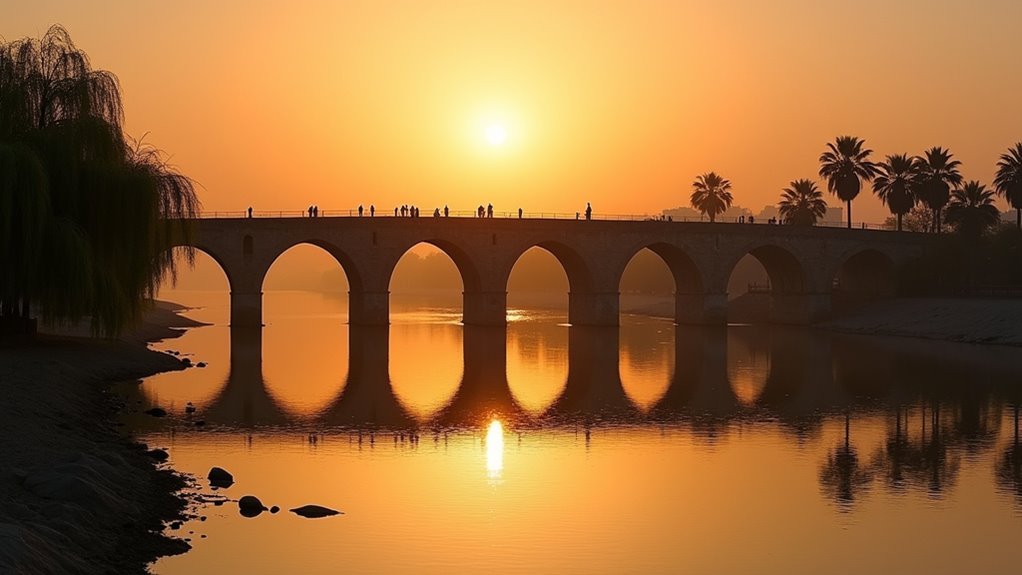
After exploring Isfahan’s covered markets, step outside to experience the city’s most iconic architectural achievement where the Zayandeh Rud River meets centuries of Persian engineering.
Si-o-se-pol Bridge, built in 1602 under Shah Abbas I, becomes magical at sunset when golden light transforms its 33 arches into dramatic silhouettes.
You’ll find the best photo opportunities during golden hour as the bridge’s reflections shimmer in the water below.
The double-deck stone structure stretches 298 meters, connecting central Isfahan with the Armenian quarter of New Jolfa.
Evening brings locals gathering with musicians and vendors, creating an authentic cultural atmosphere. The bridge was supervised by Allahverdi Khan, Shah Abbas’s trusted general who oversaw its construction as part of transforming Isfahan into the Safavid capital.
Access is completely free and available 24/7.
Combine your sunset stroll with nearby Khaju Bridge or riverside cafés for a perfect evening along the Zayandeh Rud promenade.
Listen to Traditional Singers Under Pol-e Khaju Bridge
When evening falls over Isfahan, Pol-e Khaju Bridge transforms into an impromptu concert hall where locals gather to sing traditional Persian songs beneath its 17th-century arches. You’ll find singers of all ages performing unaccompanied folk songs and pre-revolution classics, their voices naturally amplified by the bridge’s unique acoustic design.
The flowing Zayandeh Rud below creates atmospheric background sounds that enhance each performance. Homeowners in the area historically built special spring arches in their ceilings to take advantage of the exceptional acoustics for singing.
Visit during nighttime hours when Esfahanis congregate under the arches. You can sit on the stone steps or ground level near the water—it’s completely free entertainment. The bridge’s acoustics make it seem like the structure itself is singing.
Bring a jacket since evenings can be cool, and expect crowds during peak hours when families gather for this beloved cultural tradition.
Explore the Persian Gardens and Frescoes at Chehel Sotoun
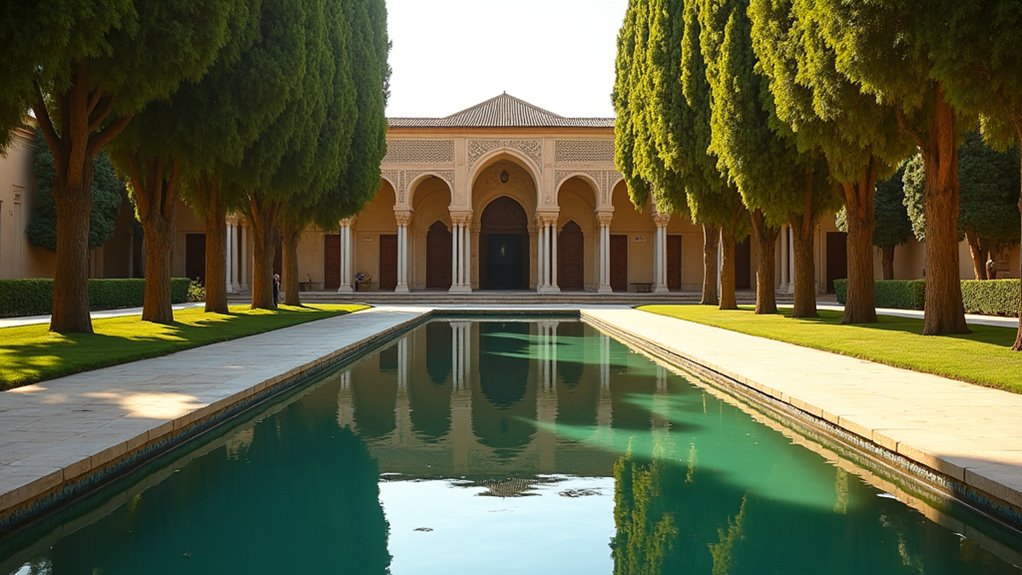
Beyond the musical echoes of Pol-e Khaju, Isfahan’s artistic legacy continues at Chehel Sotoun Palace, where you can walk through one of Iran’s most stunning examples of Safavid-era craftsmanship without breaking your budget.
You’ll immediately notice the famous optical illusion—twenty slender columns reflecting in the front pool create the appearance of forty pillars, giving the palace its name.
Don’t rush through the frescoes depicting royal receptions and Persian literature scenes by master artists like Reza Abbasi. The mirror hall’s intricate tilework sparkles with natural light, while the ceiling’s gold leaf accents showcase traditional Lachak Toranj designs.
The UNESCO-registered Persian garden offers cooling shade and tranquil water channels—perfect for contemplation after exploring the palace’s three domed halls and ornamental vaulting. The palace also served as a vital architectural connection linking the famous Chahar Baagh boulevard to the magnificent Naqsh-e Jahan Square.
Shop for Handicrafts in the Square’s Two-Story Arcades
While the palace’s artistic treasures inspire, you’ll find equally enthralling craftsmanship in Naqsh-e Jahan Square’s bustling two-story arcades, where 200 original Safavid-era shops stretch along all four sides of this massive 560-by-160-meter plaza.
Browse Persian carpets, miniature paintings, and traditional copperware in these historic five-meter-high shops that’ve operated since 1620.
You’ll discover Isfahan’s renowned inlaid woodwork, enamelware, and hand-painted tiles alongside jewelry and silk rugs from Qom.
For better prices, venture through the northern Qeysariyeh gate into the Grand Bazaar’s two-kilometer vaulted corridors.
Watch artisans demonstrate traditional techniques in their workshops.
Remember to bargain—especially for high-value items like carpets and jewelry.
The deeper you go into the bazaar, the more authentic prices become. Don’t miss the local specialties like Pashmak and other traditional sweets available from vendors throughout the square’s shopping areas.
The Sum Up
You’ll find Isfahan’s magic lies in timing your visits—early mornings at Sheikh Lotfollah Mosque and golden hour at the square won’t cost extra but deliver stunning photos. Don’t miss free evening performances under Pol-e Khaju Bridge where locals gather. Budget wisely by combining paid attractions like Ali Qapu Palace with free riverside walks. Bargain respectfully in the bazaars and try affordable street food. Isfahan’s beauty unfolds through patient exploration, not rushed sightseeing.