
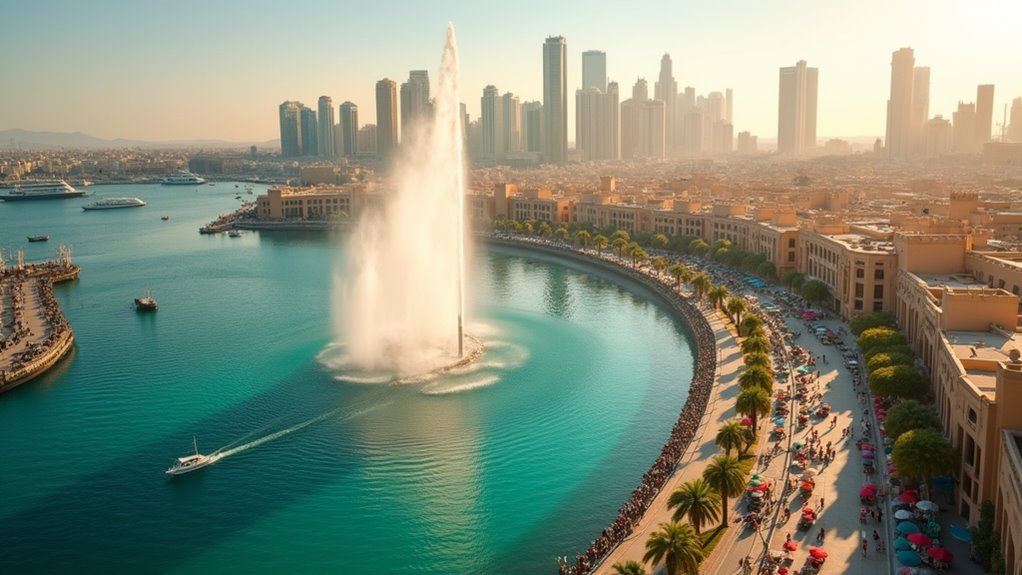
You’ll find Jeddah’s true character when you step beyond the modern shopping malls and venture into its ancient heart. The city’s UNESCO-listed Al-Balad district holds centuries of stories within its coral stone walls, while bustling souks offer authentic experiences that won’t drain your wallet. From historic merchant houses to waterfront promenades, this Red Sea gateway rewards travelers who know where to look—and there’s one particular evening ritual that locals consider essential.
- Wander Through Al-Balad’s Coral Stone Streets and Traditional Architecture
- Browse the Bustling Aisles of Souk Al Alawi Market
- Tour Historic Merchant Houses Like Bayt Nassif and Bayt AlMatbouli
- Visit Ancient Mosques Including Masjid Othman Bin Affan
- Stroll the Jeddah Corniche for Red Sea Views and King Fahad’s Fountain
- Explore the Floating Al Rahma Mosque at High Tide
- Duck Into Traditional Coffee Houses in Harat Al Yaman Neighborhood
- Photograph the Contrast Between Historic Gates and Modern Skyline
- Experience Evening Markets When Locals Come Out to Shop and Socialize
- Walk the UNESCO Heritage Zone to Understand Jeddah’s Pilgrimage History
- Watch Sunset From the Corniche While Locals Exercise and Families Picnic
- The Sum Up
Wander Through Al-Balad’s Coral Stone Streets and Traditional Architecture
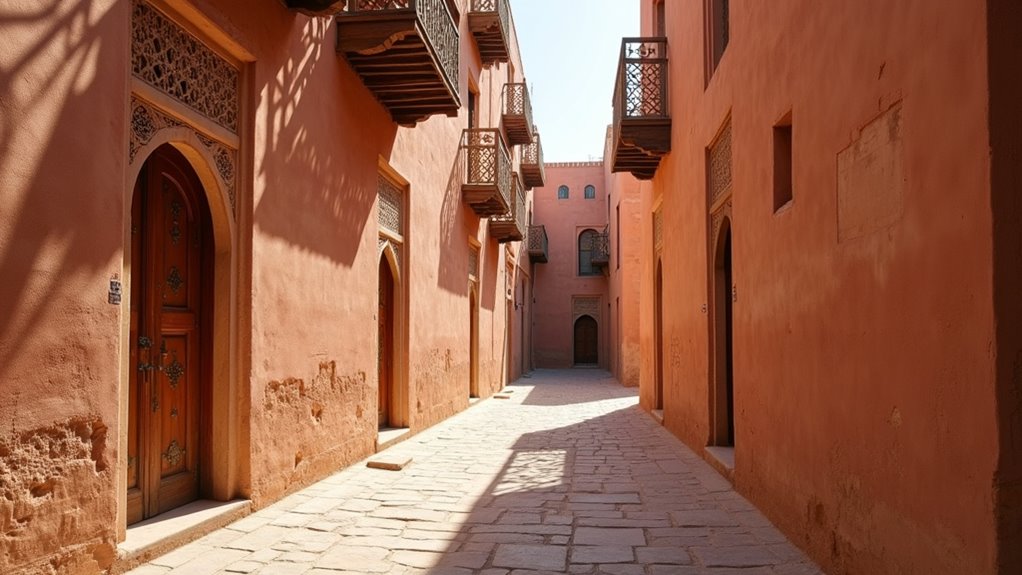
As you step into Al-Balad’s labyrinthine streets, you’ll find yourself transported back seven centuries to when this UNESCO World Heritage Site served as Jeddah’s bustling heart and the gateway for pilgrims bound for Makkah.
The coral stone buildings offer natural cooling—a free respite from Jeddah’s heat. Look up to admire the intricately carved roshan balconies and mashrabiya screens, painted in deep blues and greens, that once allowed women to observe street life privately.
Don’t miss Nasseef House, now a museum showcasing traditional merchant life.
Walk slowly through the narrow alleyways to appreciate the fusion of African, Indian, and Levantine influences that shaped this former trading hub’s unique Hijazi architecture. As you explore these historic pathways, remember that this ancient district has witnessed centuries of human struggle and perseverance, much like the spiritual journeys of countless pilgrims who passed through on their way to the holy city.
Browse the Bustling Aisles of Souk Al Alawi Market
Just steps away from Al-Balad’s historic coral stone buildings, Souk Al Alawi beckons with the aromatic blend of cardamom, frankincense, and rose water that’s perfumed its narrow aisles since 1716. You’ll find traditional Arabian goods at reasonable prices—handcrafted jewelry, textiles, spices, and Islamic art alongside modern accessories.
Visit during cooler evenings from November to March when the atmosphere’s most vibrant. Don’t hesitate to haggle; it’s expected cultural practice that vendors appreciate. The market bustles especially during Hajj season when pilgrims pass through Jeddah.
Browse freely without entry fees, letting traders share stories about their heritage crafts. This UNESCO World Heritage area offers authentic culture where locals and travelers connect through centuries-old trading traditions. The market sits within the historic district where traditional Hijazi architecture creates a stunning backdrop for your shopping experience.
Tour Historic Merchant Houses Like Bayt Nassif and Bayt AlMatbouli
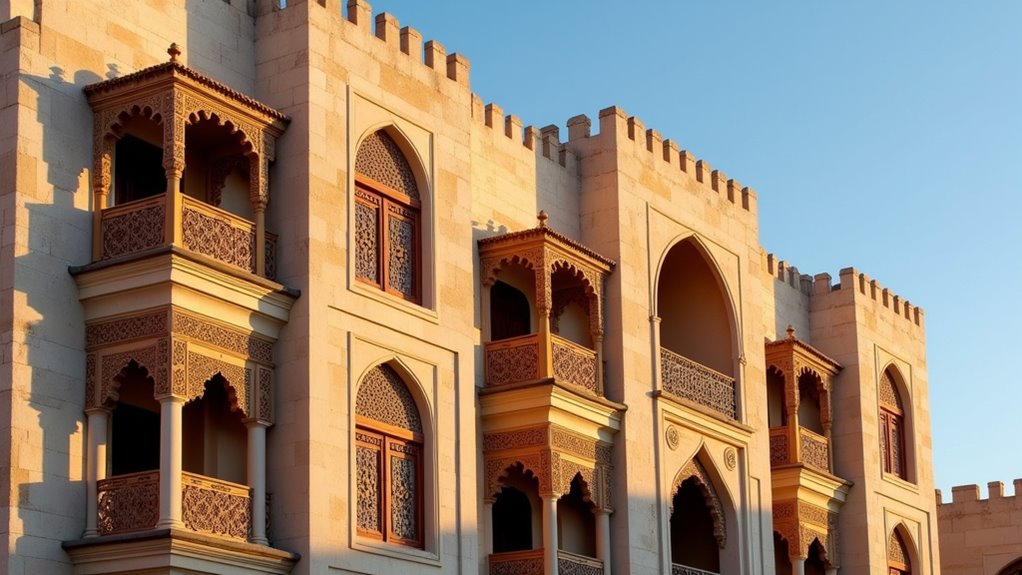
Where else can you walk through rooms where Saudi Arabia’s founding king once lived while marveling at 150-year-old architectural mastery? Tour Bayt Nassif and Bayt AlMatbouli in Al-Balad district for an authentic glimpse into Jeddah’s merchant heritage. These coral limestone houses showcase traditional Hejaz architecture with intricate wooden bay windows (Rawashin) and climate-adapted designs.
At Bayt Nassif, you’ll explore 106 rooms across four stories where King Abdulaziz resided for nearly a decade. Notice the separate entrances for men and women, reflecting historical cultural norms. The ground floor’s rainwater cisterns demonstrate ingenious cooling systems. The house also featured windcatchers on the fourth floor that provided natural cooling throughout the building.
Both houses now serve as museums offering affordable culture. Visit during cooler morning hours and combine with nearby Al-Balad heritage sites for maximum value. Entry fees are modest, making this essential Jeddah cultural experience budget-friendly.
Visit Ancient Mosques Including Masjid Othman Bin Affan
When you step into Masjid Othman Bin Affan, you’re entering sacred space that’s witnessed 1,200 years of Islamic worship and Jeddah’s evolution as a major trade hub. This ancient mosque showcases traditional Islamic architecture with its open courtyard and unchanged mihrab orientation.
You’ll notice flagstone flooring that’s been preserved for centuries, reflecting authentic construction techniques.
Archaeological discoveries here reveal Jeddah’s rich trading history through Chinese porcelain fragments and glazed pottery dating back to the 9th century. The hundreds of artefacts unearthed during recent excavations include clay tiles, plaster, and traditional tiles that provide remarkable insights into the mosque’s construction phases over the centuries.
Don’t miss the underground water cisterns—some still containing crystal-clear water after 800 years, demonstrating ingenious water management in this arid region.
The mosque remains active for daily prayers, offering you an authentic glimpse into living Islamic heritage while exploring Historic Jeddah’s preserved district.
Stroll the Jeddah Corniche for Red Sea Views and King Fahad’s Fountain
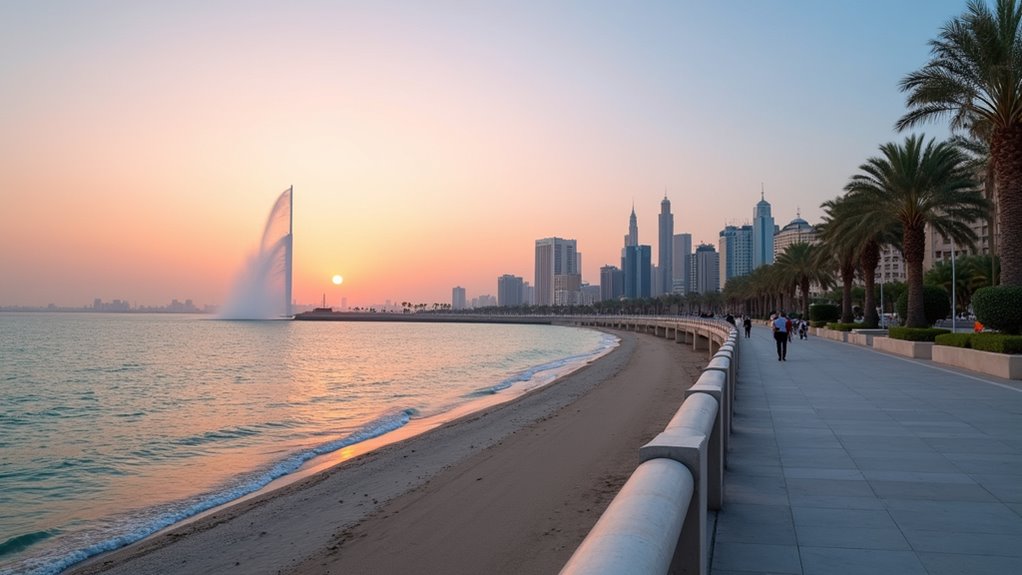
Stretching 4.2 kilometers along the Red Sea coast, the Jeddah Corniche (now called Roshn Waterfront) offers you spectacular coastal views and world-class attractions without spending a riyal on admission.
You’ll find the world’s tallest fountain here—King Fahd’s Fountain shoots Red Sea water 312 meters high, taller than the Eiffel Tower. Visit between October and March when evening breezes and sunsets create perfect viewing conditions.
Walk the waterfront’s palm-lined promenades, relax in shaded gardens, or picnic on crescent-shaped beach islands. You can jog, cycle, or simply people-watch while enjoying free Wi-Fi throughout the area. The waterfront also features opportunities for marine leisure, yachting, and water sports for those seeking more active pursuits.
The Corniche attracts 55 million visitors annually who come for swimming, cultural events, and breathtaking Red Sea panoramas—all completely free.
Explore the Floating Al Rahma Mosque at High Tide
As you venture north along Jeddah’s Corniche, you’ll discover the remarkable Al Rahma Mosque appearing to float on the Red Sea’s turquoise waters—especially dramatic during high tide when waves lap directly beneath its white marble foundation.
Built in 1985 on sea pillars, this architectural marvel offers free access with modest dress requirements. Time your visit for sunrise or sunset when the aquamarine dome and minaret create stunning reflections.
Inside, 56 stained glass windows cast colorful light across prayer halls accommodating 2,300 worshippers, while Quranic calligraphy adorns the walls in traditional scripts.
The open courtyard provides panoramic Red Sea views perfect for photography. Known as the world’s first mosque constructed over an open sea, this unique structure enhances its spiritual ambiance with the natural sounds of waves below. You’ll find this serene spiritual destination combines Islamic heritage with natural beauty year-round.
Duck Into Traditional Coffee Houses in Harat Al Yaman Neighborhood
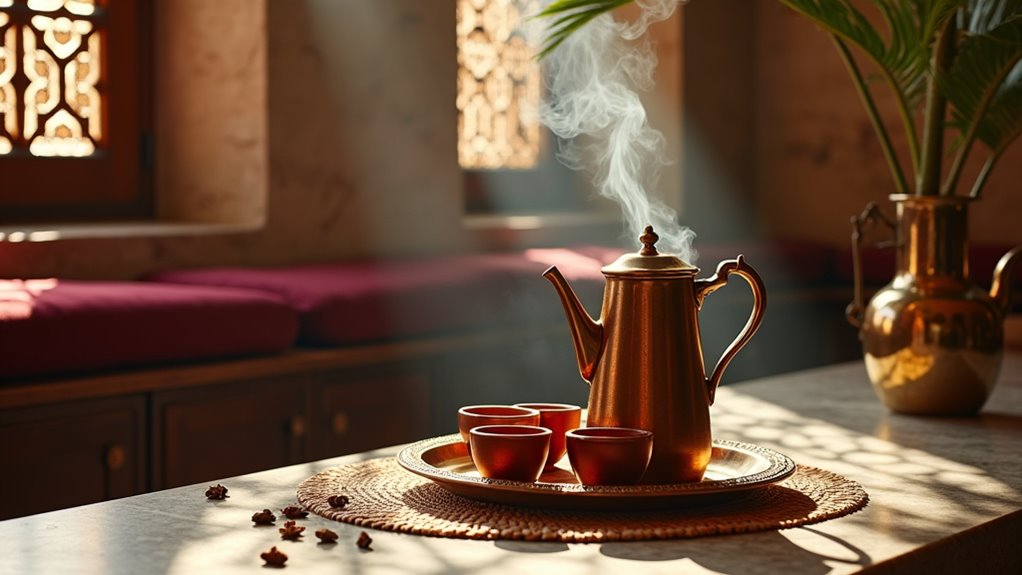
Hidden within Harat Al Yaman’s maze of coral stone alleyways, you’ll find authentic coffee houses that’ve served as neighborhood gathering spots since the 15th century. These traditional cafes offer budget-friendly culture where you’ll sip cardamom-infused Arabic coffee alongside locals engaged in scholarly discussions and relaxation.
Navigate using visual landmarks since street signage is minimal—ask residents for directions to spots like Harat Al-Bahr Café. You’ll discover Arabian motifs, colorful cushions, and aromatic coffee paired with complimentary dates. Some cafes feature rooftop seating overlooking Al Balad’s historic skyline. Many establishments also offer short workshops in traditional crafts like soap making and pottery for visitors interested in hands-on cultural experiences.
Check opening hours beforehand, as many operate seasonally or during evenings only. Plan extra time for exploration—these narrow streets reward patient wanderers with authentic experiences that connect you directly to Jeddah’s living heritage.
Photograph the Contrast Between Historic Gates and Modern Skyline
While Jeddah’s ancient gates once controlled access to this historic trading port, today they serve as striking foreground subjects for photographers capturing the city’s dramatic transformation.
You’ll find the best contrast at Bab Makkah, where the illuminated Quranic architecture stands against towering skyscrapers. Head there during golden hour with a wide-angle lens to frame the coral stone structures alongside gleaming high-rises.
Don’t miss the intricate rawasheen balconies surrounding these gates—they’re perfect for detailed shots that showcase traditional craftsmanship.
For budget-friendly photography, climb nearby rooftops or hills for elevated cityscape views. This historic area earned its UNESCO recognition in 2014, adding cultural significance to your photographic documentation of the site.
Night shots work particularly well at Bab Makkah, where blue and green lighting creates stunning juxtaposition with the modern Corniche’s glittering towers.
Experience Evening Markets When Locals Come Out to Shop and Socialize
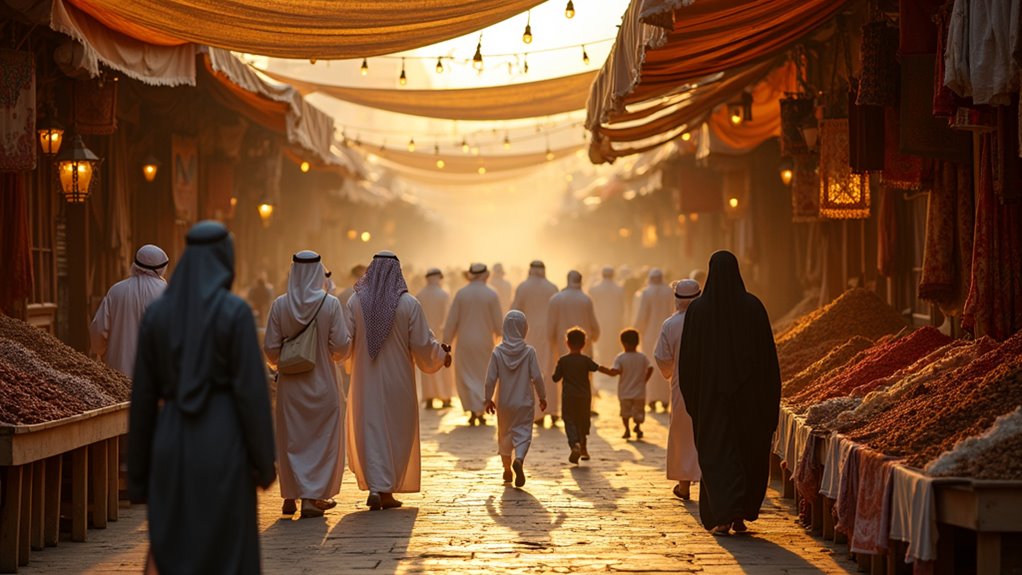
When the sun sets over Jeddah’s bustling streets, the city’s evening markets transform into vibrant social hubs where you’ll experience authentic Saudi culture at its most welcoming.
Head to Semawis Night Market after 5 PM for diverse street food and live music, or explore Al-Balad’s historic market among traditional architecture selling perfumes, gold, and handmade crafts.
You’ll find the best deals through polite bargaining while enjoying local snacks and seafood.
Arrive early (5-6:30 PM) to avoid crowds and secure parking, especially on weekends.
Most markets stay open until 10-11 PM, giving you plenty of time to browse traditional clothing, spices, and handicrafts. For a glimpse into Jeddah’s commercial heritage, visit Gabel Street Souq, one of the city’s oldest markets featuring historic buildings and diverse shops selling everything from spices to jewelry.
Remember to dress modestly and ask permission before photographing vendors.
Walk the UNESCO Heritage Zone to Understand Jeddah’s Pilgrimage History
Step into Al-Balad’s UNESCO World Heritage zone and you’ll walk through seven centuries of Islamic pilgrimage history, where over 600 coral stone buildings tell the story of Jeddah’s role as Makkah’s official gateway. You’ll discover intricate wooden Roshan latticework that once provided shelter for pilgrims from across the Islamic world, while exploring merchant tower houses that housed traders facilitating the global pilgrimage economy.
Visit the 13th-century Al Shafi’i Mosque and historic ribats where pilgrims lodged during their sacred journey. The district’s nine original gates once protected these travelers, and today you can trace their routes through bustling squares where cultures converged. The opening of the Suez Canal in 1869 brought unprecedented wealth to the city, transforming it into a cosmopolitan hub that attracted merchants and pilgrims from Asia, Africa, and the Middle East. Entry is free, making this culture accessible while you witness architecture uniquely adapted to Red Sea coastal conditions.
Watch Sunset From the Corniche While Locals Exercise and Families Picnic
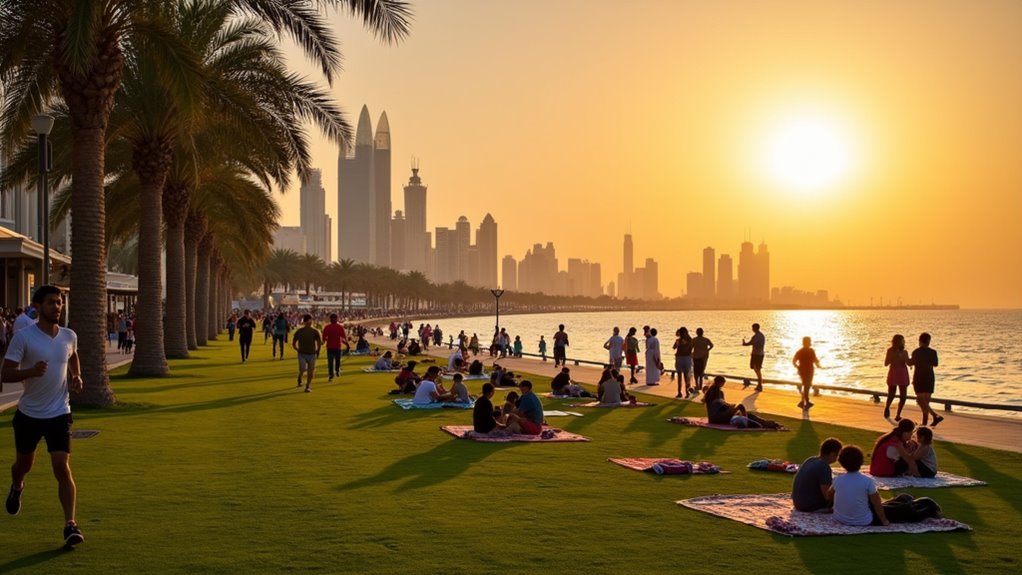
After exploring centuries-old coral stone architecture, head to the Jeddah Corniche where the Red Sea’s daily finale unfolds in spectacular fashion. You’ll witness breathtaking sunset views while enjoying local culture as runners, cyclists, and skaters populate the dedicated paths around you.
Families spread picnic blankets on green spaces, creating an authentic community atmosphere that’s completely free to experience. The waterfront also features an Art Promenade that extends to the Marina, showcasing modern installations and sculptures that blend seamlessly with the lively evening atmosphere.
The 11-kilometer waterfront offers wide promenades perfect for evening strolls, with illuminated sculptures and fountains enhancing the spectacle. Arrive early to secure parking, especially on weekends, or use ride-sharing services.
The cool sea breeze makes this the ideal time to escape daytime heat while observing how locals unwind. Wear comfortable shoes for extensive walking and bring a camera for the photogenic skyline views.
The Sum Up
You’ll discover Jeddah’s magic lies in its free experiences—wandering Al-Balad’s ancient streets, watching sunset from the Corniche, and soaking up the evening market atmosphere. Don’t rush through; instead, chat with local vendors, join families picnicking by the Red Sea, and time your visits for golden hour photography. Pack comfortable walking shoes and embrace the slow pace. Jeddah’s authentic charm unfolds when you explore like a curious neighbor, not a hurried tourist.