
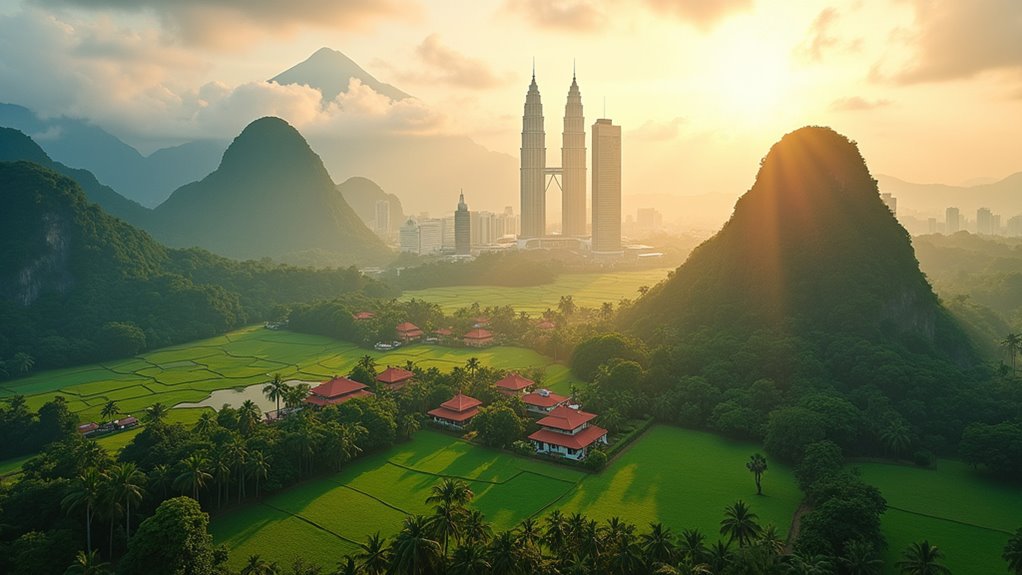
Travelers discover that Malaysia’s attractions span from towering skyscrapers to ancient rainforests, offering experiences that won’t break the bank. The country’s diverse landscape means adventurers can explore UNESCO heritage sites in the morning and watch fireflies illuminate mangrove trees by evening. Smart visitors know that many of Malaysia’s most compelling destinations combine culture with affordable exploration. However, choosing which attractions deserve precious travel time requires understanding what makes each location truly worth the journey.
- Petronas Twin Towers and KLCC Park
- Batu Caves Hindu Temple Complex
- George Town’s UNESCO Heritage District
- Melaka’s Colonial Quarter
- Taman Negara Rainforest Experience
- Mount Kinabalu Summit Trek
- Langkawi’s Sky Bridge and Cable Car
- Pulau Sipadan Diving Paradise
- Cameron Highlands Tea Plantations
- Gunung Mulu Cave Systems
- Kuala Gandah Elephant Sanctuary
- Firefly Watching at Kuala Selangor
- Islamic Arts Museum Malaysia
- Mari Mari Cultural Village
- Tunku Abdul Rahman Marine Park
Petronas Twin Towers and KLCC Park
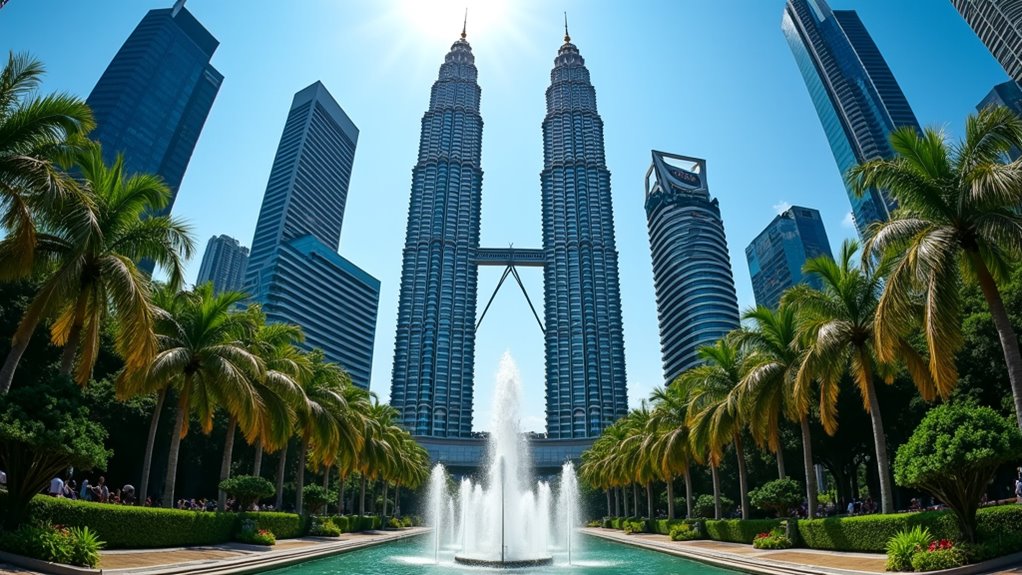
Where else can visitors experience architectural grandeur without spending a ringgit on admission? Malaysia’s iconic Petronas Twin Towers stand 452 meters tall with 88 floors, showcasing a stunning fusion of stainless steel, glass, and Islamic design elements. While the observation deck requires tickets, travelers can appreciate the towers’ magnificence from the ground level and capture spectacular photos during the illuminated evening hours.
Adjacent KLCC Park offers budget-friendly relaxation with jogging tracks and green spaces perfect for picnics. Visitors enjoy local culture by observing Malaysian families enjoying weekend gatherings. The park provides an ideal vantage point for tower photography while offering respite from Kuala Lumpur’s bustling streets.
This combination delivers world-class sightseeing without straining travel budgets.
Batu Caves Hindu Temple Complex
Just twenty minutes from Kuala Lumpur’s city center, travelers discover one of Malaysia’s most sacred Hindu sites without paying entrance fees. The Batu Caves temple complex sits within a 400-million-year-old limestone hill, featuring the world’s tallest statue of Lord Murugan at 43 meters, gleaming in gold plating.
Visitors climb 272 colorful concrete steps to reach the main Cathedral Cave, where Hindu shrines create an atmospheric spiritual experience. The steep ascent challenges fitness levels, so bring water and wear comfortable shoes.
Monkeys inhabit the area—keep food secured and bags closed.
During Thaipusam festival in January or February, over one million devotees gather here, transforming the caves into Malaysia’s most spectacular religious celebration. Dress modestly with covered shoulders and knees to respect this active pilgrimage site.
George Town’s UNESCO Heritage District
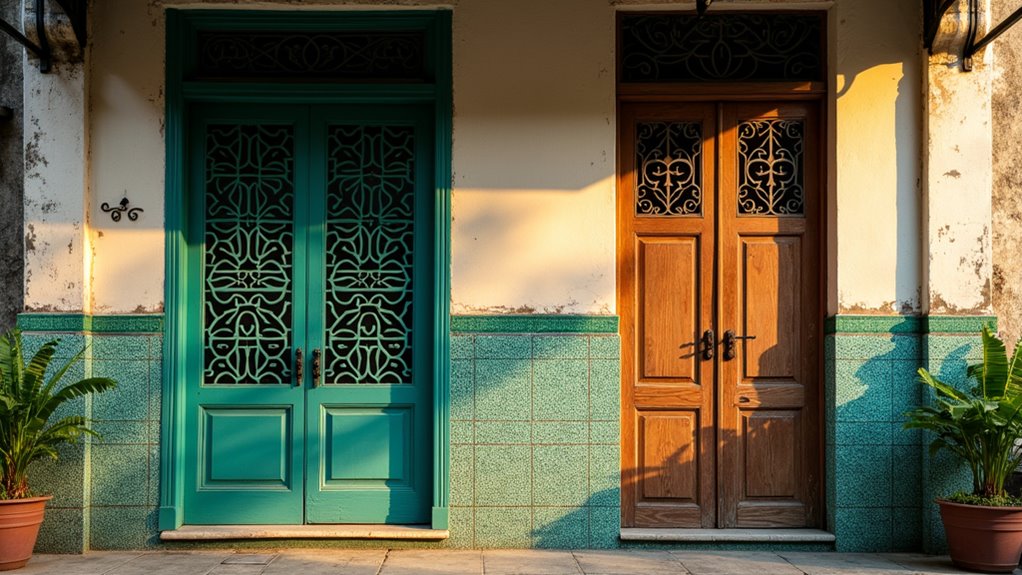
How can travelers experience centuries of multicultural history within a single city block? George Town’s UNESCO World Heritage District delivers exactly that experience. This Penang destination showcases colonial buildings alongside Chinese shophouses, Hindu temples, and Islamic mosques within walking distance.
Street art murals create Instagram-worthy backdrops while telling local stories through creative expression.
Budget-conscious travelers can explore most attractions on foot, avoiding expensive transportation. Free temple visits and self-guided walking tours keep costs minimal. Local hawker centers serve authentic Malaysian cuisine at rock-bottom prices.
The district’s compact layout makes culture effortless. Visitors can witness morning prayers at temples, browse traditional clan houses, and observe artisans practicing heritage crafts.
George Town’s living heritage means locals still inhabit these historic structures, creating authentic cultural interactions rather than sterile museum experiences.
Melaka’s Colonial Quarter
While many Southeast Asian cities have lost their colonial heritage to modern development, Melaka’s Colonial Quarter preserves over 500 years of architectural history within its UNESCO-protected streets. Visitors can explore Dutch colonial buildings, Portuguese ruins, and British administrative structures for free by walking the compact historic center.
The iconic red Stadthuys and Christ Church showcase Dutch architecture, while A Famosa fortress gate represents Portuguese influence. Budget travelers should visit museums during weekday mornings for smaller crowds and better photo opportunities.
Street food along Jonker Street costs under RM10 per meal, offering Peranakan specialties like chicken rice balls and cendol. The quarter’s walkable size makes expensive tours unnecessary—self-guided exploration reveals multicultural temples, clan houses, and colonial mansions within hours.
Taman Negara Rainforest Experience

When travelers venture into Taman Negara National Park, they’re stepping into one of the world’s oldest rainforests—a 130-million-year-old ecosystem that predates the Amazon.
Budget-conscious visitors can stay at basic chalets or camp for under RM50 per night.
Essential activities include jungle trekking on marked trails, exploring Deer Cave‘s limestone formations, and wildlife spotting for tapirs, macaques, and exotic birds.
The canopy walkway offers treetop perspectives without expensive guided tours.
Night safaris provide chances to observe nocturnal animals.
Visitors should pack insect repellent, sturdy hiking boots, and quick-dry clothing.
Local guides, while optional for main trails, enhance cave exploration experiences and cost around RM100 per group.
Multi-day packages offer better value than single-day visits.
Mount Kinabalu Summit Trek
Why do thousands of adventurers annually challenge themselves on Malaysia’s highest peak? Mount Kinabalu in Sabah offers an accessible yet rewarding summit experience that doesn’t require technical climbing skills.
The two-day trek costs around RM200-400 for permits and guide fees, making it budget-friendly compared to other major peaks worldwide.
Climbers start at Timpohon Gate, ascending through diverse ecosystems from tropical rainforest to alpine terrain.
The first day involves hiking to Laban Rata resthouse at 3,272 meters.
Day two begins at 2:30 AM for the final push to Low’s Peak at 4,095 meters, arriving for spectacular sunrise views.
Local Kadazan-Dusun communities consider Kinabalu sacred, home to spirits of ancestors.
Respect their beliefs by following guide instructions and designated paths only.
Langkawi’s Sky Bridge and Cable Car
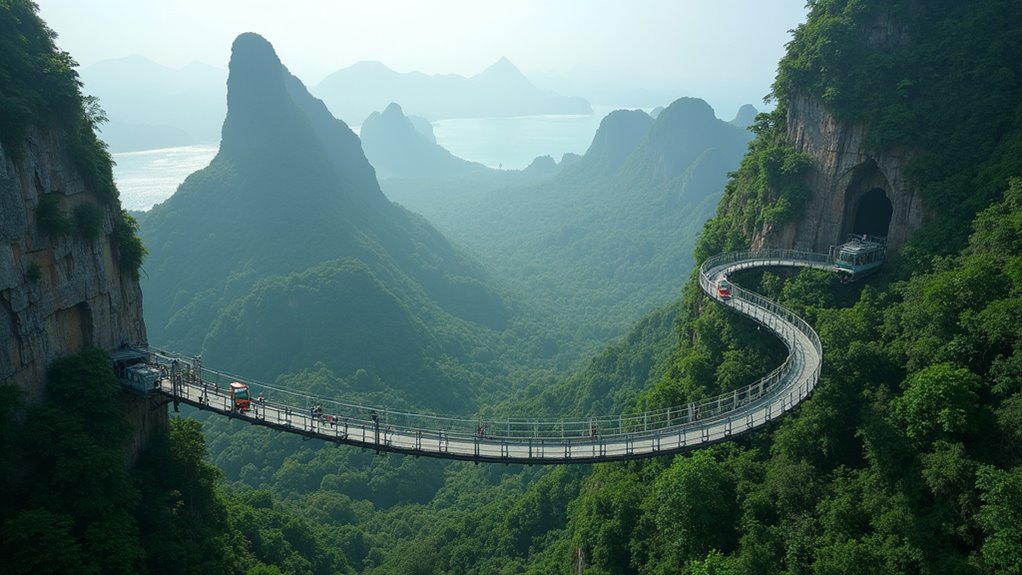
After conquering Malaysia’s highest peak, travelers seeking spectacular views without the physical demands can experience Langkawi’s SkyCab cable car system. The 15-minute ride ascends 708 meters above sea level, offering panoramic vistas of ancient rainforest, limestone cliffs, and turquoise waters.
Budget-conscious visitors can purchase combo tickets including both cable car and Sky Bridge access for better value.
The curved Sky Bridge spans 125 meters between two mountain peaks, providing breathtaking photo opportunities. Local guides explain the geological significance of Langkawi’s 550-million-year-old rock formations during the journey.
Early morning rides avoid crowds and offer clearer visibility before afternoon haze settles. The base station features cultural displays about Langkawi’s maritime heritage and local legends, enriching the experience beyond just scenic views.
Pulau Sipadan Diving Paradise
While Langkawi offers spectacular aerial views, Malaysia’s underwater treasures await at Pulau Sipadan, where world-class diving doesn’t require breaking the bank. This protected island delivers pristine coral reefs and crystal-clear waters that rival expensive Caribbean destinations at a fraction of the cost.
Budget-conscious divers can join day trips from nearby Semporna, avoiding pricey resort packages while accessing identical dive sites. The island’s conservation status means no commercial development—just untouched marine biodiversity.
Divers encounter schools of barracuda, hammerhead sharks, and green sea turtles in their natural habitat.
Local dive operators offer competitive rates, and nearby homestays provide authentic cultural experiences with Bajau sea nomad communities. Travelers gain both incredible underwater adventures and meaningful connections with Malaysia’s maritime heritage, making every ringgit count.
Cameron Highlands Tea Plantations

From underwater adventures to mountain retreats, Malaysia’s Cameron Highlands offers budget travelers an affordable escape to cooler climates without expensive international flights. Located in Pahang state, this hill station sits at 1,500 meters above sea level, providing temperate weather year-round.
The region’s rolling tea plantations create stunning green landscapes perfect for photography and cultural exploration. Visitors can tour working tea estates like BOH and Sungai Palas, learning traditional cultivation methods while sampling fresh brews. These tours typically cost under $5 and include factory visits.
Budget accommodations range from $10-20 nightly, while local buses connect plantation sites affordably. The highlands also feature strawberry farms, vegetable markets, and hiking trails.
Pack layers since temperatures drop to 15°C at night, making sweaters essential for comfortable exploration.
Gunung Mulu Cave Systems
Where else can adventurous travelers explore some of the world’s largest cave chambers for under $30? Gunung Mulu National Park in Sarawak delivers this UNESCO World Heritage experience without breaking budgets. The park’s massive cave systems include Deer Cave, one of the world’s largest cave passages, and Clearwater Cave, Malaysia’s longest cave system stretching over 200 kilometers.
Budget-conscious explorers can join guided tours starting at $25, which include headlamps and safety equipment. The evening bat exodus from Deer Cave offers spectacular wildlife viewing as millions of bats create swirling formations against the sunset sky.
Visitors should book accommodations in nearby Mulu village for affordable lodging options. The park’s ancient rainforest setting provides cultural connections to local Penan and Berawan communities, making this adventure both affordable and culturally enriching.
Kuala Gandah Elephant Sanctuary

Malaysia’s wildlife conservation efforts offer travelers meaningful encounters beyond underground exploration. The Kuala Gandah Elephant Sanctuary provides budget-friendly access to Asian elephant conservation, located just two hours from Kuala Lumpur. Visitors can observe rescued elephants in semi-natural habitats while learning about anti-poaching efforts and human-wildlife conflict resolution.
The sanctuary offers interactive experiences including elephant feeding and bathing sessions. Educational programs highlight traditional relationships between local communities and elephants, providing cultural context often missing from commercial wildlife attractions. Entry fees directly support conservation work, making visits both meaningful and affordable.
Weekend visits can be crowded, so weekday trips offer better experiences. Public transportation connections make the sanctuary accessible without expensive tours. Pack modest clothing and prepare for muddy conditions during hands-on elephant interactions.
Firefly Watching at Kuala Selangor
While most travelers chase Malaysia’s daytime attractions, the nocturnal magic of Kuala Selangor’s firefly colonies offers an enchanting alternative that costs a fraction of typical tourist experiences.
Located an hour from Kuala Lumpur, visitors board small boats for RM15-25 per person to witness thousands of synchronized fireflies illuminating mangrove trees along the Selangor River.
The best viewing occurs during new moon phases when darkness enhances the natural light show.
Local boat operators provide quiet electric boats to avoid disturbing the fireflies’ habitat.
The 45-minute journey reveals nature’s Christmas lights dancing across berembang trees.
Visitors should bring mosquito repellent and arrive before 8 PM for ideal viewing.
This budget-friendly eco-tourism experience supports conservation efforts while providing an unforgettable glimpse into Malaysia’s biodiversity.
Islamic Arts Museum Malaysia
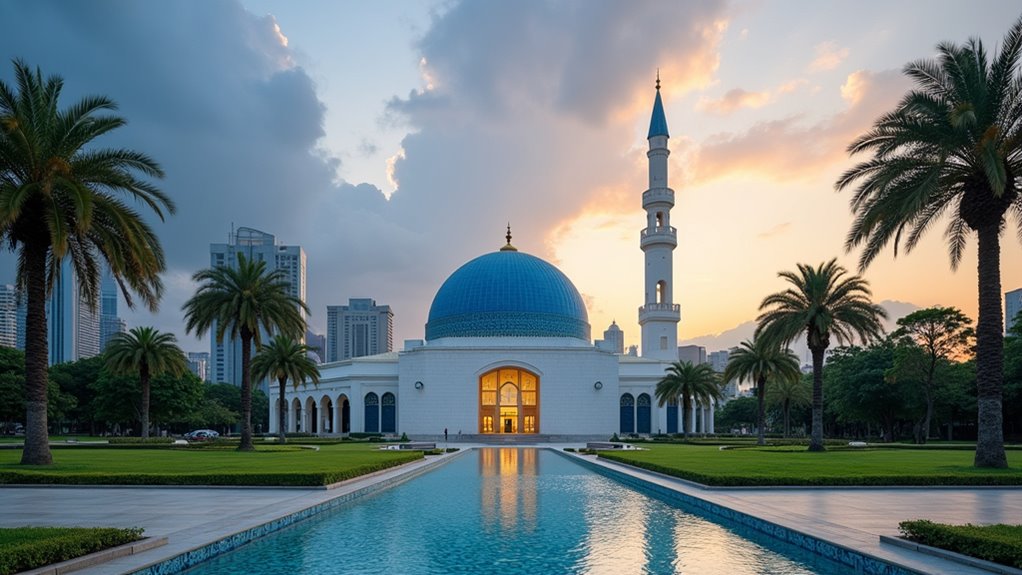
The Islamic Arts Museum Malaysia houses one of the world’s finest collections of Islamic artifacts while charging just RM14 for adults—making it Kuala Lumpur’s best cultural bargain. Visitors can explore twelve galleries showcasing exquisite manuscripts, ceramics, textiles, and architectural elements spanning 1,400 years of Islamic civilization.
The museum’s crown jewel is its collection of rare Quran manuscripts and intricate miniature paintings from Persia and India.
Budget travelers should allocate 2-3 hours for a thorough visit and consider the combo ticket with nearby attractions. The museum shop offers authentic Islamic crafts at reasonable prices.
Located in Lake Gardens, it’s easily accessible by LRT and provides essential context for understanding Malaysia’s Islamic heritage. The air-conditioned galleries offer welcome respite from Kuala Lumpur’s tropical heat.
Mari Mari Cultural Village
Located 30 minutes from Kota Kinabalu, Mari Mari Cultural Village offers travelers an authentic glimpse into Sabah’s indigenous heritage for just RM75—a fraction of what similar cultural experiences cost elsewhere in Southeast Asia. The village showcases five traditional Bornean tribes through reconstructed longhouses, authentic ceremonies, and hands-on activities like fire-making and bamboo cooking.
Visitors can sample traditional rice wine, learn blow-pipe hunting techniques, and watch cultural performances that aren’t tourist theater—they’re genuine traditions passed down through generations.
The two-hour guided tour includes lunch featuring indigenous cuisine cooked using ancient methods.
Book directly through their website to avoid tour operator markups. Visit during weekdays for smaller crowds and more personal interaction with cultural guides who are actual tribal descendants.
Tunku Abdul Rahman Marine Park
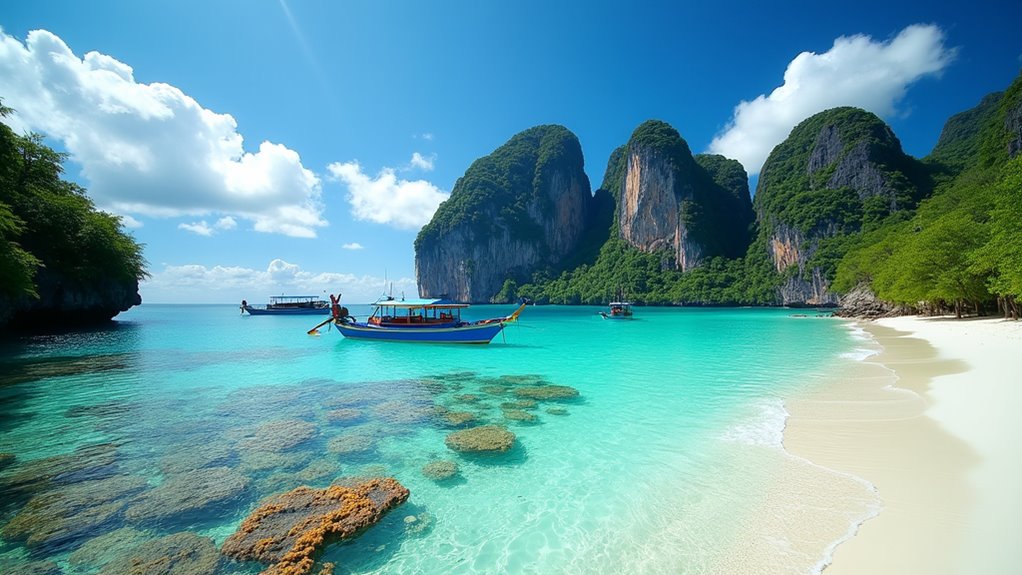
Why pay premium prices for crowded dive sites when Malaysia’s best-kept marine secret sits just 15 minutes by speedboat from Kota Kinabalu? Tunku Abdul Rahman Marine Park delivers world-class snorkeling and diving without the tourist markup found at famous locations.
The park’s five islands offer crystal-clear waters teeming with colorful coral reefs and tropical fish. Visitors can island-hop for under RM50, exploring Sapi Island’s pristine beaches or Mamutik’s excellent snorkeling spots. Local boat operators provide affordable day trips including equipment rental.
Pack homemade lunches to avoid overpriced island restaurants, and bring reef-safe sunscreen to protect the marine ecosystem. Early morning departures ensure better visibility underwater and fewer crowds.
This accessible marine sanctuary proves that Malaysia’s best diving experiences don’t require breaking the budget.