
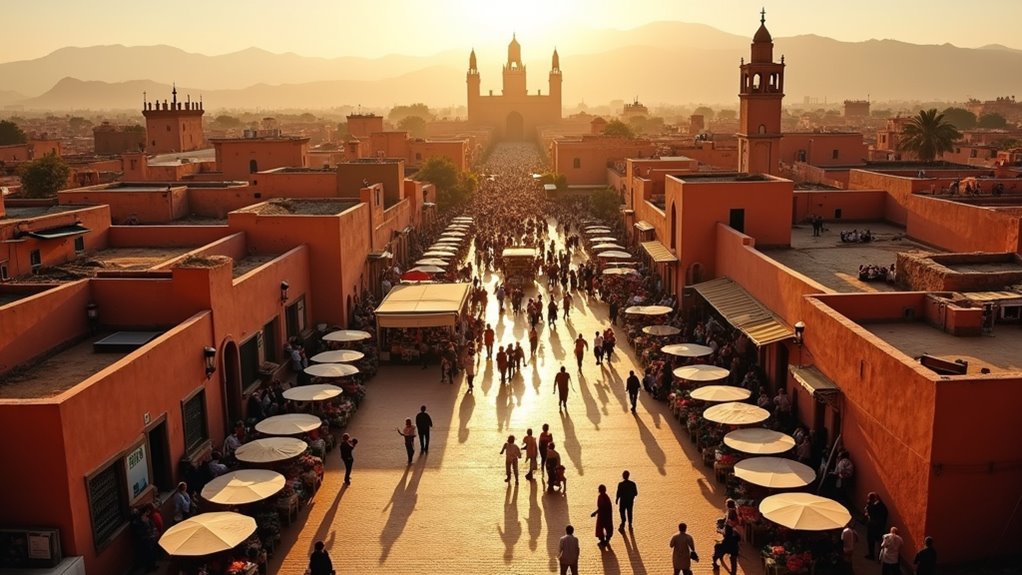
You’re planning a trip to Marrakech, but you’re probably wondering which experiences are worth your time and money. The Red City offers countless attractions, from bustling markets to serene gardens, yet exploring them efficiently can make or break your visit. Some activities drain your wallet without delivering memorable moments, while others provide incredible value for budget-conscious travelers. Here’s how to maximize your Moroccan adventure without falling into common tourist traps.
- Get Lost in the Medina’s Ancient Alleyways
- Experience the Evening Energy at Jemaa El-Fna
- Navigate the Specialized Souks Like a Local
- Climb (Almost) to the Top of Koutoubia Mosque
- Step Into Palace Life at Bahia Palace
- Discover the Hidden Saadian Tombs
- Wander the Haunting Ruins of Badi Palace
- Study Stunning Islamic Architecture at Medersa Ben Youssef
- Escape to the Blue Oasis of Jardin Majorelle
- Take a Day Trip to the Stony Agafay Desert
- Venture Into the Atlas Mountains for Berber Villages
- Float Above Morocco in a Hot Air Balloon
- The Sum Up
Get Lost in the Medina’s Ancient Alleyways
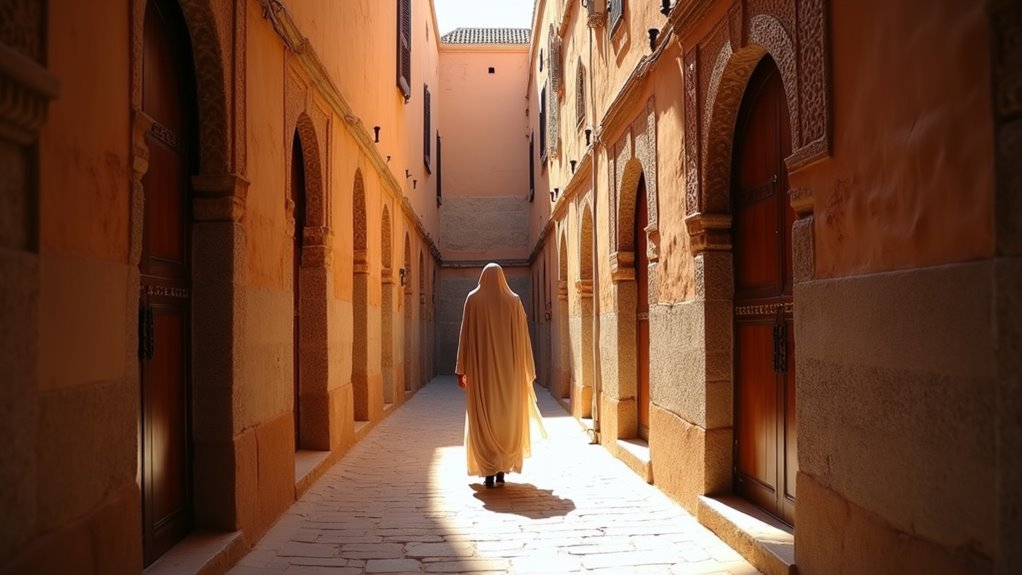
When you step into Marrakech’s medina, you’re entering a living medieval city that’s remained largely unchanged since the 11th century. The maze-like alleyways, called zankas, wind unpredictably between ancient red clay walls, creating an adventure where getting lost is part of the experience.
Don’t rely on digital maps—embrace the confusion. These narrow passages lead to hidden souks where artisans practice centuries-old crafts. You’ll discover leather workers, metalworkers, and spice merchants tucked into family-run shops that’ve operated for generations.
The covered sections provide welcome shade while you navigate the pedestrian-only streets. Watch locals move confidently through routes they’ve known since childhood, while you take your time exploring dead-end alleys that often reveal unexpected courtyards or workshops. Getting lost here isn’t a problem—it’s the point.
Navigation through the medina becomes an immersive experience that engages all your senses—follow the rich aromas of spices, the vibrant colors of textiles, and the rhythmic sounds of craftsmen at work to guide your journey through this ancient labyrinth.
Experience the Evening Energy at Jemaa El-Fna
As the sun sets over Marrakech, Jemaa el-Fna transforms from a busy daytime market into Morocco’s most electrifying nighttime spectacle. You’ll find yourself immersed in a sensory circus featuring snake charmers, drummers, and storytellers creating circles of entertainment throughout this 11th-century square.
Head straight to the hundreds of food stalls serving affordable merguez sausages, harira soup, and lamb tangia under white tents. Skip tourist-oriented stalls and follow locals for authentic flavors. The aromas of grilled meats and spices will guide you to the best spots. Stay alert for common scams and questionable animal treatment practices before agreeing to photos with performers.
For a different perspective, grab a rooftop table at venues like MO-MO or El Fenn. You’ll enjoy sunset views over the Medina while watching the square’s energy intensify below, though expect pricier meals than street-level options.
Navigate the Specialized Souks Like a Local
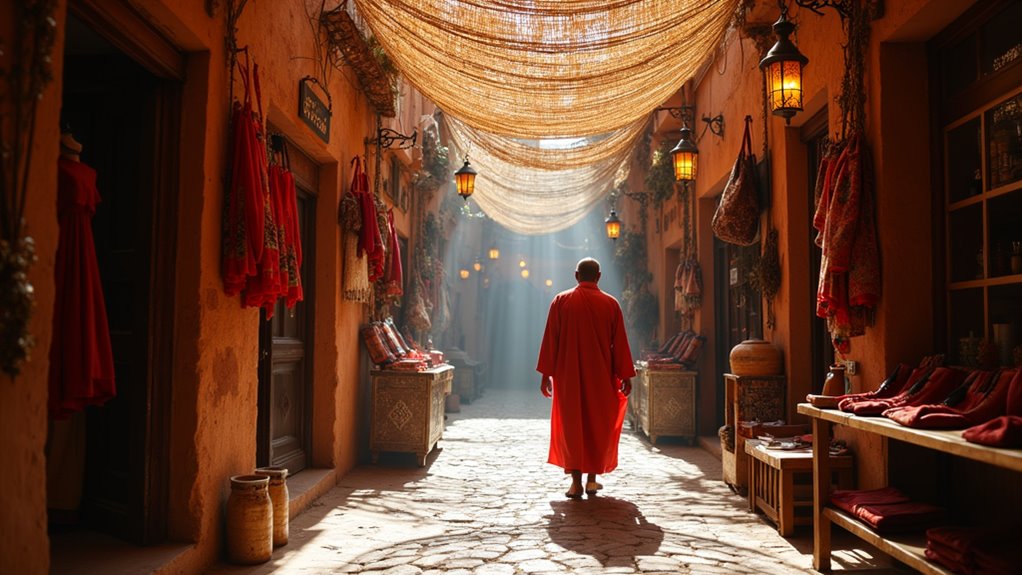
Getting lost in Marrakech’s maze-like souks isn’t just inevitable—it’s part of the authentic experience. However, you can navigate like a local with smart strategies. Use the towering Koutoubia Mosque as your compass—it’s visible from most souk areas.
Download offline map apps like Maps.me before exploring, since mobile signals often drop in narrow alleys.
Stay near Jemaa el-Fnaa’s outer souks where streets are wider and less confusing. Walk the same route between your riad and main squares multiple times to build spatial memory.
Look for permanent landmarks like distinctive arches or shop signs rather than relying on changeable features. Take time to pause for refreshing pomegranate juice from the donkey carts that weave through the bustling pathways.
When asking directions, approach families or women who’ll give honest help. Avoid young men offering personal guidance—they’ll expect payment later.
Climb (Almost) to the Top of Koutoubia Mosque
The Koutoubia Mosque’s towering 253-foot minaret that’s been guiding you through the souks isn’t just a landmark—it’s an architectural masterpiece you can’t actually climb. While travelers can’t access the internal ramps or reach the top platform, you’ll still get incredible close-up views from the surrounding gardens and streets.
Non-Muslims aren’t permitted inside the mosque itself, but you can explore the beautiful courtyard and photograph the intricate red-orange brickwork from outside. The mosque’s impressive dimensions span 80 meters in length and 60 meters in width, making it one of Marrakech’s most substantial religious structures.
For elevated perspectives, head to nearby rooftop cafes or hotel terraces that offer panoramic views of this 12th-century wonder. The minaret’s innovative design influenced towers across North Africa, and its geometric brick patterns—revealed after removing pink plaster in the 1990s—showcase authentic Almohad craftsmanship that’s absolutely worth experiencing up close.
Step Into Palace Life at Bahia Palace
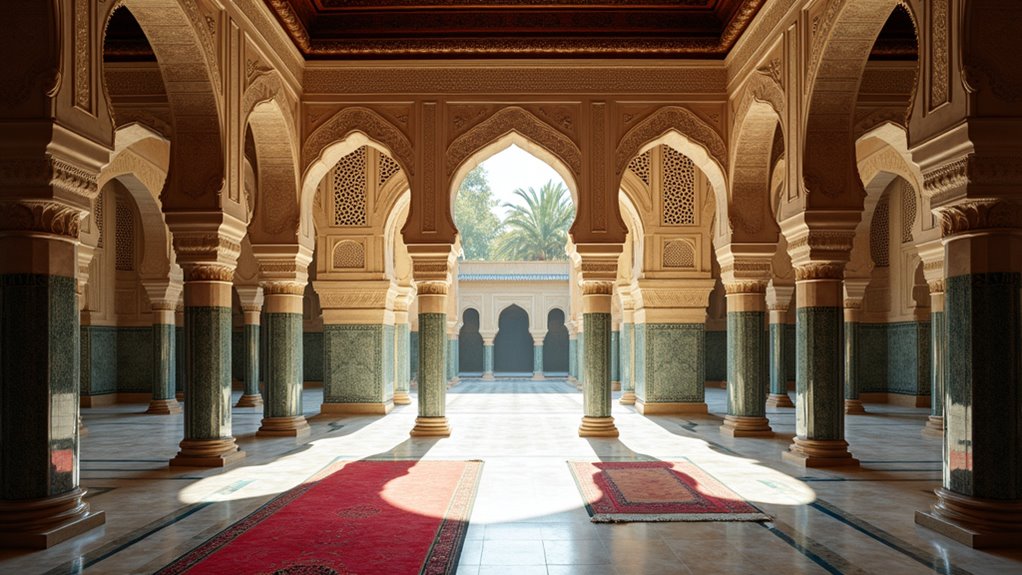
Want to experience how Morocco’s elite once lived? Head to Bahia Palace, just 900 meters from Jemaa el-Fnaa square. This 19th-century masterpiece showcases 150 rooms across 2 hectares, where grand viziers Si Moussa and his son Ba Ahmed once entertained sultans and political figures.
You’ll wander through a labyrinth of courtyards featuring intricate zellij tilework, carved stucco, and painted cedar ceilings crafted by 1,000 skilled artisans. Don’t miss the Grand Courtyard’s marble floors or the Palm Riad’s stunning stained glass—the first in North Africa.
The expansive gardens offer relief from Marrakech’s heat with orange trees, fountains, and shaded walkways.
Open daily and managed by Morocco’s Ministry of Culture, it’s budget-friendly compared to other attractions while delivering authentic Moroccan architectural grandeur. The palace name “Bahia” means “the brilliant” in Arabic, reflecting the beauty that still captivates visitors today.
Discover the Hidden Saadian Tombs
Hidden behind unremarkable walls for over 200 years, the Saadian Tombs weren’t rediscovered until 1917 when French authorities spotted them during an aerial survey. You’ll find this 16th-century royal necropolis in Marrakech’s Kasbah district, where Sultan Ahmad al-Mansur created a stunning fusion of Moorish and European architecture.
Walk through the Chamber of the Twelve Pillars to see Italian Carrara marble columns supporting intricately carved cedar ceilings. The colorful zellij tilework and detailed stucco carvings showcase Morocco’s golden age craftsmanship.
You’ll notice the multicolored tile floors resemble prayer rugs facing Mecca.
Open daily 9 AM to 5 PM, the tombs offer peaceful gardens with orange trees and fountains—a perfect contrast to the medina’s chaos. The site contains two main sections with multiple burial chambers housing members of the Saadian royal family. The intimate setting lets you experience authentic Saadian royal burial chambers.
Wander the Haunting Ruins of Badi Palace
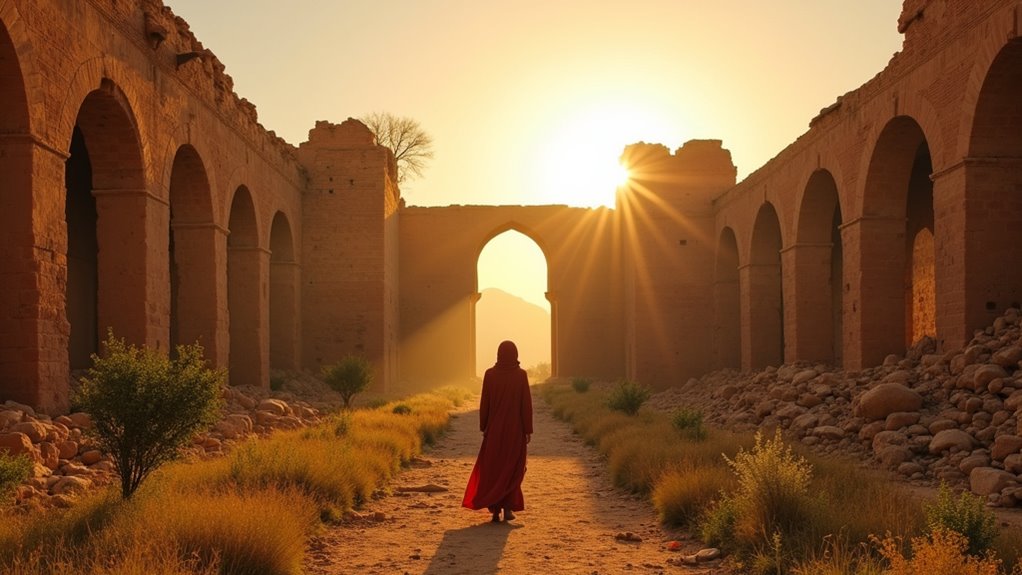
Once known as “El Badi” (The Incomparable), these haunting palace ruins tell the story of Morocco’s most ambitious royal project turned cautionary tale. Built by Sultan Ahmad al-Mansur in the 1580s using Portuguese war reparations, this palace once featured 360 rooms adorned with Italian marble, Sudanese gold, and intricate mosaics.
You’ll explore skeletal remains of four pavilions surrounding a massive rectangular courtyard with a central pool. The palace’s architectural innovation represents a unique blend of traditional Moroccan and European design elements that showcased the artistic achievement of the Saadian Dynasty.
Though Sultan Moulay Ismail stripped away all precious materials in the 1690s to build his new capital in Meknes, the ruins still convey the palace’s former grandeur.
Visit between 9 AM and 5 PM in Marrakech’s kasbah district. The modest entrance fee makes this atmospheric site perfect for budget travelers seeking Morocco’s imperial history.
Study Stunning Islamic Architecture at Medersa Ben Youssef
While Badi Palace shows you the skeletal remains of Morocco’s imperial ambitions, Medersa Ben Youssef reveals the intricate soul of Islamic artistry in stunning detail. This 14th-century madrasa housed 900 students studying everything from theology to mathematics for over 400 years.
You’ll marvel at the central courtyard’s zellige tilework, carved stucco, and Arabic calligraphy adorning every surface. The prayer hall’s muqarnas dome and horseshoe-arched mihrab showcase Morocco’s finest craftsmanship.
Notice how cedarwood doors frame geometric patterns that seem to pulse with life. The modest student rooms surrounding the courtyard once served as humble accommodations for apprentice-scholars seeking knowledge from across the Muslim world.
Entry costs around 50 dirhams—excellent value for experiencing Morocco’s educational heritage. Visit early morning to avoid crowds and photograph the intricate details without rushing. The recent 2022 restoration guarantees you’re seeing these Islamic masterpieces at their absolute finest.
Escape to the Blue Oasis of Jardin Majorelle
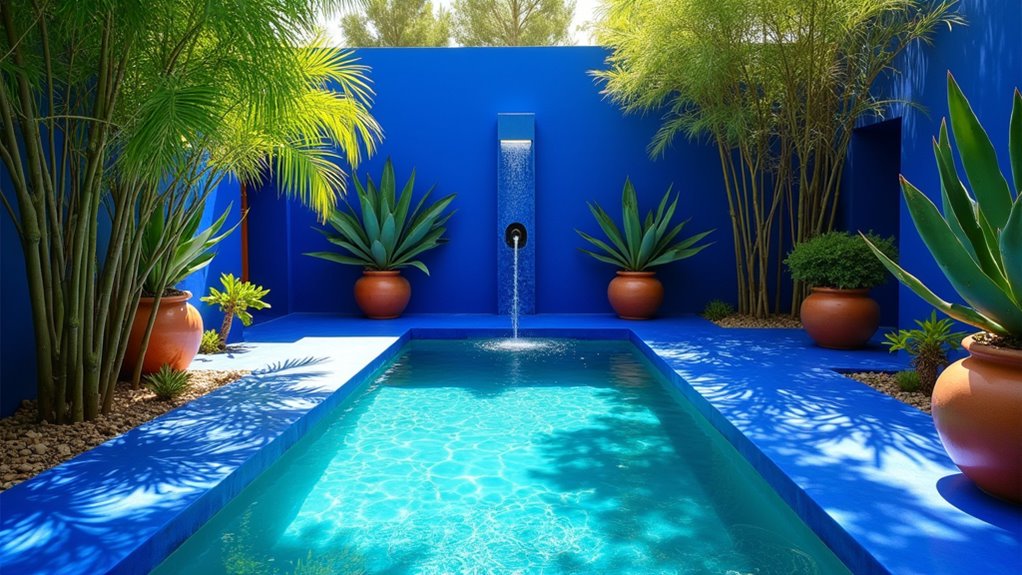
After wandering Marrakech’s dusty medina streets, you’ll find sweet relief in Jardin Majorelle’s famous cobalt blue sanctuary. This 2.5-acre botanical garden showcases over 135 plant species from five continents, all set against Jacques Majorelle’s signature “Majorelle Blue” walls and pots.
You’ll need to book tickets online, especially during peak season, as this spot draws massive crowds of Instagram enthusiasts. The entry fee’s worth it for the tranquil pools, shaded walkways, and exotic cacti collections that offer respite from Marrakech’s heat.
Don’t miss the restored Art Deco villa housing the Berber Museum, where you can explore North African culture. The garden blends Moorish design principles with botanical artistry, creating an oasis that fashion icons Yves Saint Laurent and Pierre Bergé lovingly restored in 1980. Saint Laurent’s ashes scattered in the garden’s rose section create a poignant memorial to the legendary designer.
Take a Day Trip to the Stony Agafay Desert
When you’re craving desert vibes but lack time for the nine-hour Sahara journey, Agafay Desert delivers an authentic rocky landscape just 45 minutes from Marrakech. This stony terrain differs from sandy Sahara dunes but offers stunning High Atlas Mountain views and lunar-like scenery that’s equally mesmerizing.
You’ll need private transport since there’s no public transit—rental cars work if you’re comfortable steering sparse road markings, but guided tours with hotel pickup prove more convenient and often include activities like camel rides or quad biking. Guided tour packages range from $60 to $120 per person and provide a comprehensive, hassle-free experience with meals and activities included.
Visit between October and May when temperatures stay comfortable (59-95°F). Pack sunscreen, hats, and layers for climate changes.
Most day trips last 4-6 hours and cost considerably less than multi-day Sahara expeditions while providing that desert escape you’re seeking.
Venture Into the Atlas Mountains for Berber Villages
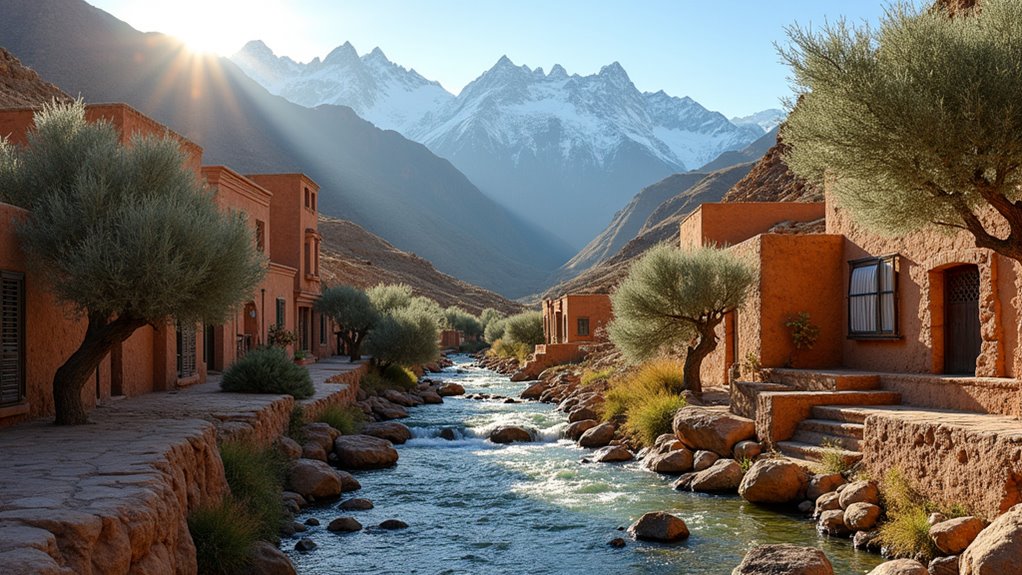
Beyond the desert’s rocky terrain lies another authentic escape from Marrakech’s bustling medina—the traditional Berber villages nestled throughout the Atlas Mountains. You’ll find welcoming communities in valleys like Imlil, Ourika, and Asni, all within a short drive from the city.
Day trips typically include guided hikes to waterfalls, visits to women-run argan oil cooperatives, and traditional meals with local families. You can sip mint tea while learning about customs preserved for thousands of years.
Most tours offer hotel pickup with English-speaking guides and include breakfast and lunch. The hikes cover approximately 4 km round-trip on rustic terrain with manageable elevation gain, making them suitable for most fitness levels.
Pack sturdy footwear and layers—the mountain weather changes quickly. Your purchases and tips directly support these communities, making this both a cultural adventure and meaningful way to give back during your Marrakech visit.
Float Above Morocco in a Hot Air Balloon
While sunrise breaks over Marrakech’s terracotta rooftops, you’ll drift silently above Morocco in a hot air balloon—one of the most magical ways to see the country’s diverse landscapes. These 40-60 minute flights offer stunning panoramic views of the Atlas Mountains, desert terrain, and traditional Berber villages you can’t reach by road.
Prices range from €85-615 per adult, depending on group size and amenities. You’ll save money by choosing shared flights over private ones, and children typically get 50% discounts. Most packages include 4×4 hotel transfers and traditional breakfasts, making the total experience last 3-5 hours.
Book with operators offering free cancellation for flexibility. Reputable companies like Marrakech Dream Ballooning provide multiple flight options to suit different preferences and budgets. With 95-100% of travelers rating these flights four stars or above, it’s consistently Marrakech’s most beloved aerial adventure.
The Sum Up
You’ll find Marrakech rewards curious travelers who embrace its chaos and beauty. Don’t feel pressured to see everything—pick a few experiences that excite you most and savor them fully. Haggle respectfully in the souks, stay hydrated, and always carry small bills for tips and purchases. Most importantly, let yourself get wonderfully lost in this ancient city’s magic. You’re about to create memories that’ll last a lifetime without breaking your budget.