
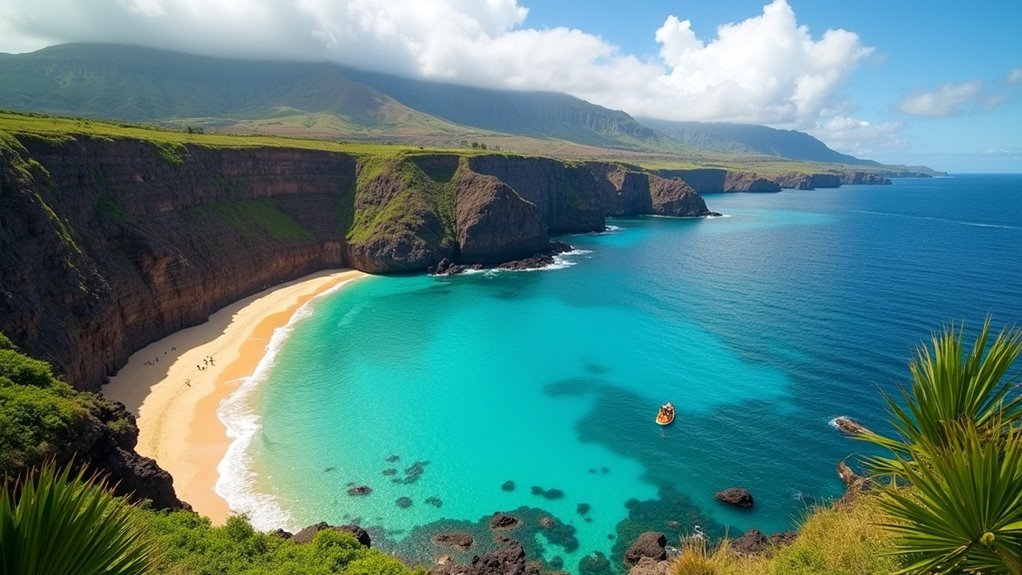
You’ll want to catch sunrise from Haleakalā’s 10,023-foot summit, snorkel Molokini Crater’s pristine waters, and navigate the legendary Road to Hāna with its 600 curves. Don’t miss hiking through bamboo forests to Waimoku Falls, exploring sacred ʻĪao Valley, and experiencing authentic lūʻau culture. Winter brings humpback whale watching opportunities, while year-round you can enjoy world-class beaches from KaʻAnapali to Wailea and exceptional stargazing from Haleakalā’s dark skies. These essential experiences showcase exactly why Maui captivates every traveler.
- Watch Sunrise From Haleakalā Summit at 10,023 Feet
- Drive the Legendary Road to Hāna and Its 600 Curves
- Snorkel the Crystal Waters of Molokini Crater
- Spot Humpback Whales During Winter Migration Season
- Hike Through Bamboo Forest on the Pipiwai Trail to Waimoku Falls
- Explore Black Sand Beaches and Lava Tubes at Waiʻānapanapa State Park
- Swim With Sea Turtles at Honolua Bay and Kapalua Bay
- Walk Among Ancient Hawaiian History at ʻĪao Valley State Monument
- Experience Authentic Polynesian Culture at a Traditional Lūʻau
- Relax on World-Class Beaches From KaʻAnapali to Wailea
- Stargaze From Haleakalā’S Dark Sky Paradise
- The Sum Up
Watch Sunrise From Haleakalā Summit at 10,023 Feet
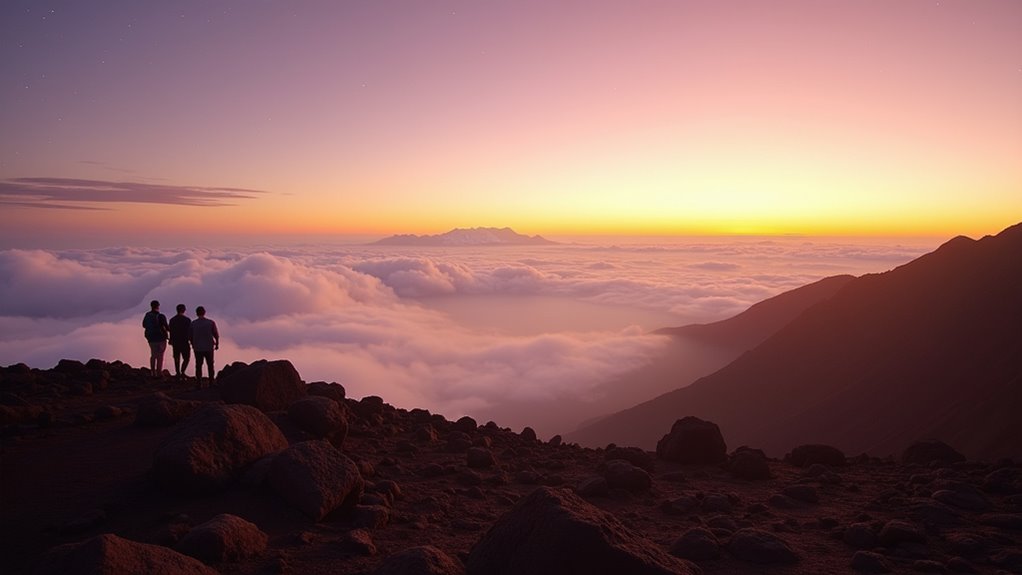
Why wake up at 3 a.m. and drive through pitch-black mountain roads to stand on a windswept volcanic summit? Because watching sunrise from Haleakalā’s 10,023-foot peak delivers one of Hawaii’s most spectacular experiences.
You’ll stand above cloud layers as intense reds and oranges paint the sky, with panoramic views stretching to neighboring islands on clear mornings.
Book your sunrise reservation 60 days ahead through Recreation.gov—it’s required between 3:00-7:00 a.m. and costs extra beyond park entrance fees. Drive time runs 1-1.5 hours from most accommodations.
Arrive 60-90 minutes before sunrise to secure parking and adjust to altitude. In December, sunrise occurs around 6:45 a.m. local time, giving you nearly 11 hours of daylight to explore the park afterward.
Pack heavy layers, gloves, and hats—summit temperatures hover near freezing with brutal wind chill. The cold’s worth it for this unforgettable experience.
Drive the Legendary Road to Hāna and Its 600 Curves
After soaking in Haleakalā’s sunrise spectacle, you’ll want to tackle Maui’s other legendary adventure: the winding Road to Hāna. This 52-mile coastal journey features 600+ curves and 59 one-lane bridges through dense rainforest and dramatic cliff views. Don’t rush—the 25 mph speed limit means you’ll need 2-4 hours each way.
Start early and drive only in daylight, as there’s no street lighting and wet pavement from waterfall spray makes conditions treacherous after dark. Pull over only in designated spots to avoid blocking traffic on narrow sections.
Budget time for stops at roadside waterfalls and continue past Hāna town to the Pools of ‘Ohe’o for cascading waterfall-fed swimming holes. Pack snacks and water since dining options are limited along this historic 16th-century route. Consider joining a guided tour for added safety and local insights about this challenging but rewarding drive.
Snorkel the Crystal Waters of Molokini Crater
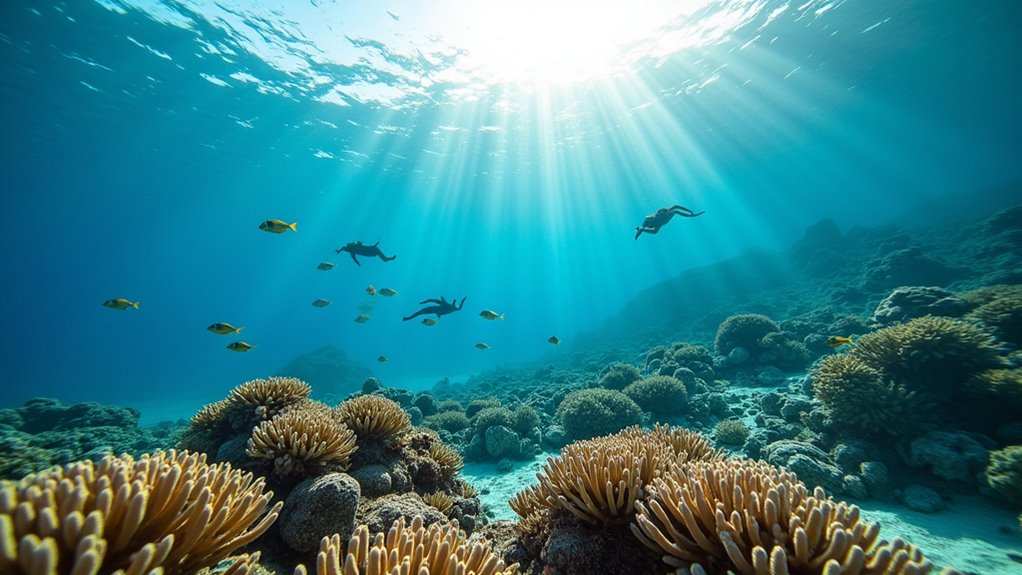
Just three miles off Maui’s south shore, the crescent-shaped Molokini Crater offers some of Hawaii’s clearest snorkeling waters—with visibility often reaching 150 feet on good days. This 230,000-year-old volcanic crater creates a naturally protected basin that’s perfect for beginners and experienced snorkelers alike.
You’ll need to book a boat tour from Ma’alaea or Makena harbors since there’s no other way to reach the crater. Morning trips offer the calmest conditions and best visibility.
The shallow inner reef ranges from 10-30 feet deep, teeming with over 200 fish species including colorful butterflyfish, parrotfish, and surgeonfish. You might spot Hawaiian green sea turtles and harmless reef sharks too. As Hawaii’s only island marine sanctuary, Molokini has been carefully protected since 1977 to preserve its exceptional underwater ecosystem.
Most tour packages include gear and flotation devices, making this world-class snorkeling accessible year-round.
Spot Humpback Whales During Winter Migration Season
When December arrives, Maui transforms into one of the world’s premier whale-watching destinations as thousands of North Pacific humpback whales complete their 3,000-mile journey from Alaska to breed and give birth in Hawaii’s warm waters.
You’ll have the best viewing opportunities from January through March when these magnificent creatures perform spectacular breaches, tail slaps, and spyhops in the Maui Nui Basin.
For budget-friendly whale watching, position yourself along west or south Maui’s coastline near Lahaina, Kīhei, or Wailea during peak season when the waters resemble “whale soup.”
Morning hours offer the calmest conditions and clearest visibility. Remember to maintain the required 100-yard distance from whales.
Competition pods of males vying for females create the most dramatic surface displays you’ll witness. Pregnant females typically give birth during February and March, adding newborn calves to the spectacular viewing experience.
Hike Through Bamboo Forest on the Pipiwai Trail to Waimoku Falls
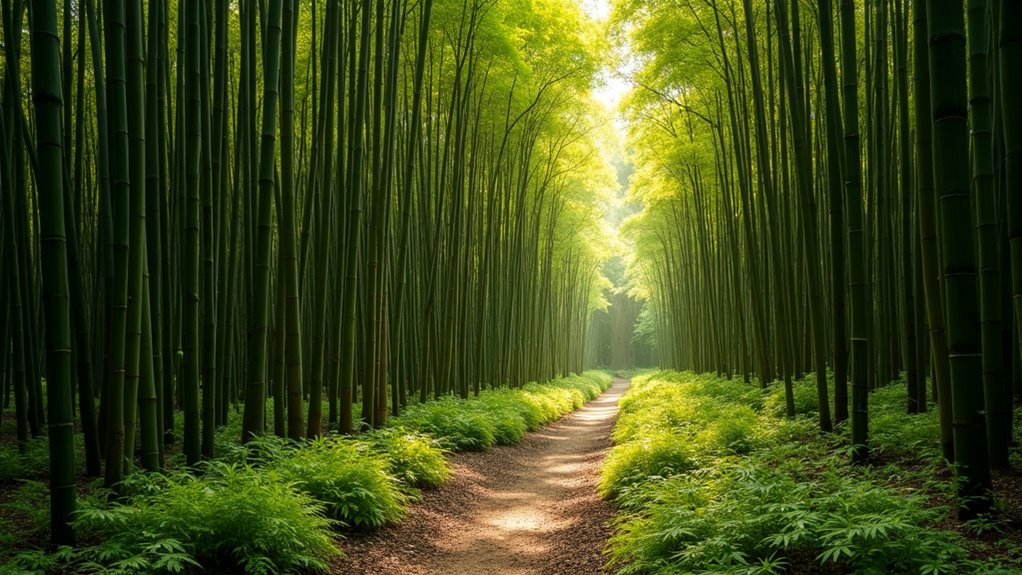
While most visitors rush through Haleakalā’s Kipahulu District after their lengthy Road to Hana journey, you’ll discover one of Maui’s most rewarding hikes by tackling the 4-mile Pipiwai Trail to Waimoku Falls. Starting near the visitor center, you’ll face the steepest climb in the first half-mile before reaching Makahiku Falls overlook and a massive banyan tree.
The trail’s highlight emerges around mile one—towering bamboo forests with elevated boardwalks that creak musically in the wind. Your reward awaits at trail’s end: 400-foot Waimoku Falls cascading down black lava cliffs.
Budget 2-4 hours and pack sturdy shoes since conditions turn slippery after rain. Arrive before 10 am to secure parking, as the limited lot capacity often fills quickly during peak times. The $30 park entrance fee covers this unforgettable rainforest experience.
Explore Black Sand Beaches and Lava Tubes at Waiʻānapanapa State Park
Though most Road to Hana travelers snap quick photos and move on, you’ll find Waiʻānapanapa State Park deserves a longer stop for its dramatic black sand beach and fascinating lava tubes. Book your timed-entry reservation in advance—it’s required for parking and costs less than missing this geological wonder entirely.
Paʻiloa Beach’s true black sand formed when Haleakalā’s basaltic lava shattered in ocean water, creating a striking contrast against turquoise waves. You can explore the shoreline lava tube at low tide, but wear sturdy shoes since sharp volcanic rock dominates the terrain.
Swimming’s only safe during calm conditions due to strong currents along this exposed coast. The short walk from parking includes viewpoints of sea stacks, blowholes, and ancient heiau, making it worth every minute. Don’t miss the park’s Native Hala Forest, which contains Hawaii’s largest wild pandanus grove surrounded by coconut and breadfruit trees.
Swim With Sea Turtles at Honolua Bay and Kapalua Bay
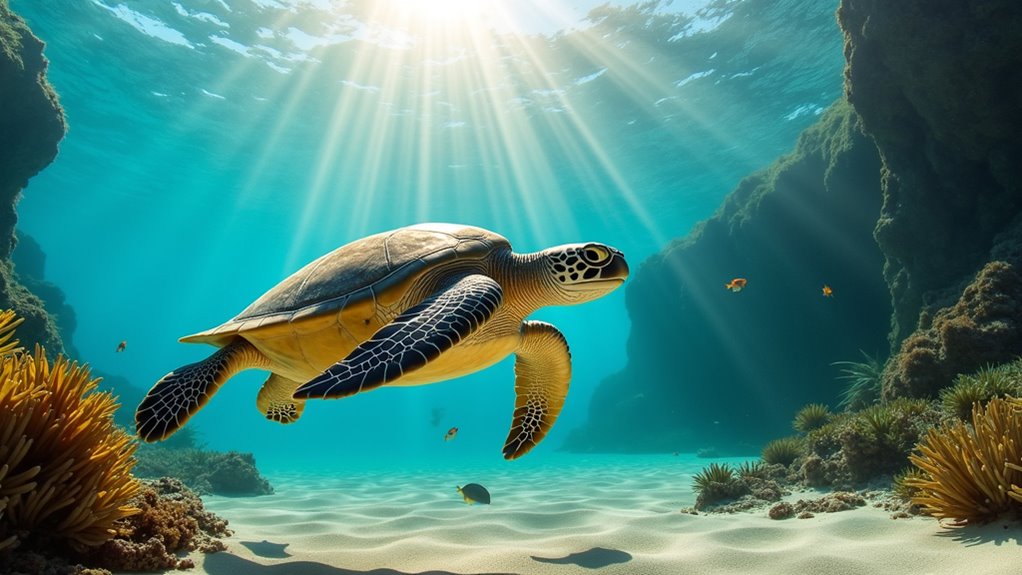
Where else can you swim alongside ancient Hawaiian green sea turtles without paying for an expensive snorkel tour? Honolua Bay and Kapalua Bay on Maui’s northwest coast offer free encounters with honu year-round. You’ll find these gentle creatures feeding on algae, resting on reefs, or surfacing to breathe in both locations.
Visit early morning for calm conditions and better visibility. Summer months provide the clearest water, while winter brings larger surf that may limit access.
Kapalua Bay’s protected waters work best for beginners, while Honolua Bay requires a short hike from the parking area.
Remember: maintain 10 feet distance from turtles—touching or harassing them carries hefty fines. These magnificent creatures have existed for over 150 million years, making every encounter a glimpse into ancient history. Don’t stand on coral reefs, and never block turtles’ path to shore. Bring your own snorkel gear to keep costs down.
Walk Among Ancient Hawaiian History at ʻĪao Valley State Monument
After experiencing Maui’s underwater wonders, head inland to ʻĪao Valley State Monument where you’ll walk through 500 years of Hawaiian royal history for just the cost of parking.
This sacred valley served as a burial ground for Maui royalty since the 15th century and witnessed the pivotal 1790 Battle of Kepaniwai, where Kamehameha I defeated Maui forces in his quest to unify Hawaii.
You’ll follow a paved 0.6-mile loop through lush rainforest to viewing platforms overlooking the iconic ʻĪao Needle—a 1,200-foot vegetation-covered lava spire rising from the valley floor. Along the way, explore the Ethnobotanical garden that displays plants used by early Hawaiians for medicinal and cultural purposes.
The cool, misty microclimate creates year-round greenery against dramatic basalt cliffs. Remember to stay on designated paths and maintain respectful silence in this culturally significant site where ancient chiefs rest in hidden cliff burials.
Experience Authentic Polynesian Culture at a Traditional Lūʻau
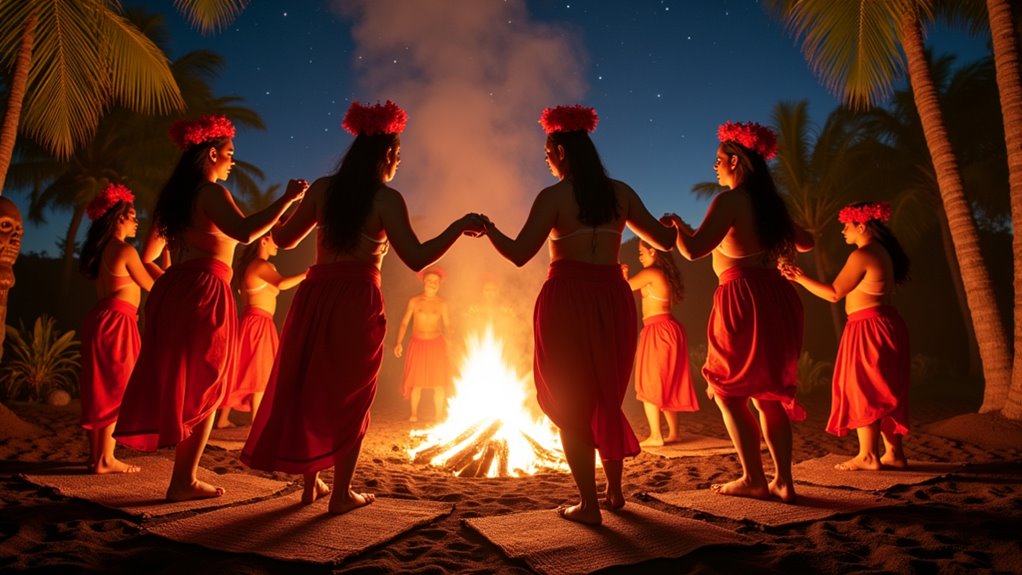
While Maui offers countless ways to connect with Hawaiian culture, attending an authentic lūʻau provides the most immersive experience of Polynesian traditions through food, music, and storytelling. This experience typically costs around $100-150 per person at quality venues.
You’ll witness the imu ceremony where kālua pig emerges from an underground oven, taste traditional foods like poi and laulau, and watch hula performances that preserve ancient moʻolelo (stories). The modern lūʻau tradition traces back to 1819 when the first recorded feast celebrated the end of social dining restrictions.
Look for smaller, community-oriented events that prioritize cultural education over spectacle. The evening typically begins with a pū (conch shell) call and lei greeting, followed by demonstrations of both hula kahiko (ancient style) and modern Polynesian dances.
Choose venues consulting with kumu hula or cultural practitioners for authentic programming.
Relax on World-Class Beaches From KaʻAnapali to Wailea
Beyond culture, Maui’s beaches deliver the quintessential tropical paradise experience that draws millions of visitors annually. Ka’anapali Beach stretches three miles of white sand along Maui’s west coast, consistently ranking among America’s best beaches. You’ll find lifeguards, restrooms, and public access points between resort properties, though parking costs extra.
Black Rock creates a protected cove perfect for beginner snorkeling, where you’ll spot green sea turtles and colorful reef fish.
Wailea Beach on the south coast offers calmer swimming conditions and connects to other beaches via a paved coastal path. Both areas provide full-service resort amenities while maintaining public access by law.
Winter visits reward you with humpback whale sightings offshore, and evenings deliver spectacular unobstructed sunsets over the Pacific. Don’t miss the daily cliff diving ceremony at Black Rock, where torches are lit at sunset to reenact the legendary dives of King Kahekili.
Stargaze From Haleakalā’S Dark Sky Paradise
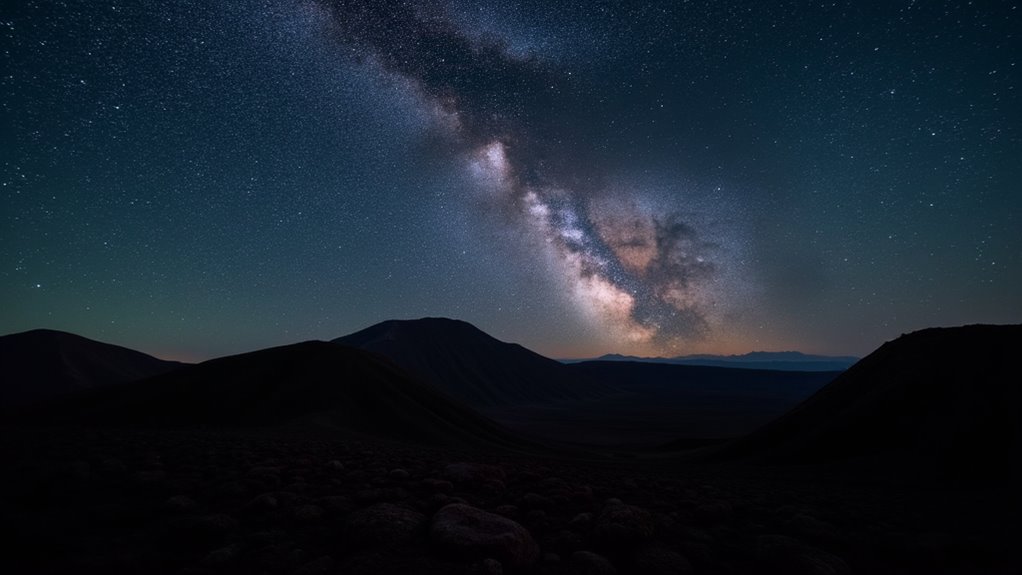
Where else can you witness the Milky Way’s full glory without fighting crowds or spending hundreds on tours? Haleakalā’s 10,023-foot summit delivers world-class stargazing at just $30 per vehicle. Unlike sunrise viewing, nighttime visits require no reservations—you’ll have this dark sky paradise mostly to yourself.
Time your visit for winter’s crisp, clear nights around the new moon. Arrive for sunset (5:30 p.m. winter, 7:00 p.m. summer), then wait an hour for ideal darkness. You’ll see planets, constellations, and deep-sky objects invisible at sea level. Atmospheric conditions at this elevation provide exceptional sky clarity for viewing celestial objects.
Pack warm layers—temperatures drop to the 40s or below with brutal wind chill. Check the National Weather Service summit forecast beforehand.
Plan 4-6 hours total for sunset and stargazing. This high-elevation experience beats any expensive tour.
The Sum Up
You’ve got endless adventures waiting on Maui, from free sunrise watching to budget-friendly snorkeling. Don’t try cramming everything into one trip—you’ll burn out and miss the island’s true magic. Pick three or four experiences that speak to you, allow extra time for spontaneous discoveries, and remember that some of Maui’s best moments can’t be planned. Pack reef-safe sunscreen, bring a reusable water bottle, and prepare for memories that’ll last a lifetime.