

You’ll want to prioritize Christ the Redeemer statue and Sugarloaf Mountain’s sunset cable car ride for iconic views, then learn about Copacabana and Ipanema’s beach culture. Don’t miss the daily sunset ritual at Arpoador Rock, climbing Selarón’s colorful mosaic steps, and exploring Tijuca’s urban rainforest. Add the futuristic Museum of Tomorrow, legendary Maracanã Stadium, and authentic samba school rehearsals for cultural depth. These essential experiences showcase why Rio captivates millions of visitors who discover there’s much more to uncover.
- Stand Before the Iconic Christ the Redeemer Statue
- Take the Cable Car Up Sugarloaf Mountain at Sunset
- Experience the Beach Culture at Copacabana and Ipanema
- Watch the Sunset From Arpoador Rock
- Climb the Colorful Selarón Steps
- Ride the Yellow Tram Through Santa Teresa
- Party Under the Lapa Arches
- Wander Through Parque Lage’s Romantic Ruins
- Stroll the Royal Palm Avenues at Jardim Botânico
- Explore Tijuca National Park’s Urban Rainforest
- Discover the Future at Museum of Tomorrow
- Tour the Legendary Maracanã Stadium
- Join a Samba School Rehearsal
- The Sum Up
Stand Before the Iconic Christ the Redeemer Statue

When you ascend Corcovado Mountain to stand before Christ the Redeemer, you’ll encounter one of the world’s most recognizable monuments—a 98-foot Art Deco masterpiece that’s dominated Rio’s skyline since 1931. The statue’s 92-foot arm span creates an iconic silhouette of welcome and protection over the city below.
You’ll reach the 2,300-foot summit via the Corcovado Rack Railway or official shuttle vans, with escalators and elevators easing the final approach. From the viewing platforms, you’ll enjoy 360-degree vistas spanning Copacabana, Ipanema, and Lagoa Rodrigo de Freitas.
The reinforced concrete structure, clad in weather-resistant soapstone tiles, weighs 635 metric tons and required five years to complete through private Catholic donations. This remarkable monument stands as the fourth largest statue of Jesus Christ anywhere in the world.
Take the Cable Car Up Sugarloaf Mountain at Sunset
As one of Rio’s most thrilling experiences, riding the cable car up Sugarloaf Mountain delivers unparalleled panoramic views that become absolutely spectacular at sunset. The two-stage journey takes you from Praia Vermelha to Morro da Urca, then up to the 396-meter summit.
Modern glass-paneled cabins provide 360-degree visibility as you ascend at speeds up to 36 km/h. You’ll witness breathtaking vistas of Guanabara Bay, Copacabana, Ipanema, and the illuminated city skyline. For an enhanced experience, consider purchasing VIP tickets that provide priority boarding and exclusive lounge access with complimentary refreshments.
Tickets cost around $26, with departures every 20 minutes until 8-9 pm. Arrive early during peak season, as wait times can extend beyond 30 minutes.
The first stop at Morro da Urca offers restaurants and bars, making it perfect for pre-sunset refreshments before continuing to the summit.
Experience the Beach Culture at Copacabana and Ipanema

After taking in Rio’s stunning vistas from above, you’ll want to learn about the vibrant beach culture that defines the city’s soul at Copacabana and Ipanema. Each lifeguard posto creates distinct micro-neighborhoods with unique crowds.
Head to Ipanema’s Posto 9 for the “see and be seen” experience among fashionable locals, or Posto 10 for bohemian artists and intellectuals.
Try frescobol, the sacred paddle ball game locals treat as meditation, or join pickup volleyball matches. Mobile vendors will keep you supplied with chilled coconuts, caipirinhas, and snacks without leaving the sand.
Pack light beachwear and minimal valuables following local etiquette. The beach serves as Rio’s great social leveler, where favela residents and luxury apartment dwellers share the same golden sand and surf. Be aware that recent new regulations have restricted some commercial activities on beaches like Copacabana, requiring vendors to obtain official permits for food and drink sales.
Watch the Sunset From Arpoador Rock
While the beaches offer incredible experiences throughout the day, you’ll discover Rio’s most magical moment at Pedra do Arpoador, the rocky peninsula between Copacabana and Ipanema.
Here, hundreds gather daily to witness one of the city’s most iconic sunsets. Arrive around 5-6 PM to secure a good spot before crowds peak. You’ll watch the sun descend directly over Dois Irmãos hill, creating classic postcard views while the crowd forms a spontaneous amphitheater on the rocks.
Join the local tradition of applauding as the sun disappears below the horizon. Wear non-slip shoes since wet rocks become extremely slippery.
Street vendors sell drinks and snacks, creating a casual, social atmosphere. The golden hour lighting transforms the sky into vivid orange-pink tones, making this daily ritual an unforgettable Rio experience. Consider booking a guided tour to enhance your visit with local insights and cultural context that will deepen your appreciation of this iconic location.
Climb the Colorful Selarón Steps
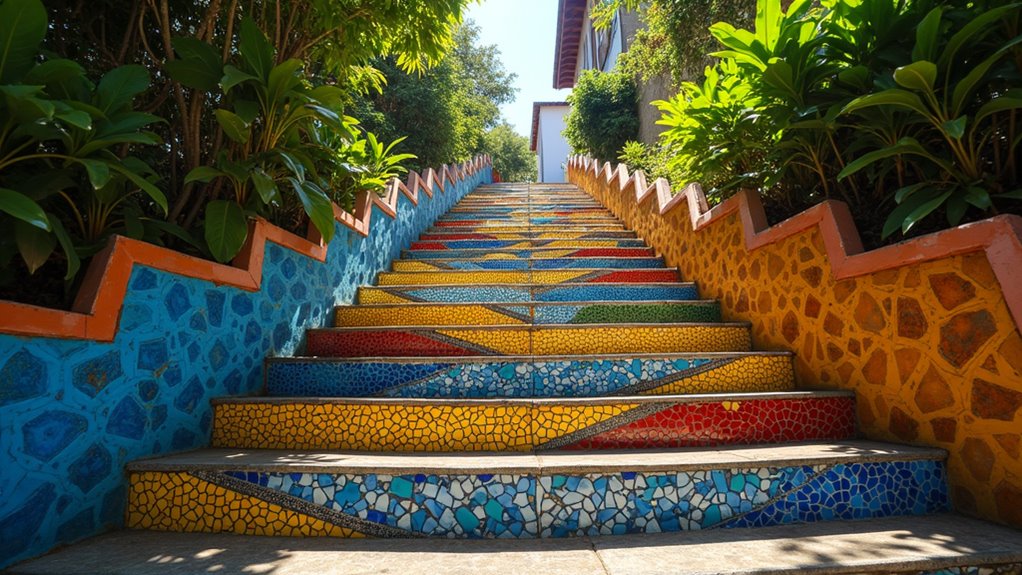
When you venture into the bohemian Lapa district, you’ll discover one of Rio’s most extraordinary artistic treasures: the Escadaria Selarón, a dazzling mosaic staircase that transforms a simple pedestrian route into an open-air gallery.
Chilean artist Jorge Selarón spent over 20 years creating this tribute to Brazil, covering 215 steps with more than 2,000 ceramic tiles sourced from 60+ countries. You’ll climb between Joaquim Silva and Pinto Martins streets, examining intricate mosaics featuring Brazilian flag colors and Selarón’s signature pregnant African woman motif.
Each step offers unique patterns and imagery, making it perfect for photography. Visit during daylight hours for safety and ideal lighting.
This free cultural heritage site connects Lapa to Santa Teresa while providing stunning artistic inspiration. The staircase has gained international recognition through features in prestigious magazines such as National Geographic and Time.
Ride the Yellow Tram Through Santa Teresa
As you ascend from the colorful Selarón Steps into Santa Teresa, you’ll discover Rio’s most charming mode of transport: the iconic yellow tram that’s been clanging through these cobblestone streets since 1877. This historic “bonde” operates as South America’s last remaining true tramway, featuring open-sided cars with cross-bench seating and traditional trolley-pole technology.
Purchase your ticket at Estação Carioca (includes return trip) and board for the 15-20 minute journey to hilltop Santa Teresa. The route crosses the spectacular Arcos da Lapa viaduct, offering elevated views of downtown and Guanabara Bay.
Stop at Largo dos Guimarães to explore the bohemian neighborhood’s colonial mansions, street art, and cafés, or continue to Parque das Ruínas for panoramic city views. At the remarkably affordable flat fare of R$0.60 (approximately US$0.25), this nostalgic journey offers exceptional value for experiencing Rio’s historic transportation heritage.
Party Under the Lapa Arches
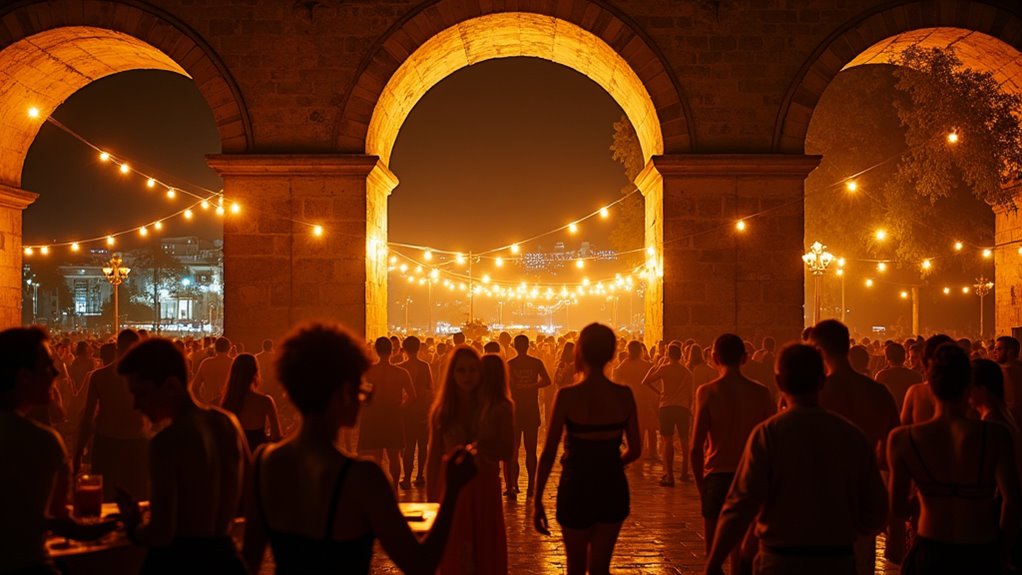
After exploring Santa Teresa by tram, descend back to street level where Rio’s most legendary nightlife district awaits beneath the very same arches you just crossed.
Lapa transforms into an open-air street party after dark, with samba drummers and sound systems echoing under the colonial aqueduct. You’ll find caipirinha stalls and street food vendors serving crowds that dance until dawn, especially Friday through Sunday when streets close to traffic. The diverse musical scene features everything from traditional samba and choro to modern electronic and rock.
Don’t miss iconic venues like Rio Scenarium for live samba or Carioca da Gema for top-tier performances. Cover fees are modest, with drinks starting around R$10.
However, stay alert for petty crime—carry minimal cash and valuables. Use rideshare apps for safe late-night transport, and arrive after midnight for peak party intensity.
Wander Through Parque Lage’s Romantic Ruins
Though only minutes from Ipanema’s bustling beaches, Parque Lage feels like a forgotten corner of European aristocracy reclaimed by Rio’s subtropical wilderness. You’ll discover a 1920s Roman palazzo built by industrialist Henrique Lage for opera singer Gabriella Besanzoni, now housing an art school and café.
The central courtyard’s pool and arcades frame stunning views of forested Corcovado.
Explore beyond the mansion’s Instagram-famous spots to find weathered artificial grottoes, a castle-like tower, and crumbling aquarium structure. Stone paths wind past sugar mill ruins dating to the 16th century. For the truly adventurous, the Corcovado trail begins behind the grotto area, offering a challenging 2 to 2.5-hour hike directly to Christ the Redeemer.
Don’t miss the somber Slaves’ Laundry in the northeastern corner—a vaulted chamber where enslaved workers once labored. This atmospheric blend of faded grandeur and darker history creates an unforgettable romantic ruins experience.
Stroll the Royal Palm Avenues at Jardim Botânico
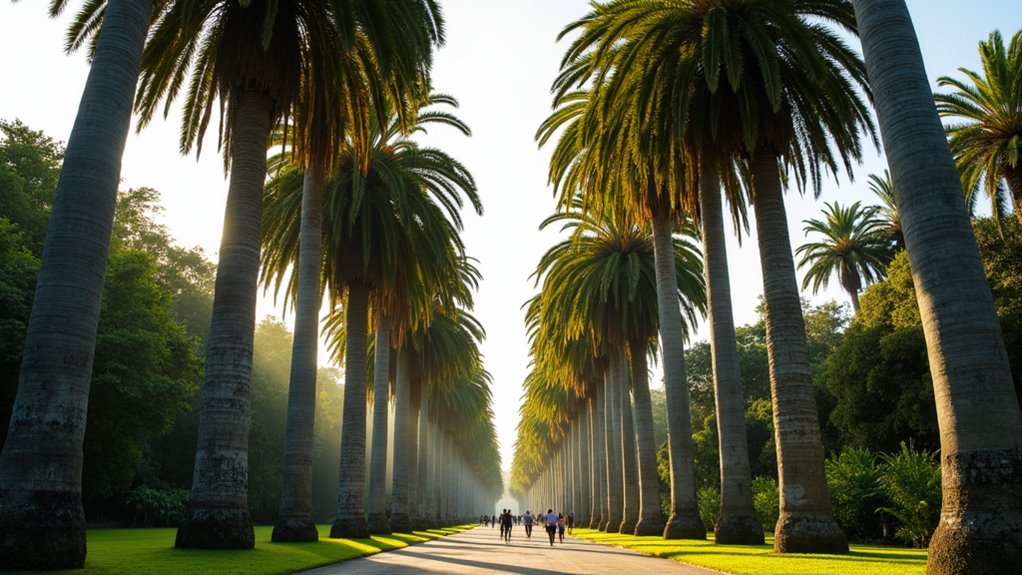
When you enter Rio’s Jardim Botânico, the magnificent Royal Palm Avenue immediately commands your attention with its perfectly aligned corridor of 134 towering imperial palms stretching 750 meters toward the distant mountains.
These 19th-century *Roystonea oleracea* specimens reach heights of 100-130 feet, creating dramatic vertical perspectives that photographers can’t resist.
You’ll find this UNESCO biosphere reserve location offers the city’s most iconic botanical vista, where royal palms descended from a single “Palma Mater” form striking vanishing-point compositions.
Visit during early morning or late afternoon for ideal lighting that accentuates the textured trunks against mountain backdrops.
This historic axis, planted during Brazil’s imperial era, remains the garden’s crown jewel and Rio’s most photographed natural landmark. The garden spans over 350 acres and hosts more than 6,000 species of tropical and subtropical plants beyond these famous palms.
Explore Tijuca National Park’s Urban Rainforest
Just minutes from the manicured paths of Jardim Botânico, Tijuca National Park envelops you in one of the world’s largest urban rainforests, where 4,000 hectares of restored Atlantic Forest create a remarkable green sanctuary within Rio’s metropolitan boundaries.
You’ll discover this isn’t pristine wilderness but a conservation success story—19th-century reforestation transformed former coffee plantations into thriving secondary forest. Emperor Dom Pedro II initiated these transformative reforestation efforts in the 1860s, planting thousands of trees to restore the degraded landscape.
The park’s mountainous terrain offers diverse experiences across multiple sectors. Trek to Pico da Tijuca for panoramic city views, or explore trails leading to waterfalls and scenic overlooks.
You’ll encounter capuchin monkeys, sloths, and over 200 bird species while hiking beneath dense canopy. With 3.3 million annual visitors, this Atlantic Forest biosphere reserve serves as Rio’s essential “green lung.”
Discover the Future at Museum of Tomorrow

While traditional museums display artifacts from the past, the Museum of Tomorrow on Pier Mauá challenges you to contemplate humanity’s next fifty years through an entirely digital, data-driven experience. Santiago Calatrava’s striking white structure features cantilevered wings that create a dynamic silhouette over Guanabara Bay.
You’ll explore five themed areas—Cosmos, Earth, Anthropocene, Tomorrows, and Us—through immersive audiovisual environments addressing climate change, population growth, and technological advances. The 200-meter-long exhibition nave offers panoramic bay views while you navigate interactive installations available in Portuguese, English, and Spanish.
Start at the ground-level plaza, then ascend dedicated ramps into the main gallery. The museum’s focus on sustainability and coexistence encourages reflection on environmental responsibility and social equity shaping our collective future. The museum also offers specialized educational programs including workshops and guided tours designed for students, teachers, and the general public.
Tour the Legendary Maracanã Stadium
From contemplating Rio’s future, you can experience the city’s most storied past at Maracanã Stadium, where Brazilian football history lives in every corner of this legendary arena. Built for the 1950 World Cup, this architectural marvel once held 200,000 spectators and witnessed Pelé’s 1,000th goal in 1969.
You’ll explore the players’ tunnel, changing rooms, and pitch-side areas during guided tours that highlight iconic moments like the devastating 1950 “Maracanazo” defeat to Uruguay.
The on-site museum displays historic jerseys, trophies, and multimedia exhibits celebrating football legends like Pelé and Zico. The stadium served as a sacred space hosting not only major football matches but also concerts, masses, and cultural events throughout its history.
Located in Rio’s North Zone with convenient metro access, you can combine your tour with live match attendance to experience the passionate fan culture of Flamengo, Fluminense, Botafogo, or Vasco da Gama.
Join a Samba School Rehearsal

Beyond the stadium’s historic walls, you can learn about Rio’s most authentic cultural experience by joining a samba school rehearsal, where the heartbeat of Carnival comes alive months before the world-famous spectacle hits the Sambadrome.
From October through January, iconic schools like Mangueira and Salgueiro open their quadras for electrifying rehearsals that run from 7 PM past midnight.
You’ll witness community members perfecting choreography, passistas showcasing incredible samba skills, and the thunderous bateria driving infectious rhythms.
Technical rehearsals at the Sambadrome offer free admission to full-scale parade run-throughs, while neighborhood quadra sessions charge modest entrance fees for intimate club-like atmospheres. These rehearsals transform into vibrant street parties with live samba music that continue well into the night.
Since most schools operate in suburban neighborhoods, book organized tours that include hotel pickup and transportation for hassle-free access to this unforgettable culture.
The Sum Up
You’ve got an incredible adventure ahead with these nine Rio experiences. Don’t try cramming everything into one trip—you’ll burn out quickly. Instead, pick three or four activities that genuinely excite you and explore them thoroughly. Book your Christ the Redeemer tickets online to skip lines, carry cash for street vendors, and stay hydrated in Rio’s heat. Most importantly, embrace the city’s relaxed pace and let yourself get swept up in its infectious energy.