
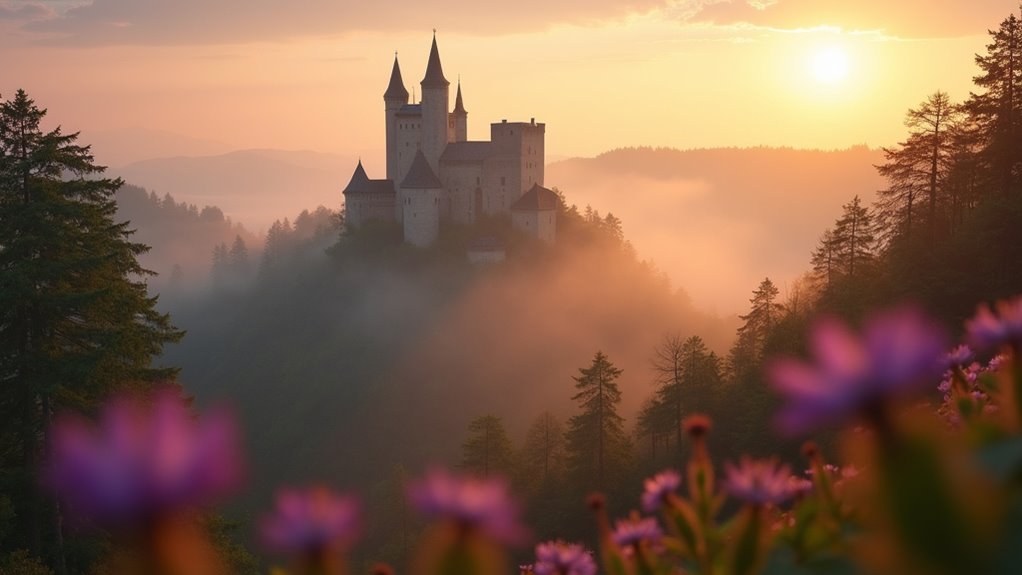
You’ve probably heard Romania mentioned in passing—maybe in connection with Dracula or Eastern European folklore. But here’s what most travelers don’t realize: this country harbors some of Europe’s most dramatic landscapes and best-preserved medieval towns. From underground salt mines that’ll make you question reality to mountain highways that rival anything in the Alps, Romania’s hiding experiences that’ll completely reframe how you think about this corner of Europe.
- Explore Bran Castle and Separate Dracula Fact From Fiction
- Drive the Transfăgărășan Highway Through the Carpathian Mountains
- Descend Into Salina Turda’s Underground Wonderland
- Wander Sighișoara’s Medieval Streets Where Vlad the Impaler Was Born
- Experience Village Life in UNESCO-Listed Viscri
- Navigate the Danube Delta by Boat
- Marvel at Peleș Castle’s Neo-Renaissance Splendor in Sinaia
- Discover Bucharest Beyond the Palace of the Parliament
- Venture Into ScăRișOara Cave to See Europe’s Largest Underground Glacier
- Climb 1,480 Steps to Poenari Citadel’s Dramatic Ruins
- Explore Brașov’s Saxon Heritage and Hike Mount Tâmpa
- Unwind Along the Black Sea Coast in Constanța and Mamaia
- The Sum Up
Explore Bran Castle and Separate Dracula Fact From Fiction
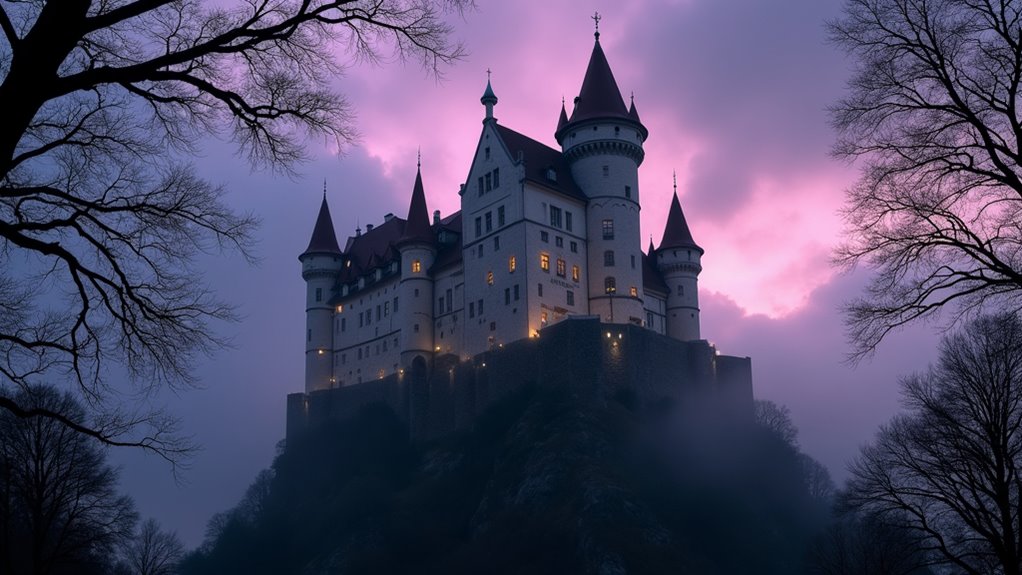
When you approach the imposing towers of Bran Castle perched dramatically on a rocky cliff in Transylvania, you’re stepping into centuries of fascinating history that has little to do with vampires.
Built in 1388 by Saxons as a military fortress and customs post, this strategic stronghold guarded the crucial mountain pass between Transylvania and Wallachia.
While Vlad the Impaler passed through the area during his 15th-century campaigns, there’s no evidence he ever lived here.
Bram Stoker never visited either—the Dracula connection is pure marketing genius.
You’ll discover the castle’s real story involves Queen Marie’s elegant restoration in the 1920s and its current role as Romania’s first private museum, showcasing authentic medieval architecture and Romanian cultural heritage. Inside, you can explore 57 rooms connected by narrow winding stairways, some featuring secret passages that were originally used for defense and escape during medieval times.
Drive the Transfăgărășan Highway Through the Carpathian Mountains
From exploring medieval castles, you’ll want to experience Romania’s most spectacular mountain adventure by conquering the legendary Transfăgărășan Highway. This 152-kilometer route cuts through the Carpathian Mountains, connecting Wallachia and Transylvania via 833 bridges, 28 viaducts, and five tunnels.
You’ll navigate hairpin turns and switchbacks while climbing to 2,042 meters near Bâlea Lake. The road’s open only June through November due to harsh winters, so plan accordingly.
Drive slowly—around 40 km/h—since there aren’t protective barriers on many curves.
Don’t miss the glacial Bâlea Lake at the summit and the impressive Bâlea Waterfall. The cable car offers breathtaking mountain views if you need a break from driving.
Built between 1970-1974, this engineering marvel delivers some of Europe’s most stunning alpine scenery. Construction required three million tons of rock to be blasted using over 6,500 tons of TNT.
Descend Into Salina Turda’s Underground Wonderland
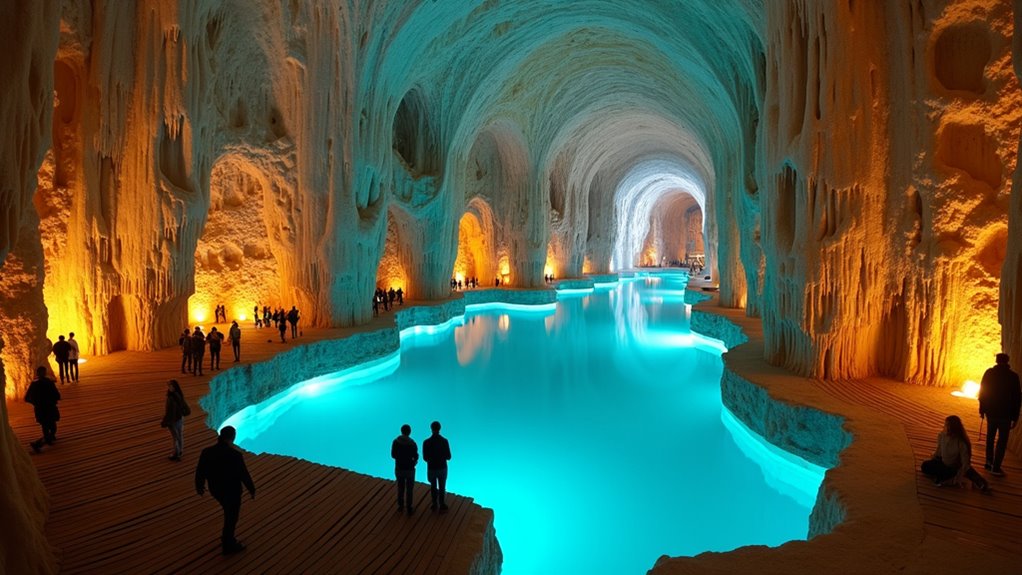
After conquering Romania’s mountain peaks, you’ll discover an entirely different adventure 120 meters beneath the earth’s surface at Salina Turda. This medieval salt mine, operating since 1075, transformed from industrial site to Romania’s most unique underground theme park in 1992.
You’ll explore massive salt caverns where miners once toiled with pickaxes and chisels. The Crivac room houses an original 1881 wooden winch machine—possibly Europe’s last surviving example.
Take a boat ride across underground salt lakes, enjoy the ferris wheel, or try mini-golf in chambers carved from solid salt. Marvel at the delicate salt stalactites that grow at approximately 2 centimeters per year before naturally breaking when they reach around 3 meters in length.
The constant 11-13°C temperature and salt-rich air provide therapeutic benefits for respiratory conditions. With over 600,000 annual visitors, you’re experiencing one of Europe’s most extraordinary subterranean destinations.
Wander Sighișoara’s Medieval Streets Where Vlad the Impaler Was Born
Stepping back into daylight from underground adventures, you’ll find yourself drawn to Sighișoara’s medieval citadel, where cobblestone streets have remained virtually unchanged since the 12th century.
You’re walking through one of Europe’s last inhabited medieval walled cities, where Vlad the Impaler was born in 1431.
Navigate the maze-like lanes between guild houses and defensive towers, including the iconic Clock Tower that now houses the History Museum.
You’ll discover narrow streets originally built for horse-drawn carts, lined with Saxon-German architecture and workshops where up to 15 guilds once thrived.
Climb the covered Students’ Staircase to reach the Gothic Church on the Hill, then explore the Lower Town’s squares. The church contains priceless artifacts from the 16th century that remain open for public viewing today.
This UNESCO World Heritage site offers an authentic medieval experience you won’t find elsewhere.
Experience Village Life in UNESCO-Listed Viscri
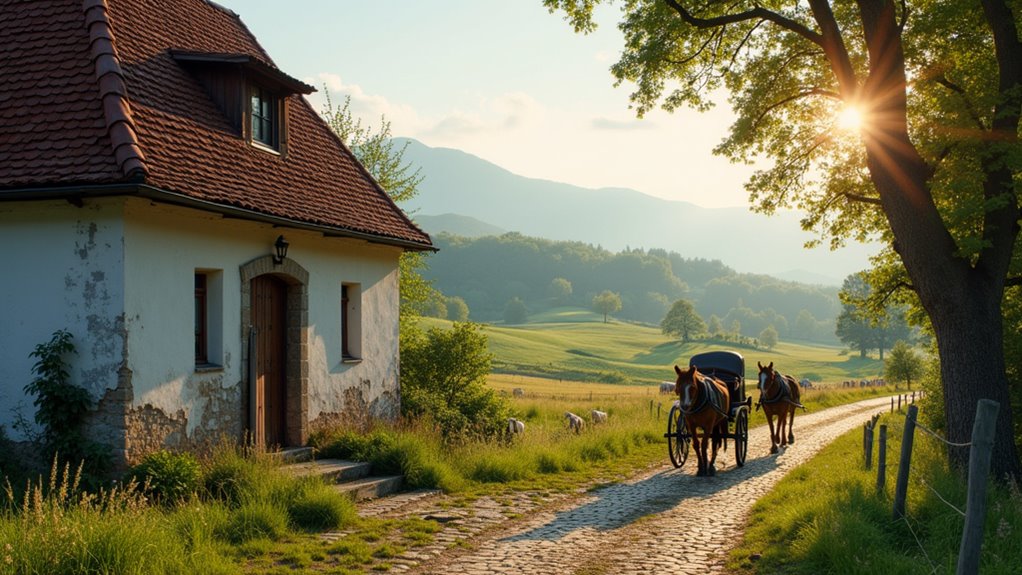
Where else can you witness centuries-old Saxon traditions still thriving in their original setting? Viscri, a UNESCO World Heritage village since 1999, offers an authentic glimpse into medieval Transylvanian life. You’ll find locals still practicing traditional blacksmithing and handmaking bricks, while shepherds tend flocks as they’ve done for generations.
The village’s crown jewel is its 900-year-old fortified church, where you can climb the tower for panoramic views and explore the museum showcasing Saxon customs. Wander among characteristic blue houses with thick stone walls and wooden gates, watching artisans craft textiles and ceramics by hand.
Thanks to King Charles III‘s conservation efforts, Viscri balances heritage preservation with sustainable tourism. You’ll experience horse cart rides through green pastures while supporting a community that’s maintained its authentic character despite modern pressures. The village maintains its slow-paced atmosphere with cobbled streets where cows, chickens, and ducks freely roam alongside residents.
Navigate the Danube Delta by Boat
From Transylvania’s medieval villages, Romania’s natural wonders beckon you eastward to the Danube Delta, Europe’s largest wetland and a UNESCO Biosphere Reserve. You’ll navigate this labyrinth of waterways aboard traditional boats with experienced captains who know every channel and reed island.
Choose from flexible tour options: four-hour wildlife watching trips, full-day eight-hour explorations to remote villages like Caraorman, or multi-day adventures with floating hotel stays. Your local guides will spot pelicans, white-tailed eagles, and migratory birds while explaining the delta’s rich ecology and history.
Visit traditional fishing villages including Sulina and Sfântu Gheorghe, where you’ll taste fresh seafood and experience rural delta life. You can also explore the ancient archaeological significance of sites like Argamum, an ancient colony that reveals the region’s deep historical roots. Tours run April through October, starting around 34 EUR per person from Tulcea‘s departure point.
Marvel at Peleș Castle’s Neo-Renaissance Splendor in Sinaia
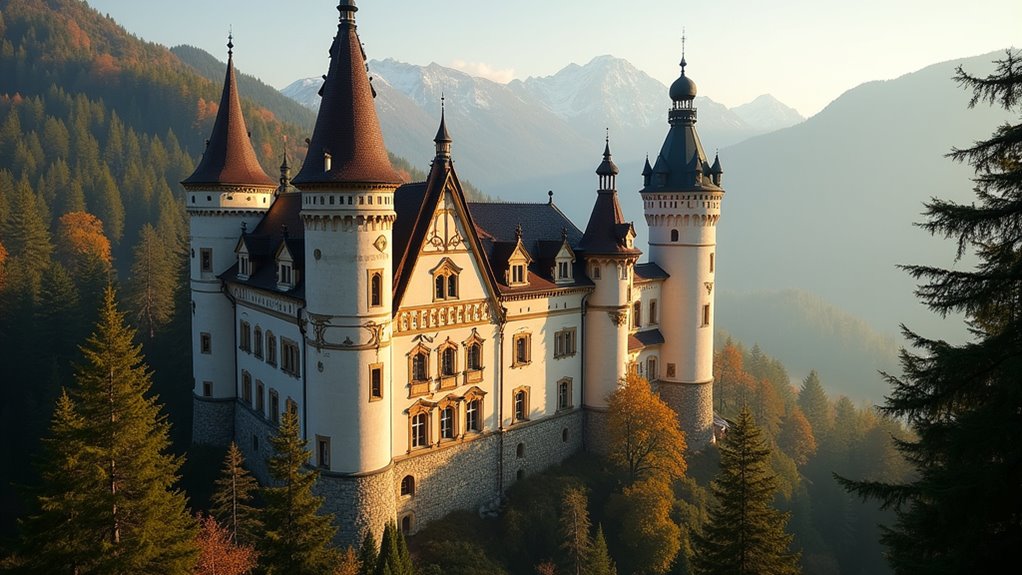
Nestled beneath the dramatic peaks of the Bucegi Mountains, Peleș Castle stands as Romania’s most spectacular royal residence and a masterpiece of Neo-Renaissance architecture. You’ll discover King Carol I’s summer palace, built between 1873-1914 as a symbol of Romanian independence.
The castle’s German architect Johannes Schultz created an extraordinary fusion of Alpine elegance and Italian sophistication, complete with a soaring 66-meter tower.
You’ll explore 160 uniquely themed rooms, from the exotic Moorish Salon to the elegant Florentine Room. Don’t miss the theatre hall featuring ceiling paintings by Gustav Klimt. The castle also houses a remarkable Royal Library containing 30,000 books with a secret door leading to the king’s private suite.
As Europe’s first fully electrified castle, it showcased cutting-edge technology including central heating from 1883. The terraced gardens and mountain backdrop create an unforgettable setting for this architectural jewel.
Discover Bucharest Beyond the Palace of the Parliament
Moving from the royal grandeur of Peleș Castle to Romania’s capital, you’ll find that Bucharest offers far more than its infamous Palace of the Parliament. Start at Pasajul Victori’s colorful umbrella canopy for Instagram-worthy shots, then wander through Macca-Villacrosse Passage’s 19th-century covered arcade lined with cozy cafés.
Escape the urban buzz at Gradina Eden, a secret garden behind Ştirbey Palace where hammocks and lush greenery create perfect hideaways. For culture, visit the ornate Romanian Athenaeum or the peaceful Stavropoleos Monastery with its stunning Byzantine frescoes.
Don’t miss Obor Market for authentic local flavors—Romania’s largest market serves up fresh produce and traditional ingredients. Browse Cărturești Carusel bookstore‘s beautiful design, then explore street art at Graffiti Walls Gallery for Bucharest’s creative pulse. End your day at Pura Vida Sky Bar, a hidden rooftop gem above the main streets offering cocktails and sunset views away from the glitzy bar scene.
Venture Into ScăRișOara Cave to See Europe’s Largest Underground Glacier
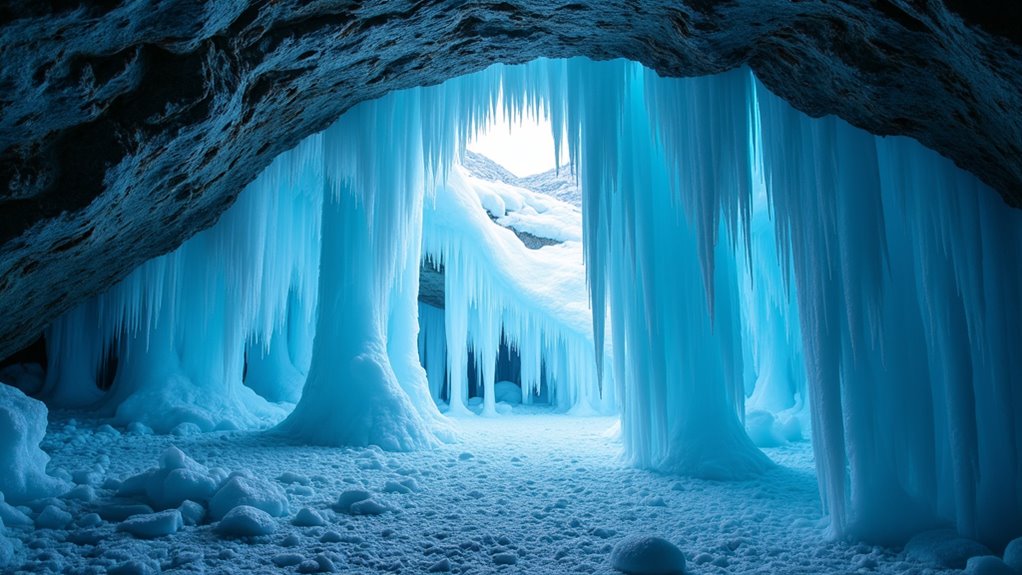
Deep beneath the Apuseni Mountains in Alba County, Scărișoara Cave houses Europe’s largest underground glacier—a 10,000-year-old ice formation that’ll leave you speechless.
You’ll descend 48 meters down a vertical shaft via staircase to reach this frozen wonderland, where temperatures hover near freezing year-round.
The massive glacier stretches 75 meters long and 50 meters wide, containing up to 118,000 cubic meters of ancient ice.
You’ll witness stunning ice stalactites, stalagmites, and frozen waterfalls in chambers like “The Big Hall” and “The Cathedral.”
Plan your visit between May and October when the cave’s open to travelers.
This isn’t just sightseeing—you’re exploring a natural climate archive that’s preserved Earth’s history for millennia, making it an unforgettable scientific and visual experience. The cave also hosts unique wildlife, including the rare Pholeuon prozerpinae glaciale, a 23mm bug species adapted to this extraordinary underground environment.
Climb 1,480 Steps to Poenari Citadel’s Dramatic Ruins
While underground marvels showcase Romania’s natural wonders, the country’s dramatic history comes alive at mountaintop fortresses that demand serious physical commitment. You’ll face 1,480 concrete steps climbing Mount Cetatea to reach Poenari Citadel, the real “Dracula’s castle” where Vlad the Impaler actually lived and ruled.
The grueling ascent rewards you with panoramic views of the Argeș River valley and Carpathian Mountains. At the summit, you’ll explore stone ruins that’ve survived since the 13th century, though earthquakes and landslides have left them partially destroyed. Vlad enslaved local nobles to rebuild these walls, and secret tunnels still hide within the clifftop fortress.
Despite the physical challenge, you’re experiencing authentic medieval history where legend meets reality. This stronghold served as Vlad’s residence, refuge, treasury, and prison over centuries, making it a multifaceted fortress that controlled the strategic Carpathian pass.
Explore Brașov’s Saxon Heritage and Hike Mount Tâmpa
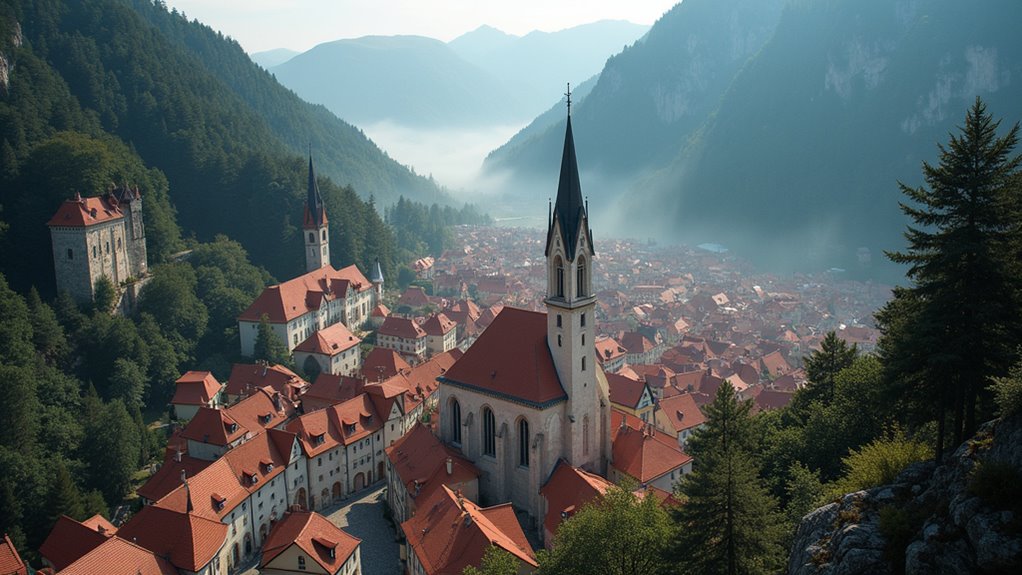
After conquering medieval fortresses, you’ll discover that Brașov offers an equally compelling blend of Saxon heritage and mountain adventure that defines Transylvania’s cultural heart.
Start exploring the Gothic Black Church, Eastern Europe’s largest Lutheran church, where you’ll find an impressive collection of Oriental rugs and hear concerts on its 4,000-pipe organ.
Walk through Council Square‘s colorful Baroque merchant houses, then visit the massive Weavers’ Bastion and climb the Blacksmiths’ Bastion to see ancient Romanian documents.
The Saxons shaped this city from the 1100s, building fortified walls and towers that still stand today. Explore the Brasov Citadel, built in 1524 as a military stronghold with four preserved towers and an impressive 81-meter deep well.
After exploring cobblestone streets and medieval bastions, hike Mount Tâmpa for panoramic views over red-roofed Saxon buildings nestled between Carpathian peaks.
Unwind Along the Black Sea Coast in Constanța and Mamaia
Once you’ve had your fill of mountain adventures, Romania’s Black Sea coast beckons with sandy beaches and seaside charm that’ll refresh your travel spirit.
Head to Mamaia, the country’s premier beach resort, where you’ll find extensive sandy shores perfect for swimming and water sports like jet skiing and parasailing.
In nearby Constanța, you can explore cultural treasures including the Roman Edifice with Mosaic and the historic casino between beach sessions.
The coast offers excellent dining and nightlife along scenic promenades and marina areas.
While summer’s the peak season, you’ll find better deals and smaller crowds during shoulder months.
With ongoing infrastructure improvements and accommodations ranging from budget to luxury, the Black Sea coast provides the perfect seaside escape. Constanța stands out as one of only two Romanian counties experiencing tourism growth in 2025, with a 4.19% increase that signals renewed visitor confidence in this coastal destination.
The Sum Up
You’ve got an incredible adventure waiting in Romania. Whether you’re chasing Dracula legends through ancient castles, driving mountain highways that’ll take your breath away, or exploring underground worlds, this country delivers experiences you won’t find anywhere else. From medieval streets to pristine coastlines, Romania’s mix of history, nature, and culture creates memories that’ll stick with you long after you’ve returned home. Start planning your Romanian journey today.