
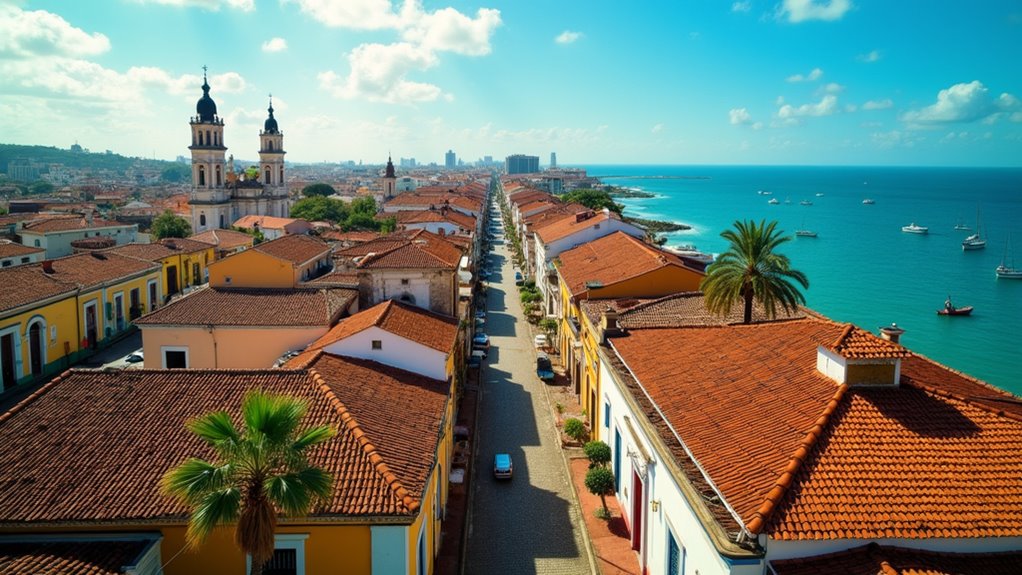
Start your Salvador adventure in UNESCO-listed Pelourinho, where colorful colonial buildings house vibrant street performances and the gold-laden São Francisco Church. Take the historic Elevador Lacerda for panoramic bay views, then sample authentic acarajé from traditional Baianas vendors. Watch spectacular sunsets at Farol Da Barra lighthouse, experience Afro-Brazilian culture at Dique Do Tororó’s Orixá sculptures, and unwind at family-friendly Porto Da Barra Beach. Discover why this coastal gem offers Brazil’s most authentic culture.
- Wander Through the Cobblestone Streets of Pelourinho
- Take the Historic Elevador Lacerda for Bay Views
- Watch the Sunset at Farol Da Barra Lighthouse
- Experience Afro-Brazilian Culture at Dique Do Tororó
- Relax at Porto Da Barra Beach
- Visit Igreja Do Bonfim and Tie a Wish Ribbon
- Marvel at the Gold-Covered Interior of São Francisco Church
- Sample Acarajé and Bahian Street Food
- Explore the Nightlife Scene in Rio Vermelho
- Take a Day Trip to Itaparica Island
- The Sum Up
Wander Through the Cobblestone Streets of Pelourinho
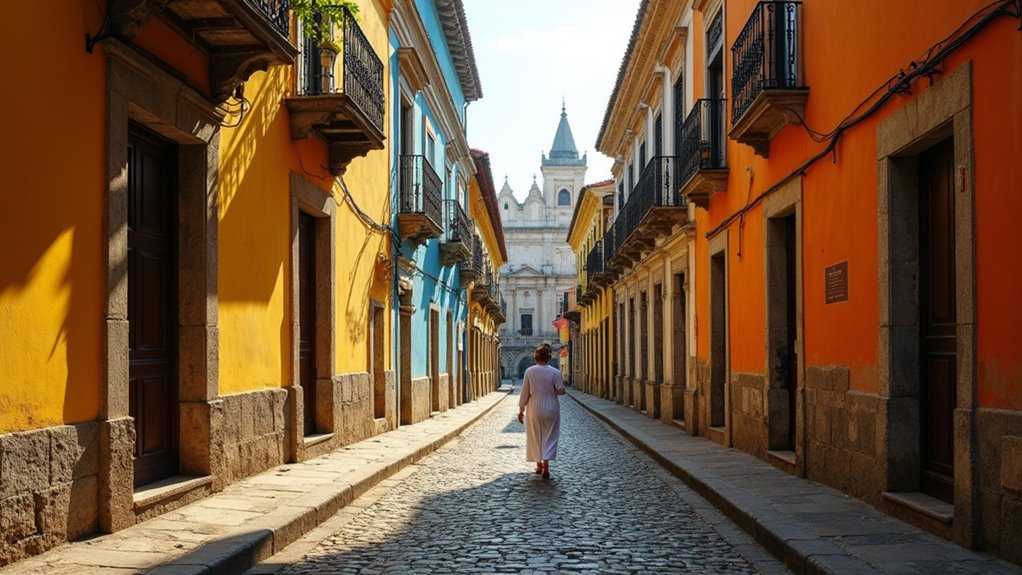
When you step onto the cobblestone streets of Pelourinho, you’re walking through Brazil’s most significant colonial district—a UNESCO World Heritage Site that served as the country’s first capital and the epicenter of the Atlantic slave trade.
The 16th-century street layout remains largely intact, lined with vibrantly painted colonial townhouses in blues, yellows, and pinks that create Salvador’s most iconic streetscape.
Navigate the steep ladeiras connecting upper and lower districts for layered views of baroque churches and tiled roofs.
Don’t miss the Igreja de Nossa Senhora do Rosário dos Pretos with its distinctive blue twin towers—built by a Black lay brotherhood from 1704. The neighborhood’s name comes from the historical pillory that once stood here, removed on September 7th, 1835, marking the end of a dark chapter in the area’s past.
Time your visit for late afternoon when street performers showcase capoeira and live music in the main squares, bringing these historic cobblestones to life.
Take the Historic Elevador Lacerda for Bay Views
Since Salvador spreads dramatically across a 72-meter coastal escarpment, you’ll want to ride the world’s first urban public elevator to connect the historic upper city with the bustling port below.
The Elevador Lacerda, operating since 1873, whisks you between Cidade Alta and Cidade Baixa in just 30 seconds for an incredibly cheap R$0.15 fare (free if you’re over 60). This engineering marvel carries approximately 900,000 passengers monthly, making it one of the world’s busiest urban elevators.
The Art Deco tower from the 1930s renovation has become Salvador’s iconic symbol, handling over 33,000 passengers daily.
Don’t miss the panoramic viewing platform at the upper station—it offers spectacular vistas of Baía de Todos-os-Santos, the harbor, and historic skyline.
Browse the nearby souvenir stalls for competitive prices on local crafts.
Watch the Sunset at Farol Da Barra Lighthouse
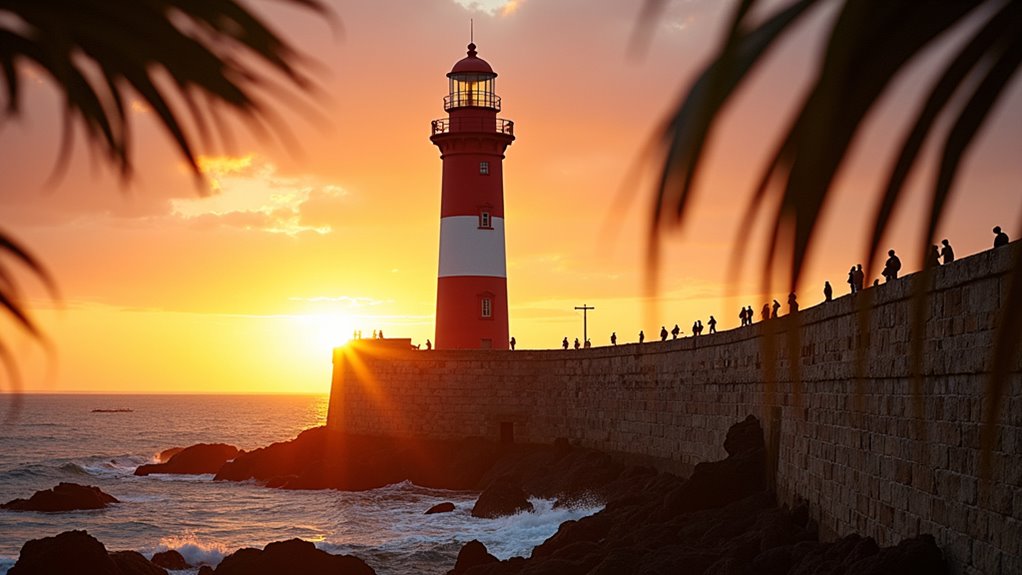
After exploring Salvador’s historic heights, head to the opposite end of the city where Brazil’s oldest lighthouse awaits at Farol da Barra. This 22-meter tower, constructed in 1839, stands at the entrance to Bay of All Saints and houses the fascinating Nautical Museum inside the adjacent 1534 fort—Brazil’s oldest military building.
The real draw here isn’t just the maritime history exhibits detailing Portugal’s slave trade legacy. It’s the grassy lawn surrounding the black-and-white striped lighthouse that transforms into Salvador’s premier sunset viewing spot. Arrive an hour before sunset to claim your space among locals and travelers gathering for the daily spectacle.
The panoramic Atlantic views from this strategic point make it clear why this location has guided ships safely to harbor for over 300 years. For the most adventurous visitors, climb the lighthouse’s 94 steps to reach the top for even more spectacular panoramic views of the coastline and bay.
Experience Afro-Brazilian Culture at Dique Do Tororó
While Salvador’s beaches and colonial architecture capture most visitors’ attention, the city’s spiritual heart beats strongest at Dique do Tororó. Here, towering sculptures of Afro-Brazilian deities rise directly from an artificial lake’s waters.
You’ll encounter magnificent statues of Orixás—Candomblé deities like Yemanjá, goddess of the sea, and Oxum, protector of fresh waters and motherhood. Sculptor Tatti Moreno crafted these powerful figures to honor Bahia’s deep African heritage, creating an otherworldly atmosphere that’s both artistic and sacred.
Walk the lakeside paths during early morning or late afternoon for the best lighting and fewer crowds. Many Candomblé practitioners consider this site holy, especially during February’s Yemanjá Festival.
The location’s easily accessible from central Salvador and pairs perfectly with visits to other Afro-Brazilian cultural sites. Originally built by the Dutch, this reservoir has transformed into one of Salvador’s most important cultural landmarks, where water sports enthusiasts and spiritual seekers gather in harmony.
Relax at Porto Da Barra Beach
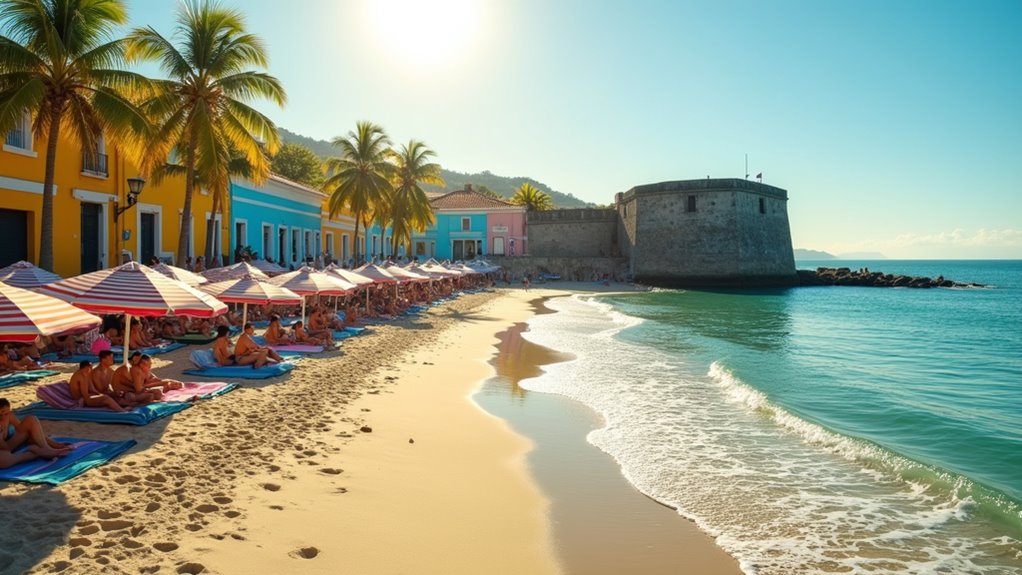
From Salvador’s spiritual landmarks, head to Porto da Barra Beach where Brazil’s colonial history meets modern beach culture in one of the country’s most historically significant stretches of sand. You’ll find yourself at the exact spot where Portuguese colonizers first landed, marked by the Marco da Fundação commemorative column.
The calm, protected waters make swimming ideal for families, while colonial forts Santo Antônio da Barra and São Diogo frame this 300-meter crescent of golden sand. This protected location sits at the entrance of the Bay of All Saints, creating the tranquil conditions that distinguish it from Salvador’s ocean-facing beaches. Arrive early morning for peaceful moments, then return for spectacular sunsets that drew Tropicalistas like Caetano Veloso in the 1960s.
Take public buses from Praça da Sé for easy access. Weekend crowds can be intense, but evening drum circles and traditional food vendors create Salvador’s quintessential beach atmosphere.
Visit Igreja Do Bonfim and Tie a Wish Ribbon
When you climb Salvador’s Sacred Hill to Igreja do Bonfim, you’ll discover Brazil’s most beloved pilgrimage site where centuries of faith have created one of the country’s most moving spiritual experiences. This 18th-century colonial Baroque church draws millions seeking blessings and miracles.
The iconic fitinhas tradition awaits you at the church gates. Purchase colorful wish ribbons from local vendors, then tie three ribbons while making three wishes each. Choose your colors thoughtfully—each represents different intentions like love, health, or success. The church’s white and yellow azulejo-tiled façade provides a stunning backdrop for this ritual.
Inside, admire Franco Velasco’s ceiling painting and gilded woodcarvings that showcase Salvador’s artistic heritage. The church is also known by its full Portuguese name “Church of Nosso Senhor do Bonfim,” which emphasizes its deep cultural significance in Brazilian religious tradition. Visit during January’s Festa do Senhor do Bonfim to witness the powerful blend of Catholic and Candomblé traditions that defines Bahian spirituality.
Marvel at the Gold-Covered Interior of São Francisco Church
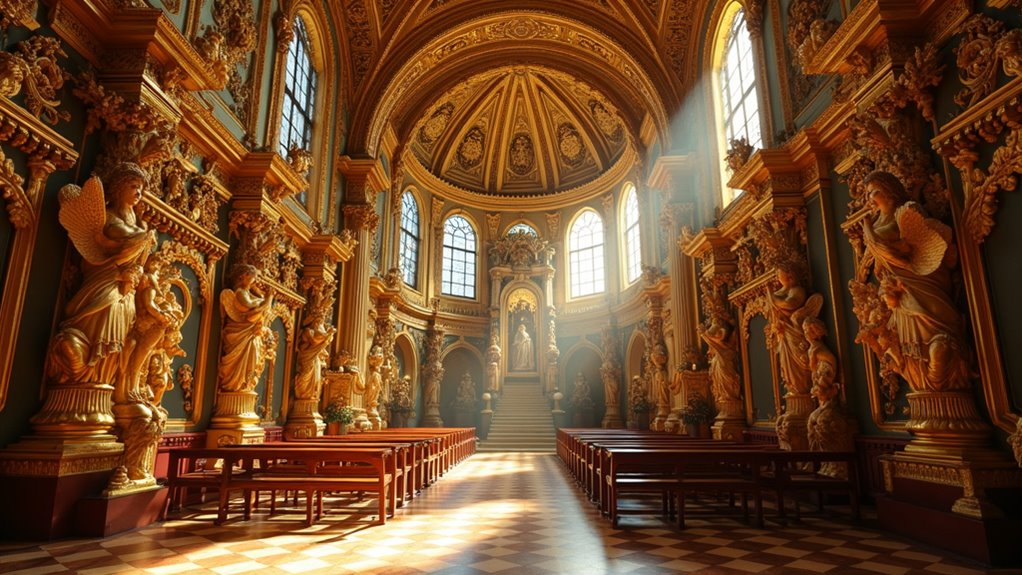
After experiencing Salvador’s spiritual traditions, prepare yourself for one of Brazil’s most breathtaking artistic spectacles at São Francisco Church. This UNESCO World Heritage site delivers an immediate “shock of gold” as you enter the nave, where every surface gleams with sculpted gilt woodwork and gold leaf.
Completed between 1708-1723, this Portuguese Baroque masterpiece features walls, pillars, and ceilings entirely covered in gold. You’ll discover 55,000 hand-painted Portuguese azulejos—the largest collection in any Latin American church—depicting scenes from St. Francis’s life alongside an 80kg silver chandelier. The church’s opulent design creates a striking ironic contrast with St. Francis’s vows of poverty, adding a thought-provoking dimension to your visit.
Allow 30-60 minutes to explore both the dazzling interior and tiled cloister. Photography’s permitted, so capture the intricate carvings and gilded altars that make this one of Brazil’s most magnificent churches.
Sample Acarajé and Bahian Street Food
Where can you taste the soul of Salvador’s Afro-Brazilian heritage in a single bite? At any acarajé stand throughout the city, where Baianas de Acarajé in traditional white dresses serve Brazil’s most iconic street food. These deep-fried black-eyed pea fritters, cooked in bright orange dendê palm oil, are split and stuffed with vatapá (creamy coconut-peanut paste), caruru (okra stew), and dried shrimp.
Head to Acarajé da Cira in Rio Vermelho for Salvador’s best version—they’ve perfected their recipe over 50 years. Choose “quente” for spicy or “frio” for mild heat levels.
Budget travelers can find R$1 acarajé stands on Avenida Sete de Setembro downtown. Don’t miss trying abará, the steamed banana leaf version, and pair your meal with bolinho de estudante for the complete Bahian street food experience. The dish is so addictive that many visitors find themselves eating multiple acarajé in a single sitting—three in one go is perfectly acceptable among enthusiasts.
Explore the Nightlife Scene in Rio Vermelho
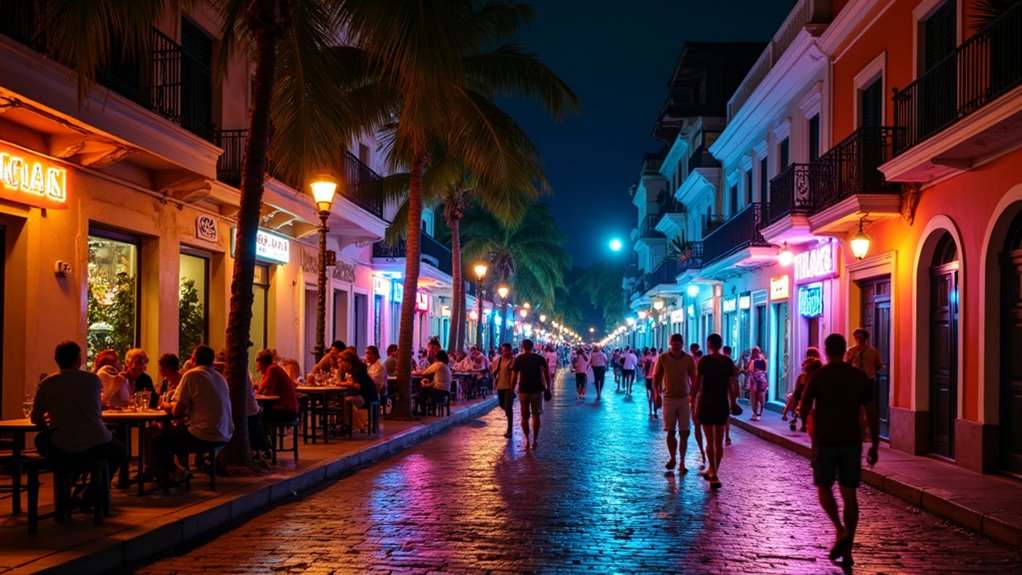
As darkness falls over Salvador, Rio Vermelho transforms into the city’s most electric nightlife destination—a bohemian neighborhood where music spills from packed bars onto cobblestone squares and revelers move seamlessly between venues until dawn.
You’ll find the action concentrated around Largo de Santana and Largo da Mariquita, where locals crowd street-side botecos and waterfront kiosks. Don’t miss the chance to taste traditional acarajé from iconic vendors who have established their territories in these bustling squares.
Start at Bombar or A Borracharia for cocktails, then catch live samba or forró at venues like Casa da Mãe (expect R$20–30 cover charges).
The revitalized Vila Caramuru offers ocean-view dining and drinks, while LGBTQ+-friendly spots like San Sebastian host drag shows and electronic nights.
Follow local Instagram agendas like Agenda Alternativa Salvador to discover pop-up events and indie concerts throughout this vibrant district.
Take a Day Trip to Itaparica Island
When Salvador’s urban energy becomes overwhelming, escape to Itaparica Island—a tranquil retreat floating in Baía de Todos os Santos just 30 minutes away by speedboat. Take the lancha from Terminal Náutico to Mar Grande for R$6.10 weekdays, or opt for the standard ferry from Terminal São Joaquim to Bom Despacho.
Once there, hire a kombi van taxi to reach pristine beaches like Barra Grande and Ponta de Areia, where coconut groves frame calm, shallow waters perfect for swimming and kayaking. The island lacks ride-hailing apps, so rely on local taxis and private drivers for transport.
Spend your day lounging in hammocks, sampling fresh moqueca at beachfront restaurants, and exploring colonial architecture in Itaparica town before catching the evening boat back to Salvador. As Brazil’s largest island, Itaparica offers 25 miles of stunning coastline to discover during your visit.
The Sum Up
You’ve now got the insider’s roadmap to Salvador’s essential experiences. Don’t rush through these highlights—you’ll want time to absorb the city’s infectious energy and rich cultural layers. Book accommodations in Pelourinho or Rio Vermelho for easy access to key attractions. Pack comfortable walking shoes for those cobblestone streets, and keep some cash handy for street food vendors. Salvador’s magic lies in its spontaneous moments, so leave room for unexpected discoveries.