

You’ve probably heard Saudi Arabia is opening its doors to travelers, but you’re not sure what’s actually worth your time and money there. Beyond the headlines about mega-projects and oil wealth, this desert kingdom holds some seriously underrated experiences that won’t break your budget. From ancient archaeological sites that rival Petra to pristine coral reefs and dramatic mountain landscapes, Saudi Arabia’s got surprises that’ll completely change how you view the Middle East.
- Explore the Ancient Nabatean Tombs at Hegra in AlUla
- Walk Through the Coral Stone Streets of Al Balad in Jeddah
- Stand at the Edge of the World for Desert Views That Go On Forever
- Dive the Red Sea Coral Reefs Around Umluj’s Island Chains
- Wander the Mud-Brick Ruins of Al Turaif in Historic Diriyah
- Camp Under the Stars at Moon Mountain’s Volcanic Landscape
- Take the Desert Safari Through the Empty Quarter’s Sand Dunes
- Visit Al Masjid an Nabawi in Medina for Religious Heritage
- Hike Saudi Arabia’s Highest Peak at Jabal Sawdah
- Experience Traditional Bedouin Culture at Thee Ain Ancient Village
- Snorkel the Untouched Marine Sanctuary of Farasan Islands
- Marvel at the Mirrored Architecture of Maraya Concert Hall
- The Sum Up
Explore the Ancient Nabatean Tombs at Hegra in AlUla
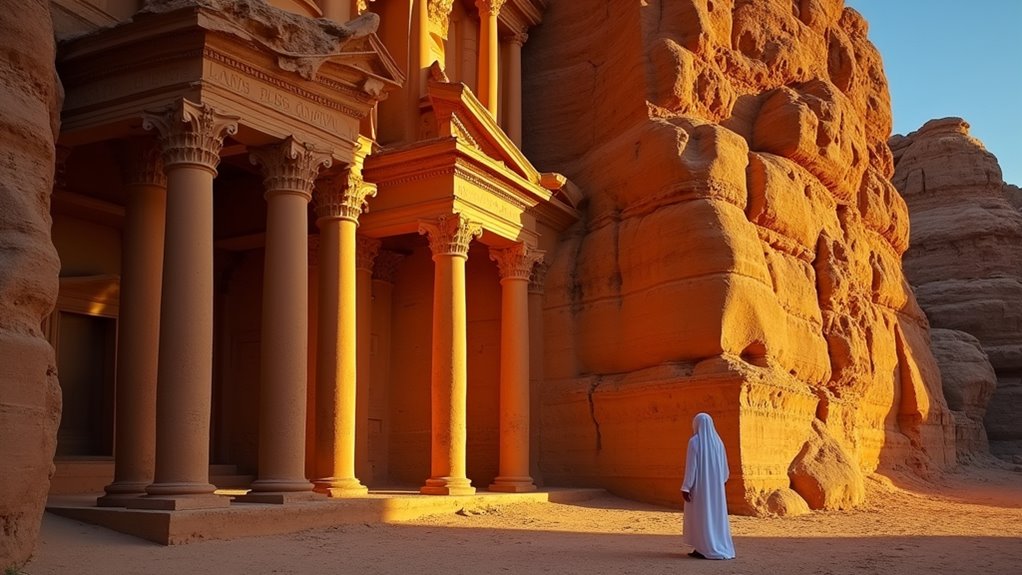
Why settle for crowded European ruins when you can explore Saudi Arabia’s best-kept archaeological secret? Hegra in AlUla offers you an intimate encounter with 111 monumental Nabataean tombs carved directly into sandstone cliffs. You’ll discover elaborate facades and inscriptions dating from 1 BC to 70 AD – more than you’d find at famous Petra.
Don’t miss Qasr al-Farid, the “Lonely Castle” tomb standing majestically on its isolated boulder. You can read over 50 ancient inscriptions that reveal personal names and titles of high-ranking officials, giving you rare glimpses into daily Nabataean life. The site’s ingenious water wells and ancient aqueduct systems demonstrate the Nabataeans’ remarkable hydraulic expertise that sustained life in this desert location.
As Saudi Arabia’s first UNESCO World Heritage Site, Hegra’s still developing tourism infrastructure means fewer crowds and lower costs than traditional archaeological destinations. You’ll experience authentic exploration while supporting emerging heritage tourism.
Walk Through the Coral Stone Streets of Al Balad in Jeddah
From ancient desert tombs, your Saudi adventure continues in Jeddah’s Al Balad, where you’ll walk streets lined with coral stone buildings that have welcomed Red Sea traders for over 1,300 years. This UNESCO World Heritage site showcases unique Hijazi architecture you won’t find anywhere else on the Red Sea coast.
You’ll discover multi-story coral houses with intricate rawasheen—wooden lattice balconies that create natural cooling systems without electricity. The coral stone walls absorb daytime heat and release it at night, demonstrating ingenious climate adaptation. Don’t miss Beit Nassif‘s restored rawasheen for photography.
Wander through active souqs where merchants still trade goods from India, Yemen, and Egypt. The district’s living culture means you’ll experience authentic marketplaces alongside historic mosques, all constructed from locally-harvested coral that’s kept this trading hub cool for centuries. Visit during the cooler months between November and March when temperatures are ideal for exploring the narrow alleyways and taking in the architectural details.
Stand at the Edge of the World for Desert Views That Go On Forever
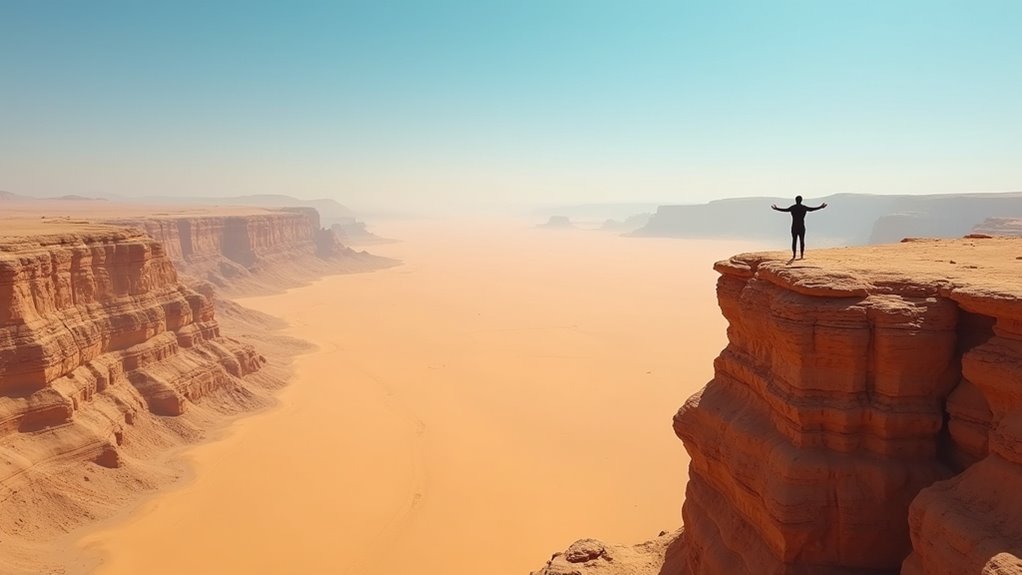
After exploring Jeddah’s historic coral streets, you’ll want to experience Saudi Arabia’s most dramatic natural landmark—the Edge of the World. This stunning escarpment sits 100 kilometers west of Riyadh, where 300-meter cliffs offer endless desert views across the Najd plateau. The dramatic landscape was formed by tectonic movement of the Arabian plate due to the Red Sea rift, creating this extraordinary geological formation.
You’ll need a 4×4 vehicle for the rocky, unmarked roads—hiring a local guide prevents costly getting-lost scenarios. The 1.5-2 hour drive from Riyadh includes a final 15-minute walk to the cliff edge.
Visit between November and March when temperatures won’t drain your water supplies. Sunset transforms the cliffs into glowing orange walls, while stargazing reveals incredible night skies without light pollution.
Bring all your own food and water—there’s zero infrastructure. The challenging off-road adventure and panoramic rewards make this Saudi Arabia’s ultimate natural experience.
Dive the Red Sea Coral Reefs Around Umluj’s Island Chains
While Saudi Arabia’s desert landscapes capture attention inland, the country’s Red Sea coastline reveals an equally spectacular underwater world around Umluj’s pristine island chains.
Often called the “Maldives of Saudi Arabia,” this archipelago of over 100 islands offers affordable access to world-class diving and snorkeling.
You’ll find healthy coral reefs teeming with clownfish, lionfish, and barracuda schools.
The Seven Sisters Islands provide the best diving, featuring underwater caves and dramatic light effects.
Beginners can snorkel directly from Umluj’s beaches, while experienced divers should book boat trips to reach remote reefs where sharks and sea turtles frequent deeper waters. These waters support over 1,200 fish species with remarkable biodiversity and high levels of endemism.
Visit between October and April for ideal conditions, with water temperatures around 22°C and excellent visibility year-round.
Wander the Mud-Brick Ruins of Al Turaif in Historic Diriyah
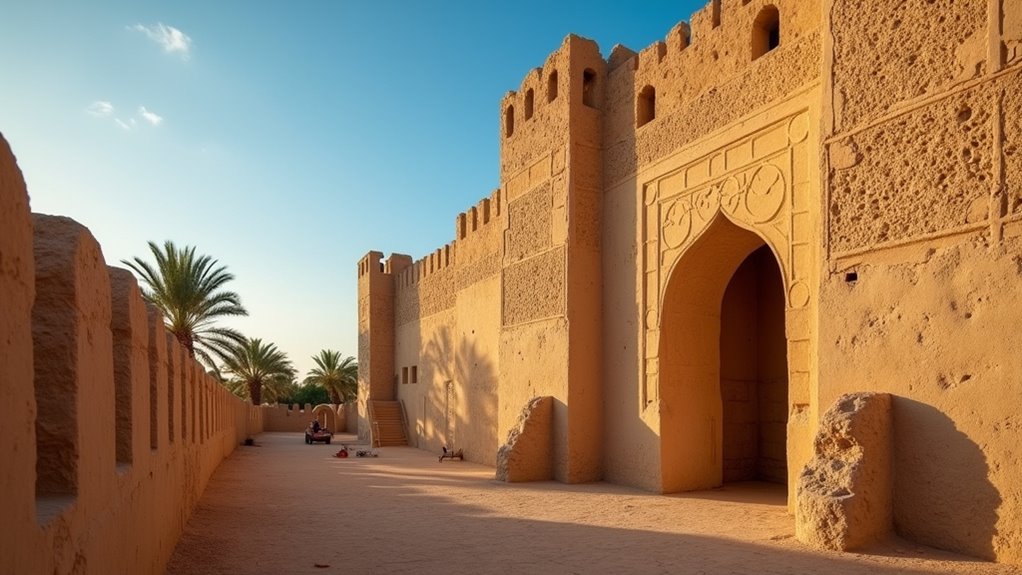
Just 20 kilometers northwest of Riyadh, you’ll discover the crumbling mud-brick palaces and fortifications of Al Turaif, where the Saudi dynasty first rose to power in the 18th century. This UNESCO World Heritage Site offers an affordable glimpse into Saudi Arabia’s origins—entrance fees are minimal, and you can easily reach it by public transport or taxi.
You’ll wander through narrow alleys between thick adobe walls that’ve withstood desert conditions for over 250 years. The restored Qasr Nasr palace and Saad bin Saud Palace showcase traditional Najdi architecture, while watchtowers provide valley views.
The site’s strategic position along ancient trade routes becomes clear as you explore the defensive layout. Built in the fertile oasis of Wadi Hanifah, the settlement benefited from underground water sources that sustained this desert civilization. Bring water and comfortable shoes—the desert sun’s intense, but the historical immersion is worth it.
Camp Under the Stars at Moon Mountain’s Volcanic Landscape
About 120 kilometers north of Jeddah, you’ll find Moon Mountain’s otherworldly volcanic landscape that looks like it belongs on an alien planet rather than Earth. You’ll need a 4×4 vehicle to navigate the sandy, rocky terrain near Asfan Road, but the hour-long drive’s worth it.
The rugged volcanic formations create perfect camping conditions under some of Saudi Arabia’s darkest skies. With minimal light pollution, you’ll get incredible stargazing opportunities while sipping Arabic coffee and enjoying dates after sunset.
The moderate hike up Moon Mountain takes 2-4 hours and offers panoramic desert views. The region’s geology consists of intrusive igneous rocks that formed millions of years ago, creating the dramatic formations you see today.
Budget-friendly tours include transport, refreshments, and guides speaking Arabic and English. Small groups of seven keep costs reasonable while providing personalized experiences in this lunar-like desert wonderland.
Take the Desert Safari Through the Empty Quarter’s Sand Dunes
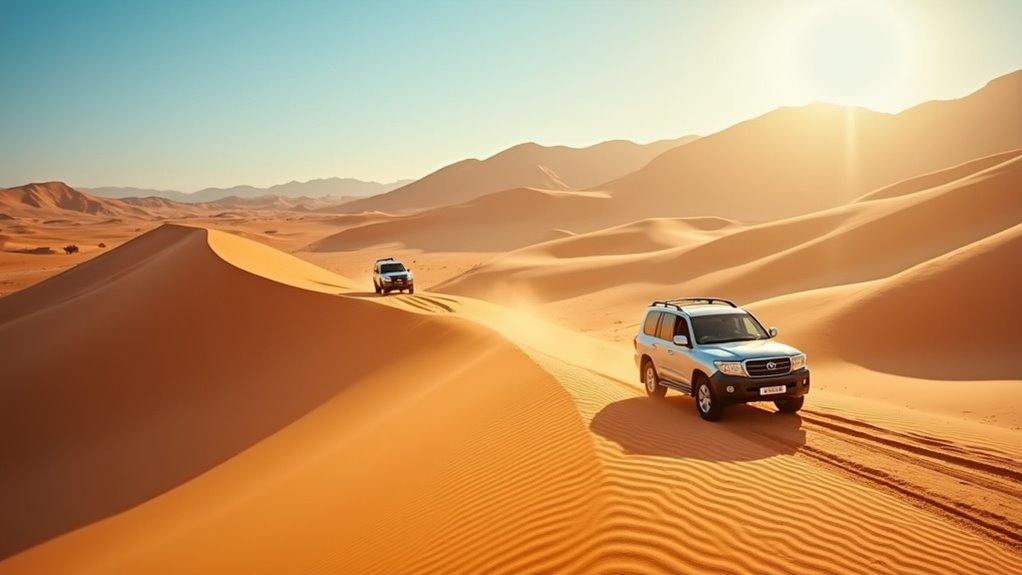
When you’re ready for the ultimate desert adventure, the Empty Quarter (Rub’ al Khali) delivers an experience that’ll make every other sand dune look ordinary. This world’s largest continuous sand desert stretches across southern Saudi Arabia, offering absolute silence and golden horizons you won’t find anywhere else.
Book a 3-4 day safari during winter months (November-March) when temperatures won’t fry you alive. You’ll get guided dune bashing in specialized 4x4s, traditional camping under star-filled skies, and stunning sunrise photography opportunities. Most packages include camping gear, meals, and transfers—just arrange your permits separately.
Expert guides are essential since GPS often fails here, and getting lost isn’t an option. You’ll also visit Bedouin camps, explore ancient archaeological sites, and experience desert culture that’s survived centuries. Many tour operators maintain security measures to protect their websites from automated threats while you browse their offerings online.
Visit Al Masjid an Nabawi in Medina for Religious Heritage
Why settle for reading about Islamic history when you can stand where it actually happened? Al Masjid an Nabawi in Medina offers you an unparalleled connection to Islamic heritage. You’ll walk where Prophet Muhammad (ﷺ) built the first mosque in 622 CE, with six original pillars still marking the historic layout.
Don’t miss the Rawdah area between the Prophet’s tomb and pulpit—it’s considered one of Paradise’s gardens. The iconic Green Dome and ten minarets create a breathtaking architectural experience spanning centuries of Islamic craftsmanship. You’ll notice how the original simple three-step wooden minbar has evolved into the magnificent pulpit you see today.
The mosque accommodates millions during Hajj and Ramadan, but you can visit year-round for prayers and reflection. Best of all, entry’s completely free for all Muslims, making this spiritual journey accessible regardless of your budget.
Hike Saudi Arabia’s Highest Peak at Jabal Sawdah
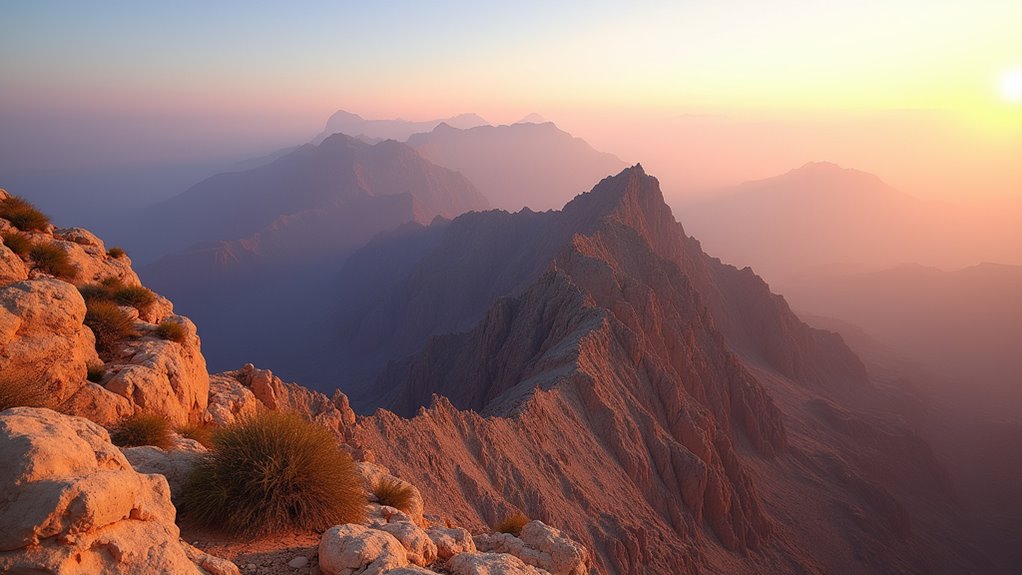
From spiritual heights to literal peaks, Saudi Arabia offers adventures beyond its sacred sites. You’ll find the country’s highest point at Jabal Sawdah, standing 3,015 meters above sea level in Asir Province.
The challenging 7-kilometer hike from Rijal Almaa village delivers 1,000 meters of elevation gain through stunning mountain scenery. The terrain reveals dramatic elevation differences, with the surrounding area ranging from 2,122 to 2,995 meters across the mountain landscape.
Pack warm clothes—temperatures drop to 11°C at the summit, much cooler than you’d expect in Saudi Arabia. The trail’s steep sections require good fitness, but no technical climbing skills.
You can drive from Abha (20 kilometers away) to reach starting points.
If hiking isn’t your thing, take the new cable car system for easier access to viewpoints. Soudah Park offers family-friendly facilities nearby, though the actual summit sits beyond the tourist zone near telecommunications towers.
Experience Traditional Bedouin Culture at Thee Ain Ancient Village
How can you walk through 1,200 years of Arabian history without breaking the bank? Visit Thee Ain Ancient Village in Al-Baha Region – completely free. This marble village sits 800 meters above sea level, featuring 49 stone houses with walls up to 90 cm thick.
You’ll explore multi-story structures built using the traditional “Madamek” system, where each floor narrows by seven inches for enhanced stability.
The 10th-century settlement showcases authentic Arabian architecture with decorative stone columns and pyramid-like designs. Walk through narrow paved alleys, visit the central mosque, and see ancient irrigation channels that once supported banana and lemon crops. The village experiences heavy rainfall during summer months, which historically supported its diverse agricultural cultivation.
Pack sturdy shoes for uneven stone paths and plan your visit between October and March for comfortable temperatures. It’s budget-friendly history at its finest.
Snorkel the Untouched Marine Sanctuary of Farasan Islands
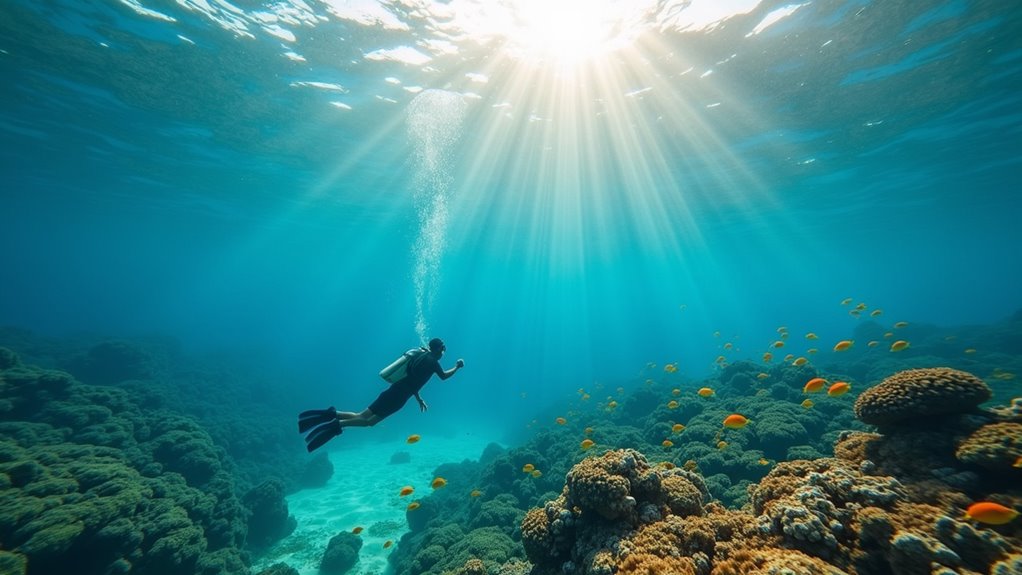
Over 170 pristine islands await you in the Red Sea’s most protected marine sanctuary – the Farasan Islands archipelago. You’ll discover one of Saudi Arabia’s best-kept secrets, where crystal-clear waters reveal vibrant coral reefs teeming with whale sharks, dugongs, and countless tropical fish species.
Catch the 90-minute ferry from Jizan Port to reach this UNESCO Biosphere Reserve. The journey’s worth it – you’ll snorkel among untouched coral gardens and shallow banks where few travelers venture.
Head to the Farasan Banks or reefs near Greater Farasan Island for the best underwater visibility. The islands feature stunning limestone coastlines formed from ancient coral reefs and seashells that create brilliant white sandy beaches.
Pack your own snorkel gear to save money, and don’t miss the mangrove-fringed shores where sea turtles nest.
This 5,408 km² marine reserve offers world-class snorkeling without the crowds you’d find elsewhere.
Marvel at the Mirrored Architecture of Maraya Concert Hall
When you’re exploring AlUla’s dramatic desert landscape, you’ll encounter what looks like a shimmering mirage rising from the golden sands – but it’s actually Maraya Concert Hall, the world’s largest mirror-clad building according to Guinness World Records.
This cube-shaped architectural marvel uses 9,740 square meters of specialized mirror glass that reflects the surrounding rock formations perfectly.
You can catch world-class concerts, operas, and cultural events in the 500-seat auditorium featuring a massive retractable window that opens to reveal the desert as your backdrop. The venue has hosted performances by renowned artists including Andrea Bocelli, bringing international talent to this remote desert location.
The name “Maraya” means “mirror” in Arabic, and you’ll understand why when you see how this “invisible” building blends seamlessly with AlUla’s ancient landscape while offering cutting-edge performances.
The Sum Up
You don’t need to break the bank to experience Saudi Arabia’s incredible diversity. Many of these adventures, like hiking Jabal Sawdah or exploring Al Balad’s streets, won’t cost you much beyond transportation. Pack your own snacks, stay in budget accommodations, and you’ll discover that this kingdom offers some of the world’s most authentic experiences without the tourist crowds. Start planning now—Saudi’s tourism scene is just getting started.