
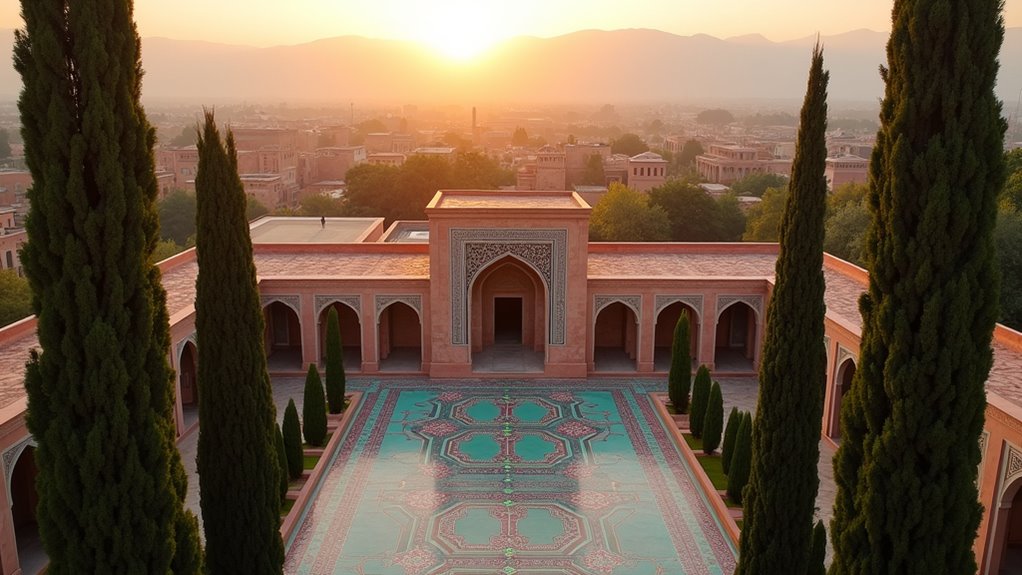
You’ll discover that Shiraz isn’t just another Iranian city—it’s where poetry lives in the streets and ancient empires whisper through rose gardens. While most travelers rush through the obvious highlights, you’re about to uncover experiences that’ll connect you with 2,500 years of Persian culture in ways guidebooks rarely mention. From dawn visits to avoid tourist crowds to evening rituals locals have practiced for centuries, here’s what awaits when you know where to look.
- Pay Your Respects at Hafez’s Tomb in the Evening
- Get Lost in the Maze of Vakil Bazaar’s 200-Year-Old Corridors
- Marvel at the Glittering Interior of Shah-e-Cheragh Mosque
- Take the Early Morning Bus to Persepolis Before the Crowds
- Stroll Through Eram Garden’s Rose-Lined Pathways
- Climb the Watchtowers of Karim Khan Citadel for City Views
- Hunt for Hand-Knotted Carpets in the Traditional Workshops
- Sample Shirazi Salad and Fesenjan at Local Family Restaurants
- Visit Saadi’s Tomb and the Nearby Tea Houses
- Drive to Pasargadae to See Cyrus the Great’s Simple Tomb
- The Sum Up
Pay Your Respects at Hafez’s Tomb in the Evening
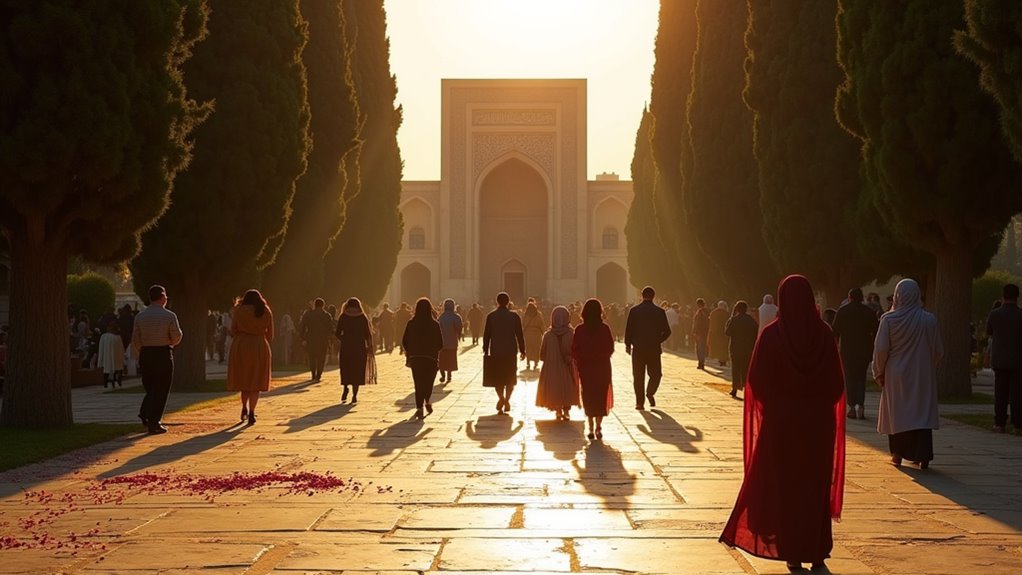
When the sun begins to set over Shiraz, there’s no more magical place to be than Hafezieh, the tomb of Iran’s beloved poet Hafez. You’ll find this peaceful sanctuary in the historic Musalla Gardens, where soft evening lighting transforms the turquoise dome into something ethereal.
The complex becomes wonderfully quiet after dark, perfect for contemplating Hafez’s verses inscribed on the marble tombstone.
Don’t miss sitting beneath the 20 stone columns while shadows dance through the long hall. Many visitors bring copies of his ghazals to read aloud – it’s a beautiful tradition you can join. You can also participate in the local tradition of fortune-telling using Hafez’s sonnets, as Iranians have done for centuries.
Remember to dress modestly and wear comfortable shoes for the stone pathways. The tomb typically closes around 19:00-20:00, so plan accordingly for this unforgettable evening experience.
Get Lost in the Maze of Vakil Bazaar’s 200-Year-Old Corridors
As you step down into Vakil Bazaar’s sunken corridors, you’ll immediately understand why this 18th-century marketplace has captivated visitors for over two centuries. Built by Karim Khan Zand to revitalize Shiraz, this architectural marvel sprawls across 21,840 square meters with 74 soaring brick arches creating a rhythmic canopy overhead.
You’ll find yourself wandering through unusually wide passageways where merchants have organized their wares by type – spices in one section, textiles in another. The walls and ceilings showcase intricate geometric and floral tile designs that exemplify the classic Persian architectural style of the Zand dynasty.
The bazaar’s subterranean design keeps you cool even during scorching summers, while its 12-meter-high ceilings create an unexpectedly grand atmosphere.
Navigate to the central Chahar Suq intersection where the four wings meet, and you’ll discover why locals consider this Iran’s most spacious historic bazaar.
Marvel at the Glittering Interior of Shah-e-Cheragh Mosque
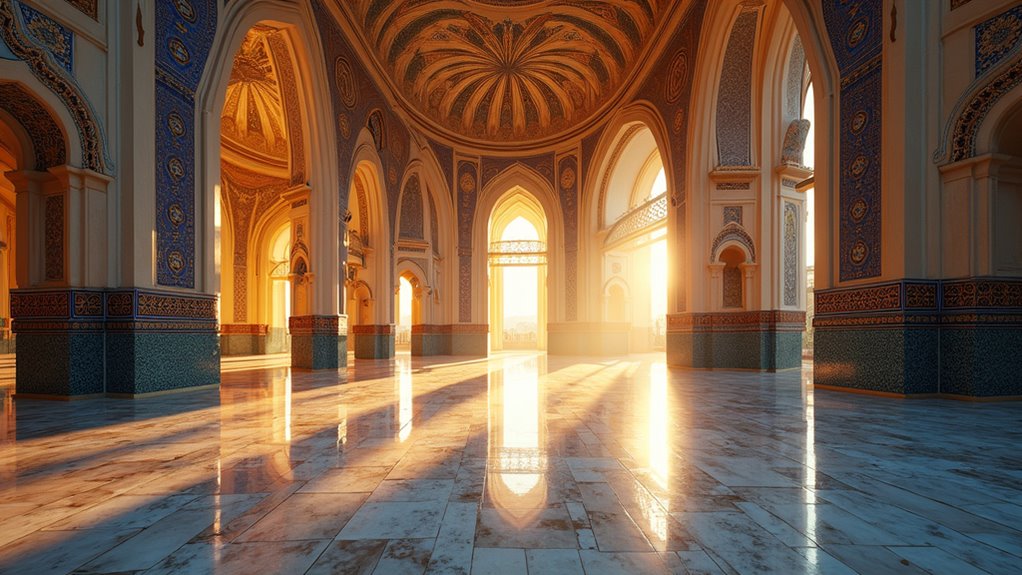
You’re visiting one of Iran’s holiest Shia pilgrimage sites, housing the tomb of Ahmad ibn Musa, brother of Imam Reza. The intricate silver zarih encasing the tomb serves as the spiritual centerpiece.
Non-Muslim visitors can join guided tours with English-speaking guides, though women must wear a provided chador.
This breathtaking mirror mosaic work represents centuries of Persian craftsmanship and devotion. The shrine’s origins trace back to the 12th century when it was first discovered and built during the rule of the Atabegs of Fars.
Take the Early Morning Bus to Persepolis Before the Crowds
While most travelers roll out of bed around 8 AM and join crowded tour groups, you’ll have Persepolis virtually to yourself if you catch that early morning minibus from Ali Ibn Hamze Terminal. Set your alarm for 5 AM and grab a taxi to the terminal for the early departure—you’ll reach the archaeological site before 7 AM when gates open.
The sunrise light transforms those ancient stone columns and bas-reliefs into pure magic, perfect for photography without other visitors cluttering your shots. You’ll actually hear your footsteps echoing through the ruins instead of fighting crowds for space. Walking through this ceremonial capital that once hosted grand Achaemenid ceremonies gives you a profound sense of stepping back into ancient Persian history.
Plus, morning temperatures keep you comfortable while exploring the expansive grounds. Team up with fellow travelers to split taxi costs, or ask your hotel concierge to arrange transport the night before.
Stroll Through Eram Garden’s Rose-Lined Pathways
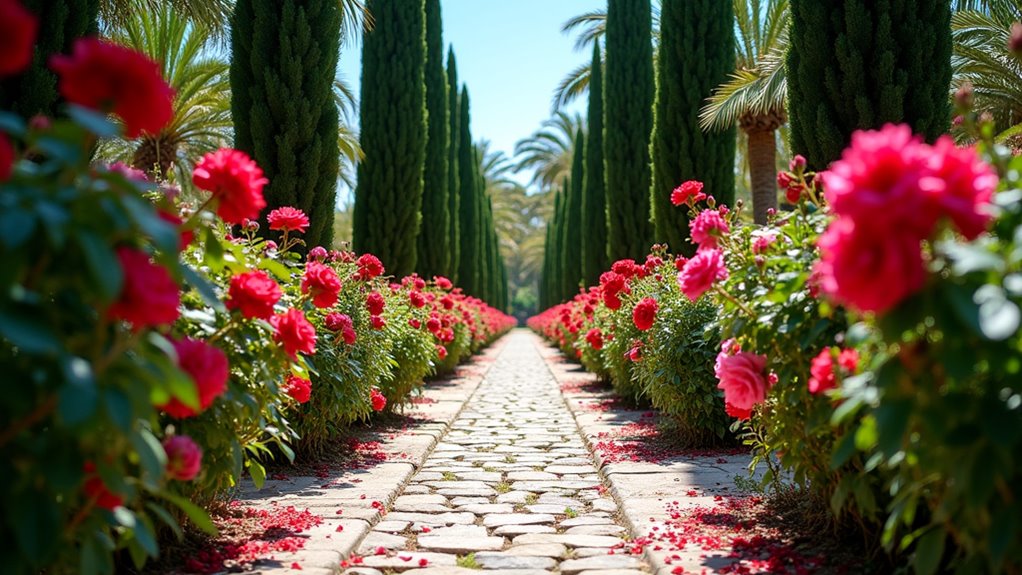
When spring arrives in Shiraz, Eram Garden transforms into a fragrant paradise where centuries-old rose varieties bloom along perfectly manicured pathways.
You’ll find yourself walking through this UNESCO World Heritage site’s traditional Persian chahar bagh layout, where symmetrical walkways lead to a stunning 19th-century Qajar pavilion.
The rose-lined paths create natural shade tunnels perfect for leisurely exploration, especially during March through May when blooms peak.
Don’t miss the three-story pavilion decorated with Persian poetry tiles from Hafez and Sa’di.
Inside, you’ll discover the Mirror Hall’s intricate mirrorwork and painted ceilings.
Visit early morning for the best light and fewer crowds.
The garden’s part of Shiraz University’s Botanical Garden, so you’ll encounter informational plaques explaining both historical significance and botanical varieties throughout your stroll. Look for the garden’s tallest cypress, a towering landmark that serves as Shiraz’s most prominent tree and adds remarkable vertical drama to the landscape.
Climb the Watchtowers of Karim Khan Citadel for City Views
After experiencing Shiraz’s garden beauty at ground level, the four imposing watchtowers of Karim Khan Citadel offer you a completely different perspective of the city from 14 meters above street level. You’ll climb three stories through rooms that once housed Zand dynasty guards and weapons. Each tower’s brick construction showcases Persian architectural fusion spanning centuries of influences.
From the top, you’ll capture panoramic views of downtown Shiraz and surrounding neighborhoods that historically served military surveillance purposes. The towers’ strategic positioning lets you observe the citadel’s gardens below and distant historic sites. The watchtowers feature shooting holes that guards used for surveillance and defense during the 18th century.
Don’t miss the famous “Leaning Tower of Shiraz” – its distinctive tilt resulted from soil settlement during construction. These vantage points transform you from tourist to temporary sentinel, experiencing Shiraz as royal guards once did.
Hunt for Hand-Knotted Carpets in the Traditional Workshops
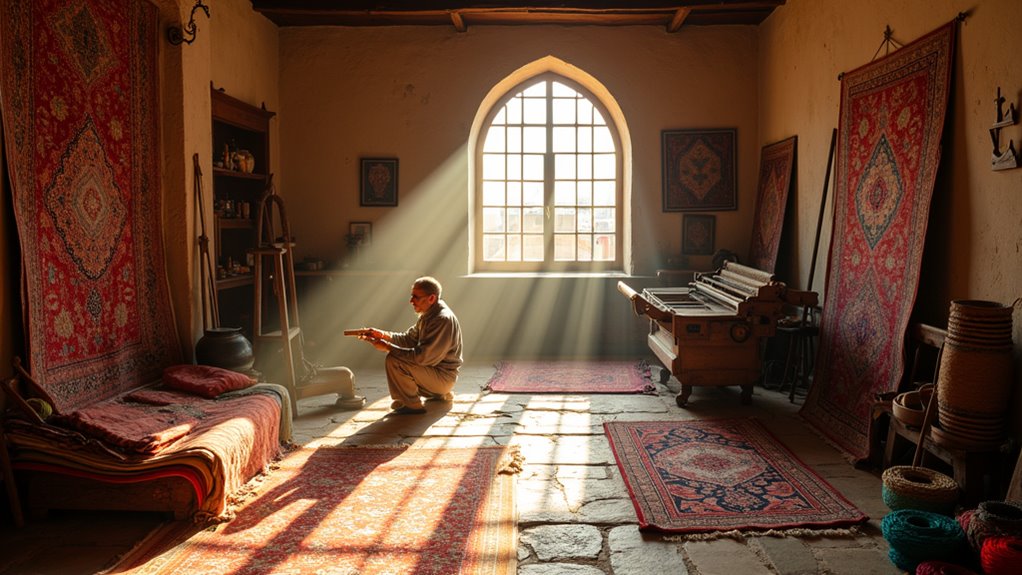
Step through the narrow doorways of Shiraz’s traditional carpet workshops, and you’ll discover artisans perpetuating a 500-year-old craft that transforms simple wool into treasured heirlooms. You’ll watch skilled weavers tie individual knots using techniques passed down through Qashqai and Khamseh nomadic tribes since the Safavid era.
These workshops reveal the entire process—from natural dye extraction using local plants to hand-knotting geometric patterns that tell stories of nomadic life. Many of these symbolic patterns carry deep meaning, with motifs like the Boteh representing growth and fertility in tribal culture.
You’ll notice Shiraz carpets feature lower knot density than other Persian rugs, creating their distinctive relaxed texture and rustic charm.
Don’t expect perfection; intentional irregularities make each piece unique. The deep reds, earthy browns, and natural blues you’ll see come from vegetable dyes, ensuring authentic tribal aesthetics that blend beautifully with modern interiors.
Sample Shirazi Salad and Fesenjan at Local Family Restaurants
While Shiraz’s carpet workshops showcase the city’s artistic heritage, its family restaurants reveal culinary traditions that’ll awaken your taste buds with authentic Persian flavors.
You’ll discover Shirazi salad’s invigorating crunch—finely diced cucumber, tomato, and onion dressed with tangy lemon juice and olive oil. This light starter perfectly balances rich dishes like Fesenjan, a hearty stew combining ground walnuts and pomegranate molasses with tender chicken or duck.
Visit Kateh Mas Traditional Restaurant for authentic preparation methods passed down through generations, or head to Sharzeh Restaurant near Vakil Bazaar for their popular buffet-style offerings.
Shapouri Garden’s heritage setting adds elegance to your dining experience. Many traditional venues enhance your meal with live Persian music performances that create an immersive cultural atmosphere.
These family-run establishments emphasize fresh, locally sourced ingredients and traditional cooking techniques, giving you genuine taste of Shiraz’s culinary identity.
Visit Saadi’s Tomb and the Nearby Tea Houses
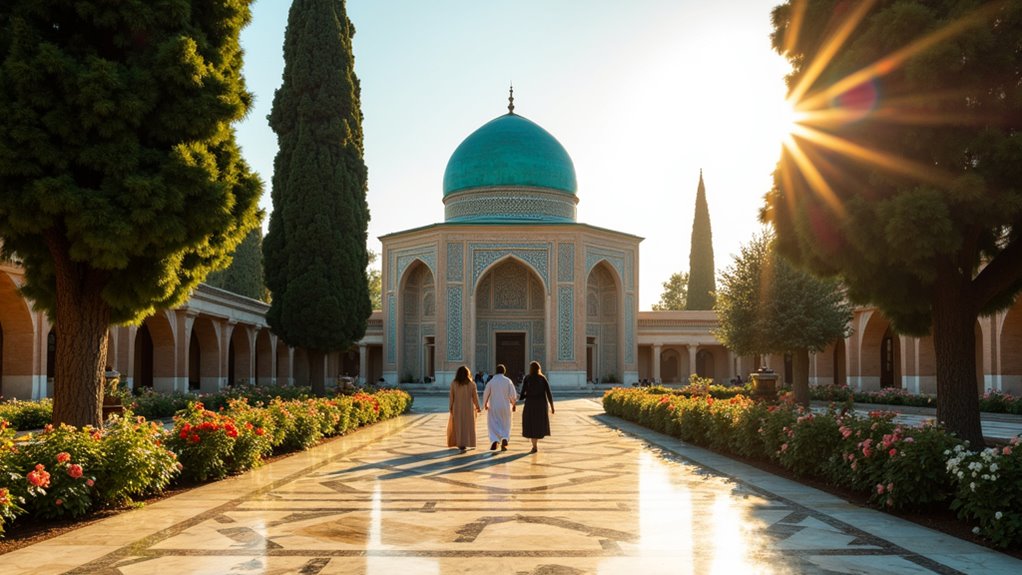
The turquoise dome of Saadi’s Tomb rises gracefully above one of Shiraz’s most beloved gathering places, where Persian poetry meets peaceful contemplation. You’ll discover the modernist mausoleum’s stunning blend of cubic exterior and octagonal interior, with seven verses from Saadi’s works inscribed on marble walls.
The azure-tiled dome symbolizes heaven in Persian tradition, while the surrounding 7,700-square-meter garden creates an oasis of cypress trees and flowing water channels. The site welcomes visitors daily from 8 AM to 9 PM, making it accessible for both morning contemplation and evening reflection.
Don’t miss the octagonal fish pond where locals traditionally wash during Chaharshanbe Suri. After exploring the tomb and museum, you’ll find traditional tea houses nestled under plane trees nearby. These cafés serve aromatic Persian tea with nuts, dried fruits, and sweets—perfect for reflecting on Saadi’s timeless poetry while watching daily Shirazi life unfold.
Drive to Pasargadae to See Cyrus the Great’s Simple Tomb
About 135 kilometers east of Shiraz, you’ll discover one of history’s most profound monuments—the remarkably simple tomb of Cyrus the Great, founder of the mighty Achaemenid Empire. Unlike other Persian rulers’ elaborate burial sites, Cyrus’s tomb reflects his modest values through its understated design.
You’ll find this 2,500-year-old limestone structure sitting in Pasargadae’s archaeological site. It consists of a six-stepped base topped by a simple chamber. The tomb’s earthquake-resistant construction has withstood millennia of natural forces. The site contains tomb inscriptions that confirm Cyrus’ identity and burial location, providing archaeological evidence that links this monument to the great Persian king.
Alexander the Great himself visited here in 330 BCE, ordering its restoration after finding it damaged.
The drive takes about two hours on well-maintained roads. As a UNESCO World Heritage site, Pasargadae offers you glimpses into early Persian architecture and the birthplace of one of history’s greatest empires.
The Sum Up
You’ll find Shiraz weaves poetry into everyday life—from Hafez’s verses echoing through evening gardens to carpet weavers sharing stories over tea. Don’t rush through the sites; instead, let conversations flow naturally with locals who’ll reveal hidden gems beyond guidebooks. Pack comfortable shoes for those ancient cobblestones, bring cash for bazaar bargaining, and save room for that extra bowl of fesenjan. Shiraz isn’t just a destination—it’s a cultural awakening you’ll carry home.