
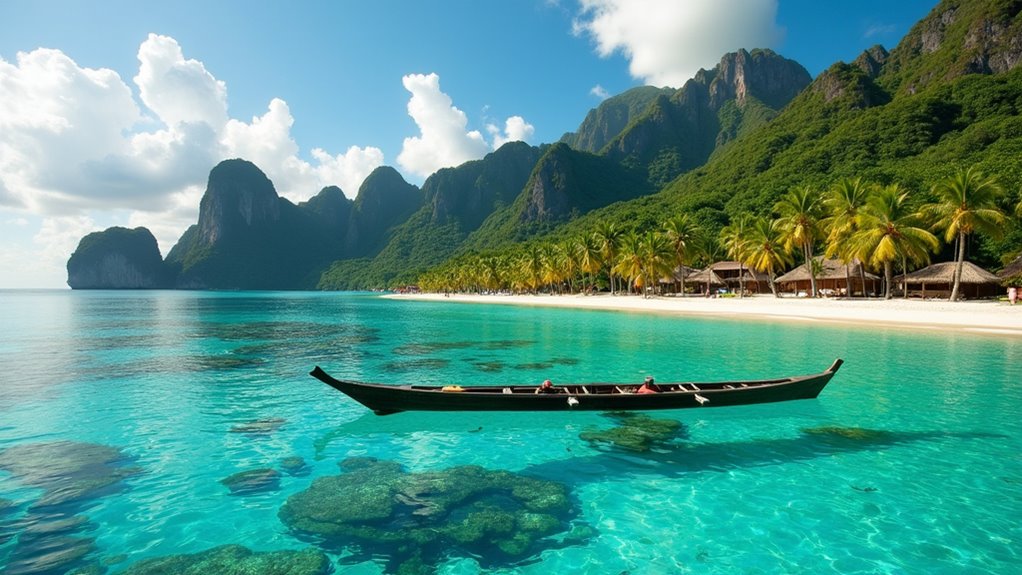
You’ll find the Solomon Islands offer far more than pristine beaches and turquoise waters. This Melanesian archipelago holds some of the Pacific’s most significant WWII history, alongside untouched coral reefs and traditional cultures that’ve remained largely unchanged for centuries. From diving legendary wartime wrecks to swimming with wild dolphins, the experiences here aren’t found anywhere else. Here’s how you can make the most of this remote paradise that few travelers ever discover.
- Dive the WWII Wrecks Around Gizo and Bonegi Beach
- Explore Guadalcanal’s WWII Battlefields and Museums
- Snorkel and Dive Marovo Lagoon’s Double Reef System
- Hike to Mataniko Falls Through Rainforest and War Sites
- Island Hop Through the Western Province
- Experience Traditional Village Life in Malaita
- Go Dolphin Swimming Off Savo Island
- Browse Honiara’s Markets and Cultural Sites
- The Sum Up
Dive the WWII Wrecks Around Gizo and Bonegi Beach
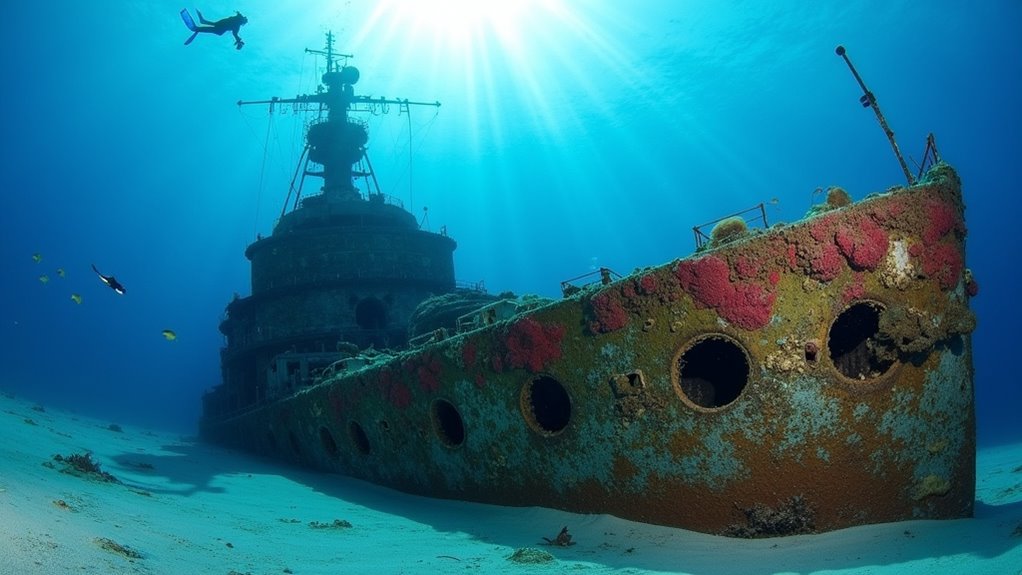
Two of the Solomon Islands’ most remarkable diving destinations offer unparalleled access to WWII history beneath the waves. Near Gizo, you’ll explore the massive Toa Maru, a 140-meter Japanese freighter resting between 7-37 meters deep. You’ll discover preserved cargo including tanks, motorcycles, and sake bottles while swimming through vibrant coral gardens teeming with turtles and manta rays.
At Bonegi Beach near Honiara, you can shore dive three historic Japanese transport wrecks from November 1942. The Hirokawa Maru offers swim-throughs and torpedo holes from 5-60 meters depth, while the nearby Kinugawa Maru provides equally compelling exploration. These artificial reefs now support over 20 nudibranch species and diverse marine life, creating unique underwater ecosystems where history and nature converge spectacularly. The region’s extensive wreck diving opportunities stem from the Solomon Islands campaign, where over 1,300 aircraft were lost and numerous ships sunk during the fierce battles between August 1942 and February 1943.
Explore Guadalcanal’s WWII Battlefields and Museums
While the underwater wrecks reveal Guadalcanal’s wartime past beneath the waves, the island’s land-based battlefields and museums offer equally compelling insights into one of WWII’s most vital campaigns.
You’ll find the Guadalcanal American Memorial on Skyline Drive, featuring a 24-foot pylon honoring Allied forces who died during the six-month campaign.
Visit the Vilu War Museum near Aruligo for its extensive collection of American aircraft and Japanese artillery, assembled from across the island.
Don’t miss key battle sites like Bloody Ridge, Red Beach, and Edson’s Ridge, where fierce combat shaped the Pacific War’s trajectory.
The Betikama School War Museum provides essential context about the campaign’s local impact and community involvement. The memorial’s strategic location overlooks both Honiara and the Mataniko River, offering visitors panoramic views of the historical landscape.
Snorkel and Dive Marovo Lagoon’s Double Reef System
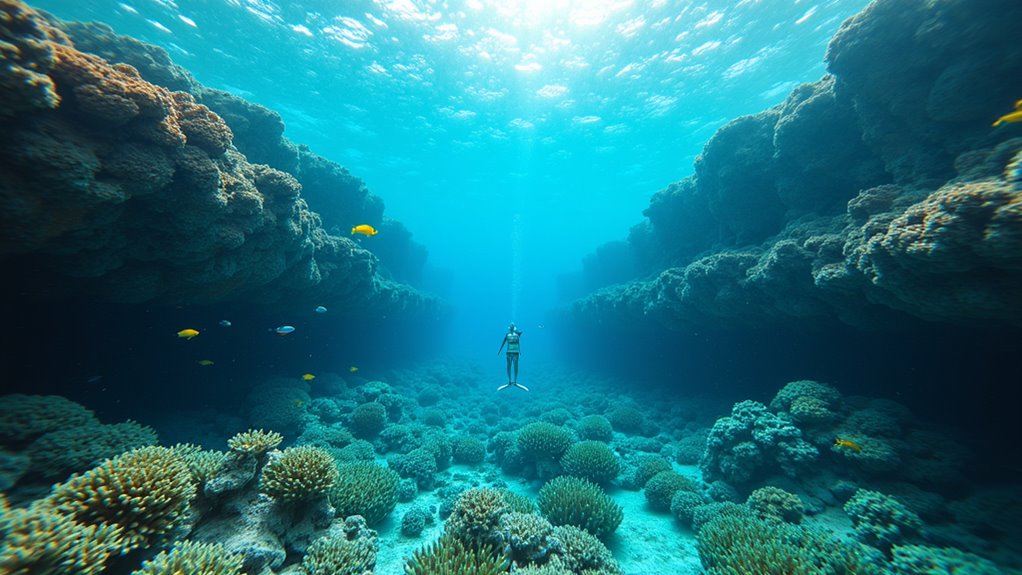
Spanning 700 square kilometers of pristine waters, Marovo Lagoon‘s double barrier reef system creates the world’s largest enclosed lagoon of its kind and one of the planet’s most extraordinary diving destinations.
You’ll discover water temperatures between 26°C and 30°C with visibility reaching 50 meters in these glass-like conditions protected by dual reef barriers.
The lagoon hosts over 900 tropical fish species and 1,000 marine species within the Coral Triangle’s biodiversity hotspot.
You can explore diverse sites featuring pelagic species, macro life, reef walls, and WWII aircraft wrecks.
Shallow reefs near villages offer safe snorkeling with vibrant coral cover averaging 38-49%.
Access through Seghe’s airstrip, where you’ll find canoe tours combining cultural village visits with underwater adventures.
Watch for dugongs, manta rays, sea turtles, and occasional sharks. The lagoon supports nearly 40% of mangrove species found worldwide, creating unique ecosystems where saltwater and freshwater environments merge.
Hike to Mataniko Falls Through Rainforest and War Sites
Beyond the underwater wonders surrounding the islands, you’ll find equally compelling adventures on land. Honiara’s nearby Mataniko Falls offers one of the Solomon Islands’ most rewarding day hikes.
Starting from Lili Village behind New Chinatown, you’ll traverse steep, uneven terrain through lush rainforest for 1.5-2 hours each way. The trail crosses the historically significant Mataniko River and ascends Galloping Horse Hills, where WWII relics from the Battle of Guadalcanal remain scattered throughout the landscape.
You’ll need sturdy hiking shoes, plenty of water, and good fitness levels for this challenging trek. Professional guides lead this 4-5 hour adventure, providing transportation from your hotel to ensure you safely navigate the demanding terrain. Your reward includes thundering waterfalls cascading over boulders, invigorating swimming holes, and the option to float downriver back to the village.
Island Hop Through the Western Province
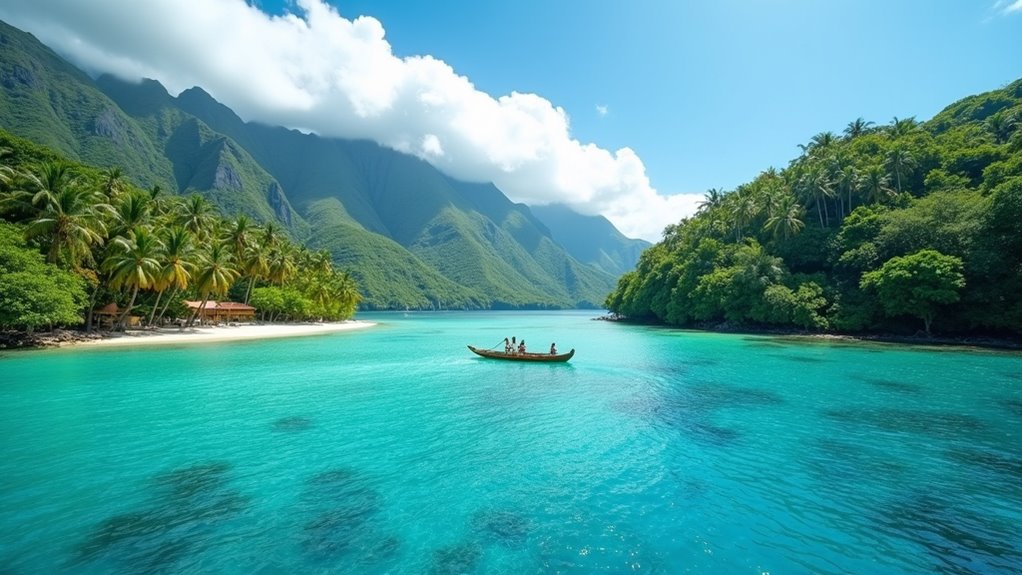
Where else can you explore eleven diverse islands in a single adventure-packed region? Western Province offers unmatched island hopping through Gizo, Munda, Kolombangara, Rendova, and New Georgia.
You’ll reach main hubs via Pelican Shipping Company ferries (SBD300-1100) or domestic flights from Honiara, then use local boats for smaller islands.
Dive world-class sites like Shark Point’s 600-meter wall and WWII wrecks including Toa Maru. Snorkel Marovo Lagoon’s pristine reefs or explore Karumolun Point’s pelagic species.
Visit sacred Skull Island with local guides to see traditional ceremonial artifacts and shell money. Experience authentic village markets and Melanesian culture on remote islands.
Hike Kolombangara’s mountain trails to waterfalls, or kayak around Mbabanga Island for alternative exploration. For a unique accommodation experience, stay at Fatboys Resort in Western Province which features overwater bungalows.
Experience Traditional Village Life in Malaita
Malaita’s remote villages offer an unparalleled glimpse into authentic Melanesian culture, where ancient kastom traditions shape daily life and shell money still functions as legitimate currency. You’ll witness the wantok kinship system firsthand as clan members gather in central men’s houses around communal fire pits for storytelling and decision-making ceremonies.
Visit traditional stilt houses built from sago-palm leaves near coastal lagoons, where families practice subsistence fishing using woven coconut leaf nets. You can learn shell money crafting techniques at Langa Langa Lagoon workshops or attend Busu village’s annual Shell Money Festival featuring authentic dance performances. The traditional shell currency serves multiple purposes in village society, from resolving disputes and conflicts to facilitating bride price negotiations and ceremonial gift exchanges.
Experience traditional ‘Visi’ fishing methods in Nareabu’s lagoon communities and listen to distinctive panpipe music in Are Are Lagoon villages, where these cultural expressions remain integral to village identity.
Go Dolphin Swimming Off Savo Island
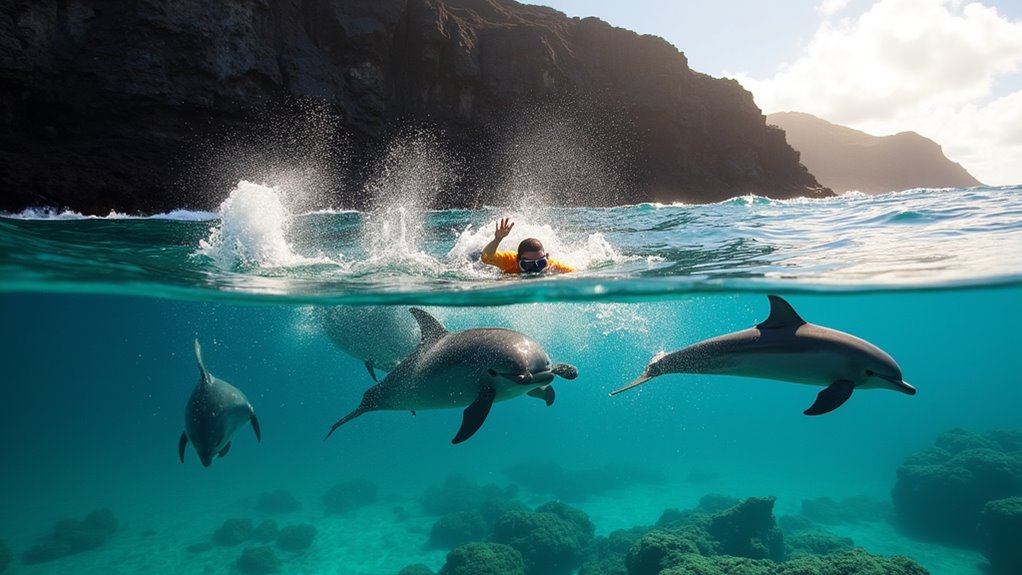
Savo Island’s southern waters host thriving dolphin populations where you can swim alongside bottlenose and spinner dolphins in their natural breeding grounds. You’ll hang onto boat sides while dolphins approach naturally, allowing respectful encounters without forced interaction. Tours operate from nearby Sunset Lodge, providing quick access to prime dolphin sites during daylight hours when dolphins feed and socialize near the surface.
Calm seas and clear water increase your chances of successful encounters. You’ll need good swimming skills and must follow guide instructions for safety. Snorkeling gear enhances underwater observation without physical contact.
Book tours through Honiara operators or directly at Savo Island for organized excursions that combine dolphin swimming with coral reef snorkeling and wildlife viewing opportunities. During boat trips, dolphins often perform acrobatic shows while following vessels, adding spectacular displays to your swimming experience.
Browse Honiara’s Markets and Cultural Sites
Honiara Central Market serves as the Solomon Islands’ largest marketplace and cultural heartbeat, where you’ll experience authentic local commerce alongside traditional arts and crafts. Open daily except Sundays from 8:00 a.m. to 5:00 p.m., you’ll find fresh tropical produce, fish, and local meats alongside mother-of-pearl carvings, shell jewelry, and wooden handicrafts.
Visit the nearby Honiara Craft Market Centre, managed by the National Art Gallery, where you can watch artisans create traditional and contemporary pieces daily. Explore surrounding cultural landmarks including Holy Cross Cathedral, Point Cruz Wharf, and war relics reflecting WWII heritage.
The bustling market atmosphere showcases local life through subsistence farming surplus and lively social interactions. Affordable prices make it easy to spend an entire day browsing the diverse selection of handicrafts and sampling local delicacies. Haggling’s common, and you’ll discover unique souvenirs incorporating historic shell money while witnessing authentic Solomon Islands culture.
The Sum Up
You’ll find the Solomon Islands offer an unmatched blend of history, adventure, and culture. Plan at least two weeks to experience the diverse activities properly—WWII sites require full days, while island hopping needs careful timing with local transport schedules. Book accommodations early, especially in remote areas. Don’t miss engaging with local communities; their stories and traditions provide irreplaceable context to your journey. Pack reef-safe sunscreen and waterproof gear for ideal exploration.