
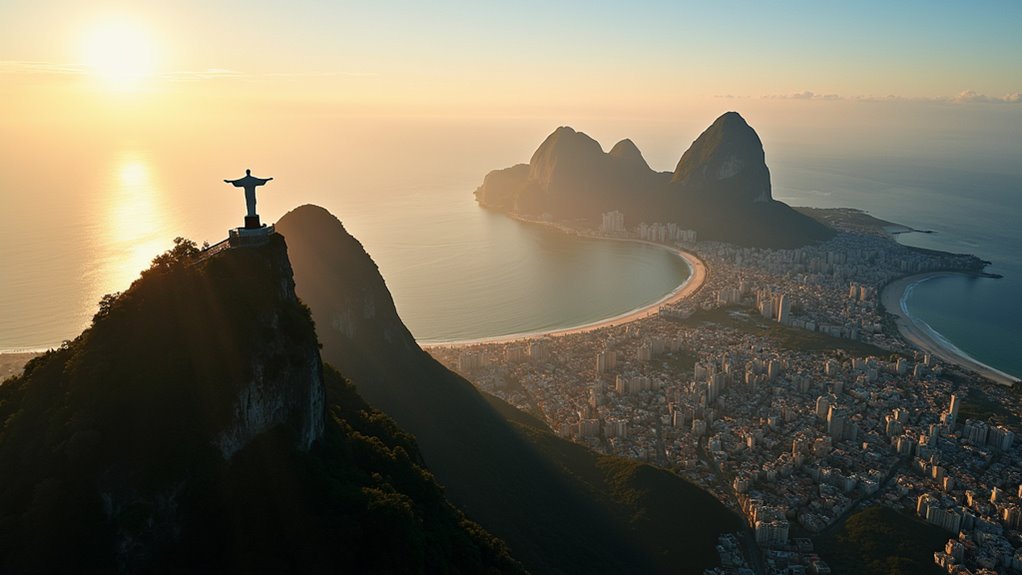
You’ll find South America’s most unforgettable experiences range from hiking the 4-day Classic Inca Trail to Machu Picchu’s ancient ruins to witnessing over 2,100 southern right whales breach along Argentina’s Valdés Peninsula. Walk across Bolivia’s mirror-like Salar de Uyuni salt flats, explore Cartagena’s cobblestone colonial streets, and feel the thundering power of 275-waterfall Iguazu Falls. From stargazing in Chile’s Atacama Desert to dancing tango in Buenos Aires’ neighborhoods, these adventures showcase the continent’s incredible diversity and hidden treasures await your exploration.
- Hike the Classic Inca Trail to Machu Picchu
- Experience the Thundering Power of Iguazu Falls
- Walk Across the Mirror-Like Salar De Uyuni Salt Flats
- Take the Cable Car Up Rio’s Sugarloaf Mountain
- Explore the Cobblestone Streets of Colonial Cartagena
- Cruise the Galápagos Islands for Wildlife Encounters
- Trek to Mount Fitz Roy Base Camp in El Chaltén
- Navigate the Amazon Rainforest From a Jungle Lodge
- Watch Condors Soar Over Peru’s Colca Canyon
- Discover Ancient Inca Ruins in Cusco’s Sacred Valley
- Dance Tango in Buenos Aires’ Atmospheric Neighborhoods
- Marvel at Easter Island’s Mysterious Moai Statues
- Bike Bolivia’s Infamous Death Road Downhill Route
- Spot Whales and Penguins on Argentina’s Valdés Peninsula
- Experience High-Altitude Lake Life at Lake Titicaca
- Stargaze in Chile’s Crystal-Clear Atacama Desert
- Trek Through Torres Del Paine’s Granite Peaks
- Sandboard the Massive Dunes at Huacachina Oasis
- Wander Quito’s UNESCO-Listed Colonial Center
- Relax on Brazil’s World-Famous Ipanema Beach
- Explore Patagonia’s Ancient Glaciers and Ice Fields
- Visit the Floating Reed Islands of the Uros People
- Discover Rio’s Vibrant Neighborhoods Beyond the Beaches
- Trek Multi-Day Routes Through Patagonian Wilderness
- Experience New Year’s Eve on Copacabana Beach
- The Sum Up
Hike the Classic Inca Trail to Machu Picchu
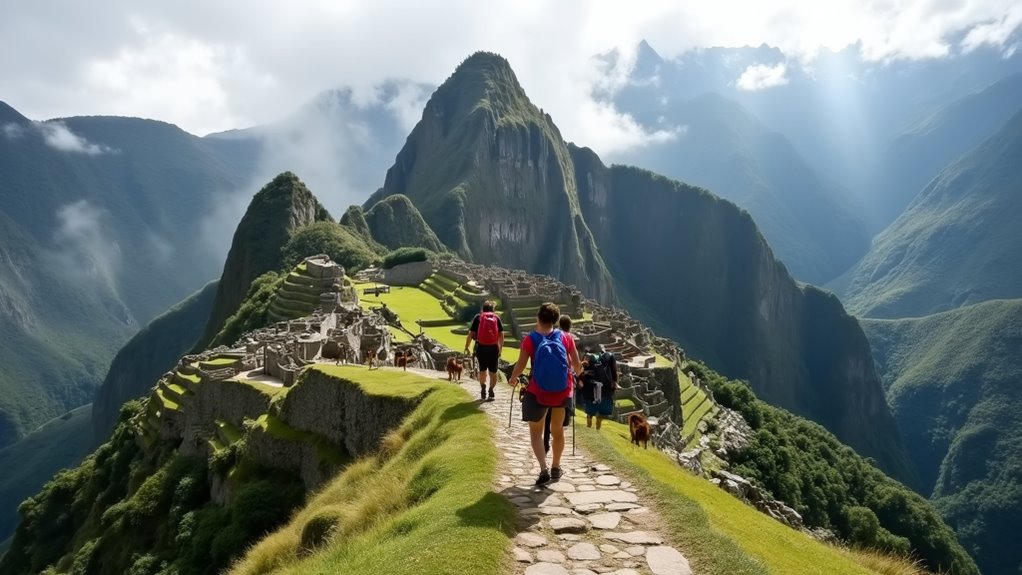
Why settle for glimpsing Machu Picchu from a tour bus when you can earn your arrival through four days of trekking along the same stone pathways the Incas carved centuries ago? The Classic Inca Trail spans 39-43 kilometers through stunning Andean terrain, culminating at the legendary Sun Gate overlooking Machu Picchu.
Book your permit 6-8 months ahead—only 200 hikers can start daily. Prepare for the challenging Day 2 climb to Dead Woman’s Pass at 13,800 feet, where you’ll gain over 4,000 feet of elevation. The trek involves a total elevation gain of approximately 8,822 feet throughout the journey. Acclimatize in Cusco for 1-2 days beforehand and train your cardiovascular system and leg strength.
You’ll navigate ancient stone staircases, camp beneath star-filled skies, and explore archaeological sites like Wiñay Wayna before reaching Machu Picchu at sunrise.
Experience the Thundering Power of Iguazu Falls
Where 275 individual waterfalls plunge thunderously into misty chasms along a 1.7-mile semicircular precipice, Iguazu Falls delivers one of South America’s most overwhelming sensory experiences.
You’ll want to explore both sides of this binational UNESCO World Heritage Site. Argentina’s boardwalk circuits bring you within arm’s reach of cascading torrents and the spectacular Devil’s Throat—a U-shaped chasm with an 80-meter vertical drop carrying 1,500 cubic meters per second. Take an exhilarating speedboat ride to get soaked in the mist and experience the falls’ raw power up close.
Brazil’s side offers sweeping panoramic viewpoints across the entire amphitheater.
Visit during November-March’s rainy season for maximum drama, though expect up to 10,000 daily visitors. The drier August-September period provides clearer hiking conditions and better photography opportunities with reduced crowds.
Walk Across the Mirror-Like Salar De Uyuni Salt Flats
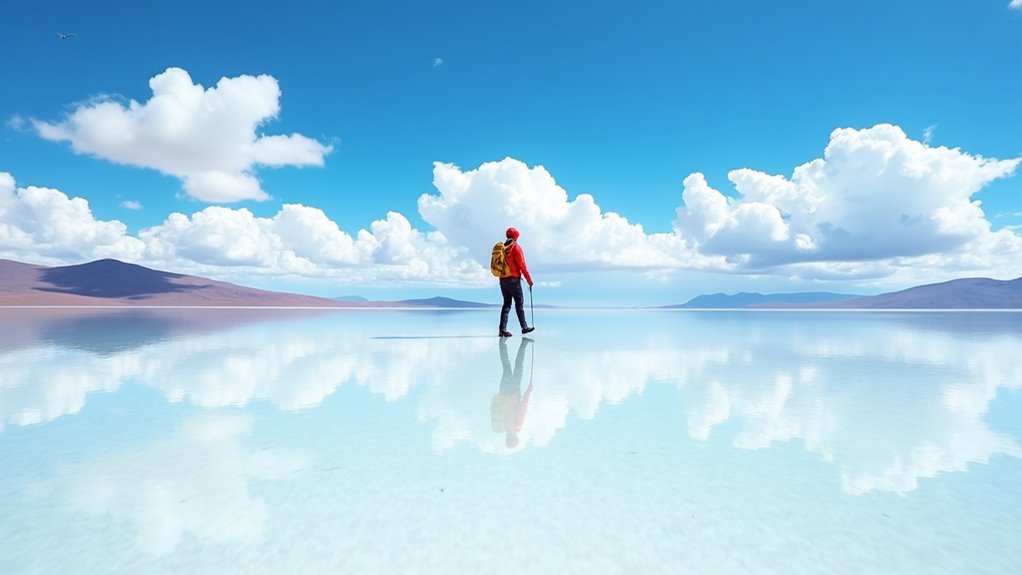
When Bolivia’s rainy season transforms Salar de Uyuni into the world’s largest natural mirror, you’ll find yourself walking on what appears to be the sky itself. Plan your visit between December and March when summer rains flood the salt flats with just a few centimeters of water, creating reflection photography paradise across 80+ miles of seamless horizon.
Base yourself in Uyuni town and book sunrise or sunset mirror tours for ideal lighting conditions. The shallow water lets you walk safely while maintaining that ethereal sky-reflection effect.
During dry season, you’ll experience completely different magic—polygon-cracked salt crusts stretching endlessly across this 10,582-square-kilometer expanse at 12,000 feet elevation. This otherworldly landscape has served as the backdrop for major films, including its role as planet Crait in Star Wars: The Last Jedi.
Consider multi-day 4×4 circuits including nearby colored lagoons, and don’t miss perspective-bending photography opportunities that this ultra-flat terrain uniquely enables.
Take the Cable Car Up Rio’s Sugarloaf Mountain
Since its 1912 inauguration as South America’s first cable car system, Rio’s iconic bondinho has carried over 40 million passengers up Sugarloaf Mountain’s dramatic granite face.
You’ll ascend in two stages: first to Morro da Urca at 722 feet, then the steeper final climb to the 1,299-foot summit. Each three-minute ride offers expanding views of Guanabara Bay, Copacabana Beach, and Christ the Redeemer statue.
Stop at Morro da Urca’s intermediate station for cafes and less crowded photo opportunities before continuing upward.
The glass-walled gondolas maximize visibility during your ascent through Atlantic forest terrain. Each modern cabin can accommodate up to 65 passengers for a comfortable journey to the top.
Buy tickets through official Parque Bondinho channels to avoid markup, and time your visit for late afternoon when golden light enhances the panoramic cityscape stretching across Rio’s coastline.
Explore the Cobblestone Streets of Colonial Cartagena
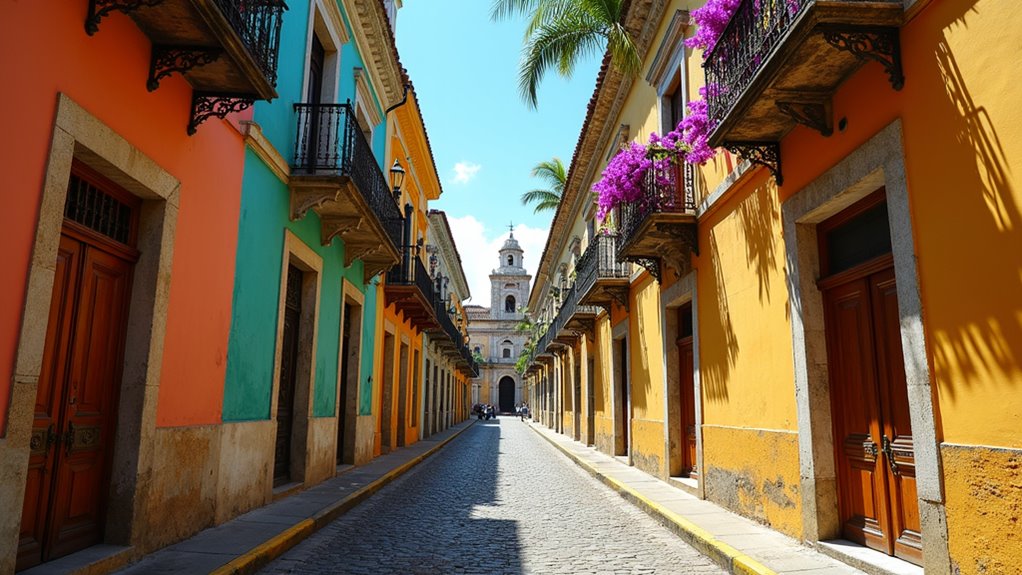
While most South American colonial cities have succumbed to modern development, Cartagena’s cobblestone streets remain frozen in time within their original 16th-century walls. You’ll enter through the Torre del Reloj’s iconic archway into a dense grid of narrow lanes lined with pastel-colored Spanish colonial houses.
Focus your exploration around the interior patios visible behind ornate wooden doors—each tells stories of the city’s complex past as a major slave port and gold shipment hub.
Don’t miss the carved balconies with wrought-iron details that provide natural shade as you navigate between Plaza de los Coches and the network of small squares. The city was strategically built atop the destroyed village of Calamarí, establishing Spanish colonial dominance over the indigenous settlement that once thrived here.
Extend your walk to Las Bóvedas’ vaulted artisan shops, then venture into neighboring Getsemaní for a complete colonial experience beyond the main tourist corridors.
Cruise the Galápagos Islands for Wildlife Encounters
A seven-day expedition cruise through the Galápagos offers unparalleled access to the world’s most fearless wildlife, where you’ll encounter giant tortoises, marine iguanas, and playful sea lions across multiple islands without the limitations of land-based tours.
You’ll witness marine iguanas—the world’s only marine lizard—basking in dense colonies on Fernandina’s volcanic shores. Zodiac landings and guided hikes reveal blue-footed boobies and frigatebirds nesting at arm’s length, while snorkeling puts you face-to-face with curious sea lions in shallow bays. These magnificent frigatebirds showcase impressive 8-foot wingspans as they soar overhead during their elaborate courtship displays.
Certified naturalist guides interpret behaviors and evolution at every stop. With fewer than 79,000 cruise visitors annually, small-ship expeditions guarantee intimate wildlife encounters while protecting this UNESCO World Heritage site’s extraordinary biodiversity.
Trek to Mount Fitz Roy Base Camp in El Chaltén
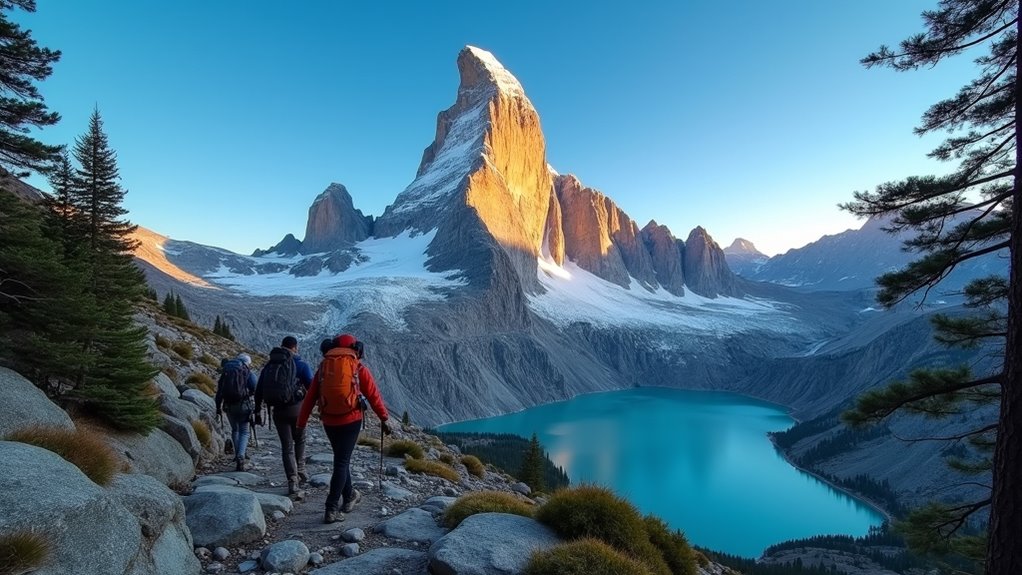
Where else can you stand face-to-face with Patagonia’s most iconic granite spires rising 3,405 meters straight from the valley floor? The trek to Mount Fitz Roy base camp from El Chaltén delivers Argentina’s most spectacular mountain panorama at Laguna de los Tres viewpoint.
You’ll tackle a demanding 21-kilometer round trip with 800-1,066 meters of elevation gain over 7-9 hours. The route starts gently through forested valleys, passing Mirador Fitz Roy before reaching Campamento Poincenot after 8 kilometers.
Then comes the brutal final kilometer—400 meters of elevation gain over loose rock and scree that’ll test your endurance. For the ultimate adventure, you can cross the Fitz Roy river using a zip-line to access even more remote viewpoints and glacier crossings.
Visit November through March for ideal conditions, though expect Patagonian winds and rapid weather changes. Pack trekking poles, layered clothing, and waterproof gear. Start early from El Chaltén to maximize daylight hours.
Navigate the Amazon Rainforest From a Jungle Lodge
Deep within the world’s largest rainforest, jungle lodges serve as your gateway to experiencing the Amazon’s incredible biodiversity without sacrificing comfort or safety. You’ll reach most lodges through key hubs like Manaus, Iquitos, or Puerto Maldonado, then travel 2–4 hours by combined car and boat transfers.
Plan for a minimum 3-day stay to justify transfer times and maximize wildlife encounters. Your all-inclusive package typically covers transfers, meals, and twice-daily guided excursions using motorized canoes, paddled boats, and walking trails.
Remote lodges deep inside reserves offer 20% or higher jaguar sighting chances and access to specialized features like clay licks and canopy towers. Bilingual guides accompany you during all outdoor activities, carrying telescopes and binoculars to help spot wildlife that untrained visitors often miss.
Expect mosquito-screened accommodations, scheduled electricity, and shared spaces including restaurants and viewing decks overlooking pristine forest.
Watch Condors Soar Over Peru’s Colca Canyon
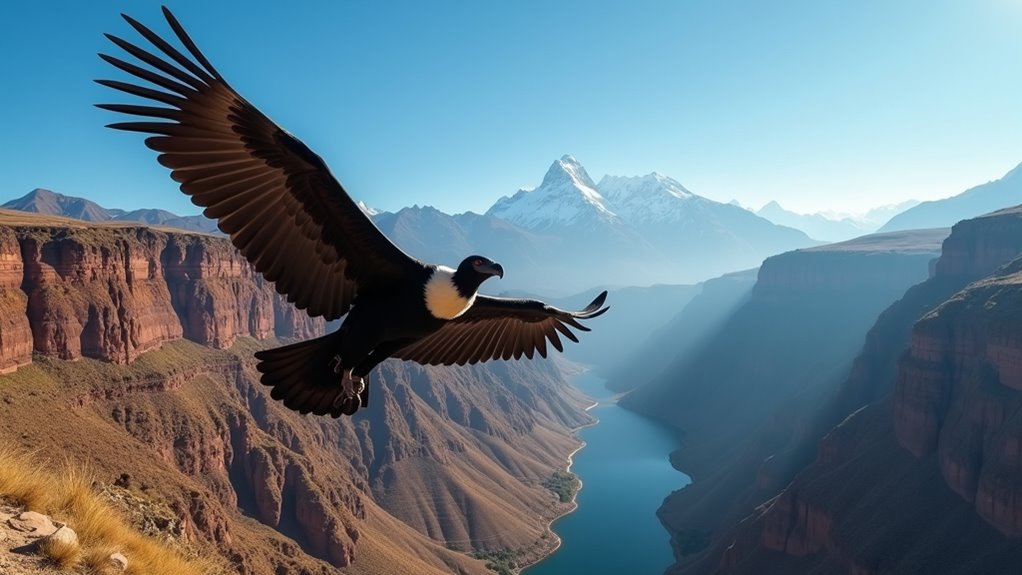
While the Amazon offers intimate wildlife encounters from jungle lodges, Peru’s Colca Canyon delivers one of South America’s most spectacular avian experiences as massive Andean condors ride thermal currents above the world’s second-deepest canyon.
You’ll need to start early—tours depart Arequipa around 3:30 a.m. for the four-hour drive to reach Cruz del Cóndor viewpoint by 8:00 a.m., when condors begin their morning flights.
These sacred birds, with wingspans reaching 11 feet, soar effortlessly on thermal updrafts at the canyon’s 3,400-meter depths.
Visit between May and September for ideal weather conditions and clearer skies. The early departure also helps avoid morning fog that can obstruct views in the valley before sunlight burns it off.
Arrive prepared for altitude—you’ll be viewing at 3,500 meters above sea level while dozens of condors glide below, beside, and above your platform.
Discover Ancient Inca Ruins in Cusco’s Sacred Valley
Beyond Machu Picchu’s fame lies the Sacred Valley’s constellation of remarkable Inca sites, each offering distinct insights into imperial engineering and daily life from Cusco’s agricultural heartland.
Start at Sacsayhuamán’s massive zigzag walls above Cusco, then venture to Pisac’s extensive terraces and cliffside tombs. Don’t miss Moray’s circular agricultural laboratory—these concentric terraces create distinct microclimates where Incas perfected crop cultivation. Each 30-meter-deep depression demonstrates sophisticated hydrological engineering that’s still functional today.
Ollantaytambo provides the valley’s most complete experience. You’ll explore steep agricultural terraces, the unfinished Sun Temple’s massive andesite blocks, and ceremonial waterworks. The town below maintains its original Inca street grid, making it the empire’s best-preserved continuously inhabited settlement. Visit during the dry season from May to October for optimal weather conditions and easier navigation between sites.
Plan two days minimum to appreciate these interconnected sites properly.
Dance Tango in Buenos Aires’ Atmospheric Neighborhoods

In Buenos Aires’ cobblestone streets and dimlit corners, tango pulses through neighborhoods where the dance was born among dockworkers and immigrants over a century ago. You’ll find the most authentic experiences in San Telmo and La Boca, where each barrio developed its own distinctive style.
Start at Plaza Dorrego’s Sunday market, where dancers lay boards over cobblestones for impromptu performances amid handicraft stalls. Explore Almagro’s traditional milongas for late-night social dancing, or catch professional demonstrations in La Boca’s colorful streets.
Follow the classic tango circuit: take classes first, practice at prácticas on weeknights, then graduate to weekend milongas. Each venue has unique codes and regulars, so observe before jumping in. You’ll be joining approximately 145,000 dancers who call Buenos Aires home, representing over 1% of the city’s population.
Marvel at Easter Island’s Mysterious Moai Statues
From the passionate rhythms of Buenos Aires, journey to the remote Pacific where Easter Island’s nearly 1,000 moai statues stand as silent guardians across a windswept landscape. You’ll discover these aren’t just heads—many partially buried statues reveal full bodies when excavated.
Visit Rano Raraku quarry where 95% were carved from volcanic tuff using basalt tools called toki between 1250-1500 CE.
Head to Ahu Tongariki for the most impressive lineup of fifteen restored moai facing inland to protect ancestral lands. Don’t miss the quarry site where nearly 400 statues remain in various completion stages. Look for the distinctive red scoria topknots called pukao that crown some statues, representing the sacred headdresses of high-ranking chieftains.
Plan your visit during sunrise or sunset when dramatic lighting emphasizes their imposing presence. These “living faces of ancestors” served as repositories of mana, representing deified chiefs whose spiritual power assured community prosperity and fertility.
Bike Bolivia’s Infamous Death Road Downhill Route
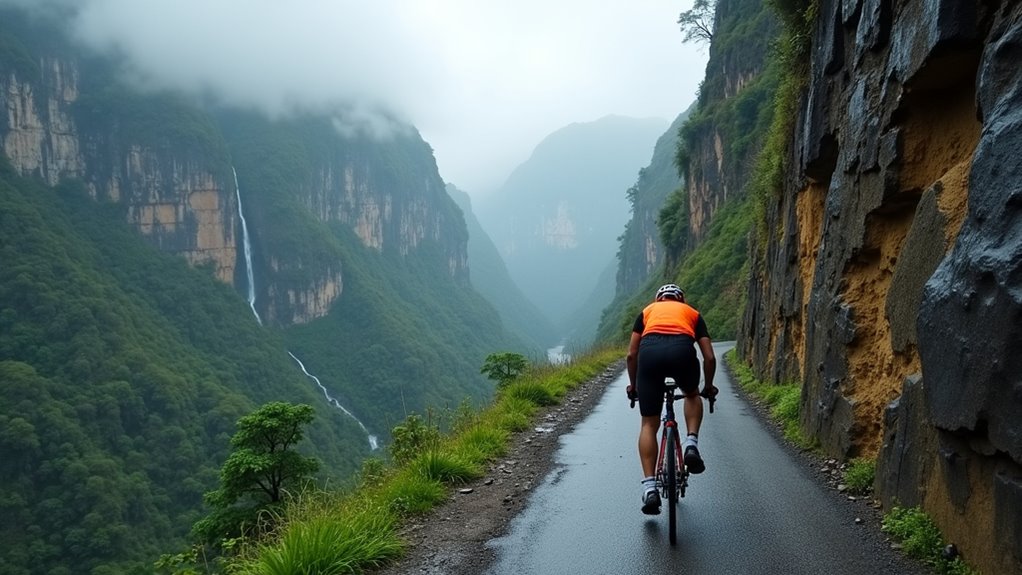
Why would anyone voluntarily hurtle down a road nicknamed “Death Road” on a mountain bike? Because Bolivia’s North Yungas Road offers one of the world’s most extreme cycling adventures. You’ll descend 3,500 meters from La Cumbre’s frigid 4,650-meter starting point to subtropical Coroico, experiencing dramatic climate shifts within hours.
The 60-kilometer route features narrow gravel paths hugging 600-meter cliff drops—no guardrails included. Book tours through established La Paz operators who provide full-suspension bikes and safety gear. You’ll need both. The unpaved sections demand constant concentration as you navigate mud, loose stones, and occasional waterfalls crossing your path.
Despite improved safety measures since vehicle traffic moved to a new highway, 18 cyclists have died here since 1998. The road was originally built in the 1930s by Paraguayan prisoners during the Chaco War. Respect the road’s reputation while embracing this unmatched adrenaline rush through Bolivia’s stunning landscapes.
Spot Whales and Penguins on Argentina’s Valdés Peninsula
Argentina’s Península Valdés delivers one of the planet’s most spectacular marine wildlife experiences, where you’ll witness southern right whales breaching just meters from shore alongside massive Magellanic penguin colonies.
Visit during September through November for the ultimate wildlife overlap—southern right whales, Magellanic penguins, elephant seals, and orcas all converge. Base yourself in Puerto Madryn, then head to El Doradillo Beach for incredible shore-based whale watching where mothers and calves approach within meters.
Take boat tours from Puerto Pirámides for close encounters with the 400-600 whales that visit seasonally. Recent aerial census data shows the whale population has been steadily increasing since 2000, with researchers recording over 2,100 southern right whales in the area.
Don’t miss Estancia San Lorenzo for penguin watching within this UNESCO World Heritage site. The dry coastal climate guarantees reliable viewing conditions year-round, while the peninsula’s 500 residents maintain an authentic, uncrowded atmosphere.
Experience High-Altitude Lake Life at Lake Titicaca
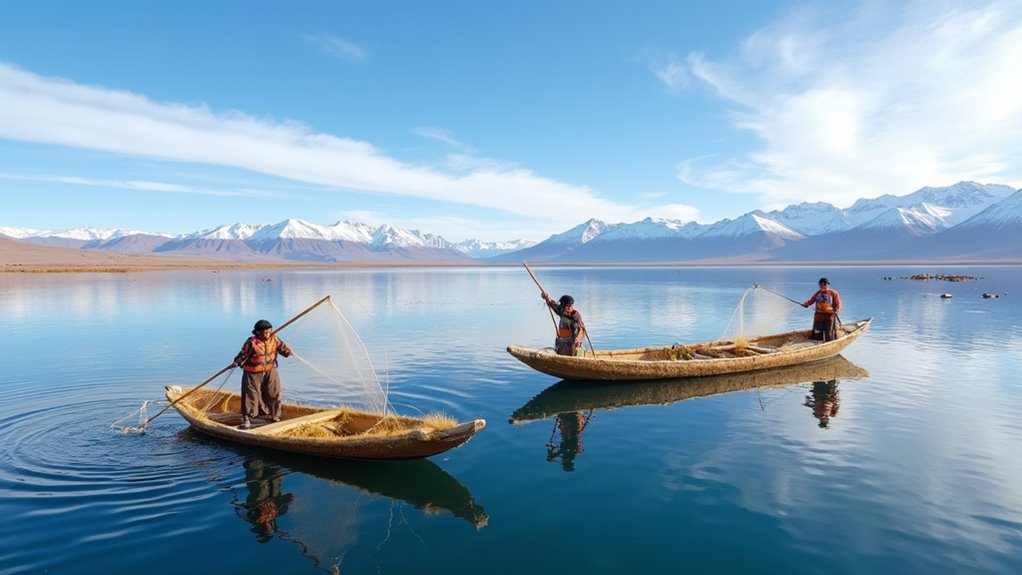
While Argentina’s coastal waters showcase marine spectacles, Peru and Bolivia’s shared Lake Titicaca offers an entirely different yet equally mesmerizing encounter with nature at 12,500 feet above sea level. You’ll discover the world’s highest navigable lake spanning 3,200 square miles across the Altiplano.
Base yourself in Puno, Peru, or Copacabana, Bolivia, to explore over 40 islands. Visit the famous totora reed floating islands where Uros communities craft homes and boats from lake vegetation. Take traditional reed boats to Taquile Island for authentic Quechua culture and textiles.
Watch for endemic species like the flightless Titicaca grebe and Titicaca water frog. The lake’s sacred significance runs deep—locals consider it the cradle of Inca civilization. This ancient lake is estimated to be three million years old, making it one of the oldest bodies of water on Earth. Expect intense sun and cool temperatures year-round at this extreme altitude.
Stargaze in Chile’s Crystal-Clear Atacama Desert
Beyond the high-altitude wonders of Lake Titicaca, Chile’s Atacama Desert presents what many consider Earth’s spectacular stargazing destination. You’ll experience Bortle class 1-2 dark skies with exceptional clarity due to extreme dryness and high elevation around San Pedro de Atacama at 2,400 meters.
Plan your visit during the dry season from April through October, targeting new-moon periods for prime Milky Way visibility. Book telescope tours from San Pedro, where 16-inch Meade reflectors reveal Saturn’s rings and Jupiter’s moons in stunning detail.
Valle de la Luna offers unobstructed sky views, while El Tatio Geysers area above 4,000 meters provides incredibly thin, transparent air.
You’ll see southern hemisphere exclusives like Magellanic Clouds and the Southern Cross, plus major planets aligned along the ecliptic during summer months.
Trek Through Torres Del Paine’s Granite Peaks
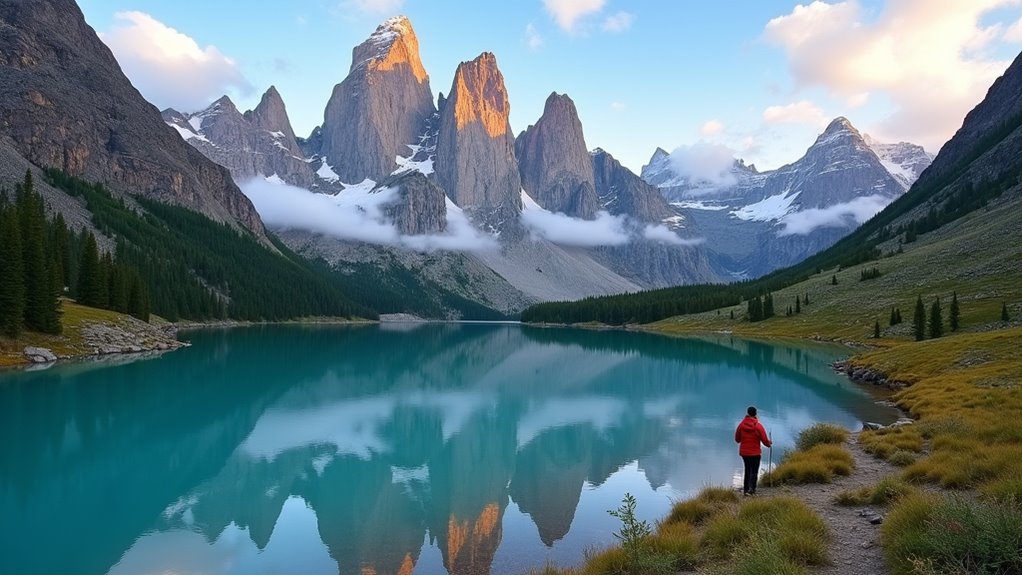
Patagonia’s crown jewel awaits in Chile’s Torres del Paine National Park, where jagged granite spires pierce the sky at nearly 9,000 feet above dramatic glacial valleys.
You’ll tackle the challenging W Trek (46 miles over 4-5 days) or the demanding O Circuit (80 miles spanning 8-10 days) through windswept steppes and ancient lenga forests.
The Base Torres day hike delivers stunning granite tower views after a grueling 7-9 hour trek with 3,300 feet of elevation gain.
Plan your visit between October and April when trails operate at full capacity.
Pack hurricane-strength windproof gear—conditions change rapidly from sunshine to driving sleet.
Book accommodations early and consult CONAF rangers about weather closures before departing.
Sandboard the Massive Dunes at Huacachina Oasis
When you crave pure adrenaline without the expense of a ski resort, Peru’s Huacachina Oasis delivers world-class sandboarding on towering golden dunes just four hours south of Lima.
The soft, fine sand here is actually easier to ride than snow, making it perfect for beginners and experts alike.
Book a combined dune buggy and sandboarding tour for around $13-25, typically lasting two hours with 3-4 runs on progressively larger slopes. Schedule late afternoon tours to catch stunning sunset views.
Wax your board before each descent—unwaxed boards stick to sand and kill your speed. Wear long sleeves and pants for protection, plus sunglasses and a scarf to block sand. Most operators offer beginner-friendly belly-riding options if standing feels too intimidating initially.
Wander Quito’s UNESCO-Listed Colonial Center
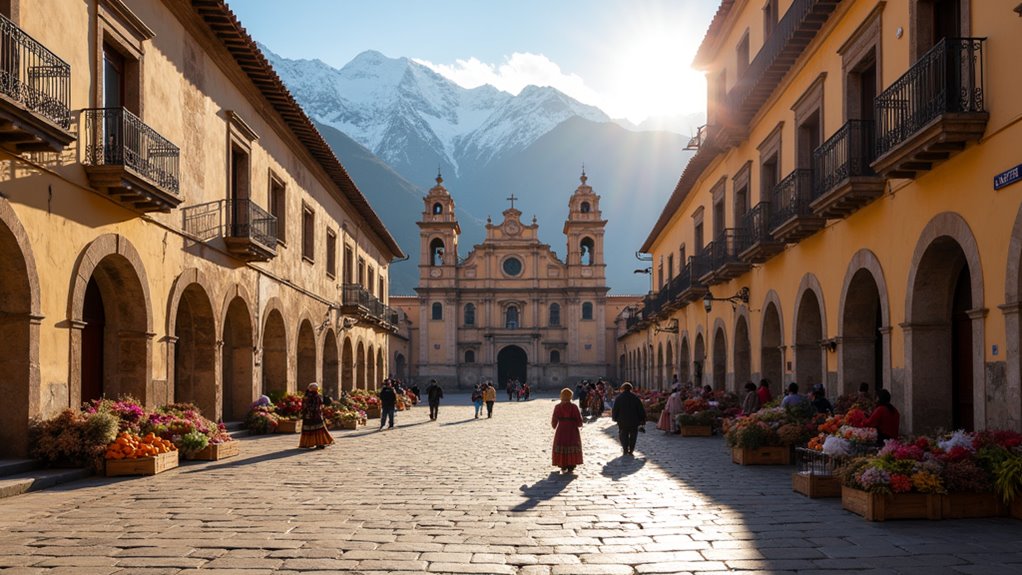
Since UNESCO designated Quito’s colonial center as one of the world’s first World Heritage Sites in 1978, this 790-acre district has remained South America’s best-preserved showcase of Spanish Baroque architecture. You’ll discover over 100 meticulously maintained buildings dating to the 1500s, when Spanish conquistadors founded this capital on Inca ruins.
Start at Plaza Grande, where the Presidential Palace and Metropolitan Cathedral anchor the district’s heart. Don’t miss La Compañía de Jesús church—its gold leaf interior represents colonial art at its finest. Wander through 24 churches, 6 convents, and 7 monasteries showcasing Moorish and Flemish influences alongside Spanish design.
Explore 32 museums preserving Ecuador’s cultural heritage, then admire the distinctive colonial balconies and courtyards that offer glimpses into centuries-old daily life throughout this living historical treasure.
Relax on Brazil’s World-Famous Ipanema Beach
Stretching 2.6 kilometers between the rocky outcrop of Arpoador and the upscale Leblon district, Ipanema Beach offers you Brazil’s most sophisticated oceanfront experience beneath the dramatic backdrop of Dois Irmãos mountains.
Position yourself at Posto 9 to join fashion-conscious locals and bohemian artists, or head to Praia Farme near Rua Farme de Amoedo for the vibrant LGBTQ+ scene.
You’ll find beach vendors selling cold beer and coconut water while locals play footvolley and frescobol around you.
Don’t miss sunset at Arpoador‘s eastern end—applaud with fellow beachgoers as the sun disappears.
Visit on Sundays when the oceanfront road closes to traffic, creating perfect cycling conditions.
Explore Patagonia’s Ancient Glaciers and Ice Fields
While most travelers associate glaciers with distant polar regions, you’ll discover some of the world’s most accessible and dramatic ice formations right in Patagonia’s ancient ice fields. Visit Argentina’s Los Glaciares National Park to witness Perito Moreno Glacier‘s spectacular calving events into Lago Argentino—it’s among the world’s most active glaciers.
Head to Chile’s Laguna San Rafael National Park for boat access to the Northern Patagonian Ice Field, where you’ll navigate through icebergs and witness glaciers flowing directly into Pacific fjords. Take the Route of Parks corridor to explore multiple glaciers including Grey, Viedma, and Upsala.
These ice fields contain remnants from 20,000-year-old ice sheets and represent the Southern Hemisphere’s largest ice expanse outside Antarctica, making your visit both thrilling and scientifically significant.
Visit the Floating Reed Islands of the Uros People
From Patagonia’s icy wilderness, journey north to Lake Titicaca where you’ll encounter one of South America’s most extraordinary cultural experiences—the floating reed islands of the Uros people.
These indigenous communities have inhabited totora reed islands for centuries, originally as protection against Inca expansion.
You’ll explore 60+ islands constructed entirely from lake reeds, watching demonstrations of traditional building techniques that require constant maintenance.
Book day tours from Puno to witness fishing practices, purchase intricate reed handicrafts, and learn about Aymara culture from islanders themselves.
Consider homestays for deeper culture, but book responsibly through community-approved operators.
The “people of the lake” rely heavily on tourism income, so your visit directly supports this unique 3,810-meter-high civilization that’s adapted remarkably to life on water.
Discover Rio’s Vibrant Neighborhoods Beyond the Beaches
Beyond Copacabana’s golden sands and Ipanema’s famous shoreline, Rio’s authentic soul pulses through hillside neighborhoods where locals live, work, and celebrate. Start in bohemian Santa Teresa, accessing this cobblestoned arts district via the historic bonde tram that crosses the 18th-century Carioca Aqueduct.
You’ll find artist studios, galleries, and the Museu Chácara do Céu showcasing modern art with panoramic bay views.
Descend to Lapa for Rio’s legendary nightlife around the iconic arches, then explore adjacent Little Africa in Saúde, where samba was born. Don’t miss Pedra do Sal‘s open-air samba gatherings on Mondays and Fridays.
Complete your journey through Catete, Glória, and Flamengo’s tree-lined avenues and the massive Parque do Flamengo, where 19th-century mansions tell stories of old Rio.
Trek Multi-Day Routes Through Patagonian Wilderness
Patagonia’s untamed wilderness beckons serious trekkers with multi-day circuits that showcase Earth’s most dramatic landscapes across Chile and Argentina.
Start with Torres del Paine’s iconic W Trek—80-100km over 4-5 days featuring Grey Glacier, French Valley, and Mirador Las Torres. Budget US$50 for park entry plus accommodation costs.
The O Circuit extends this into a 7-9 day adventure with fewer crowds and Southern Patagonian Ice Field views.
For alternatives, tackle Cerro Castillo’s 53km loop (3-4 days) near Coyhaique—turquoise lagunas and hanging glaciers for roughly US$35.
Advanced trekkers should consider remote circuits like Jeinimeni’s 95km wilderness route or Sierra Valdivieso’s challenging 48km circuit.
Pack for rapidly changing weather, strong winds, and self-sufficient camping in designated areas only.
Experience New Year’s Eve on Copacabana Beach
Where else can you join 2.5 million revelers in white clothing on one of the world’s most famous beaches for the planet’s largest New Year’s celebration? Rio’s Réveillon transforms Copacabana into a spiritual and musical spectacle that rivals Carnival itself.
Arrive wearing white for luck and peace, honoring the Candomblé tradition of celebrating Iemanjá, the sea goddess. You’ll witness 24 tons of fireworks launched from offshore barges during a mesmerizing 16-minute display.
Bring flowers or small gifts to place at the shoreline as offerings—waves carry them to sea at midnight.
Position yourself near one of three stages for 10+ hours of live samba performances. The celebration generates $650 million in tourism revenue, so book accommodation months ahead.
Expect post-midnight beach parties until sunrise.
The Sum Up
You’ve got an incredible continent waiting for your exploration. Don’t rush through these experiences—you’ll want time to absorb each moment. Pack layers for dramatic climate changes, especially in Patagonia. Book Inca Trail permits months ahead, and always carry cash in smaller denominations. Connect with locals wherever possible; they’ll share hidden gems you won’t find in guidebooks. South America rewards travelers who embrace spontaneity while respecting its diverse cultures and breathtaking landscapes.