
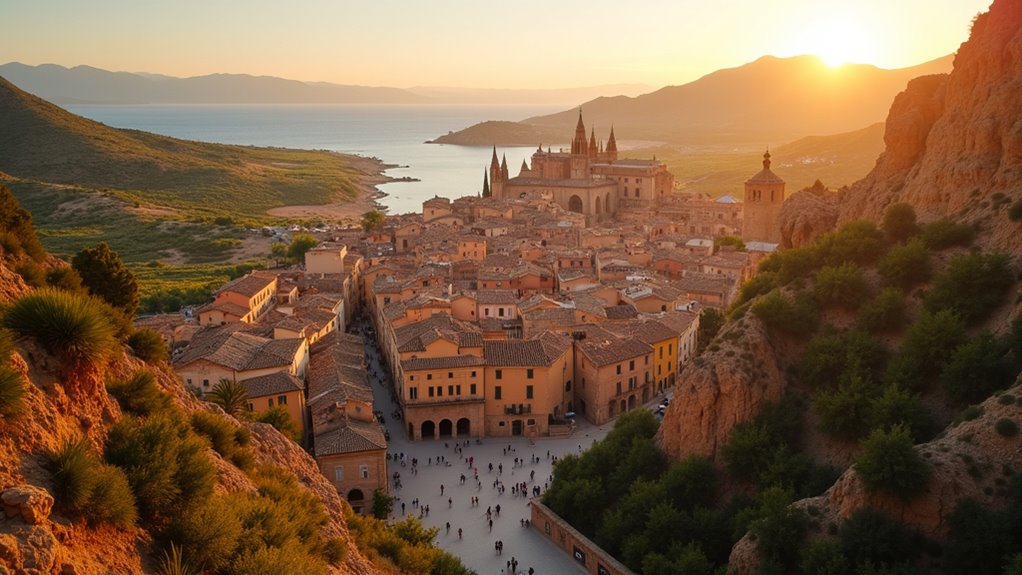
You’ll discover that Spain offers an incredible blend of architectural wonders, natural landscapes, and cultural experiences that’ll transform your understanding of this diverse country. From Gaudí’s surreal masterpieces in Barcelona to the volcanic peaks of Tenerife, each destination tells a different story. Whether you’re drawn to flamenco rhythms in Seville or prefer hiking mountain trails, Spain’s regions each hold distinct treasures that most travelers never fully explore—and some of the most rewarding experiences happen in the most unexpected places.
- Marvel at the Alhambra in Granada
- Experience Gaudí’s Sagrada Familia in Barcelona
- Wander Through Park Güell’s Colorful Mosaics
- Tour the Royal Palace of Madrid
- Soak Up the Atmosphere at Plaza Mayor
- Explore the Prado Museum’s Masterpieces
- See Picasso’s Guernica at Reina Sofía Museum
- Stroll Barcelona’s La Rambla
- Discover Salamanca’s Golden Stone Architecture
- Watch Flamenco in Seville’s Authentic Venues
- Relax at La Concha Beach in San Sebastian
- Hike Spain’s Highest Peak at Teide National Park
- Experience Football Culture at Camp Nou
- Unwind in Madrid’s El Retiro Park
- Take a Day Trip to Montserrat Mountain
- The Sum Up
Marvel at the Alhambra in Granada
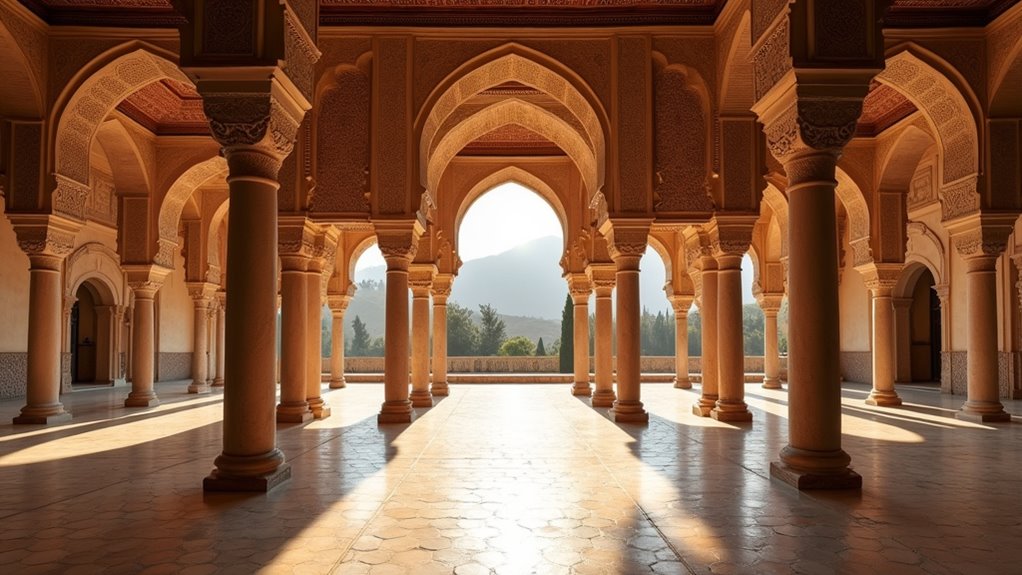
When you step through the gates of the Alhambra, you’ll find yourself standing within the most magnificent example of Moorish architecture in Spain. This 13th-century fortress-palace complex spans 26 acres atop Granada‘s Sabika Hill, showcasing intricate Islamic artistry through its stucco work, arabesques, and stunning tilework.
You’ll explore the Nasrid Palaces with their famous Court of the Lions fountain and the Hall of Ambassadors. Don’t miss the oldest Alcazaba fortress section, where watchtowers offer commanding views over Granada.
The complex beautifully blends Islamic, Christian, and Jewish architectural elements, reflecting Spain’s layered history. The name Alhambra comes from the Arabic al-Ḥamrā, meaning “the Red One,” referencing the distinctive reddish walls that give this masterpiece its identity.
Plan ahead—you’ll need advance reservations since daily visitors are limited. The Alhambra represents the pinnacle of Moorish culture in Iberia and UNESCO recognizes it as a World Heritage Site.
Experience Gaudí’s Sagrada Familia in Barcelona
From Granada’s Islamic masterpiece, you’ll discover another architectural marvel in Barcelona that’s equally mesmerizing yet completely different in origin and style. Antoni Gaudí’s Sagrada Familia represents over 140 years of continuous construction, blending Gothic and Art Nouveau forms into something entirely unique.
You’ll witness an expiatory temple funded purely by donations, where intricate façades tell the story of Christ’s life through stone. The Nativity façade celebrates Jesus’s birth with rich decorative detail, while the stark Passion façade dramatically depicts the Crucifixion.
Gaudí’s innovative engineering eliminates traditional buttresses through hyperbolic geometry and naturalistic forms. As you explore this basilica, consecrated by Pope Benedict XVI in 2010, you’re experiencing architectural genius that continues evolving toward its projected 2026 completion. The temple has achieved remarkable recognition as a UNESCO World Heritage Site, with both the Nativity façade and crypt receiving this prestigious designation in 2005.
Wander Through Park Güell’s Colorful Mosaics
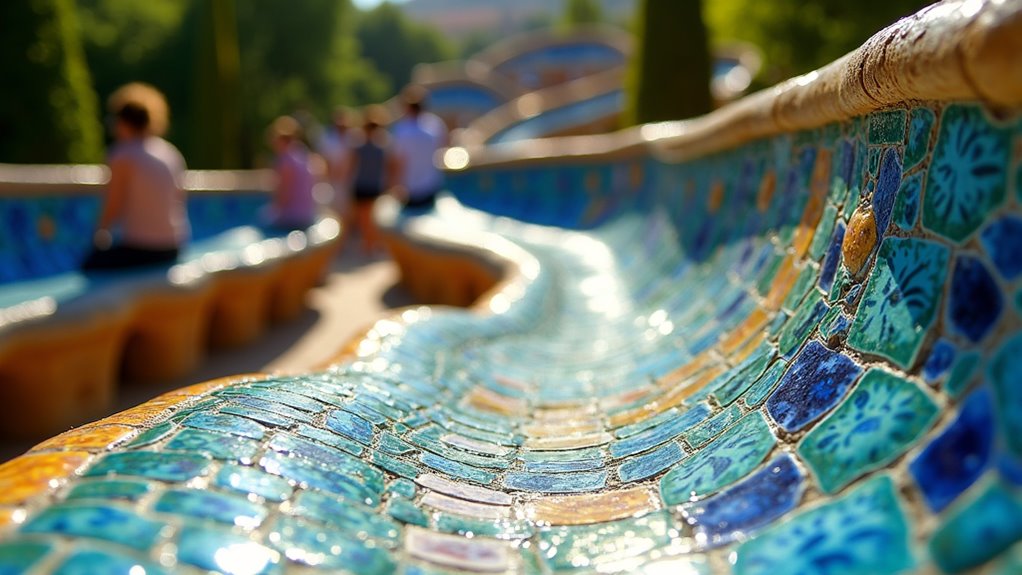
After experiencing Gaudí’s sacred architecture, you’ll discover his playful side at Park Güell, where vibrant mosaics transform a hillside into Barcelona’s most whimsical public space.
You’ll encounter the famous mosaic dragon at the main entrance stairway, crafted using Gaudí’s innovative trencadís technique of broken ceramic tiles. The serpentine bench wrapping around the main terrace showcases this colorful mosaic method at its finest, repurposing discarded ceramics into stunning art.
As you wander the curved pathways, you’ll notice how Gaudí preserved the natural landscape while integrating fairy-tale pavilions and organic architectural forms. The park’s elevated pathways were ingeniously designed to mimic natural forms, blending seamlessly with the rocky terrain through local stone construction. The panoramic views from Carmel Hill reward your climb, offering sweeping vistas of Barcelona and the Mediterranean.
Book timed entry tickets in advance, as this UNESCO World Heritage Site attracts millions of visitors annually.
Tour the Royal Palace of Madrid
You’ll step into centuries of Spanish royal history at the Royal Palace of Madrid, where more than 3,000 rooms showcase the opulent lifestyle of former monarchs through priceless tapestries, Tiepolo frescoes, and gleaming chandeliers.
Don’t miss the Throne Room with its red velvet walls and current monarchs’ thrones, or the Royal Armory‘s impressive collection of historical weapons and armor.
Book tickets online to skip queues at the main Puerta del Príncipe entrance. EU citizens can visit free Monday-Thursday evenings with proof of eligibility. The palace operates with seasonal hours, extending until 7pm during summer months from April through September.
Time your visit for Wednesday or Saturday to catch the Changing of the Guard ceremony.
Consider guided tours for access to lesser-known areas and historical insights that’ll enrich your understanding of Spain’s royal heritage.
Soak Up the Atmosphere at Plaza Mayor
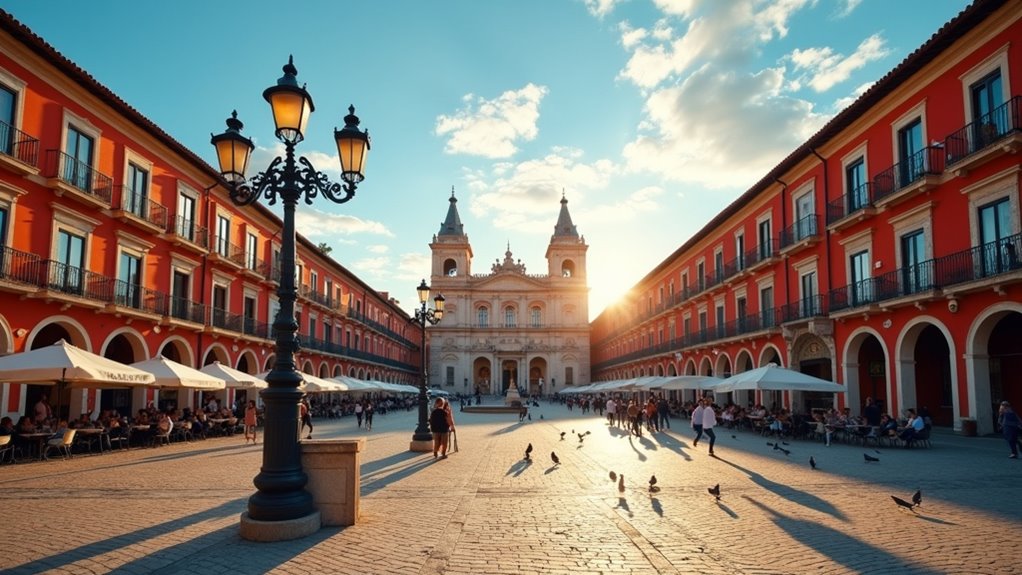
Madrid’s most iconic square, Plaza Mayor, captures four centuries of Spanish history within its perfectly symmetrical walls of red brick and slate roofs. You’ll find yourself surrounded by 237 balconies and 114 arches as you enter through one of ten monumental archways.
At the square’s heart stands King Philip III’s equestrian statue, while the Casa de la Panadería showcases stunning façade artwork.
Pull up a chair at one of the many cafes lining the plaza’s perimeter and watch Madrid’s social theater unfold. The 129m by 94m rectangular space buzzes with street performers, travelers, and locals meeting for coffee. Throughout the year, the plaza transforms to host Easter parades and festive Christmas markets that draw crowds from across the city.
Originally the city’s main marketplace, it’s retained its role as Madrid’s social hub. Don’t miss exploring the famous Arco de Cuchilleros archway leading to traditional restaurants below.
Explore the Prado Museum’s Masterpieces
Just a short walk from Plaza Mayor, the Prado Museum houses the world’s finest collection of Spanish art alongside masterpieces that’ll leave you speechless.
You’ll find Velázquez’s famous Las Meninas in Room 12, where the artist painted himself into this enigmatic royal portrait. Don’t miss Goya’s psychologically intense Black Paintings, including the haunting Saturn, or his controversial Naked Maja.
Bosch’s mind-bending Garden of Earthly Delights in Room 56A continues puzzling scholars centuries later. The museum holds over 100 Velázquez works plus exceptional collections by El Greco and Rubens.
Invest €4 in the audio guide for essential context about the symbolism. Arrive early before tour groups to maximize your experience exploring these revolutionary works that shaped Western culture. View Velázquez’s masterpieces to witness his loose brushwork that appears impressionistic up close yet creates stunning realism from a distance.
See Picasso’s Guernica at Reina Sofía Museum
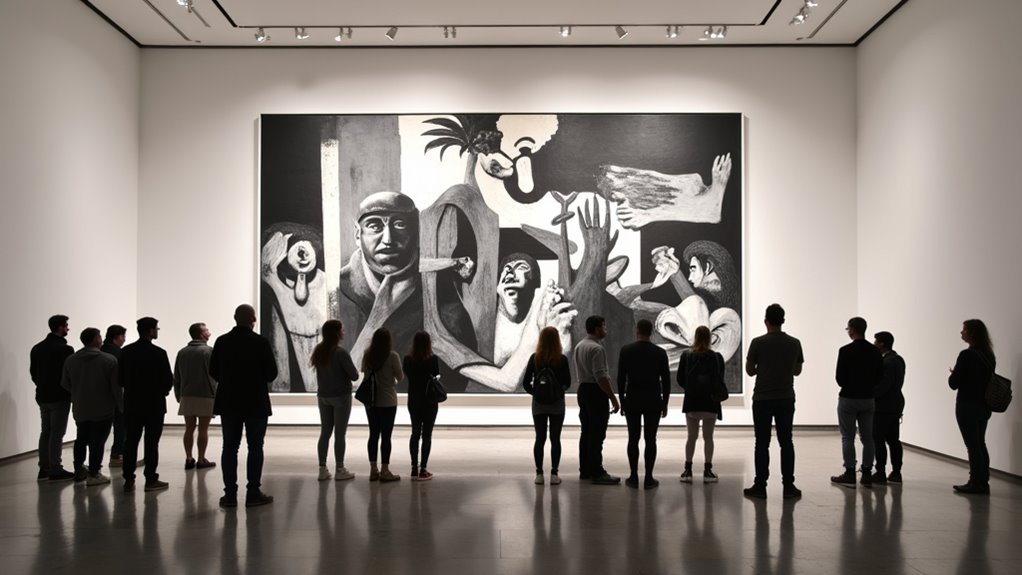
One of the world’s most powerful anti-war statements awaits you at Madrid’s Reina Sofía Museum, where Picasso’s monumental Guernica commands Room 205.10 on the second floor of the Sabatini Building.
This haunting 1937 masterpiece, painted in response to the bombing of a Basque town during the Spanish Civil War, depicts chaotic figures that symbolize war’s devastating impact on innocent lives.
You’ll find preparatory sketches and photographic documents surrounding the painting, offering deeper insight into Picasso’s creative process.
The museum’s digital audio guides enhance your understanding in multiple languages.
You can now photograph Guernica without flash, though tripods and selfie sticks aren’t permitted.
The Reina Sofía, part of Madrid’s prestigious “Golden Triangle of Art,” houses extensive collections from Dalí, Miró, and other Spanish masters. The museum is housed in a neoclassical building that originally served as a hospital built in the 16th century by Philip II.
Stroll Barcelona’s La Rambla
Barcelona’s most famous pedestrian boulevard, La Rambla, stretches 1.2 kilometers from the bustling Plaça Catalunya down to the towering Columbus monument at Port Vell. You’ll walk through five distinct sections, each offering unique attractions.
Stop at Font de Canaletes—legend says drinking its water guarantees you’ll return to Barcelona. Don’t miss Joan Miró’s stunning mosaic on Rambla de les Flors, where flower vendors have operated since the 19th century.
Explore Mercat de la Boqueria‘s 300 stalls for fresh produce and Catalan tapas. You can catch performances at the historic Teatre Liceu or visit Gaudí’s nearby Palau Güell.
Street performers, from human statues to caricature artists, create an electric atmosphere. The boulevard divides Gothic Quarter from El Raval, making it perfect for exploring both neighborhoods. The name La Rambla comes from the Arabic word ramla, meaning sandy or muddy area, reflecting its origins as a natural watercourse.
Discover Salamanca’s Golden Stone Architecture
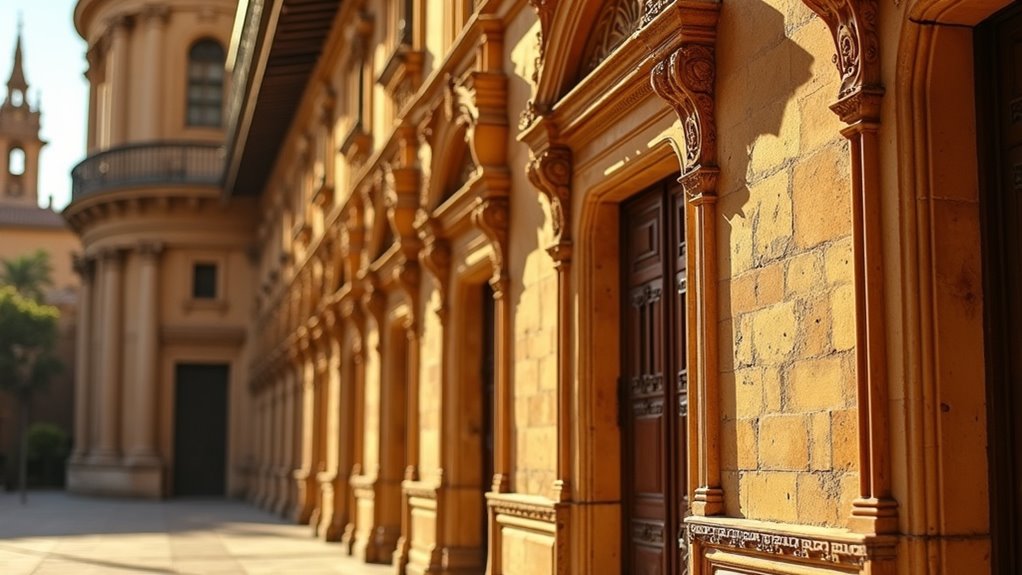
Salamanca’s nickname “The Golden City” becomes crystal clear the moment you witness its stunning Villamayor sandstone architecture glowing in the Spanish sunlight. You’ll find this blond sandstone creates magical golden-yellow hues that shift throughout the day, especially dramatic at sunrise and sunset.
Start at the University of Salamanca’s facade to hunt for the famous hidden frog carving—a beloved local tradition. The intricate Plateresque stonework showcases silversmith-like detail that’s breathtaking up close.
Don’t miss the twin cathedrals, where you can compare Romanesque and Gothic styles side by side. This architectural heritage earned Salamanca its UNESCO designation as a World Heritage Site in 1988.
Visit Plaza Mayor during golden hour when the iron-rich stone truly comes alive. The Roman Bridge offers another perspective of this unique material that’s defined Salamanca’s character for centuries.
Watch Flamenco in Seville’s Authentic Venues
While Salamanca’s golden stones tell stories through architecture, Seville’s flamenco venues let you experience Spain’s most passionate art form in its birthplace.
You’ll find authentic performances at Peña Torres Macarena, where €6 gets you into intimate weekly shows favored by locals.
For daily performances, Casa de La Memoria hosts deeply emotional shows at 7:30 pm and 9 pm in a 15th-century building for €18.
Budget-conscious travelers should visit La Carbonería, offering free shows in atmospheric cave settings.
La Madriguera de Mai provides Friday performances for just €3 including drinks.
For theatrical experiences, try Museo del Baile Flamenco‘s courtyard shows or Teatro Flamenco Triana’s polished productions.
Tablao Los Gallos, operating since 1966, delivers world-class performances multiple times daily.
The historic Triana neighborhood, separated from the city by the Guadalquivir River, remains the cultural heart of flamenco where the art form’s gypsy roots first flourished.
Relax at La Concha Beach in San Sebastian
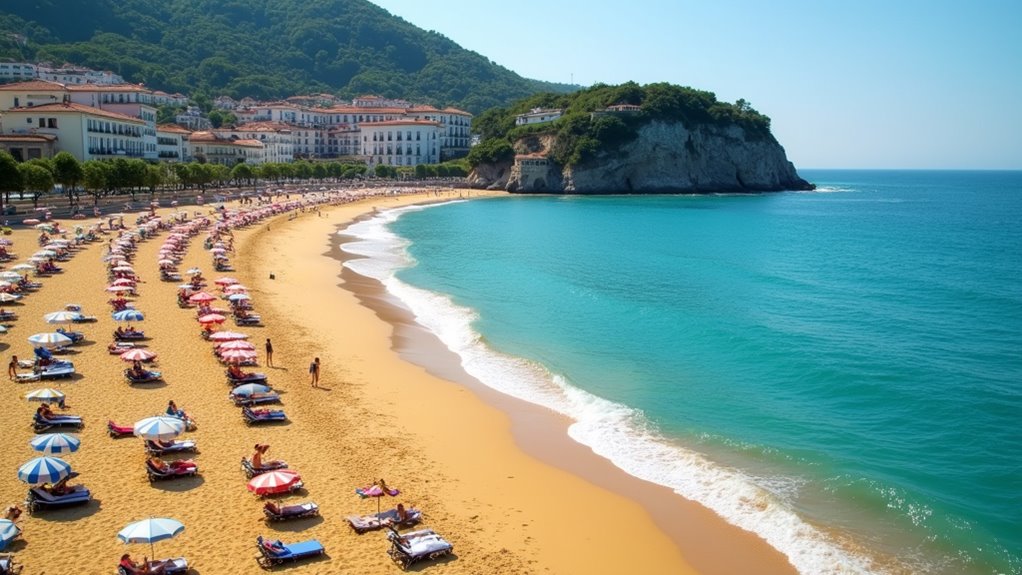
After experiencing Spain’s passionate flamenco culture, you’ll find a completely different kind of magic at La Concha Beach in San Sebastián.
This beach is where Europe’s most beautiful urban stretch extends in a perfect crescent along the Basque coastline. You can walk directly from the city center to this 1,350-meter stretch of golden sand, making it incredibly convenient for a beach day between sightseeing.
The shallow, calm waters are perfect for swimming, while the western orientation gives you stunning sunset views over Santa Clara Island.
You’ll find everything you need along the elegant Paseo de la Concha promenade—sunshade rentals, water sports equipment, and nearby restaurants. La Concha has earned recognition as the 3rd best beach in the world by TripAdvisor, cementing its status as a must-visit destination.
Time your visit around low tide for maximum beach space, and consider the lifeguarded summer season for ideal safety.
Hike Spain’s Highest Peak at Teide National Park
Rising 12,198 feet above sea level, Mount Teide claims the title of Spain’s highest peak and serves as the dramatic centerpiece of Tenerife’s UNESCO World Heritage national park. You’ll need a permit to reach the summit, but several trails offer incredible volcanic landscapes without restrictions.
Try the two-hour Roques de García loop for stunning rock formations, or tackle the gentler Arenas Negras trail through black volcanic terrain and golden broom fields.
The cable car takes you to La Rambleta at 11,663 feet, where the final summit push begins. You’ll encounter unique alpine plants like the Teide daisy and witness panoramic views of the Canary Islands.
The park’s minimal light pollution makes it perfect for stargazing after your hike. The Teide Observatory in Izaña attracts world-class astronomers and offers visitors exceptional views of the Milky Way without requiring a telescope.
Experience Football Culture at Camp Nou
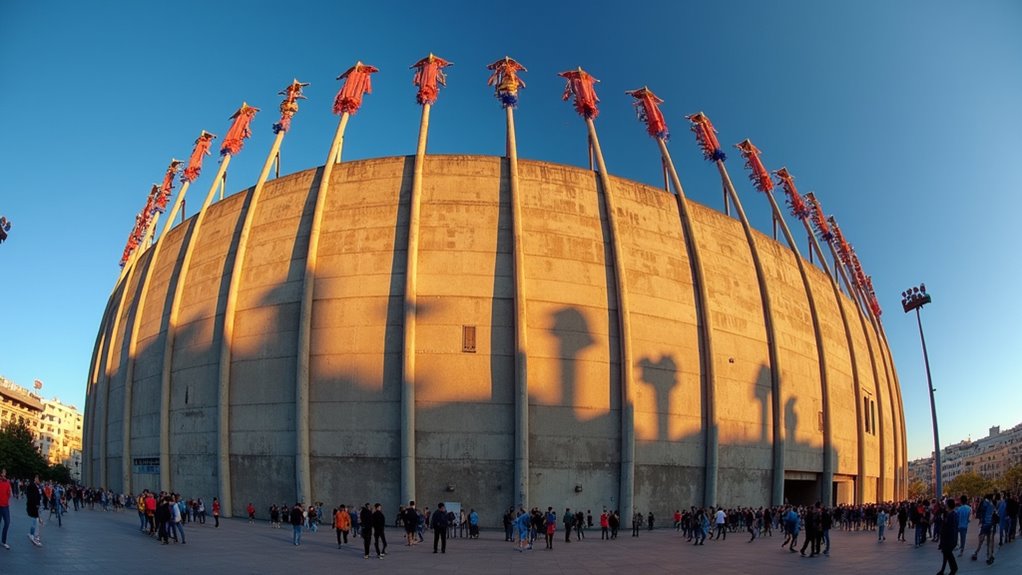
From Tenerife’s volcanic peaks, Spain’s cultural landscape shifts to Barcelona, where Camp Nou stands as Europe’s largest football stadium and the beating heart of Catalan identity. You’ll experience more than just football here – this 99,354-capacity venue embodies Catalonian pride and FC Barcelona’s legendary philosophy of creative, attacking play.
Take the stadium tour to access the pitch, locker rooms, and stands where Messi once dazzled crowds. The FC Barcelona Museum showcases decades of trophies and memorabilia, telling the story of one of football’s most prestigious clubs. The stadium has hosted memorable matches including the 1982 European Cup final and multiple Cup Winners Cup finals, cementing its place in football history.
If you’re visiting during match season, witnessing the passionate atmosphere firsthand is unforgettable – Camp Nou becomes electric with devoted fans who’ve supported the club for generations, creating an authentic cultural experience beyond traditional sightseeing.
Unwind in Madrid’s El Retiro Park
While Barcelona pulses with football fervor, Madrid offers its own treasures in the form of El Retiro Park, a sprawling 125-hectare oasis where you can escape the city’s bustling energy without leaving its heart.
You’ll find yourself wandering tree-lined avenues past the stunning Crystal Palace, where temporary art exhibitions complement the iron and glass architecture. Rent a rowing boat on the artificial lake beneath the Monument to Alfonso XII, or seek out the controversial Statue of the Fallen Angel—one of the world’s only Devil sculptures. The park achieved UNESCO World Heritage status in 2021, cementing its global cultural significance.
Don’t miss Madrid’s oldest tree, “El Ahuehuete,” near the Parterre. Whether you’re jogging the trails, enjoying weekend puppet shows, or simply picnicking in the Rose Garden, this former royal retreat provides the perfect respite.
Take a Day Trip to Montserrat Mountain
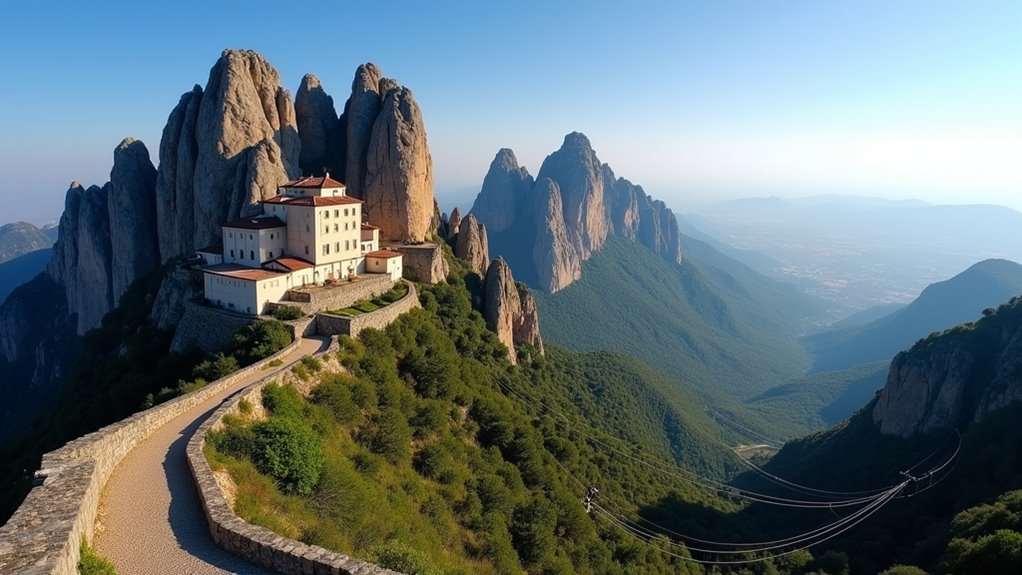
Just an hour and a half from Barcelona’s urban energy, Montserrat Mountain beckons with its dramatic saw-toothed peaks and spiritual significance that’ll transform your Spanish adventure.
Take the R5 train from Plaça d’Espanya to reach this sacred mountain, then ascend via cable car or rack railway. You’ll discover the Santa Maria de Montserrat Monastery, home to the revered Black Madonna statue—Catalonia’s patron saint.
Don’t miss the Montserrat Museum featuring works by Picasso and Dalí.
For outdoor enthusiasts, hiking trails range from easy walks to the challenging Sant Jeroni peak at 1,236 meters. The moderate La Creu de Sant Miquel hike offers stunning panoramic views without excessive difficulty.
Experience the Montserrat Boys’ Choir, Europe’s oldest, performing during mass and weekly services at the monastery.
Plan 5-6 hours total for this day trip, arriving early to beat crowds and fully experience this mystical mountain’s religious heritage and natural beauty.
The Sum Up
You’ve got incredible diversity waiting for you in Spain. Whether you’re drawn to Gaudí’s whimsical architecture, the Alhambra’s Moorish splendor, or Teide’s volcanic trails, there’s something that’ll capture your imagination. Don’t try to see everything in one trip—you’ll burn out quickly. Instead, pick a region or theme that excites you most, then dive deep. Spain’s rich culture, stunning landscapes, and vibrant cities will leave you planning your return visit before you’ve even left.