
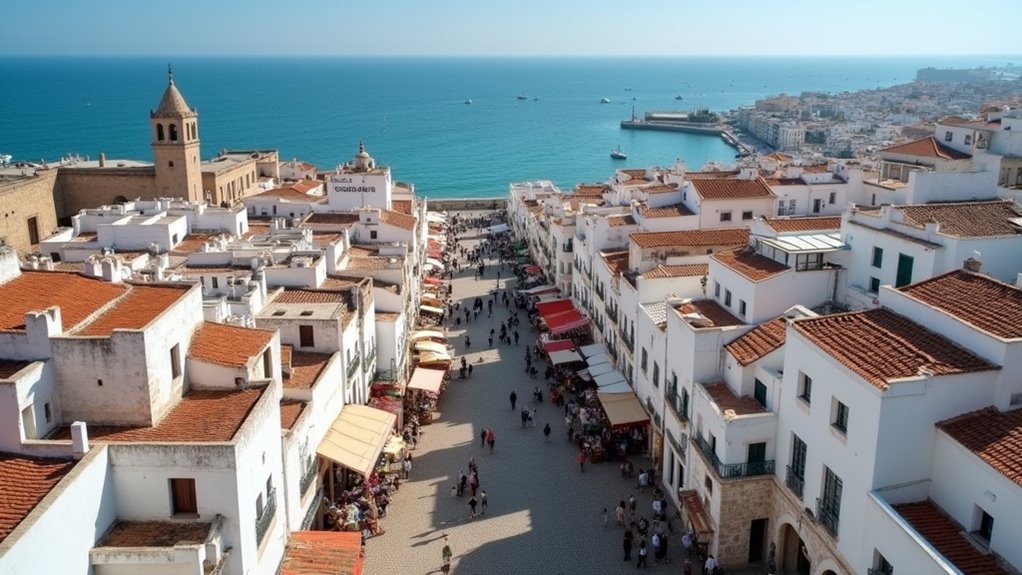
You’re standing at the crossroads of Africa and Europe, where Atlantic winds carry the scent of mint tea through ancient alleyways. Tangier’s been enchanting travelers for centuries, and you don’t need deep pockets to experience its magic. From UNESCO-listed medinas to legendary caves, this Moroccan port city offers experiences that’ll stick with you long after you’ve left. Here’s how to make the most of your first visit without breaking the bank.
- Get Lost in the Medina’s Maze of Whitewashed Alleys
- Climb to the Kasbah for Views Over the Strait of Gibraltar
- Explore the Kasbah Museum of Mediterranean Cultures
- Visit the American Legation Museum Near Petit Socco
- People-Watch at the Grand and Petit Socco Squares
- Admire the Great Mosque’s 17th-Century Architecture
- Haggle for Treasures in the Medina’s Traditional Souks
- Take a Day Trip to Cape Spartel Lighthouse
- Walk Through the Famous Caves of Hercules
- Follow the Coastal Path From Cape Spartel to Robinson Plage
- The Sum Up
Get Lost in the Medina’s Maze of Whitewashed Alleys
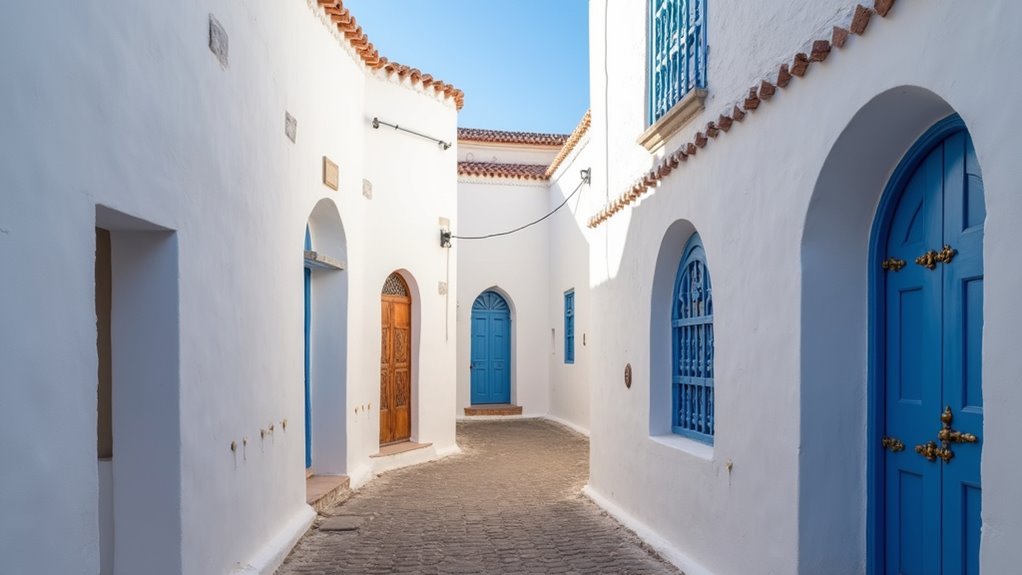
When you step into Tangier’s medina, you’re entering a UNESCO World Heritage site that’s far more than just another tourist destination. This living neighborhood pulses with daily life while showcasing centuries of Phoenician, Roman, Arab, and European influences through its labyrinthine alleys.
You’ll navigate narrow cobblestone paths lined with whitewashed buildings adorned with bright blue and green doors. The reflected light creates an almost surreal atmosphere that famously inspired Henri Matisse in the 1920s.
Your senses will be overwhelmed by spice aromas, grilled meats, and vendors’ calls echoing between ancient walls. Look out for the numerous cats that roam freely through the streets, adding to the authentic atmosphere of this historic quarter.
Wear comfortable walking shoes and carry small bills for purchases. Don’t worry about getting lost – it’s part of the authentic experience.
Visit during morning or late afternoon for cooler temperatures and better photo lighting.
Climb to the Kasbah for Views Over the Strait of Gibraltar
After wandering through the medina’s winding streets, you’ll want to make your way uphill to the Kasbah, the historic fortress that crowns Tangier’s old city. This 10th-century citadel sits on the highest point, offering spectacular panoramic views over the Strait of Gibraltar where the Mediterranean meets the Atlantic.
The climb requires sturdy shoes since you’ll navigate steep cobblestone paths and staircases. It’s worth the effort – Place de la Kasbah provides the most iconic vantage point overlooking the port and Spanish coastline. Entry to the fortress grounds is free, though you’ll pay if you visit the Dar El Makhzen museum inside.
Time your visit for sunset when golden light illuminates the white buildings and sea views. The ramparts offer excellent photo opportunities of this strategic meeting point between continents. The streets are beautifully lined with bougainvilleas and brightly-colored Moroccan houses that add vibrant charm to your exploration.
Explore the Kasbah Museum of Mediterranean Cultures
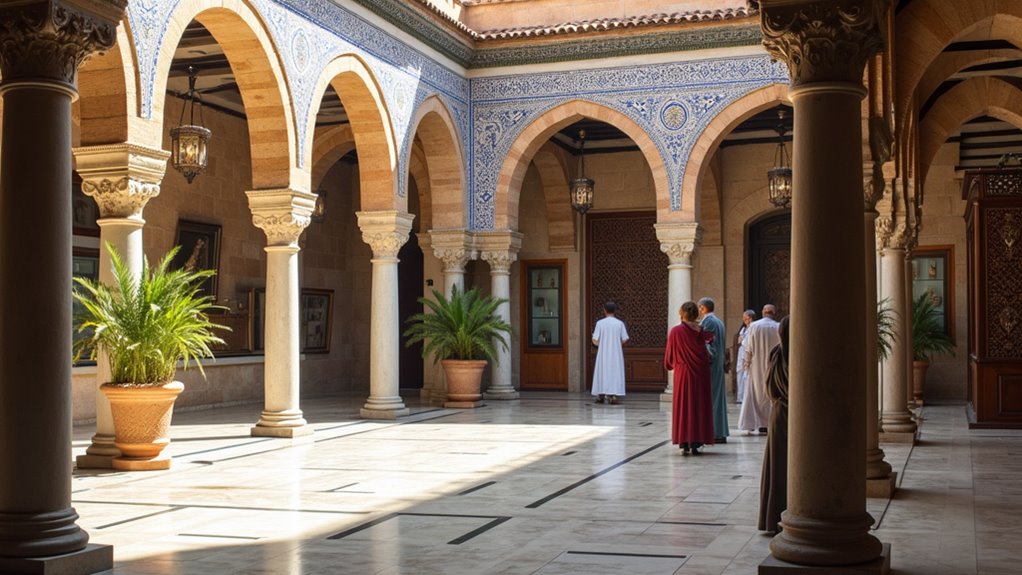
Once you’ve soaked in the panoramic views from the Kasbah’s ramparts, head inside to explore the Museum of Mediterranean Cultures, housed within the stunning 17th-century Dar el Makhzen palace. You’ll walk through rooms that once served as the Sultan’s residence, admiring intricate carved stucco walls, colorful mosaics, and domed ceilings with elaborate muqarnas.
The museum’s chronological exhibits trace Tangier’s multicultural history through Phoenician artifacts, Roman mosaics, and traditional Moroccan crafts. Don’t miss the famous Venus mosaic from Volubilis and some of the world’s oldest maps.
Between galleries, relax in the peaceful Andalusian courtyards with their fountains and gardens—you might spot tortoises wandering among the plants. Take advantage of the DIY audio tour to guide you through the collections and artifacts at your own pace. It’s an affordable way to understand Tangier’s rich Mediterranean heritage.
Visit the American Legation Museum Near Petit Socco
Just a five-minute walk from the bustling Petit Socco square, you’ll find the American Legation Museum tucked away on Rue d’Amérique—a hidden gem that most travelers overlook.
This historic building holds the distinction of being America’s first diplomatic property abroad and the only U.S. National Historic Landmark on foreign soil.
You’ll discover fascinating exhibits showcasing 200+ years of U.S.-Morocco relations, starting from Morocco’s groundbreaking recognition of American independence in 1786.
The museum’s beautiful Moorish architecture features intricate zellij tiles and carved woodwork surrounding a peaceful courtyard.
Entry costs just a few dirhams, making it perfect for budget travelers.
Don’t miss the World War II exhibits detailing Operation Torch planning that happened within these very walls. The complex also served as an important evacuation center for Jewish refugees fleeing Europe during the war.
People-Watch at the Grand and Petit Socco Squares
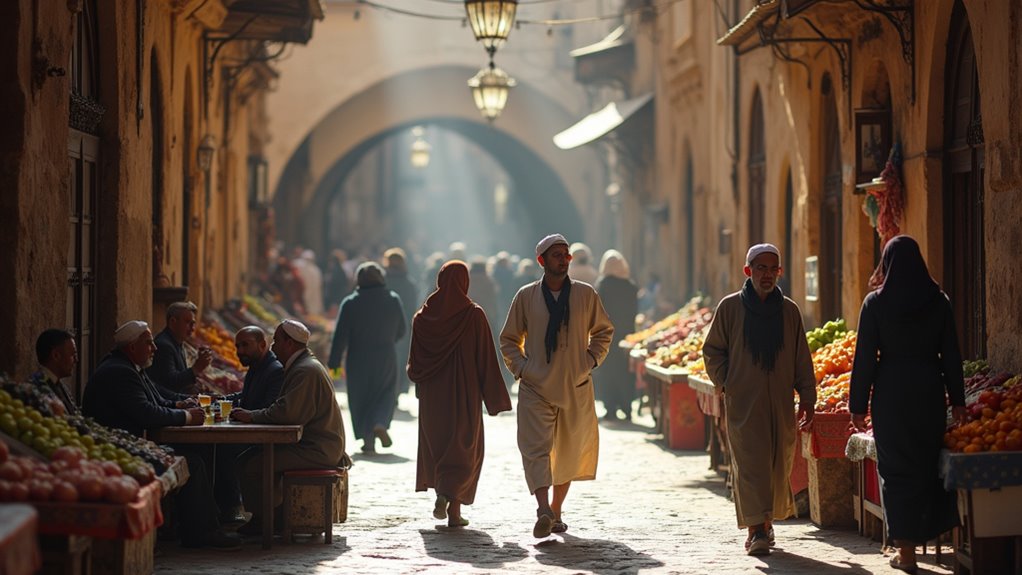
While exploring Tangier’s medina, you’ll want to grab a mint tea and settle into one of the many cafes surrounding Grand Socco and Petit Socco—these two squares offer the city’s best people-watching opportunities without spending a dirham on admission fees.
Grand Socco’s spacious setting lets you observe the constant flow of locals, travelers, and merchants moving between the medina and modern city. You’ll see grand taxis loading passengers, vendors selling fresh mint, and families strolling through the renovated gardens. The square serves as a transitional space between Tangier’s historic medina and its modern developments, making it the perfect spot to witness the city’s cultural layers unfold before your eyes.
Petit Socco provides a more intimate experience in the medina’s heart, where you can watch animated conversations unfold over coffee at Gran Café Central while artisans hurry past with their wares.
Admire the Great Mosque’s 17th-Century Architecture
After soaking up the energy at Petit Socco, you’ll spot the impressive minaret of the Great Mosque rising just steps away—and you don’t need to pay anything to admire this architectural gem from the outside.
Built in 1684 by Moulay Isma’il and completely rebuilt in 1815, this mosque showcases classic Alawite architectural style with its striking white stucco walls and green ceramic tiles. The square minaret topped with a pyramidal dome creates a stunning contrast against Tangier’s skyline.
Look for the monumental horseshoe arch entrance and intricate geometric patterns that exemplify Moroccan Islamic artistry. The site remarkably includes an old minaret that survives from earlier mosque structures, adding layers of historical significance to what you see today. While non-Muslims can’t enter, the exterior alone tells centuries of history spanning Roman temples to Islamic heritage.
Haggle for Treasures in the Medina’s Traditional Souks
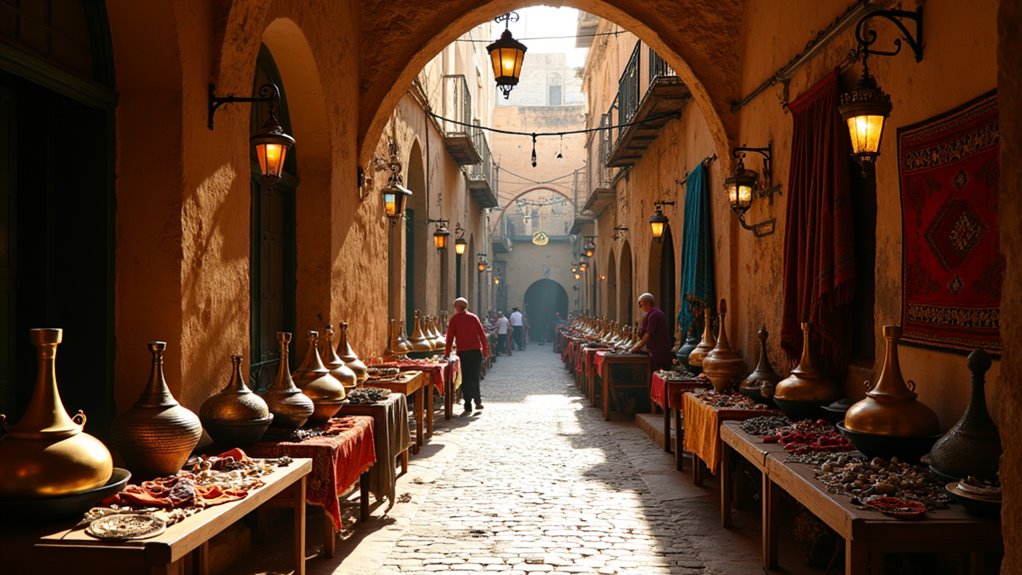
From the Grand Socco’s bustling square, dive straight into Tangier’s labyrinthine medina where centuries-old souks beckon with their treasure troves of handwoven carpets, aromatic spices, and gleaming leather goods.
You’ll find everything from traditional babouches to intricate metalwork and colorful textiles reflecting Morocco’s rich heritage.
Haggling isn’t just expected—it’s part of the experience. Start your offers around 50-60% of the asking price and enjoy the lively negotiation that follows.
Vendors here are skilled at turning purchases into social exchanges, so embrace the interaction.
Bring cash in small denominations, especially for the medina’s craft shops.
The Central Market offers excellent spices like Ras el Hanout, while specialized carpet souks showcase stunning Berber rugs perfect for authentic souvenirs. Take time to sample the abundant herbal blends and spice mixtures offered by friendly merchants eager to share their knowledge of traditional flavors.
Take a Day Trip to Cape Spartel Lighthouse
When you need a break from Tangier’s bustling streets, Cape Spartel Lighthouse offers the perfect escape just 14 kilometers west of the city. You’ll stand at Africa’s northwesternmost point, where the Mediterranean Sea meets the Atlantic Ocean – a truly spectacular sight.
This historic lighthouse, built between 1861-1864, rises 24 meters above dramatic cliffs that soar over 300 meters above sea level. You’re visiting Morocco’s oldest lighthouse and a symbol of international cooperation, as ten countries once shared its maintenance.
The panoramic views are breathtaking, especially at sunset. You can explore the nearby Caves of Hercules for added adventure. The lighthouse was originally constructed under the reign of Sultan Mohammed IV and represents an important piece of Morocco’s maritime heritage.
Take a grand taxi or rent a car to reach this maritime landmark – it’s an affordable half-day trip that’ll give you incredible photos.
Walk Through the Famous Caves of Hercules
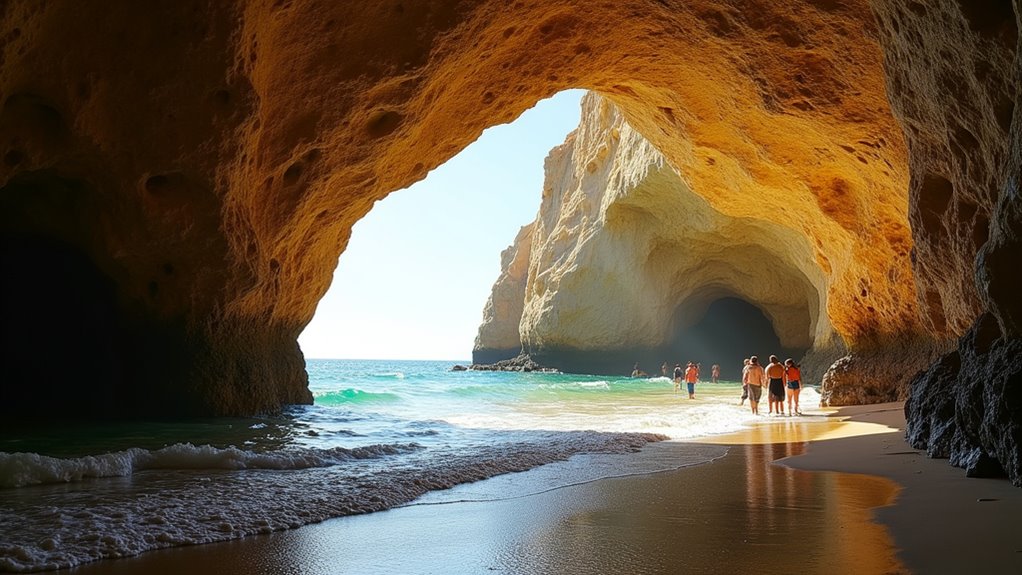
Just a short walk from Cape Spartel Lighthouse, you’ll discover the legendary Caves of Hercules – one of Morocco’s most fascinating natural wonders. This remarkable cave system combines natural sea-carved chambers with ancient man-made quarry rooms, where you can still see circular tool marks left by Berber stone workers.
The highlight? The sea-facing opening that’s shaped exactly like the African continent when viewed from the ocean. You’ll explore two main chambers – the natural sea cave carved by Atlantic waves and the historic quarry chamber where locals once cut millstones.
The caves are steeped in mythology, supposedly where Hercules rested during his legendary labors. These natural formations developed through geological processes over millions of years, creating the stunning stalagmites and stalactites you’ll see throughout the chambers. With electric lighting and easy walking paths, it’s accessible for all ages and makes a perfect addition to your Cape Spartel visit.
Follow the Coastal Path From Cape Spartel to Robinson Plage
After exploring the legendary caves, you’ll want to tackle one of Tangier’s most scenic walks – the 5-kilometer coastal path from Cape Spartel to Robinson Plage. This relatively easy trail follows Morocco’s rocky coastline, offering stunning views where the Atlantic Ocean meets the Mediterranean Sea.
You can reach the starting point via budget-friendly bus routes #2A or #26 from Tangier’s city center.
The path gives you flexibility – stick to the rocky shoreline trail or split midway to follow the road. You’ll pass beautiful beaches like Sol Beach, Achakkar Beach, and Sidi Kacem Beach, perfect for rest stops. These beaches feature white sand and blue water with small waves, making them some of Morocco’s best coastal destinations.
Pack water and snacks since this is a budget-friendly adventure. The dramatic waves crashing against rocky outcrops create incredible photo opportunities throughout your journey.
The Sum Up
You’ll find Tangier’s magic lies in its contrasts—ancient medina streets meeting modern cafés, traditional souks beside contemporary galleries. Don’t rush through everything; pick a few highlights that speak to you. Bargain hard in the souks, pack comfortable walking shoes, and always carry small bills for mint tea breaks. The city’s best experiences often happen when you’re simply wandering without a plan. Trust your instincts and let Tangier’s energy guide your adventure.