
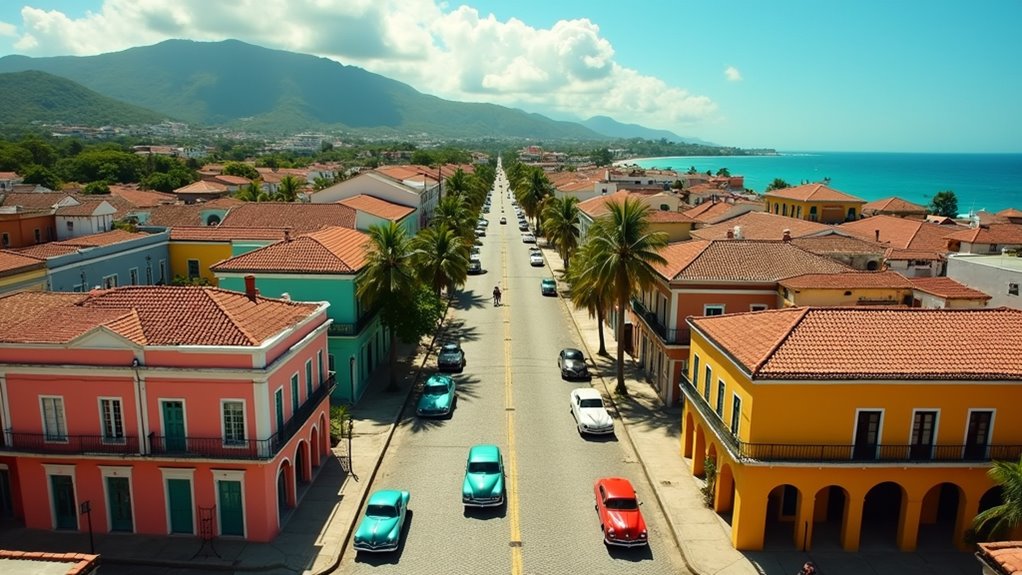
You’ll find Trinidad Cuba’s UNESCO historic center perfect for wandering cobblestone streets lined with colonial mansions. Climb the Convento de San Francisco bell tower for panoramic views, then explore Plaza Mayor‘s colorful architecture. Visit Valle de los Ingenios sugar plantation ruins and relax at nearby Playa Ancón’s white sand beach. Experience authentic nightlife at Casa de la Música, sip traditional Canchanchara cocktails, and enjoy live trova music performances. These budget-friendly activities showcase Trinidad’s rich cultural heritage and vibrant atmosphere perfectly.
- Wander the Cobblestone Streets of UNESCO’s Historic Center
- Climb the Bell Tower at Convento De San Francisco for Rooftop Views
- Soak Up the Colonial Atmosphere at Plaza Mayor
- Explore Valle De Los Ingenios and Its Sugar Plantation Ruins
- Climb the 147-Foot Manaca Iznaga Slave Watchtower
- Spend an Afternoon at Playa Ancón’s White Sand Beach
- Dance the Night Away at Casa De La Música
- Sample Canchanchara Cocktails at Bar La Canchanchara
- Experience Authentic Cuban Trova Music at Casa De La Trova
- The Sum Up
Wander the Cobblestone Streets of UNESCO’s Historic Center
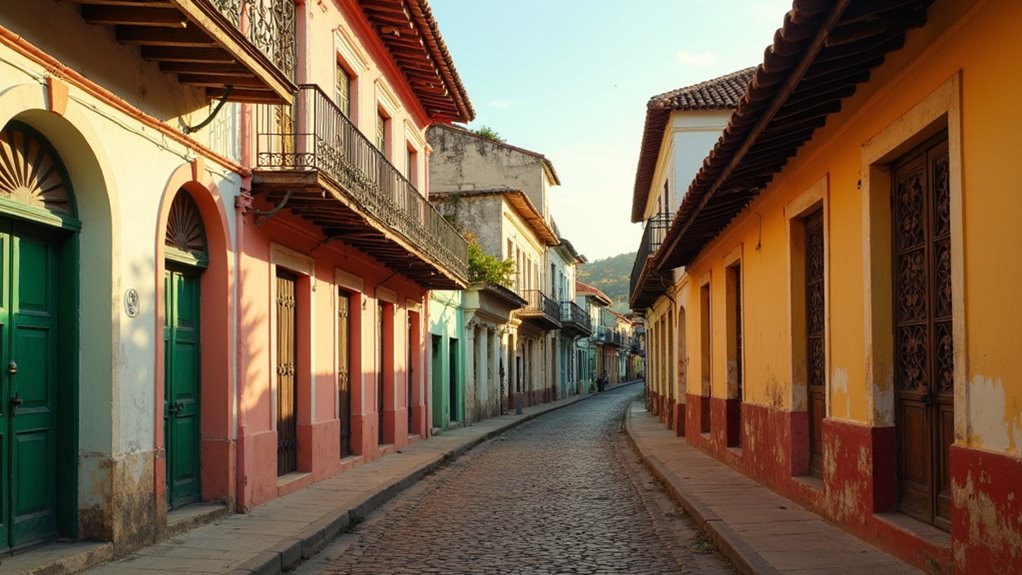
While most Caribbean destinations showcase beaches and resorts, Trinidad’s UNESCO World Heritage historic center transports you back to Cuba’s sugar-trading heyday without breaking the bank. You’ll discover one of the Caribbean’s most well-preserved colonial cities, where cobblestone streets use centuries-old materials and construction techniques. The compact historic center spans just a few square blocks, making it perfect for walking exploration.
You’ll encounter stunning Spanish colonial architecture blending Andalusian, Moorish, and Neoclassical styles from the 18th and 19th centuries. Plaza Mayor serves as your central hub, surrounded by museums housed in authentic colonial palaces.
Don’t miss Palacio Brunet for the most authentic glimpse of Trinidad’s golden age, or Palacio Cantero’s neoclassical elegance. Every corner reveals meticulously preserved lime mortar walls and traditional terracotta roofing. As you wander these historic streets, you’ll notice children playing in the cobblestone pathways, bringing life to this beautifully preserved colonial setting.
Climb the Bell Tower at Convento De San Francisco for Rooftop Views
After exploring Trinidad’s charming streets at ground level, you’ll want to gain a bird’s-eye perspective of this colonial gem by climbing the iconic yellow bell tower at Convento de San Francisco. At 138 feet tall, this Baroque structure from 1739 stands as Trinidad’s most recognizable landmark and offers unparalleled panoramic views.
The climb involves somewhat strenuous stairs, but it’s manageable for most visitors and absolutely worth the effort. From the top, you’ll see Trinidad’s colorful colonial rooftops, the surrounding Sierra del Escambray mountains, and the distant Caribbean Sea. Visit during golden hour for the best photography opportunities.
The convent also houses the Museum of the Fight Against Bandits, which displays photographs, maps, weapons, and military objects from Cuba’s revolutionary struggle during the 1960s. Though most travelers prioritize the tower climb for those spectacular UNESCO World Heritage site views.
Soak Up the Colonial Atmosphere at Plaza Mayor
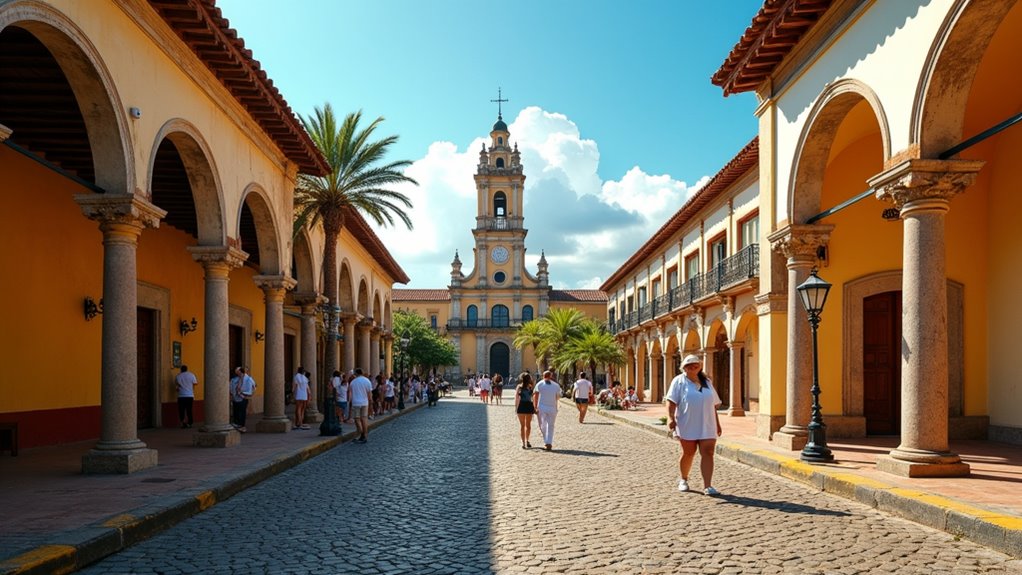
Once you’ve descended from the bell tower, head straight to Plaza Mayor, Trinidad’s beating heart and the crown jewel of this UNESCO World Heritage site. You’ll find yourself surrounded by stunning 18th and 19th-century mansions painted in vibrant pastels, their tiled roofs and wooden balconies creating picture-perfect scenes at every turn.
The cobblestone streets radiating from this central square tell centuries of stories. Duck into the free-to-browse Casa de Aldemán Ortiz art gallery or spend a few pesos at Museo Romántico to peek inside elite colonial life.
The landscaped plaza itself costs nothing—grab a bench under the palm trees and watch vintage cars rumble past horse-drawn carts. The square has maintained its mid-19th-century configuration since the 1850s, preserving the authentic urban design that creates this remarkable time capsule. It’s like stepping into a living museum where daily Cuban life unfolds.
Explore Valle De Los Ingenios and Its Sugar Plantation Ruins
Step outside Trinidad’s colonial center to discover Valle de los Ingenios, where Cuba’s sugar empire once flourished just 12 kilometers from the city. You’ll explore over 70 former sugar mill sites scattered across this UNESCO World Heritage valley that once housed more than 50 operating mills during the 19th century.
Don’t miss the iconic Iznaga Tower, where bells once signaled work schedules for over 30,000 enslaved workers. You can climb this observation tower for panoramic views of the red earth landscape and sugar cane fields.
The valley’s preserved plantation houses, barracks, and mill ruins tell the story of Cuba’s sugar industry from the late 18th to 19th centuries. A historic railway line built in the late 1880s once connected these valleys to Trinidad and the port of Casilda for sugar export. This living museum offers an affordable day trip that reveals Trinidad’s agricultural heritage.
Climb the 147-Foot Manaca Iznaga Slave Watchtower
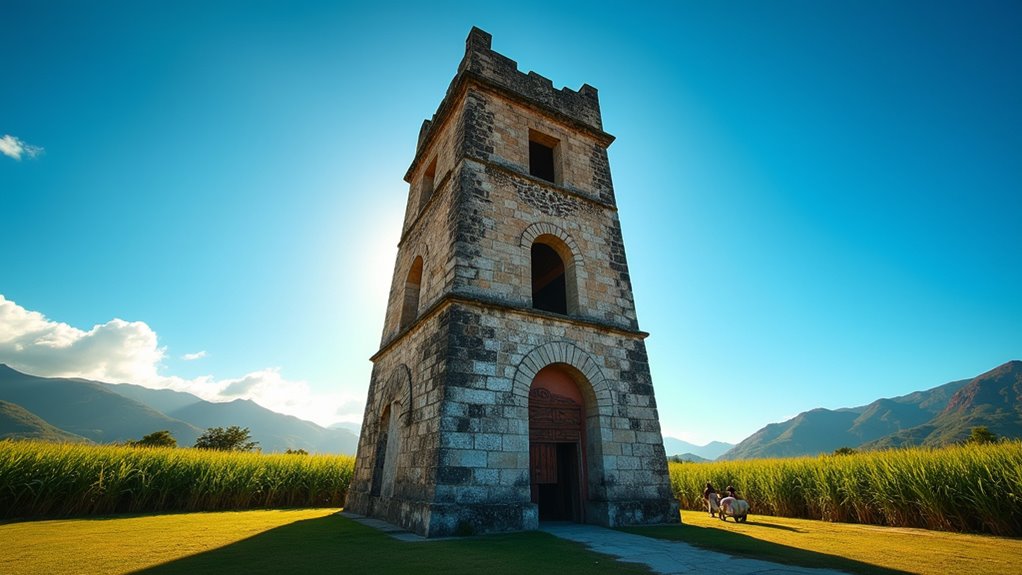
Towering 147 feet above the Valle de los Ingenios, the Manaca Iznaga slave watchtower stands as Cuba’s most haunting monument to the sugar trade’s dark past. Built between 1815-1830, this seven-story structure once surveilled enslaved workers toiling in surrounding sugarcane fields.
You’ll climb 136-184 steep, narrow steps through the lime and sand masonry tower, with openings at each level providing progressively wider views. The challenging ascent rewards you with 360° panoramic vistas of the valley’s colonial houses, former cane fields, and mountains.
Entry costs about $1 USD. After your climb, you can grab fresh sugarcane juice from stands near the base or visit the nearby restaurant. The plantation was purchased by Basque Spaniard Pedro Iznaga in the late 1700s and became one of the valley’s most powerful sugar operations. The experience offers powerful reflection on Cuba’s colonial economy while providing spectacular valley views.
Spend an Afternoon at Playa Ancón’s White Sand Beach
Just 15 minutes south of Trinidad’s cobblestone streets, Playa Ancón unfolds as Cuba’s south coast gem with 4 kilometers of powdery white sand meeting crystal-clear Caribbean waters.
You’ll find gentle waves perfect for swimming and enough space to spread out, even during busy weekends.
Beach access costs nothing, though sun loungers and palapas run about 100 Cuban pesos if you want shade. Pack your own snacks to keep costs down, or grab piña coladas at beachfront bars.
The calm, transparent water’s ideal for casual snorkeling, while nearby marinas offer boat trips to Cayo Blanco. For even better underwater exploration, consider venturing to nearby Playa María Aguilar, which boasts vibrant marine life perfect for snorkeling enthusiasts.
Visit early morning or late afternoon to avoid scorching midday sun. Don’t forget high-SPF sunscreen – that Caribbean sun’s intense, and the white sand reflects heat mercilessly.
Dance the Night Away at Casa De La Música
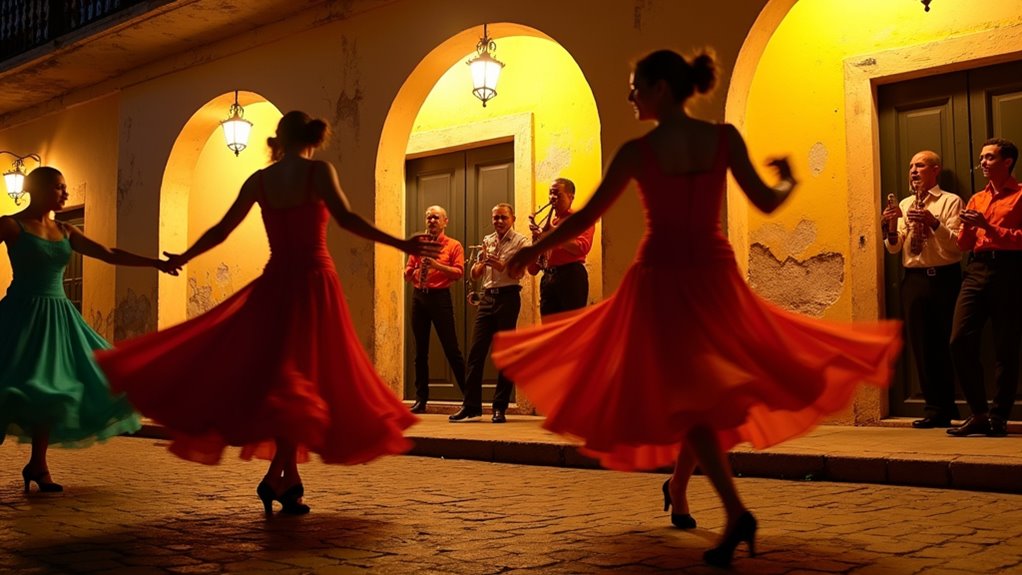
When evening falls over Trinidad’s cobblestone streets, Casa De La Música transforms into the city’s pulsing nightlife heartbeat on the wide steps overlooking Plaza Mayor.
You’ll find red plastic chairs arranged in tiers facing the colonial church, creating an open-air amphitheater under the stars.
Live Cuban bands kick off around 10 p.m., playing salsa, timba, and son while locals and travelers fill the energetic dance floor.
Arrive early to snag better seats before crowds gather.
You’ll pay a small entry fee, plus affordable drinks from the full bar service.
Plan to stay 2-3 hours soaking up the authentic atmosphere.
Locals often offer informal dance lessons, and musicians circulate for tips between sets.
The venue operates within Trinidad’s historic center, where vehicles are restricted and the cobblestone streets create a pedestrian-only cultural zone.
It’s Trinidad’s nightlife epicenter—you can’t miss it.
Sample Canchanchara Cocktails at Bar La Canchanchara
Where can you taste Cuba’s oldest cocktail in its most authentic setting? Head to Taberna La Canchánchara at 90 Calle Real del Jigüe, housed in an 18th-century colonial mansion in Trinidad’s UNESCO World Heritage center.
This rustic tavern serves the legendary Canchanchara—Cuba’s first cocktail born from 19th-century independence fighters who mixed aguardiente, honey, lime, and water for warmth and courage.
You’ll sip this simple yet flavorful drink from traditional unglazed clay cups while surrounded by colonial architecture and shaded patios.
The bartenders muddle honey with lime and water before adding Cuban rum and ice, creating a perfect balance of citrus, sweetness, and spirit. Unlike Havana’s glamorous cocktails like the Mojito or Daiquiri, this drink connects you to Cuba’s countryside tradition and revolutionary roots.
Open 10 a.m. to 6 p.m. daily, it’s an affordable cultural experience.
Don’t forget to buy a clay cup souvenir!
Experience Authentic Cuban Trova Music at Casa De La Trova
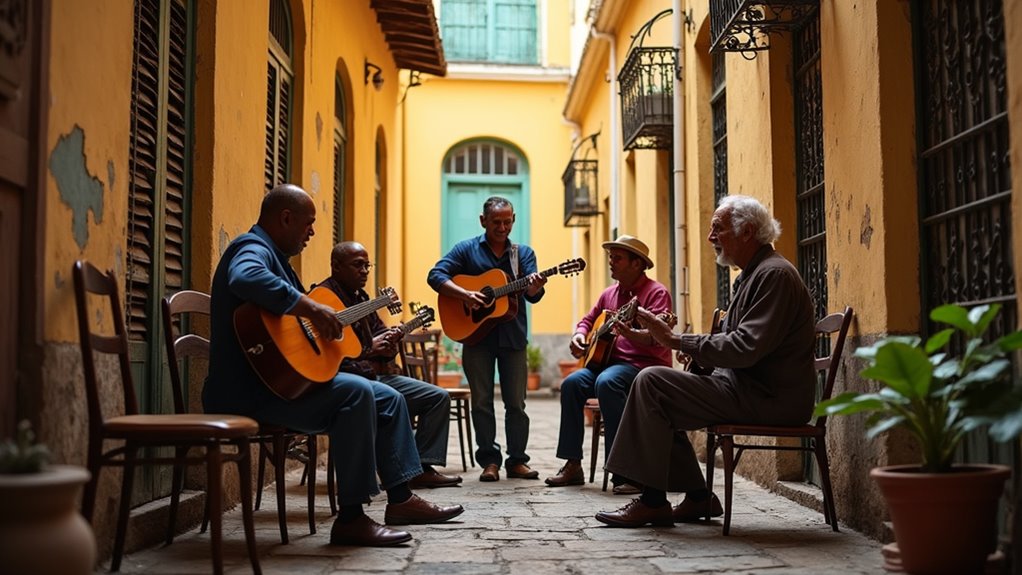
Since Trinidad’s cobblestone streets come alive with music after dark, you’ll want to make your way to Casa de la Trova for Cuba’s most authentic musical experience. This cultural center has promoted traditional Cuban trova and son music since 1974, hosting multiple live bands each evening in an intimate courtyard setting.
You’ll find yourself dancing salsa alongside locals on the small but energetic dance floor while guitarists and vocalists perform just feet away.
The venue charges around 1 CUC entrance fee and offers table service for drinks. Located near the Church of the Holy Trinity, it’s easily walkable from Trinidad’s center.
Tip musicians when possible, and consider purchasing band CDs for about 10 CUC to support local artists. Many performers are classically trained musicians who have backgrounds in state-sponsored choirs and madrigal groups, bringing exceptional skill to their traditional Cuban repertoire.
The Sum Up
You’ll find Trinidad offers incredible value for budget travelers. Most activities like wandering the historic streets and exploring Plaza Mayor won’t cost you a penny. Even climbing the bell tower and visiting the sugar plantation ruins are surprisingly affordable. Don’t miss the authentic music venues and local bars – they’re cheap and give you real Cuban culture. Pack comfortable walking shoes since you’ll be covering lots of cobblestone on foot.