
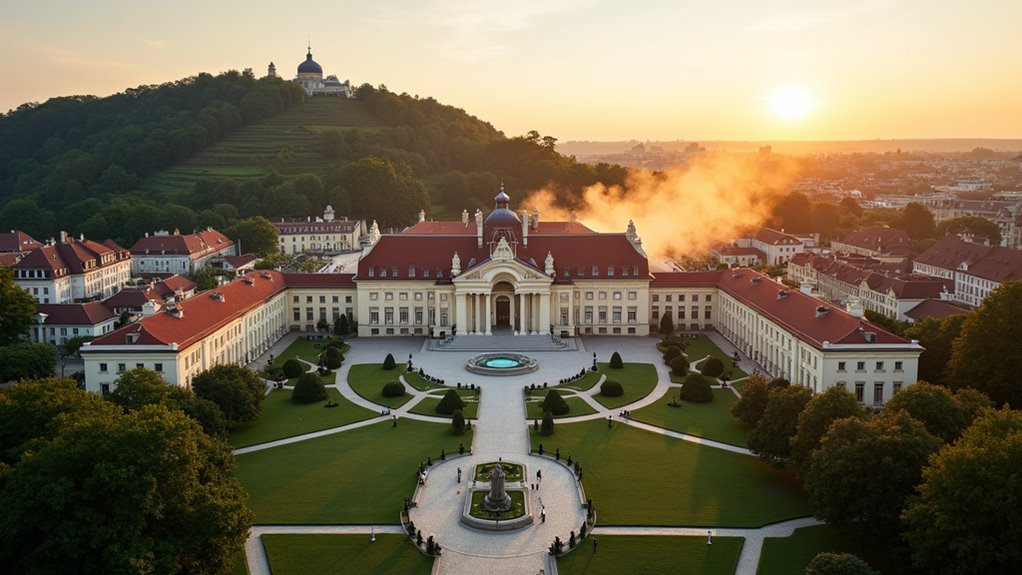
You’ll find Wiesbaden offers a perfect blend of relaxation and culture that’s often overlooked by travelers rushing to Germany’s bigger cities. This elegant spa town combines centuries-old thermal traditions with impressive architecture, world-class museums, and scenic Rhine Valley views. Whether you’re seeking rejuvenation in mineral-rich waters or exploring historic palaces, Wiesbaden delivers experiences that cater to both wellness enthusiasts and culture seekers. Here’s how to make the most of your time in this sophisticated German gem.
- Wander Through the Historic Old Town’s Pedestrian Streets
- Marvel at the Neo-Gothic Marktkirche and Its 100-Meter Tower
- Stroll the Kurpark’s Tree-Lined Paths and Central Lake
- Sample the Steaming Hot Water at Kochbrunnen Thermal Spring
- Ride the Historic Water-Powered Nerobergbahn Funicular
- Experience the Grand Kurhaus Casino and Cultural Scene
- Soak in the Thermal Baths at Kaiser-Friedrich-Therme
- Browse Art and Natural History at Museum Wiesbaden
- Explore Biebrich Palace and Its Baroque Gardens Along the Rhine
- The Sum Up
Wander Through the Historic Old Town’s Pedestrian Streets
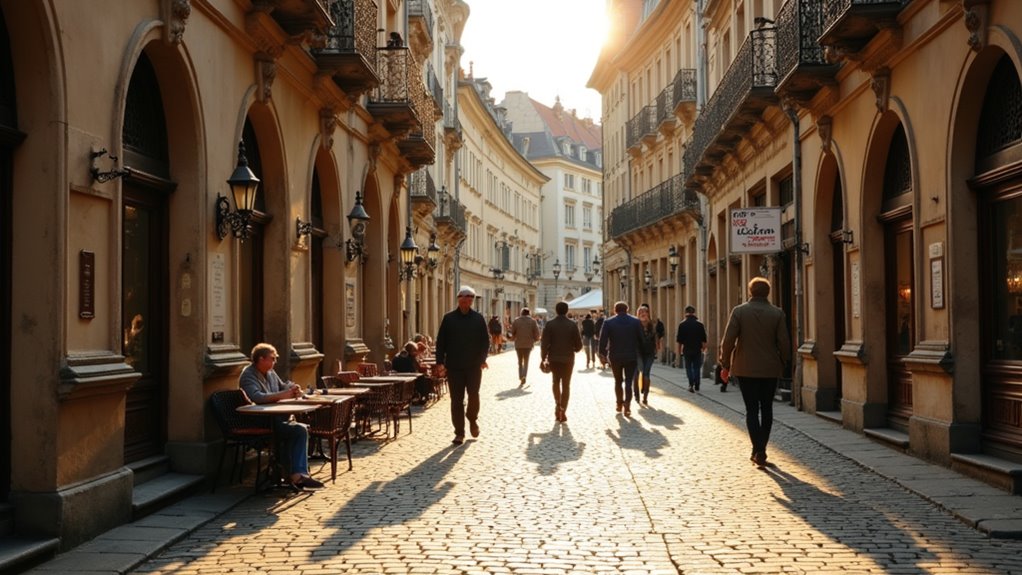
When you step into Wiesbaden’s historic Old Town, you’ll discover a mesmerizing pedestrian zone that stretches over 1.5 kilometers through the heart of the city. The locally nicknamed “Schiffchen” (meaning little ship) gets its name from the bow-shaped street layout that guides you through centuries of German history.
You’ll find yourself browsing individual fashion boutiques and admiring unique pieces from local jewelry designers. The area’s diverse culinary scene tempts you with open-air cafés, regional delicacies, and restaurants serving local specialties. The shopping experience is enhanced by exquisite scents and aromas wafting from local providers throughout the historic streets.
Don’t miss the weekly market where vendors sell fresh regional products and handcrafted goods.
The pedestrian-friendly environment creates a relaxed atmosphere perfect for leisurely exploration, making this historic district an essential Wiesbaden experience.
Marvel at the Neo-Gothic Marktkirche and Its 100-Meter Tower
As you explore the charming pedestrian streets, you’ll notice the impressive red brick spires of Marktkirche rising 100 meters above Schlossplatz, creating Wiesbaden’s most recognizable skyline feature. This neo-Gothic masterpiece, designed by Carl Boos between 1853 and 1862, stands as the Nassau region’s largest brick building.
You’ll find five distinctive towers that emphasize the church’s dramatic verticality against the cityscape.
Step inside to discover celestial-painted ceilings dotted with golden stars and an enormous organ containing 6,200 pipes. The mid-20th-century stained-glass windows flood the interior with colorful light, while statues of Christ and the four Evangelists add spiritual grandeur. Listen for the church’s remarkable 49-bell carillon that provides stunning auditory experiences throughout your visit.
Despite World War II damage, careful restoration preserves both original features and modern additions, making this architectural gem accessible to visitors of all backgrounds.
Stroll the Kurpark’s Tree-Lined Paths and Central Lake
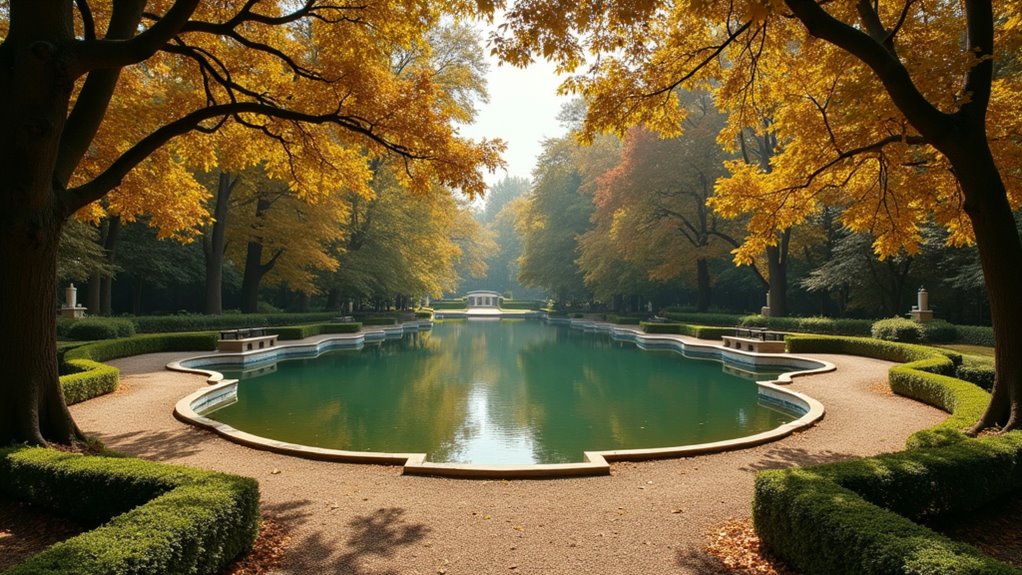
Just beyond the bustling city center, you’ll discover Kurpark’s peaceful tree-lined avenues that have welcomed visitors since the early 19th century. These shaded paths wind through an English landscape garden that perfectly blends natural beauty with refined design.
You’ll find yourself drawn to the scenic Kurparkweiher, a central lake that serves as the park’s focal point near the Kurhaus building. The water creates a tranquil atmosphere perfect for relaxation, with convenient seating areas and walking paths surrounding it. The park’s design complements the Neoclassical architecture of the adjacent Kurhaus, creating a harmonious blend of natural and built environments.
The park connects Wiesbaden’s urban core to the Taunus hills, maintaining its role as a restorative sanctuary. Whether you’re seeking quiet contemplation or casual recreation, these well-preserved paths offer an escape that’s remained integral to Wiesbaden’s spa-town identity for over two centuries.
Sample the Steaming Hot Water at Kochbrunnen Thermal Spring
At 66°C (151°F), Kochbrunnen‘s steaming thermal water offers you a direct taste of what’s made Wiesbaden a spa destination for over 2,000 years.
Located in Kochbrunnenplatz’s elegant temple-like pavilion, this famous spring gushes 360 liters per minute of mineral-rich water that Romans once used for bathing and healing.
You’ll find the drinking fountain inside the 1887 pavilion, where you can sample the salty, sulfurous water year-round for free. Bring a small cup or glass to make tasting easier.
The water’s sodium chloride and sulfur compounds give it a distinctive flavor that locals believe offers health benefits. The yellow-reddish sinter deposits around the spring were historically prized by Romans as a hair dye.
Visit early morning to see the most dramatic steam and mist rising from the spring, creating an atmospheric experience in Wiesbaden’s historic spa district.
Ride the Historic Water-Powered Nerobergbahn Funicular
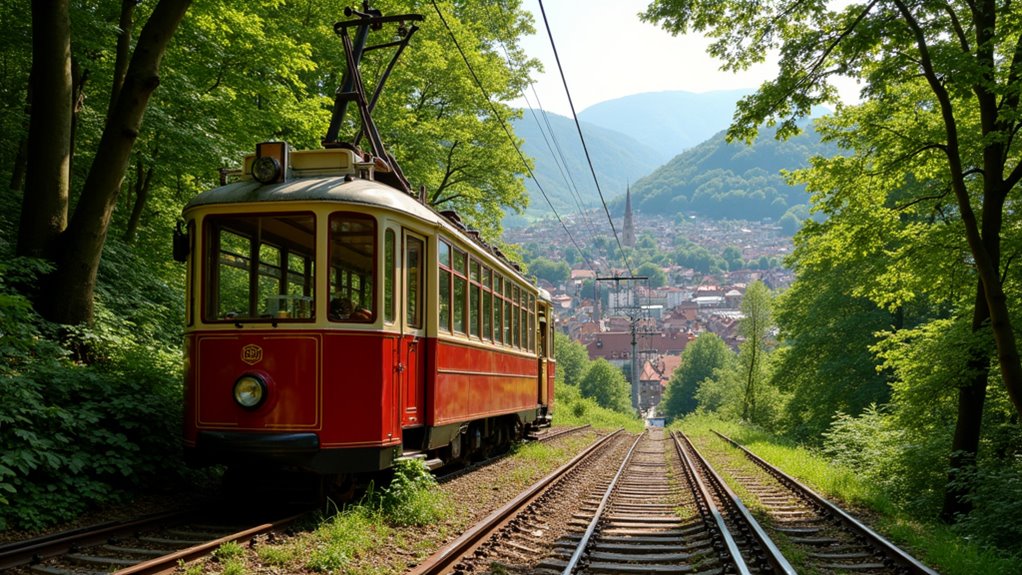
Since 1888, you’ll experience one of the world’s last water-powered funiculars when you ride the historic Nerobergbahn up Wiesbaden’s Neroberg hill. This unique railway uses no engine – instead, gravity does the work.
The downhill car fills with 7,000 liters of water, becoming heavy enough to pull the uphill car via a 452-meter steel cable.
You’ll climb 438 meters of track over an 83-meter height difference in about 10 minutes. The funicular operates seasonally from spring to autumn, running every 15 minutes between 9:00-19:00.
Adult tickets cost around 5 euros for the round trip.
At the top, you’ll enjoy panoramic views of Wiesbaden and access to Neroberg Park and the Russian Orthodox Church. The railway has transported over 250,000 passengers annually in recent years, demonstrating its enduring popularity as a cultural attraction.
It’s Germany’s oldest rack-and-pinion water ballast system.
Experience the Grand Kurhaus Casino and Cultural Scene
After exploring Wiesbaden’s hillside attractions, you’ll discover the city’s most magnificent landmark right in its heart. The Kurhaus stands as a neoclassical masterpiece, built between 1905-1907 and inaugurated by Kaiser Wilhelm II himself.
Step inside to experience Wiesbaden’s legendary casino, where gambling traditions date back to 1771. You’ll find polished wooden roulette wheels reminiscent of Dostoevsky’s era, who famously visited in the 1860s. The casino blends historic charm with modern slot machines in its secondary building.
Beyond gambling, the Kurhaus serves as Wiesbaden’s premier cultural venue. You can attend concerts in the opulent main hall with its Nassau marble columns and mahogany paneling. The surrounding Bowling Green hosts open-air performances, while the building’s Wine Salon and Shell Hall showcase stunning interior architecture. Following major restoration work that began in 1983, the venue reopened in 1987 as a modern event space while preserving its historic elegance.
Soak in the Thermal Baths at Kaiser-Friedrich-Therme
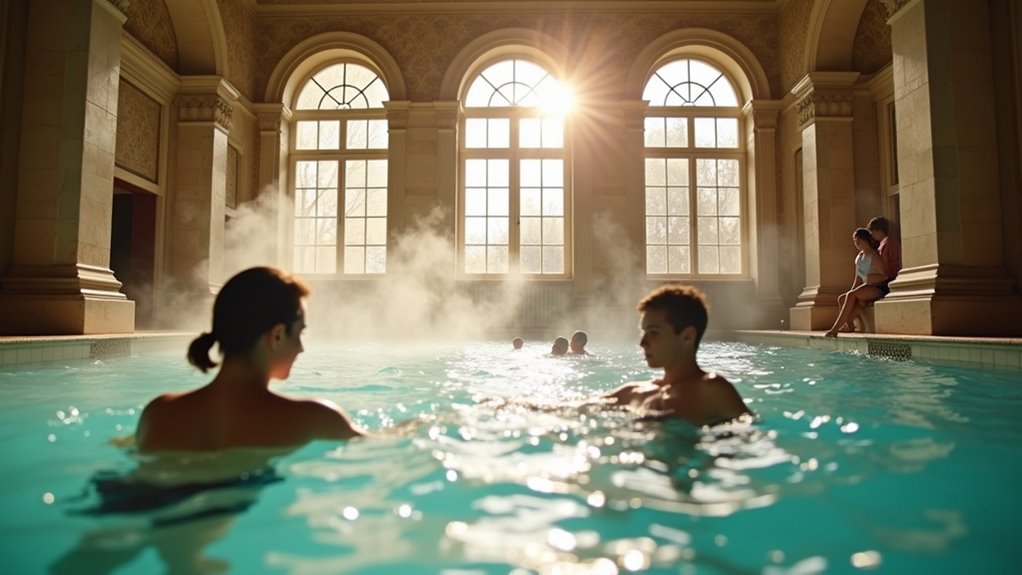
Two thousand years of spa tradition await you at Kaiser-Friedrich-Therme, where you’ll experience Wiesbaden’s most authentic thermal bathing in a stunning Jugendstil setting. This 1913 bathhouse sits atop ancient Roman foundations, feeding you mineral-rich water from the Adlerquelle spring.
You’ll find multiple thermal experiences here: cool pools at 22°C with massage jets, an icy Lavacrum plunge pool, and traditional Roman-style saunas including tepidarium and sudatorium. The Irish-Roman sauna landscape offers various heat and humidity levels, plus invigorating ice rain showers.
Note that this is clothing-optional bathing following German FKK traditions, and you must be 16 or older. The facility observes women-only Tuesdays that create a particularly comfortable environment for female visitors. Don’t miss the free thermal water at the Trinkstelle drinking fountain – locals swear by its healing properties for joint and muscle ailments.
Browse Art and Natural History at Museum Wiesbaden
Four floors of artistic treasures and natural wonders make Museum Wiesbaden one of Germany’s most distinctive cultural institutions, where you’ll discover how art and nature intertwine across centuries.
You’ll find permanent collections spanning from 12th-century Old Masters to contemporary works, including one of the world’s largest Jawlensky collections with over 100 pieces. The museum’s crown jewel is the 500-object Neess Collection, making Wiesbaden a European Art Nouveau center. Don’t miss Expressionist masterpieces by Max Beckmann and Karl Schmidt-Rottluff.
The Natural History Collections offer an immersive experience through five thematic rooms exploring Form, Color, Movement, Time, and climate change. You’ll see over a thousand butterflies, hundreds of birds, and regional fossils dating back 400 million years, beautifully connecting scientific discovery with artistic inspiration. The museum honors artistic excellence through the prestigious Alexej von Jawlensky Prize, awarded every five years to distinguished international artists.
Explore Biebrich Palace and Its Baroque Gardens Along the Rhine
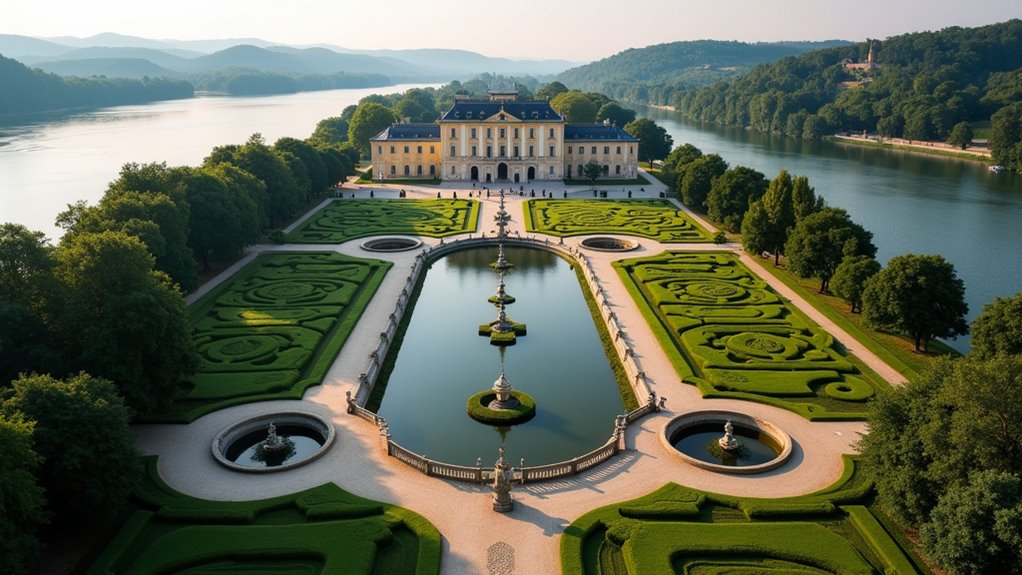
While Wiesbaden’s museums showcase artistic masterpieces indoors, Biebrich Palace offers you the chance to experience Baroque grandeur in its original riverside setting.
You’ll find this 18th-century palace in the Biebrich district, where three wings surround an impressive central rotunda that once served as a royal ballroom. The building’s red-and-white façade creates a striking contrast against the Rhine River backdrop. Originally built as a summer residence for Duke Adolf von Nassau, the palace has served the Nassau princes since 1744.
Don’t miss the extensive palace park, redesigned in 1817 as an English-style landscape garden. You can stroll through formal terraces, tree-lined avenues, and ornamental flowerbeds that extend to the riverbank.
The park’s sweeping lawns and scenic Rhine promenade make it perfect for leisurely walks while admiring both the palace’s architectural details and the river views.
The Sum Up
You’ve got everything you need for an unforgettable Wiesbaden adventure. From soaking in therapeutic thermal waters to exploring grand palaces and riding historic funiculars, this spa town delivers both relaxation and culture. Don’t miss the stunning architecture, peaceful parks, and that famous hot spring water everyone talks about. Pack comfortable walking shoes and prepare to fall in love with one of Germany’s most charming destinations.