
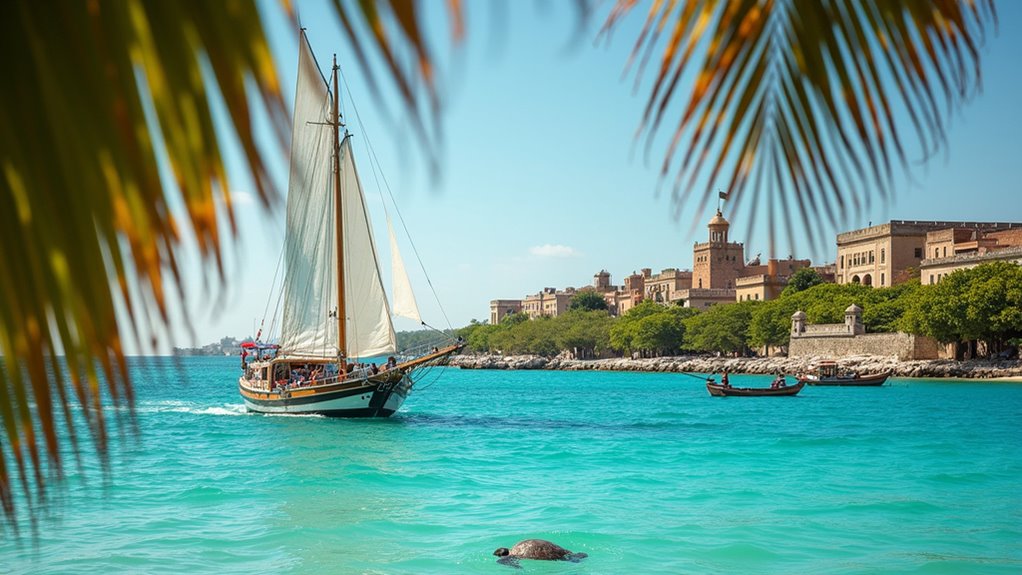
You’ve probably heard Zanzibar called the “Spice Island,” but there’s so much more waiting beyond those aromatic clove plantations. Whether you’re drawn by Stone Town’s UNESCO-listed alleyways, the promise of pristine beaches, or encounters with rare red colobus monkeys, this archipelago offers experiences that won’t drain your travel fund. The tricky part isn’t finding things to do—it’s knowing which ones deserve your limited time and which tourist traps you should skip entirely.
- Wander Stone Town’s Labyrinthine Streets and Historic Landmarks
- Take a Spice Farm Tour to Understand Zanzibar’s Trading Heritage
- Spend Time at Nungwi and Kendwa Beaches for Swimming and Sunset Views
- Visit Jozani Chwaka Bay National Park to See Red Colobus Monkeys
- Experience Forodhani Square’s Evening Food Market
- Take a Day Trip to Prison Island for Giant Tortoises and History
- Go Snorkeling at Mnemba Island or Nakupenda Sandbank
- Explore Paje Beach for Kite Surfing and Kuza Cave
- Join a Blue Safari Boat Tour Through Menai Bay
- Shop for Local Crafts and Textiles in Stone Town Markets
- Visit the Zanzibar Butterfly Center and Turtle Conservation Projects
- The Sum Up
Wander Stone Town’s Labyrinthine Streets and Historic Landmarks
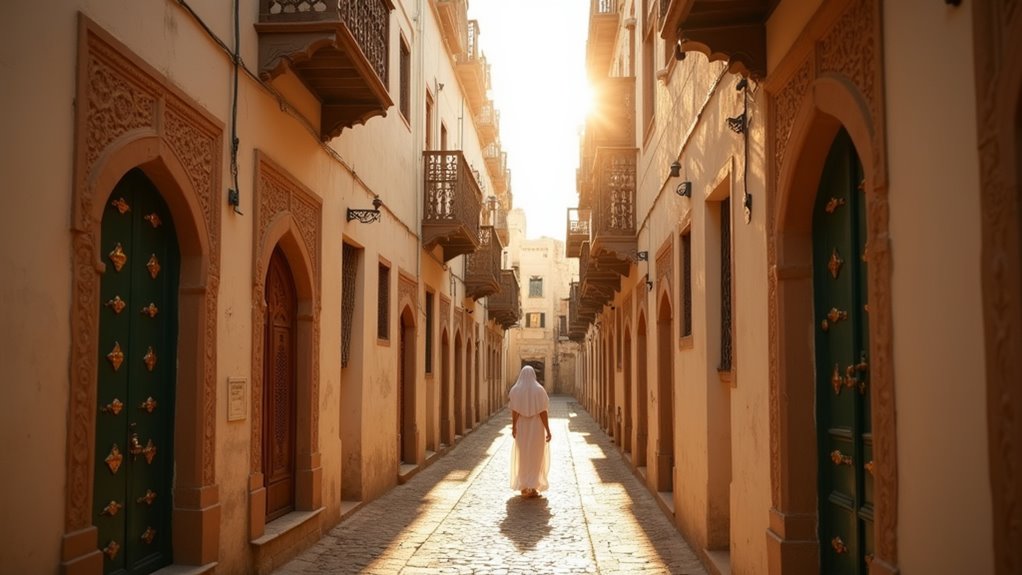
When you first step off the ferry onto Zanzibar’s main island, Stone Town’s maze-like streets will immediately draw you in with their centuries-old coral stone buildings and intricately carved wooden doors. You’ll wander through narrow alleys designed to provide shade from the tropical heat, discovering architectural gems that won’t cost you anything to admire.
Start at the Old Fort, Stone Town’s oldest building from the 17th century, then head to the House of Wonders, once East Africa’s tallest structure. Don’t miss Christ Church Cathedral, built on the former slave market site, where you can learn about Zanzibar’s complex history.
The ornate Old Dispensary showcases stunning Indian merchant architecture, while traditional Zanzibar doors tell stories of the island’s diverse cultural influences. These structures primarily use coralline ragstone, mangrove timber, and lime mortar that reflect centuries of traditional building techniques passed down through generations of local artisans.
Take a Spice Farm Tour to Understand Zanzibar’s Trading Heritage
After exploring Stone Town’s architectural legacy, you’ll want to understand how Zanzibar earned its nickname as the “Spice Island” by visiting one of the local spice farms just outside the city. These 2-3 hour tours in the Masingini Forest area cost around $15-25 and offer incredible value for understanding the island’s trading heritage.
You’ll walk through working plantations where guides encourage you to touch, smell, and taste fresh spices directly from plants—raw ginger, cinnamon bark, and turmeric roots. The farms operate using sustainable practices with no pesticides and natural fertilizers to preserve Zanzibar’s ecological balance.
Beyond identifying cloves, nutmeg, and vanilla orchids, you’ll learn how Sultan Seyyid Said’s 1820s plantations transformed Zanzibar into a wealthy Indian Ocean trading hub.
Most tours include fruit tastings and end with optional spice purchases, making them both educational and deliciously memorable.
Spend Time at Nungwi and Kendwa Beaches for Swimming and Sunset Views
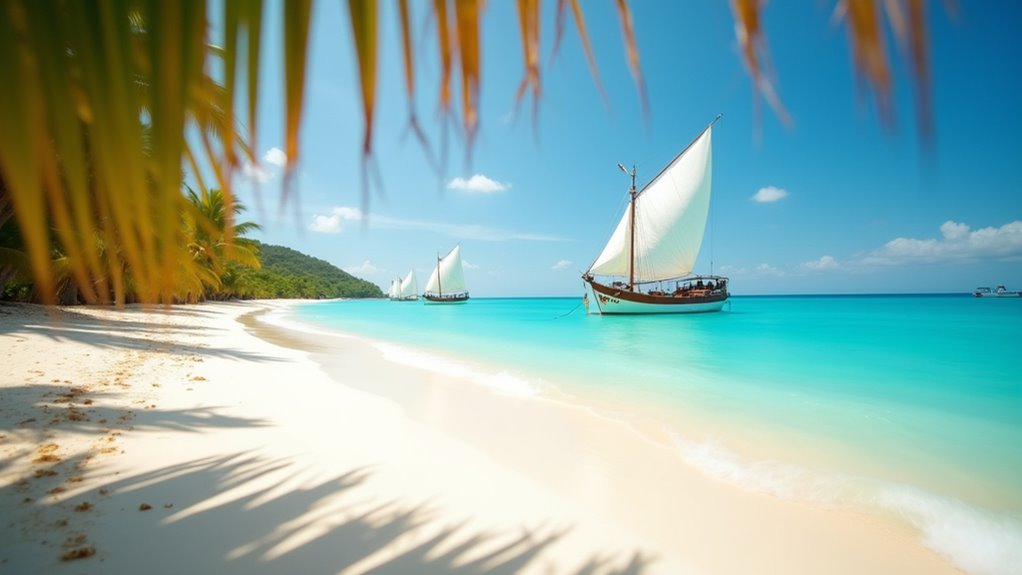
While Stone Town and spice farms reveal Zanzibar’s cultural heart, the island’s northern beaches of Nungwi and Kendwa showcase its natural beauty with some of East Africa’s most stunning coastline. You’ll find powdery white sand and turquoise waters perfect for swimming, especially during high tide when the lagoon offers calm, safe conditions.
Kendwa’s more stable tides make it ideal for consistent beach time, while Nungwi provides excellent snorkeling opportunities right off the shore. Kendwa Beach has been ranked 4th best beach in the world by Big 7 Travel magazine. Both beaches face west, delivering spectacular sunset views between 6:00-7:00 PM. Visit Kendwa Rocks Beach Bar or Essque Zalu’s wooden jetty for prime sunset spots.
Pack water shoes for sea urchins, negotiate prices with beach vendors upfront, and bring cash for chair rentals at public beach areas.
Visit Jozani Chwaka Bay National Park to See Red Colobus Monkeys
Beyond Zanzibar’s pristine beaches lies an incredible wildlife experience that’ll bring you face-to-face with one of Africa’s rarest primates. Jozani-Chwaka Bay National Park, located 35 km southeast of Stone Town, is home to the endangered Zanzibar red colobus monkey found nowhere else on Earth.
You’ll walk guided forest trails where these remarkable primates are habituated to humans, allowing close-up photography and observation. The 45-minute nature trail winds through diverse habitats including mangroves, tropical forests, and coral rag formations supporting 291 plant species and 168 bird species. The park gained international recognition as a UNESCO Biosphere site in 2016, highlighting its global ecological importance.
Your entrance fee directly funds conservation efforts protecting these endangered monkeys and their ecosystem. It’s an affordable day trip that combines wildlife viewing with environmental education, making it essential for first-time visitors seeking authentic Zanzibar experiences beyond beaches.
Experience Forodhani Square’s Evening Food Market

When sunset paints Stone Town’s harbor in golden hues, Forodhani Square transforms into Zanzibar’s most vibrant culinary theater. You’ll find dozens of food stalls firing up grills along the seawalk between the House of Wonders and Old Fort, serving everything from grilled lobster to Zanzibar pizza—a local stuffed flatbread that’s nothing like Italian pizza.
Arrive around 6 PM to snag the best dishes before they’re gone. Must-tries include urojo (Zanzibar Mix), fresh sugarcane juice, and whatever seafood’s grilling nearby. Negotiate prices upfront and watch vendors prepare your food for the freshest experience.
The atmosphere’s electric with locals and travelers mingling under the stars. You’ll eat al fresco overlooking the Indian Ocean—just keep your belongings close in the crowds. This historic market was originally created in 1936 to celebrate Sultan Khalifa’s Silver Jubilee and has since evolved into a multicultural culinary hub.
Take a Day Trip to Prison Island for Giant Tortoises and History
Just a 20-minute boat ride from Stone Town’s harbor, Prison Island (Changuu Island) offers one of Zanzibar’s most unique day trips—where you’ll meet century-old giant tortoises and explore the ruins of a British-era prison that never actually held prisoners.
The island’s main attraction is its giant tortoise sanctuary, home to endangered Aldabra tortoises that you can feed and observe up close. Some of these gentle giants are reportedly over 100 years old.
You’ll also explore the fascinating coral stone prison complex built in 1893-1894, which ironically served as a quarantine station instead of housing inmates. The facility primarily functioned as a quarantine center for yellow fever victims during the colonial period.
Most day trips include snorkeling in the crystal-clear waters surrounding the island.
Entry fees support conservation efforts, and combining transportation with a guided tour typically offers the best value for your visit.
Go Snorkeling at Mnemba Island or Nakupenda Sandbank
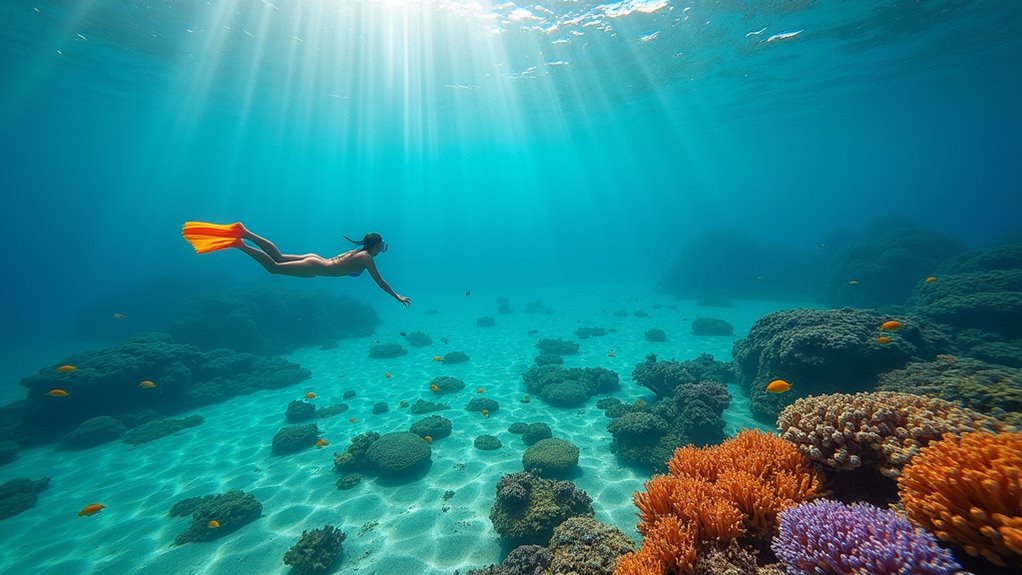
While Prison Island offers fascinating history and giant tortoises, Zanzibar’s underwater world provides equally mesmerizing experiences at Mnemba Island and Nakupenda Sandbank.
You’ll snorkel in crystal-clear waters with 20-30 meter visibility, spotting colorful reef fish, sea turtles, and rays in shallow 2-4 meter depths perfect for beginners.
Full-day tours ($30-60) depart from Nungwi Beach around 9am, including equipment, lunch, and guides.
You can’t access Mnemba Island itself—it’s restricted to luxury lodge guests—but you’ll snorkel the protected reefs offshore where fishing’s banned, ensuring abundant marine life. The area hosts approximately 600 species of coral reef fish, making every underwater moment spectacular.
Most tours combine snorkeling with relaxation at pristine Nakupenda Sandbank’s white beaches.
Book through local dive shops in Nungwi or Matemwe, and remember to practice responsible snorkeling to protect these conservation areas.
Explore Paje Beach for Kite Surfing and Kuza Cave
Located on Zanzibar’s southeast coast, Paje Beach transforms into a kitesurfer’s paradise when consistent trade winds kick in from June through September and December to March.
You’ll find perfect conditions with winds averaging 15-25 knots and shallow lagoon waters protected by offshore coral reefs.
If you’re new to kitesurfing, Paje’s your ideal starting point. The shallow waters at low tide create safe learning conditions, while certified instructors offer lessons for all skill levels.
Morning winds start gentle at 12-18 knots, strengthening after noon—perfect for building confidence gradually.
The beach offers kite rentals, food vendors, and ample launching space. When the wind dies down, you can enjoy stand-up paddleboarding tours or explore the vibrant marine life through diving and snorkeling.
Beyond kitesurfing, you can explore nearby Kuza Cave‘s underground pools.
Paje maintains a tranquil, less touristy atmosphere while providing stunning white sand beaches and crystal-clear turquoise waters.
Join a Blue Safari Boat Tour Through Menai Bay
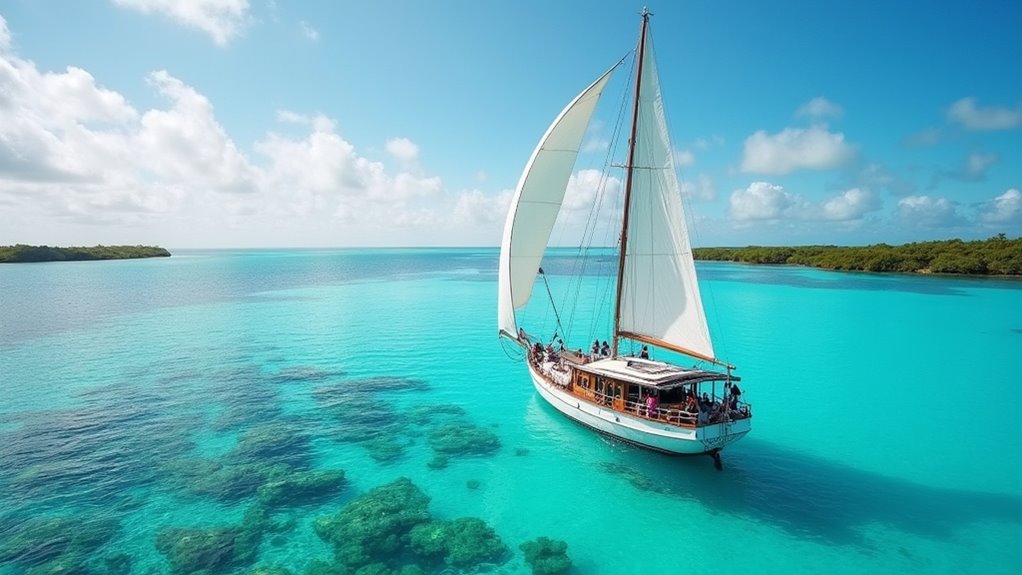
Why settle for ordinary beach time when you can set out on a Blue Safari boat tour through Menai Bay Conservation Area? This full-day adventure departing from Fumba village offers exceptional value at $50-140 per person.
You’ll sail on traditional dhows while spotting dolphins, then snorkel vibrant coral reefs teeming with tropical fish. The tour includes swimming in crystal-clear waters and exploring natural sandbanks during low tide.
What makes this experience special is the freshly prepared seafood barbecue featuring lobster, prawns, and local fish, served with tropical fruits right on the sandbank. Tours run 6-8 hours and include snorkeling gear, meals, and drinks. The experience is highly rated with 4.9 out of 5 stars from 120 travelers who have enjoyed this unforgettable marine adventure.
Book in English, German, or Spanish, and arrange transport to Fumba village if pickup isn’t included.
Shop for Local Crafts and Textiles in Stone Town Markets
After exploring Zanzibar’s marine wonders, you’ll discover that Stone Town’s bustling markets offer an equally engaging culture into the island’s artisan traditions.
Start at Darajani Market, the beating heart of Stone Town, where you’ll find authentic spices like cloves and cardamom, colorful kangas with Swahili proverbs, and hand-carved wooden items. Visit early morning when stalls are fully stocked and bargaining is expected.
For a more relaxed experience, explore fixed-price shops like Memories of Zanzibar or Zanzibar Gallery. Don’t miss the Cultural Arts Centre for handmade crafts and Tinga Tinga paintings.
Support local communities by purchasing from artisan collectives like Moto, which sells beautiful Ukili baskets. Consider visiting Fahari Zanzibar, a social enterprise that empowers local women artisans through the sale of handcrafted leather goods and contemporary jewelry.
Avoid coral or tortoiseshell products – they’re illegal and harm endangered species.
Visit the Zanzibar Butterfly Center and Turtle Conservation Projects

While shopping for crafts gives you insight into Zanzibar’s cultural heritage, visiting the Zanzibar Butterfly Centre near Jozani Forest offers an equally rewarding experience that connects you directly with the island’s natural conservation efforts.
You’ll observe over 50 butterfly species in their enclosed tropical garden, watching the complete life cycle from eggs to adults. The 30-45 minute guided tours cost reasonable fees that directly support 40 local farmers from Pete village and forest conservation projects.
Visit between 10 AM and 2 PM when butterflies are most active. You don’t need advance booking for standard visits, making it perfect for spontaneous plans. For a deeper experience, consider the optional Farmer’s Tour that showcases eco-friendly farming practices and community livelihoods.
The centre’s family-friendly atmosphere works well with children, and you’ll likely have butterflies land on you during feeding demonstrations.
The Sum Up
You’ll find Zanzibar offers incredible value for budget travelers who plan smart. Book local guesthouses over resorts, eat at street stalls and local restaurants, and choose group tours to split costs. Don’t miss free activities like exploring Stone Town’s alleys or watching sunsets from public beaches. Pack light, bring cash for better deals at markets, and you’ll experience this magical island’s culture, wildlife, and beaches without breaking the bank.