
The Aswan-to-Luxor Nile cruise is the trip that turned Egypt from a place I liked to a place I love. Four days of floating between temples, eating every meal with the river outside the window, and waking up somewhere new each morning — it’s the easiest luxury holiday in Egypt.
I’ve since recommended it to everyone who asks about Egypt. Yes, the pyramids matter. Yes, you should do Cairo. But the Nile cruise is what you’ll still talk about five years later.
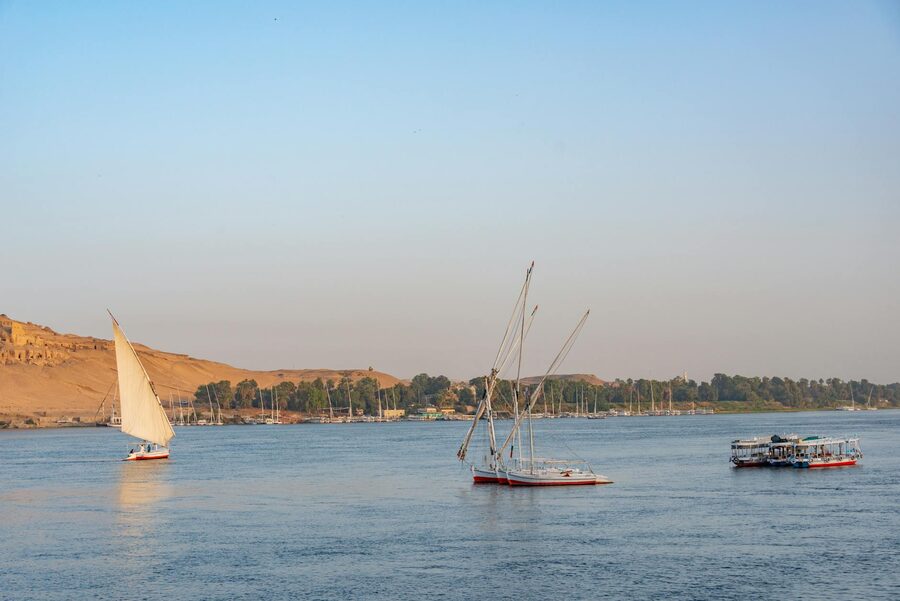
In this guide I’ll walk through the three Nile cruises I’d book at different price points, explain what the 4-day itinerary actually looks like, and cover the essential stops — Philae, Kom Ombo, Edfu, and the Abu Simbel add-on. I’ll also flag the boat quality tiers that matter.
- Three Nile Cruises I’d Book
- The Standard 4-Day Itinerary
- Tour #1 — 4-Day Nile Cruise with Abu Simbel and Balloon (Budget)
- 4 Days Nile Cruise from Aswan to Luxor with Abu Simbel & Balloon — 0 per person
- Tour #2 — 3-Night Deluxe Nile Cruise with Abu Simbel (Mid-tier)
- 3 Night Deluxe Nile Cruise from Aswan to Luxor with Abu Simbel — 5 per person
- Tour #3 — Private Sightseeing Nile Cruise (Premium)
- Nile Cruise from Aswan to Luxor with Private Sightseeing — id="section-0",005 per person
- Abu Simbel — Worth the 4am Wake-up?
- Kom Ombo — The Crocodile Temple
- Philae — The Temple That Was Moved
- Life Onboard — What to Expect
- Aswan vs Luxor as Starting Point
- How to Fit the Cruise Into a Larger Egypt Trip
- Which Boat Matters More Than You Think
- Best Time to Sail
- Frequently Asked Questions
- My Bottom Line
Three Nile Cruises I’d Book
Nile cruise prices span $300 to $2,500+ per person for 3-4 night trips, depending on boat class, private vs group sightseeing, and whether Abu Simbel is included. The sweet spot for most travelers is $400-700 per person with Abu Simbel included.
My budget pick is the $370 4 Days Nile Cruise from Aswan to Luxor with Abu Simbel Temples and Balloon — a full itinerary at an entry-level price. For a step up in boat quality and service, the $625 3 Night Deluxe Nile Cruise with Abu Simbel is the classic choice. For private guides and upscale boats, the $1,005 Private Sightseeing Nile Cruise is worth the jump.
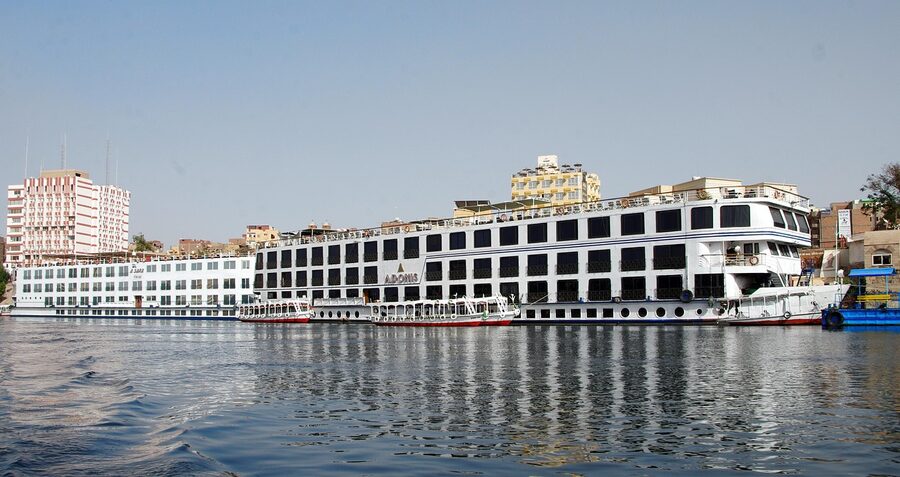
All three include hotel pickup in Aswan, onboard meals, sightseeing with a guide, and drop-off in Luxor. Drinks (beer, wine, soft drinks) are usually extra at boat prices.
The Standard 4-Day Itinerary
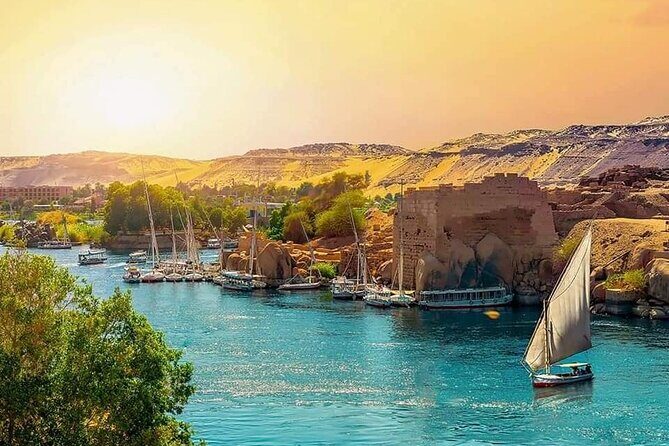
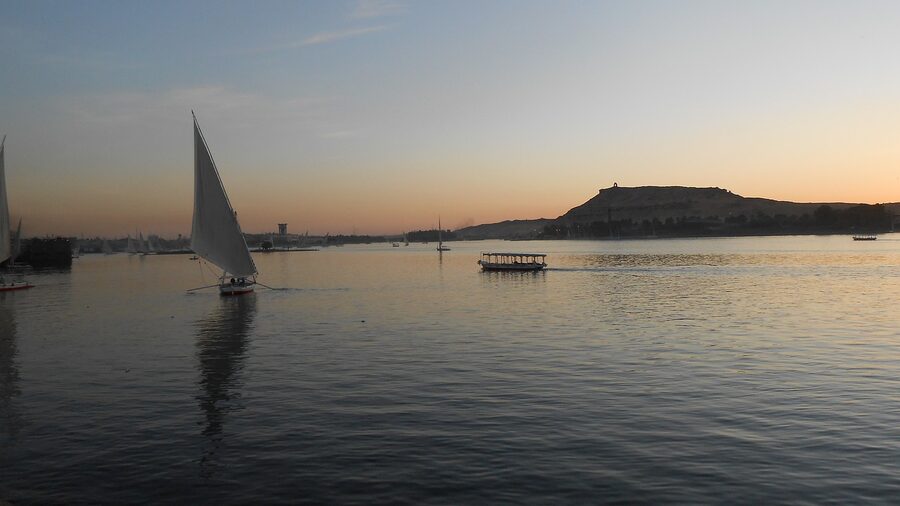
Day 1 (Aswan): Check in around noon. Visit the High Dam, the Unfinished Obelisk, and Philae Temple in the afternoon. Back to the boat for dinner and a sunset sail on the Nile.
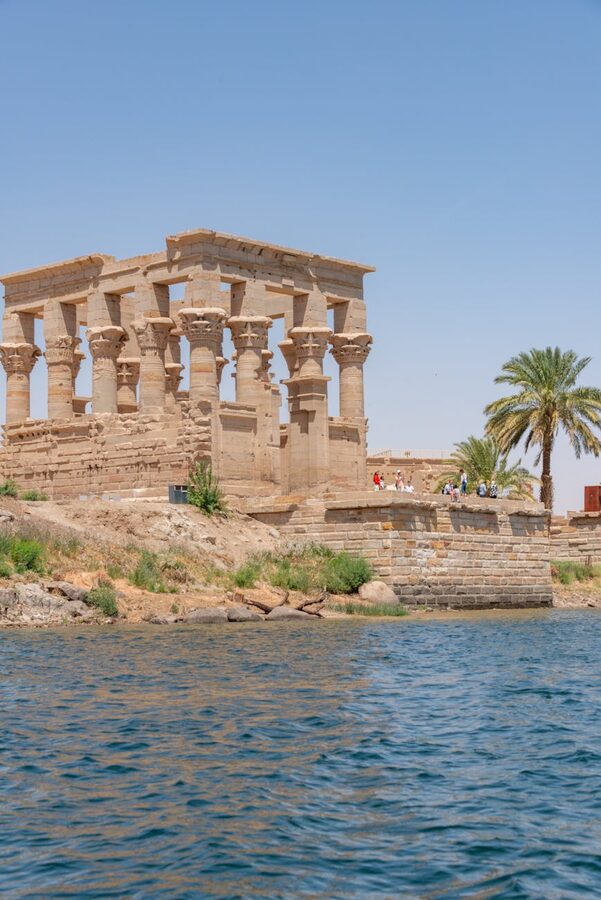
Day 2 (Abu Simbel add-on or leisure day, then Kom Ombo): The optional Abu Simbel excursion leaves at 4am, returns at 1pm. Boat sails in the afternoon to Kom Ombo Temple. Evening: sail to Edfu, moored overnight.
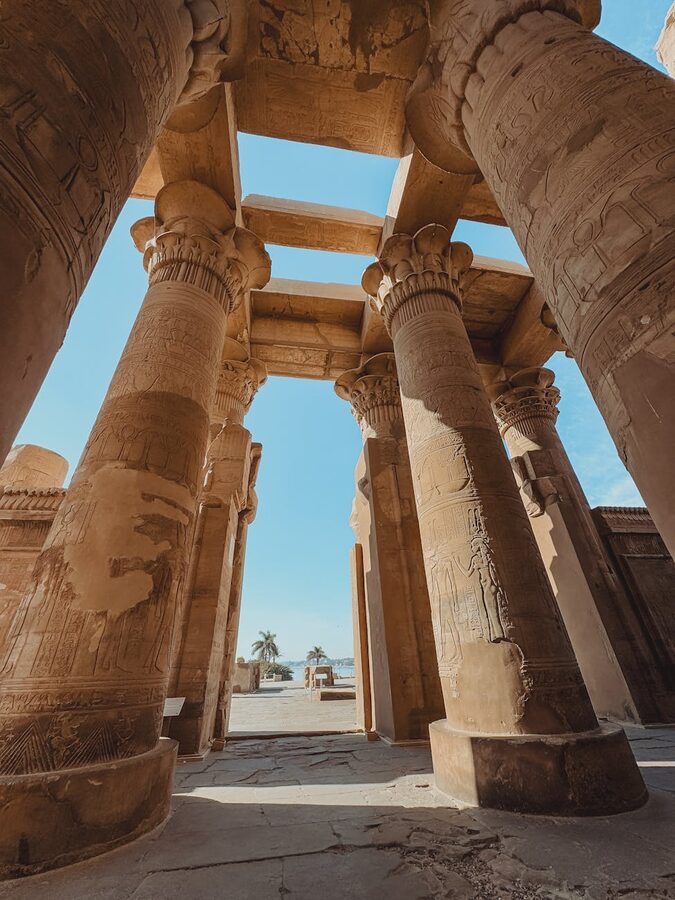
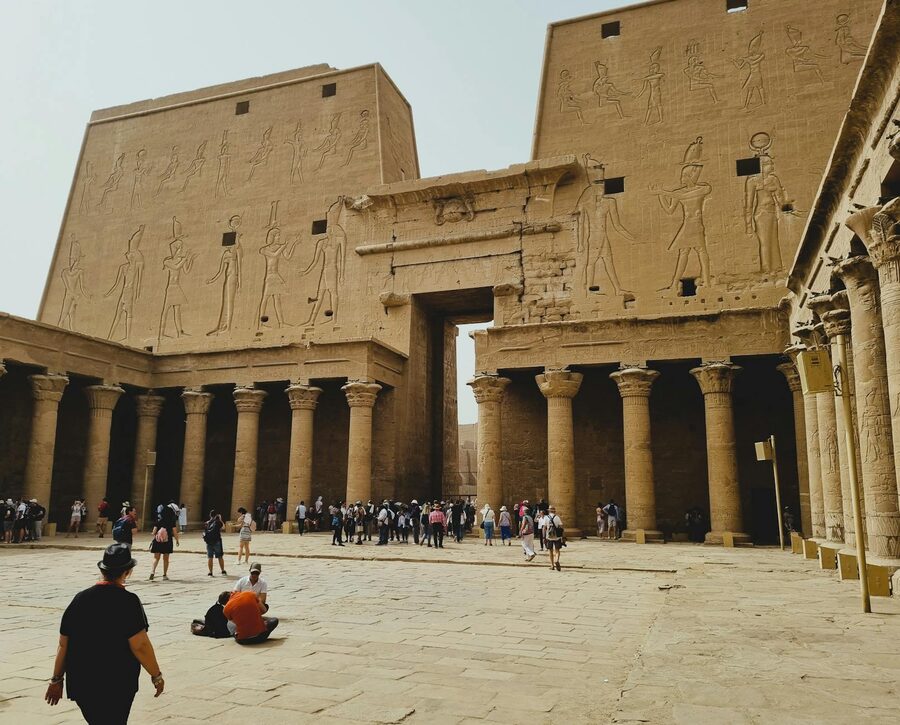
Day 3 (Edfu, sail to Luxor): Morning visit to the Temple of Horus at Edfu — the best-preserved Ptolemaic temple in Egypt. Sail through the Esna Lock in the afternoon, arrive in Luxor around 6pm.
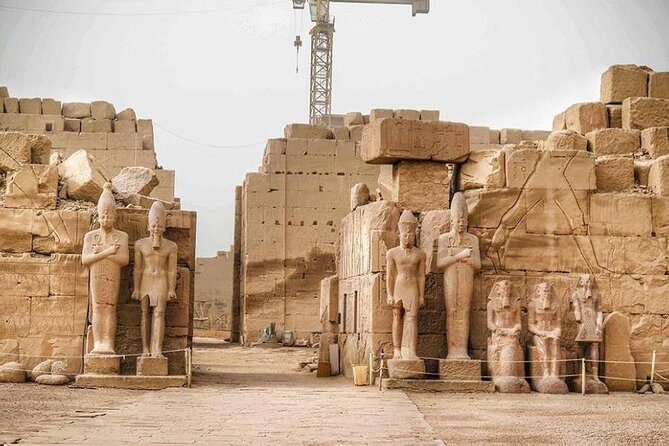
Day 4 (Luxor): Visit the Valley of the Kings, Hatshepsut’s Temple, and the Colossi of Memnon on the West Bank in the morning. Karnak and Luxor Temple on the East Bank in the afternoon. Check out from the boat.
Tour #1 — 4-Day Nile Cruise with Abu Simbel and Balloon (Budget)
4 Days Nile Cruise from Aswan to Luxor with Abu Simbel & Balloon — $370 per person
At $370 this is the entry point for the Aswan-to-Luxor cruise. You get a standard 4-star boat, shared guide for sightseeing, all meals onboard, Abu Simbel excursion, and the Luxor sunrise balloon on day 4.
The catch at this price: older boats, smaller cabins (think 16 square meters), and shared-group sightseeing. You’ll be on coaches with 20+ other guests visiting temples. Fine for the experience, just don’t expect luxury.
See the full itinerary in our 4-day Nile cruise with Abu Simbel review.
Tour #2 — 3-Night Deluxe Nile Cruise with Abu Simbel (Mid-tier)
3 Night Deluxe Nile Cruise from Aswan to Luxor with Abu Simbel — $625 per person
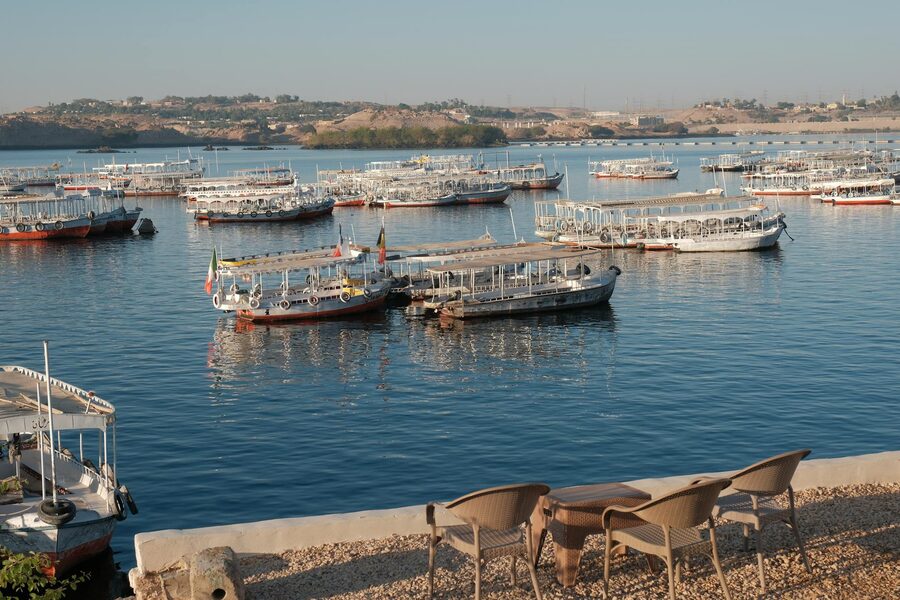
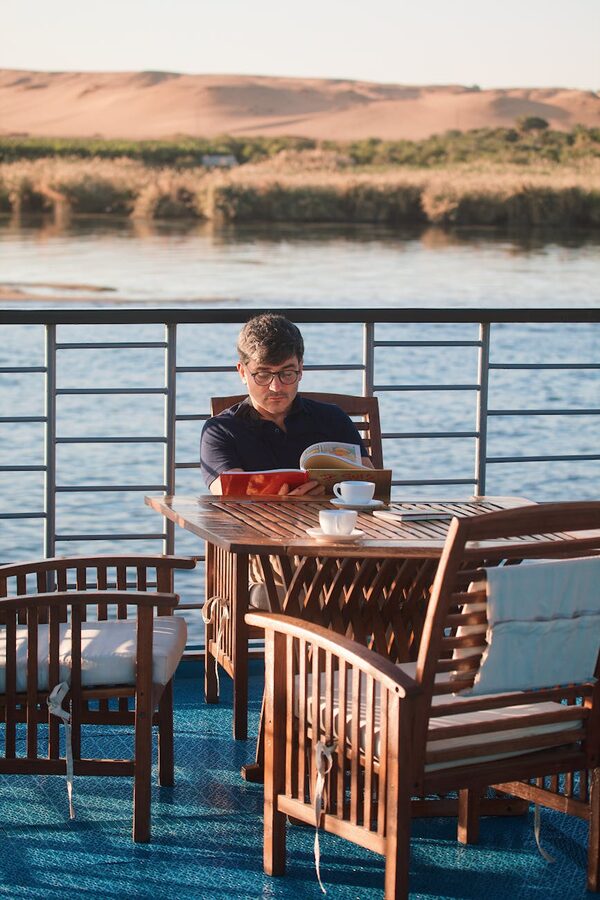
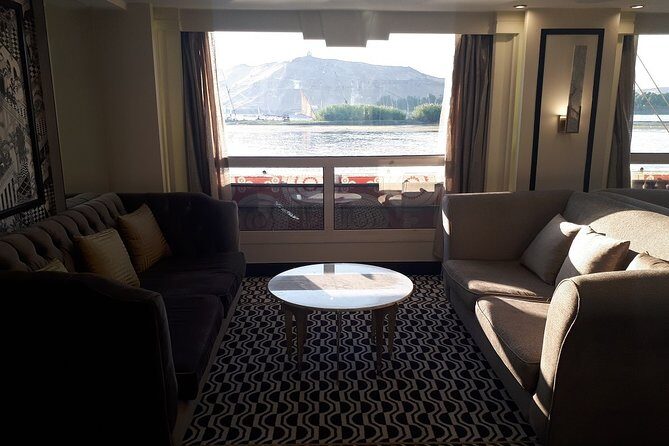
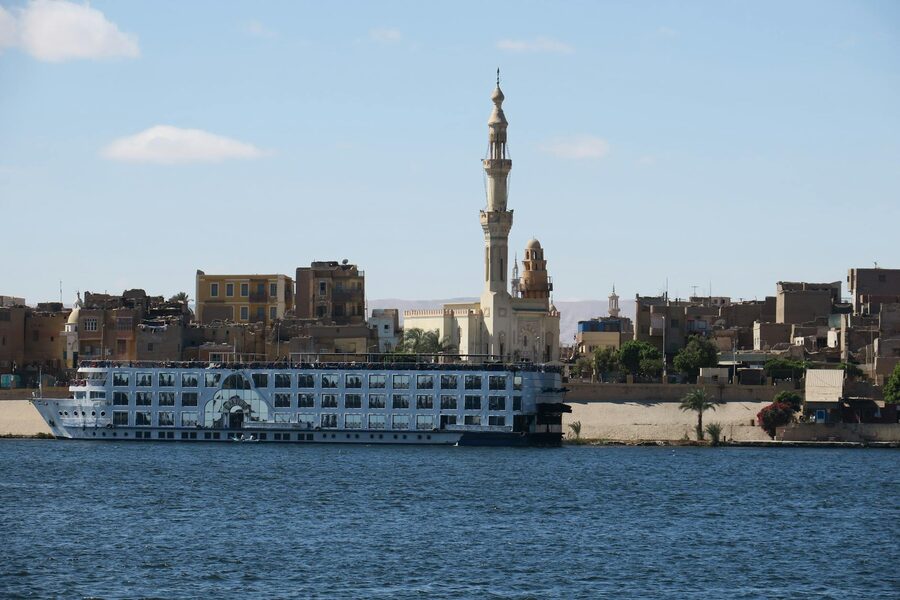
This is the option I’d book for most travelers who want the Nile cruise done right. You’re on a 5-star boat (usually the Movenpick Sun Ray, Sonesta St. George, or similar), with cabins around 25 sqm, pool deck, and a proper buffet dinner rather than a cafeteria line.
The sightseeing guide is still shared-group but smaller groups (8-12 rather than 20+), and the guides are more experienced. Abu Simbel is included at the $625 price — that’s a $120 value if bought separately.
At 5.0 stars across 4 detailed responses, this has been consistent for years. Details are in our 3 Night Deluxe Nile Cruise review.
Tour #3 — Private Sightseeing Nile Cruise (Premium)
Nile Cruise from Aswan to Luxor with Private Sightseeing — $1,005 per person
The real upgrade here isn’t the boat (usually the same 5-star ships as the deluxe option). It’s the shore excursions. You get a dedicated Egyptologist guide, a private AC van, and go at your own pace through the temples.
For groups of 2-4 who want to ask questions and linger, this is transformative. The standard group-tour rushes you through Kom Ombo in 45 minutes. Private gives you 90 minutes and proper context.
See the full package in our private sightseeing Nile cruise review.
Abu Simbel — Worth the 4am Wake-up?
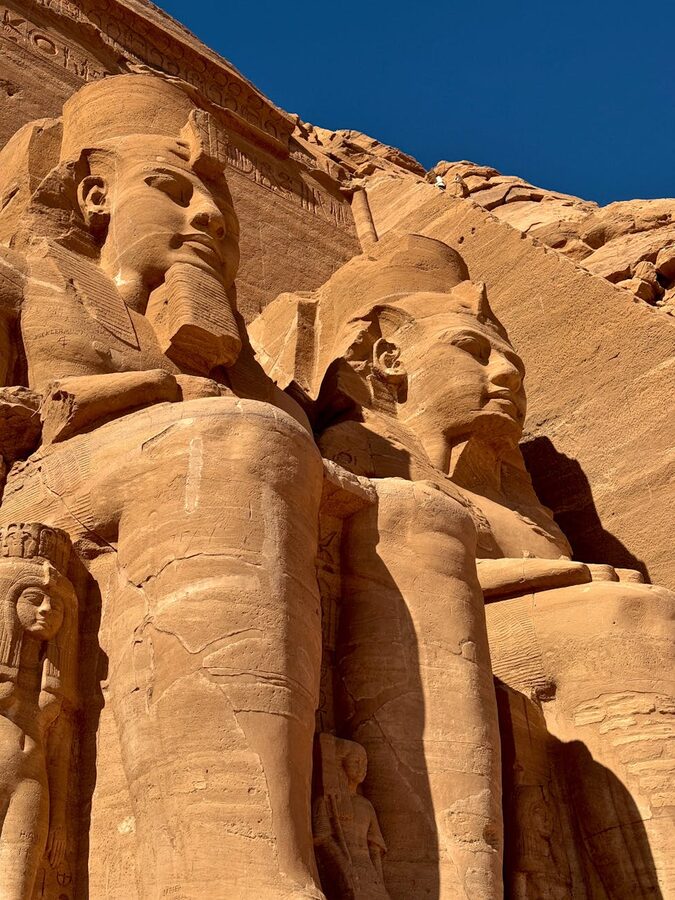
Yes. Abu Simbel is 280km south of Aswan — a 3-hour drive into the Nubian desert. The coach convoy leaves at 4am, arrives at 7am, and gives you 2 hours at the site. You’re back in Aswan at 1pm.
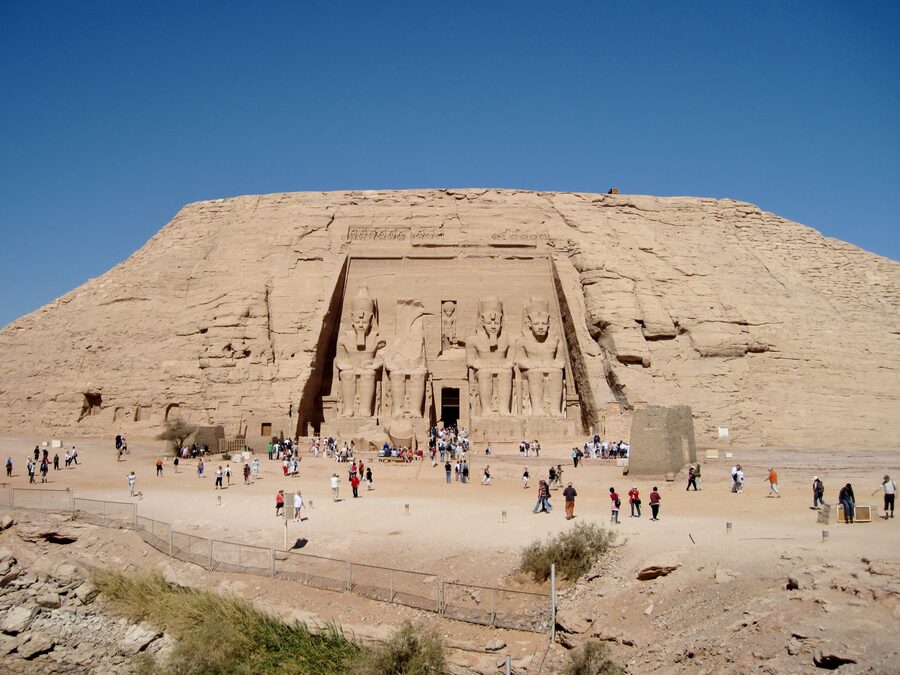
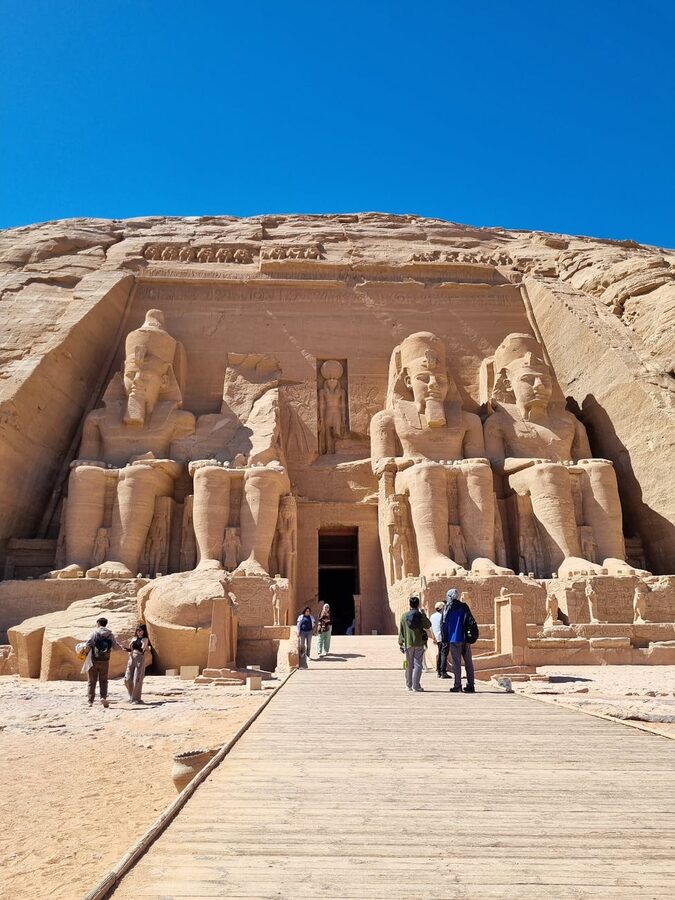
The temple was carved into a cliff by Ramses II around 1264 BC. In the 1960s it was cut into 20-tonne blocks and relocated 65 meters uphill to save it from the rising waters behind the Aswan High Dam. The relocation is itself one of the great engineering feats of the 20th century.
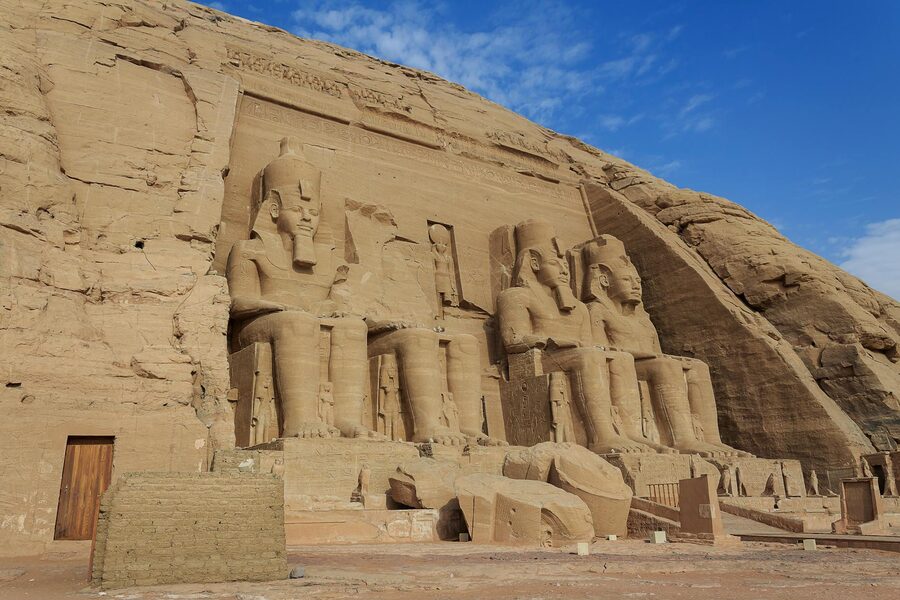
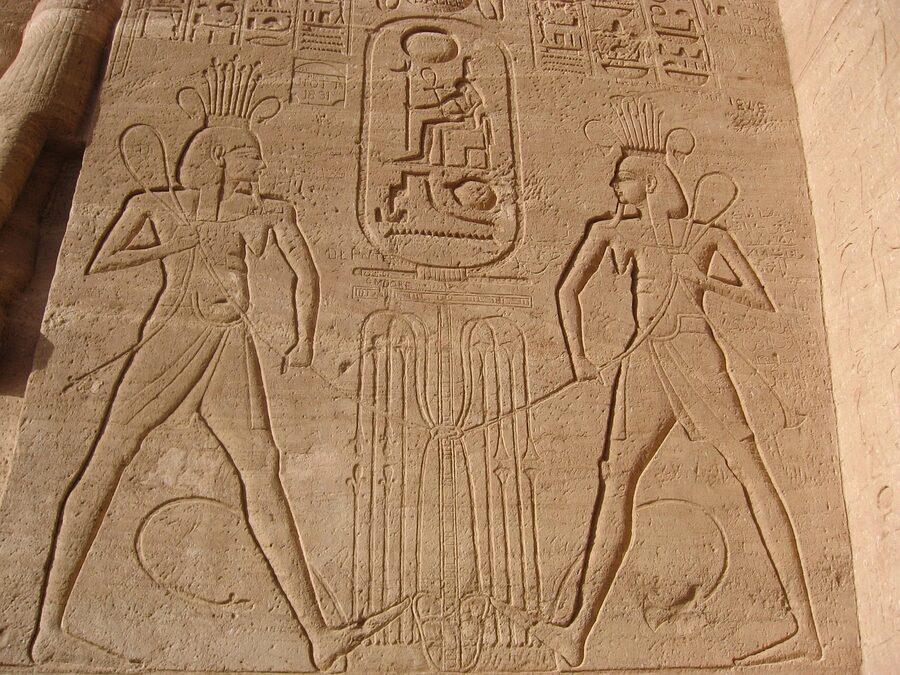
Inside the temple you’ll find carved scenes of Ramses’ military campaigns, including the Battle of Kadesh. The sanctuary at the back aligns with the rising sun twice a year (February 22 and October 22) — the sunlight reaches the back wall and illuminates three of four statues. It’s timed for Ramses’ coronation and birthday.
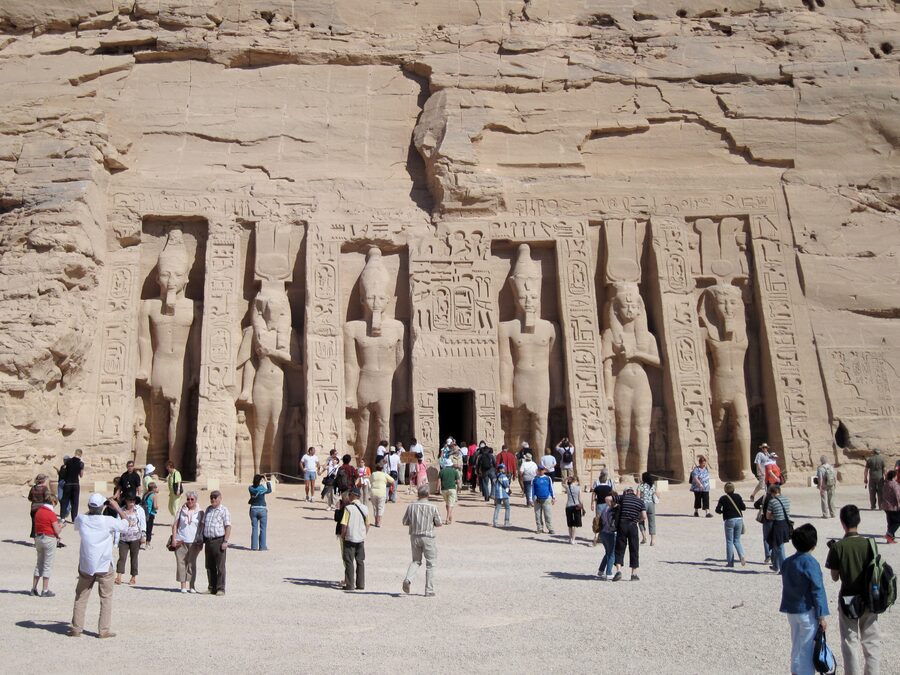
Next to the Grand Temple stands the smaller Temple of Nefertari, dedicated to Ramses’ favorite wife. The statues of Nefertari are carved the same size as Ramses, unusual in ancient Egypt where queens were typically depicted smaller.
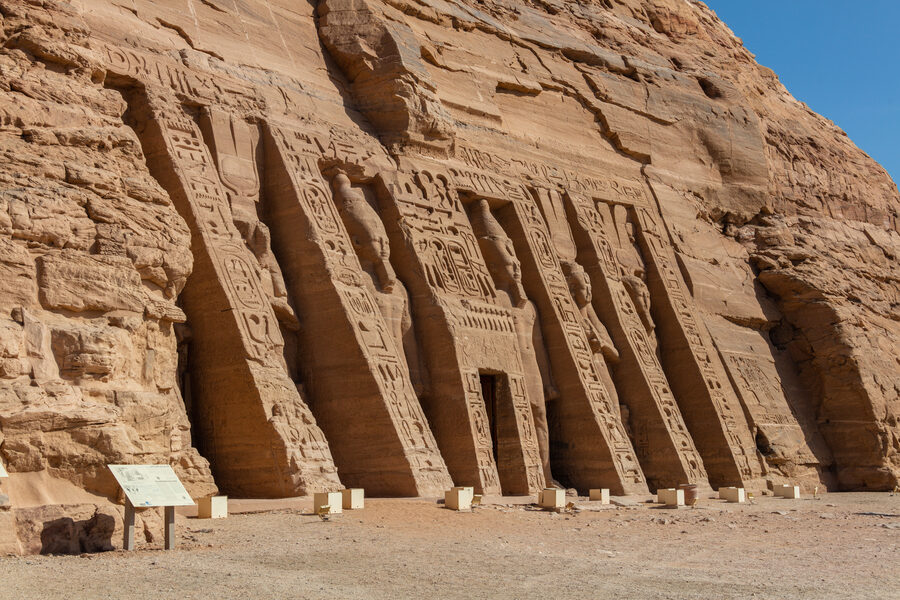
Don’t skip this if you can afford the add-on. It’s universally the highlight of the whole cruise for most travelers.
Kom Ombo — The Crocodile Temple
Kom Ombo is the quirky stop. It’s a Ptolemaic temple from around 180 BC, built on an unusual double plan — two parallel sanctuaries, one for Sobek (crocodile god) and one for Horus (falcon god).
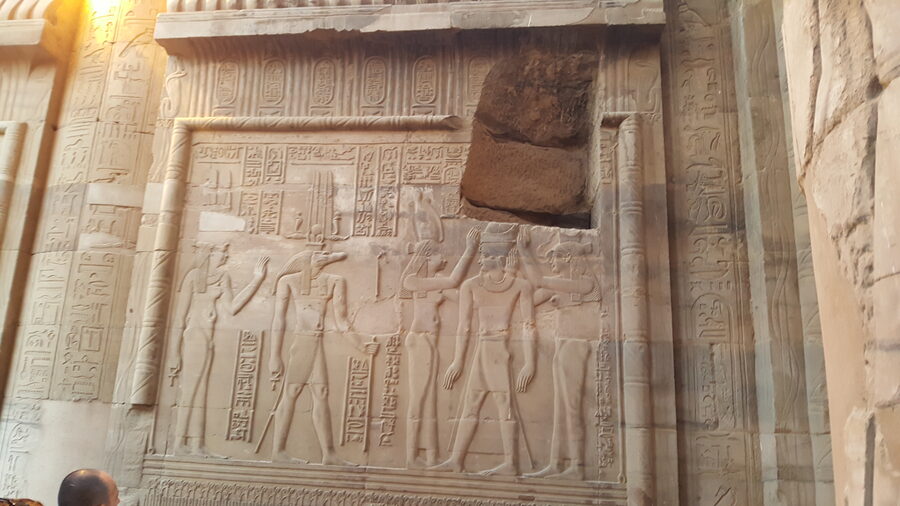
The crocodile cult was serious here — there’s a small museum next to the temple displaying mummified crocodiles, some of which would have been several meters long when alive. The nearby Nile was crocodile territory before the dam.
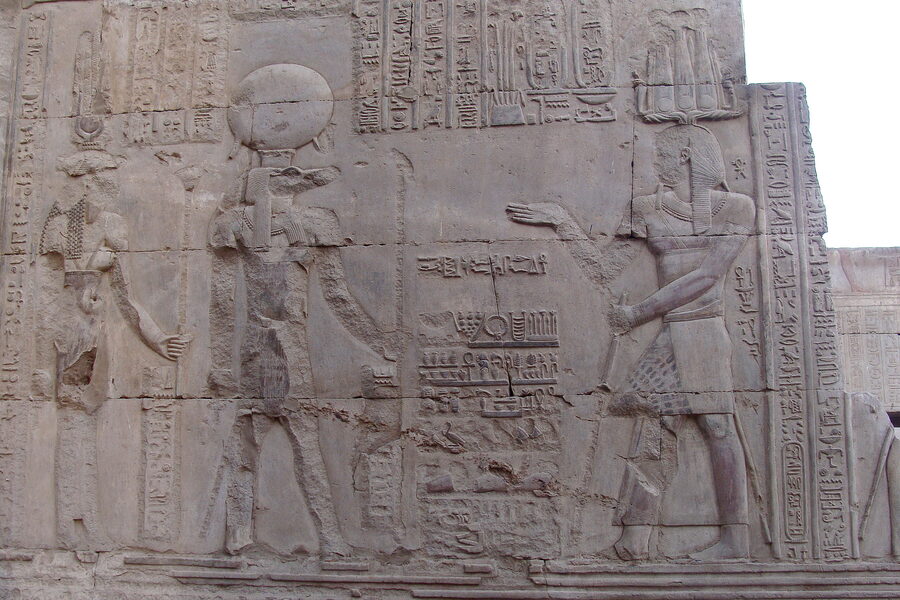
The medical instrument relief on the back outer wall is one of the oldest depictions of surgical tools — scalpels, forceps, scales, and what appear to be birthing chairs. Worth finding; your guide should point it out.
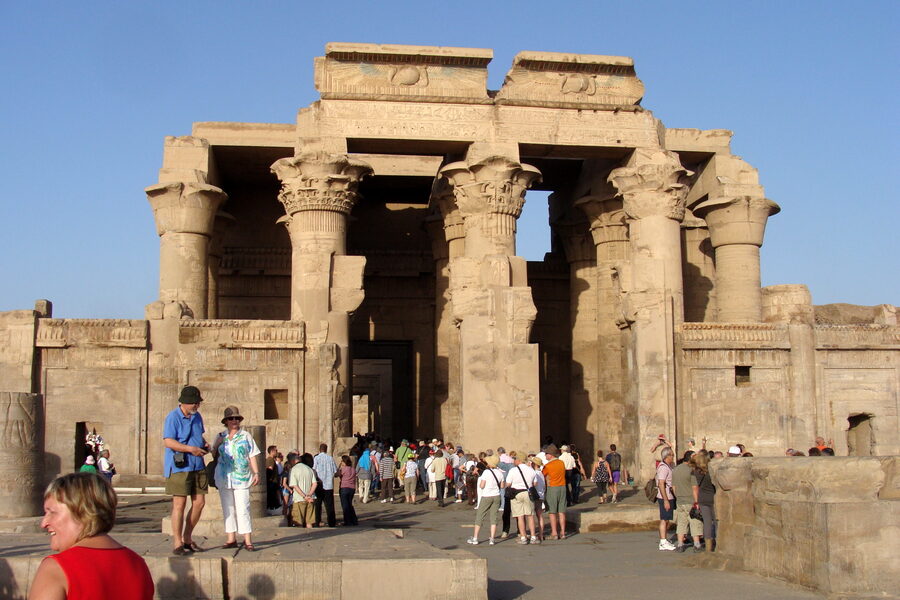
Time at Kom Ombo: 45-90 minutes depending on group size and guide pace.
Philae — The Temple That Was Moved
Philae is the stop most people remember second only to Abu Simbel. The temple was dedicated to Isis and was the last functioning Ancient Egyptian temple — it remained in use until the 6th century AD.
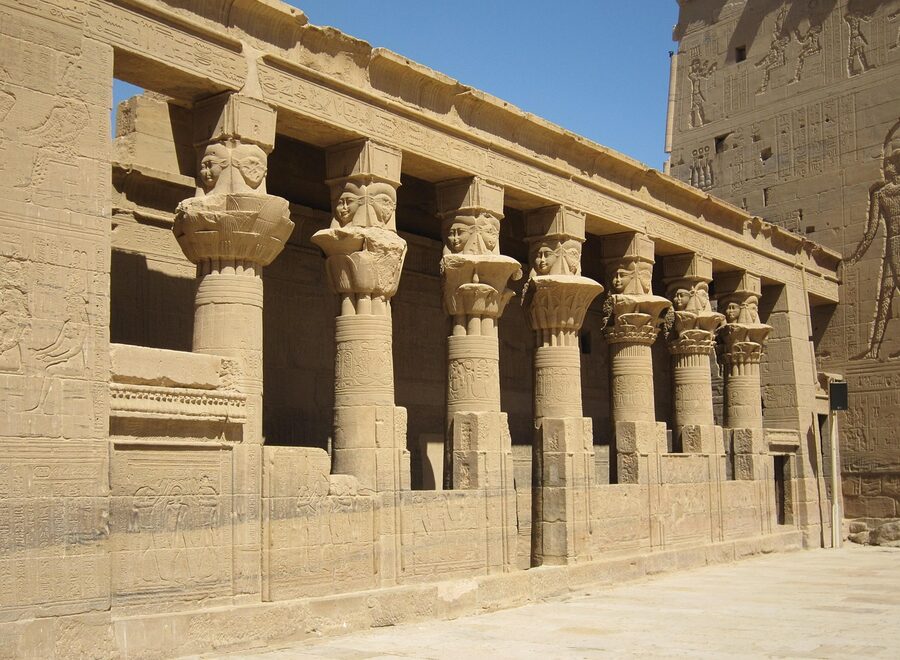
Like Abu Simbel, Philae was moved — in this case from its original island (now underwater) to the nearby Agilkia Island, reconstructed block by block between 1972 and 1980. Look carefully and you can see the seams between the original masonry blocks where they were cut and rejoined.
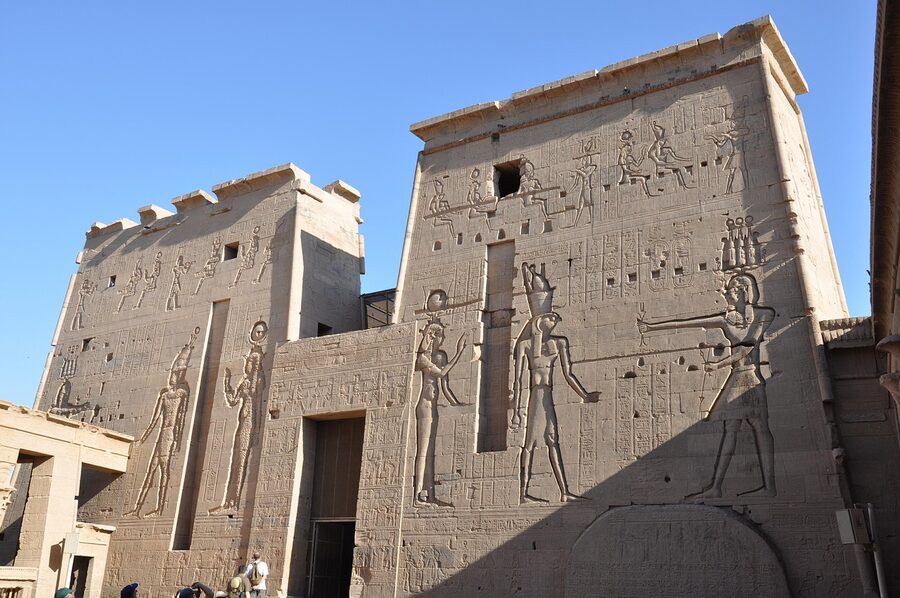
There’s a sound-and-light show at Philae in the evening — skippable unless you’re specifically into that kind of thing.
Life Onboard — What to Expect
Cabins: 16-25 sqm depending on boat class. Twin beds configurable to king. Private bathroom with shower. Picture window facing the river. Air conditioning that works.
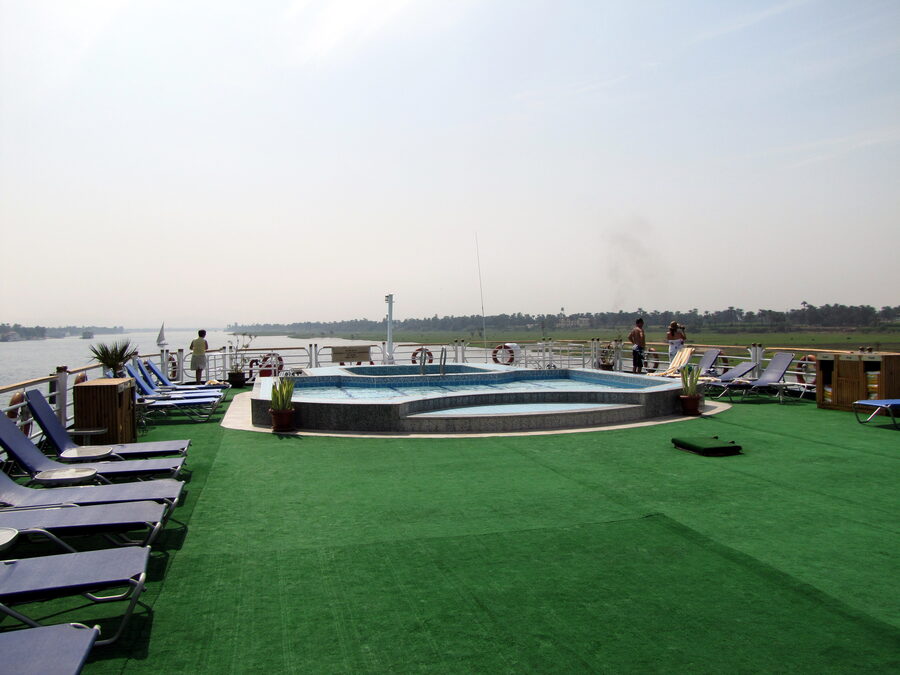
Meals: buffet breakfast (6:30-9am), buffet lunch (12:30-2pm), three-course dinner (7:30-9pm). Typical menu mixes Egyptian dishes with international fare. Quality is hotel-restaurant level — good, not exceptional.
Drinks: bottled water at meals free. Beer, wine, spirits, and soft drinks cost extra, payable in cash or on a running tab to settle on check-out. Expect $3-5 for beer, $30-40 for a decent bottle of Egyptian wine.
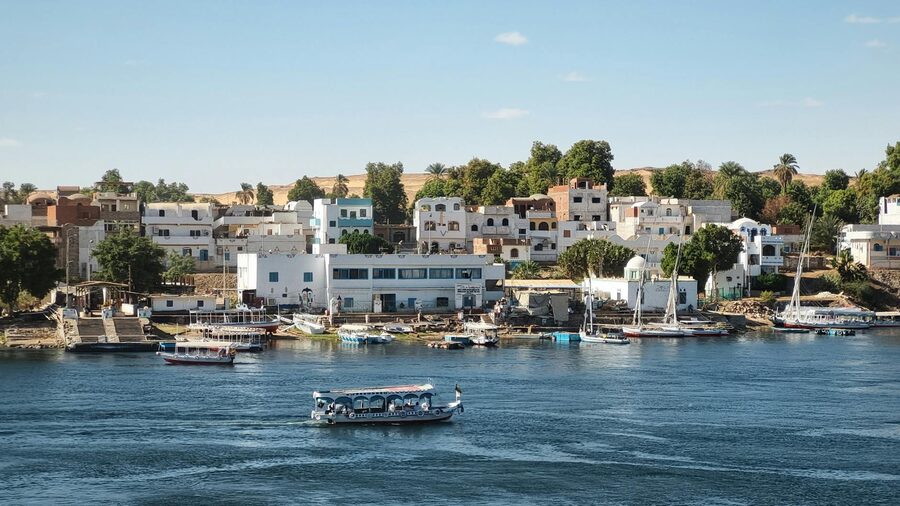
Entertainment: captain’s welcome cocktail on day 1, themed galabeya dinner on one evening (you can rent the robes onboard), Nubian folklore show one night. Skippable if you’re tired; entertaining if you lean in.
Aswan vs Luxor as Starting Point
The itinerary runs both directions — Aswan to Luxor (sailing north, with the current) or Luxor to Aswan (sailing south, against the current).
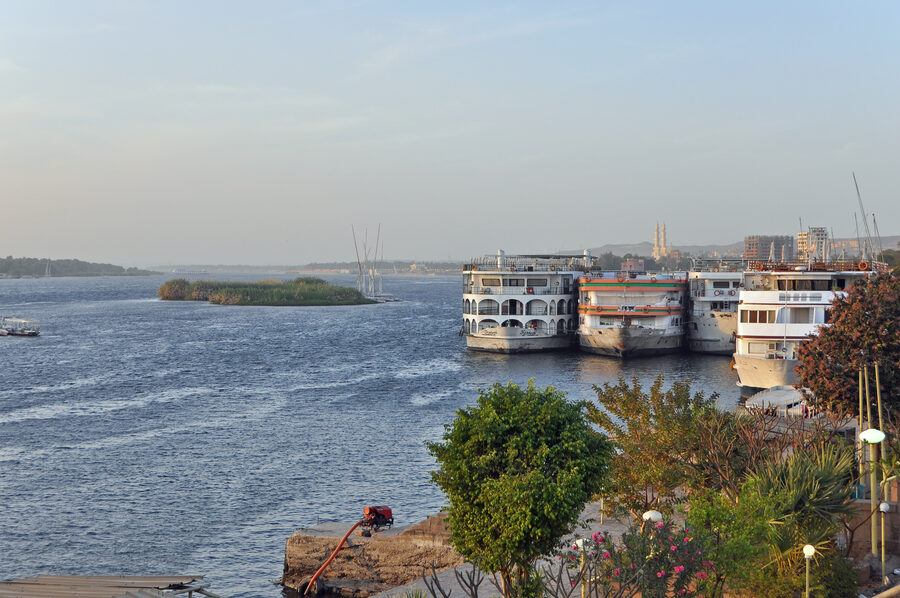
Aswan-to-Luxor is the more popular choice for two reasons. First, you start in the quieter town and end in the busier one, which matches most travelers’ energy. Second, sailing with the current means less engine noise.
Luxor-to-Aswan works too, particularly if you’re flying into Luxor from Cairo. Same itinerary, reversed order.
How to Fit the Cruise Into a Larger Egypt Trip
The classic 10-day Egypt circuit: Cairo 3 days (pyramids, museum, Nile dinner cruise), fly to Aswan, 4-day cruise, fly back to Cairo from Luxor. Total 10 days. See the Giza Pyramids tour guide and the Cairo Nile dinner cruise guide for the Cairo portion.
If you’re adding Red Sea time: fly from Cairo to Hurghada or Sharm after the cruise. See the Hurghada desert guide or Sharm adventures guide.
If you want the balloon: Luxor overnight after check-out to catch the Luxor sunrise balloon. Some cruises include this; check on booking.
Which Boat Matters More Than You Think
There are roughly 250 Nile cruise ships operating between Aswan and Luxor at any given time. Quality varies by a factor of three — a $300 boat and a $1,500 boat have different plumbing, different kitchens, and different class of guide.
The top-tier boats I’d trust: Sonesta St. George, Movenpick Sun Ray, Oberoi Zahra, Nile Goddess, Sonesta Nile Goddess, Steigenberger Minerva. If you see these in a tour description, the operator is using real 5-star stock.
Mid-tier reliable: Champollion, Tiyi, Alyssa, Tiger Nile. These are 4-star boats with consistent reviews.
Avoid unnamed “5-star deluxe” descriptions on budget listings — they often mean the operator rotates among older boats. Ask specifically which ship you’ll be on before booking.
Best Time to Sail
High season (best weather, highest prices): October through March. Daytime temperatures 25-32°C, cool evenings. Crowded temples. Book 2-3 months ahead.
Shoulder season (best value): April-May and September. Hot (30-38°C) but manageable in shade. Fewer crowds. Prices 20-30% off peak.
Low season (brutal heat, lowest prices): June-August. 40°C+ daily. Swimming pool is essential. Book only if you can’t go any other time.
Frequently Asked Questions
How long is the cruise? Most trips are 3 nights / 4 days (Aswan to Luxor) or 4 nights / 5 days (Luxor to Aswan). Longer 7-night loops exist but give you repeat stops.
Is Abu Simbel always included? No — it’s usually an optional add-on at $80-150 per person. Confirm at booking.
Should I book online or through a Cairo agency? Online is cheaper and more transparent. Cairo agencies have local knowledge but charge 20-40% more.
What should I pack? Smart casual for evenings (one collared shirt or dress is enough), sturdy shoes for temples, sun hat, reef-safe sunscreen if using the pool, and a light jacket for November-February nights.
Is there Wi-Fi? Yes on most boats — slow and intermittent. Cellular is more reliable; grab an Egyptian SIM at Aswan or Cairo airport.
Are drinks expensive? About 2-3x what you’d pay in a Cairo hotel bar. Beer $3-5, wine $30-40 per bottle, cocktails $5-8.
Tipping policy? Standard is $50-80 per person for the 4-day cruise, split between boat crew, guide, and drivers. Pay in USD or EGP cash at check-out.
Can kids come? Yes, most boats accommodate children. Under-12 often get reduced rates. The program can be long for small kids; pick a boat with a pool for downtime.
My Bottom Line
The Nile cruise is the classic Egypt experience for a reason. You see the major Upper Egypt temples with zero logistics stress — no hotels to switch, no transfers to arrange, no restaurants to pick. It’s the easiest high-reward trip in Egypt.
Book the $370 4-Day Nile Cruise with Abu Simbel and Balloon for budget. Step up to the $625 3 Night Deluxe Nile Cruise for the comfort that matters. Go with the $1,005 Private Sightseeing Nile Cruise if you’re traveling as a couple or family of four and want pacing control.
Book October through March if the weather matters. Add Abu Simbel — it’s the trip highlight. And don’t skip the galabeya dinner; everyone looks silly and nobody cares.