
The Bahia Palace and Saadian Tombs combo tour is the cultural centerpiece of any Marrakech visit. Two hours, two sites, and the best architectural storytelling in the medina — painted cedar ceilings from the 19th century in one place, and ornate 16th-century tombs in the other.
What makes this tour work is that both sites are within 10 minutes’ walk of each other in the Kasbah district. You can do them on your own, but a guide pays for itself in context. Neither site has signage that tells you what you’re actually looking at.
This guide covers three Bahia Palace tours I’d book, what to look for at each site, how to navigate the Kasbah without getting lost, and the half-day additions that make the tour a better deal.
- Three Bahia Palace and Saadian Tombs Tours Worth Booking
- Bahia Palace — What You’re Actually Seeing
- Tour #1 — Bahia Palace, Saadian Tombs, Souk and Medina Tour (Top Pick)
- Bahia Palace, Saadian Tombs, Souk and Medina Tour — per person
- The Saadian Tombs — A Story of Lost and Found
- Tour #2 — Bahia Palace, Saadian Tombs and Medina Guided Tour (Value Pick)
- Bahia Palace, Saadian Tombs and Medina Guided Tour — per person
- Tour #3 — Bahia Palace, Madrasa Ben Youssef and Souk Tour (Cultural Alternative)
- Bahia Palace, Madrasa Ben Youssef and Souk Tour — per person
- Understanding the Kasbah District
- El Badi Palace — The Ruin Next Door
- The Mellah — Marrakech’s Jewish Quarter
- What You Will NOT See on the Tour
- What to Wear
- Photography Rules
- Fitting the Tour Into Your Marrakech Trip
- Frequently Asked Questions
- Morning vs Afternoon — When to Go
- My Bottom Line
Three Bahia Palace and Saadian Tombs Tours Worth Booking
These combo tours run $18-35 per person for shared groups and $150-200 for private. Every option I’d recommend includes both sites plus walks through the souks and often the Jewish Quarter (Mellah).
My top pick is the $20 Marrakech: Bahia Palace, Saadian Tombs, Souk and Medina Tour — an extraordinary 4,974 detailed responses at 4.7 stars makes this the most-booked walking tour in Marrakech. For a slightly cheaper option, the $18 Bahia Palace, Saadian Tombs and Medina Guided Tour covers the same core sites. If you want the Madrasa Ben Youssef instead of the Saadian Tombs, book the $20 Bahia Palace, Madrasa Ben Youssef and Souk Tour.
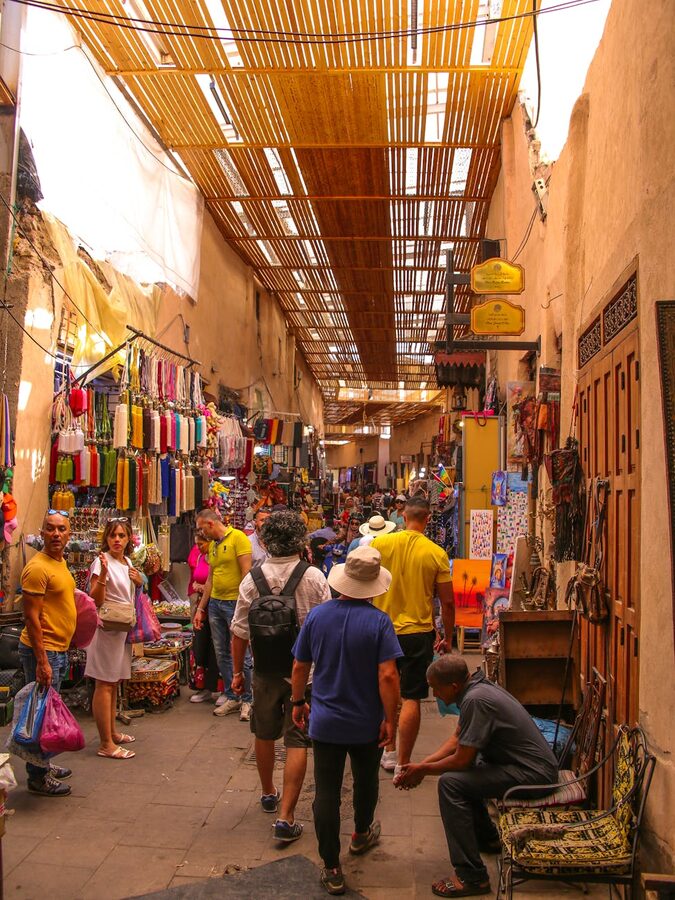
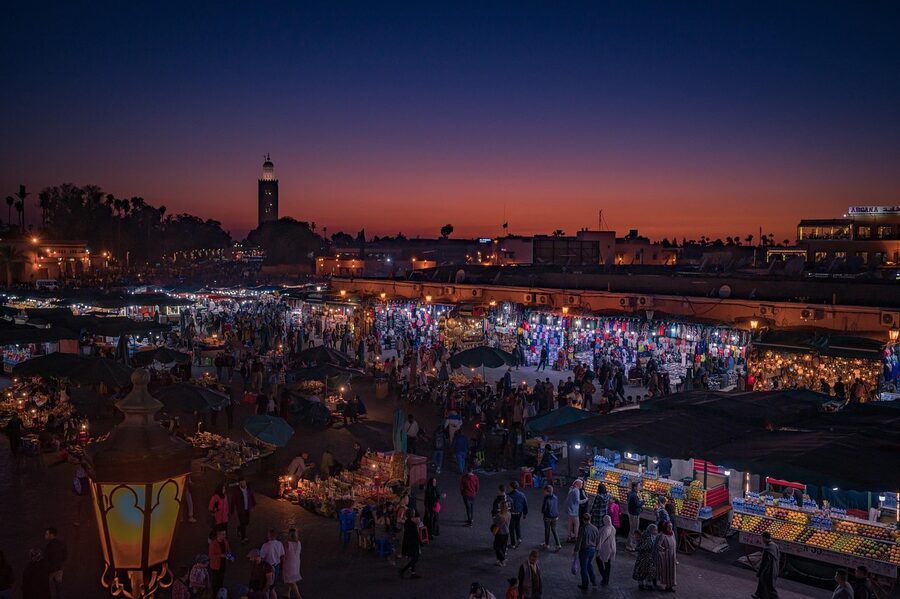
All three tours meet at Djemaa el-Fna square. Expect 3-4 hours door to door, entrance fees included. Bring 30-50 dirham cash for small purchases and tips.
Bahia Palace — What You’re Actually Seeing
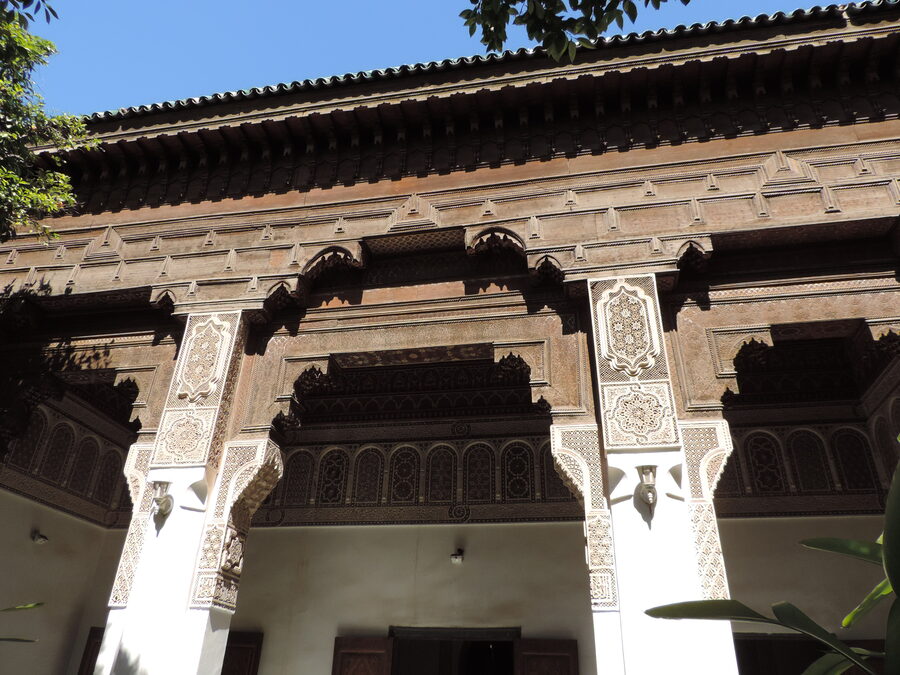
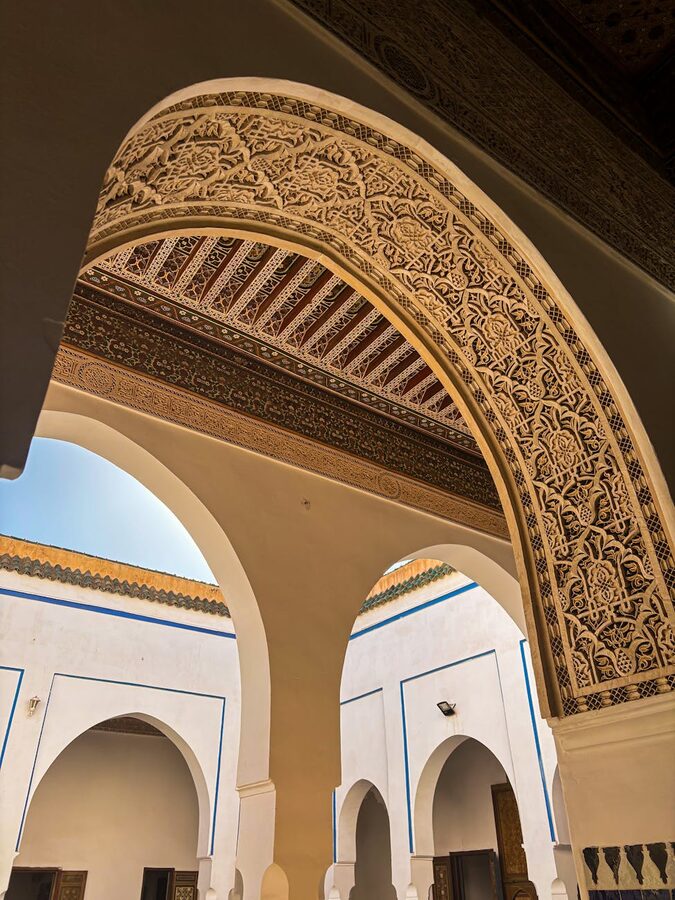
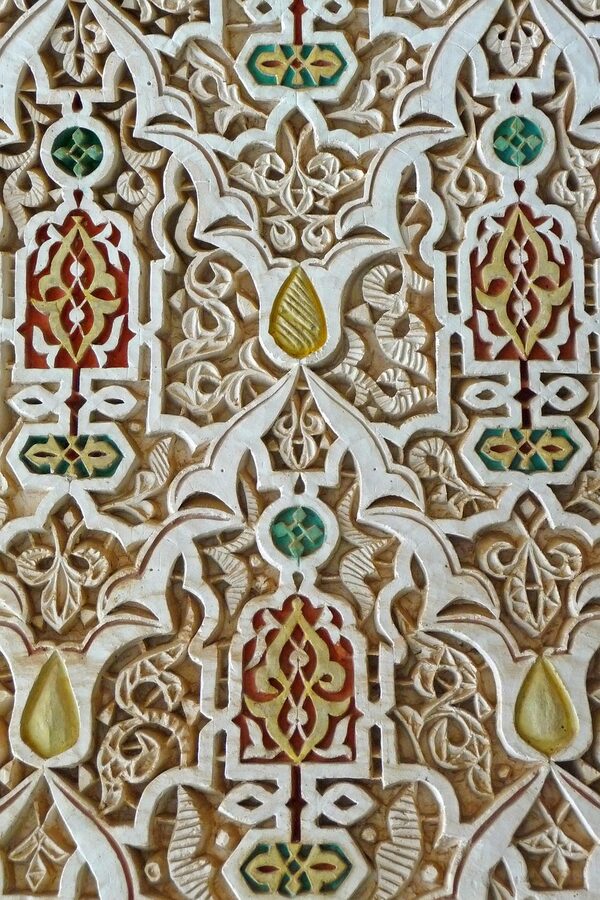
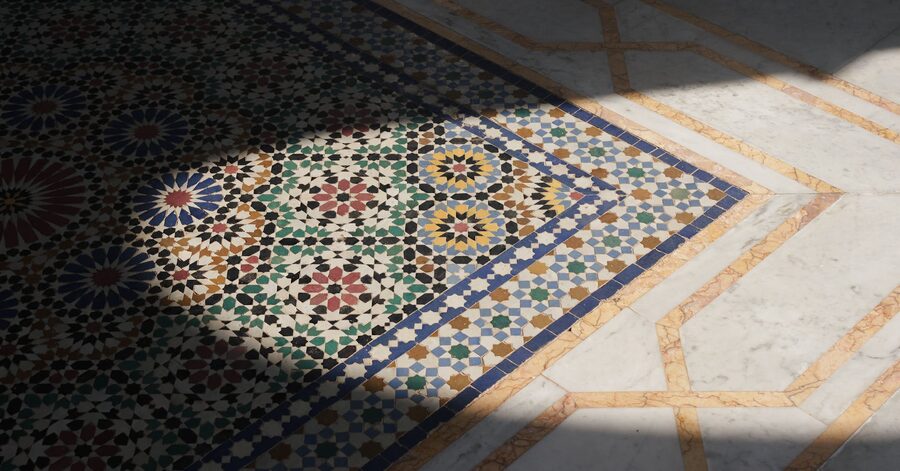
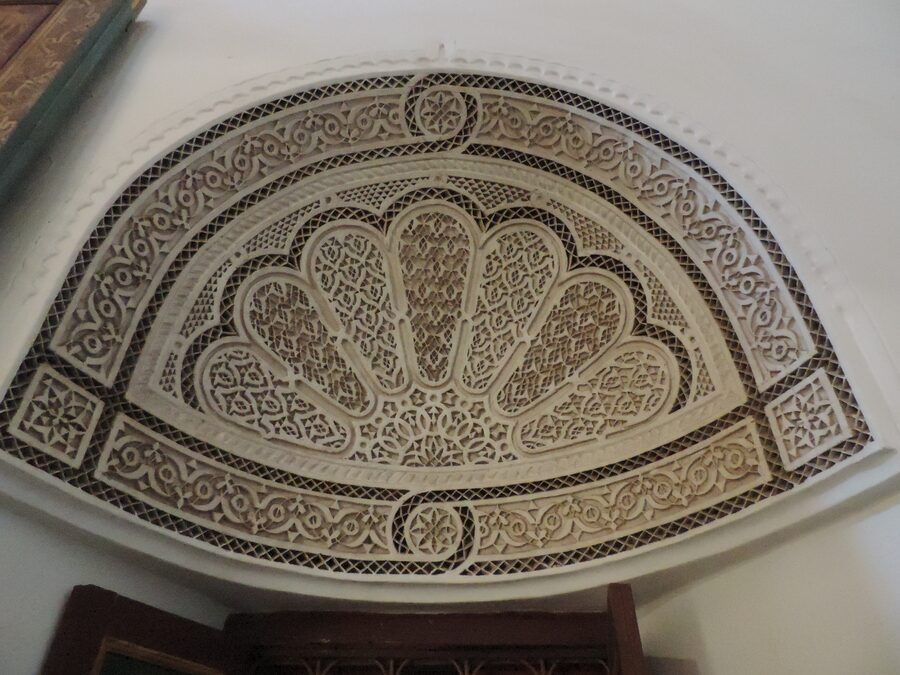
Bahia Palace was built in two main phases between 1859 and 1900 by Si Moussa (grand vizier to Sultan Hassan I) and his son Ba Ahmed. It was designed as a statement — the most lavish palace in Morocco, with the best craftsmen pulled from Fez, Meknes and Tetouan to compete on zellige tile, carved stucco, and cedar ceiling work.
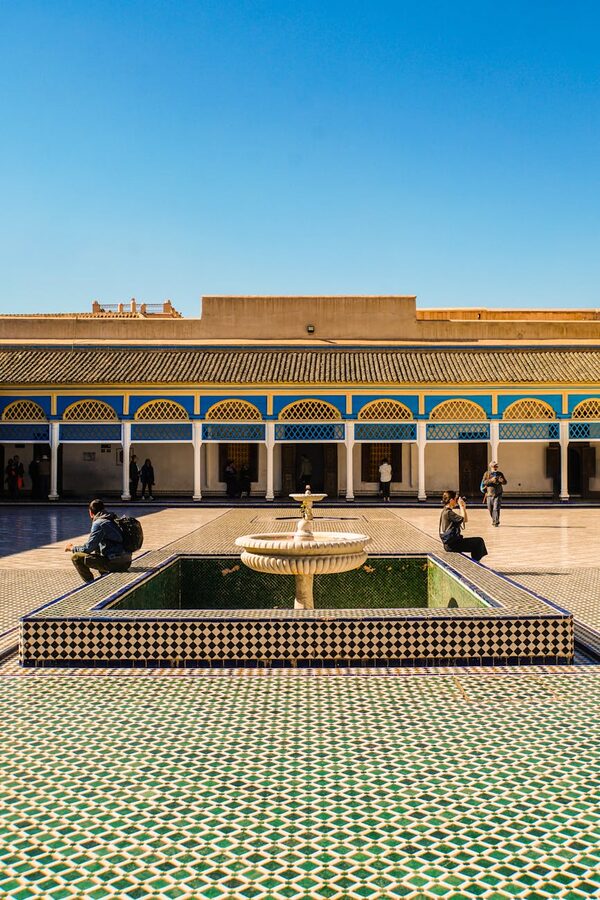
The palace has 150+ rooms across 8,000 square meters. The Small Courtyard (Petit Riad), Great Courtyard (Grand Riad), and the Council Chamber are the must-see rooms. Most tours cover all three in about 45 minutes.
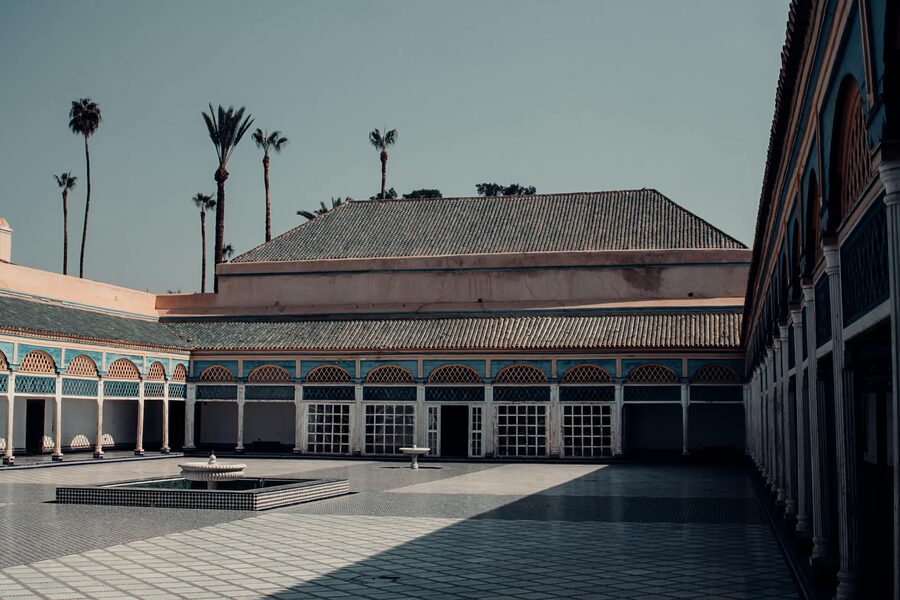
Watch for the orange trees in the courtyards — they fruit in January-February and the scent is extraordinary. The harem wing (the west side) has the most ornate ceilings because it housed the four primary wives and 24 concubines.
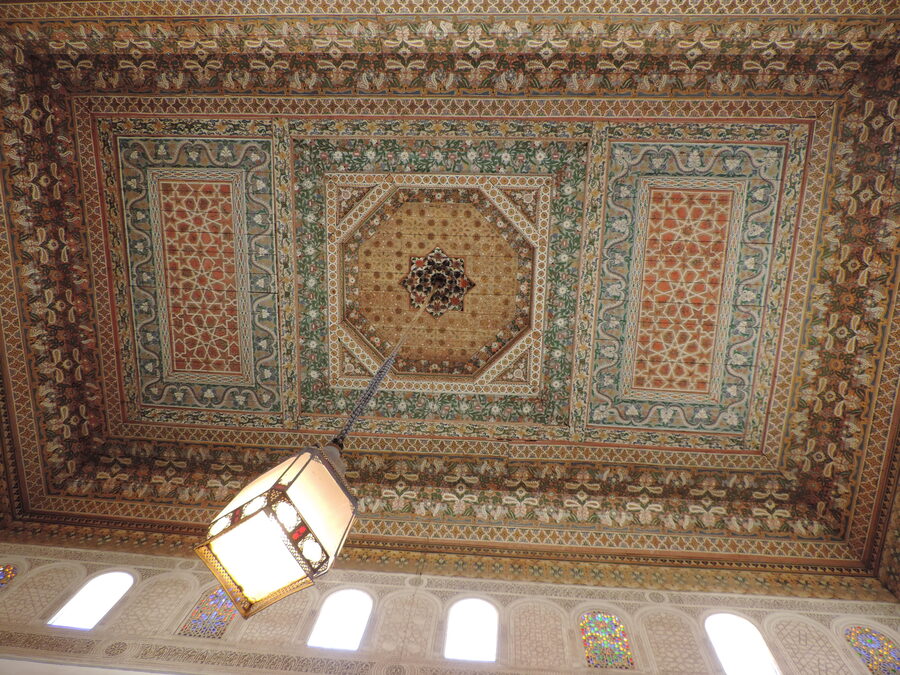
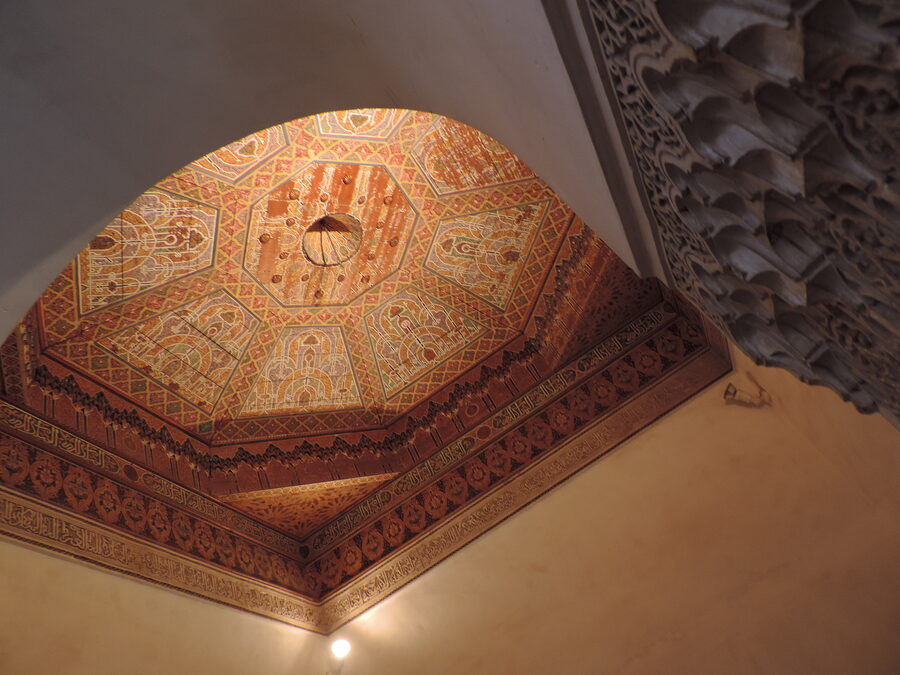
The Council Chamber is where Ba Ahmed received foreign dignitaries. It has the most elaborate ceiling in the palace — painted cedar with gilt detailing that took 30 craftsmen 7 years to complete.
Tour #1 — Bahia Palace, Saadian Tombs, Souk and Medina Tour (Top Pick)
Bahia Palace, Saadian Tombs, Souk and Medina Tour — $20 per person
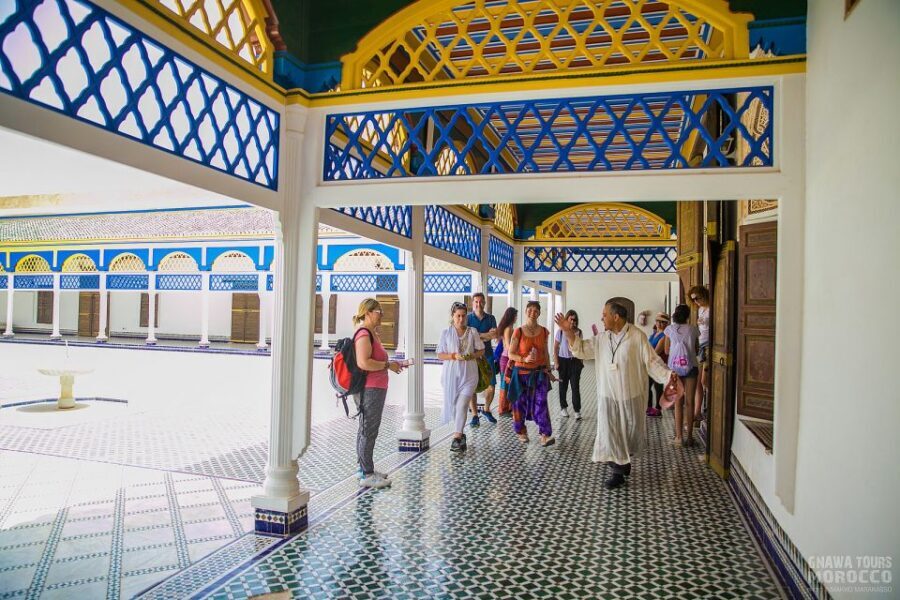
This is the tour I’d book first. 3 hours, both Bahia Palace and the Saadian Tombs with a proper guide, plus a souk walk with artisan stops. Entry fees to both sites are included — that saves you 100 dirham.
Start at 9am or 2pm. Group size caps at 15 in peak season, smaller in shoulder seasons. Guide is a licensed Moroccan who speaks English; ask for Arabic or French if that’s your preference at booking.
With 4,974 detailed responses averaging 4.7 stars, this is the consensus top choice. Full breakdown is in our Bahia Palace tour review.
The Saadian Tombs — A Story of Lost and Found
The Saadian Tombs date to the late 1500s, built by Sultan Ahmad al-Mansur during the Saadi dynasty. They were the royal mausoleum until the dynasty fell in 1659. The new Alaouite sultans walled them up and pretended they didn’t exist.
They stayed hidden for 250 years. In 1917, French aerial photography revealed the rooftop of the mausoleum within a walled garden attached to the Kasbah Mosque. The French colonial administration opened them up and restoration began.
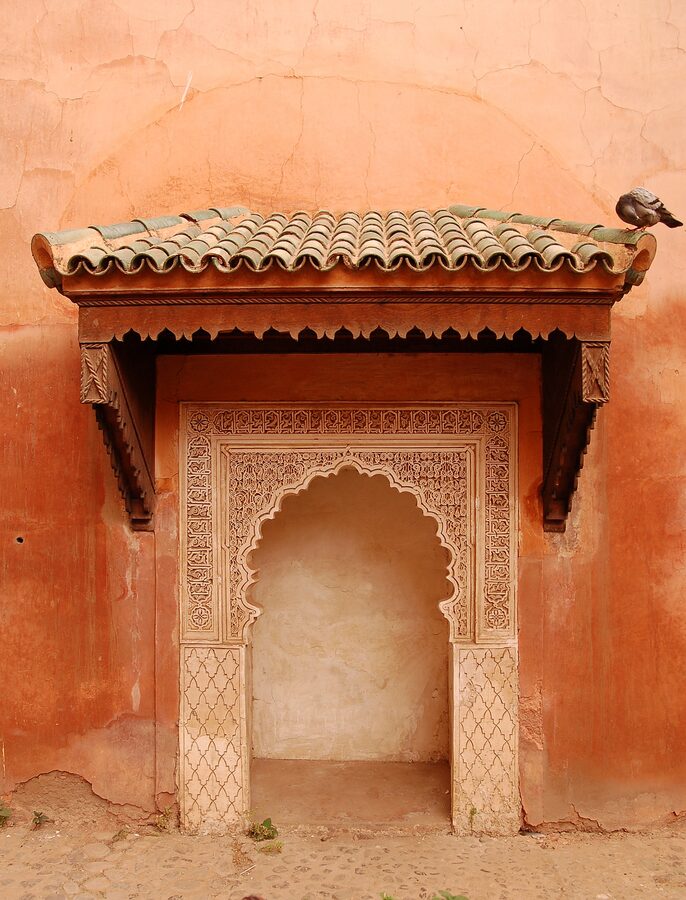
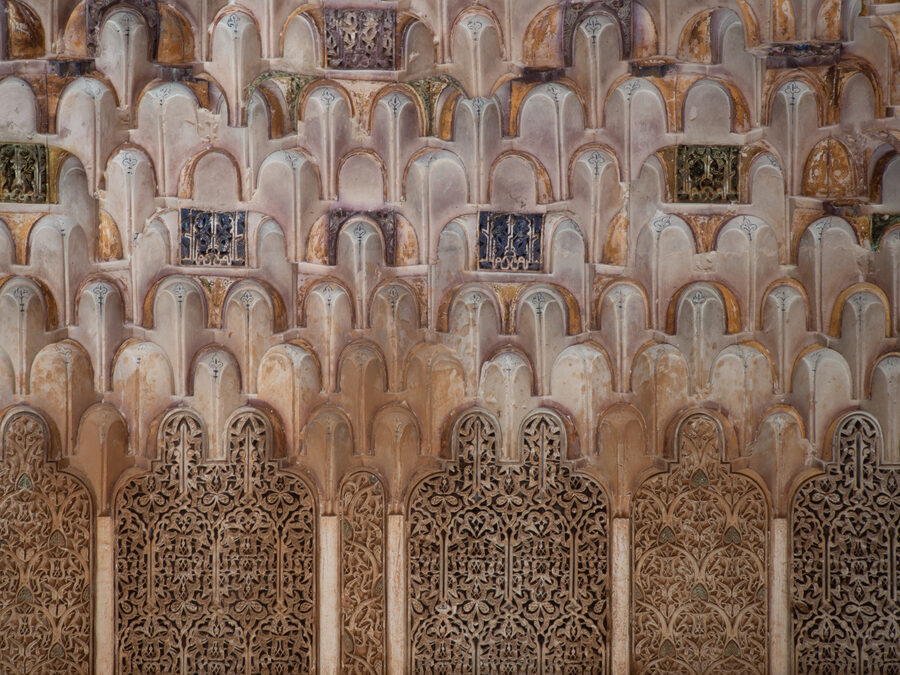
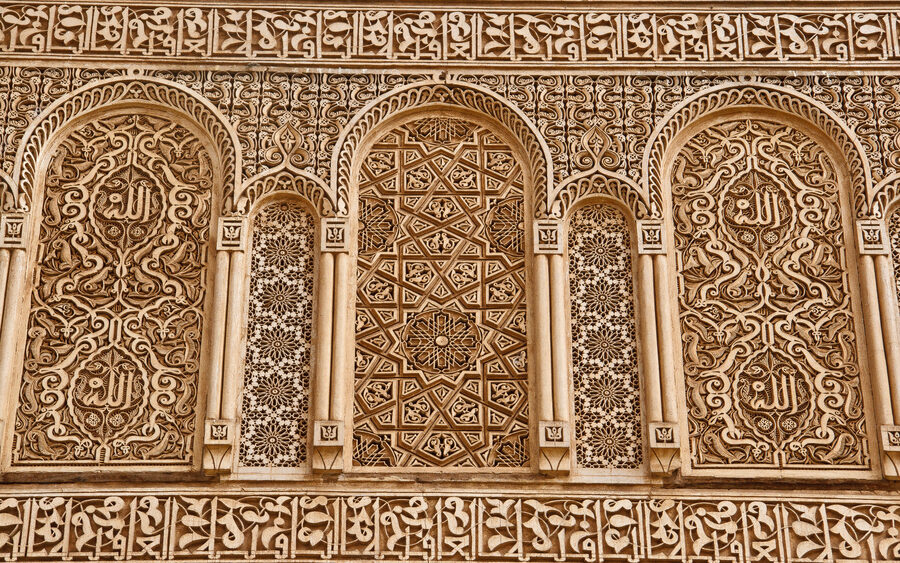
The main chamber is the Hall of Twelve Columns — Italian marble columns, carved cedar ceiling, intricate stucco walls, and 12 tombs of the royal line. Its elaborate ornament is why the Saadian Tombs are considered the high point of the dynasty’s art.
The garden outside has 100+ smaller tombs of courtiers, concubines, and soldiers. Wildflowers in spring make the whole site photogenic.
Tour #2 — Bahia Palace, Saadian Tombs and Medina Guided Tour (Value Pick)
Bahia Palace, Saadian Tombs and Medina Guided Tour — $18 per person
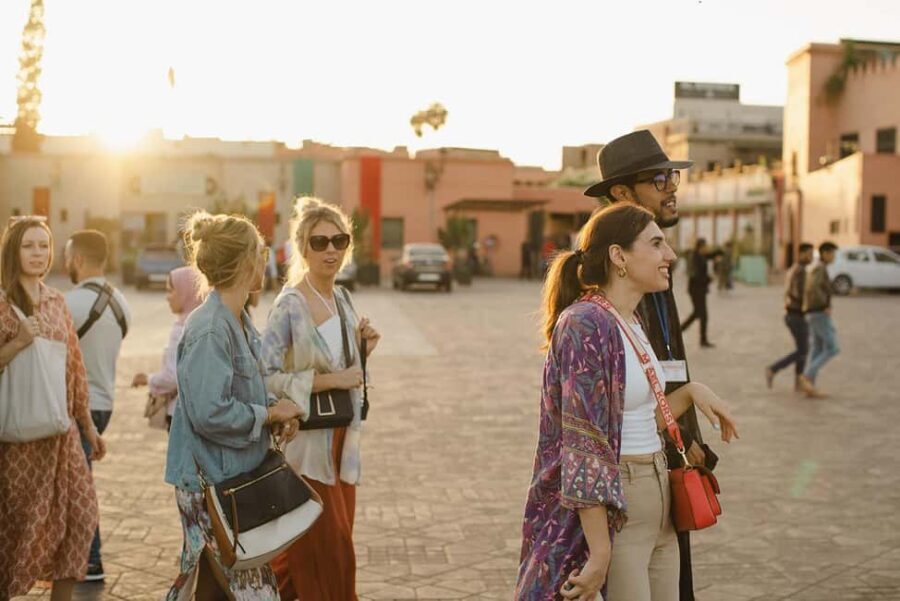
Essentially the same tour as option #1 at $2 less. Shorter souk walk (about 20 minutes vs 45) and a slightly smaller group. I’d pick this if you’re tight on budget or if you already have medina plans for another day.
Same entrance fees included, same licensed guide model. 2.5 hours typical vs 3 hours for the fuller tour. Finishes near Djemaa el-Fna so you can grab lunch on your own.
4.7 stars across 153 detailed responses — a reliable smaller-scale option. Details in our Bahia Palace value tour review.
Tour #3 — Bahia Palace, Madrasa Ben Youssef and Souk Tour (Cultural Alternative)
Bahia Palace, Madrasa Ben Youssef and Souk Tour — $20 per person
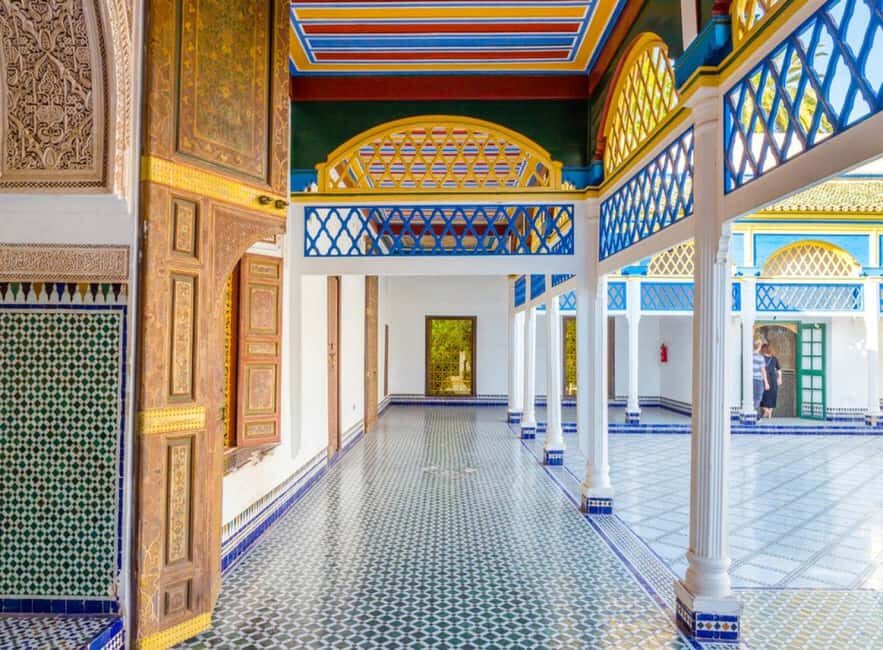
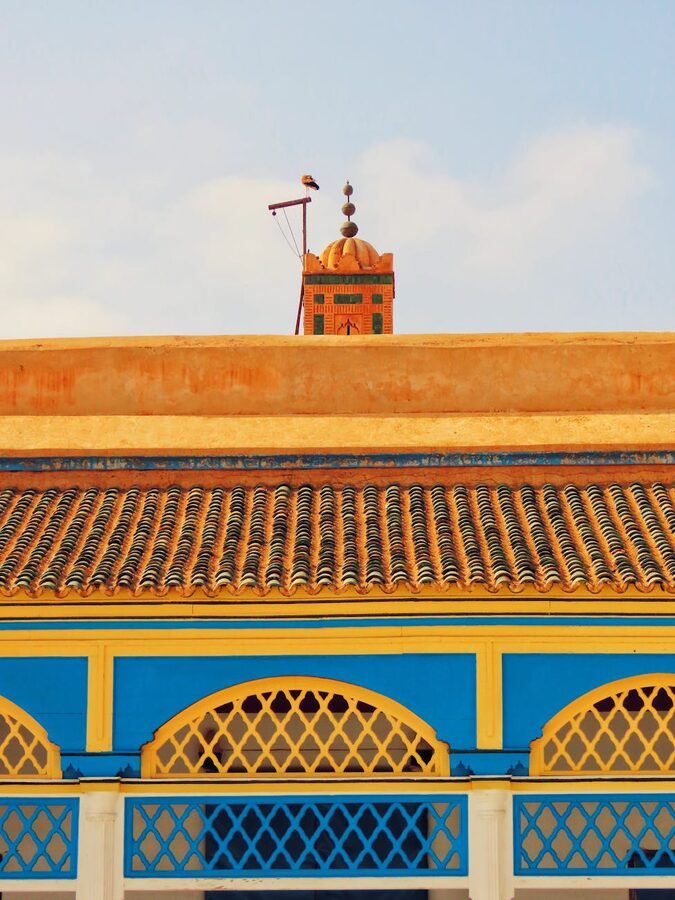
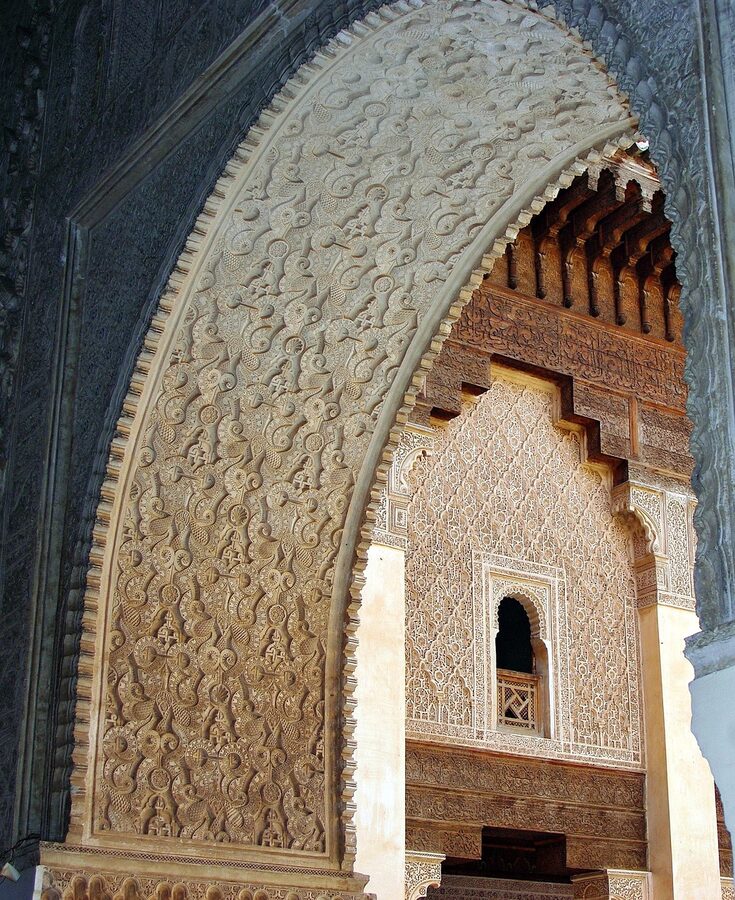
Same price as the top pick but with the Madrasa Ben Youssef instead of the Saadian Tombs. Madrasa was an Islamic school from the 14th century (rebuilt in the 16th) — 130 student cells around a central courtyard with some of the most refined Moroccan architecture anywhere.
I’d pick this if you’ve already seen royal tombs elsewhere or if architecture history interests you more than dynastic politics. The madrasa is genuinely spectacular and often less crowded than the Saadian Tombs.
4.8 stars across 101 detailed responses. Full details in our Bahia Palace and Madrasa review.
Understanding the Kasbah District
The Kasbah is the walled royal district at the southern end of the Marrakech medina. Entry is through Bab Agnaou, the 12th-century gate still standing since the Almohad dynasty. The district holds the royal palace (closed), the Kasbah Mosque, the Saadian Tombs, and El Badi Palace.
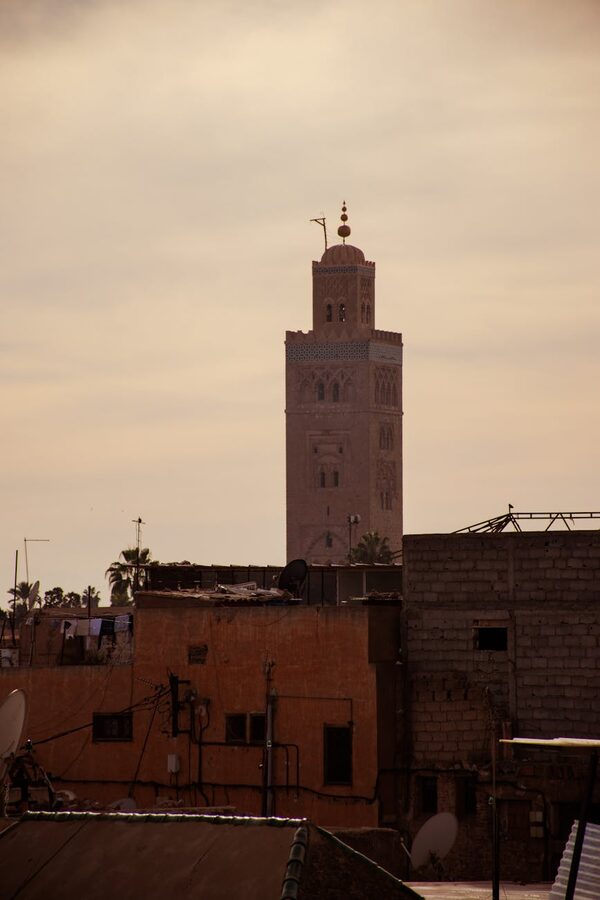
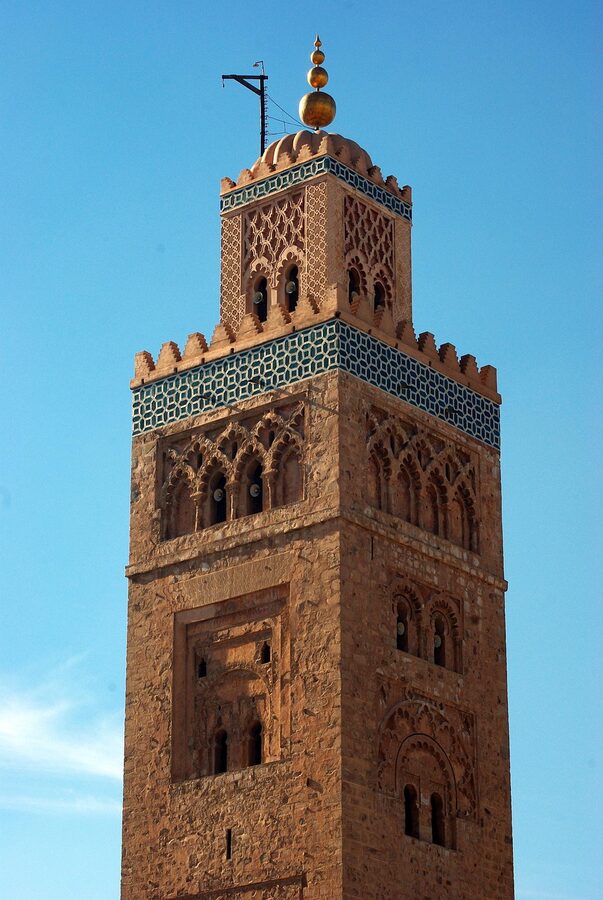
From Djemaa el-Fna, the walk to the Kasbah is 15 minutes through medina streets. Tour guides lead the way; if you’re solo, keep Koutoubia Mosque over your right shoulder and follow signs for “Kasbah Mosque.”
Bab Agnaou itself is worth a photo. It’s Morocco’s most ornate medieval gate, built in 1188 from red sandstone with kufic script carved into the archway.
El Badi Palace — The Ruin Next Door
Many tours add El Badi Palace to the Bahia + Saadian itinerary. It’s a 10-minute walk from the Saadian Tombs and costs 100 dirham extra.
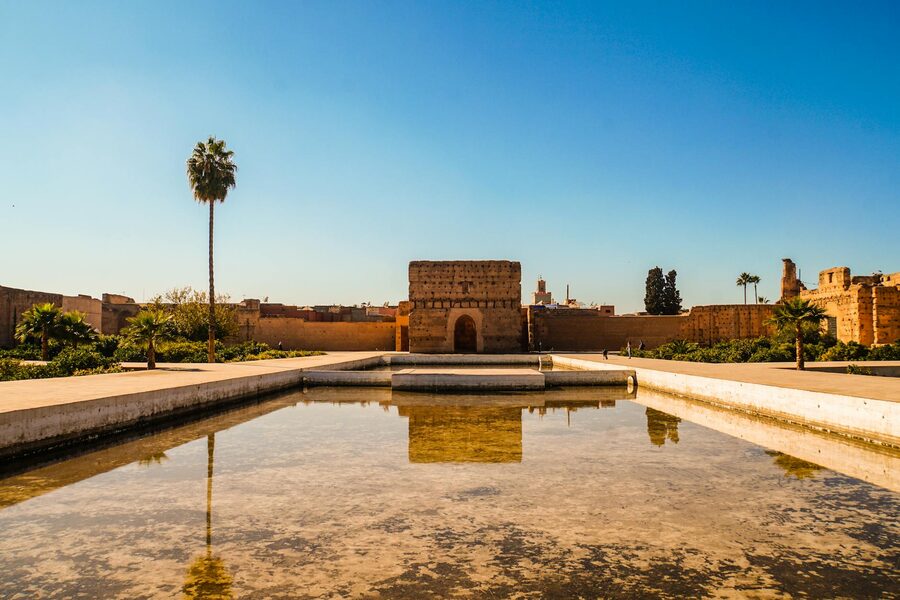
El Badi (“The Incomparable”) was built by Sultan al-Mansur with gold brought from Timbuktu. It was stripped in 1696 by Sultan Moulay Ismail who reused the materials for his own palace at Meknes. Only walls, pools and storks’ nests remain.
Climb to the rampart walks for the best views. You can see the whole Kasbah district from the northwest corner — Bahia Palace to the east, Saadian Tombs to the south, and Koutoubia Mosque to the west.
The Mellah — Marrakech’s Jewish Quarter
Mellah is the old Jewish Quarter, established in 1558 when the Saadian sultan required Jews to live in a designated district next to the Kasbah. Most tours pass through it briefly between Bahia Palace and the Saadian Tombs.
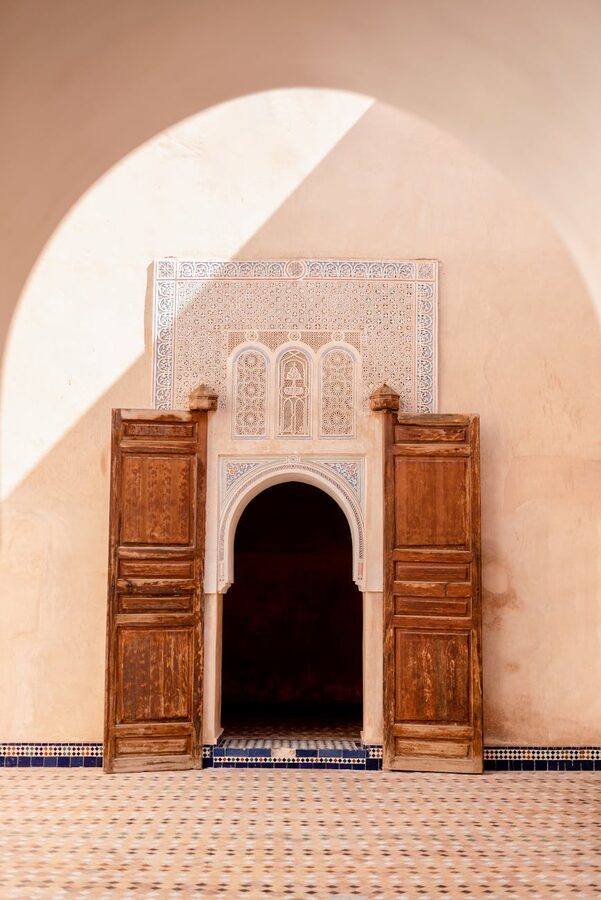
The Slat al-Azama Synagogue is in the Mellah and is open to visitors — 20 dirham entry, worth a brief stop. It was built in the 16th century and is one of the oldest operating synagogues in Morocco.
Until 1948 there were 50,000+ Jews in Morocco; most emigrated to Israel, France and Canada after the founding of the State of Israel. Today the Moroccan Jewish community numbers about 2,000, mostly in Casablanca.
What You Will NOT See on the Tour
The Royal Palace (Dar al-Makhzen) is closed to visitors — it’s still the royal residence in Marrakech. You can see the walls from outside.
The Dar Si Said museum (traditional Moroccan arts) is near Bahia Palace but not included. 60 dirham separate entry; worth a visit on a separate day if you like decorative arts.
The Museum of the Confluences (Yves Saint Laurent-adjacent private museum) is in the new city, not medina, and not on these tours.
What to Wear
Dress modestly — shoulders covered, knees covered, for both men and women. Both sites are family attractions, not religious sites, but the local norm applies. Linen pants and a t-shirt with sleeves is fine for men, dress or pants with light scarf for women.
Comfortable walking shoes. You’ll walk 2-3km total including medina navigation. Marble floors inside the sites can be slippery; don’t wear flip-flops.
Bring a light scarf for wind in the Kasbah courtyards. Bring water.
Photography Rules
Both sites allow photography. Flash is technically prohibited but rarely enforced inside Bahia Palace. The Saadian Tombs main hall has low light — steady yourself on a doorframe or bring a small monopod.
Tripods require a permit (not worth the hassle for tourist visits). Drones are banned in the medina.
Best light for courtyard photos is 10-11am (sun clears the walls). Inside the harem rooms of Bahia Palace, afternoon light from the small windows is magical.
Fitting the Tour Into Your Marrakech Trip
Day 1: arrival and gentle orientation at Djemaa el-Fna. Day 2: Bahia Palace + Saadian Tombs morning, medina walking tour afternoon. Day 3: Ourika Valley day trip. Day 4: Majorelle Garden + leisurely medina. Day 5: Agafay Desert afternoon and sunset.
If you have 7+ days, add Atlas Mountains day hike or Essaouira day trip. For a bigger Morocco circuit, the 3-day Sahara tour is unskippable.
Frequently Asked Questions
How long does the tour take? 2.5 to 3 hours including walking time between sites.
Are both sites on the same ticket? On tour, yes — entry is bundled. On your own, each site costs 70 dirham. Budget 150 dirham per person for entries if going solo.
Is the tour handicap-accessible? Partially. Bahia Palace has some stepped sections but most is flat. Saadian Tombs entrance has a narrow doorway. The medina streets are cobblestone.
Can I visit both sites on my own? Yes, but you’ll miss the story. The signage is minimal. Hire a guide for 200-300 dirham at the entrance if you want context.
Are there queues? Yes, especially at Saadian Tombs in peak season. Go early morning (9am opening) or late afternoon (3-4pm) to avoid the cruise-ship groups.
What’s the best time of year? October through May. Summer is hot but the sites are shaded. Avoid religious holidays if possible.
Do I need to book a guide in advance? Yes — licensed guides are cheaper online than at the gate. Online rate is $18-20; at-gate is 300-500 dirham.
Is a guide necessary? Strongly recommended. The sites are visually stunning but the history is hidden. A good guide transforms the visit.
Morning vs Afternoon — When to Go
Morning (9-11am) gets you the best light in the Bahia Palace courtyards, the smallest crowds at Saadian Tombs, and cooler temperatures for the walk. This is the strong recommendation for a single-day tour.
Afternoon (2-5pm) lets you sleep in and arrive after the cruise-ship groups have cleared. Light is warmer and gentler for photography. The downside is crowds during the late-morning overlap.
Avoid midday in summer. The sites have limited shade in the outdoor sections and the midday sun at 40°C+ is punishing.
My Bottom Line
The Bahia Palace and Saadian Tombs tour is the core cultural visit in Marrakech. Two architecturally spectacular sites covered by a licensed guide in one morning, for $20. You won’t find better cultural value in Morocco.
Book the $20 Bahia Palace, Saadian Tombs, Souk and Medina Tour as your default — the volume data is overwhelming. Drop to the $18 Bahia Palace, Saadian Tombs and Medina Tour if budget matters. Swap to the $20 Bahia Palace and Madrasa Ben Youssef Tour if architecture excites you more than tombs.
Book a morning slot to beat the crowds. Dress modestly and comfortably. And take time in the Saadian Tombs garden — the storks’ nests and wildflowers are as memorable as the mausoleum itself.