
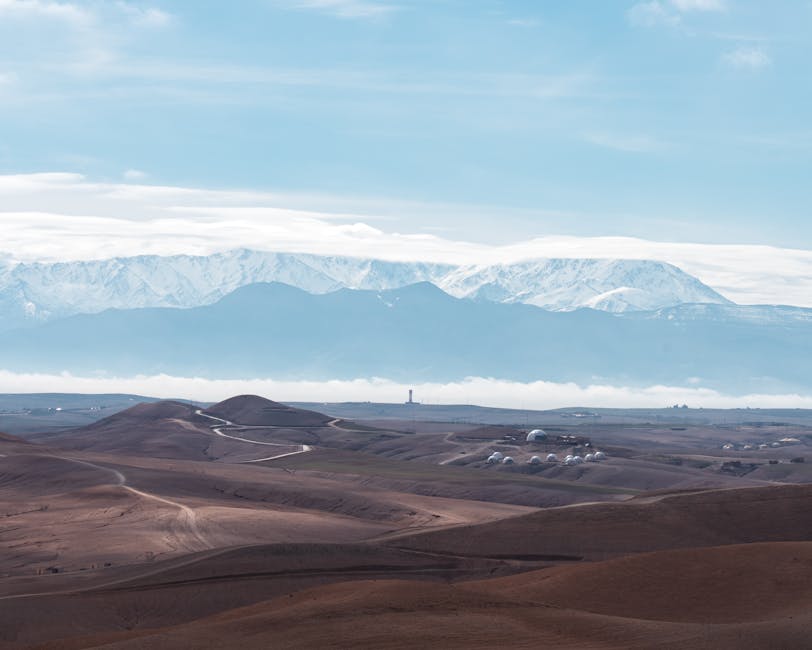
I’d been told Agafay was “a taste of the Sahara without the twelve-hour drive.” What I didn’t expect was the moment around sunset when the light went copper, the Atlas Mountains stood up in the distance like a snow-capped punctuation mark, and my camel, for no obvious reason, decided to sit down with me still on it. We worked it out. You have to lean back as they fold — front legs first, then back — or the laws of physics put you face-first in the dust.
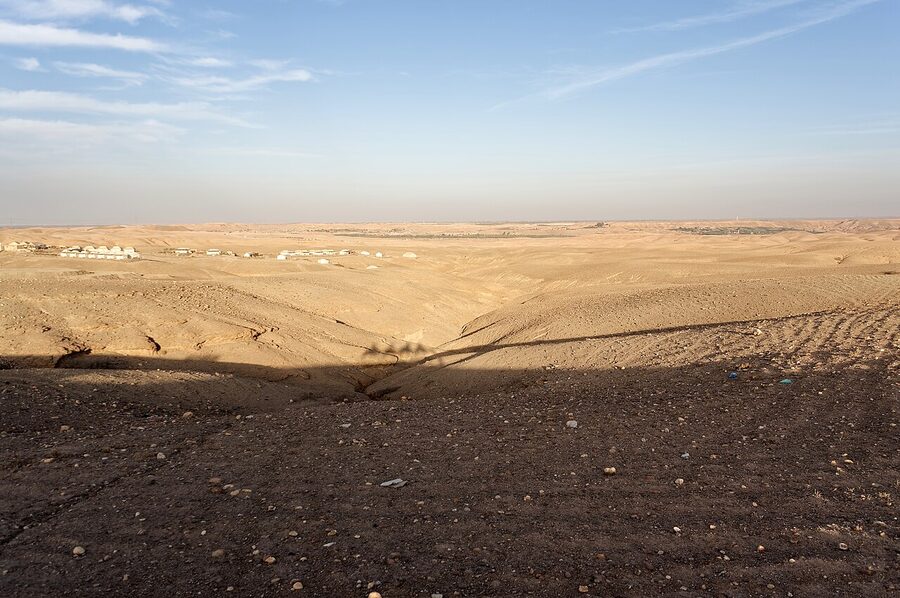
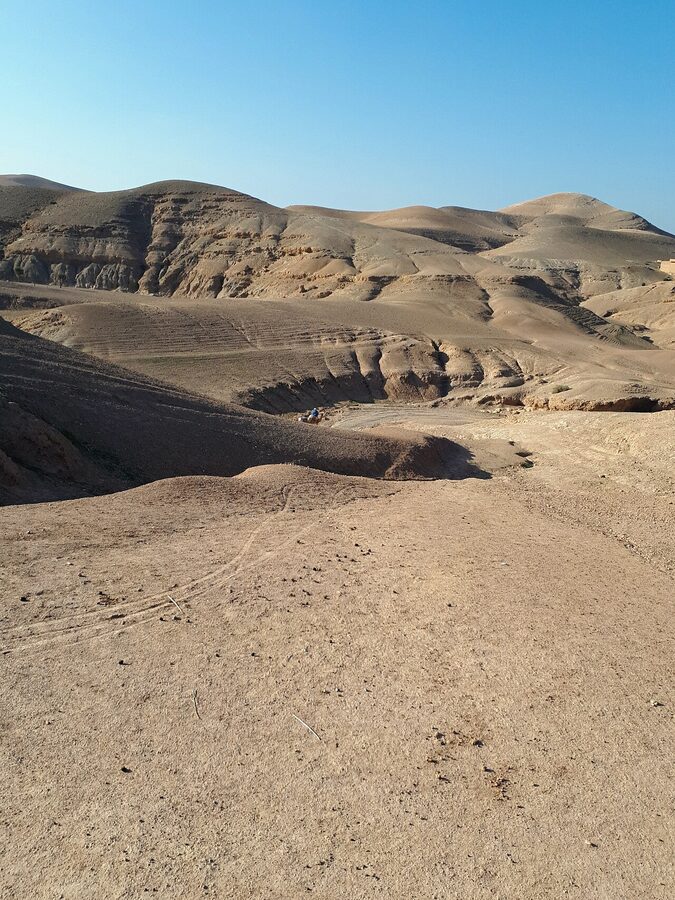
Agafay Desert isn’t a sand desert. It’s a stone desert — 40 kilometres of rocky, undulating terrain about 45 minutes south-west of Marrakech. The marketing calls it the “Marrakech desert” because most visitors can’t make the 12-hour round trip to the real Sahara at Merzouga. Agafay is the fair-enough substitute: lunar landscapes, Berber camps, camels, quad bikes, sunset dinners, and an Atlas Mountains backdrop that even purist Sahara fans grudgingly admit is spectacular.
Prices range from $48 for a quad-bike-plus-camel-plus-dinner combo up to $76 for the classic sunset camel ride with traditional dinner. The GetYourGuide and Viator options both include transfer from Marrakech, so you book and forget — the driver shows up at your riad.
The short verdict: Agafay is the best half-day escape from Marrakech. It’s close enough to do in an afternoon, visually striking, genuinely a different landscape from the city, and cheap by Moroccan tour standards. If you only have one free evening in Marrakech, spend it here.

In a Hurry? Our Top Picks
Best value — three activities in one. Quad bikes through the desert, camel ride, traditional dinner with a show.
The quintessential Agafay experience. Camel ride into the desert, sunset, traditional tagine dinner under the stars.
Premium option with a smaller group, elevated dinner setup, and a more intimate evening.
- What Agafay Actually Is (And Isn’t)
- The Camel Ride — What to Expect
- The Quad Bike Option
- The Camps and Dinner Experience
- Our Recommended Tours
- 1. Quad Biking + Camels + Dinner & Show —
- 2. Classic Camel Ride + Sunset Dinner —
- 3. Sunset Camel + Unique Evening Dinner —
- When to Go — Season Matters
- Practical Tips
- Agafay vs Other Marrakech Day Trips
- Getting There
- Is Agafay Worth the +?
- Building Agafay Into Your Marrakech Trip
What Agafay Actually Is (And Isn’t)
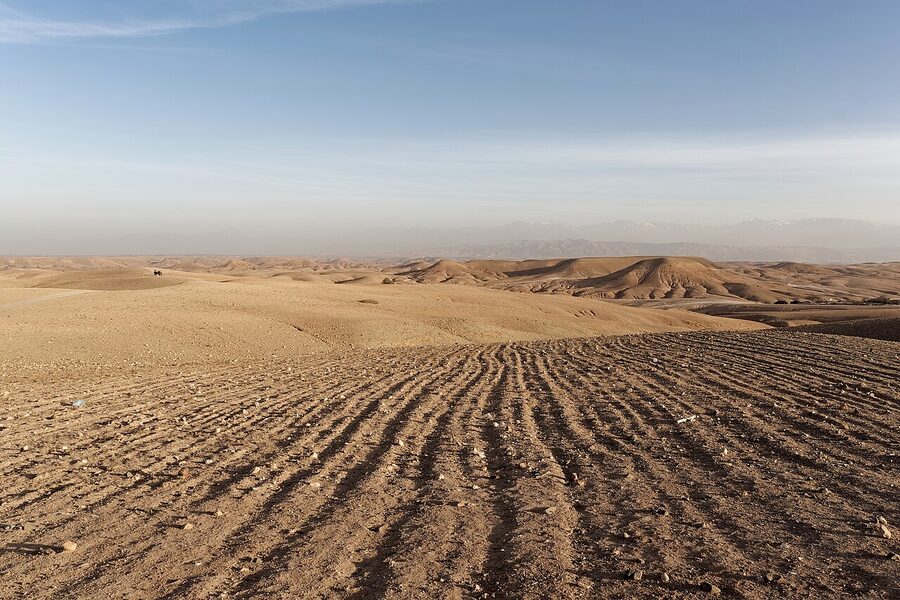
Agafay is a stone desert, not a sand desert. The distinction matters because many visitors book expecting Sahara-style dunes and leave disappointed when they find rocky, scrubby terrain instead.
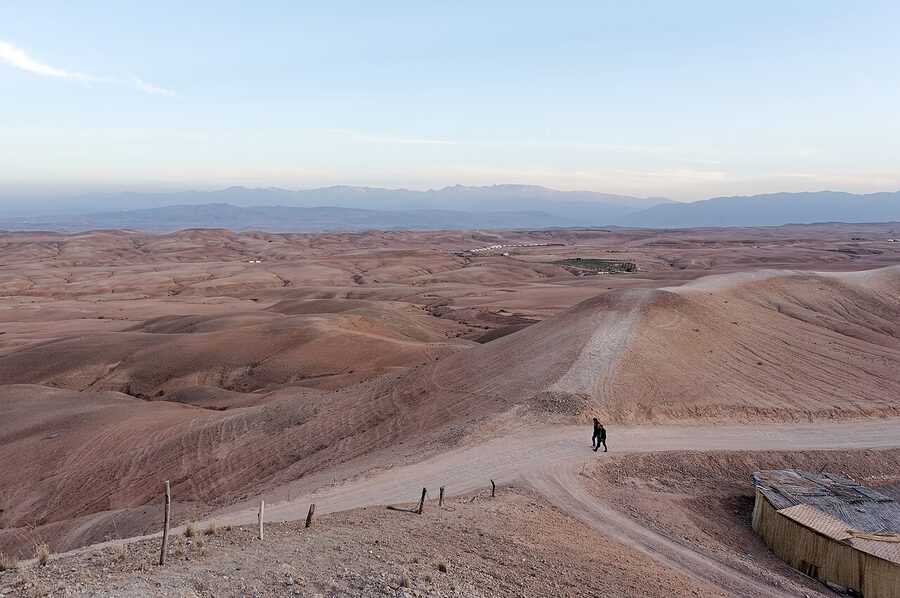
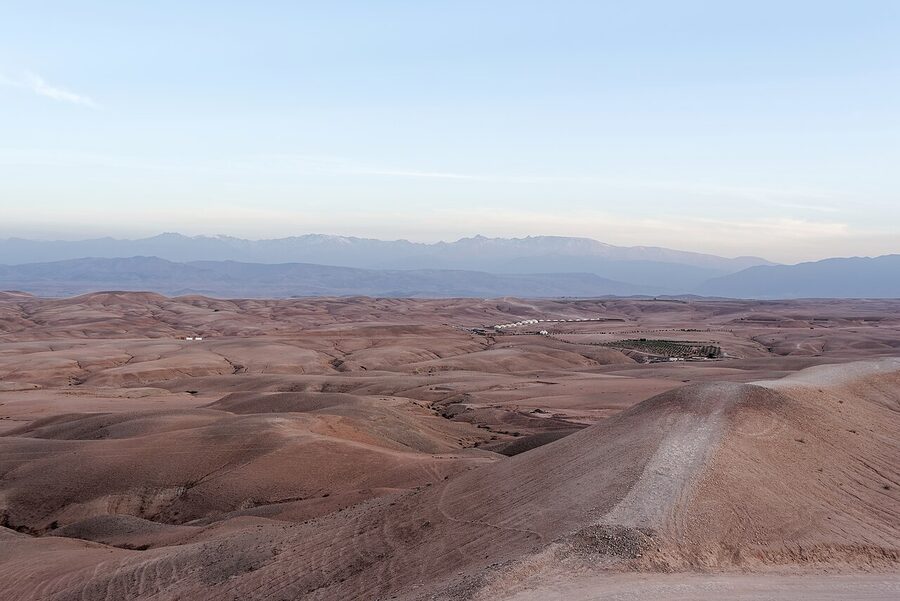
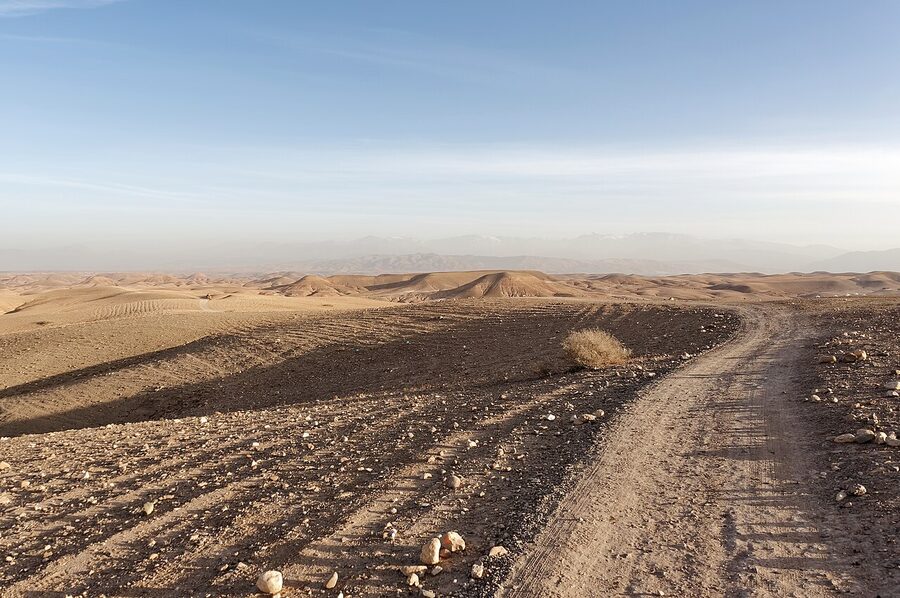
The surface is a mix of fine grey-brown gravel, flat stones, and low thorny vegetation. The hills are gentle — the highest points are maybe 30 metres above the surrounding terrain. It photographs beautifully because the texture and the Atlas backdrop are distinctive, but it’s not what people picture when they hear “Moroccan desert.”
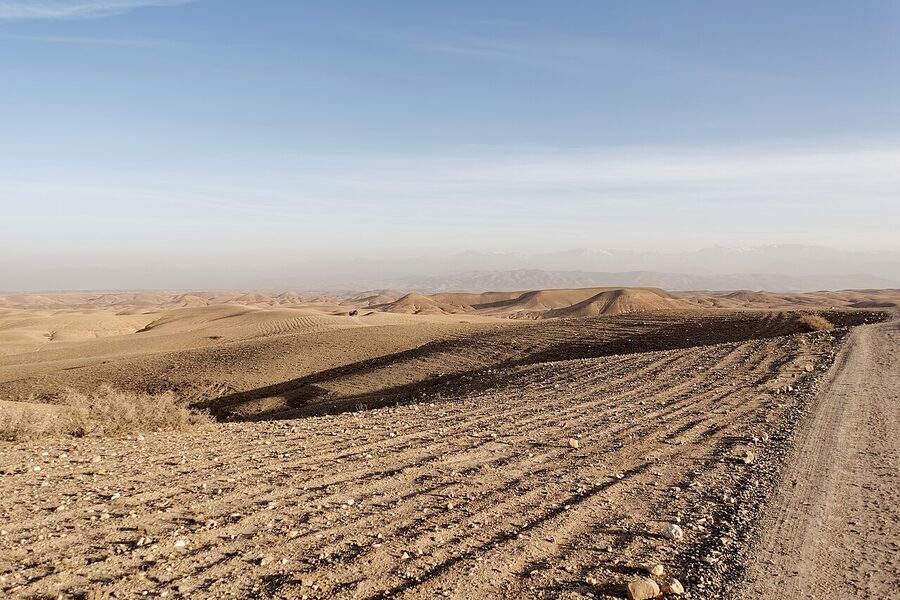


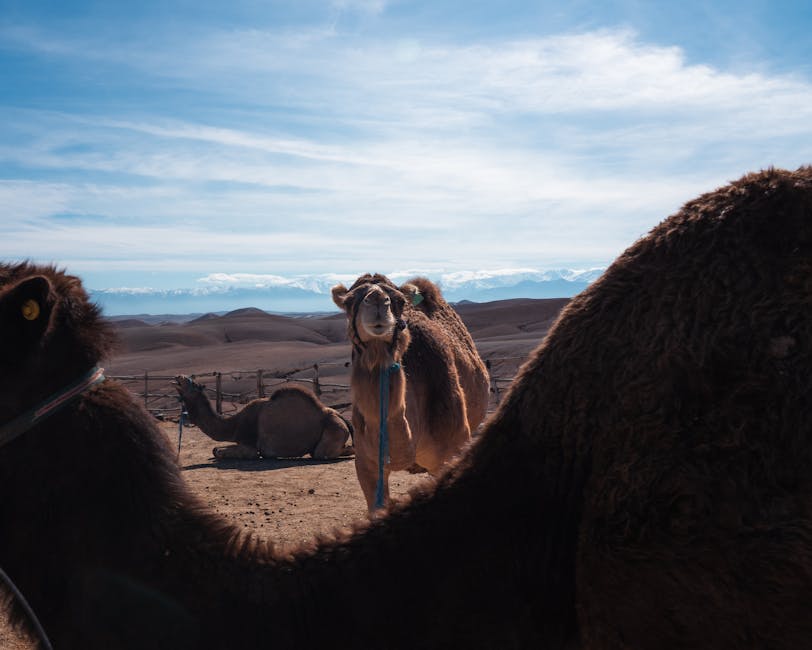
Agafay’s biggest appeal — beyond accessibility — is the Atlas Mountains view. From the Sahara at Merzouga, you see dunes in every direction. From Agafay, you see rocky scrubland in the foreground and snow-capped 4,000-metre peaks on the horizon. The composition is genuinely unique.

If you genuinely want sand dunes and the full Sahara experience, book the 3-day Sahara tour to Merzouga instead. Agafay is the compromise for people who don’t have three days to spare.
The Camel Ride — What to Expect
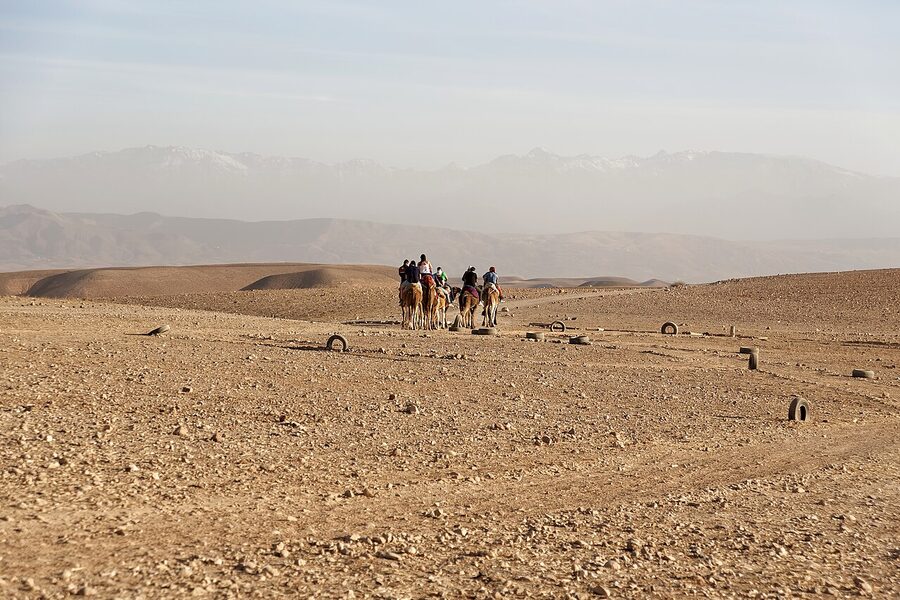
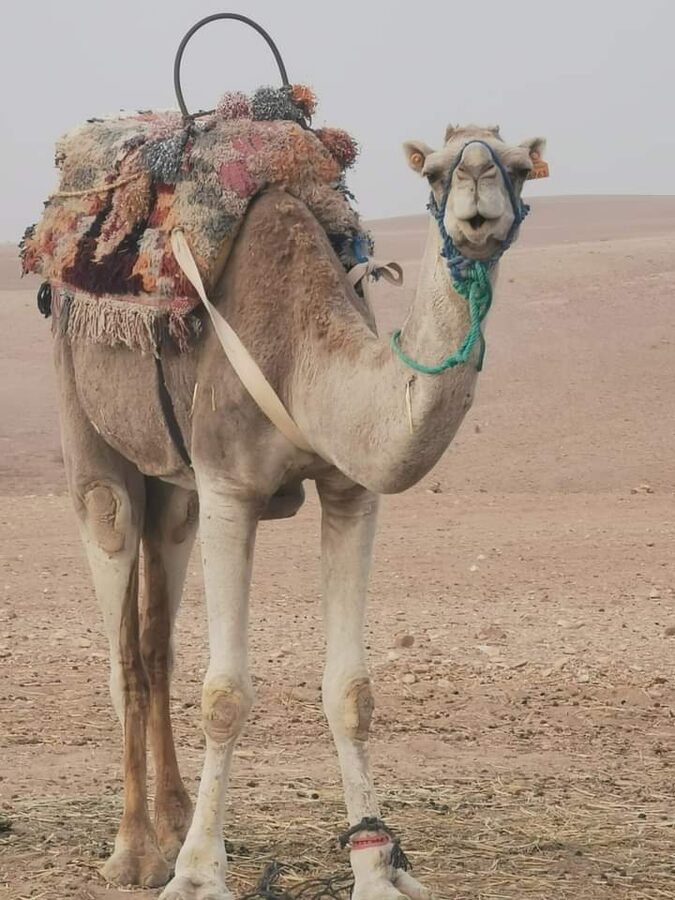
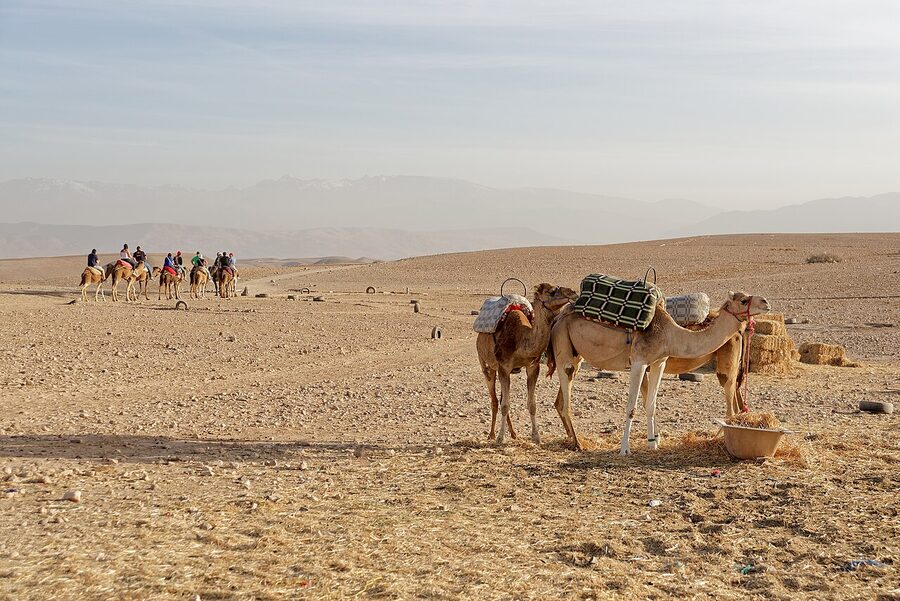
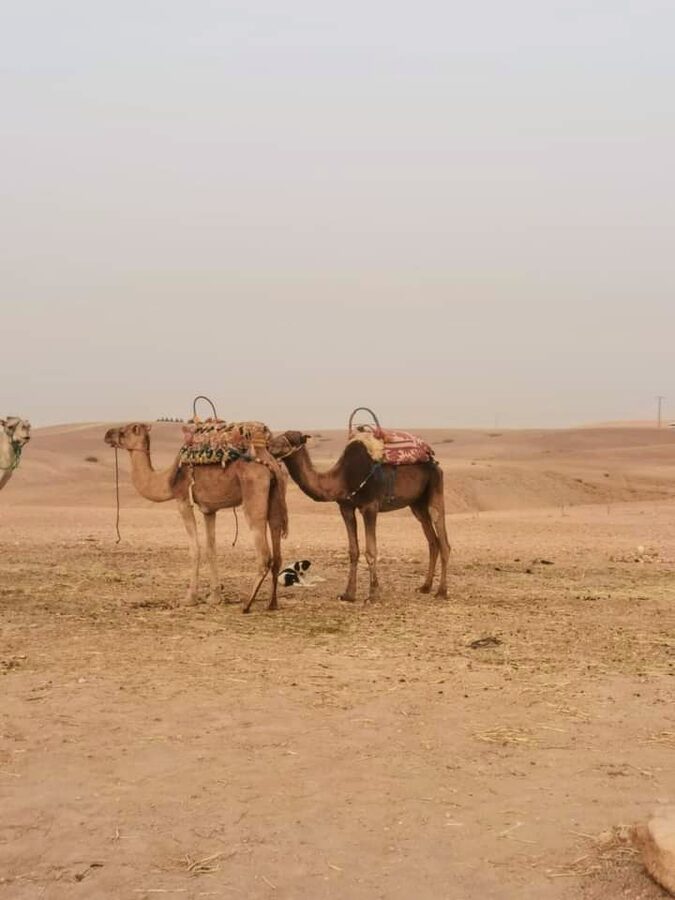
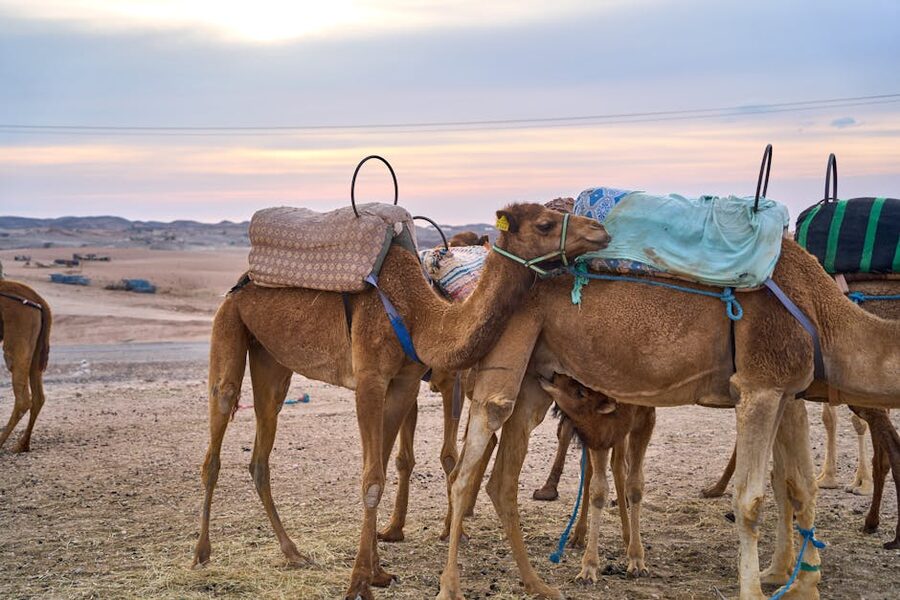
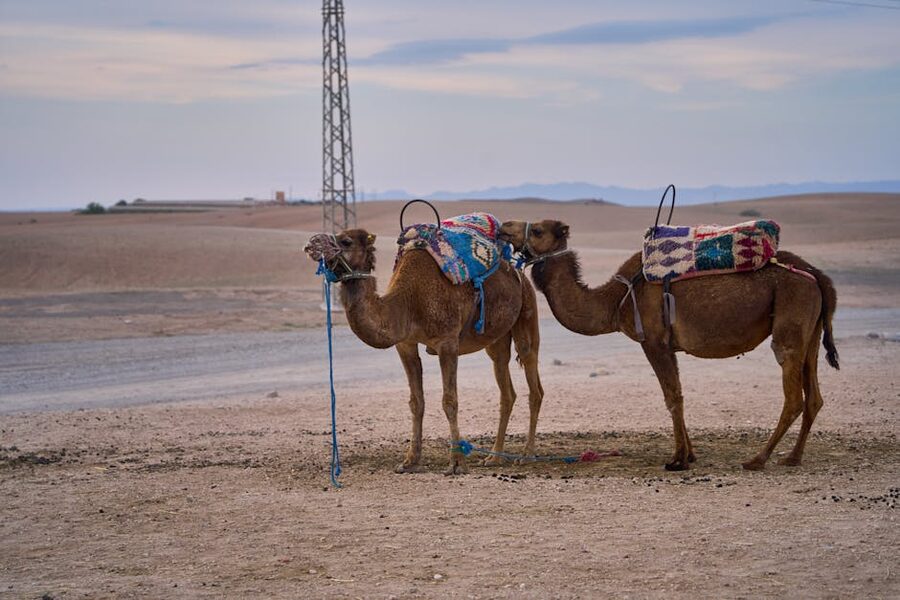
The camel ride is the signature Agafay experience. It’s typically 1-2 hours, starting late afternoon and timed to finish at sunset. The camels are Berber-owned dromedaries, handled by a camel-leader who walks alongside and manages the line.
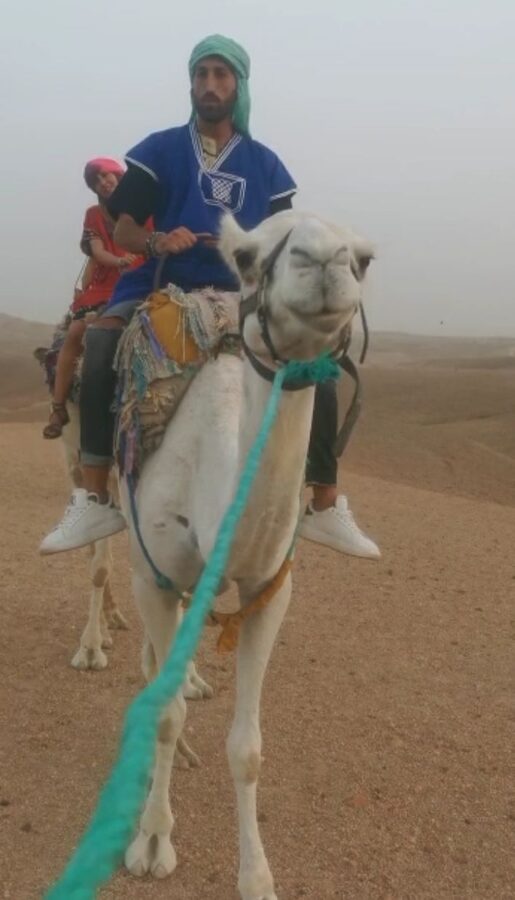

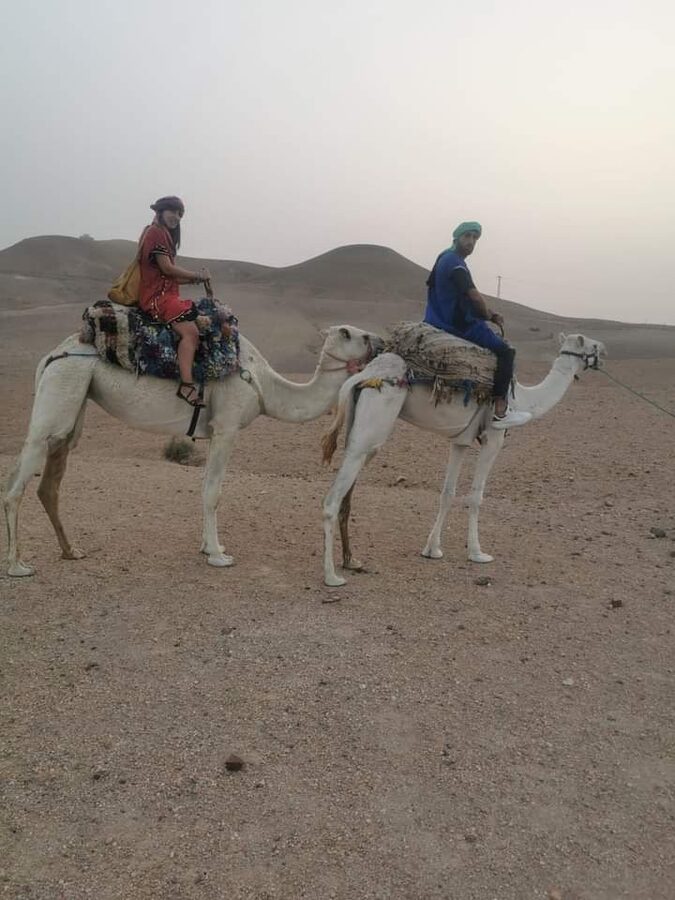

The first 20 minutes is uncomfortable — the rocking gait takes getting used to, and the wooden saddle isn’t designed for human comfort. After that, most people settle in. Wear trousers, not shorts. The saddle rubs, and thin skin suffers.



The Quad Bike Option
Quad bikes (ATVs) are the alternative to camels for people who want speed and self-determination over the slow swaying pace. The routes cover 15-25 kilometres of rolling terrain, going places the camel routes don’t.
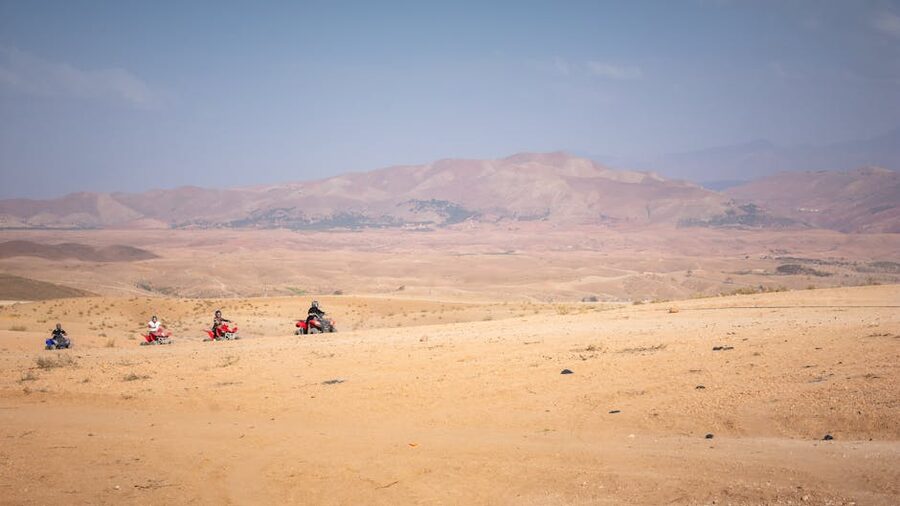
A quad bike tour runs about 90 minutes and covers more ground than a camel ride. If you’re energetic and want to cover distance, this is the choice. You can also combine both — the $48 package includes 90 minutes of quad plus a shorter camel ride at sunset.
If quad biking is your main interest, the dedicated quad-bike tour from Marrakech covers longer routes and different terrain — palmeraie and desert combined.
The Camps and Dinner Experience
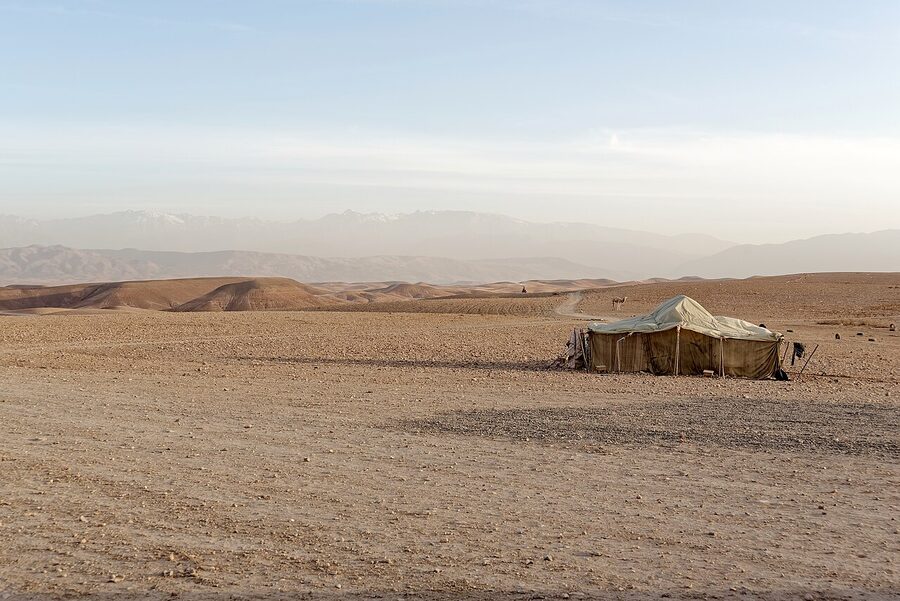
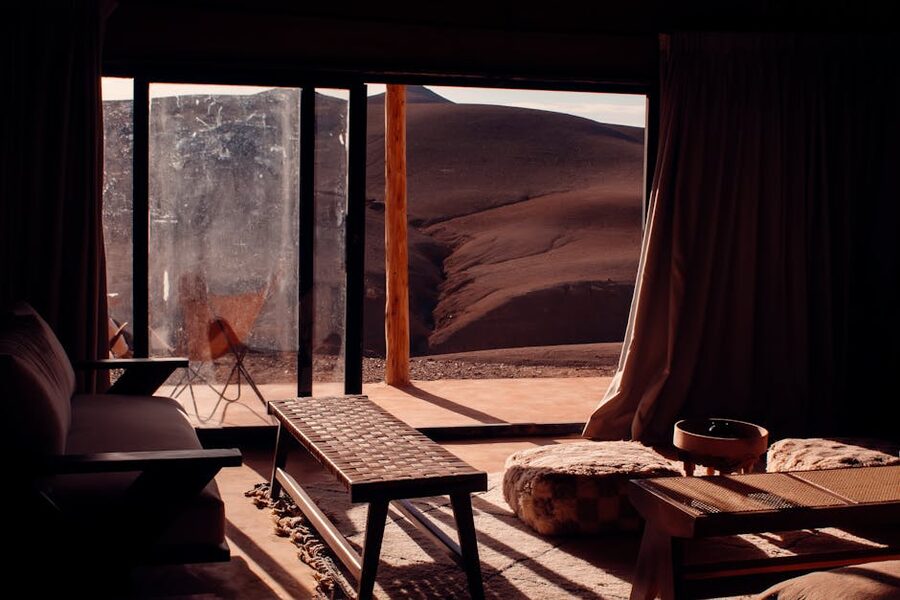
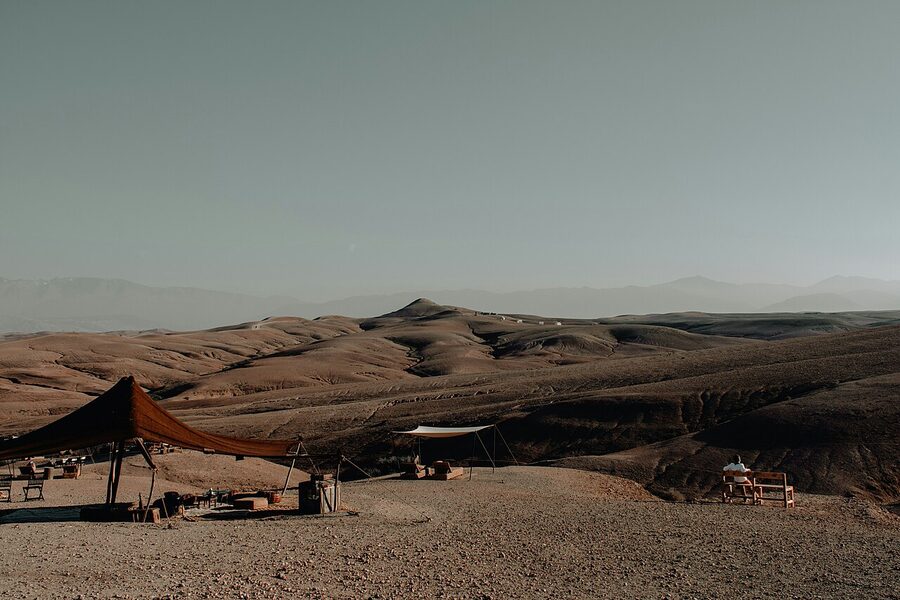
Agafay has roughly 30 different camp operators, ranging from basic Berber-tent setups to luxury glamping with private bathrooms and full-service dinners. Most day tours visit mid-range camps — decent amenities, group dinner, traditional entertainment.

Dinner is typically three courses of traditional Moroccan fare: harira soup, a choice of tagine (chicken and lemon, beef and prune, or vegetable), and mint tea with pastries. Bread is fresh from a wood-fired oven at the camp.
The food is good but not extraordinary. You’re paying for the setting, not the cooking. If food quality matters most, book a dedicated Marrakech food tour instead.


Many camps have live entertainment after dinner — Berber musicians with traditional drums and stringed instruments, fire performers, henna artists. Quality varies widely by camp. The higher-tier tours tend to have better entertainment because they partner with professional musicians.
Our Recommended Tours
1. Quad Biking + Camels + Dinner & Show — $48
The most-reviewed Agafay tour on Viator with 44 five-star reviews at the time of writing. You get the quad bike adventure, the camel ride experience, and a traditional dinner with a show — all for the price of a single activity elsewhere.
The logistics are tight. Pickup around 2pm from your Marrakech riad, quad biking 90 minutes, camel ride at sunset, dinner 7-9pm, drop-off back at the riad around 10pm. It’s a long afternoon-to-evening but the pace works. Our full review of this combo tour breaks down what to expect at each phase of the afternoon.
2. Classic Camel Ride + Sunset Dinner — $69
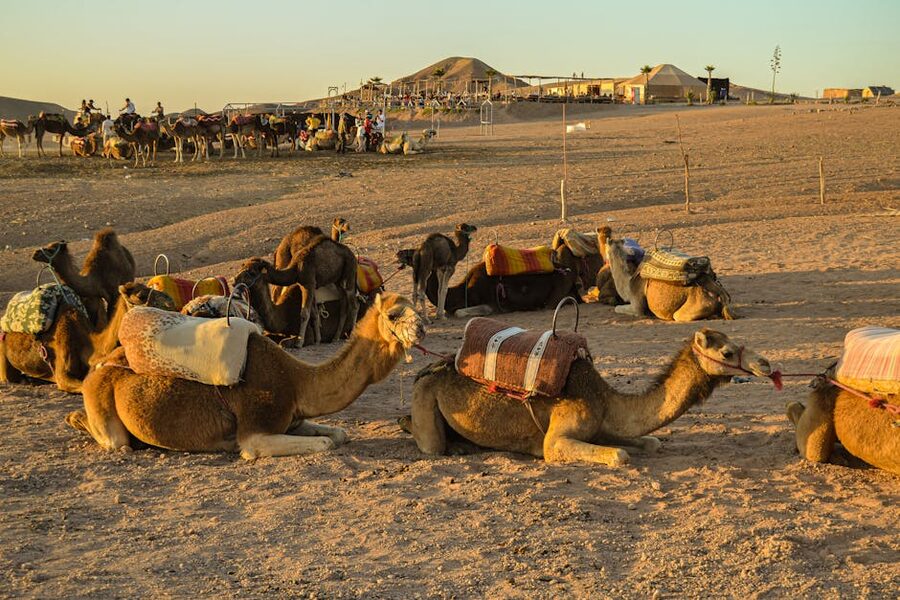
The quintessential Agafay tour. 39 five-star reviews. You get the camel ride into the desert, sunset viewing, and a traditional dinner in a camp setting. No quad bikes — this is the contemplative version of the Agafay experience.
Worth the $21 premium over option 1 if you prefer pacing to activity variety, or if you’re with an older group that doesn’t want the quad bike component. Our detailed review of this classic tour compares camp quality and dinner standards between the two Viator options.
3. Sunset Camel + Unique Evening Dinner — $76

A premium version of the classic sunset tour. Smaller groups, better-placed camps for sunset viewing, and a more curated dinner presentation. The camels used on this tour are typically better-conditioned than on budget tours.
Worth the $7 premium over option 2 if you’re prioritizing quality over price, or if you’re on a special occasion (honeymoon, anniversary) where the extra polish matters. Our review of this premium option covers what the extra spend actually gets you.
When to Go — Season Matters
Agafay is a year-round destination but the experience changes dramatically by season.
October-April (peak season): Cool days (18-24°C), cold nights (5-12°C), potentially rain in winter. The Atlas Mountains have snow December-March. Best sunsets and photography. Crowded in December and the European holiday windows.
May-September (summer): Hot days (35-42°C), bearable evenings. The sunset tours still work because the worst heat is over by 5pm. Less crowded. No snow on the Atlas.

If you’re visiting Marrakech in winter anyway, prioritize Agafay over almost any other day trip. The winter light is exceptional and the Atlas snow makes the views unforgettable. In summer, Agafay is still worthwhile but the Ouzoud Waterfalls or Atlas Mountains hike are better summer alternatives.
Practical Tips
Go for the sunset tour, not the morning. Agafay in the morning is hot, flat-lit, and lacks atmosphere. The whole experience is built around sunset. If your tour schedule says “afternoon pickup,” it’s done right.
Wear sensible clothes. Long trousers for the camel ride (saddle friction), closed-toe shoes (scorpions, thorns, rocks), a light jacket for evening (temperature drops fast after sunset), and a hat or scarf for sun and dust.
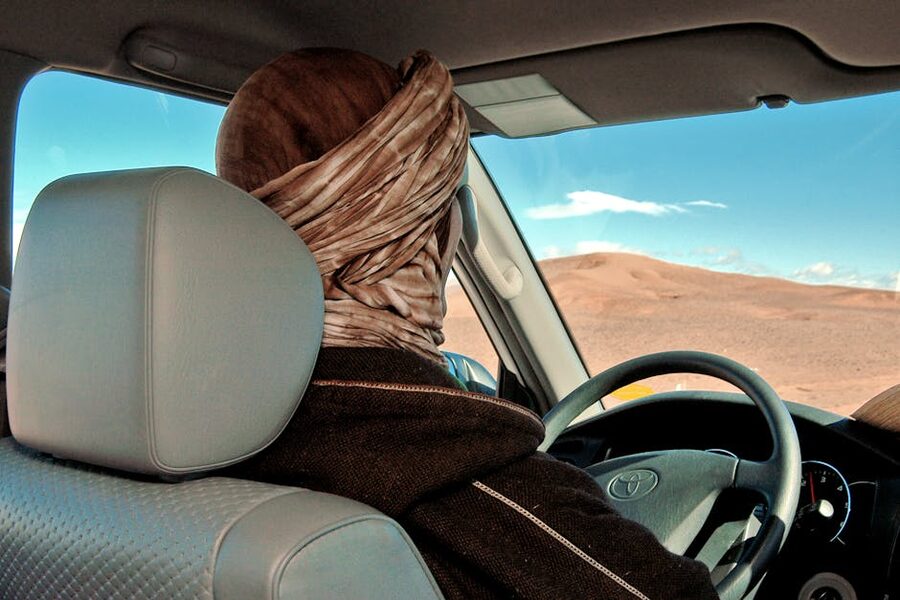
Bring a small bag. You’ll want sunscreen, water, camera, a light layer. The 4×4 transfers drop you at the camp so you’ll have your bag with you throughout. Don’t overpack — there’s no storage at the camps.

Tip the camel handler. 20-50 MAD ($2-5) per rider is appropriate. These are typically not included in tour prices and they do the real work — leading your camel, setting up saddles, handling dismount.
Cash for extras. The camps sell drinks (especially alcohol, which isn’t included in most dinner packages), souvenirs, and henna. Bring 200-300 MAD ($20-30) for sundries. Euros and dollars accepted at most camps; cards often don’t work out here.
Camel-ride duration. 90 minutes is standard. More than two hours is uncomfortable for first-time riders. If your tour offers a “4-hour camel trek,” that’s usually overselling; book the shorter version and enjoy the dinner longer.
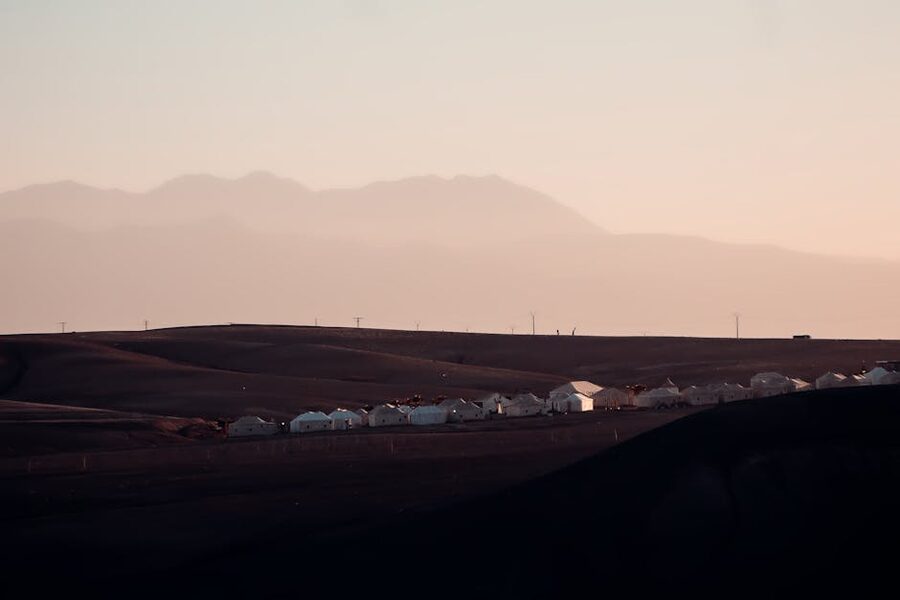
Photography. Sunset gives you maybe 30 minutes of golden light, then 20 minutes of blue hour before full dark. Bring a wide lens for the landscapes, a zoom for the camels. Shoot handheld; the motion on the camel makes tripods impractical.
Transfer times. Marrakech to Agafay is about 45 minutes each way. Factor in traffic at peak Marrakech hours (4-7pm). Some tours pick up at 2pm to beat traffic both ways.
Agafay vs Other Marrakech Day Trips
vs 3-Day Sahara Desert Tour to Merzouga: Merzouga is the real deal — tall sand dunes, overnight in the desert, the full Sahara experience. But it’s a 10-hour drive each way plus 2 nights on the road. If you have 3 days and love deserts, go Merzouga. Otherwise, Agafay is the compromise.
vs Atlas Mountains Day Hike: The Atlas hike gets you into the mountains themselves — waterfalls, Berber villages, mountain air. Agafay is the valley floor looking up at the mountains. Complementary rather than competing experiences.
vs Ouzoud Waterfalls: Ouzoud is a 3-hour drive each way for the 110m waterfalls and wild monkeys. Agafay is 45 minutes. If you have one day, Agafay is easier and more efficient.
vs Essaouira Day Trip: Essaouira is the coastal alternative — beach, seafood, wind, walled medina. Agafay is desert. Completely different experiences. Book Essaouira for daytime, Agafay for evening; they pair well on a longer Marrakech stay.
vs Hot Air Balloon over Marrakech: Hot air balloon is sunrise (4am start); Agafay is sunset. You can do both on the same day if you’re ambitious — balloon at dawn, rest during midday, Agafay in the evening.
Getting There
Location: Agafay Desert, about 40 kilometres south-west of Marrakech. 45 minutes by car.
Tour pickup: Every tour includes hotel/riad pickup and drop-off. This is essentially the only way to reach Agafay unless you’re renting a car.
Driving yourself: Possible but not recommended. The tracks inside Agafay aren’t well-signed and many of the camps are on unpaved approaches that rental cars struggle with. Rent a 4×4 if you’re committed to self-drive.
No public transport. There are no buses or trains to Agafay. Grand taxis (shared taxis) occasionally run to nearby villages but not to the camps themselves.
Is Agafay Worth the $48+?
For a sunset camel ride, traditional dinner, and the Atlas Mountains backdrop, $48 is an absolute bargain. The equivalent experience anywhere else in the world would cost 3-4 times as much.
The caveats: it’s not the real Sahara, the stone terrain can feel anticlimactic if you were expecting dunes, and the camp dinners vary wildly in quality. Read the reviews carefully before picking your tour — camp quality is the single biggest variable.
Verdict: if you have one free afternoon and evening in Marrakech, spend it at Agafay. It’s the best-value atmospheric experience you’ll have on a short Marrakech visit.
Building Agafay Into Your Marrakech Trip
Agafay fills an afternoon and evening (roughly 2pm-10pm). That leaves most of your day free for other Marrakech activities.
The natural morning options: a hot air balloon ride at dawn, a Medina walking tour, or a morning at the Majorelle Garden. Any of these pair nicely before an afternoon in Agafay.
For a relaxed day before, consider a traditional hammam session — the cleansing ritual sets you up perfectly for the physical day that follows. For a full Moroccan experience, you can stretch Agafay to the front of a longer trip: Agafay on day 1, Atlas Mountains hike on day 2, Essaouira on day 3, and a food tour on day 4 for a complete week. The city makes a great base for all of these because the transfer logistics are short enough to leave most of each day for the activity itself.