
Karnak is the largest religious building humans have ever built. 250 acres, 2,000 years of continuous construction and reuse, 30+ pharaohs contributing to its expansion. You can spend a day here and still miss sections.
Luxor Temple, 3km south of Karnak, is smaller but more intimate. Connected to Karnak by a 3km processional avenue lined with sphinxes (recently restored and now walkable again). Together they form the East Bank of Luxor — the ceremonial heart of ancient Thebes.
This guide covers three East Bank tours worth booking, what to see at each temple, and whether the Karnak Sound and Light show is worth the extra evening.
- Three Karnak and Luxor Temple Tours Worth Booking
- What Karnak Actually Is
- Tour #1 — Private Half-Day Tour to Karnak and Luxor Temples
- Private Half-Day Tour to Karnak and Luxor Temples — per person
- Luxor Temple — The Smaller, Quieter Masterpiece
- Tour #2 — Private Half Day Tour to East Bank Karnak and Luxor Temples
- Private Half Day to East Bank Karnak and Luxor Temples — per person
- Tour #3 — Sound and Light Show at Karnak Temple (Evening Option)
- Sound and Light Show at Karnak Temple — per person
- The Avenue of Sphinxes
- Brief History of Karnak
- Brief History of Luxor Temple
- When to Visit
- How Much Time Do You Need?
- Ticket Types and Combination Passes
- What to Wear
- Combining With Other Luxor Sites
- Luxor Museum Pairing
- Nile Cruise Integration
- Frequently Asked Questions
- The Sacred Lake at Karnak
- What’s at the Outer Walls of Karnak
- The Opet Festival Context
- My Bottom Line
Three Karnak and Luxor Temple Tours Worth Booking
Karnak and Luxor Temple tours range from $40 for the evening Sound and Light show to $75+ for a half-day private tour covering both temples with an Egyptologist.
My top pick is the $69 Private Half-Day Tour to Karnak and Luxor Temples — a proper licensed guide at a reasonable price. For a slightly cheaper East Bank tour, the $49 East Bank Karnak and Luxor Temples covers the same core sites. For an evening experience, book the $40 Sound and Light Show at Karnak Temple.
All include licensed guide and entry fees. Transportation from your Luxor hotel is usually included in private tours; public tours may require you to meet at the entrance.
What Karnak Actually Is
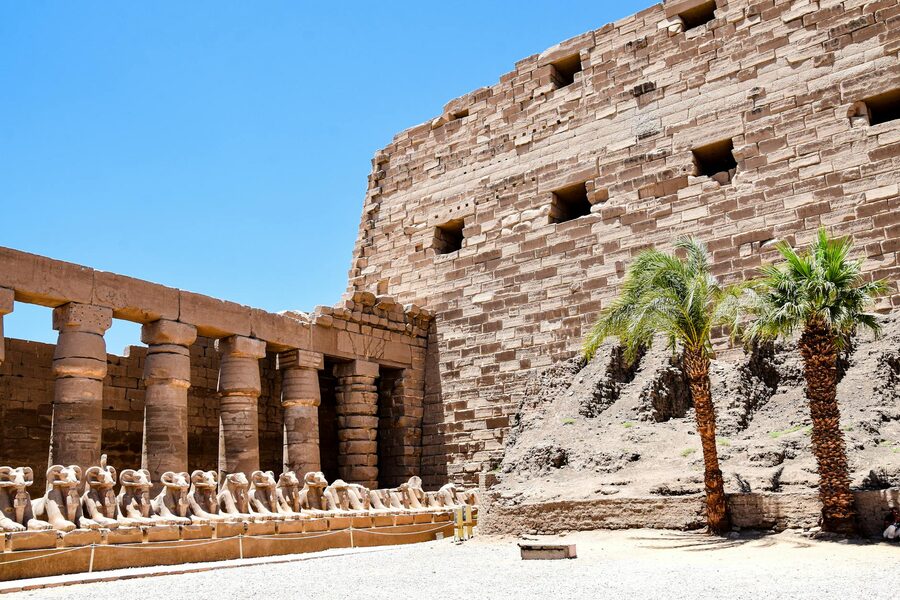
Karnak is a sprawling complex covering the area of a small town. The main axis is the Precinct of Amun-Re — the temple dedicated to Amun, chief god of Thebes. Other precincts honor Mut (Amun’s wife) and Khonsu (their son).
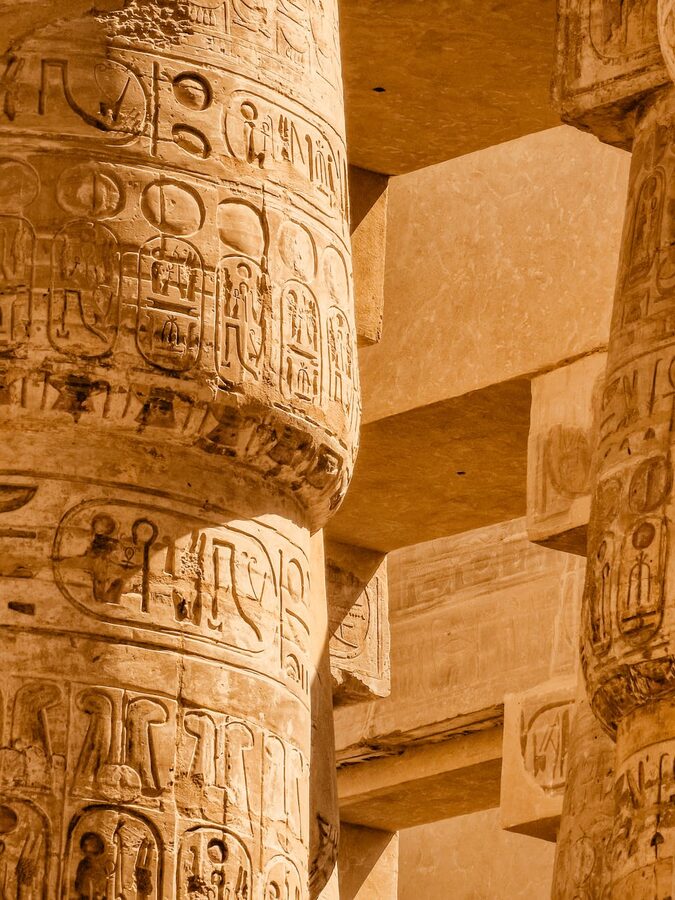
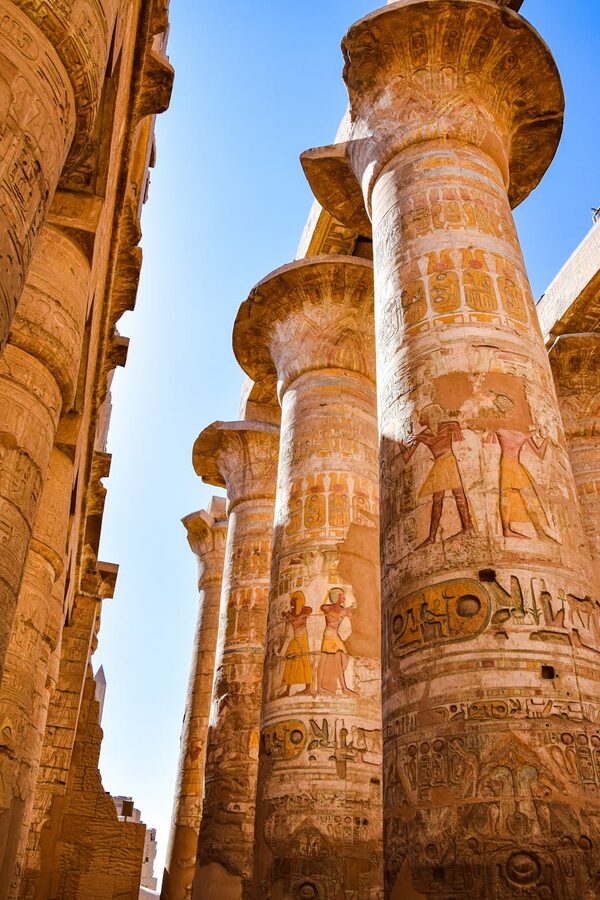
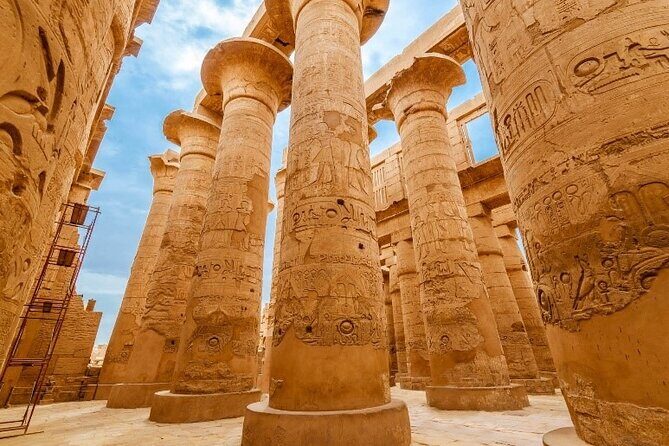
The central axis runs about 600 meters through increasingly impressive architecture: the main entrance pylon (built by Nectanebo I), the outer courtyard, the great hypostyle hall (134 columns, 15-21 meters tall), the inner sanctuary, and the sacred lake at the eastern end.
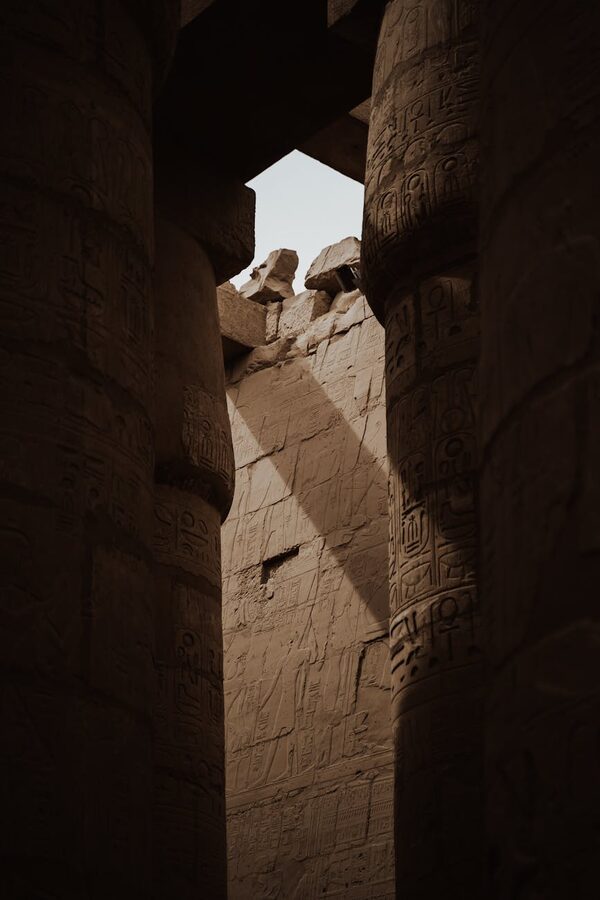
Don’t miss the hypostyle hall. Stand at the base of one of the central papyrus-capital columns and look up. Each column is 21 meters tall. The hall originally had a ceiling 24 meters above the floor. You get a physical sense of what ancient grandeur felt like.
Tour #1 — Private Half-Day Tour to Karnak and Luxor Temples
Private Half-Day Tour to Karnak and Luxor Temples — $69 per person
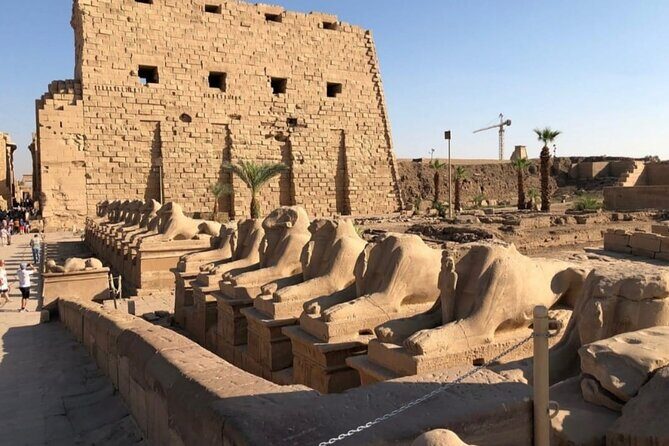
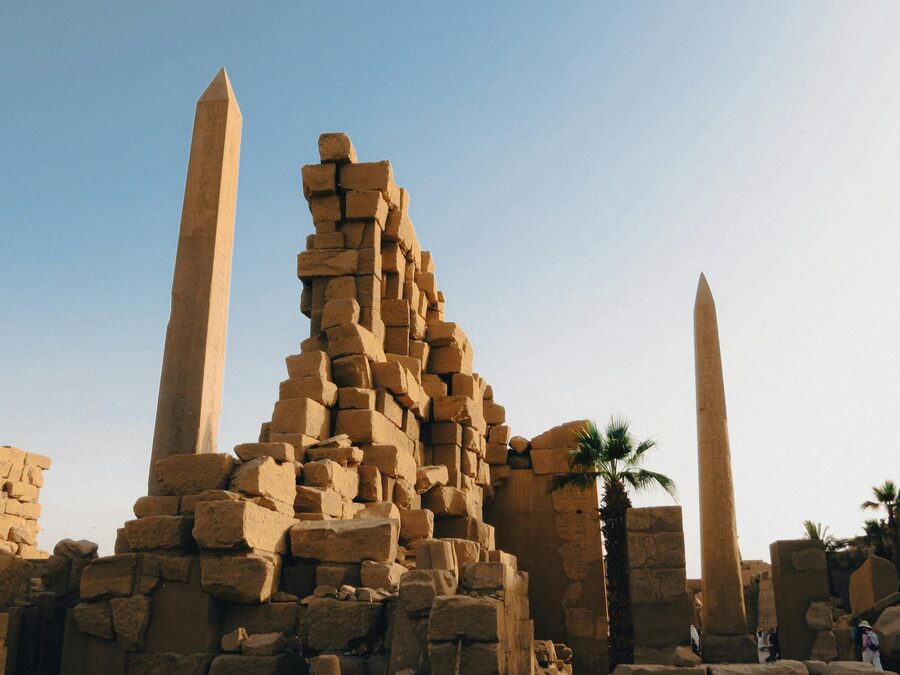
4-hour private tour. 2 hours at Karnak (hypostyle hall, obelisks, sacred lake, Amun sanctuary), then 20-minute drive to Luxor Temple, 1 hour at Luxor Temple (entrance pylon, Avenue of Sphinxes, colonnade, courtyard). Egyptologist guide, entry fees, transport included.
The private setup means the pace adjusts to your interest. Photo enthusiasts get more time for pictures; history buffs get deeper explanations of reliefs and inscriptions.
Full breakdown in our private Karnak and Luxor Temples tour review.
Luxor Temple — The Smaller, Quieter Masterpiece
Luxor Temple was primarily built by Amenhotep III (1390-1350 BC) and expanded by Ramses II (1279-1213 BC). Unlike Karnak’s sprawling complex, Luxor is a single coherent temple — more walkable, more immediately grasped.
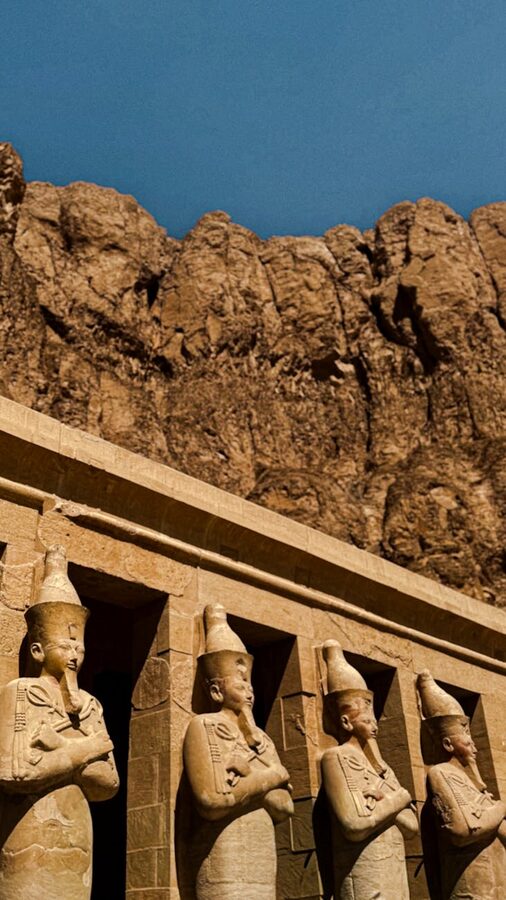
The first pylon (Ramses II’s entrance) is flanked by two seated colossi of Ramses. Originally it had two obelisks; one was given to France in 1836 and stands today in the Place de la Concorde in Paris.
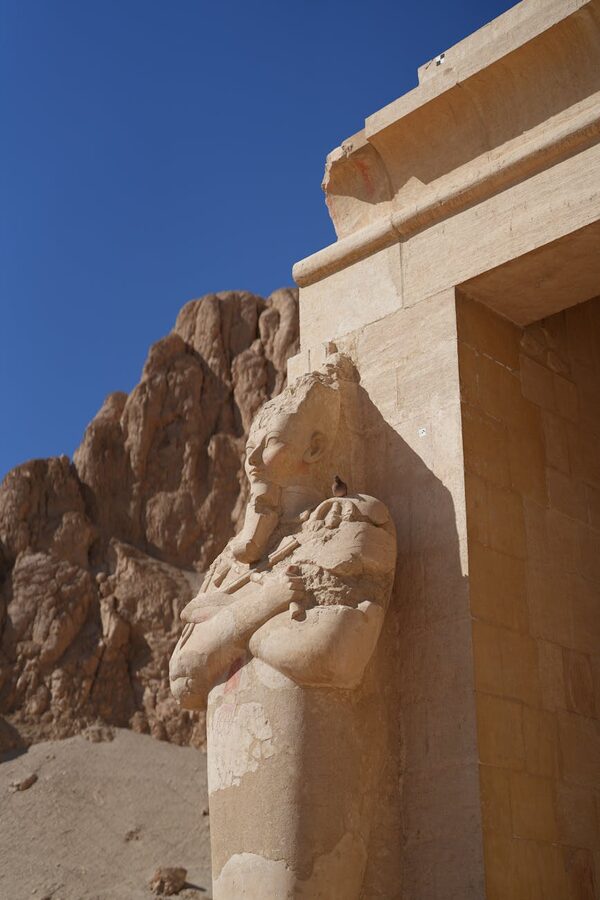
Inside: a court with colossi, a grand colonnade with 14 palm-capital columns 19 meters tall, and the Ramses court with 74 papyrus-bundle columns. The inner sanctuary has Alexander the Great’s barque shrine — a reminder that the temple stayed in use through the Ptolemaic and Roman periods.

Tour #2 — Private Half Day Tour to East Bank Karnak and Luxor Temples
Private Half Day to East Bank Karnak and Luxor Temples — $49 per person
4-hour East Bank half-day with a guide, hotel pickup, and entry to both temples. The same Karnak-then-Luxor Temple itinerary as Tour #1 at $20 less per person.
The slight difference: guides on this tour are sometimes licensed tour guides rather than full Egyptologists. Still knowledgeable, just less academic. Most visitors won’t notice the difference.
See the full itinerary in our East Bank tour review.
Tour #3 — Sound and Light Show at Karnak Temple (Evening Option)
Sound and Light Show at Karnak Temple — $40 per person
75-minute evening show inside Karnak. Illumination of the major architectural features while narrated history plays in multiple languages (English, Spanish, German, French, Japanese available). Shows typically at 7pm and 8pm.
Expect Hollywood-style drama rather than academic lecture. Good if you want a gentler evening experience; not as substantive as a daytime tour. Pair it with a Nile dinner cruise or hotel dinner.
3.0 stars across 19 responses — polarizing. Some love the spectacle, others find it hokey. See our Sound and Light show review.
The Avenue of Sphinxes
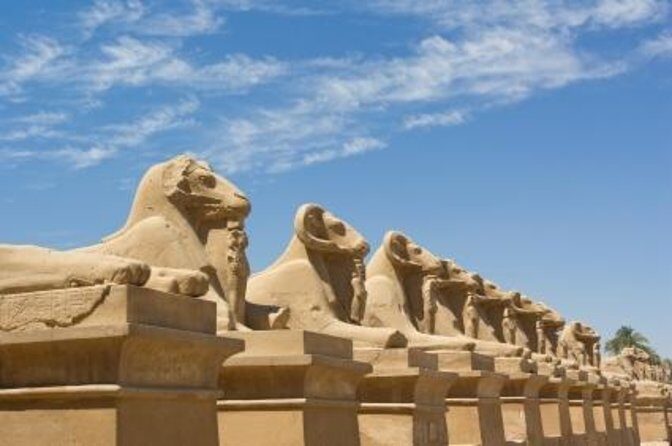
The 3km processional route connecting Karnak and Luxor Temple was rediscovered and restored in 2021 after decades of excavation. 1,200 ram-headed and human-headed sphinxes line the avenue. You can walk the full route.
Walking time: 45-60 minutes one way. Bring water — the route is exposed. Morning or late afternoon is best; midday is brutal.
Brief History of Karnak
Karnak’s first construction dates to the Middle Kingdom (2055-1650 BC). It grew significantly under the New Kingdom (1550-1069 BC) when Thebes was the capital. The great hypostyle hall was built by Seti I and Ramses II in the 13th century BC.
Additions continued through the Third Intermediate Period, the Late Period, and even the Ptolemaic era. The last major building work was by Nectanebo I (378-360 BC), though the temple remained in active religious use until the 4th century AD when Christianity closed the pagan temples.
Earthquakes in the 1st and 14th centuries AD damaged the hypostyle hall. Modern restoration began in the 1890s under the French archaeologist Georges Legrain.
Brief History of Luxor Temple
Luxor Temple was built primarily under Amenhotep III (1390-1350 BC). Ramses II (1279-1213 BC) added the massive entrance pylon, two obelisks, and a court with additional colossi. The temple became a shrine to Alexander the Great after his visit in 332 BC.
Unusually, Luxor Temple was used continuously for 3,500 years — as an Egyptian temple, then as a Roman military camp (the Abu Haggag Mosque at the northwest corner is still active today, built into the temple walls), and now as a heritage site.
When to Visit
Early morning (6-9am) is prime. Cooler temperatures, fewer crowds, best light for photography. Karnak opens at 6am in summer, 6:30am in winter.
Late afternoon (3-5pm) avoids both morning tour buses and midday heat. Light is warmer, making photos more atmospheric. Close-up carvings show up better.
Avoid midday 11am-3pm in summer. Karnak has limited shade and the heat is punishing.
How Much Time Do You Need?
Karnak: 2-3 hours minimum. Half a day is better. If you love Egyptology, a full day with breaks is defensible.
Luxor Temple: 1 hour minimum, 1.5-2 hours for a thorough visit. It’s denser than Karnak — less ground to cover, more detailed stops.
Both in one day: tight but doable with a private guide. The half-day tours I recommend spend 2.5 hours at Karnak and 1 hour at Luxor Temple.
Ticket Types and Combination Passes
Individual tickets: Karnak 600 EGP, Luxor Temple 400 EGP, Valley of the Kings 240 EGP plus optional Tutankhamun 300 EGP. Open 6am-5pm (closes earlier in winter).
Student discounts: 50% off all tickets with a valid international student ID. Check at the Visitor Centre.
Combination tickets: various 3-site or all-Luxor passes at small discounts. Not universally available; ask at the gate or through your hotel concierge.
Photography passes: 300 EGP extra for camera use inside tombs and most temples. Smartphone photos are usually included in the base ticket.
What to Wear
Modest clothing — shoulders and knees covered, both men and women. Sensible walking shoes with grip; some paths are uneven stone. Hat with brim for sun. Plenty of water.
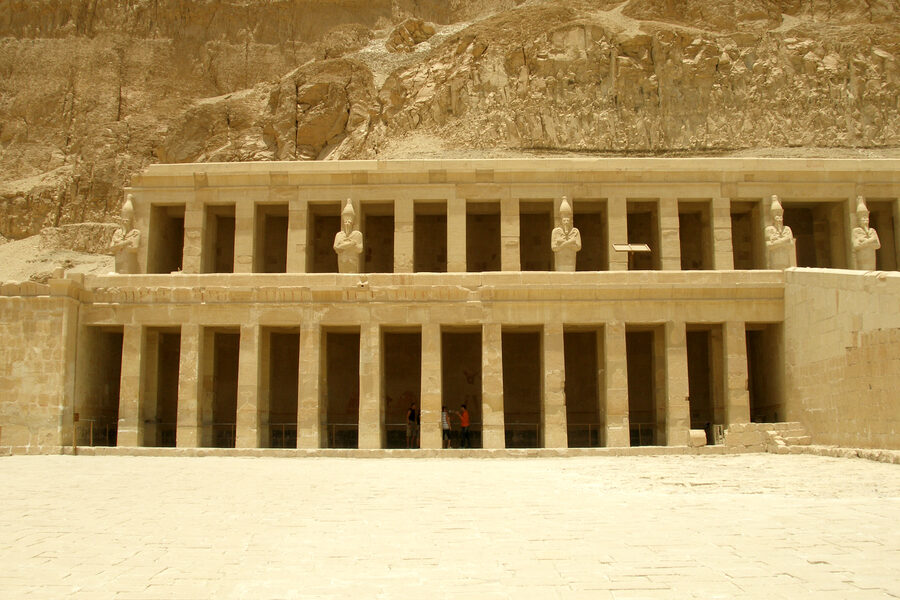
Don’t wear flip flops. The stone paths at Karnak can be hot and rough, and there’s significant walking within the complex.
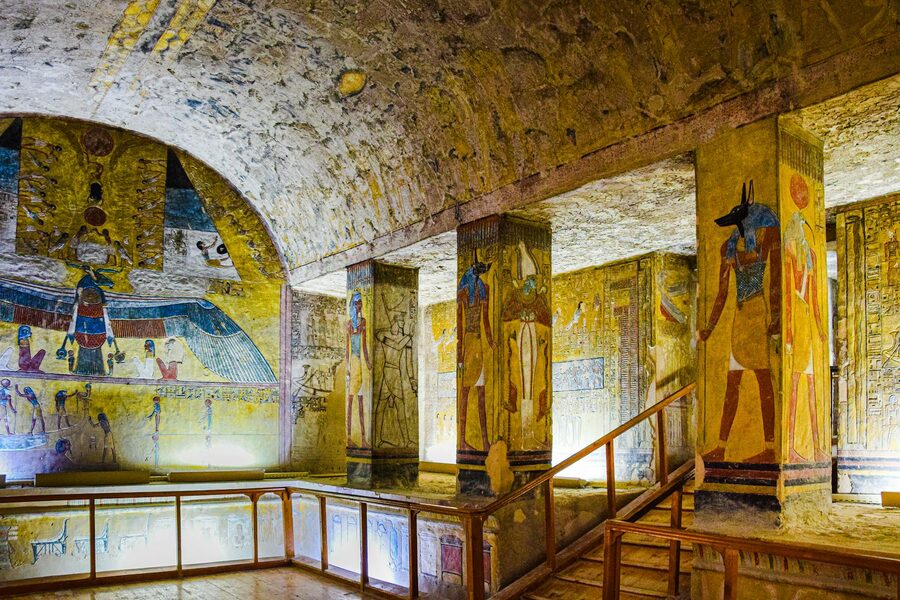
Combining With Other Luxor Sites
Best combinations: morning Valley of the Kings + afternoon Karnak (see the Valley of the Kings guide). Or morning balloon + afternoon Karnak (see the Luxor balloon guide).
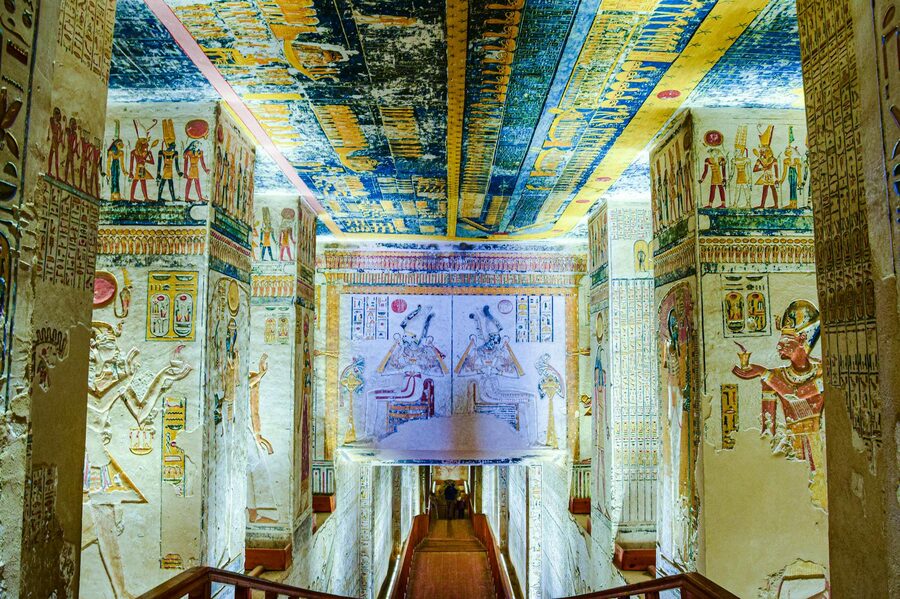
If you’re on a tight 1-day Luxor schedule from a Nile cruise or Hurghada day trip, you won’t get to Karnak. Prioritize the Valley of the Kings instead (that’s where most ships dock you).
Luxor Museum Pairing
The Luxor Museum on the East Bank corniche is a short walk from Luxor Temple and holds artifacts discovered at both Karnak and Luxor Temple. Worth 2 hours if you have the time.
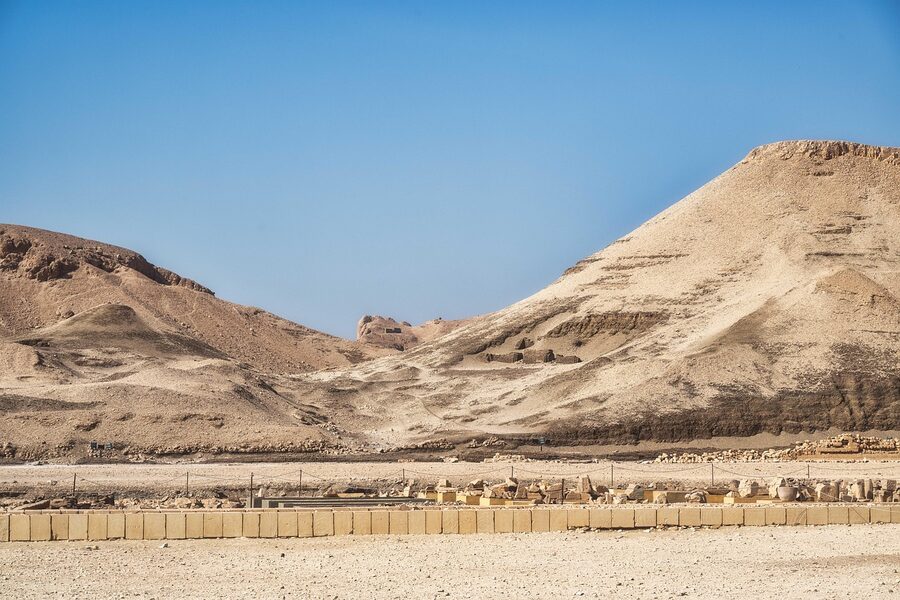
Open 9am-2pm and 4-9pm. The afternoon split is helpful — visit in the late morning and then pair the evening Sound and Light show or dinner cruise.
Nile Cruise Integration
Every Aswan-Luxor Nile cruise spends at least one morning on the East Bank visiting Karnak and Luxor Temple. It’s the cruise’s last stop before check-out. See the Nile cruise guide for that context.
For Hurghada-based travelers, a day trip to Luxor includes 1-2 hours at Karnak. See the Luxor from Hurghada guide.
Frequently Asked Questions
How long does a tour take? 3-4 hours for both temples. Add 2 hours for the Sound and Light show if you’re doing it.
Are photos allowed? Yes. No flash in any enclosed spaces. Tripods require a permit (rarely enforced).
Is it kid-friendly? Yes. Kids 8+ engage well; under 8 may get restless. Bring snacks and water.
Do I need a guide? Strongly recommended. The sites have minimal signage.
What’s the entry fee? Karnak: 600 EGP, Luxor Temple: 400 EGP. Tour prices include these.
Are tours wheelchair accessible? Partially. Karnak’s outer courtyards are mostly flat; inner areas have some steps. Luxor Temple has more steps throughout.
Can I see Karnak from above? Only via the Luxor balloon — see the Luxor balloon guide. No drone flying allowed.
Is the Sound and Light show worth it? Depends on taste. If you enjoy theatrical history presentations, yes. If you prefer academic tours, skip.
Can I walk from Karnak to Luxor Temple? Yes, via the restored Avenue of Sphinxes (3km, 45-60 minutes). Most tours drive, but walking gives you the original procession experience.
What if I only have one afternoon in Luxor? Skip Karnak and do Luxor Temple at sunset, or do both quickly (2.5 hours total). Better to spend another day if possible.
Is the restored Avenue of Sphinxes safe to walk? Yes. Tourism police patrol the route. No fee to walk it, though some gates may be closed outside daytime hours.
The Sacred Lake at Karnak
Often overlooked, the Sacred Lake at the eastern end of Karnak is a 120×77 meter rectangular pool used for ritual purifications. Priests washed themselves here before entering the sanctuary.
Today the lake has a modest grandstand on the southern edge where the Sound and Light show plays. Even without the show, worth 15 minutes at the lake for the scale and quiet.
What’s at the Outer Walls of Karnak
The outer walls carry inscriptions recording major events. Notable: the Battle of Kadesh relief (Ramses II’s famous chariot battle with the Hittites in 1274 BC), the Seti I battle reliefs, and the Bubastite Portal showing the campaign of Shoshenq I (the biblical “Shishak” who sacked Jerusalem).
A good Egyptologist will take you around the outer wall to see these reliefs. They’re the most concrete historical records of political history available from ancient Egypt.
The Opet Festival Context
Karnak and Luxor Temple were connected ceremonially by the annual Opet Festival — a 20+ day event in which Amun’s statue was carried from Karnak to Luxor Temple and back. The festival renewed pharaonic divinity.
Knowing this transforms how you see both sites. They weren’t isolated temples; they were the two ends of a religious processional route. The Avenue of Sphinxes was the sacred path.
My Bottom Line
Karnak and Luxor Temple are the most impressive religious architecture anywhere. They’re older than the Parthenon, larger than Angkor Wat, and more continuously used than either. For $49-69 per person, you get professional guidance through one of civilization’s greatest achievements.
Book the $69 Private Half-Day Tour to Karnak and Luxor Temples for the best experience with an Egyptologist. Step down to the $49 East Bank Tour for a similar tour at lower cost. Add the $40 Sound and Light Show as an evening experience.
The temples will leave an impression that photos can’t quite capture. The columns in the Karnak hypostyle hall are bigger than the trees in most redwood forests. The obelisks still standing are larger than any ever raised in Europe. This is the scale of ancient Egypt at its peak, preserved in stone you can touch.
Go early morning or late afternoon. Dress modestly. Skip lunch in peak heat. And give Karnak proper time — rushing through Karnak in 45 minutes is a missed opportunity — plan for at least 2 hours inside.