How to Book a Luxor Day Trip from Hurghada

The van picks you up at 4am. Four hours later, after crossing the eastern desert in the pre-dawn light, you’re standing in the Valley of the Kings looking at a hole in the rock that goes down to Ramses VI’s tomb. The painted ceiling 50 metres down has been there since 1136 BC. You have 15 minutes before the bus moves on.

The Luxor day trip from Hurghada is the beach-to-antiquity shortcut. If you’re on the Red Sea coast for a holiday but want to see one of the world’s great archaeological sites without flying to Cairo, this is how. It’s a long day — 15+ hours total — but it’s the only practical way to see Luxor from Hurghada without overnighting.
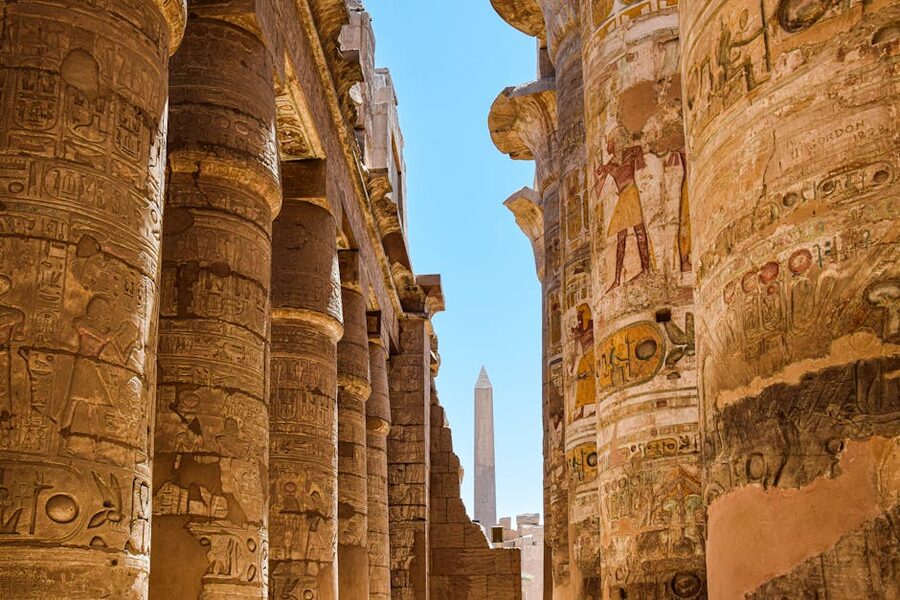
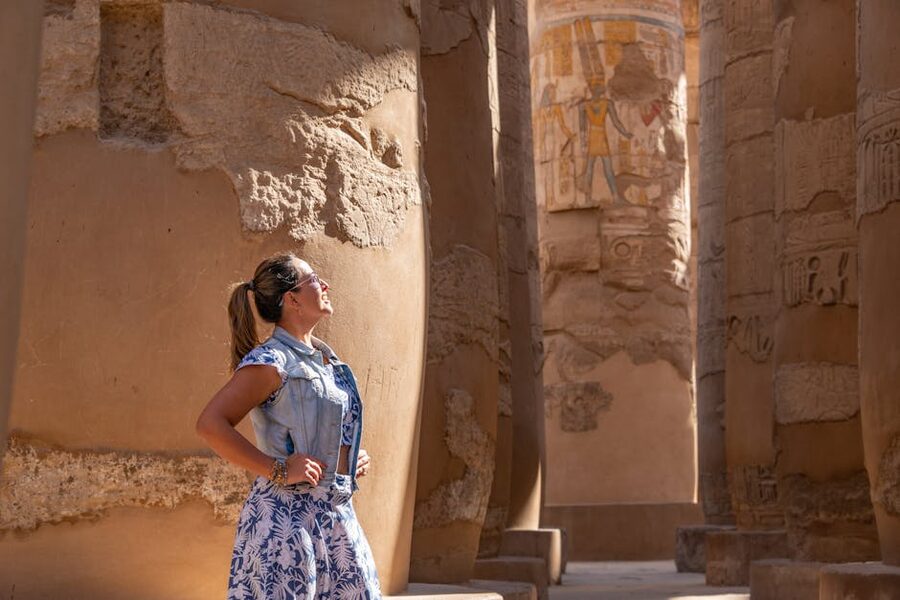
Karnak Temple columns hieroglyphs Egypt
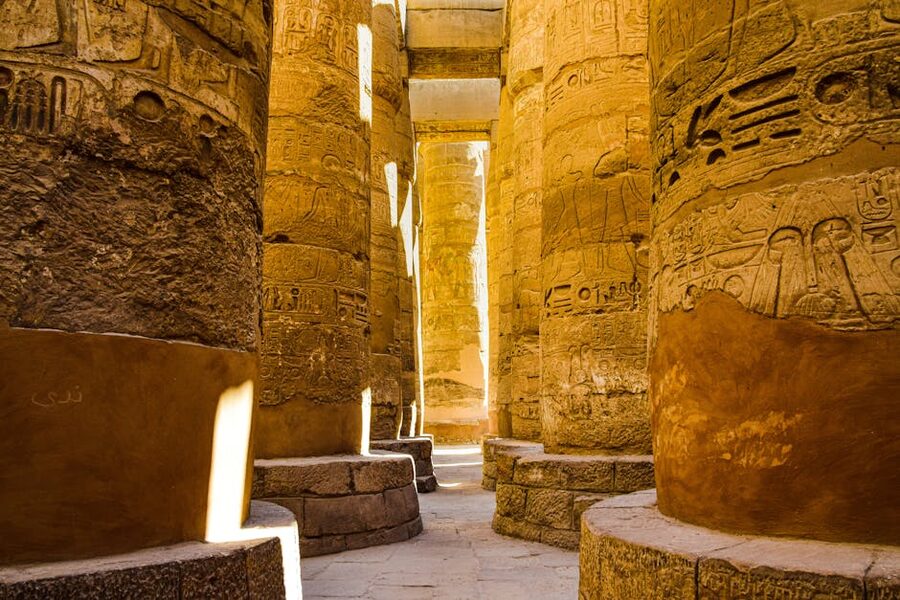
The hypostyle hall at Karnak Temple. 134 columns, each 21 metres tall, covered in original hieroglyphic carvings. The tallest columns’ capitals are wide enough to fit 50 people on top. Standing beneath them and looking up is one of the most disorienting experiences in world architecture. Photo by AXP Photography / Pexels

Tour prices range from $21 for the budget small-group excursion to $280 for the premium guided day with hotel transfers. The mid-tier GYG tour at $99 hits the sweet spot: proper guide, air-conditioned coach, lunch included, full day coverage.

The drive each way is 4 hours on the Hurghada-Safaga-Qena highway. Modern road, checkpoints common (Egypt’s western desert region has had security restrictions — valid passport essential), bathroom breaks every 2 hours. Bring snacks, water, sun protection.
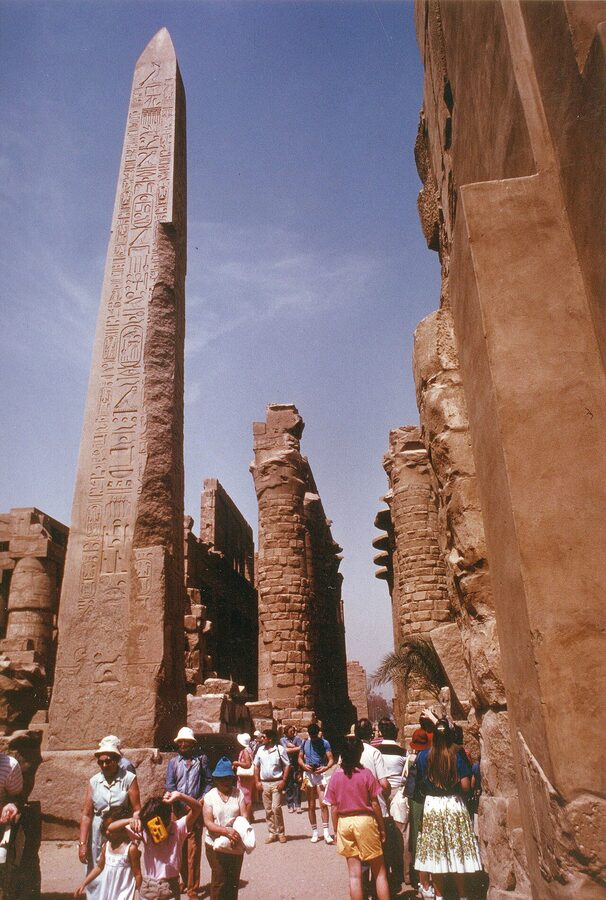
Karnak Temple Luxor historic view
Karnak Temple from a 1984 photograph. The site covers 200 hectares — the largest religious complex ever built. Construction spanned 2,000 years (from 2,000 BC to 30 AD), with every pharaoh adding chapels, pylons, and obelisks. No single plan; a cumulative vision. Photo by Mike McBey / Wikimedia Commons (CC BY 2.0)

In a Hurry? Our Top Picks

Small Group Excursion — $21 Book Now →
Best value — 637 five-star reviews. Bus to Luxor, Valley of Kings, Karnak, and return.
Valley of Kings, Hatshepsut & Karnak Day Trip — $99 Book Now →
Full east and west bank tour with Egyptologist guide. 375 four-star reviews.
Guided Day Trip with Hotel Transfers — $280 Book Now →
Premium private option — hotel pickup, private guide, flexible pacing.

Valley of the Kings

The west bank of the Nile at Luxor holds the Valley of the Kings — the royal necropolis where pharaohs of the New Kingdom (1,550-1,077 BC) were buried. 63 known tombs, 25 of which are open to visitors on a rotating schedule to protect the 3,000-year-old painted interiors.
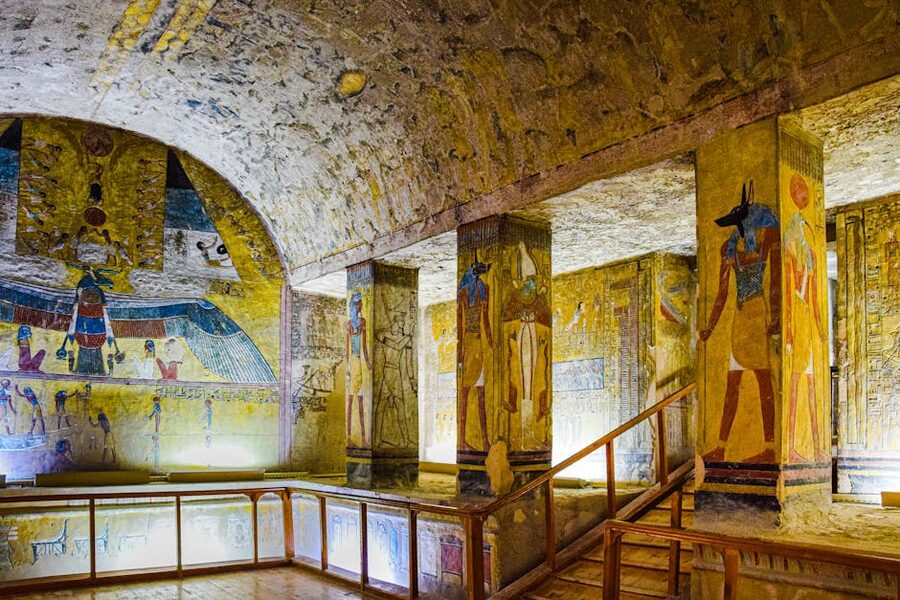
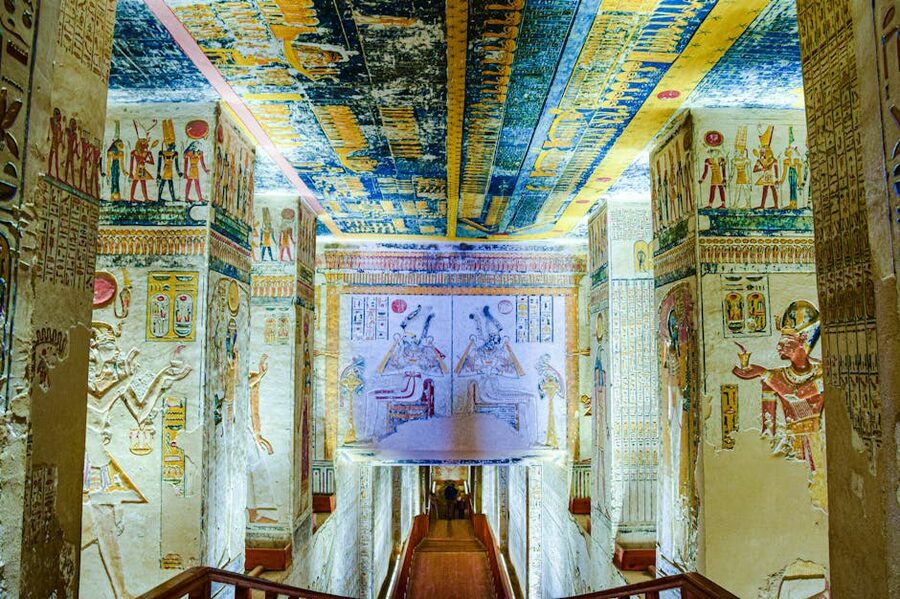
Valley of the Kings tomb paintings
Ancient Egyptian tomb wall paintings — still vivid after 3,000+ years. The colours were made from natural pigments: red from iron oxide, blue from azurite, yellow from orpiment, white from calcium carbonate. Sealed in dark tombs with stable temperatures, they’ve survived remarkably. Photo by AXP Photography / Pexels
Egyptian tomb decorated corridor
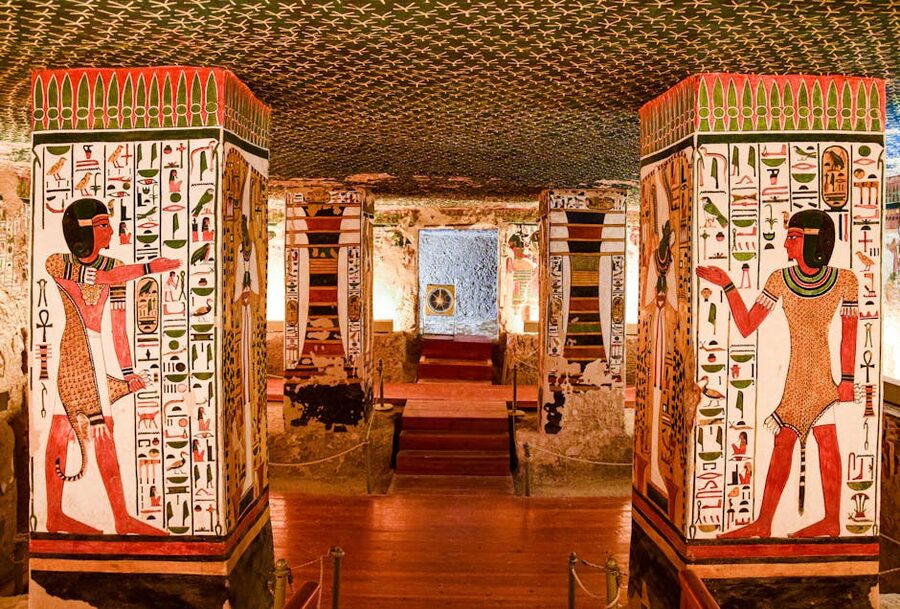
A decorated corridor inside one of the tombs. Most tombs open to visitors have similar layouts — a descending corridor, one or two antechambers, then the burial chamber. Wall paintings depict the pharaoh’s journey through the afterlife, passages from the Book of the Dead, and appeals to various gods. Photo by AXP Photography / Pexels
Luxor tomb painted columns
Painted columns inside an ancient tomb. Photography is permitted but flash is not — the light degrades the pigments. The colours you see here are similar to what Howard Carter saw when he opened Tutankhamun’s tomb in 1922 after 3,300 years sealed. Photo by AXP Photography / Pexels

Standard valley entry includes 3 tombs. Tutankhamun’s tomb (KV62) costs extra (300 EGP / $6 additional). Most tours include standard entry; the Tut extension is an optional add-on you decide on-site.

Which tombs are open varies day to day. Common choices: Ramses III, Ramses VI (the one with the great ceiling), Merneptah, Thutmose III. Each gives you 10-15 minutes inside.

Karnak Temple Complex

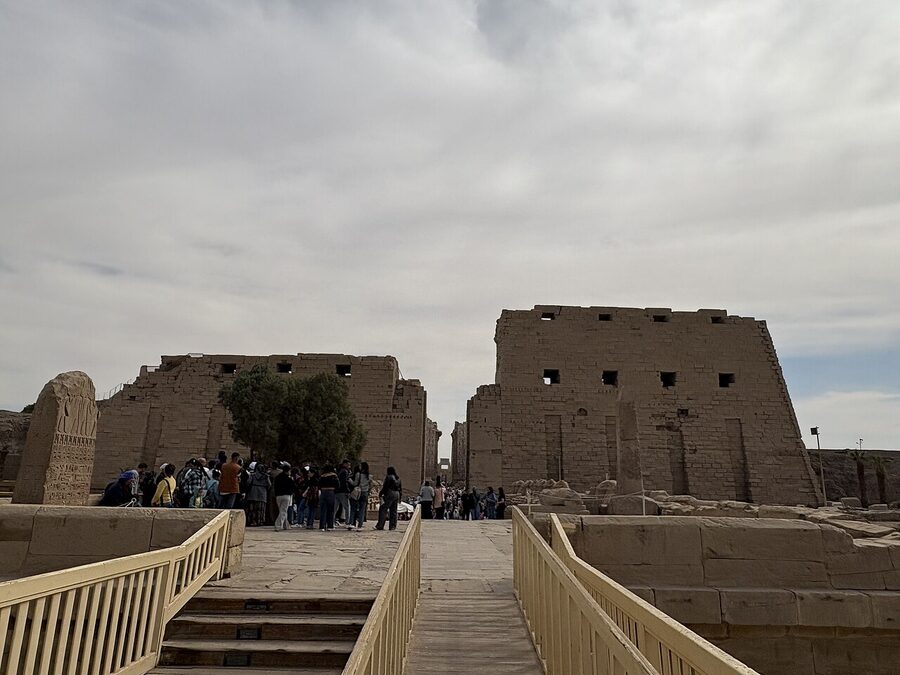
Karnak is the largest religious structure ever built — 200 hectares of temples, obelisks, pylons, and sacred lakes. Construction spanned 2,000 years from the Middle Kingdom through the Ptolemaic period. Every pharaoh added something; the cumulative result is overwhelming.
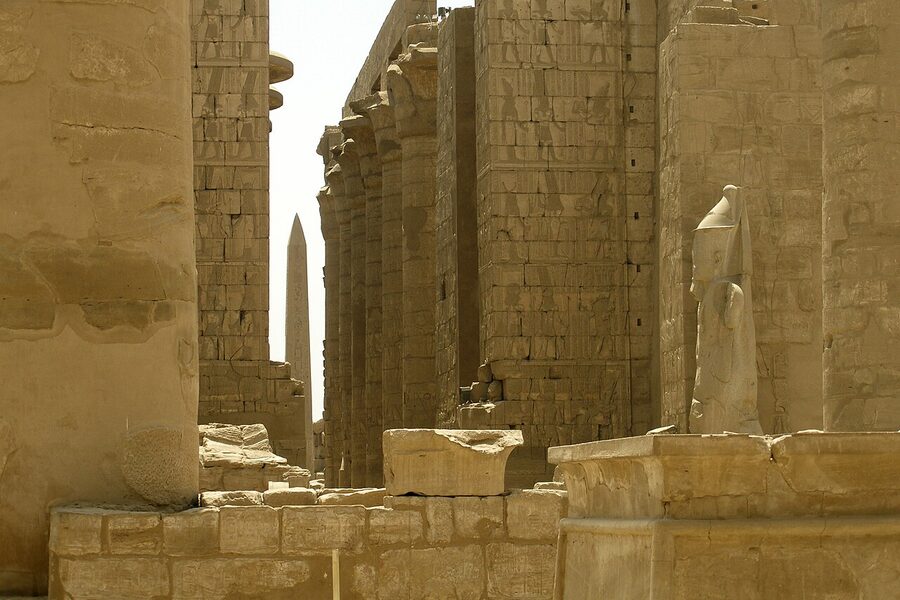
Karnak Temple interior columns
Interior of the Great Hypostyle Hall at Karnak. 5,000 square metres, 134 columns, original stone painted in bright colours (mostly faded today). Pharaohs Seti I and Ramses II were the primary builders. Engineering-wise, it’s extraordinary for its age. Photo by Vyacheslav Argenberg / Wikimedia Commons (CC BY 4.0)
Karnak temple complex 4
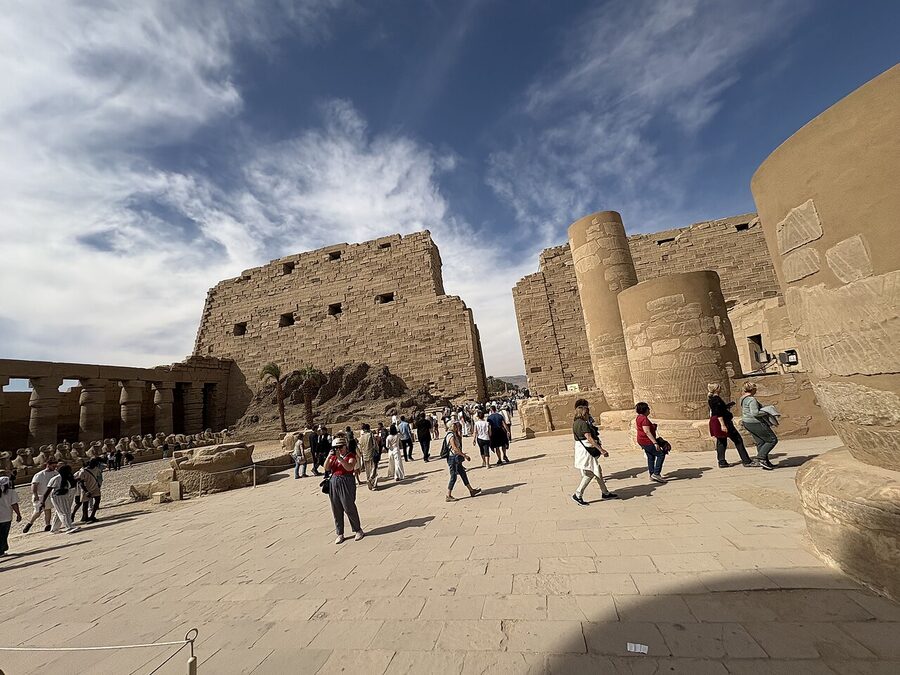
A view within the complex. Walking Karnak takes 2-3 hours minimum. The main precinct of Amun-Ra is the headline section; the precincts of Mut and Montu are also within the complex but less often visited. Photo by Hamerani / Wikimedia Commons (CC BY-SA 4.0)
Templo de Karnak Luxor
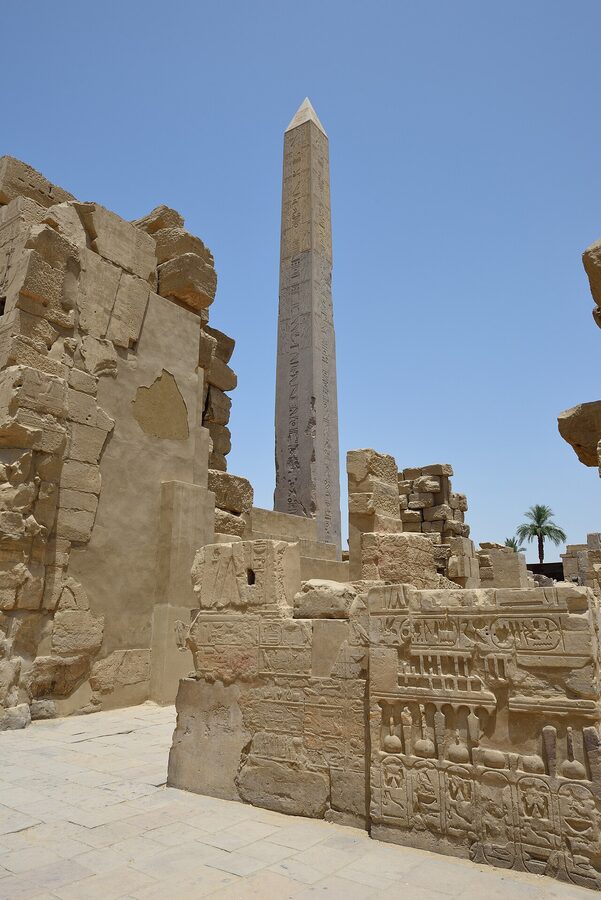
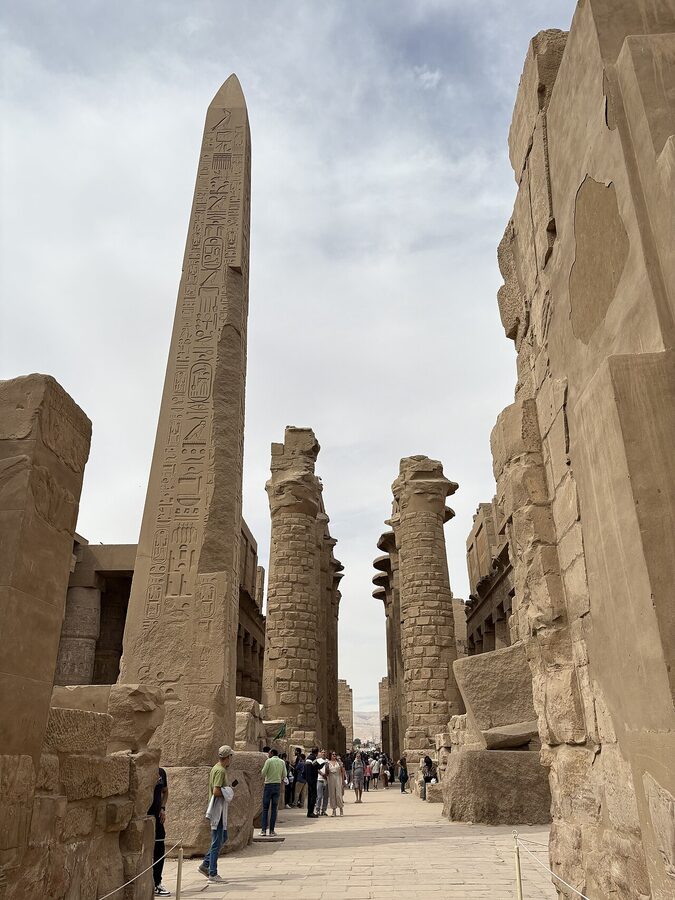
Another Karnak angle. The obelisks standing throughout the complex are single-piece granite — quarried at Aswan, floated down the Nile, and erected without modern machinery. The tallest standing obelisk here is 29 metres. Photo by Diego Delso / Wikimedia Commons (CC BY-SA 4.0)
Karnak Temple Complex Egypt 01
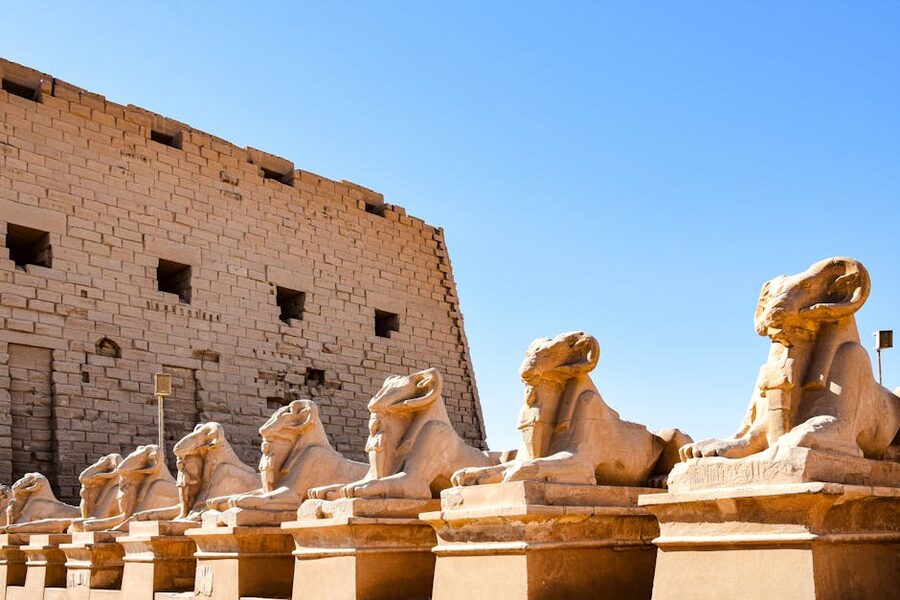
The ram-headed sphinxes flanking the processional avenue. These represent the god Amun and lined the path from Karnak to Luxor Temple — originally 3 kilometres of alternating sphinxes. Restoration has opened much of the avenue to walking in recent years. Photo by wala / Wikimedia Commons (Public Domain)
Karnak Temple Complex Egypt 06
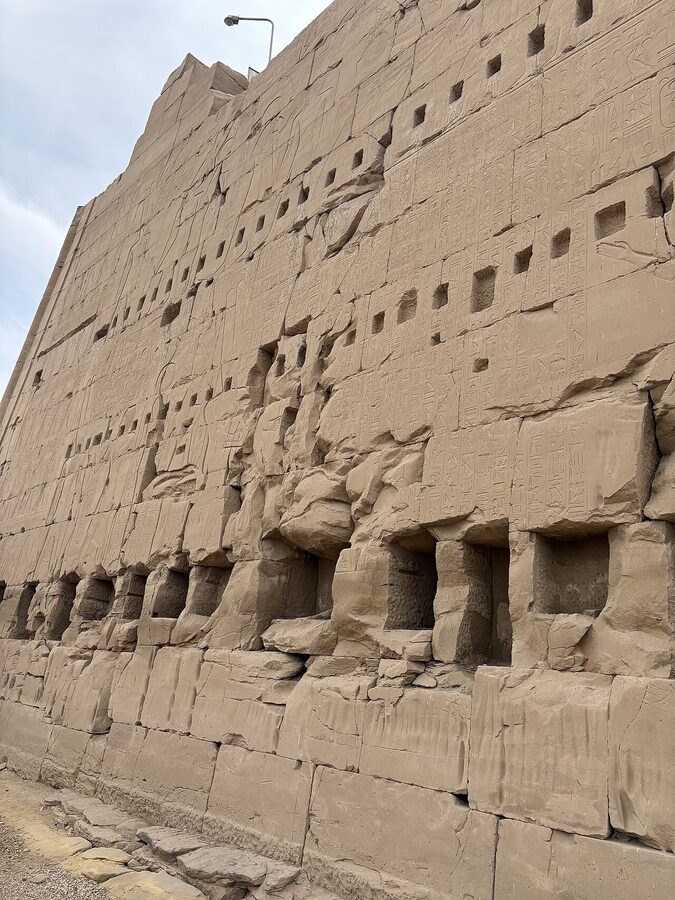
Detail of Karnak’s carvings. The hieroglyphic texts cover every surface — temples, columns, walls, floors. Egyptologists can read them fluently; most visitors just appreciate the visual density. Some tours include hieroglyph decoding in the guide’s script. Photo by wala / Wikimedia Commons (Public Domain)
Karnak Temple Complex Egypt 76
The sacred lake at Karnak. Priests used the lake for ritual bathing before entering the main temple. Today it’s drained except for display purposes but the size gives you an idea of the complex’s original scale — everything was massive. Photo by wala / Wikimedia Commons (Public Domain)
Karnak Temple Complex Egypt 18
More of the structural scale. Walking through Karnak you experience the real size — most photos crop out the true proportions. The pylons (temple gateways) reach 40 metres high. The site has 10 major pylons in total. Photo by wala / Wikimedia Commons (Public Domain)
Karnak Temple Complex Egypt 43
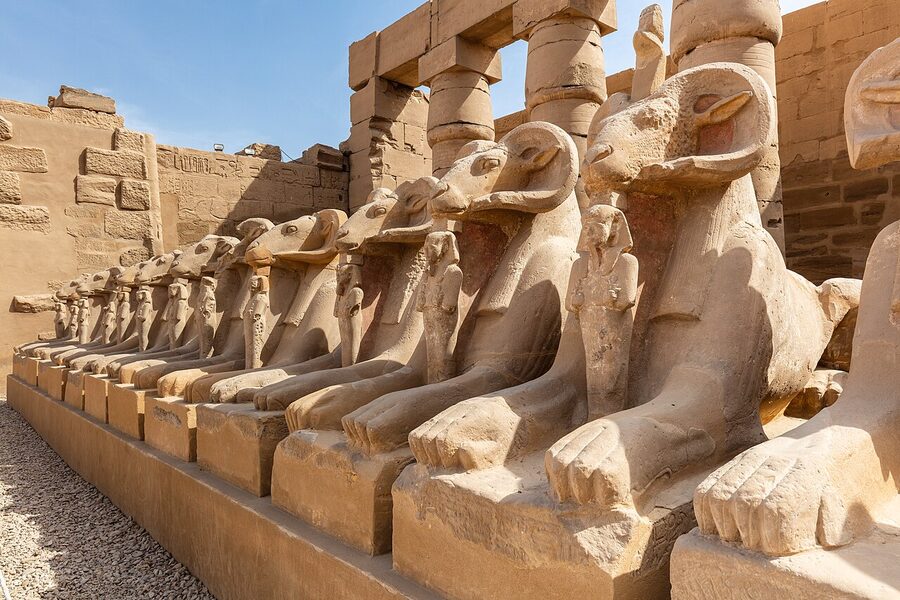
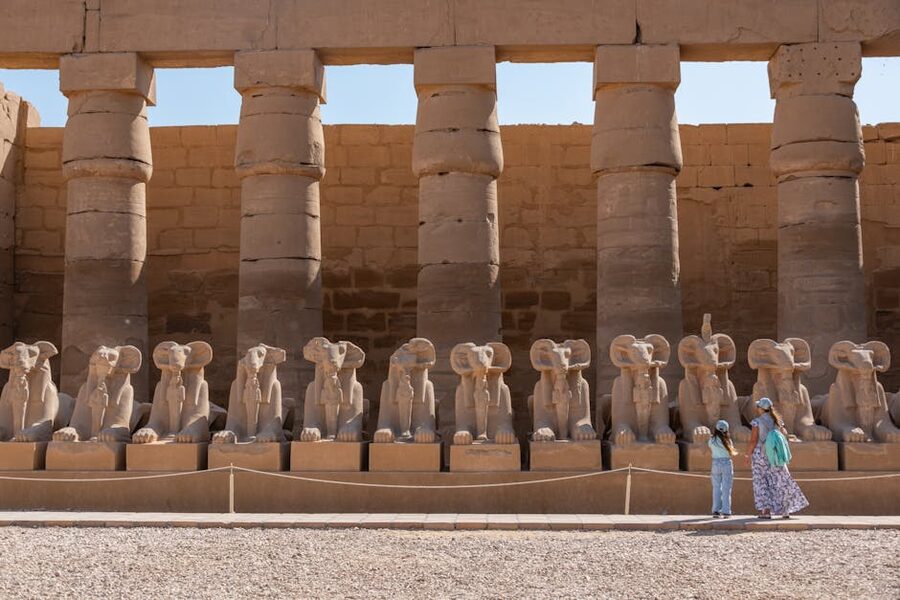
A corridor of ram-headed sphinxes at Karnak. Each sphinx guards a small figure between its paws — representing the pharaoh. The symbolism: the pharaoh is protected by the god (Amun). There are dozens of these along the processional route. Photo by wala / Wikimedia Commons (Public Domain)
Karnak Temple Complex Egypt 65
An obelisk with original carvings. Queen Hatshepsut’s obelisk at Karnak is 29 metres tall and weighs roughly 320 tonnes — carved from a single block of granite at Aswan. How the Egyptians transported and erected it without modern machinery remains partially unresolved. Photo by wala / Wikimedia Commons (Public Domain)
Karnak Temple ancient sphinx statues
The sphinx statues up close. The processional road from Karnak to Luxor Temple was lined with 1,350 sphinxes — all restored or excavated in the modern era. Walking the entire 3km between the two temples is now possible on foot. Photo by AXP Photography / Pexels
Karnak Temple sunlit columns
Sunlit columns of the hypostyle hall. Morning is the best time for this shot — the angled light reaches deep into the space and catches the carved details. By noon the light is too high; by late afternoon it’s too shadowed. Photo by AXP Photography / Pexels
Karnak Temple ram-headed sphinx
Ram-headed sphinxes in sequence. Each is slightly different from the next — not mass-produced. Some still have their small protective figures intact; others are missing the pharaohs that stood between their paws. Time and vandalism have done their work. Photo by Diego F. Parra / Pexels

Luxor Temple

Separate from Karnak but connected by the processional sphinx avenue, Luxor Temple sits in the middle of the modern city. It’s smaller than Karnak but arguably more atmospheric — especially at night when it’s illuminated.
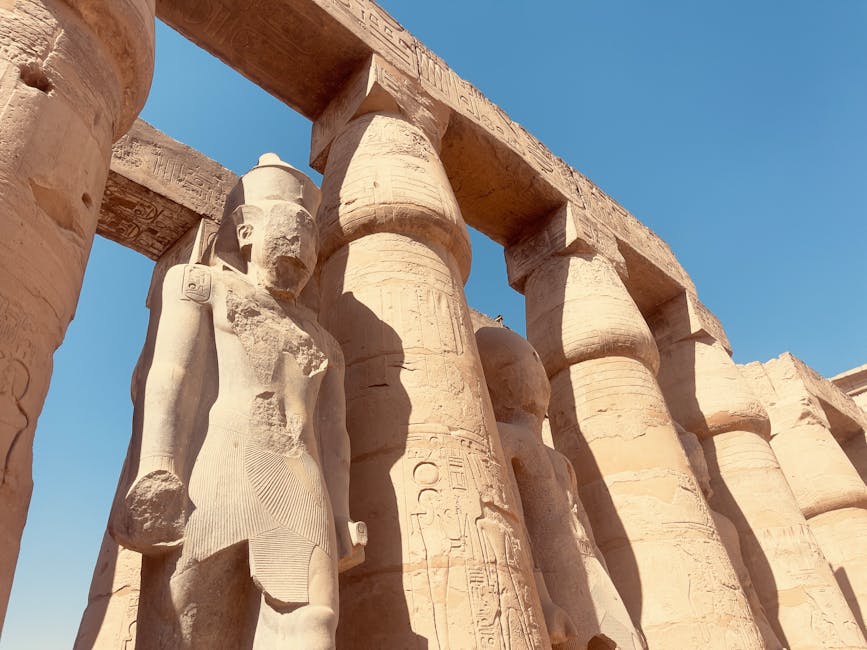
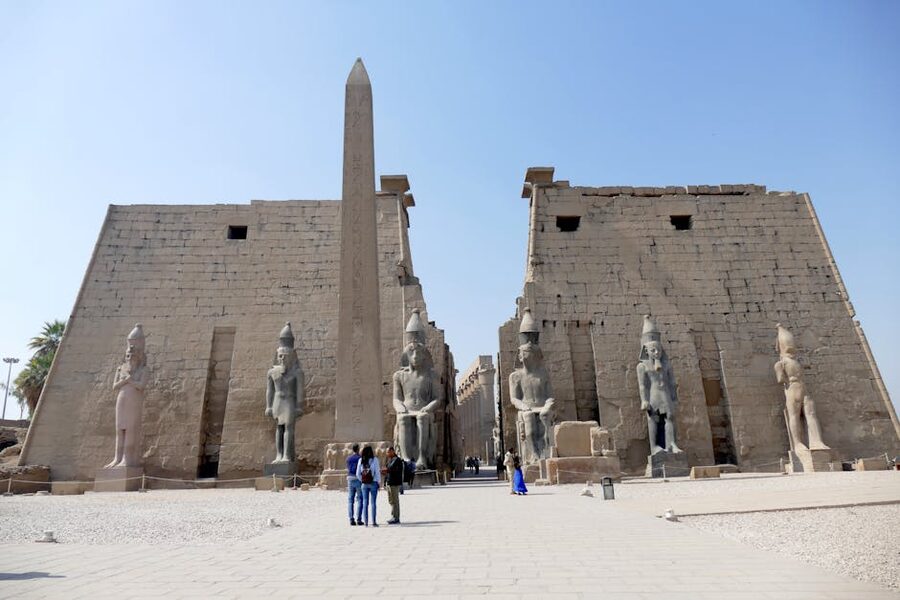
Luxor Temple statues and columns
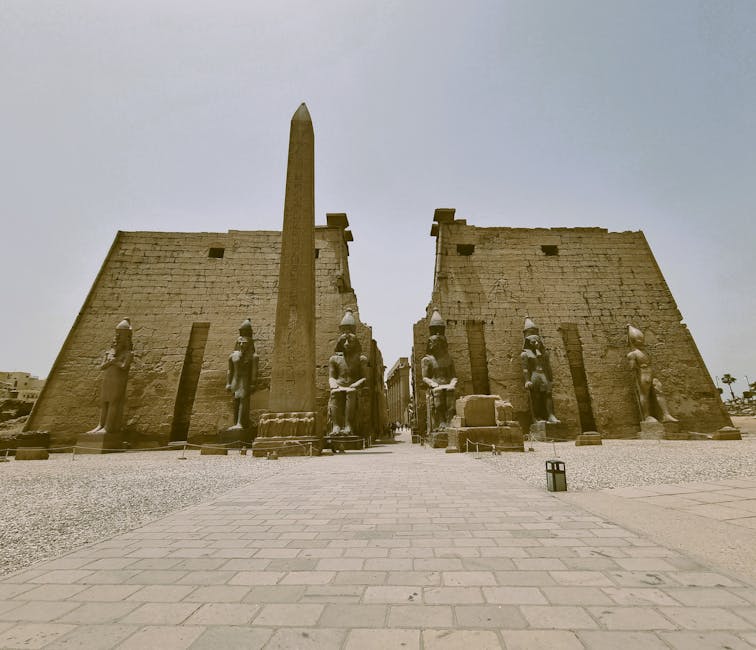
Luxor Temple exterior with its famous colossal seated statues. Originally there were six statues flanking the entrance; two remain prominent. The obelisk that stood on the left now stands in Place de la Concorde in Paris (gift from Muhammad Ali to France in 1831). Photo by Atman Bouba / Pexels
Luxor Temple entrance statues
Visitors at the Luxor Temple entrance. The statue on the left is missing its crown; the original fell in an earthquake in the 1800s. Modern reconstruction effort is ongoing — some decorative elements you see have been added since 2010. Photo by Jennifer / Pexels
Luxor Temple carved columns sunlight
The interior columns at Luxor Temple. Afternoon sunlight through the broken roof sections creates dramatic shadow patterns. The original roof collapsed centuries ago; modern visitors see the columns open to the sky. Photo by Diego F. Parra / Pexels
Luxor Temple obelisks
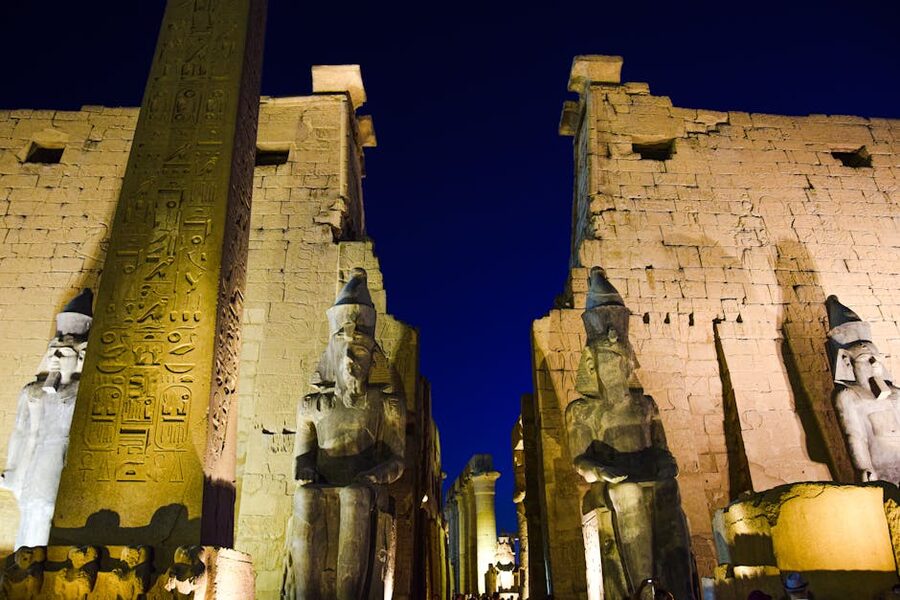
The remaining obelisk and statues at Luxor Temple entrance. The temple is particularly dramatic at dusk when the lighting transitions. Most day tours only see it in daylight; the night-illuminated version is a separate experience. Photo by Francesco Albanese / Pexels
Luxor Temple night illuminated
Luxor Temple at night. The modern lighting system illuminates individual statues and columns in dramatic spotlit sequences. The temple stays open until 9pm most nights — day-trip tours from Hurghada rarely stay this late, but overnight visitors should prioritize this. Photo by AXP Photography / Pexels
Luxor Temple sunset illuminated
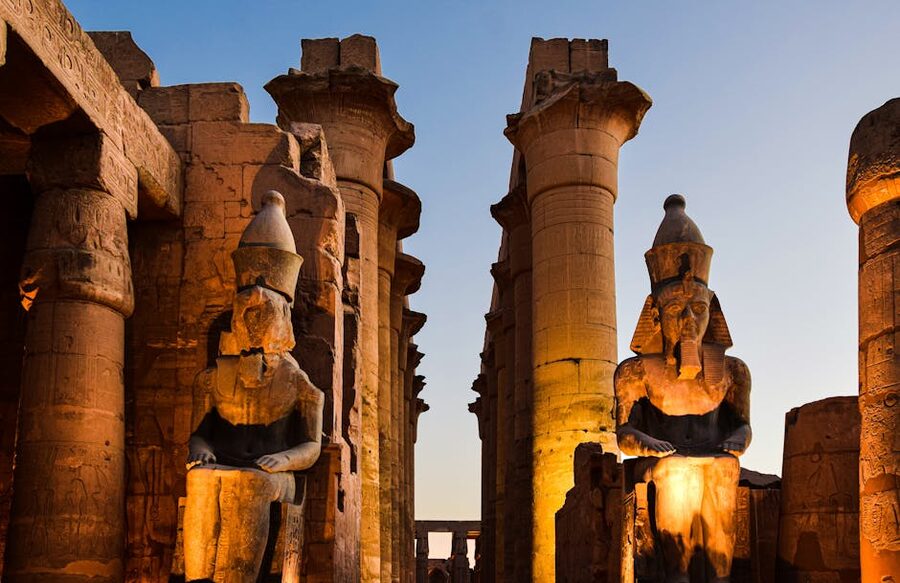
The sunset transition at Luxor Temple. The Nile is a few hundred metres away; the temple catches the last golden light across the river. After dark the spotlights turn on and the mood shifts. Photo by AXP Photography / Pexels

Hatshepsut Temple

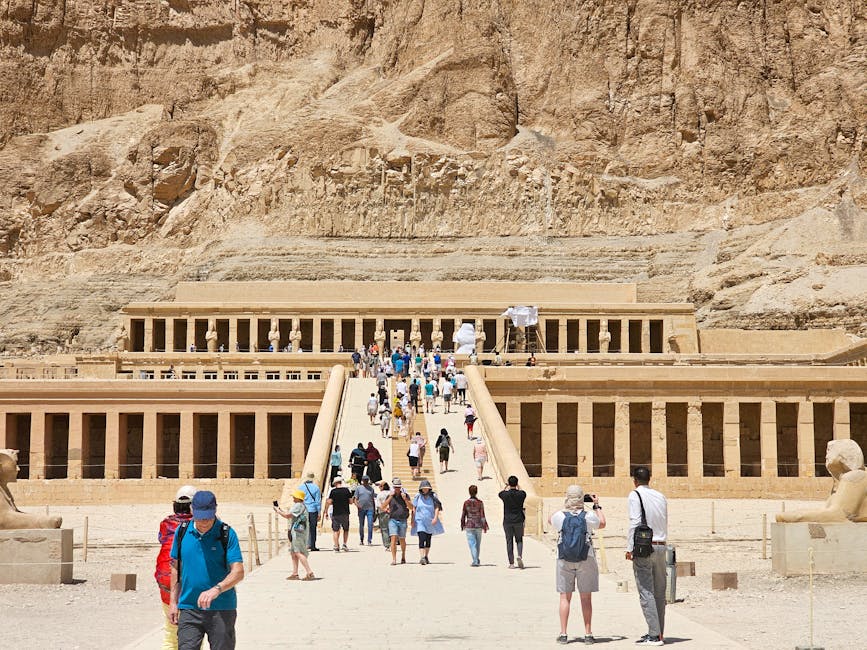
The mortuary temple of Queen Hatshepsut, built into a cliff face on the west bank of the Nile. Architecturally unique — terraced, built into living rock, partly carved into the mountain. One of the most photographed ancient Egyptian structures.
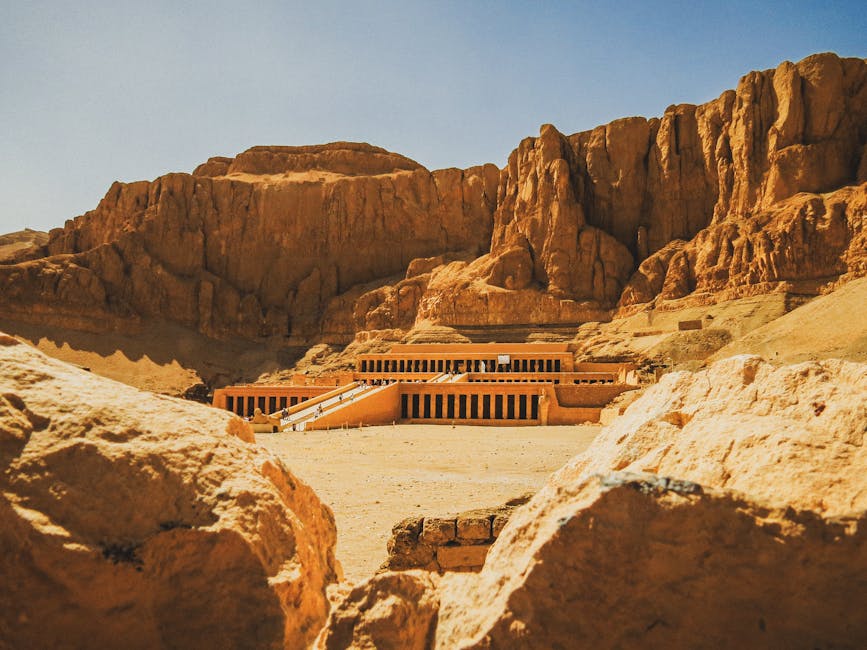
Hatshepsut Temple Luxor rocky desert
Hatshepsut Temple against the cliff backdrop. Built around 1,479-1,458 BC for Queen Hatshepsut — one of Egypt’s rare female pharaohs. The three-tiered colonnade design is unlike any other Egyptian temple. Partly destroyed and rebuilt multiple times over the centuries. Photo by Mert Çelik / Pexels
Hatshepsut Temple visitors
Visitors exploring the temple. Some original painted reliefs remain — particularly on the middle terrace depicting Hatshepsut’s expedition to the Land of Punt. The colours are reduced but the details of ships, exotic animals, and African traders are visible. Photo by AHAD HASAN / Pexels

Our Recommended Tours

1. Small Group Excursion to Valley of the Kings — $21

Small group Luxor excursion
Best-value Luxor tour — 637 five-star reviews. The budget way to see the highlights. Photo by Vyacheslav Argenberg / Wikimedia Commons (CC BY 4.0)

Highest-reviewed Hurghada-to-Luxor day trip — 637 five-star reviews. Small group (12-15 people) bus to Luxor, Valley of the Kings entry (3 tombs), Karnak Temple, Luxor Temple exterior, return to Hurghada. 15+ hour day total.

At $21, this is genuinely the best-value day trip across all of Morocco and Egypt. Our full review of this Luxor excursion covers the itinerary and what to expect physically after the long drive.

2. Valley of Kings, Hatshepsut & Karnak Full Day — $99

Valley of Kings Hatshepsut Karnak full day tour
The mid-tier option with Hatshepsut added. Covers both east and west banks with Egyptologist guide. 375 four-star reviews. Photo by Mert Çelik / Pexels

Mid-tier GetYourGuide tour — 375 four-star reviews. Includes Valley of the Kings (3 tombs), Hatshepsut Temple, Karnak Temple, Luxor Temple, and lunch. Egyptologist guide throughout. 15-hour day.

Worth the $78 premium over option 1 for the Hatshepsut addition, the Egyptologist guide, and the lunch. Our full review of the full-day tour compares the two options directly.

3. Guided Day Trip with Hotel Transfers — $280

Luxor guided day trip hotel transfers
Premium private option. Hotel pickup, private Egyptologist guide, flexible pacing, lunch at upscale venue. Photo by AXP Photography / Pexels

Premium private tour — hotel pickup, private Egyptologist guide, flexible pacing. You can linger at the sites that interest you most. Lunch at an upscale venue overlooking the Nile.

Worth the premium if you’re travelling as a couple or small group and want a curated experience. Our review of this private tour compares it to the group options and explains when the premium is worth it.

Practical Tips

Pre-dawn start. 4am pickup is standard. Go to bed early the night before. Some tours offer 3am departures for extra time in Luxor — consider only if you’re OK with very long days.

Bring cash for extras. Tut’s tomb (300 EGP), bathroom access at tourist sites (10-20 EGP), tips for guide and driver (50-100 EGP each). 500-1,000 EGP total ($10-20) for the day.

Temperature extremes. Summer Luxor hits 45°C. Winter mornings can be 5°C with 20°C afternoons. Layers for winter, lightweight sun protection for summer.

Photography. Outside shots are unrestricted. Tombs allow photography but no flash. Some specific tombs have photography bans (check signage). Bring a camera with good low-light capabilities for interiors.

Tomb selection. Which 3 tombs are open varies. Tutankhamun’s tomb (extra fee) is famous but physically small. Ramses VI has the most elaborate painted ceiling. Seti I (extra fee, sometimes closed) has the best overall preservation.

Lunch logistics. The $21 tour includes a lunch stop but not the meal itself — expect to pay 150-200 EGP at the stop. The $99 tour includes lunch. The $280 tour has premium lunch.

Luxor Day Trip vs Alternatives

vs Nile Cruise from Aswan: The 3-4 day Nile cruise covers the same sites plus much more, at a comfortable pace, with overnight stays. Infinitely better than a day trip for actually appreciating the region. Only do the Hurghada day trip if you’re time-constrained.

vs Cairo Nile Dinner Cruise: Cairo cruise is an evening entertainment experience in Cairo. Luxor day is full-day historical sites from Hurghada. Different experiences in different cities.

vs Giza Pyramids from Cairo: Giza is Lower Egypt (Cairo area). Luxor is Upper Egypt (500+ km south). Both essential for Egyptian heritage; different types of sites.

vs Luxor Balloon Ride: The balloon gives you the aerial view of the same sites. If you’re staying in Luxor, book both. From Hurghada, the balloon requires overnight in Luxor anyway.

vs Orange Bay from Hurghada: Orange Bay is beach/snorkelling day. Luxor is cultural day. Do both on a longer Hurghada trip — different entirely.

Is the Luxor Day Trip Worth It?

For $21, undeniably yes — you’re seeing some of humanity’s most significant archaeological sites for a fraction of the cost of equivalent tours in Cairo. The 15-hour day is long but the content justifies it.

The main caveat: if you can extend to 2 days (overnight in Luxor), do it. The night-illuminated Luxor Temple, the sunrise balloon ride, and more time at each site make a huge difference.

Building Luxor Into Your Egypt Trip

If you’re on the Red Sea coast (Hurghada, Sharm el-Sheikh, El Gouna), the Luxor day trip is the essential cultural supplement to your beach holiday. 1 long day gets you the highlights.

If you have more time, overnight in Luxor: Day 1 Valley of the Kings + Hatshepsut + Luxor Temple at night, Day 2 sunrise balloon + Karnak + return. Two days is noticeably better than one.

Full Egypt itinerary: Cairo (Pyramids + Museum) 2-3 days, Nile cruise from Aswan to Luxor 3-4 days, if based in Hurghada supplement with a day trip, optional Red Sea beach extension (Orange Bay, Sharm adventures). For the complete picture, the 3-day Nile cruise is the transformative option — the day trip is the efficient compromise. Recovery afterwards: the long drive back to Hurghada usually finishes around midnight, so plan nothing for the next morning.