
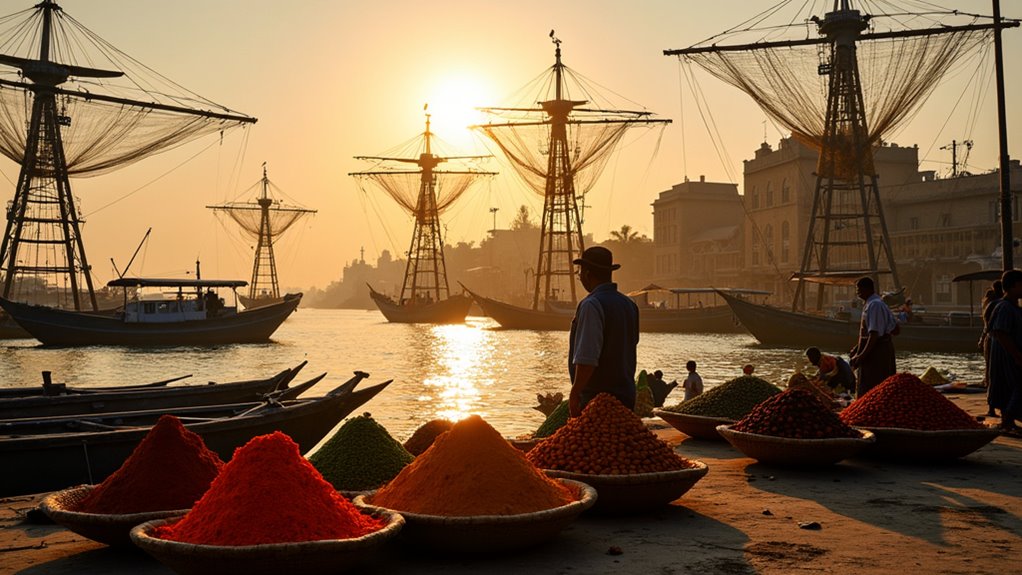
Kochi’s centuries-old Chinese fishing nets stand as living monuments to Kerala’s maritime trading legacy, while nearby spice markets fill the air with cardamom and black pepper—the same aromatic treasures that once drew Portuguese and Dutch merchants to these shores. Travelers can witness fishermen operating these massive cantilevered nets using techniques unchanged for 600 years, then haggle for fresh catches and exotic spices just steps away. These experiences reveal why this coastal city remains India’s most authentic cultural crossroads.
- Watch the Ancient Chinese Fishing Nets in Action at Fort Kochi Beach
- Explore the Aromatic Jew Town Spice Market
- Stroll Through the Historic Streets of Mattancherry
- Visit the Dutch Palace and Its Stunning Murals
- Experience Fresh Seafood Dining Along the Waterfront
- Take a Sunset Cruise Through Kerala’s Backwaters
- Discover the Jewish Heritage at Paradesi Synagogue
- Shop for Local Handicrafts and Antiques in Heritage Markets
Watch the Ancient Chinese Fishing Nets in Action at Fort Kochi Beach

As the morning mist clears over Fort Kochi Beach, travelers can witness one of India’s most mesmerizing fishing traditions without spending a rupee. The ancient Chinese fishing nets, or Cheena Vala, have operated here since the 1400s using the same cantilever system introduced by Chinese explorer Zheng He.
Head to Vasco da Gama Square‘s narrow walkway for prime viewing. Watch teams of up to six fishermen rhythmically lower these 10-meter-high teak structures into the Arabian Sea, then raise them using stone counterweights. The process is hypnotic and offers authentic culture.
Visit during early morning or evening for ideal fishing activity. Only seven nets remain after Cyclone Ockhi‘s destruction, making this experience increasingly precious. These iconic structures have transitioned from a simple fishing accessory to a major visual landmark that attracts visitors from around the world. Like other underrated cities across Asia, Kochi offers travelers authentic experiences away from the typical tourist crowds.
Purchase fresh catches directly from fishermen for budget-friendly local seafood.
Explore the Aromatic Jew Town Spice Market
Where else can travelers enjoy 2,000 years of spice trading history while filling their bags with Kerala’s finest cardamom, black pepper, and cinnamon for a fraction of Western prices? Jew Town’s aromatic warehouses offer exactly this experience, where centuries-old trading practices continue daily from 5:00 AM to 9:00 PM.
Workers actively sort and pack spices while trucks deliver fresh inventory to family-run businesses that’ve dominated Kerala’s spice trade for generations. The sensory overload of nutmeg, turmeric, and “black gold” pepper creates an immersive cultural experience. Much like the imperial experiences that define Hue’s cultural significance, these spice markets represent centuries of preserved traditions.
Visit on Sundays for quieter browsing, and prioritize quality over price when comparing vendors. Buy in bulk for better deals, but guarantee you’re getting authentic Kerala-sourced products from this living museum of global commerce. Beyond spices, visitors can explore antique shops filled with historical treasures and colonial-era artifacts.
Stroll Through the Historic Streets of Mattancherry
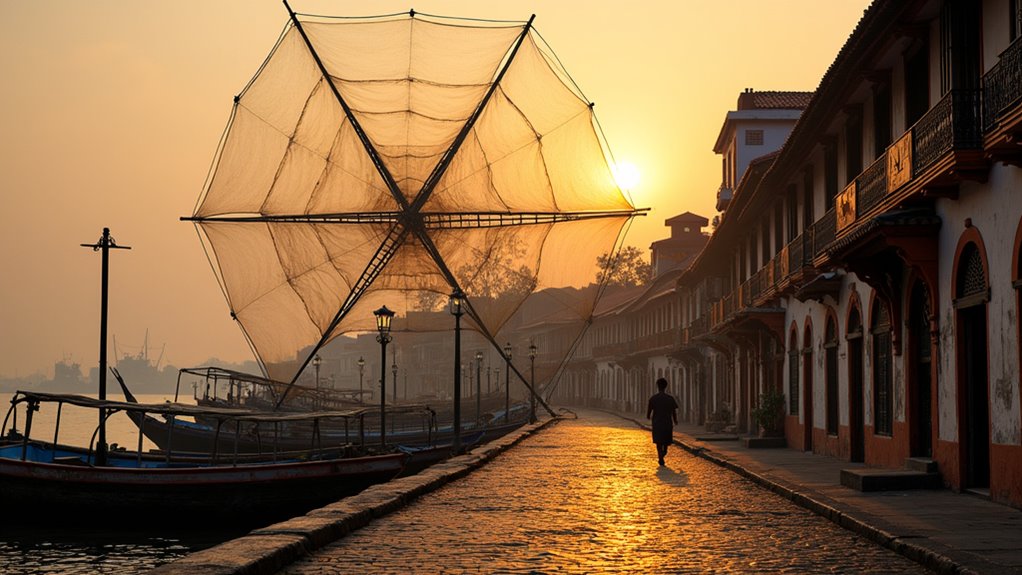
Just beyond the spice warehouses, Mattancherry’s cobblestone streets reveal five centuries of multicultural history where Portuguese traders, Dutch colonists, Cochin Jews, and local Keralites created one of India’s most fascinating cultural crossroads.
Narrow lanes showcase colonial architecture blending Kerala, Dutch, and Jewish influences alongside working-class neighborhoods where diverse communities still live harmoniously.
The Dutch-built clock tower displays Hebrew, Roman, and Malayalam numerals—a monument to the area’s multicultural heritage.
Visitors can explore religious sites including the copper-roofed Chempittapally mosque, Holy Cross Church, and Kochi Jain temple within walking distance. The historic Jew Town features antique shops housed in former dwellings, selling everything from carved wooden furniture to vintage photographs that reflect the area’s diverse cultural heritage.
Street photography opportunities abound as traditional architecture frames daily life scenes. Like Kaohsiung’s transformation into vibrant art districts, these historic neighborhoods showcase how port cities can preserve cultural heritage while embracing contemporary creativity.
Budget travelers appreciate this free walking experience that offers authentic culture beyond tourist attractions.
Visit the Dutch Palace and Its Stunning Murals
While wandering through Mattancherry’s historic lanes, travelers can’t miss the Dutch Palace—a Portuguese-built royal residence from 1555 that showcases Kerala’s most spectacular temple murals. Despite its name, the Dutch merely renovated this quadrangular Nālukettu-style palace after ousting the Portuguese in 1663.
The real treasure lies inside: vibrant tempera murals depicting scenes from the Mahabharata and Ramayana cover the walls in rich, warm colors. Visitors can explore the coronation hall, royal bedchamber, and dining hall with its elaborately carved wooden ceiling.
The unique flooring, crafted from burned coconut shells and lime, resembles polished black marble. The palace’s construction utilizing laterite blocks and lime mortar demonstrates the traditional Kerala building methods that have ensured the structure’s remarkable durability through centuries of monsoon rains. Like Taiwan’s historic capital of Tainan, this palace represents centuries of cultural preservation and architectural heritage.
At just ₹5 entry fee, it’s budget-friendly culture. The central courtyard houses a temple dedicated to the royal family’s deity, offering insight into Kerala’s royal heritage and artistic traditions.
Experience Fresh Seafood Dining Along the Waterfront
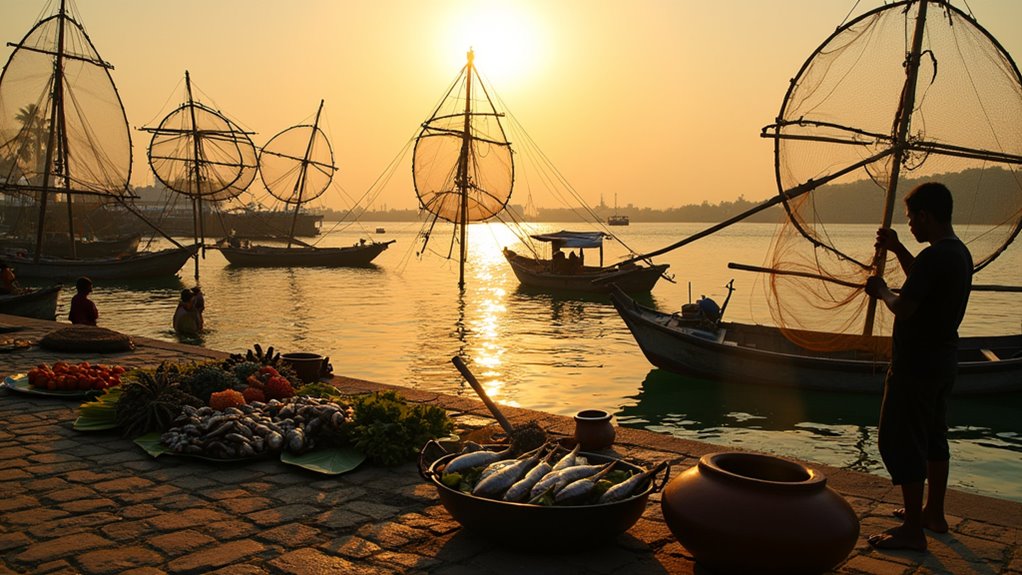
After exploring Kochi’s historic sites, travelers discover that the city’s waterfront transforms into a culinary paradise where fresh Arabian Sea catches meet traditional Kerala spices.
The Rice Boat at Taj Malabar Resort offers dining aboard a traditional Kettuvalam with panoramic water views, while Fort Cochin Seafood Specialty Restaurant provides romantic candlelit ambiance perfect for special occasions.
Budget-conscious diners shouldn’t miss Hotel Seagull’s outdoor waterfront seating, where they’ll watch local fishermen while savoring grilled seasonal fish.
Ginger House combines museum-like interiors with quality seafood menus. Essential dishes include fish moilee, Alleppey fish curry, and coconut-based prawn preparations served with appam or brown rice.
Most restaurants source daily catches from local fishermen, ensuring exceptional freshness while highlighting Kerala’s rich marine biodiversity.
Like Ho Chi Minh City’s vibrant chaos of street food and motorbikes, Kochi’s waterfront dining scene pulses with energy as vendors, fishermen, and travelers converge in a beautifully orchestrated dance of commerce and culture.
Take a Sunset Cruise Through Kerala’s Backwaters
Beyond the waterfront restaurants, travelers can extend their connection with Kerala’s maritime culture by boarding traditional houseboats for sunset cruises through the legendary backwaters. Two-hour sunset cruises operate from 4:30 PM to 6:30 PM, perfectly timed for golden hour viewing.
One-bedroom houseboat packages start at ₹6,000 ($72 USD) including evening tea and snacks, while three-bedroom options cost ₹8,000 ($96 USD). Standard houseboats accommodate eight passengers, with additional guests charged ₹350-₹400 each. These vessels are modified kettuvallams, traditionally used for cargo transport and built with eco-friendly materials like jackfruit wood, bamboo, and coconut fiber.
Budget-conscious travelers can choose simple shikara canoes for three-hour experiences or utilize State Water Transport Department ferries between Alleppey and Kottayam. These houseboat adventures provide an immersive way to explore Kerala’s intricate network of canals, rivers, and lagoons that make up this unique ecosystem.
Online booking offers fifty percent discounts compared to government rates, requiring fifty percent advance deposit with free cancellation available up to twenty-four hours before departure.
Discover the Jewish Heritage at Paradesi Synagogue
As travelers explore Kochi’s diverse cultural tapestry, the 16th-century Paradesi Synagogue in Mattancherry stands as Kerala’s most significant monument to Jewish heritage. Built in 1568 by Jewish merchants on land gifted by the Raja of Kochi, it’s the Commonwealth’s oldest active synagogue.
Visitors can admire the hand-painted Cantonese tiles, Belgian chandeliers, and carved teak ark housing Torah scrolls encased in silver and gold. The three-story clock tower from 1761 displays unique Indo-colonial architecture with Hebrew inscriptions.
Entry costs minimal fees, making it budget-friendly. The synagogue houses ancient copper plates detailing privileges granted to Kochi’s Jewish community. Like Guilin’s famous karst mountains that attract countless travelers to explore natural wonders, this historic synagogue draws visitors seeking cultural treasures. The interior features glass lanterns in various colors that were originally designed for burning coconut oil rather than electric lighting.
Though most families emigrated after 1948, this spiritual hub preserves centuries of peaceful coexistence and Jewish traditions in Kerala.
Shop for Local Handicrafts and Antiques in Heritage Markets
While exploring Kochi’s historic neighborhoods, travelers discover a treasure trove of heritage markets where centuries-old trading traditions continue to thrive. Fort Kochi’s Cochin Craft Market showcases Kerala’s traditional handicrafts, including intricate wood carvings, kasavu textiles, and items crafted from coconut wood and coir. Budget-conscious shoppers can negotiate prices while interacting directly with local artisans.
Jew Town’s antique shops offer vintage collectibles reflecting Portuguese, Dutch, and British colonial influences, plus rare spice trade artifacts. Just as Ko Samui offers adventures beyond parties, Kochi’s markets provide cultural experiences that extend far beyond typical tourist shopping.
Mattancherry’s aromatic spice bazaars feature cardamom, cinnamon, and “Black Gold” pepper in both raw and packaged forms. Heritage roadside markets provide affordable handmade goods and curiosities. These bustling bazaars connect seamlessly with nearby cultural landmarks, allowing visitors to experience authentic local commerce while supporting traditional craftsmanship and understanding Kochi’s maritime trading legacy. Experienced guides enhance the market exploration by offering local insights and cultural context about Kerala’s historic trade routes.