
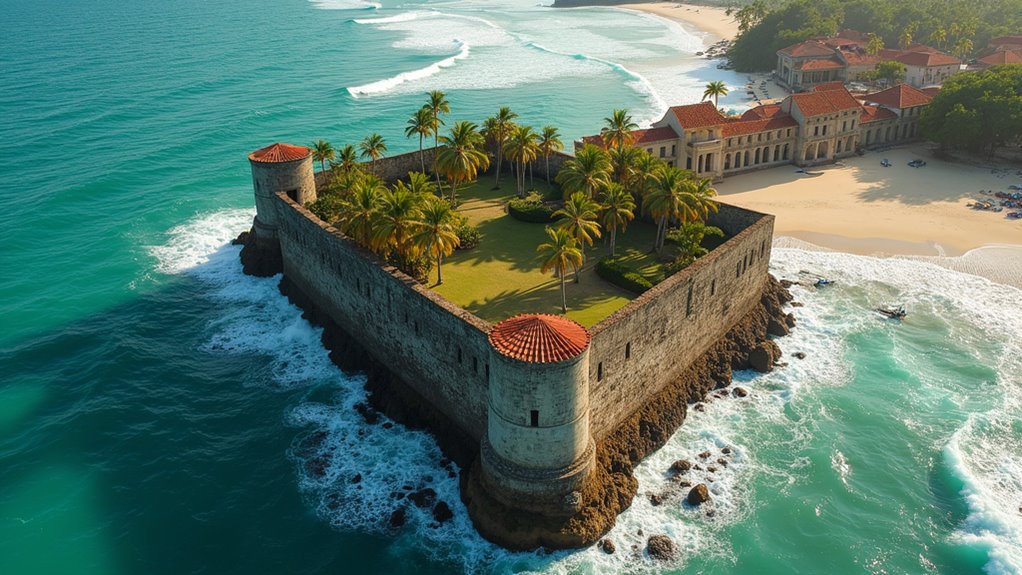
Travelers seeking both historical depth and coastal adventure find themselves drawn to Galle, where centuries-old fortifications meet world-class surf breaks. This UNESCO World Heritage site offers an unusual combination that’s hard to find elsewhere—visitors can explore Dutch colonial bastions in the morning and catch waves at nearby beaches by afternoon. The town’s compact size means everything’s within walking distance, making it perfect for budget-conscious explorers. Yet most visitors barely scratch the surface of what this remarkable destination truly offers.
- Explore the Historic Ramparts and 14 Bastions of Galle Fort
- Visit the Dutch Reformed Church (Groote Kerk) and Colonial Architecture
- Climb Galle Lighthouse for Panoramic Ocean Views
- Stroll the Cobblestone Streets and Browse Local Markets
- Learn About the Spice Trade History Through Guided Tours
- Surf the Seasonal Breaks Along Galle’s Coastline
- Discover the Fusion of European and South Asian Cultural Heritage
- Experience Living History in the UNESCO World Heritage Site
- Enjoy Beachside Activities and Coastal Recreation Near the Fort
Explore the Historic Ramparts and 14 Bastions of Galle Fort
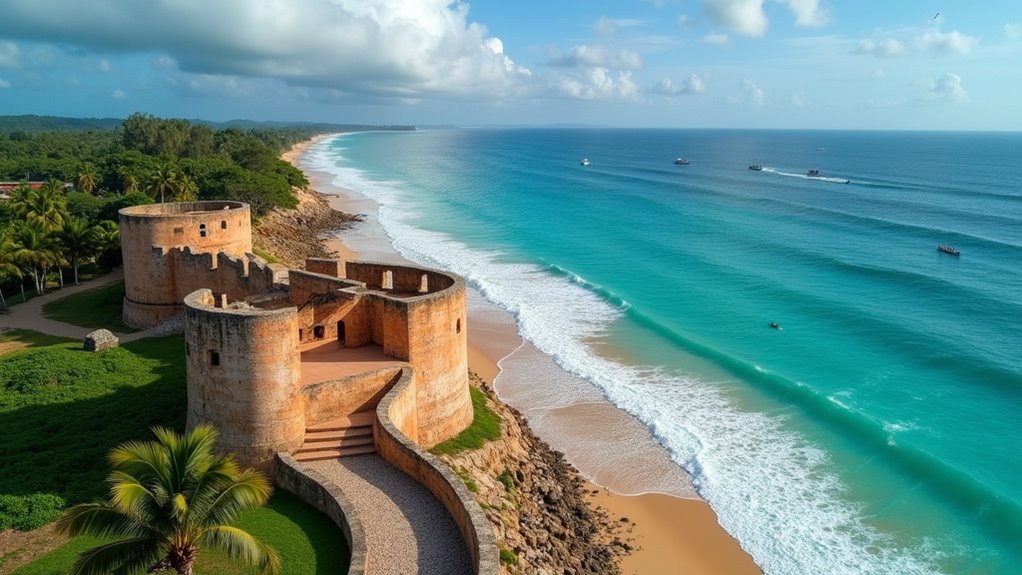
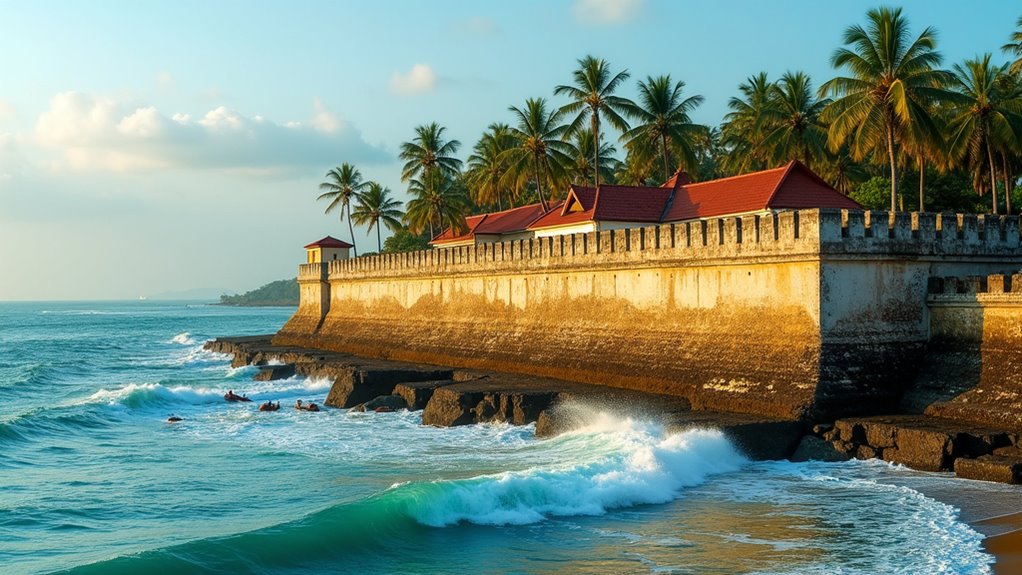
While most visitors rush to snap photos along Galle Fort’s famous ramparts, they’re actually walking atop a 400-year-old military masterpiece that’s survived Portuguese cannons, Dutch sieges, and even World War II bombardments. The Portuguese started with basic earthen walls in the 16th century, but the Dutch transformed this into something spectacular after 1640.
They built 14 massive bastions using coral and granite stones, creating overlapping fields of fire that could devastate any attacking force.
Don’t miss the Star Bastion and Flag Rock Bastion on the southern tip, where cannons once warned approaching ships. Each bastion tells a different story—some housed administrative buildings, others contained slave quarters. The eastern bastions faced the harbor’s greatest threats, while the northern ones defended against land attacks. From Moon Bastion, you can spot the historic clocktower donated by Dr. Anthonisz that’s been standing for over 130 years.
These ancient limestone cliffs that form the foundation of the fort create a dramatic backdrop against the Indian Ocean, similar to other coastal formations found throughout the region.
It’s free to explore these UNESCO-recognized fortifications.
Visit the Dutch Reformed Church (Groote Kerk) and Colonial Architecture
Standing on Galle Fort’s highest ground at over 12 meters above sea level, the Dutch Reformed Church (Groote Kerk) represents one of Sri Lanka’s most haunting colonial landmarks—where visitors literally walk across centuries-old tombstones that pave the entire floor.
Built in 1755, this cruciform-designed church showcases Baroque influences with decorative swirl patterns on its facade. The interior features dark stained glass windows, wooden pews, and high ceilings that create an atmospheric setting.
What makes this church unique isn’t just its Doric architecture—it’s the sobering experience of stepping on Dutch colonial tombstones embedded throughout the floor and walls. Like Xi’an’s famous Terracotta Warriors, this site offers visitors a tangible connection to centuries of preserved history beneath their feet.
Entry’s free, making it perfect for budget travelers. The church remains active for worship while serving as a powerful reminder of Galle’s complex colonial past. As the oldest active Protestant church in Sri Lanka, Groote Kerk continues to hold regular services while welcoming visitors to explore its historic significance.
Climb Galle Lighthouse for Panoramic Ocean Views
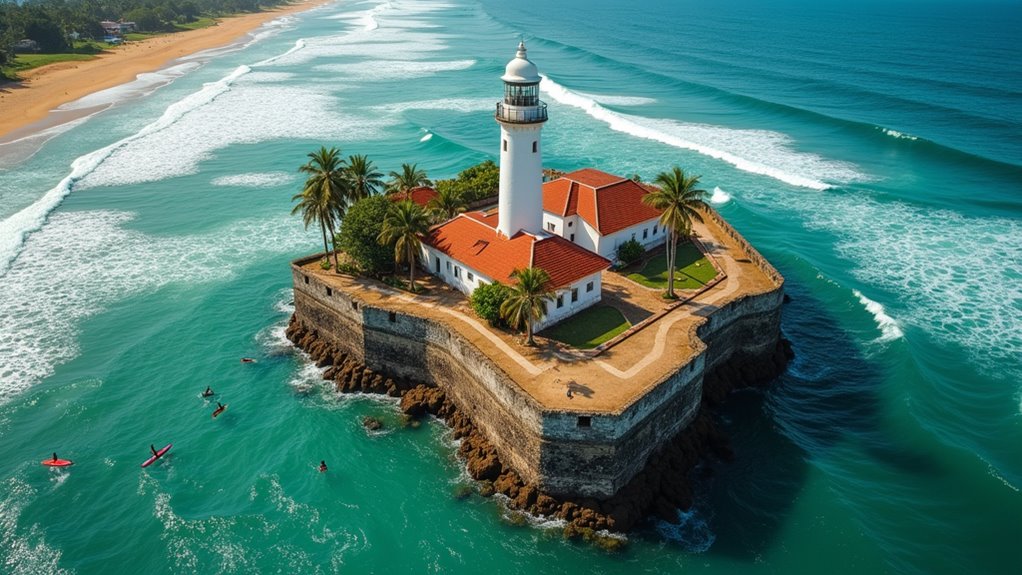
After exploring the Dutch Reformed Church’s haunting tombstone floors, travelers can head to Galle Fort’s southeastern tip where the iconic white lighthouse towers 26.5 meters above the Indian Ocean.
Built by the British in 1939, this working lighthouse offers sweeping panoramic views that make the climb worthwhile. From the top, visitors can spot local surf breaks, watch ships navigate ancient trading routes, and photograph the fort’s military layout with its coral and granite bastions.
The lighthouse’s distinctive white cylindrical design creates striking contrast against the fort’s weathered stone walls. Seven small black-glass windows mark the tower’s exterior, while tropical vegetation frames the base. The structure replaced the original 1848 structure that burned down, maintaining its role as a crucial maritime guide for over a century.
It’s easily accessible via the fort’s cobblestone paths, making it a perfect final stop for budget travelers exploring Galle’s colonial heritage. Like Sapporo’s famous Snow Festival, this lighthouse draws visitors year-round who come to experience its unique blend of history and natural beauty.
Stroll the Cobblestone Streets and Browse Local Markets
Once visitors descend from the lighthouse, Galle Fort’s cobblestone streets beckon with their Dutch colonial grid layout that makes navigation surprisingly easy. Key thoroughfares like Rampart Street, Lighthouse Street, and Pedlar Street each offer distinct experiences worth exploring on foot.
Pedlar Street stands out as the shopping hub, where former Moor residences now house cafes, boutiques, and artisan shops. Budget-conscious travelers will find postcards, clothes, and unique souvenirs. Those with deeper pockets can browse genuine Sri Lankan gemstones and antique jewelry.
The pedestrian-friendly streets weave past historic bastions like Clippenburg and Neptune, leading to art galleries showcasing local artists’ work. Street cafes provide perfect rest stops between browsing sessions, creating an unhurried atmosphere that encourages spontaneous discoveries around every cobblestone corner. The fort’s European architecture seamlessly blends with South Asian traditions, creating a unique colonial aesthetic that distinguishes it from other historical sites. For those seeking broader Southeast Asian adventures, Thailand offers twelve experiences ranging from northern mountain temples to southern beach destinations.
Learn About the Spice Trade History Through Guided Tours
Beyond the charming boutiques and art galleries, Galle Fort’s cobblestone streets hold secrets of a much older commerce—one that shaped global trade for over a millennium. Guided tours reveal how Sri Lankan cinnamon was valued higher than gold, creating fortunes that built the Dutch colonial buildings visitors see today.
These educational walks take travelers through historic spice merchant houses like the 300-year-old Thambili House, where guides explain cultivation methods refined during colonial periods. Tours detail how Portuguese, Dutch, and British powers fought for control over this lucrative trade, making Galle a strategic hub connecting three continents. The spice trade attracted merchants from Arabia, China, and India since the 2nd century AD, establishing Sri Lanka’s reputation as a global trading destination.
Visitors learn about processing techniques while hearing cultural narratives about how spices influenced local cuisine and traditions—making history tangible and delicious. Like Hanoi’s Old Quarter, Galle’s historic district offers an immersive journey through centuries of commercial heritage where every street corner tells a story of international trade.
Surf the Seasonal Breaks Along Galle’s Coastline
When the southwestern monsoon rolls in from April to October, Galle’s coastline transforms into a surfer’s playground with consistent 4-7 foot swells that cater to every skill level.
Beginners should head to Dewata Beach near Galle Fort, where mellow sandy-bottom waves and numerous surf schools make learning affordable and safe.
Intermediate surfers will find their sweet spot at Hikkaduwa’s reliable 4-6 foot breaks, while Kabalana Beach offers both beginner-friendly waves and The Rock’s challenging A-frame reef break for advanced riders.
Don’t miss Unawatuna’s powerful right-hand reef break or the less crowded Lobster’s Left.
With offshore winds at 7-14 knots and low tides around 0.4 feet, conditions stay clean. Current reports show fair conditions across multiple breaks including The Rock, Sunbeach Break, and Main Point with manageable 1-2 foot waves.
Budget-friendly surf camps and board rentals make extended surf trips accessible year-round. Between surf sessions, explore the region’s stunning karst landscapes that create a dramatic backdrop to the coastal waters.
Discover the Fusion of European and South Asian Cultural Heritage
Walking through Galle Fort’s cobblestone streets feels like stepping into a living museum where Portuguese bastions meet Dutch gabled roofs and British colonial mansions stand alongside traditional Sri Lankan mosques. This UNESCO World Heritage Site showcases centuries of cultural fusion that budget travelers can explore for free.
The 1755 Groote Kerk demonstrates Dutch colonial architecture, while the Victorian Gothic All Saints’ Church reflects British influence. Local craftsmen adapted European designs using indigenous materials and techniques suited to Sri Lanka’s tropical climate. Visitors can wander through the Old Dutch Hospital, now transformed into shops and restaurants, experiencing adaptive reuse firsthand.
The fort’s ramparts reveal Dutch military engineering modified for local geography. The distinctive rectangular grid pattern of the fort’s layout reflects organized Dutch urban planning principles. This multicultural heritage creates Galle’s distinctive character—European planning principles seamlessly blending with South Asian architectural traditions. Like many travelers exploring diverse landscapes, visitors can experience this coast to desert cultural journey within Sri Lanka’s varied regions.
Experience Living History in the UNESCO World Heritage Site
Since Galle Fort earned UNESCO World Heritage status in 1988, travelers can explore nearly four centuries of living colonial history within walls that have survived Portuguese cannon fire, Dutch expansion, British rule, and even the 2004 tsunami.
Unlike typical museums, this 52-hectare fortress remains a thriving community where residents live alongside centuries-old architecture.
Visitors can walk cobblestone streets following the original Dutch urban grid from the 1600s, passing colonial warehouses, churches, and former slave quarters that tell complex stories of maritime trade and empire.
The Maritime Museum in the old VOC warehouse offers context for understanding the fort’s role in global trade networks. The Dutch Reformed Church, established in 1755, features intricate gravestones that provide glimpses into the lives of colonial settlers.
Street markets, local shops, and cultural events maintain the site’s authentic atmosphere while providing budget-friendly ways to experience this remarkable living heritage. Beyond the historical attractions, visitors can discover unique experiences that showcase the fort’s contemporary cultural vitality.
Enjoy Beachside Activities and Coastal Recreation Near the Fort
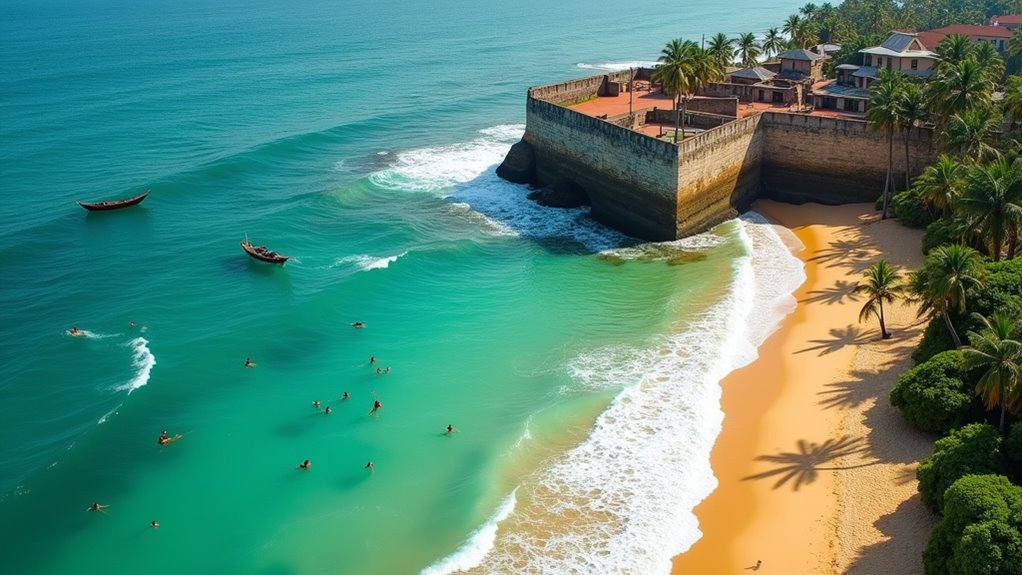
Beyond the fort’s historic walls, travelers discover some of Sri Lanka’s most accessible beaches and water activities within walking distance or a short tuk-tuk ride. Unawatuna’s horseshoe-shaped beach offers excellent snorkeling among coral reefs, while nearby Jungle Beach provides quieter white sand backed by tropical vegetation.
Budget-conscious visitors appreciate Dalawella Beach’s affordable entry fees and natural lagoon, complete with Instagram-worthy beach swings.
Dewata Beach stands out for beginner surfers with mellow waves and rental boards available. Several surf schools operate between December and April when conditions peak. Hikkaduwa’s expansive beaches feature ideal surf breaks for those learning to ride the waves.
Traditional fishing tours depart from local harbors with gear and snacks included. While Galle may not rival Japan’s famous nighttime beauty, the coastal views at dusk create their own memorable atmosphere.
For those seeking tranquility, Mihiripenna Beach’s lagoon swing creates perfect sunrise moments, while Unawatuna’s northern pagoda offers scenic sunset strolls.