
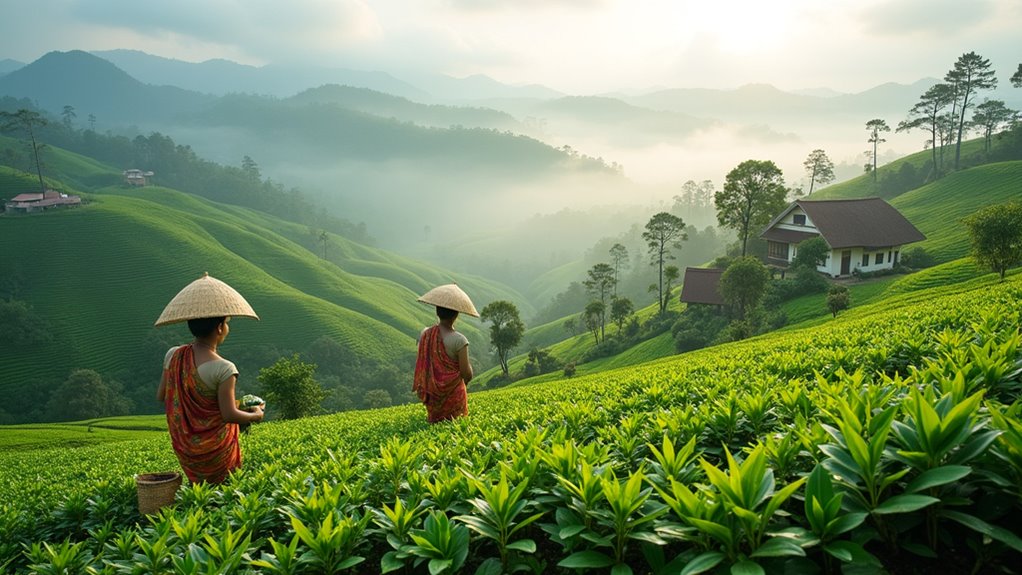
Nestled in Sri Lanka’s central highlands, Nuwara Eliya offers travelers an escape from tropical heat while showcasing the island’s renowned tea culture. This former British hill station combines affordable adventures with scenic beauty, from hands-on plantation tours to misty mountain hikes. Visitors can explore working estates, sample world-class Ceylon tea, and discover colonial architecture without breaking the bank. However, there’s more to this cool-climate destination than meets the eye, and timing one’s visit makes all the difference.
- Tour Working Tea Plantations and Witness Traditional Tea Processing
- Experience Tea Plucking and Sample Fresh Ceylon Tea
- Hike Through Misty Tea Estates With Scenic Mountain Views
- Explore Colonial-Era Architecture and British Hill Station Heritage
- Visit Local Markets for Fresh Cool Climate Produce
- Enjoy Nature Walks Among Wild Flora and Eucalyptus-Scented Trails
- Relax at Hill Resorts and Health Spas in Temperate Weather
- Discover the Tea Research Institute and Agricultural Innovations
Tour Working Tea Plantations and Witness Traditional Tea Processing
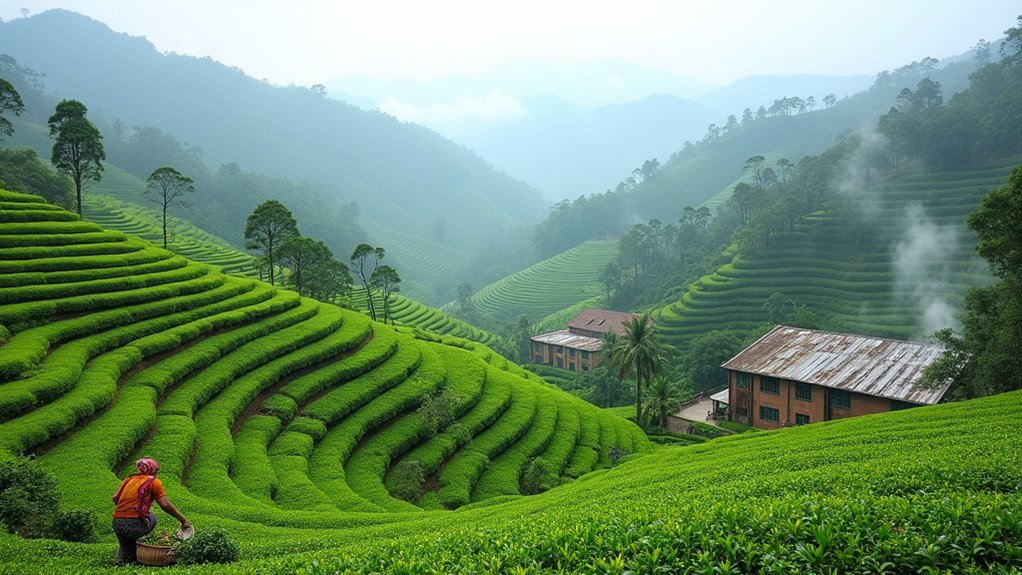
While most travelers rush through Nuwara Eliya’s scenic viewpoints, savvy travelers know the real value lies in touring the region’s working tea plantations. Historic estates like Blue Fields and Pedro Tea Estate offer 20-45 minute guided tours that’ll cost you next to nothing while delivering authentic cultural experiences.
You’ll witness the complete tea-making process: leaves withering on concrete slabs for 2.5 hours, rolling machines bruising leaves for oxidation, fermentation developing flavors, and final drying at 91°C using traditional firewood heat. The machinery dates back to the 1920s, preserving time-tested methods. Like the vibrant chaos of Ho Chi Minh City’s bustling streets, these plantations buzz with constant activity as workers move between different processing stations.
Pedro Tea Estate, established in 1885, provides excellent short tours with onsite shops selling fresh loose-leaf tea. These plantations operate best overnight, so visit during daytime hours when guides can fully explain each processing stage. Tea was introduced to Sri Lanka by Scotsman James Taylor in 1867, transforming the island’s agricultural landscape after coffee crops were destroyed by fungal disease.
Experience Tea Plucking and Sample Fresh Ceylon Tea
Beyond observing the tea-making process, visitors can roll up their sleeves and join estate workers in the actual tea plucking experience. Using traditional tools at estates like Pedro Tea Estate, travelers spend 30 minutes to an hour learning the precise selection of young tea leaves essential for quality Ceylon tea.
The hands-on session reveals the physical demands and skill required for harvesting on Nuwara Eliya’s steep, misty hills.
After plucking, visitors can sample freshly brewed Ceylon tea directly at the plantation. These tasting sessions showcase different varieties, including high-grown black teas known for delicate flavors and subtle fruity notes. Many plantations also offer traditional ramen experiences alongside their tea tastings, providing visitors with a complete culture.
Factory tours typically conclude with tea tastings, where guests can purchase exclusive blends and souvenirs from boutique tea shops. The comprehensive tea production stages include withering, rolling, fermenting, drying, and sorting, each carefully monitored to maintain Sri Lanka’s reputation for producing the world’s finest tea.
Hike Through Misty Tea Estates With Scenic Mountain Views
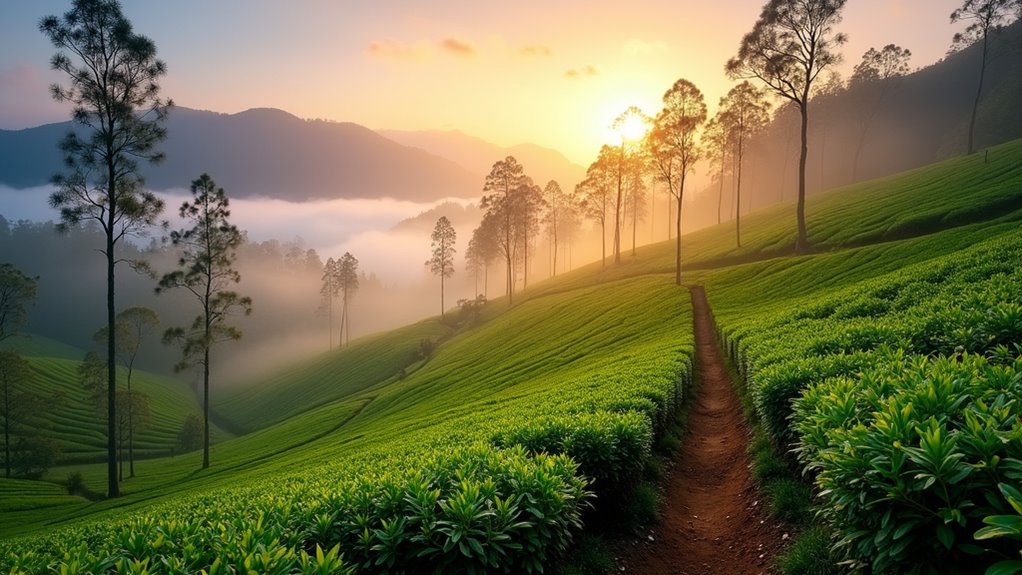
As dawn breaks over Nuwara Eliya’s mist-shrouded hills, hikers discover that the region’s tea estates offer some of Sri Lanka’s most accessible and rewarding trekking experiences. The well-marked trails wind through historic estates like Pedro and Mackwoods, where rolling tea bushes create endless green carpets across the landscape.
Most routes suit various fitness levels, with moderate elevation gains between 390-520 meters. Popular hikes include the 11.3km Pekoe Trail Stage 22, which takes about 4.5 hours, and shorter 8km routes connecting estate bungalows. Trails start from small towns with easy bus or tuk-tuk access. Like Xi’an’s famous Terracotta Warriors, these trails offer glimpses into centuries of cultural heritage preserved in the landscape.
The payoff’s spectacular: panoramic views from Little Adam’s Peak, cascading waterfalls, and misty valleys. Hikers can tour tea factories along the way, making these affordable adventures both scenic and educational. The colonial architecture throughout the region adds a distinctive charm to the trekking experience, with Victorian-era buildings dotting the landscape.
Explore Colonial-Era Architecture and British Hill Station Heritage
After exploring the misty tea trails, visitors can step back in time through Nuwara Eliya’s remarkably preserved colonial architecture that earned this hill station its nickname “Little England.” The town’s Victorian and Tudor-style buildings tell the story of British colonial life, and most can be explored for free simply by walking the streets.
The Grand Hotel, originally Barnes Hall governor’s mansion, showcases Tudor architecture with its white facade and manicured gardens.
The century-old Hill Club maintains its exclusive colonial charm, while the 1894 Post Office displays classic red brick Tudor styling with a distinctive clock spire.
Holy Trinity Church offers glimpses of British ecclesiastical heritage with its impressive pipe organ.
Victoria Park provides English country garden aesthetics perfect for budget-friendly strolls through this living colonial museum. Like other cultural destinations with thriving art districts, Nuwara Eliya has evolved beyond its colonial roots to embrace contemporary creative expressions alongside its historical preservation efforts. Many private entities have transformed historic colonial villas into charming hotels and inns that blend heritage architecture with modern comfort.
Visit Local Markets for Fresh Cool Climate Produce
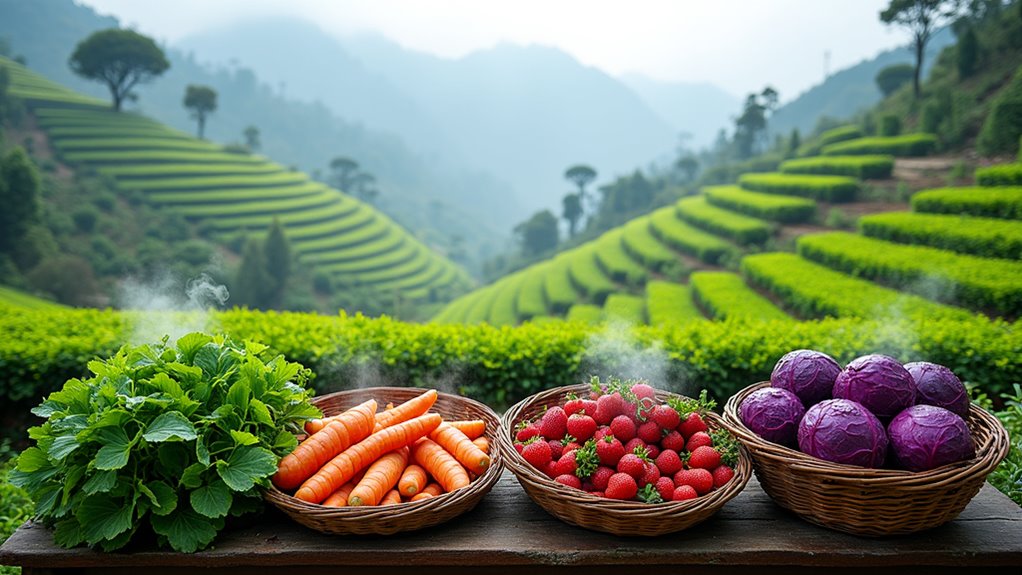
While Victorian buildings showcase Nuwara Eliya’s colonial past, the bustling Central Market reveals the town’s vibrant present through stalls overflowing with cool-climate produce that thrives in these misty highlands. Visitors can find fresh strawberries, carrots, leeks, and temperate vegetables that don’t grow elsewhere in Sri Lanka.
The market’s best deals come early morning when farmers arrive with daily harvests.
Beyond produce, vendors offer authentic street food and encourage sampling before buying. Vegetarian options abound with fresh juices and vegetable-based snacks. The neat, well-organized stalls maintain good hygiene standards, making shopping pleasant.
While prices slightly exceed roadside vendors, the central location and quality justify costs. Local handicrafts and warm clothing reflect the cool climate culture. Like many must-see highlights for travelers, this market offers an authentic glimpse into local daily life. The market’s location near the historic 1894 Post Office adds colonial architectural charm to the vibrant shopping experience.
Enjoy Nature Walks Among Wild Flora and Eucalyptus-Scented Trails
Though Nuwara Eliya’s tea plantations stretch endlessly across rolling hills, visitors discover the real magic happens when they lace up hiking boots and venture onto the aromatic trails weaving between emerald tea bushes and towering eucalyptus groves.
These well-marked paths wind through estates like Pedro Tea Estate, where walkers encounter traditional tea pluckers at work while breathing in the invigorating eucalyptus oils that naturally scent the cool air.
Morning and late afternoon walks offer the best experience, with temperatures often dropping below 12°C during winter months.
The 2-6 hour trails suit various fitness levels and showcase diverse wildflowers, native plants, and seasonal butterflies. Many walkers enjoy exploring the nearby Tamil villages where tea plantation workers live, offering authentic glimpses into local community life.
Many routes end at tea factories, combining botanical exploration with cultural learning. Like Japan’s hidden gems that reward curious travelers, these lesser-known trails reveal Nuwara Eliya’s most spectacular viewpoints away from crowded tourist areas.
Pack layers—the cool climate makes these fragrant walks comfortable year-round while providing natural respiratory benefits.
Relax at Hill Resorts and Health Spas in Temperate Weather
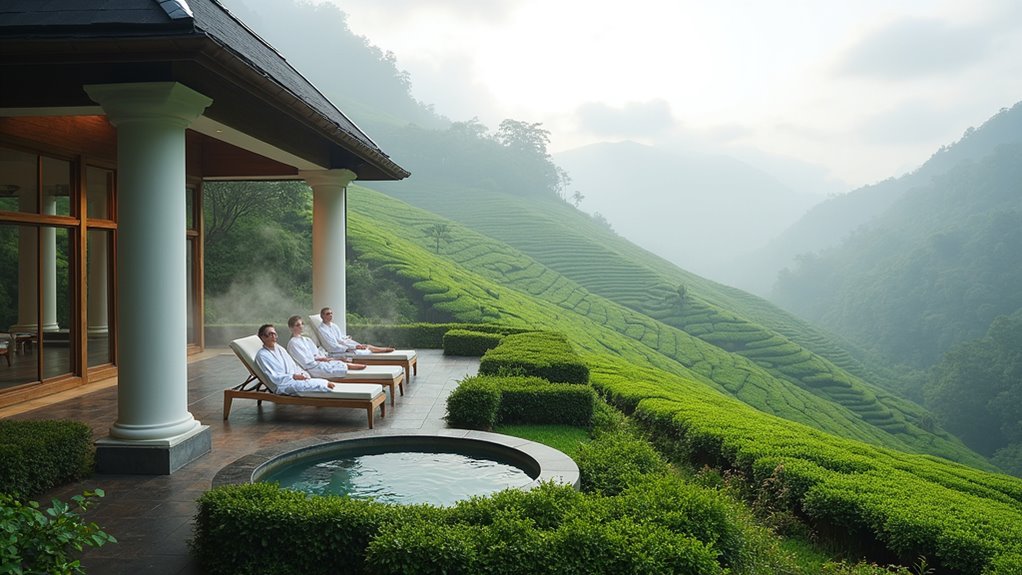
When temperatures hover around 12°C year-round, Nuwara Eliya’s hill resorts transform into perfect wellness retreats where visitors can indulge in therapeutic treatments without sweltering heat or humidity.
The Grand Hotel’s Balinese Ayu Spa offers traditional massages and body scrubs using natural ingredients, while Santani Wellness Resort combines Ayurvedic methods with modern hydrotherapy suites and mountain-view saunas.
Budget-conscious travelers can find excellent value in wellness packages that include personalized treatments addressing stress and sleep issues. Like Taiwan’s creative capital Taichung, Nuwara Eliya has evolved into a destination that nurtures both wellness and artistic inspiration through its serene mountain environment.
Many resorts feature heated pools and Jacuzzis—essential for year-round comfort in cooler temperatures. The serene hill country setting provides an ideal backdrop for these therapeutic experiences, enhancing the overall sense of tranquility and escape.
Amaya Hills and Blackpool Resort offer extensive spa services alongside fitness facilities, while authentic Ayurvedic centers provide physician-led treatments focusing on detoxification.
The temperate climate enhances relaxation, making every therapeutic session more rejuvenating than coastal alternatives.
Discover the Tea Research Institute and Agricultural Innovations
How does a century-old research institute continue revolutionizing one of the world’s most beloved beverages? The Tea Research Institute, founded in 1925 and celebrating its centenary in 2025, offers visitors fascinating insights into Ceylon tea’s scientific evolution.
Originally established in Nuwara Eliya before moving to Talawakelle, this pioneering institution has developed over 70 high-yielding tea cultivars that resist pests and drought while maintaining quality standards.
Travelers can explore how researchers transform tea production through regenerative agriculture programs, reducing chemical fertilizer dependence through organic recycling and bio-composting. The institute operates through regional centers in Passara, Kandy, Ratnapura, Galle, and Deniyaya, ensuring comprehensive coverage across all tea-growing areas of Sri Lanka.
The institute’s innovations extend beyond traditional tea, creating wine, carbonated drinks, and health-focused extracts. Visitors exploring the region can discover numerous essential experiences that showcase the cultural significance of tea cultivation alongside these scientific breakthroughs.
Mobile laboratories and “crop clinics” demonstrate real-time advisory services supporting both large plantations and smallholders who produce 75% of Sri Lanka’s tea output.