
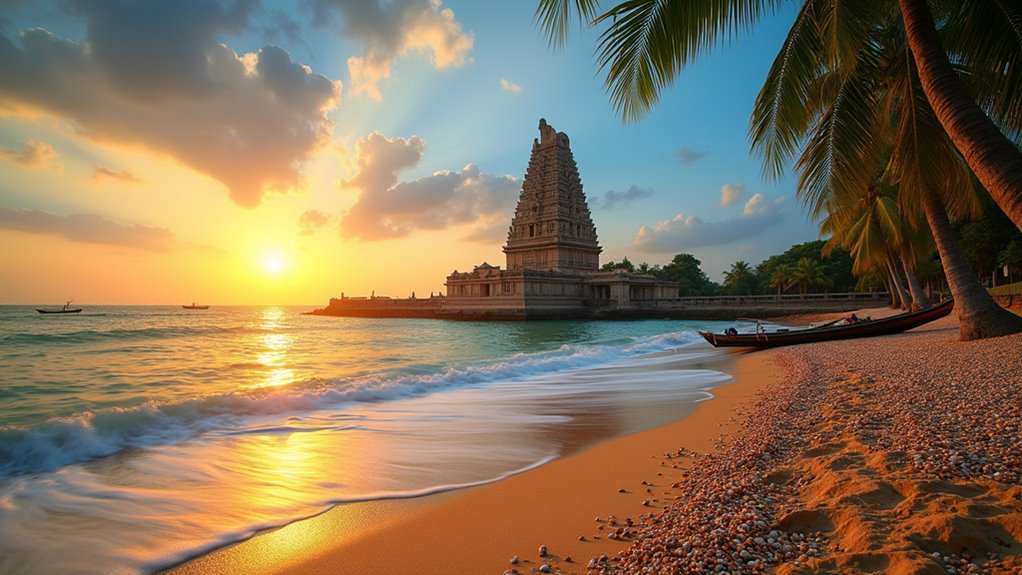
Chennai offers travelers an exceptional combination of ancient temples and expansive coastlines without breaking the bank. The city’s spiritual sites showcase centuries-old Dravidian architecture, while its beaches provide free entertainment and stunning sunset views. Most temple visits cost nothing, and street food near these attractions won’t strain any budget. From historic basilicas to towering gopurams, Chennai’s cultural landscape reveals layers of Tamil heritage alongside colonial influences that shape modern India’s identity in unexpected ways.
- Stroll Along Marina Beach, the World’s Second-Longest Urban Coastline
- Explore the Ancient Kapaleeshwarar Temple and Its Towering Gopura
- Discover Colonial History at Fort St. George and Its Museum
- Visit Santhome Basilica Built Over Saint Thomas’s Tomb
- Browse Archaeological Treasures at the Government Museum
- Relax at Elliot’s Beach Away From the Crowds
- Climb Chennai Lighthouse for Panoramic Bay Views
- Pay Respects at Political Memorials Along Marina Promenade
- Experience Spiritual Serenity at Ashtalakshmi Temple by the Shore
Stroll Along Marina Beach, the World’s Second-Longest Urban Coastline
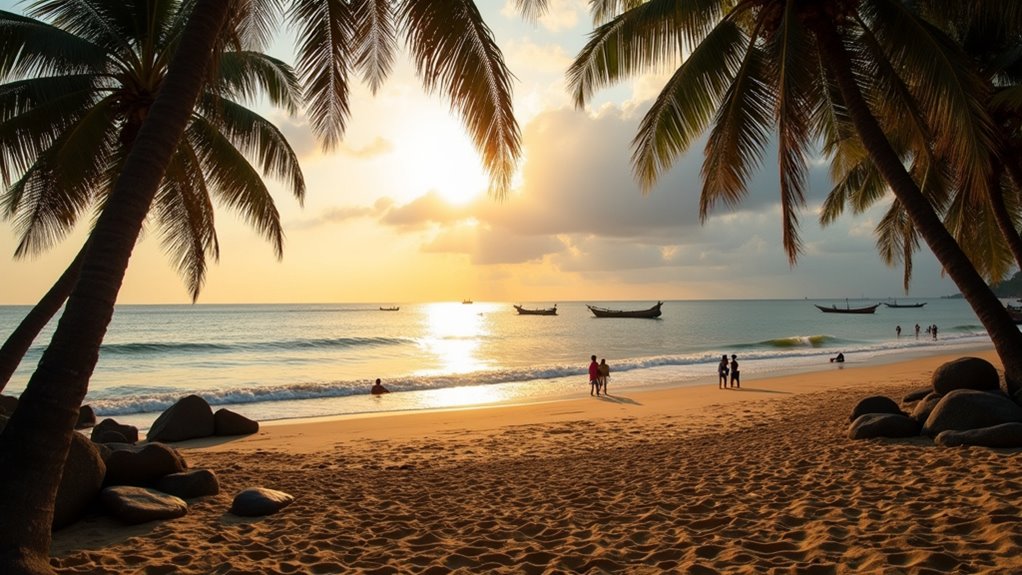
When travelers first glimpse Marina Beach’s 13-kilometer expanse stretching from Fort St. George to Besant Nagar, they’re witnessing India’s longest urban coastline. This natural sandy stretch offers budget-friendly entertainment with free access to morning jogs, evening strolls, and culture.
The 300-meter-wide beach hosts daily life where locals gather for Pongal celebrations and community activities.
Visitors can explore statues honoring Tamil poets and historical figures while enjoying kite flying, cricket, and sand art. The lighthouse provides panoramic views, while the aquarium and historic buildings like Chepauk Palace line the shore. The historic seawall from the 1920s serves as both a protective barrier and popular promenade for exercise and social gatherings. As evening approaches, the beach transforms into a stunning coastal panorama with nighttime beauty that rivals famous destinations worldwide.
Though swimming isn’t recommended due to rough seas, the beach’s accessibility via public transport and proximity to Anna International Airport make it perfect for cultural exploration and people-watching.
Explore the Ancient Kapaleeshwarar Temple and Its Towering Gopura
Rising 37 meters above Mylapore’s bustling streets, Kapaleeshwarar Temple’s magnificent gopuram serves as both a spiritual beacon and architectural masterpiece that’s captivated devotees for over thirteen centuries. Originally constructed by Pallava rulers in the 7th century, this Dravidian marvel showcases intricate carvings of gods, goddesses, and mythological creatures across its towering gateway.
Visitors can explore the temple’s unique features, including Lord Shiva facing west rather than east, and Goddess Parvati worshipped as Karpagambal. Don’t miss the Peacock Hall’s sculptures depicting Parvati’s legend, the sacred tank, and bronze carvings of 63 Saivite saints. The temple also houses a dedicated shrine to 63 Nayanars, the revered hymn writers of the Tevaram who were devoted followers of Shiva. Like the vibrant chaos found throughout many South Asian cities, the temple area pulses with energy as pilgrims, vendors, and curious travelers converge in this sacred space.
Entry remains free, making this architectural wonder accessible to budget-conscious travelers seeking authentic South Indian temple experiences in Chennai’s cultural heart.
Discover Colonial History at Fort St. George and Its Museum
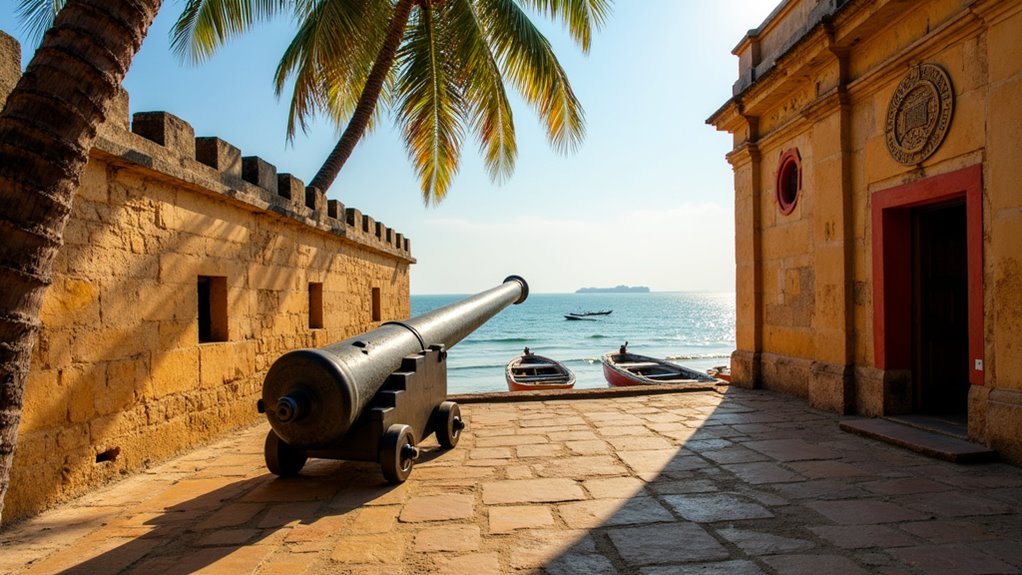
From Mylapore’s ancient spiritual heritage, travelers can journey to Chennai’s colonial past at Fort St. George, India’s first British fortress established in 1639. This historic stronghold on the Coromandel Coast marks where British colonial rule began, transforming from a small trading post into the administrative heart of southern India.
The white-walled fort houses the Tamil Nadu Legislative Assembly and St. Mary’s Church, one of India’s oldest Anglican churches. Visitors shouldn’t miss the Fort Museum, located in the original 1795 Madras Bank building. The museum displays colonial-era weapons, uniforms, manuscripts, and artifacts that chronicle British presence in India. The complex also features a striking 46-metre flagstaff made of teakwood, one of the tallest in India.
Entry costs are minimal, making it budget-friendly. The fort’s strategic location offers insights into how European powers shaped modern Chennai’s development. Like the charming lantern-lit streets of other historic destinations, Fort St. George provides an atmospheric glimpse into India’s layered past.
Visit Santhome Basilica Built Over Saint Thomas’s Tomb
After exploring colonial history, pilgrims and history enthusiasts shouldn’t miss Santhome Basilica, one of only three churches worldwide built over an apostle’s tomb. This sacred site houses the remains of St. Thomas the Apostle, who brought Christianity to South Asia in the first century.
The current Neo-Gothic structure, rebuilt by the British in 1896, features stunning stained glass panels and a 47-meter spire. Visitors can explore the interior’s white curved arches, marvel at the main altar’s statues, and view the Stations of the Cross along the walls. The basilica’s vaulted ceilings enhance both the acoustics for services and the overall aesthetic appeal of the sacred space.
Located near Marina Beach, the basilica offers free entry daily. Guided tours provide valuable historical insights, while nearby shops sell affordable religious souvenirs. Photography’s permitted in designated areas, making it perfect for budget-conscious travelers seeking spiritual and cultural experiences. Like many travelers exploring Japan’s alpine village destinations, visitors here can appreciate the unique blend of cultural heritage and natural beauty that defines this coastal region.
Browse Archaeological Treasures at the Government Museum
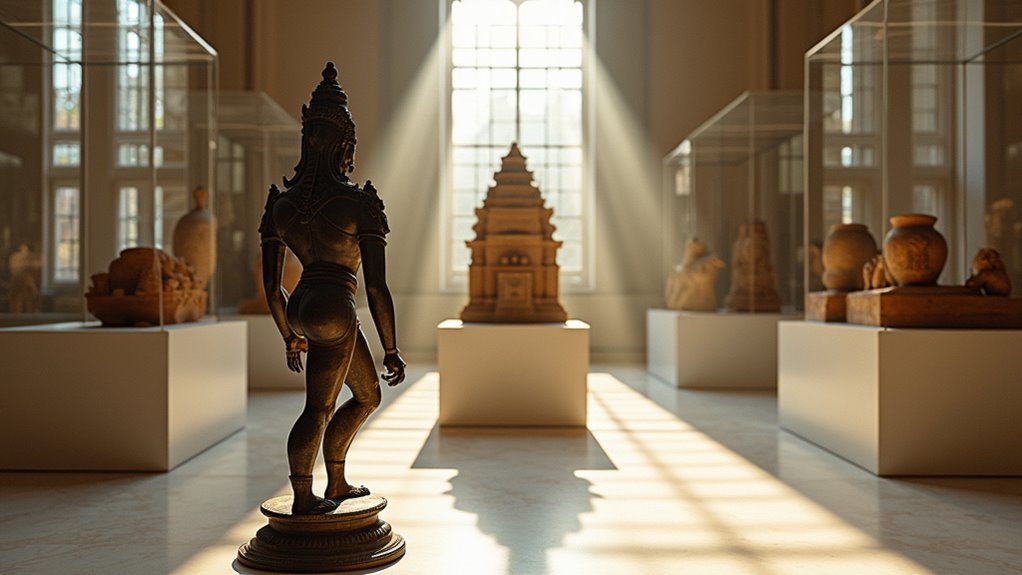
While Chennai’s spiritual sites captivate visitors, the Government Museum offers an equally compelling journey through South India’s rich archaeological heritage. Spread across 16.25 acres with 46 galleries, this Indo-Saracenic complex houses India’s most impressive archaeological collections at budget-friendly admission rates.
The museum’s crown jewel is its collection of over 1,500 bronze sculptures, including celebrated Chola masterpieces like the Dancing Nataraja displayed in climate-controlled rooms. Visitors can explore 315 stone sculptures from ancient Amaravati and witness 3,200-year-old Adichanallur artifacts that illuminate Tamil Nadu’s prehistoric civilization. Like Nagoya’s renowned castle architecture, Chennai’s museum showcases impressive structural design that enhances the visitor experience.
The numismatic section showcases coins spanning millennia, while tribal ethnographic displays provide cultural insights into South Indian communities. The museum also houses over 600 copper plate inscriptions that record land grants from South Indian dynasties, offering invaluable insights into the region’s political and administrative history.
Plan three hours to properly appreciate the diverse galleries covering archaeology, natural history, and art.
Relax at Elliot’s Beach Away From the Crowds
Beyond Chennai’s bustling Marina Beach lies Elliot’s Beach, where visitors discover a cleaner, more tranquil coastal retreat in the upscale Besant Nagar neighborhood. This golden sand stretch offers peaceful solitude without entry fees, making it budget-friendly for extended relaxation. Early morning visits reward travelers with spectacular sunrises and fewer crowds, while weekdays provide ideal tranquility.
The beach’s cultural significance shines through the colorful Ashtalakshmi Temple at its southern tip and the Karl Schmidt monument honoring a Danish sailor’s heroic sacrifice. Visitors can enjoy informal cricket matches, leisurely walks along the promenade, and invigorating dips in the Bay of Bengal’s calm waters. Like many destinations that offer spiritual experiences alongside natural beauty, this coastal spot provides a perfect balance of cultural exploration and seaside relaxation. The nearest public transit station is Besant Nagar, located just a 9-minute walk from the beach.
Access proves convenient via buses 23C, 29C, or auto-rickshaws from central Chennai, with decent parking available on Elliot’s Boulevard for those driving.
Climb Chennai Lighthouse for Panoramic Bay Views
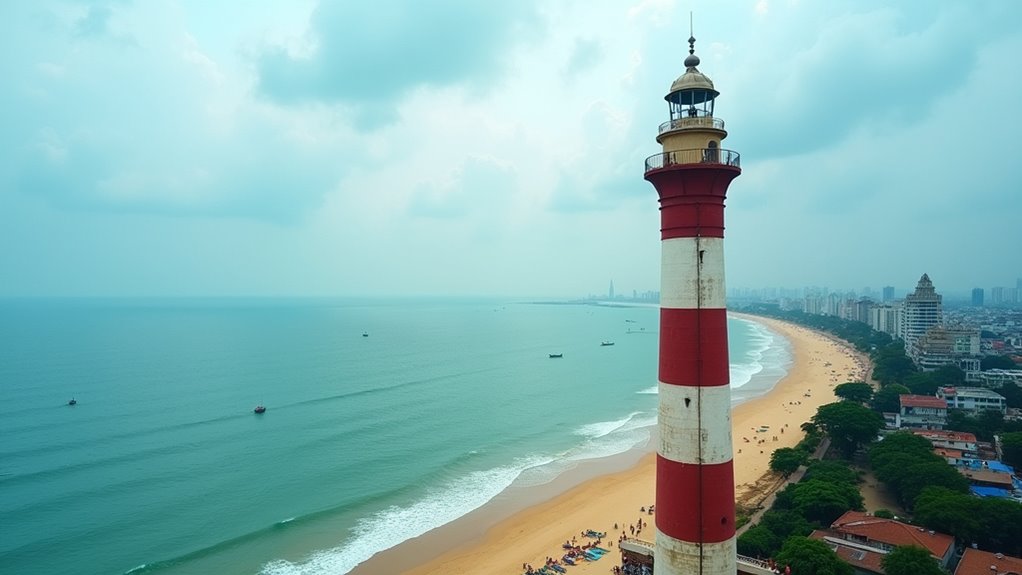
Standing 46 meters above Marina Beach’s southern end, Chennai Lighthouse offers visitors an unmatched 360-degree perspective of the Bay of Bengal and the city’s sprawling coastline for the price of a basic entry ticket.
Built in 1976, this distinctive red-and-white striped tower houses a small maritime museum showcasing Chennai’s seafaring heritage, from historic oil lamps to modern navigation technology.
Visitors can climb the stairs or take the elevator to reach the viewing gallery, though booking tickets in advance helps avoid weekend crowds.
The lighthouse operates Tuesday through Sunday, 10 AM-1 PM and 3-5:30 PM, closed Mondays.
Photography enthusiasts shouldn’t miss the golden hour sunsets. The lighthouse’s prominent location makes it a frequently photographed landmark that adds charm to the bustling Marina Beach area.
For those seeking adventure beyond the lighthouse, consider exploring nearby limestone cliffs and coastal formations that offer additional climbing opportunities along the Tamil Nadu coastline.
This active navigational aid survived the 2004 tsunami and continues guiding ships into Chennai Port.
Pay Respects at Political Memorials Along Marina Promenade
As visitors stroll along Marina Beach’s expansive promenade, they’ll encounter one of India’s most significant collections of political memorials, where Tamil Nadu’s most influential leaders rest beneath striking architectural tributes that cost nothing to visit yet offer invaluable insights into the state’s complex political heritage.
The Anna Memorial Complex showcases distinctive black marble platforms and tusk-shaped arches honoring former chief ministers. M.G. Ramachandran’s lotus-shaped memorial and J. Jayalalithaa’s phoenix-designed enclosure each feature eternal flames and portrait displays.
The newer pen-shaped Karunanidhi memorial extends toward the sea, reflecting his literary contributions. These monuments represent decades of Tamil political movements, with over 65 memorials built since 1968. Like other cities across India that serve as cultural capitals, Chennai’s memorial complex demonstrates how public spaces preserve regional political heritage. Among these stands the reinstalled statue of Kannagi, a symbol of Tamil pride that returned to the promenade in 2006 after its controversial disappearance in 2001.
Stone footpaths connect the sites, making them easily accessible for budget travelers seeking cultural understanding.
Experience Spiritual Serenity at Ashtalakshmi Temple by the Shore
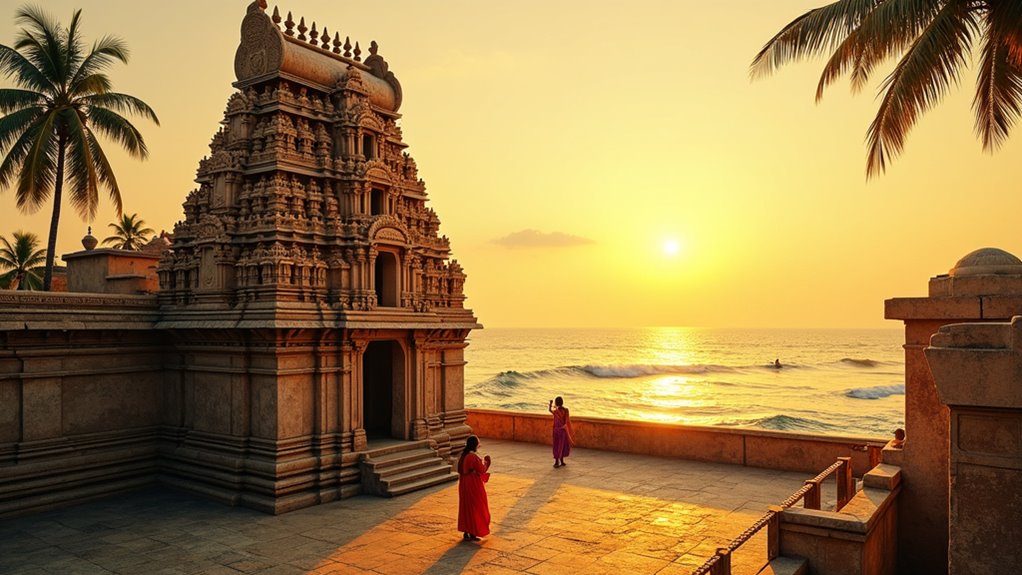
While most Chennai temples require traversing crowded streets and bustling neighborhoods, Ashtalakshmi Temple offers devotees a rare opportunity to combine spiritual worship with coastal tranquility along Elliott’s Beach in Besant Nagar.
This unique 1976 temple, designed in the sacred “Om” shape, dedicates itself to eight forms of Goddess Lakshmi across four ascending levels.
Visit early weekday mornings for fewer crowds and enhanced serenity.
The Bay of Bengal serves as the temple’s natural sacred tank, eliminating traditional purification pools. The temple follows six daily rituals known as Aarukala Pooja, maintaining traditional Vedic practices throughout the day.
During Navaratri and Diwali, cultural performances add festive atmosphere without extra charges.
Dress modestly in traditional attire—sarees or kurtis for women, dhotis for men. Like other renowned temple destinations, Chennai’s spiritual sites offer visitors must-see highlights that showcase the city’s rich cultural heritage.
The 46-meter elevation provides scenic coastal views while the multi-tiered structure encourages spiritual ascent toward divine blessings.