
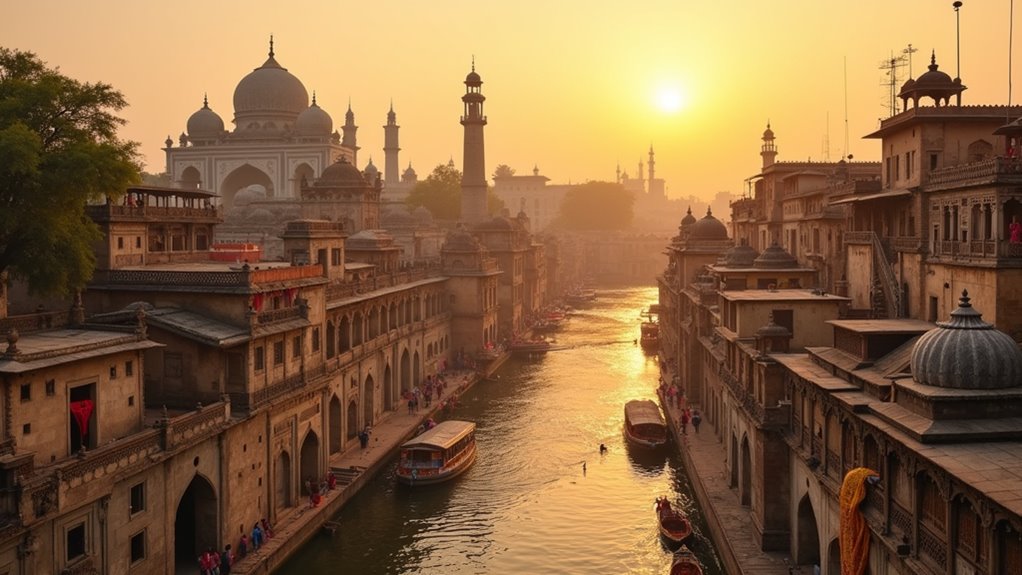
Ahmedabad seamlessly blends centuries-old heritage with modern attractions, offering travelers an authentic Gujarat experience without breaking the bank. From ancient stepwells and Gandhi’s ashram to bustling night markets and serene lakefronts, the city’s diverse attractions cater to history buffs, families, and culture enthusiasts alike. Visitors can explore magnificent architecture, sample street food, and discover spiritual sites—all within walking distance or a short rickshaw ride. The city’s treasures reveal themselves to those who know where to look.
- Marvel at the Architectural Wonder of Adalaj Stepwell
- Walk Through History at Gandhi Ashram
- Stroll Along the Beautiful Sabarmati Riverfront
- Enjoy Family Fun at Kankaria Lake
- Experience the Vibrant Night Market at Manek Chowk
- Explore Science City and Auto World Vintage Car Museum
- Discover the Spiritual Beauty of Swaminarayan Temple
- Take Heritage Walks Through Ancient Monuments and Step-wells
Marvel at the Architectural Wonder of Adalaj Stepwell
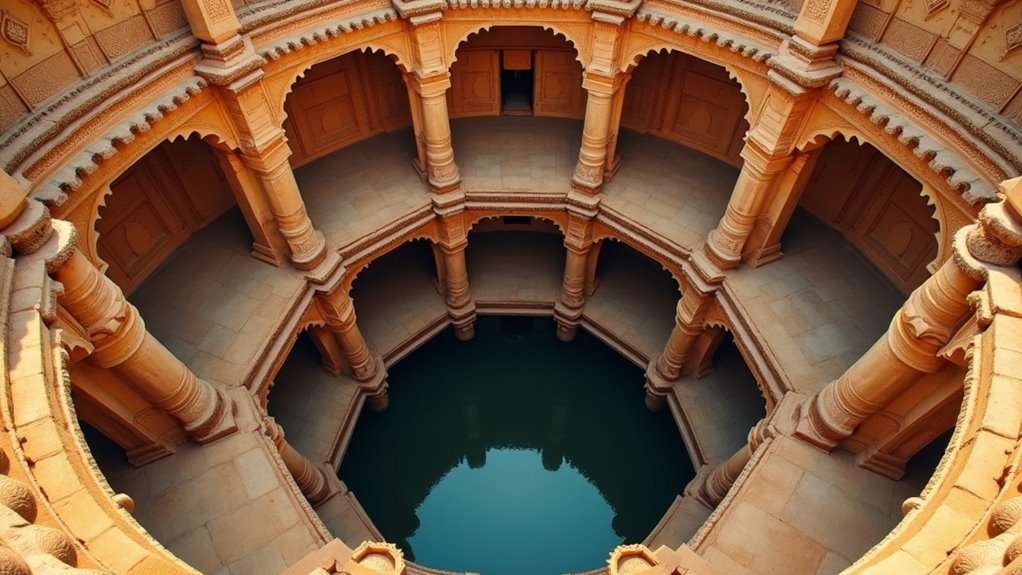
When exploring Ahmedabad’s rich architectural heritage, travelers shouldn’t miss the stunning Adalaj Stepwell, a 15th-century marvel that’s easily accessible and free to visit. Built in 1498 by Rana Veer Singh and completed under Sultan Mahmud Begada, this five-story octagonal structure showcases exceptional Indo-Islamic architecture carved entirely in red sandstone.
Visitors can descend through three entrance staircases to explore intricate carvings depicting Hindu, Jain, and Islamic motifs. The walls feature mythological scenes, everyday life imagery, and geometric patterns that reflect the region’s cultural fusion.
Each floor offers spacious areas with ornamental pillars and elephant carvings. The atmosphere inside remains six degrees cooler than the outside temperature, providing natural climate control. Like many historical destinations, the stepwell offers 10 things for visitors to discover and appreciate throughout their exploration.
Located in nearby Adalaj town, it’s perfect for budget travelers seeking authentic cultural experiences. The stepwell’s engineering brilliance includes natural ventilation systems and deep water access, making it Gujarat’s finest architectural treasure.
Walk Through History at Gandhi Ashram
While Ahmedabad offers countless attractions, no visit is complete without exploring the Sabarmati Ashram, where Mahatma Gandhi lived from 1917 to 1930 and orchestrated India’s freedom struggle. This historic site served as headquarters for pivotal movements including the Salt March, Non-Cooperation Movement, and Khilafat Movement.
Walk through Gandhi’s preserved cottage “Hridaya Kunj” and explore the museum’s galleries featuring life-size paintings, photographs, and historic exhibits. The ashram embodies Gandhi’s principles of simplicity, truth, and non-violence while showcasing structures like Upasana Mandir and Magan Niwas. Residents once followed eleven vows including truth, non-violence, chastity, and non-possession as part of their daily spiritual discipline. Like Hong Kong’s blend of tradition and modernity, the ashram offers visitors breathtaking views along the Sabarmati River that complement the spiritual atmosphere.
Entry is free, making it perfect for budget travelers. Plan 2-3 hours to fully absorb the exhibits and peaceful grounds. The site operates as both a living monument and educational center, offering deep insights into India’s independence movement and Gandhi’s transformative philosophy.
Stroll Along the Beautiful Sabarmati Riverfront
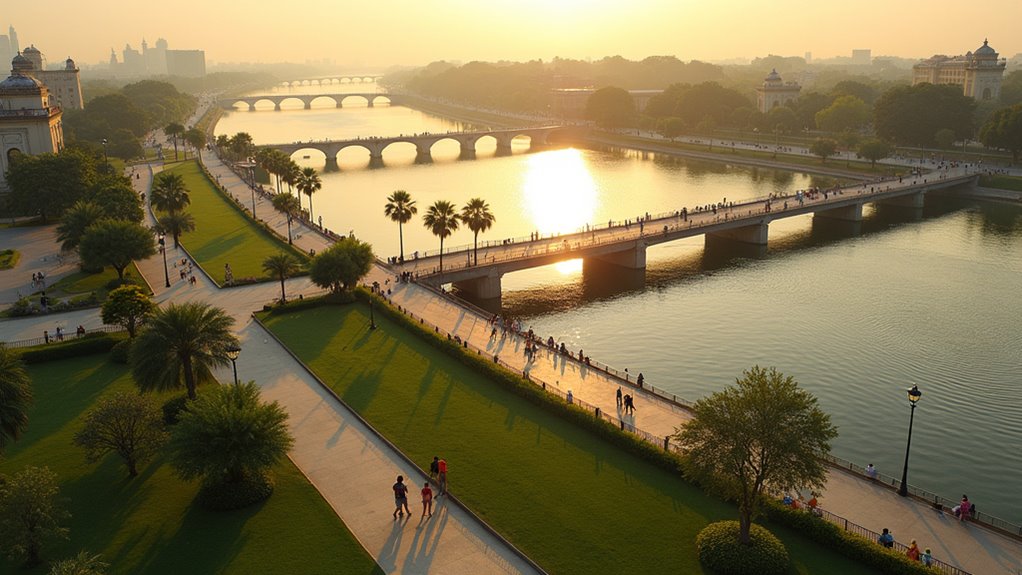
After exploring Gandhi’s legacy, visitors can extend their cultural journey along the stunning 11.4-kilometer Sabarmati Riverfront, one of India’s most ambitious urban development projects. The promenade offers continuous walkways for pedestrians and cyclists on both banks, with thirty-one ghats facilitating traditional cultural activities.
Budget-conscious travelers can enjoy the Riverfront Park for just 10 Rs entry, explore the free Flower Park with over 330 species, or walk across the illuminated Atal Foot Bridge designed like colorful kites.
Water enthusiasts can try kayaking or take Sabarmati River Cruises for approximately 250 Rs per person. Adventure seekers can also experience unique helicopter rides at the Waterdom helipad for spectacular aerial views of Ahmedabad and the riverfront area.
The Ravivari Bajar Sunday Market provides authentic local crafts and street food, while regular seating, public washrooms, and elevator access ensure comfortable exploration of this transformed urban waterfront. For those planning their Ahmedabad itinerary, the riverfront ranks among the must-see highlights that showcase the city’s modern urban transformation.
Enjoy Family Fun at Kankaria Lake
For over 570 years, Kankaria Lake has served as Ahmedabad’s premier family destination, transforming from Sultan Qutb-ud-Din’s 15th-century water reservoir into the city’s most extensive recreational complex.
Families can explore Kamla Nehru Zoo’s wildlife collection, enjoy the scenic Atal Express toy train ride, and let children role-play at Kids City’s educational playground.
Budget-conscious visitors appreciate the minimal ₹10 adult entry fee, with additional charges for specific attractions like rides and zoo access.
Evening cultural shows and laser light displays create magical experiences, while local food stalls offer affordable dining options. Visitors can explore the vibrant Butterfly Park with its lush green environment and colorful species.
The complex accommodates 4-6 hour visits, combining water activities like zorbing with traditional entertainment including mini golf and Segway rides, making it ideal for multi-generational families. The lakefront offers stunning harbour views that rival those of other major Indian waterfront destinations.
Experience the Vibrant Night Market at Manek Chowk
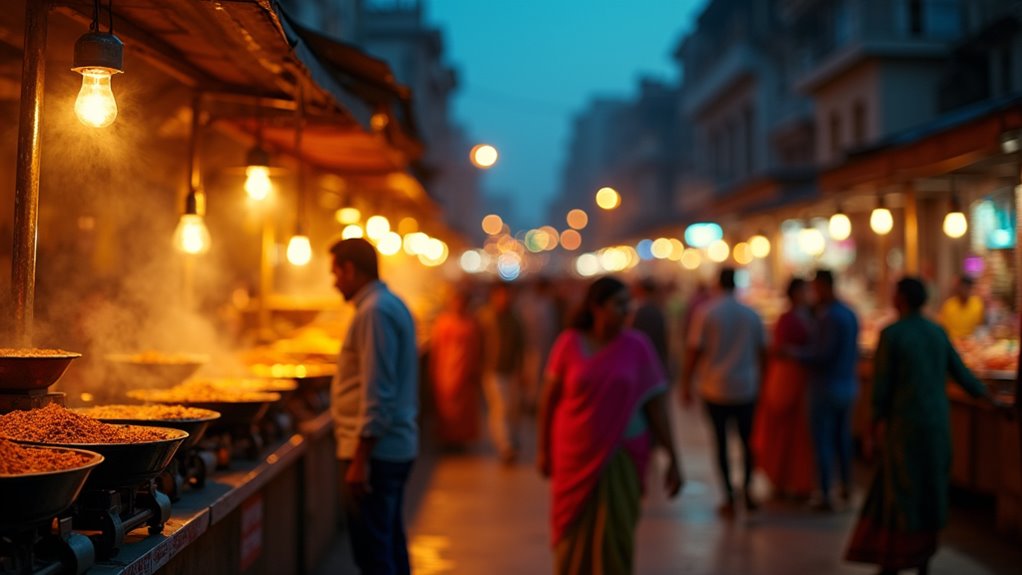
When evening shadows fall across Ahmedabad’s historic center, Manek Chowk undergoes its most mesmerizing transformation from daytime bullion market to the city’s premier street food destination. Around 9:30 PM, vendors set up countless stalls offering authentic Gujarati vegetarian delicacies at incredibly affordable prices—a full meal costs under Rs 200.
Food enthusiasts can savor rabri kulfi, crispy vegetable dosas, bhaji pav, and unique chocolate pizzas alongside regional specialties like Gwalior dosa and jamun shots. Don’t miss Kamlesh Patel’s traditional paan stall, a family-run institution since 1967.
The night market operates until midnight, creating a vibrant social hub where locals and travelers mingle. This 600-year-old chowk, named after Saint Maneknath, perfectly blends Ahmedabad’s commercial heritage with its culinary traditions. For travelers seeking similar adventures in diverse landscapes, Thailand’s Krabi province offers spectacular limestone cliffs and island hopping experiences that create equally memorable cultural encounters. The area’s L-shaped layout features historic tombs on one arm and connects to the Muhurat Pol neighborhood on the other, creating a unique spatial experience for visitors exploring the market.
Explore Science City and Auto World Vintage Car Museum
While Ahmedabad’s culinary scene captivates visitors after dark, the city’s innovative spirit shines brightest at Gujarat Science City, where families can explore India’s most all-encompassing science education complex for just Rs 40 general admission.
Since opening in 2002, this expansive facility transforms learning into entertainment through interactive exhibits spanning robotics, space exploration, and marine life. Don’t miss the IMAX 3D Theatre with its 10-story building-sized screen or the Aquatic Gallery—India’s largest public aquarium requiring a separate ticket but worth every rupee.
The Energy Park’s 9,000-square-meter interactive displays teach energy concepts through hands-on experiments, while live demonstrations in the amphitheatre blend science with performance art for memorable family experiences. Just as Hakodate offers Japan’s best night view from Mount Hakodate, Gujarat Science City provides panoramic learning experiences that illuminate young minds long after sunset. Plan your visit between Tuesday and Sunday as the complex remains closed on Mondays, with operating hours from 10:00 AM to 8:00 PM year-round.
Discover the Spiritual Beauty of Swaminarayan Temple
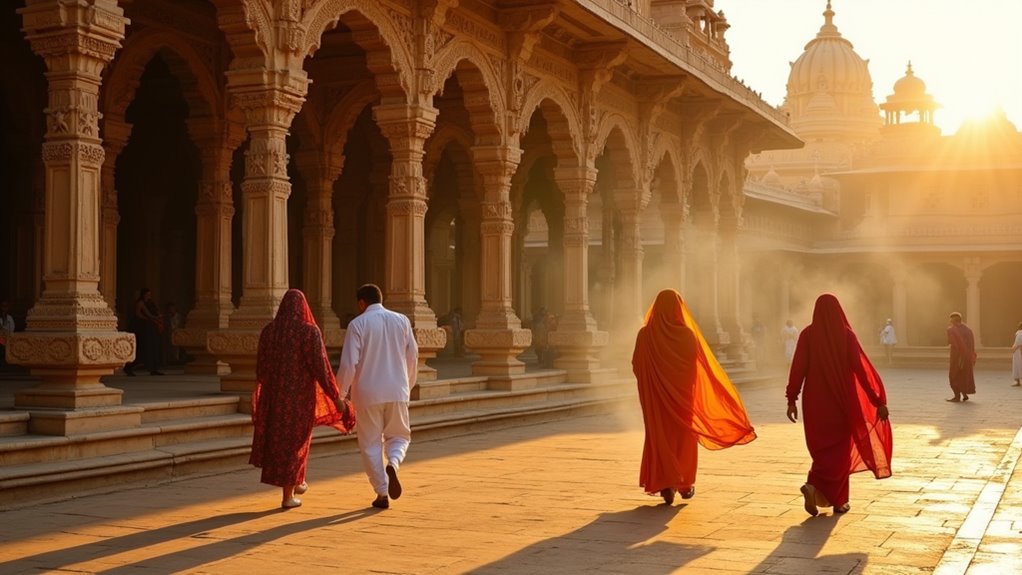
Beyond Ahmedabad’s scientific wonders lies the city’s most revered spiritual landmark—the magnificent Swaminarayan Temple in Kalupur, where visitors can experience Gujarat’s rich devotional heritage for free while marveling at nearly two centuries of architectural mastery.
Built in 1822 as the sect’s first temple, this Burmese teak masterpiece showcases intricate carvings of Hindu deities alongside a unique fusion of Mughal, British, and regional Indian architecture. The temple’s historical significance is underscored by the remarkable 101-gun salute ordered by British officer Sir Dunlop, who was so impressed by its grandeur.
The central hall’s sixty ornately carved pillars and sandstone walls depicting mythological scenes create an immersive cultural experience. Like Xi’an’s famous ancient walls that protect centuries of history, this temple stands as a guardian of Gujarat’s spiritual and architectural legacy.
Travelers can witness devotional practices at the sanctum housing NarNarayan Dev and other deities, while the complex’s guest house and medical facilities demonstrate the temple’s continued community service, making it essential for understanding Ahmedabad’s spiritual foundation.
Take Heritage Walks Through Ancient Monuments and Step-wells
After experiencing Ahmedabad’s spiritual grandeur, travelers can explore the city’s living history through guided heritage walks that wind through ancient pols, ornate step-wells, and centuries-old monuments for just ₹200-400 per person. These 2-3 hour walks cover traditional residential clusters called pols, featuring narrow lanes, communal courtyards, and elaborately carved wooden houses that showcase medieval community living.
Visitors discover architectural marvels including intricately designed havelis blending Hindu, Islamic, and Jain styles, plus significant sites like Jama Masjid with its 260 pillars and Sidi Saiyyed Mosque‘s famous stone latticework. Hidden step-wells reveal ancient water conservation engineering. The optimal experience begins with early morning walks around 8 AM to avoid crowds and heat while capturing the best lighting for photography.
While walks through Sambhavnath ni Khadki temple and other religious sites offer cultural insights into Ahmedabad’s socio-cultural fabric spanning the 15th-17th centuries. Beyond the typical tourist attractions, these heritage walks offer unique experiences that reveal the authentic character of Gujarat’s cultural capital.