
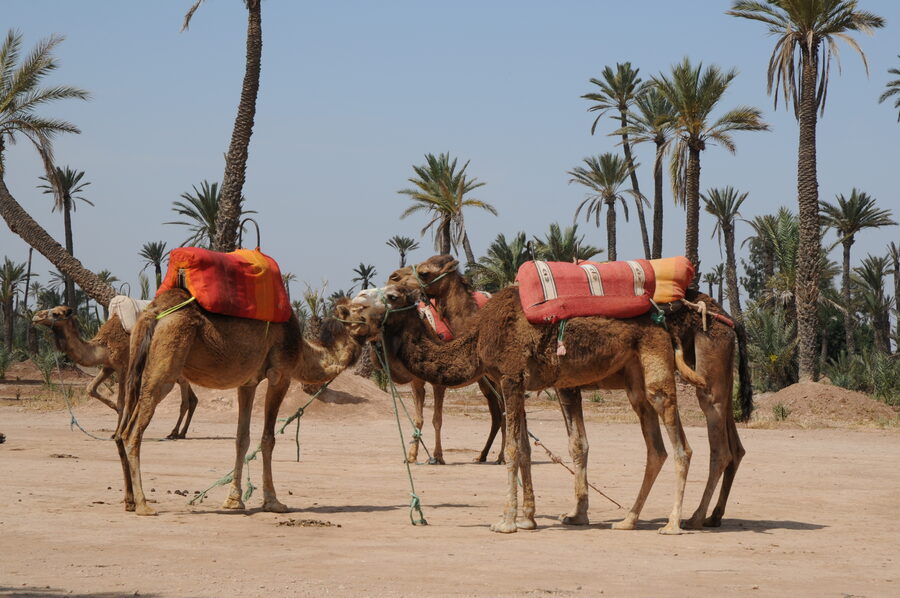
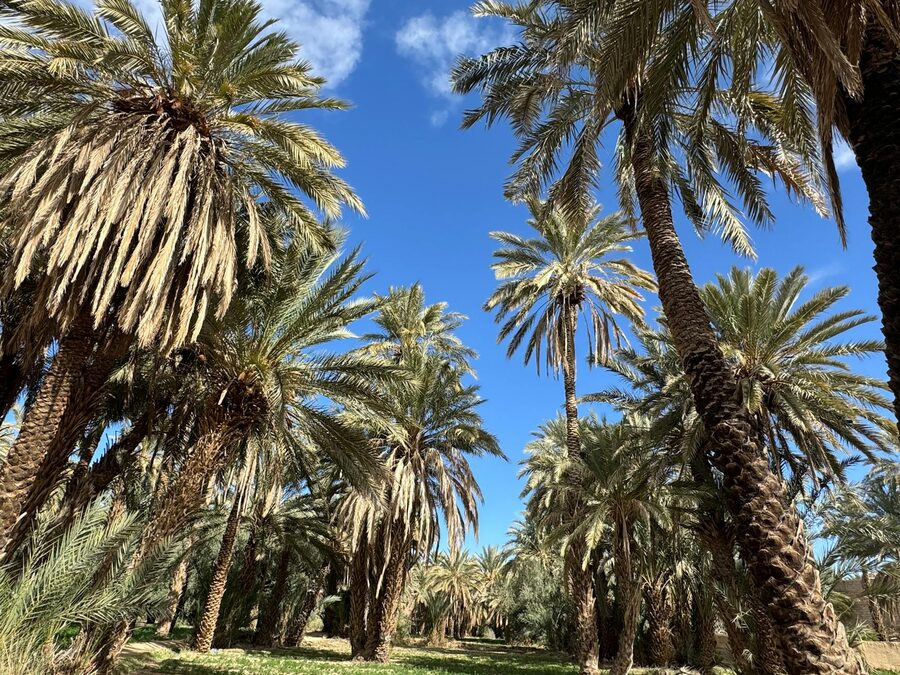
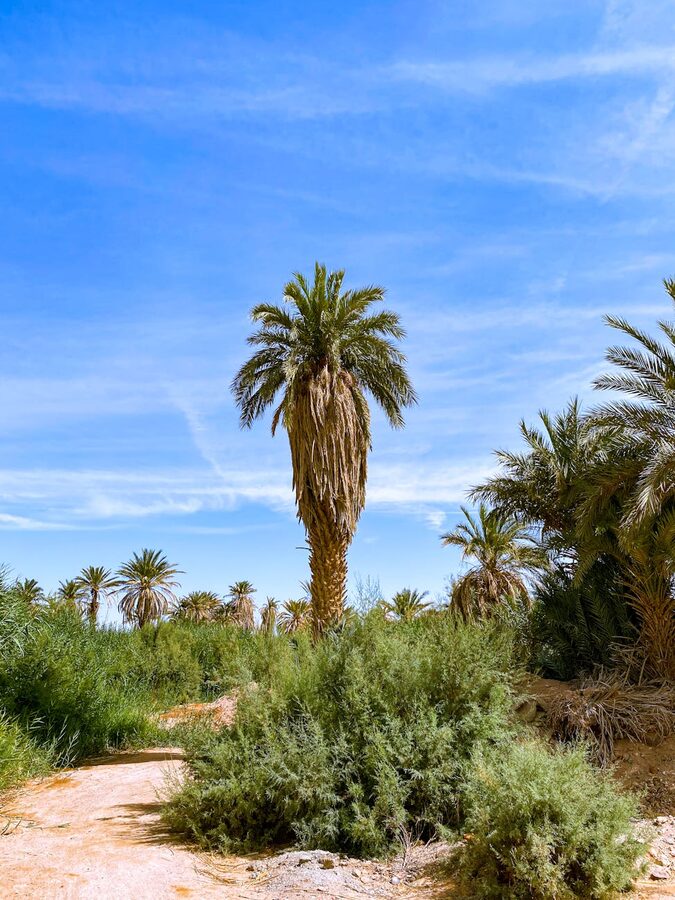
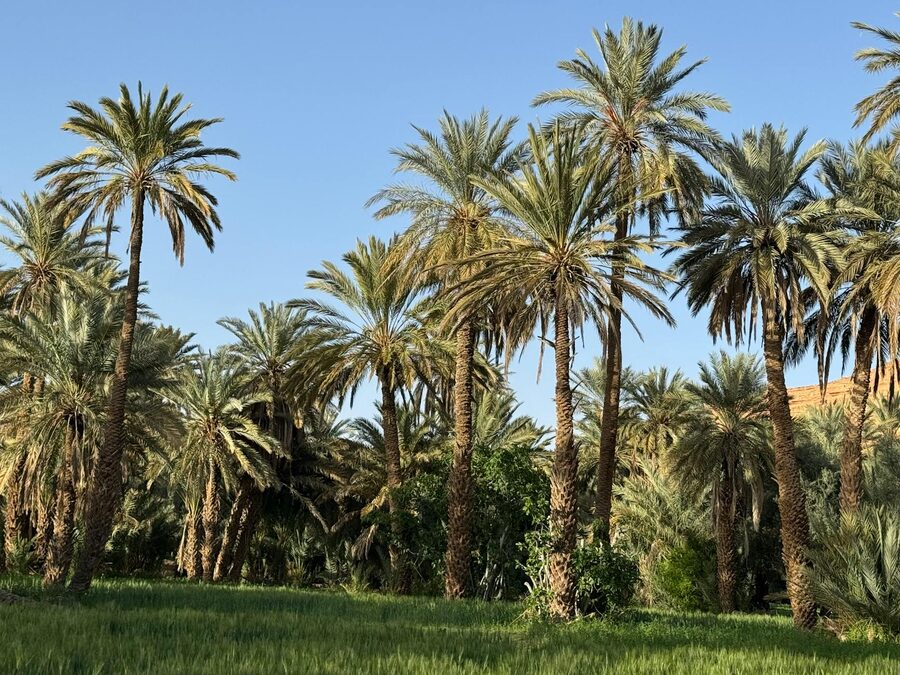
Marrakech’s Palmeraie is 15,000 palm trees just outside the city walls. For a thousand years it’s supplied dates, shade, and now — mostly — camel rides for tourists. It’s not the Sahara, but it’s the easiest camel experience you’ll find from a Marrakech hotel.
The ride is 45-90 minutes on a well-handled animal walked by a Berber handler. You pass through groves of date palms, past small kasbahs, and around a few low hills. Kids love it; adults find it oddly calming.
This guide covers the three camel rides I’d actually book, how to tell a well-treated camel from a stressed one, and the combo tours that add quad biking or buggy driving to make a full afternoon.
- Three Marrakech Camel Rides Worth Booking
- What a Palmeraie Camel Ride Actually Is
- Tour #1 — Camel Ride in the Oasis Palmeraie (Top Pick)
- Marrakech: Camel Ride in the Oasis Palmeraie — per person
- The Camel Experience — What It’s Like
- Tour #2 — 2-Hour Quad Bike and Camel Ride in Palmeraie
- Marrakech: 2-Hour Quad Bike and Camel Ride in Palmeraie — per person
- Tour #3 — Sunset Camel Ride in Palmeraie (Romantic Pick)
- Marrakech: Sunset Camel Ride in Palmeraie — per person
- How to Spot a Well-Treated Camel
- The Mint Tea Break — Why It Matters
- What to Wear
- Combining With Quad Biking, Buggy or Horse Riding
- The Palmeraie vs Agafay vs Sahara
- Dromedary Basics — What Kind of Camel You’re Actually Riding
- Is a Camel Ride Appropriate for Kids?
- The Palmeraie Area — More Than Camels
- Best Time of Day and Year
- Fitting a Camel Ride Into a Marrakech Trip
- Frequently Asked Questions
- Pricing and Booking Tips
- My Bottom Line
Three Marrakech Camel Rides Worth Booking
Prices range from $10 for a short 30-minute ride to $80 for a 3-hour camel-plus-quad combo. The sweet spot is $25-35 for a 1-1.5 hour ride with pickup and tea.
My top pick is the $26 Marrakech: Camel Ride in the Oasis Palmeraie — with 4,883 detailed responses, this is the most-booked camel ride in Morocco. For a combo option, book the $57 2-Hour Quad Bike and Camel Ride in Palmeraie. For a romantic option, the $29 Sunset Camel Ride in Palmeraie is the right call.
All three include hotel pickup from central Marrakech. Budget 2-3 hours door to door depending on traffic and ride length.
What a Palmeraie Camel Ride Actually Is
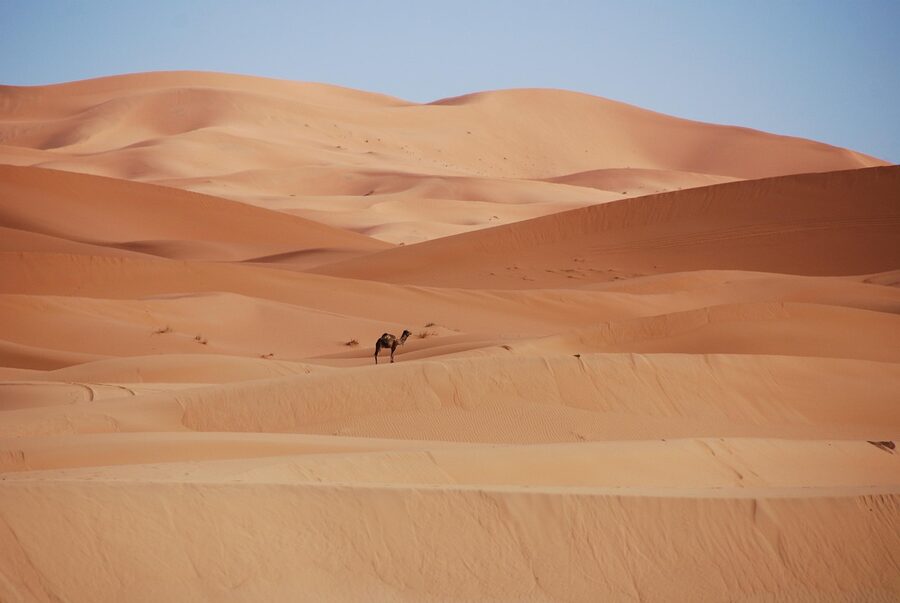
Not the Sahara. Not even close. The Palmeraie is flat, green, and dotted with houses and hotels. If you want real desert on a camel, you need to book a 2-3 day Sahara trip (see the 3-day Sahara tour) or a day trip to the Agafay stone desert (see Agafay guide).
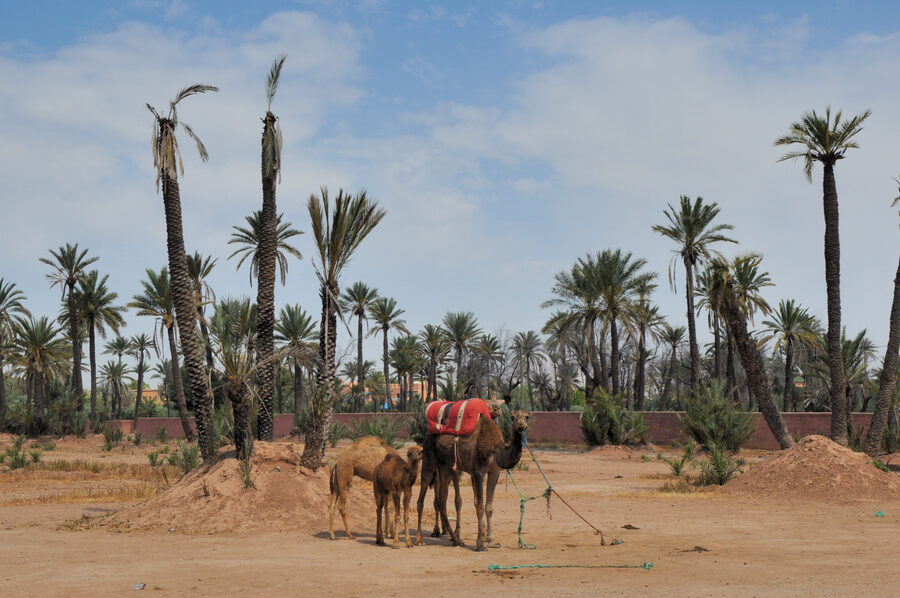
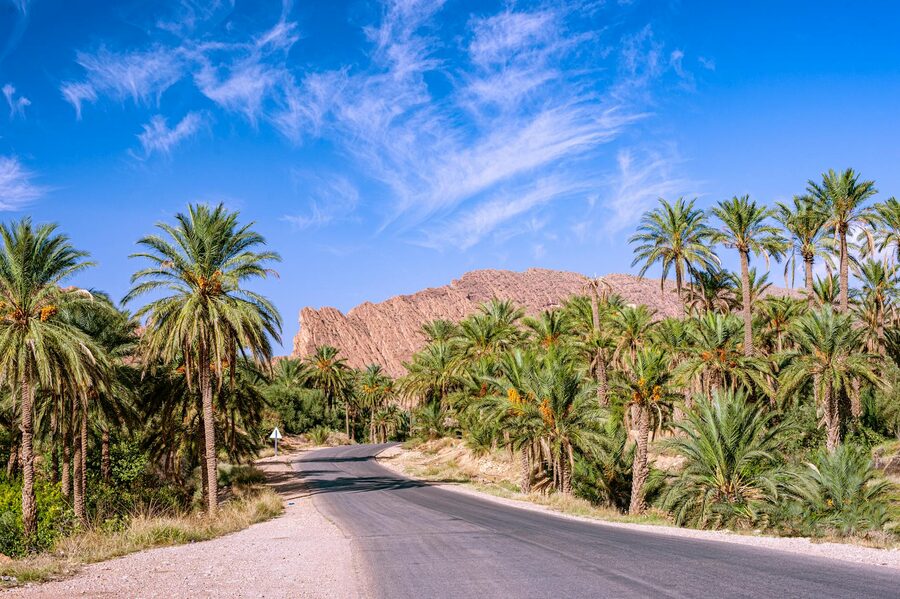
What Palmeraie delivers: a pleasant 45-90 minute ride through real palm groves with a Berber handler, a mint-tea stop midway, and a comfortable hotel pickup. Think of it as a relaxed introduction to camels, not an adventure.
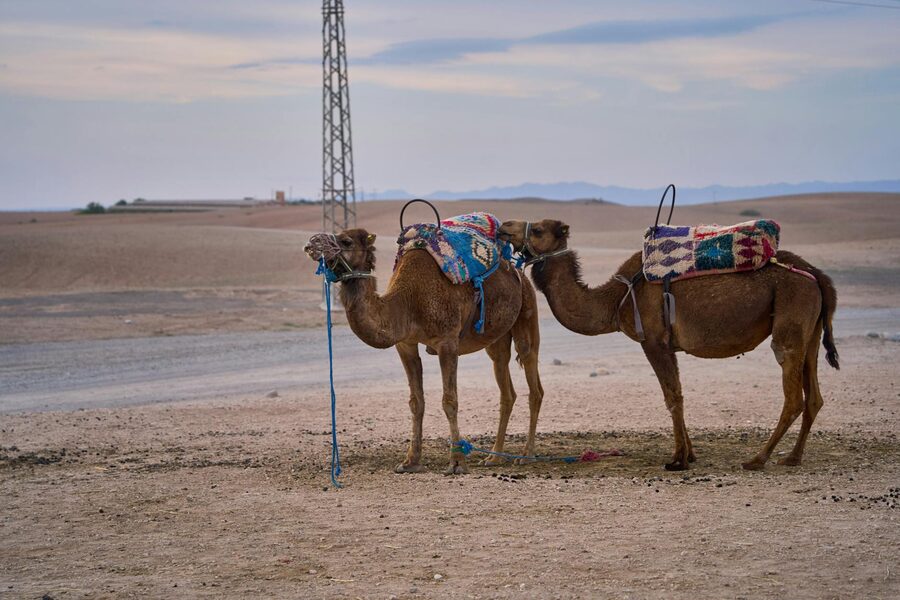
Most rides follow a fixed trail that loops through the groves. You won’t navigate; the handlers do. Total distance is usually 3-5km at about 4 km/h (walking pace).
Tour #1 — Camel Ride in the Oasis Palmeraie (Top Pick)
Marrakech: Camel Ride in the Oasis Palmeraie — $26 per person
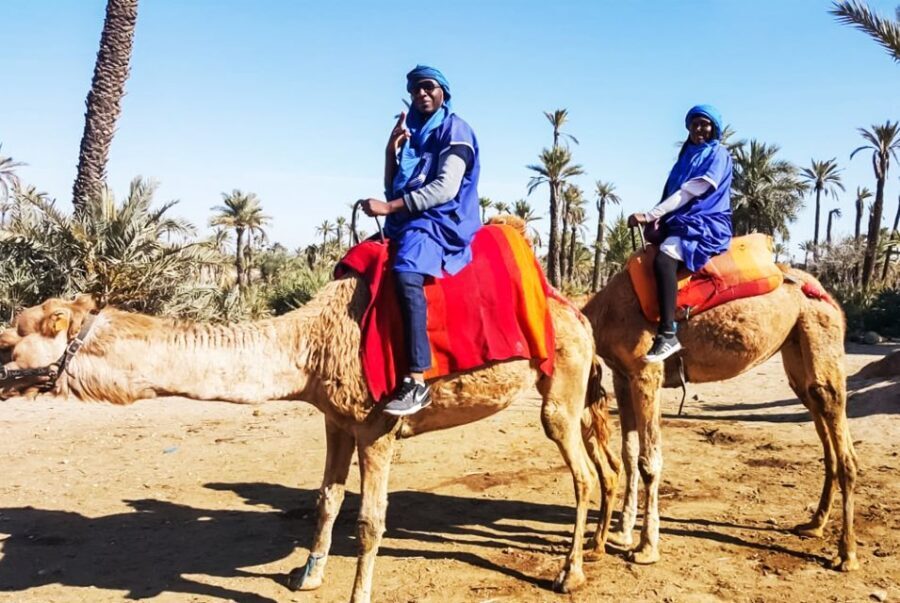
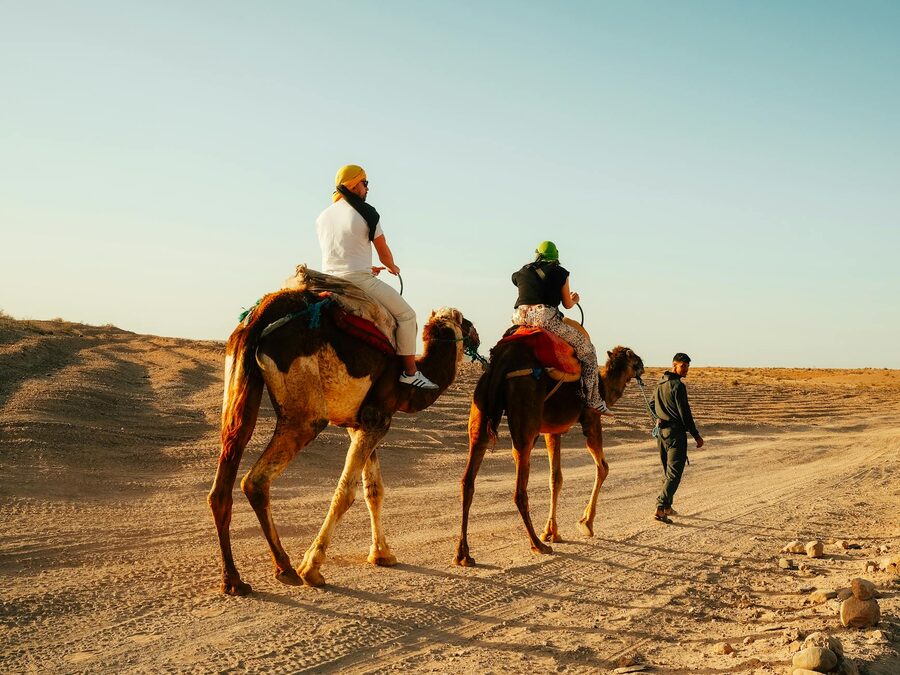
This is the archetype. 1-hour camel ride with hotel pickup, traditional Berber welcome with mint tea and pastries, and a handler who speaks enough English to tell you about the camel. Group size typically 4-10.
The ride is easy. Camels kneel for you to mount, stand rear-first (prepare for the lurch), and walk at a steady pace. The handler leads from the front by a rope; you don’t steer.
With 4,883 detailed responses averaging 4.6 stars, this is consensus reliable. Full details in our Palmeraie camel ride review.
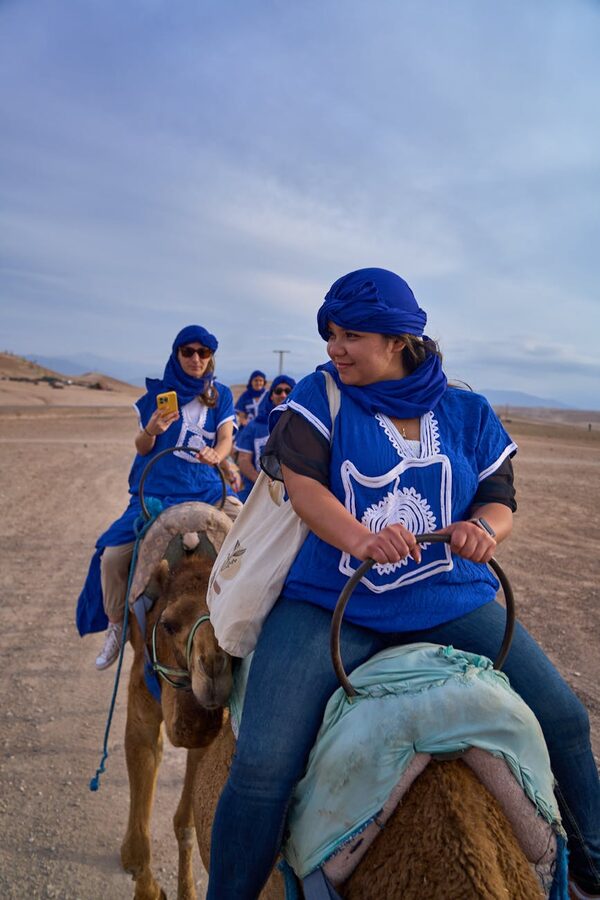
The Camel Experience — What It’s Like
Mounting is the tricky part. The camel is kneeling, you swing your leg over the saddle, and you hold the saddle horn as the animal stands — rear end first, then front. Lean back when the rear stands, then forward when the front goes up. Follow the handler’s instructions.
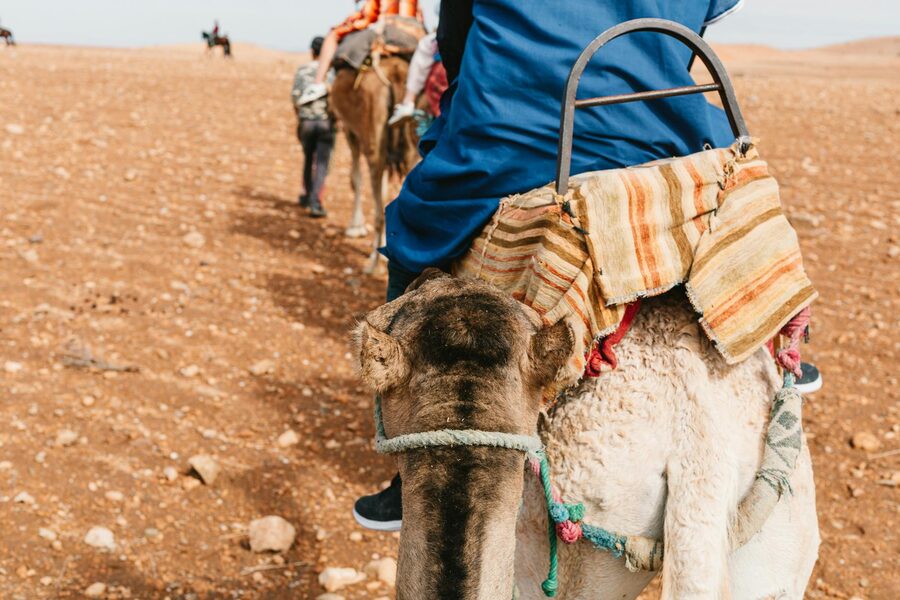
The ride itself is slow, calm, and rhythmic. Hold the saddle horn loosely; don’t grip white-knuckled. Your body naturally finds the rhythm within 5-10 minutes.
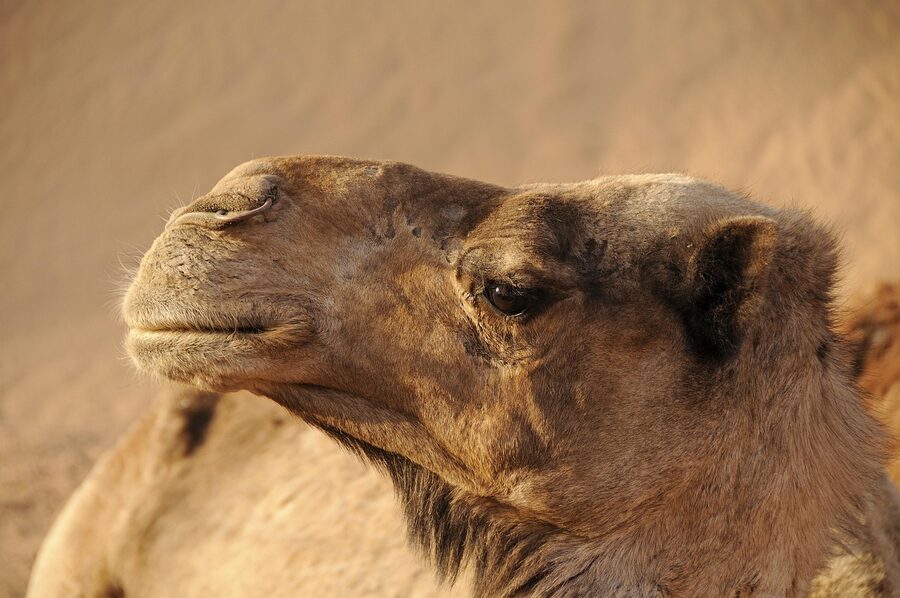
Dismounting is the reverse — hold on, the camel kneels (front legs first, then rear), and you swing off. The whole process takes 10 seconds with a practiced handler.
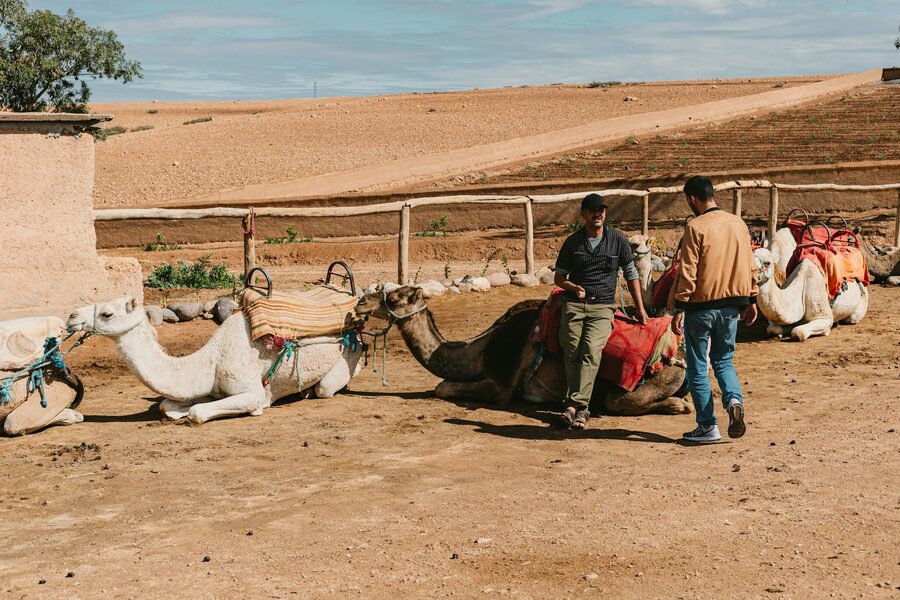
Tour #2 — 2-Hour Quad Bike and Camel Ride in Palmeraie
Marrakech: 2-Hour Quad Bike and Camel Ride in Palmeraie — $57 per person
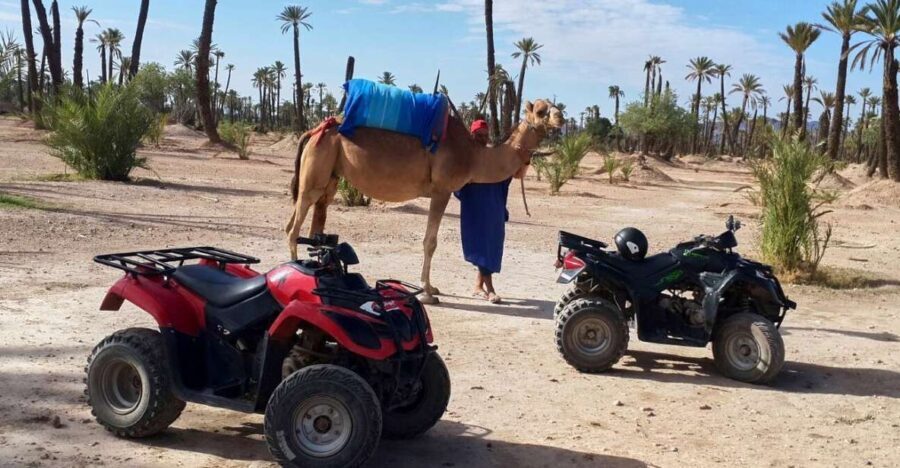
The combo I’d book for anyone wanting both adventure and calm in a single half-day. One hour on a quad bike through the Palmeraie (faster, more exciting), then one hour on a camel (slower, more scenic). Gear switch happens at the same staging camp.
Quad time is guided — you follow a lead rider through set routes at moderate pace. Helmets, goggles and coveralls provided. Min age usually 8.
598 detailed responses at 4.5 stars; it’s a well-run operation. See the full experience in our quad and camel combo review.
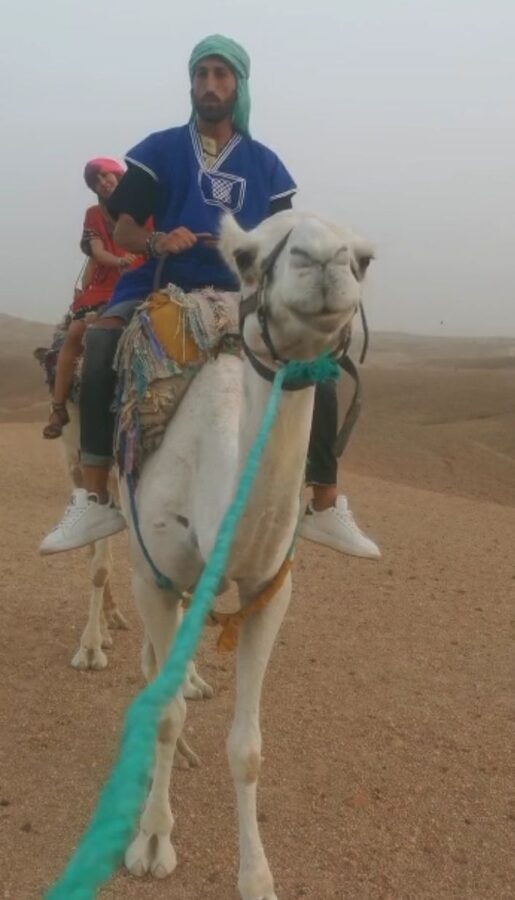
Tour #3 — Sunset Camel Ride in Palmeraie (Romantic Pick)
Marrakech: Sunset Camel Ride in Palmeraie — $29 per person
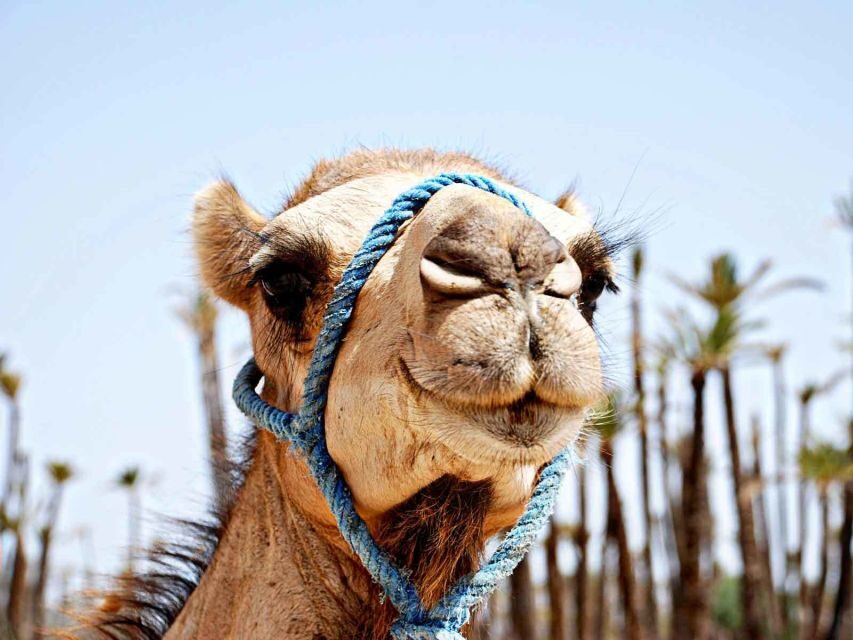
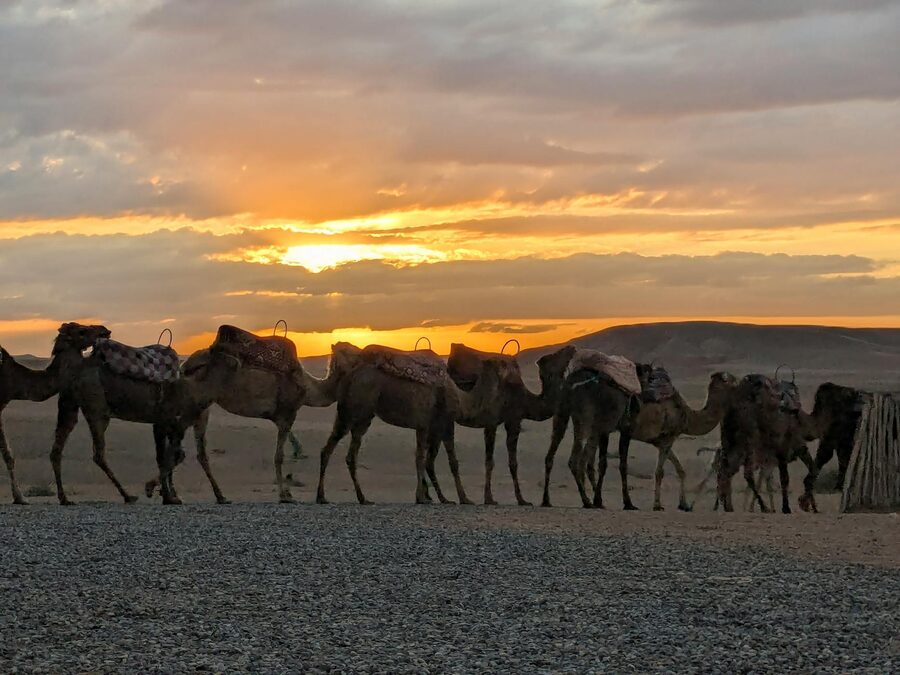
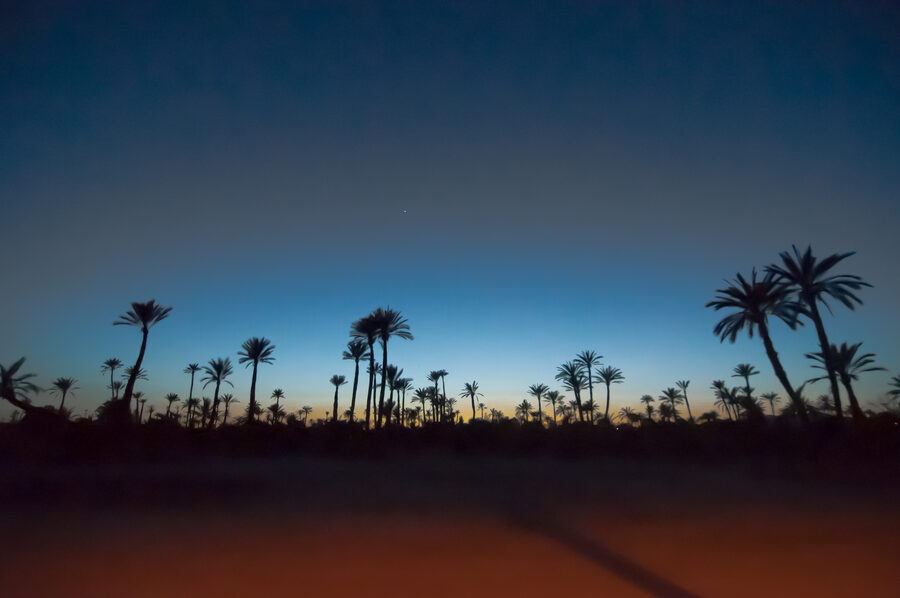
Same Palmeraie, same camels, but timed for the last 90 minutes of daylight. The golden light turns the palm groves rust-orange and the air drops 10°C from the hot afternoon. Photographers love this slot.
Pickup is usually 5-6pm depending on season, ride runs until dusk, drop-off back at your riad around 8pm. Tea break at the camp coincides with sunset.
4.6 stars across 169 detailed responses. See the full sunset version in our sunset camel ride review.
How to Spot a Well-Treated Camel
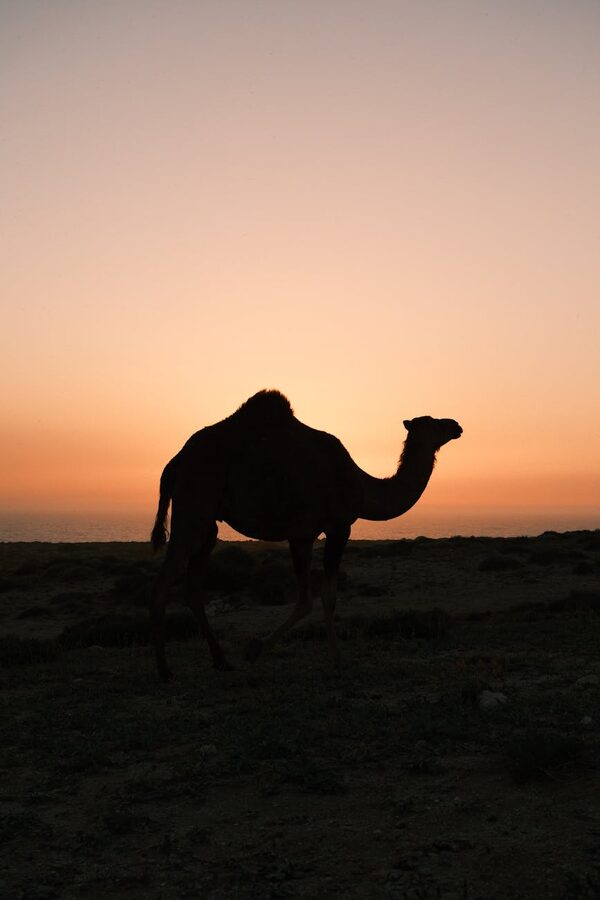
Healthy camels have bright eyes, standing hair (not matted), firm humps (upright, not flopping), and calm demeanor. If the camel looks listless, has open sores where the saddle sits, or is muzzled aggressively, you’ve ended up at a poor operator.
Good operators rotate camels. Each animal works 2-3 hours per day, then rests. If you see the same camel being loaded with a second group immediately after yours, that’s a red flag.
Pre-booking through Viator or GetYourGuide gives you an audit trail. The top-rated operators I recommend in this guide have standards enforced by the booking platforms.
The Mint Tea Break — Why It Matters
Every Palmeraie camel ride ends (or pauses mid-way) at a Berber tent for mint tea, pastries, and photos. This is not a tourist trap pointless stop — it’s a genuine cultural tradition, and the tea itself is worth showing up for.
The tea is Moroccan mint tea — a strong Chinese gunpowder green tea base with fresh mint and sugar, poured from a height into small glasses. The pour creates a foam on top, which is the sign of a good tea. Locals judge tea by the bubbles.
Pastries are usually gazelle horns (kaab el ghazal), chebakia (honey-sesame), or msemmen (flatbread with honey and cheese). Budget 20-30 minutes for the tea break. This is the natural time to tip the handler and camp attendants.
What to Wear
Closed shoes — no sandals. Long pants (jeans are fine). A long-sleeve shirt if the sun is strong. A buff or scarf for dust on the trail.
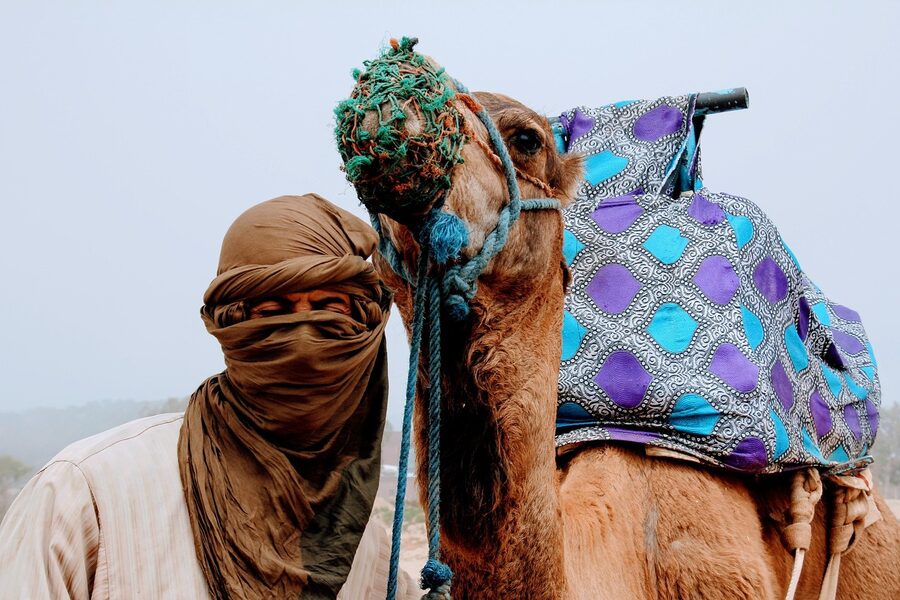
Sunglasses and a hat with a chin strap. The Palmeraie gets windy in summer afternoons and light hats disappear.
Cash for tips — 50-100 dirham per family, usually split between the handler and the camp’s tea attendant. Pay in local currency when possible.
Combining With Quad Biking, Buggy or Horse Riding
Quad + camel (covered in tour #2 above) is the most popular combo. Buggy + camel exists too — similar price, roll-cage buggies you drive yourself. Horse riding + camel is less common but possible at a few operators.
If you want a more active day, consider the full Marrakech quad bike tour instead of the combo. Budget half-day and you get more quad time, plus similar camel exposure.
The Palmeraie vs Agafay vs Sahara
Palmeraie: 15-20 min drive from Marrakech, palm grove setting, 45-90 min ride, $20-35.
Agafay: 30-45 min drive, stone desert (no dunes), longer rides possible up to 2 hours, sunset dinner often included, $35-80. See the Agafay desert tour guide.
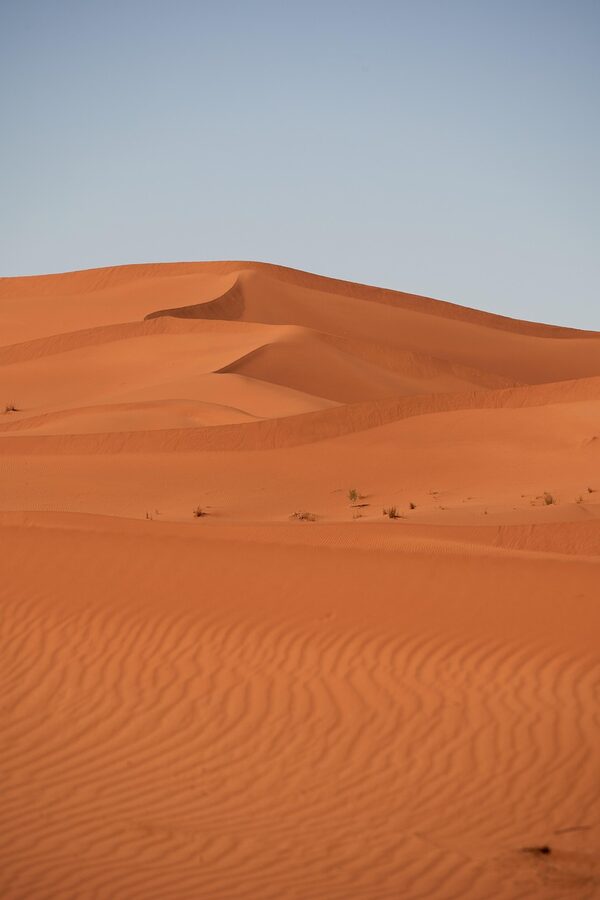
Sahara: 9-hour drive to Merzouga, actual sand dunes, overnight Berber camp, 2-hour sunset ride plus sunrise ride, $150-300 for 3-day package. See the 3-day Sahara tour.
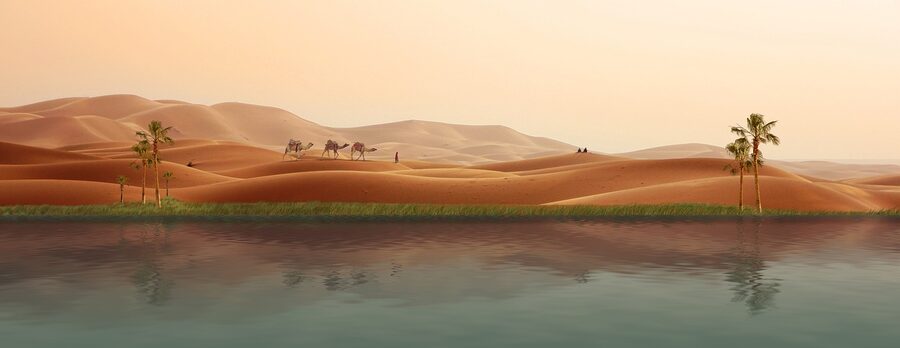
Pick by trip length and budget. If you have 4+ days in Morocco and want the real thing, go Sahara. If you have 1 extra day, Agafay delivers more scenery. If it’s a half-day fit, Palmeraie is the answer.
Dromedary Basics — What Kind of Camel You’re Actually Riding
All Moroccan tourist camels are dromedaries — the single-humped species native to Arabia and North Africa. Bactrian (two-humped) camels are Central Asian and aren’t used for Moroccan tourism rides.
Dromedaries can carry 200kg and walk 40km per day without water in desert conditions. Tourist camels work far less — 3-5km per ride, 2-3 rides per day max. They get fresh water and alfalfa at camp between rides.
Life expectancy is 40-50 years. Most tourism camels are 6-15 years old — the period when they’re trained, sturdy, and predictable around unfamiliar riders.
Male camels (bulls) are aggressive during mating season and typically aren’t used for tourism. Female camels and castrated males are the workhorses of the trade.
Is a Camel Ride Appropriate for Kids?
Yes. Minimum age 4-5 on most operators, with a handler walking beside. Kids 4-10 ride in front of a parent on a double saddle. Teenagers ride their own camel with parental sign-off.
The ride pace is walking. There’s no bolting, no galloping. The biggest kid concern is the mounting/dismounting lurch — coach them to lean into the movement.
The Palmeraie Area — More Than Camels
The Palmeraie isn’t just camel territory. It’s home to some of Marrakech’s highest-end hotels — Oberoi, Four Seasons Resort, Selman, Amanjena. If you’re splurging on a Marrakech stay, many stays are in the Palmeraie and offer camel rides as part of the hotel’s concierge program.
Golf is the other Palmeraie activity. Three championship courses (Amelkis, Rotana, Palmeraie Golf Palace) are scattered across the oasis. If you’re a golfer, book a morning round and a late-afternoon camel ride for a perfect Marrakech day.
The Palmeraie is also where Marrakech’s wealthier families have weekend villas. Many are hidden behind high walls; you’ll pass gates on the camel route but won’t see the properties.
Best Time of Day and Year
Early morning (7-9am): cooler, quieter, no crowds. Best light for photos. Mid-morning (10-11am): still cool, good for adding a medina lunch after. Afternoon (3-5pm): hot in summer (avoid June-August). Sunset (5-7pm): golden light, romantic, popular — book ahead.
By season: October through April is the sweet spot. 18-26°C air, crystal light, comfortable for both you and the camels. November-February is off-peak with 20-30% discount.
Summer (June-August): skip the afternoon. Camels handle 40°C better than you do but you’ll be miserable. Book 7-8am or sunset only.
Fitting a Camel Ride Into a Marrakech Trip
The camel ride works well as a half-day activity. Pair it with either a morning medina walk (see the medina walking tour) or an afternoon hammam (see the hammam guide).
Classic 3-day Marrakech itinerary: day 1 medina + Bahia Palace (see Bahia and Saadian tour). Day 2 Ourika Valley day trip. Day 3 morning camel ride + afternoon Majorelle Garden (see Majorelle guide).
If you’re doing the 3-day Sahara tour, skip the Palmeraie camel ride — you’ll get real camel time in the dunes.
Frequently Asked Questions
How long is the ride? 45-90 minutes on the camel, plus 30 minutes of tea and mounting logistics. Door-to-door 2-3 hours.
Can I steer the camel? No. The handler leads by rope. You hold the saddle horn and enjoy the view.
Is it safe? Yes. Walking pace, handlers experienced, well-handled animals. No serious falls ever reported.
What if I’m overweight? Camels handle up to 150kg. Notify the operator if you’re over that; some have taller/stronger animals.
Is the saddle comfortable? Padded but not cushioned. If you have back issues, do the 45-minute ride only; longer can cause muscle strain.
What if I’m scared of heights? A camel’s back is about 2 meters up. If 2 meters freaks you out, maybe skip.
Can I take photos? Yes, from the saddle. Hold your phone tight. Drones prohibited.
Should I tip? Yes — 30-50 dirham per person for the handler.
Pricing and Booking Tips
Book online before arriving in Morocco. Same tour booked through a Marrakech hotel concierge is typically 40-60% more than online pricing. The hotel keeps the margin.
Confirm what’s included. Hotel pickup is standard on all three tours recommended here. Entrance fees, tea, and equipment should also be included. If the listing only includes the ride itself without transfer, skip it.
Don’t book at the Palmeraie itself. There are walk-up operators at the main entrance who charge 150-300 dirham and offer no quality guarantee. The booked tours are both cheaper and more reliable.
My Bottom Line
The Marrakech Palmeraie camel ride is the easiest camel experience in Morocco. Not the Sahara, but a proper introduction with well-handled animals, professional operators, and no logistics stress.
Book the $26 Camel Ride in the Oasis Palmeraie for the default experience — 4,883 responses back the choice. Upgrade to the $57 Quad Bike and Camel Combo if you want adrenaline alongside. Pick the $29 Sunset Camel Ride for the golden-hour version.
The camel ride is one of those Marrakech experiences that’s easy to dismiss as a cliché but actually delivers something memorable. You’re moving slowly through a landscape that’s existed in some form for a thousand years, on an animal that helped shape the city’s trade routes for centuries.
Go morning or sunset. Wear long pants and closed shoes. Tip the handler. And remember — this is the Palmeraie, not the Sahara. If you want dunes, book the 3-day Sahara tour.