
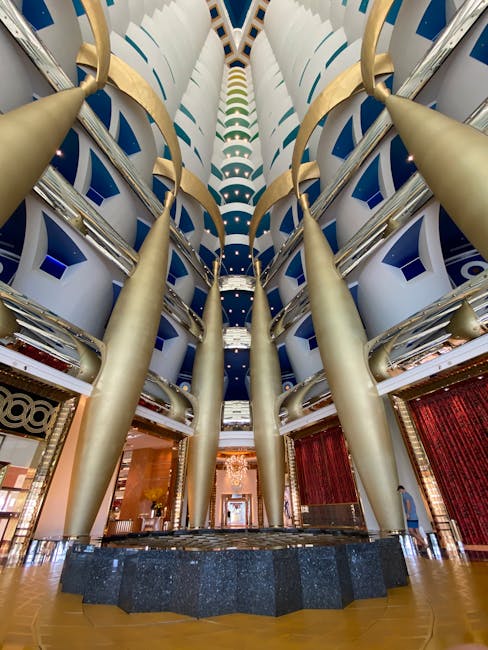
The lobby doors opened and the first thing I saw was gold. Not gold accents, not gold trim — gold everywhere. Gold columns, gold leaf on the ceiling, gold balustrades on the escalators. The atrium soared 180 metres above me, ringed by floors of suites I couldn’t afford, and a fountain at the bottom shot water toward a ceiling I couldn’t see the top of.
This is what $3 billion buys you. The Burj Al Arab doesn’t whisper luxury. It screams it.
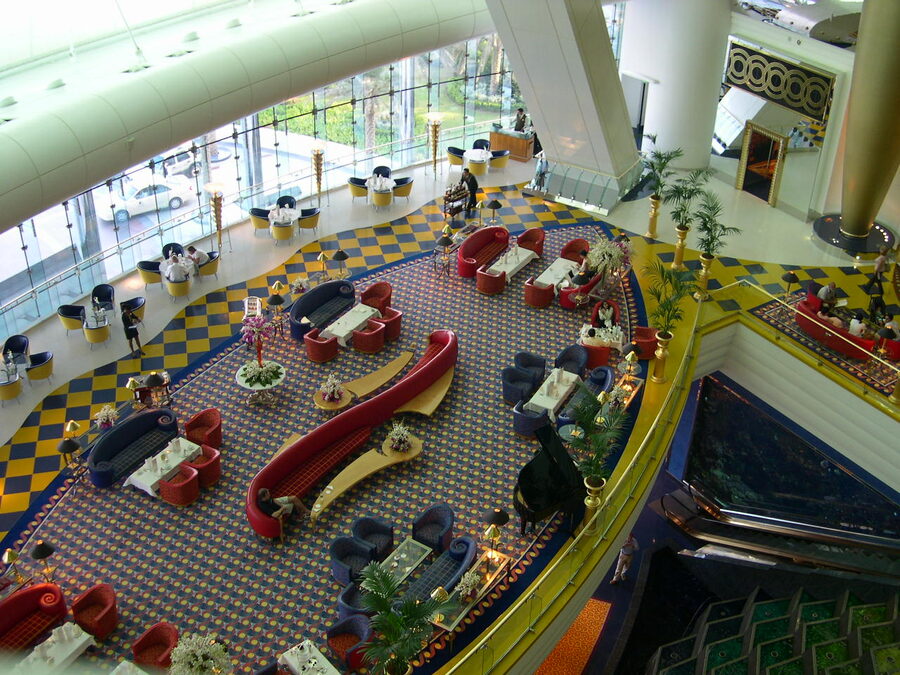
For decades, the Burj Al Arab was completely closed to non-guests. No room booking, no entry. The only way inside was to reserve a table at one of the restaurants — minimum spend $200+ per person — or know someone with a suite key.
Then they launched the guided tours. Now, for $67, you can walk through the lobby, the atrium, the Royal Suite viewing area, and the UJ Bar, with a guide explaining every absurd detail along the way.
In a Hurry? Our Top Picks
The standard guided tour. Lobby, atrium, Royal Suite viewing, and drinks at UJ Bar. The most booked option.
Guided tour plus hotel transfers and optional dinner upgrade. The premium package.
Tour plus souvenir package and enhanced experience options.
- What You’ll See Inside — Room by Room
- The Lobby and Atrium
- The Royal Suite Viewing
- UJ Bar — Drinks with a View
- The Helipad (Sometimes Available)
- Our Recommended Tour Bookings
- 1. Inside Burj Al Arab Guided Tour with Optional Extras —
- 2. Inside Burj Al Arab Tour with Transfer & Dinner Options — 0
- 3. Inside Burj Al Arab Experience with Souvenir Package — 2
- The History Behind the World’s Most Famous Hotel
- Practical Tips — What the Tour Doesn’t Tell You
- How to See the Burj Al Arab Without the Tour
- Is the Inside Tour Worth ?
- Getting There
- Planning the Rest of Your Dubai Trip
What You’ll See Inside — Room by Room
The guided tour lasts about 90 minutes and takes you through the public and semi-public areas of the hotel. You don’t enter guest rooms (the cheapest suite is $2,000/night), but you see enough to understand why this building has become a global symbol of luxury.
The Lobby and Atrium
The atrium is the centrepiece. At 180 metres, it’s one of the tallest hotel atriums in the world — you could fit the Statue of Liberty inside it with room to spare. The space is ringed by colour-coded floors (each floor has a different colour scheme), and the central fountain sends water jets toward the ceiling in choreographed patterns.
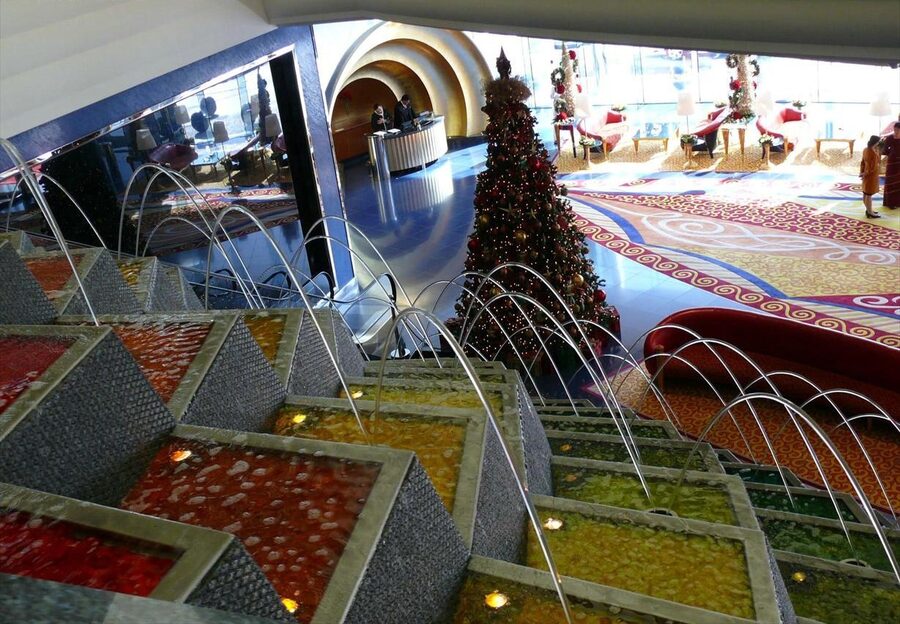
The guide explains the design philosophy behind the interior — it’s meant to represent the inside of a pearl, with the colours representing the ocean (blue), the sand (gold), and the sky (the shifting patterns). Whether you buy the metaphor or not, the craftsmanship is undeniable. Every surface is hand-finished. Every detail is deliberate. The hotel employed 1,500 interior designers and artisans for 5 years.
The Royal Suite Viewing
You don’t enter the Royal Suite — it costs $24,000 per night and it’s usually occupied. But the guide shows you the suite from a viewing area, supplemented by photos and video of the interior. The suite has two floors, a rotating four-poster bed, a private cinema, a library, and a dedicated butler. Guests arriving at the Royal Suite get a Rolls-Royce Phantom pickup from the airport and a helicopter landing on the rooftop helipad.
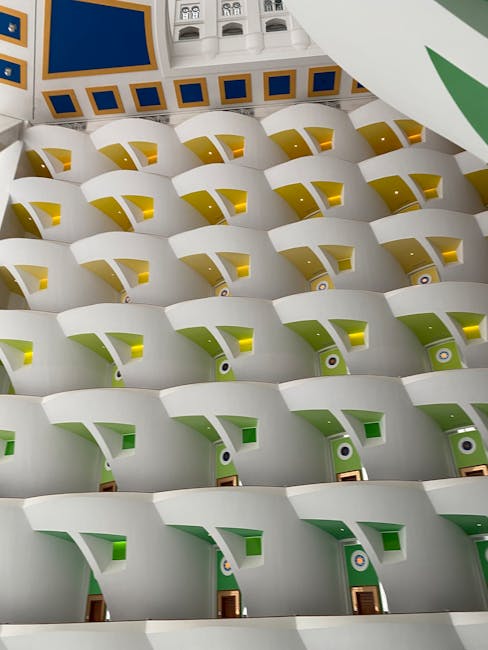
The numbers are absurd and the guide delivers them with the practiced enthusiasm of someone who knows the audience wants to gasp. The bathroom has full-size Hermès toiletries. The bed linen is Egyptian cotton at 1,000 thread count. The in-suite dining menu offers gold-flaked cappuccinos. Whether you find this inspiring or obscene depends entirely on your relationship with money.
UJ Bar — Drinks with a View
The tour includes a drink at UJ (United Jumeirah), a lounge bar on the 27th floor with floor-to-ceiling windows overlooking the Arabian Gulf. The cocktails and non-alcoholic drinks are included in the tour price — which softens the $67 entry somewhat.
The bar atmosphere is relaxed — leather seating, low music, and the kind of service where your glass is refilled before you notice it’s empty. The view west over the Gulf is unobstructed and, during sunset, genuinely spectacular. This is the moment where the tour transitions from “looking at expensive things” to “experiencing something beautiful.”
The Helipad (Sometimes Available)
The rooftop helipad — famous from tennis matches between Federer and Agassi, car launches, and various publicity stunts — is sometimes accessible as an optional upgrade. Check availability when booking. The helipad sits at 210 metres and the views from the top are among the best in Dubai.
Our Recommended Tour Bookings
1. Inside Burj Al Arab Guided Tour with Optional Extras — $67
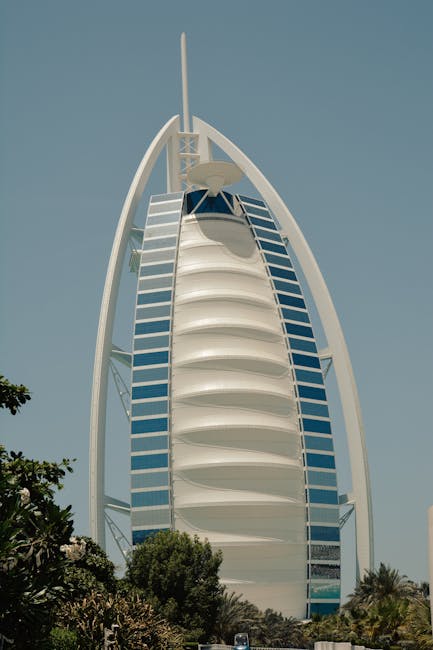
The main booking option on GetYourGuide. 90-minute guided tour covering the lobby, atrium, Royal Suite viewing area, and a complimentary drink at UJ Bar on the 27th floor. Optional upgrades include afternoon tea at Sahn Eddar (the atrium lounge) and dinner at one of the restaurants — but these add $150-$300+ to the base price.
The $67 base tour is what most visitors should book. The guide adds context that you’d miss walking around alone — construction details, design philosophy, and the sheer scale of the investment. The drink at UJ Bar with the Gulf view is the highlight for many visitors. See our full review of the Inside Burj Al Arab tour.
2. Inside Burj Al Arab Tour with Transfer & Dinner Options — $110
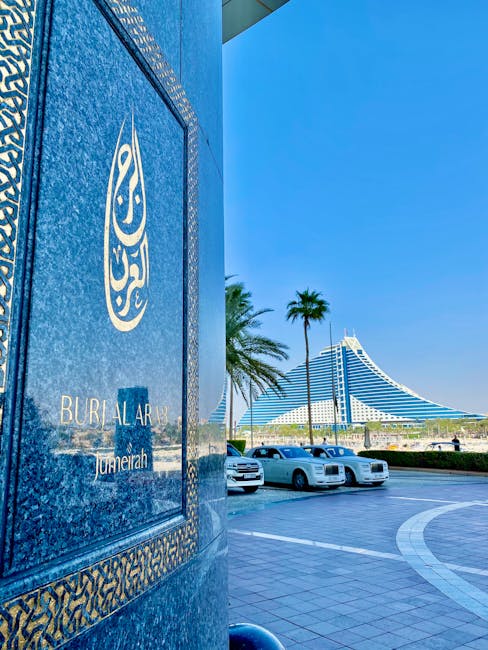
The same 90-minute guided tour with the addition of hotel pickup and drop-off. The dinner upgrade option adds a meal at one of the hotel’s restaurants — Al Mahara (seafood in an underwater dining room) or Al Muntaha (sky-high dining on the 27th floor). The dinner adds $200-$400 per person but turns the tour into a complete evening experience.
At $110 for the tour-with-transfer version, the premium is $43 over the GYG base. Whether that’s worth it depends on where you’re staying and how much you value door-to-door service. See our full review of the premium Viator package.
3. Inside Burj Al Arab Experience with Souvenir Package — $102
The mid-range Viator option that adds a souvenir package to the standard guided tour. Same 90-minute tour, same areas covered, with branded memorabilia and enhanced experience elements. At $102, it sits between the base GYG ($67) and the premium Viator with dinner ($110+).
The souvenir package appeals to visitors who want a physical memento of the experience. If souvenirs aren’t your thing, the $67 GYG base tour gives you the same access to the building at a lower price. Check our full review of the Experience Package.
The History Behind the World’s Most Famous Hotel
The Burj Al Arab was conceived in the early 1990s by Sheikh Mohammed bin Rashid Al Maktoum, who wanted a building that would become an instant symbol of Dubai — the way the Eiffel Tower represents Paris or the Opera House represents Sydney. He hired British architect Tom Wright of WKK Architects (now Atkins) and gave him one instruction: design a building the world would recognize.
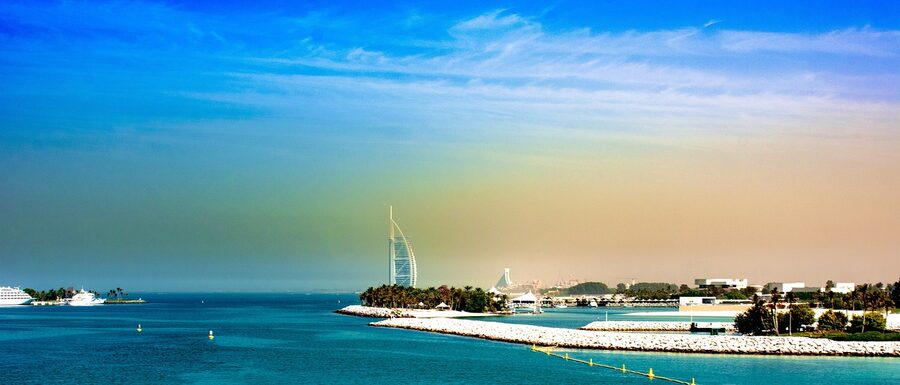
Construction began in 1994 with the artificial island — 3 years of filling the seabed with sand, rock, and concrete to create a stable foundation in the Persian Gulf. The building itself took another 3 years. The total project cost was approximately $1 billion (in 1990s dollars — roughly $2-3 billion in today’s money).
The hotel opened on December 1, 1999 — timed to coincide with the millennium celebrations. It was immediately described by journalists as a “7-star hotel” — a label that doesn’t officially exist in any hotel rating system but which the Burj Al Arab has never discouraged. The marketing worked. Within months, the building was the most recognizable hotel on Earth.
The interior design was led by Khuan Chew, who spent 5 years with a team of 1,500 craftspeople. The colour scheme — gold, red, blue, green — was inspired by the elements of the Arabian landscape: sand, sun, sea, and oasis. The gold leaf alone required 1,790 square metres of 24-carat material. The total interior fit-out cost was estimated at $400 million — more than many entire hotels cost to build.
Every suite in the Burj Al Arab is a duplex — two floors, minimum 170 square metres. There are 202 suites in total. The smallest is the Deluxe Suite at 170 sq m ($2,000+/night). The largest is the Royal Suite at 780 sq m ($24,000/night). All suites include a personal butler, and the Royal Suite includes a Rolls-Royce airport transfer and the option of helicopter arrival on the rooftop helipad.
Practical Tips — What the Tour Doesn’t Tell You
Book at least 3-5 days in advance. The guided tours have limited daily capacity and popular time slots (especially late afternoon for the sunset at UJ Bar) sell out quickly. Weekend slots during peak tourist season are the hardest to get. Book early.
Dress smart casual. The Burj Al Arab has a dress code. No shorts, no sandals, no sportswear. Men: long trousers and a collared shirt minimum. Women: smart dress or trousers. The security checkpoint at the bridge will turn you away if you don’t comply. The guide reminds everyone at booking, but people still arrive in flip-flops and get refused entry.
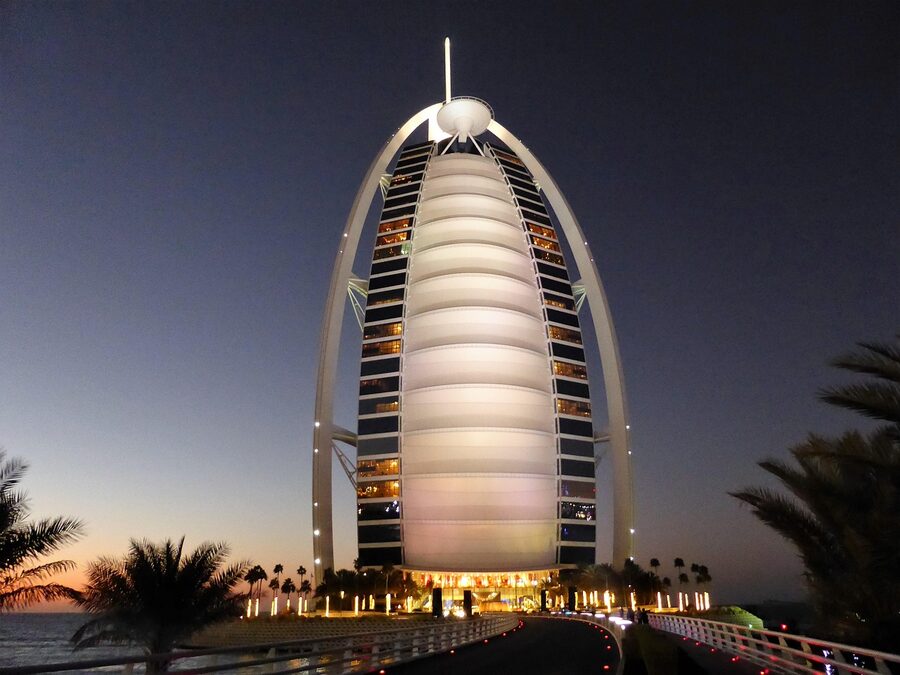
Arrive on time — the bridge has security. You need your booking confirmation (QR code or printed) to cross the bridge to the island. Security checks are airport-style — bags go through an X-ray machine. Allow 15-20 minutes before your tour start time for the security process. Late arrivals miss the tour start and cannot catch up — the group moves together through secured areas.
Photography is allowed and encouraged. The hotel expects visitors to photograph the lobby, atrium, and UJ Bar. Some corridors and the Royal Suite viewing area may have restrictions that the guide will mention. Phone cameras are fine. No professional equipment (tripods, lighting rigs) is allowed without prior permission.
The afternoon tea option is extraordinary but expensive. If you upgrade to afternoon tea at Sahn Eddar (the atrium lounge), budget $200-$250 per person on top of the tour fee. The tea service includes finger sandwiches, pastries, scones, and a selection of premium teas served on bone china in the 180-metre atrium. It’s the most opulent afternoon tea experience in Dubai. Whether it’s worth $250 depends on how much you enjoy the ritual of tea and how much the setting enhances it for you.
The tour is 90 minutes. Plan to spend 2 hours total — 15 minutes for security, 90 minutes for the tour, and extra time for photos in the lobby afterwards. The guide allows free time in the lobby area after the structured tour ends, so you can revisit the atrium and take photos without the group.
The comparison to the Burj Khalifa is inevitable. The Burj Khalifa is taller and gives you a view of the city from above. The Burj Al Arab gives you a view of luxury from inside. They’re complementary experiences. The Burj Khalifa shows you what Dubai built. The Burj Al Arab shows you how Dubai lives — or at least, how the top 0.01% of Dubai lives.
How to See the Burj Al Arab Without the Tour
The guided tour isn’t the only way to experience the building. Here are the alternatives, from cheapest to most expensive.
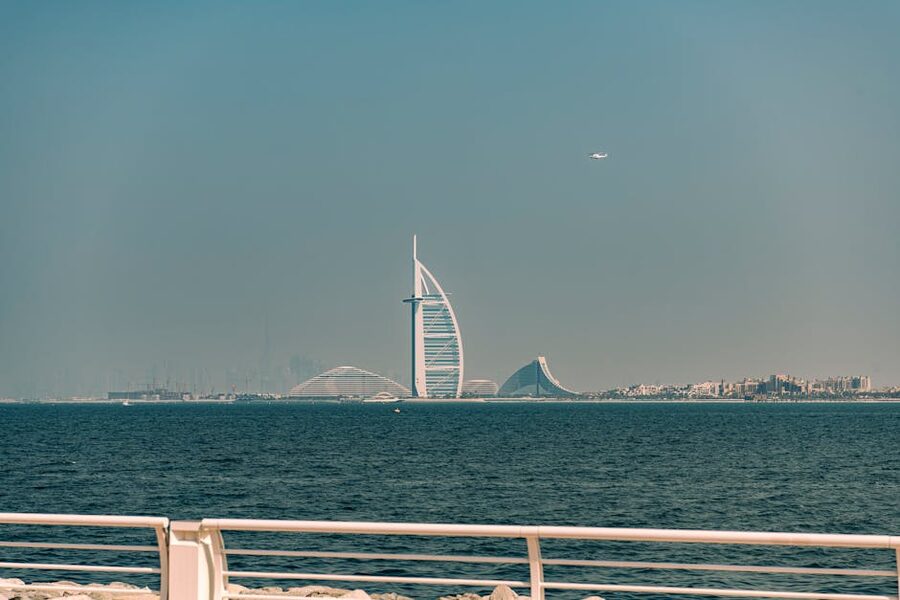
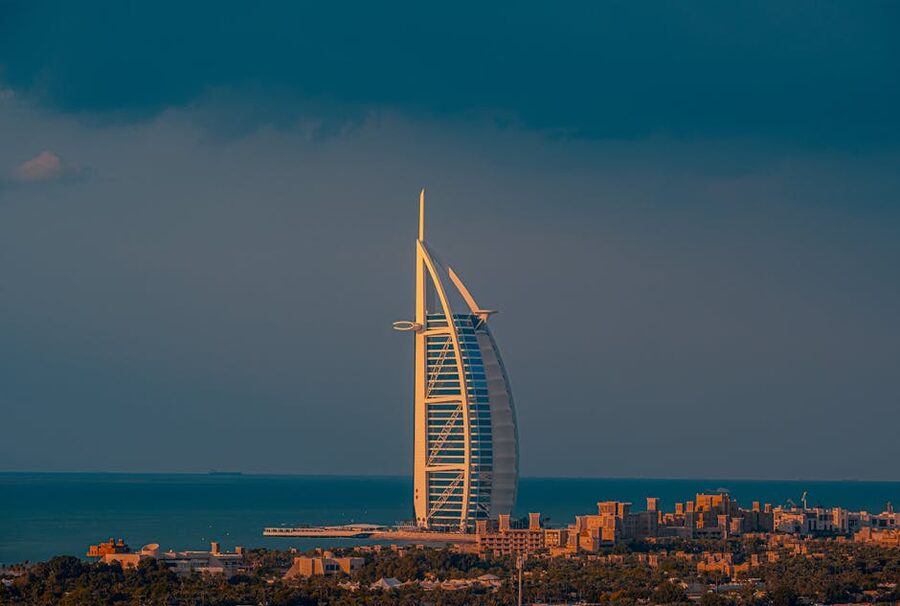
Free — from the beach: The public beach at Jumeirah Beach Hotel (adjacent to the Burj Al Arab) gives you the classic exterior photo with the building framed against the sky. This is the postcard angle and it costs nothing. The beach is a 5-minute walk from the Burj Al Arab bridge checkpoint.
$25-$55 — from the water: The jet ski tours, speedboat tours, and yacht cruises all pass the Burj Al Arab from the water. The sea-level perspective shows the building on its artificial island with the full sail shape visible. This is the second-most-popular angle for photos.
$67 — the guided tour: This article. The inside experience. The only way to access the interior without a restaurant reservation or room booking.
$195-$353 — from the air: The helicopter tours fly past the Burj Al Arab at altitude. You see the helipad, the full sail shape from above, and the artificial island from the air.
$200+ — afternoon tea: Sahn Eddar (atrium lounge) serves afternoon tea daily. No tour guide, no group — just you, the tea, and the 180-metre atrium. Reservation required through the hotel’s website. The experience is quieter and more intimate than the tour.
$300-$500+ — dinner: Al Mahara (seafood, underground aquarium dining room) or Al Muntaha (27th floor, city and sea views). Both require reservations months in advance for prime seating. The food is Michelin-caliber. The settings are extraordinary. The bill is eye-watering.
Is the Inside Tour Worth $67?
If the Burj Al Arab has been on your Dubai list — and for most visitors, it has — the $67 tour is the most accessible way to satisfy the curiosity. The interior is genuinely jaw-dropping, even if your taste runs toward understated design. The gold, the scale, the details — they add up to something you’ve never seen in any other hotel.
The guide adds value that a self-guided visit couldn’t provide — construction details, design anecdotes, and access to areas that aren’t open to walk-ins. The included drink at UJ Bar makes the pricing feel less like an entry fee and more like a cocktail with a 90-minute building tour attached.
If you’re not particularly interested in luxury hotels or architecture, the $67 is better spent elsewhere. The desert safari ($29-$88) offers more diverse entertainment. The Museum of the Future ($46) offers more intellectual stimulation. But for the experience of standing inside the world’s most famous hotel and understanding why it costs $24,000 per night, the tour delivers.
Getting There
Location: Burj Al Arab, Jumeirah Beach Road, Jumeirah 3. The building is on its own island — access is via a bridge with a security checkpoint.
Taxi: Ask for “Burj Al Arab” — every taxi driver knows it. Budget AED 30-50 ($8-$14) from central Dubai. The taxi drops you at the bridge checkpoint, not at the hotel entrance.
From JBR or the Marina: A 15-minute taxi ride. The hop-on hop-off bus has a stop near Jumeirah Beach, within walking distance of the Burj Al Arab bridge.
Planning the Rest of Your Dubai Trip
The Burj Al Arab tour fills an afternoon. Pair it with a morning at the Burj Khalifa for the ultimate “inside Dubai’s icons” day. The Wild Wadi Waterpark is directly next to the Burj Al Arab — visible from the hotel terrace — and makes a fun contrast after the luxury tour.
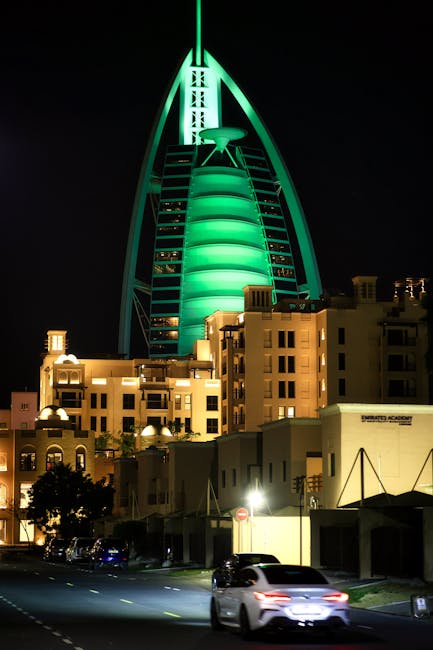
The jet ski tours and parasailing from JBR Beach both pass the Burj Al Arab from the water — booking one of these before or after the interior tour gives you the building from every angle. And the evening dinner cruises from the Marina include the illuminated Burj Al Arab on their route — the building at night, from the water, is a fitting postscript to seeing it from inside during the day.