
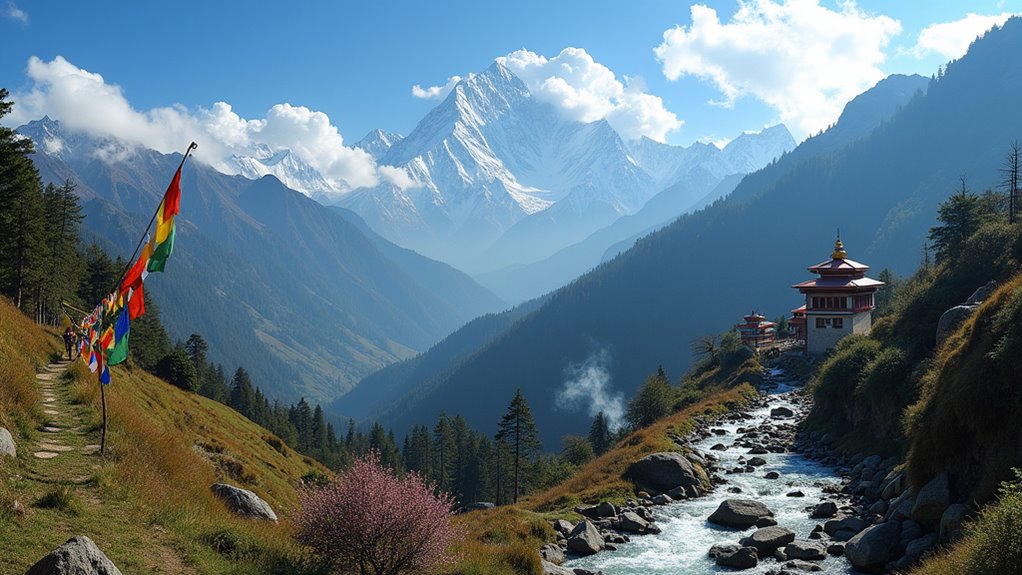
The Annapurna Massif draws trekkers from around the world, but many don’t realize they’re missing half the experience by sticking to just one trail. Smart travelers know there’s more to this Himalayan giant than the famous circuit route. From hidden hot springs that cost nothing to soak in, to high-altitude lakes that rival anything in the Alps, budget-conscious adventurers can discover eight incredible experiences that most visitors overlook entirely.
- Trek to Annapurna Base Camp Through Diverse Terrain
- Conquer the Challenging Annapurna Circuit and Thorong La Pass
- Experience Sunrise Views From Poon Hill
- Explore the High Glacial Basin of Annapurna Sanctuary
- Immerse Yourself in Gurung and Thakali Village Cultures
- Relax in Natural Hot Springs at Jhinu Danda
- Discover Wildlife and Birdwatching in Subtropical Forests
- Venture on Side Treks to Tilicho Lake and Mustang Valley
Trek to Annapurna Base Camp Through Diverse Terrain
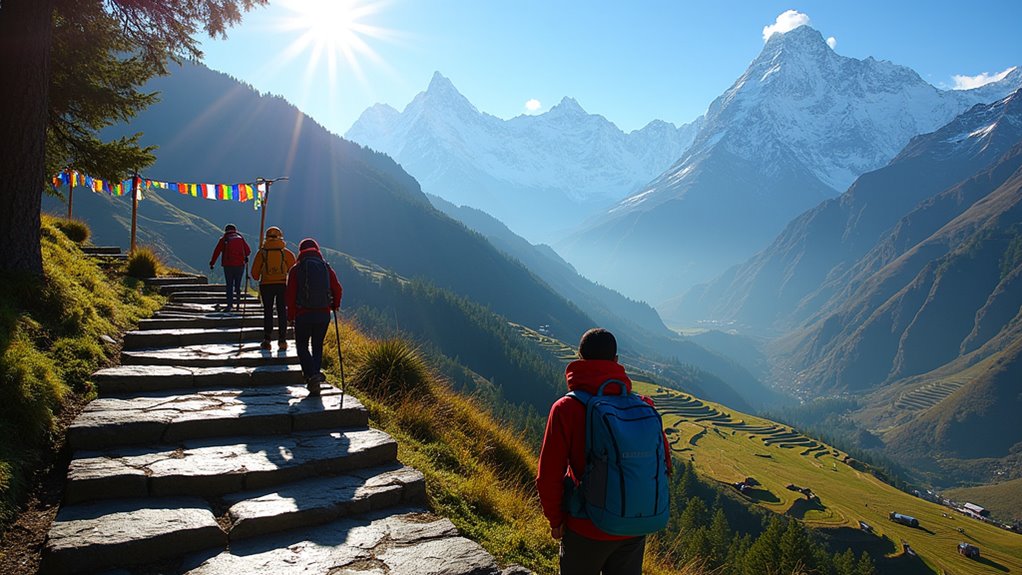
While many trekkers dream of reaching Annapurna Base Camp, few realize they’ll tackle 110 kilometers of Nepal’s most demanding terrain over 11 grueling days. Starting at Birethanti’s modest 1,039 meters, hikers climb nearly 3,100 meters to reach the sanctuary at 4,130 meters elevation.
The route punishes legs with stone steps, rocky paths, and steep ascents through rhododendron forests and terraced fields. Trekkers spend 6-8 hours daily covering 8-15 kilometer segments, crossing Modi Khola river and charting narrow cliff-edge sections. Daily segments include highlights like the suspension bridges connecting dramatic gorges and bamboo forest passages that test endurance.
Smart hikers allow extra rest days at Machhapuchhre Base Camp for acclimatization. Like compiling any comprehensive travel itinerary, planning your trek requires identifying must-see highlights that justify the physical demands of each stage.
The payoff? Annapurna Massif‘s towering 8,091-meter peak dominates 360-degree views, while Machapuchre’s distinctive fishtail silhouette creates Instagram-worthy sunrise shots that’ll make every blister worthwhile.
Conquer the Challenging Annapurna Circuit and Thorong La Pass
Beyond the sanctuary’s towering walls lies Nepal’s most legendary trek: the Annapurna Circuit and its crown jewel, Thorong La Pass at 5,416 meters. This challenging 15-18 day adventure circles the entire Annapurna massif, covering roughly 160-230 kilometers depending on your route choices.
Trekkers gain nearly 5,000 meters of elevation, demanding serious physical preparation and altitude acclimatization. The anticlockwise route offers safer altitude gains while crossing between the dramatic Marshyandi and Kaligandaki valleys—the world’s deepest gorge. Essential acclimatization days in villages like Manang help prevent altitude sickness as you prepare for the high-altitude crossing.
Budget-friendly tea houses dot nearly every village, providing hot meals and warm beds without expensive camping gear. Daily walks average 4-8 hours through diverse terrain from tropical forests to arid Tibetan-style landscapes. Like its neighboring region, the Annapurna area shares the distinction of being part of the Roof of the World with its extreme high-altitude environments and breathtaking mountain vistas. Proper fitness training and altitude sickness knowledge aren’t optional—they’re essential for conquering this Himalayan classic.
Experience Sunrise Views From Poon Hill
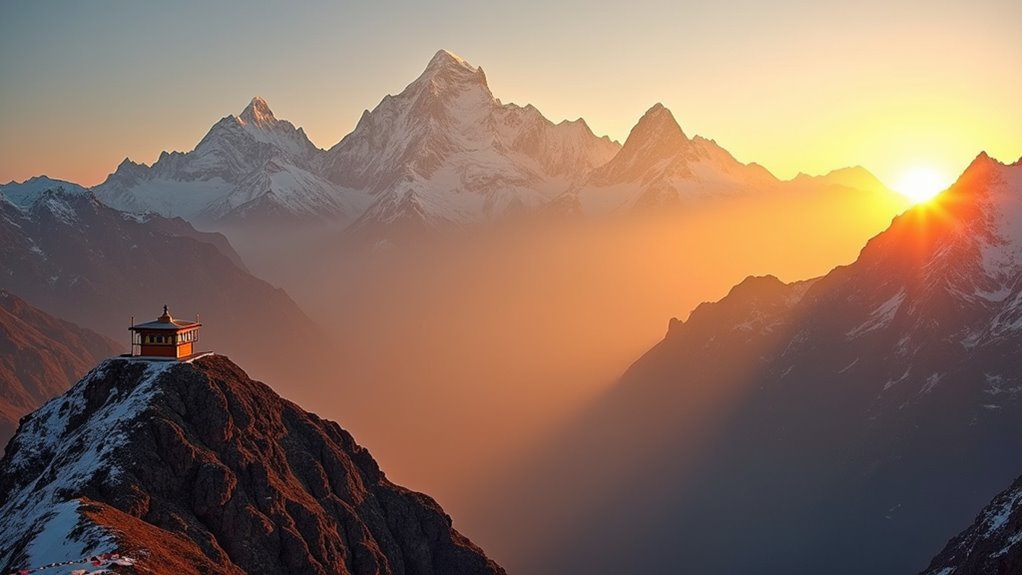
For trekkers seeking spectacular mountain views without the grueling weeks required by longer circuits, Poon Hill delivers an unforgettable sunrise experience at just 3,210 meters elevation. This accessible viewpoint showcases golden light illuminating Annapurna I, Dhaulagiri, and Machhapuchhre across a panoramic vista of ten Himalayan peaks.
The trek’s completed in 3-7 days through rhododendron forests and Gurung villages, making it perfect for beginners. Budget-friendly teahouses provide meals and basic accommodation along well-marked trails.
Early risers climb 45 minutes from Ghorepani village to catch the sunrise spectacle. Travelers can also opt for a modified 3-day route that drives directly from Pokhara to Ghorepani, reducing walking time while maximizing mountain views.
Autumn and spring offer the clearest views, while essential gear includes warm layers for chilly mornings and sturdy boots for stone staircases. This iconic sunrise spot combines stunning mountain photography opportunities with culture in local communities. The region’s vibrant chaos of mountain culture mirrors the energy found in many Asian destinations, creating an authentic Himalayan experience.
Explore the High Glacial Basin of Annapurna Sanctuary
Trekkers seeking a more challenging adventure than Poon Hill’s sunrise views can push deeper into the Annapurna region to reach the spectacular glacial amphitheater of Annapurna Sanctuary. This 13-day trek leads to Annapurna Base Camp at 4,130 meters, where thirteen towering peaks above 7,000 meters encircle visitors in a stunning natural arena.
The moderate-difficulty route follows Modi Khola Valley through rhododendron forests, across suspension bridges, and past the historic Hinku Cave shelter at 3,100 meters. Trekkers witness impressive geological features including lateral moraines, glacial cliffs, and metamorphic rock formations while climbing through distinct vegetation zones. The sanctuary’s microclimate creates unique conditions that support diverse ecosystems ranging from subtropical forests to alpine tundra. This journey through the Indian subcontinent offers an unfiltered glimpse into the raw natural beauty that defines the Himalayan region.
Traditional teahouses provide budget-friendly accommodation throughout the journey, making this high-altitude sanctuary accessible to adventurous travelers with basic fitness levels.
Immerse Yourself in Gurung and Thakali Village Cultures
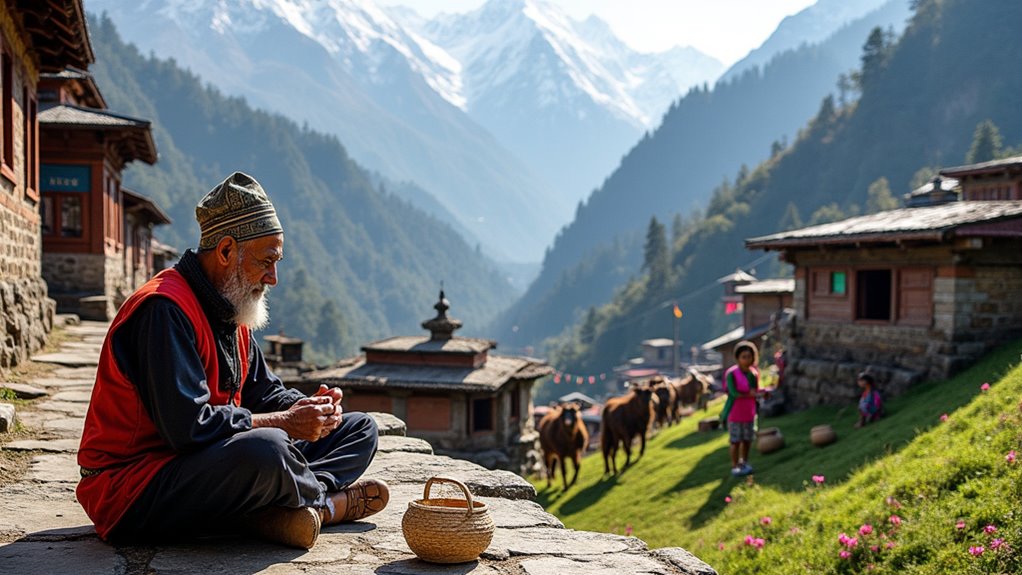
While the dramatic peaks capture most visitors’ attention, the true heart of the Annapurna region lies in its vibrant Gurung and Thakali villages, where ancient traditions thrive alongside modern trekking routes.
Ghandruk offers an authentic glimpse into Gurung life, where you’ll witness traditional terraced farming and hear the melodic sounds of Tungna flutes echoing through stone houses. The warm hospitality here’s legendary—locals welcome trekkers with genuine smiles and hearty meals.
Don’t miss Marpha village, the Thakali cultural hub famous for apple orchards and locally-made brandy. The renowned Thakali thali served in village teahouses provides incredible value, featuring buckwheat pancakes, fermented greens, and perfectly balanced dal bhat. Many villages also feature traditional Gompas that serve as spiritual centers where visitors can observe meditation practices and participate in community ceremonies.
Time your visit during festivals like Lhosar or Dashain to experience traditional Ghatu dances and archery competitions that showcase centuries-old customs. As evening falls, the villages transform into magical settings where the nighttime beauty rivals Japan’s most celebrated mountain destinations, creating unforgettable memories against the backdrop of towering Himalayan peaks.
Relax in Natural Hot Springs at Jhinu Danda
After days of challenging mountain trails, nothing beats sinking into the therapeutic waters of Jhinu Danda’s natural hot springs. Located at 1,780 meters in the Annapurna region, these mineral-rich pools offer weary trekkers the perfect remedy for sore muscles and tired limbs.
The springs sit just 15-20 minutes downhill from Jhinu Danda village along the Modi Khola River. Visitors descend through lush rhododendron and bamboo forests while enjoying stunning views of Annapurna South, Machapuchare, and Himchuli peaks.
This essential stop on the Annapurna Base Camp trek serves as both physical therapy and natural spa experience. The peaceful setting, enhanced by flowing river sounds, creates an unforgettable retreat. Like Taiwan’s historic capital Tainan, which offers travelers a glimpse into centuries of cultural heritage, this mountain sanctuary provides its own timeless appeal to those seeking restoration. The ridgetop settlement also serves as a favored lunch spot for visitors exploring the surrounding area.
Note that the springs close during monsoon season (June-July) for safety reasons.
Discover Wildlife and Birdwatching in Subtropical Forests
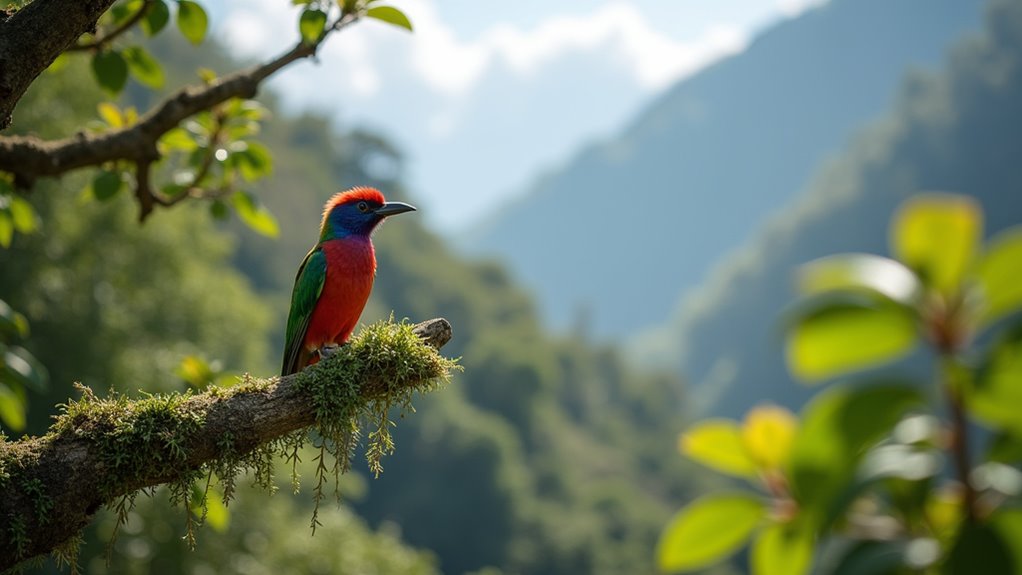
Five hundred distinct bird species and over 100 mammal types transform the Annapurna Conservation Area into Nepal’s premier wildlife sanctuary. The subtropical forests between 800-2,000 meters offer budget-friendly wildlife encounters without expensive permits or guides.
Early morning walks through sal forests around lower elevations reward visitors with sightings of gray langurs, barking deer, and colorful butterflies. Bird enthusiasts can spot Nepal’s only endemic species, the Spiny Babbler, alongside laughingthrushes and various pheasants.
The diverse habitat supports endangered red pandas near Ghorepani and elusive leopard cats. Conservation efforts throughout the region include community-based management programs that protect these species while involving local residents in wildlife preservation. Similar to Taiwan’s Taroko Gorge, these protected areas demonstrate how sustainable tourism can coexist with wildlife conservation.
River valleys provide excellent birdwatching opportunities where white-capped water redstarts, kingfishers, and wagtails frequent the banks. Trekkers don’t need specialized equipment—basic binoculars and patience yield remarkable wildlife experiences.
These accessible forests offer incredible biodiversity encounters that rival expensive safari destinations elsewhere.
Venture on Side Treks to Tilicho Lake and Mustang Valley
Beyond the rich forests and wildlife encounters, adventurous trekkers can extend their Annapurna experience with challenging side treks to Tilicho Lake and Mustang Valley. The Tilicho Lake trek adds 3-6 extra days to the standard Annapurna Circuit, reaching one of the world’s highest alpine lakes at 4,919 meters.
This route is moderate to challenging and branches from Manang through remote terrain with fewer tea houses, meaning higher costs but incredible rewards. The trail features steep rocky paths and requires excellent acclimatization—budget extra days at altitude. Daily distances drop to 10-12 kilometers due to thin air.
Weather can change rapidly, so pack warm gear. The journey passes through unique Gurung communities where trekkers can experience authentic cultural traditions and local hospitality. Like exploring Beijing’s hidden gems, these remote mountain paths reveal secret viewpoints and untouched landscapes far from the crowds. While more demanding than the standard circuit, these side treks offer stunning rock formations, snow-capped peaks, and unique Himalayan experiences that serious trekkers shouldn’t miss.