
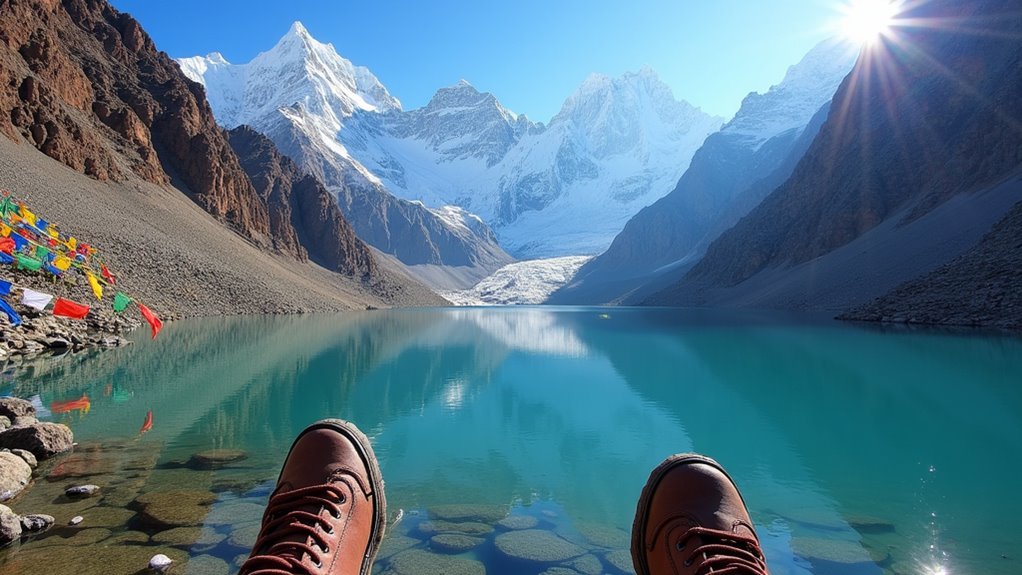
Adventure travelers seeking authentic Himalayan experiences don’t need to break the bank in Nepal. The country’s diverse terrain offers everything from legendary treks through rhododendron forests to wildlife encounters in subtropical jungles. Budget-conscious explorers can stay in local teahouses, eat dal bhat with families, and join community-based tourism initiatives that directly support mountain villages. However, choosing the right adventure depends on understanding Nepal’s seasonal patterns, altitude challenges, and cultural protocols that most guidebooks overlook.
- Everest Base Camp Trek: Journey to the World’s Highest Peak
- Annapurna Circuit: Nepal’s Most Popular Trekking Adventure
- Manaslu Trek: Remote Himalayan Wilderness Experience
- Langtang Valley: Hidden Gem for Off-the-Beaten-Path Explorers
- Paragliding Over Pokhara: Soaring Above the Himalayas
- White-Water Rafting on Trishuli River: Adrenaline-Pumping Rapids
- Chitwan National Park Safari: Bengal Tigers and Rhino Encounters
- High-Altitude Mountaineering: Conquering Nepal’s 6,000+ Meter Peaks
- Bardia National Park: Wild Elephant and Wildlife Adventures
- Spiritual Trekking: Buddhist Monasteries in Mountain Settings
Everest Base Camp Trek: Journey to the World’s Highest Peak
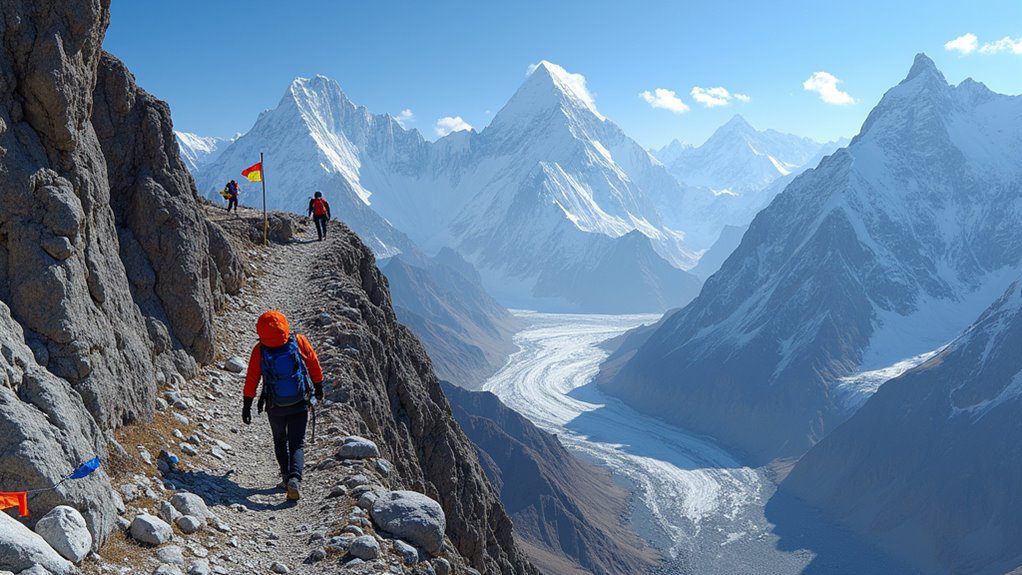
Why do thousands of trekkers each year choose to endure 12-15 days of grueling high-altitude hiking for a glimpse of the world’s tallest peak? The Everest Base Camp trek delivers an unmatched combination of culture and mountain adventure at a fraction of climbing costs.
Starting from Lukla’s airstrip at 2,860 meters, trekkers cover 130 kilometers through Sherpa villages like Namche Bazaar and Tengboche, reaching Base Camp at 5,364 meters. Daily distances average 10-15 kilometers over 5-8 hours, with strategic rest stops preventing altitude sickness.
The route passes suspension bridges, rhododendron forests, and ancient monasteries, offering authentic cultural exchanges with local communities. Many trekkers extend their journey to Kala Patthar at 5,643 meters for the ultimate panoramic view of Everest’s summit. Like Okinawa’s pristine coastlines that draw visitors to experience Ryukyu culture alongside natural beauty, the Himalayas offer their own unique blend of mountain vistas and traditional heritage. Budget-conscious adventurers can complete this challenging trek for considerably less than technical climbing expeditions while experiencing the same breathtaking Himalayan scenery.
Annapurna Circuit: Nepal’s Most Popular Trekking Adventure
While the Everest Base Camp trek captures headlines, Nepal’s Annapurna Circuit attracts more trekkers annually with its diverse landscapes, rich cultural encounters, and budget-friendly logistics.
The 160-230 kilometer route typically takes 15-18 days, crossing Thorung La Pass at 5,416 meters. Daily costs average just $30-35, covering tea house accommodations and meals featuring Nepali, Indian, and Western cuisines.
Trekkers experience dramatic terrain shifts from lush valleys to windswept Himalayan plateaus while passing through Gurung and Manangi villages. The trail offers spectacular views of Annapurna I and Dhaulagiri peaks. Like other must-see highlights of Nepal’s adventure offerings, these mountain vistas create unforgettable memories for visitors.
Daily distances range from 8-15 kilometers depending on altitude and terrain difficulty. Popular side trips to destinations like Tilicho Lake and Poon Hill add extra days but provide access to unique landscapes and cultural sites.
Essential permits include TIMS cards and ACAP permits. Proper acclimatization prevents altitude sickness, while moderate fitness levels handle the substantial elevation changes throughout this culturally rich adventure.
Manaslu Trek: Remote Himalayan Wilderness Experience
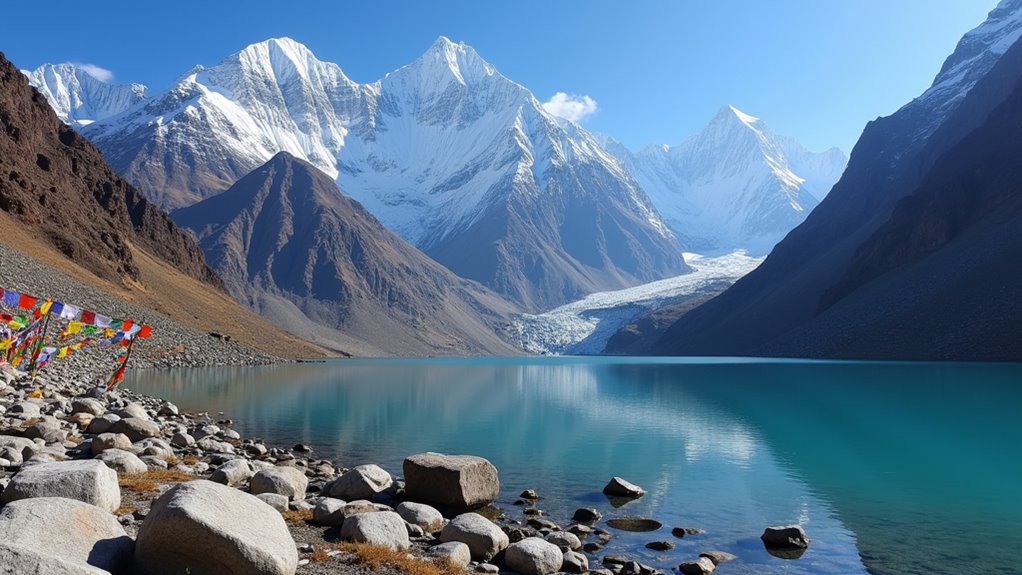
For trekkers seeking authentic Himalayan wilderness beyond crowded trails, the Manaslu Circuit delivers Nepal’s eighth-highest peak experience at half the cost of Everest Base Camp. This 150-200 kilometer trek circles Mount Manaslu (8,163m) over 12-20 days, offering genuine culture through Tibetan-influenced villages like Sama Gaon and Namrung.
Daily walks average 10-20 kilometers through diverse terrain—from terraced farmland to glacial valleys. The challenging Larke La Pass (5,160m) requires proper acclimatization and represents the trek’s pinnacle moment. Budget-conscious adventurers appreciate supporting local teahouses while experiencing traditional hospitality and cuisine.
This moderate-to-strenuous trek suits physically prepared first-timers with guides. Starting from Machha Khola after a 7-9 hour drive from Kathmandu, trekkers discover monasteries, rhododendron forests, and snow-capped peaks without Everest’s crowds or premium pricing. Like exploring Japan’s seaside temples, these sacred mountain monasteries offer spiritual respite amid stunning natural landscapes. Experienced hikers walking 6 to 8 hours daily can complete the circuit faster, potentially shortening the standard duration by 1-2 days.
Langtang Valley: Hidden Gem for Off-the-Beaten-Path Explorers
Just 32 kilometers north of Kathmandu, Langtang Valley offers budget-conscious trekkers authentic Himalayan culture without the expense and crowds of popular circuits. The 5-9 day trek reaches Kyanjin Gompa at 3,830 meters, providing stunning views of Langtang Lirung’s 7,227-meter peak and nearby glaciers.
Tamang villages showcase traditional Buddhist customs, while teahouses offer affordable accommodation and meals prepared by local families. Trekkers experience genuine cultural exchange through monastery visits and festival participation.
The trail winds through rhododendron forests that bloom spectacularly in spring, creating natural photo opportunities. While the Himalayas offer rugged mountain adventures, travelers seeking ultimate relaxation can discover the magic of overwater bungalows in tropical destinations like the Maldives.
Wildlife enthusiasts might spot red pandas and snow leopards within Langtang National Park‘s diverse ecosystems. The park spans three districts including Rasuwa, Nuwakot, and Sindupalchowk, covering 1710 square kilometers of protected wilderness. Post-earthquake reconstruction has improved infrastructure while maintaining the valley’s authentic character, making it perfect for travelers seeking meaningful connections with Himalayan communities.
Paragliding Over Pokhara: Soaring Above the Himalayas
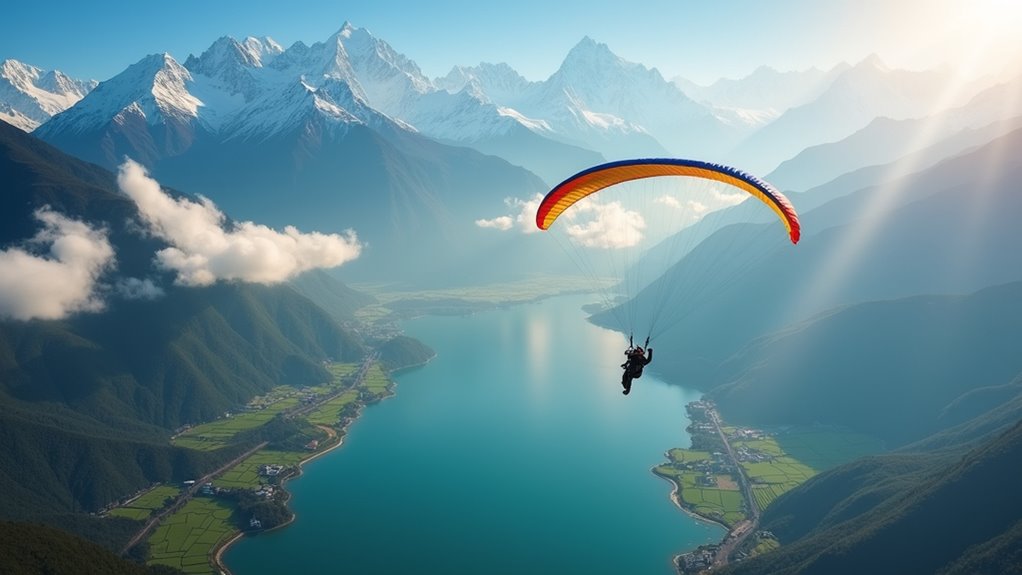
Although Pokhara’s paragliding scene attracts thrill-seekers worldwide, budget travelers can experience this aerial adventure for around $85-90, making it one of Nepal’s most accessible extreme sports.
Tandem flights launch from Sarangkot hill at 1,600 meters, soaring above Phewa Lake while certified pilots handle navigation. The 20-30 minute flights offer stunning views of Annapurna range peaks and Machhapuchhre’s distinctive summit.
Smart travelers book between September and May when weather conditions remain stable. Monsoon season flights get canceled frequently, so timing matters. Three daily slots typically operate at 10:30 AM, 12:00 PM, and 2:00 PM to accommodate different schedules.
Standard packages include hotel transfers, safety briefings, and equipment. Weight limits range from 20-100 kg, accommodating most travelers. Like Japan’s famous nighttime beauty destinations, Nepal’s aerial adventures create equally memorable experiences for travelers seeking unique perspectives.
With speeds reaching 40-60 km/h at altitudes near 2,000 meters, participants witness Nepal’s mountain majesty from an unforgettable perspective.
White-Water Rafting on Trishuli River: Adrenaline-Pumping Rapids
When budget-conscious adventurers crave white-water thrills without breaking the bank, Trishuli River delivers Class II-IV rapids for just $40-80 per day trip. Starting from accessible Benighat, just 75km from Kathmandu, travelers tackle legendary rapids like Upset and Pinball while drifting past terraced hillsides and traditional villages.
The river’s balanced mix of adrenaline-pumping sections and calm stretches suits both beginners and experienced rafters.
September through December and February through June offer ideal conditions, avoiding monsoon’s dangerous high waters. Originating from the sacred Gosainkunda Lake, the river carries spiritual significance alongside its thrilling waters.
Safety gear’s mandatory, with professional guides ensuring participants aged 10+ navigate safely.
Smart travelers combine rafting with nearby Manakamana Temple visits, maximizing culture.
Groups of five unlock private bookings, while the convenient highway location enables easy day trips from major tourist hubs.
Chitwan National Park Safari: Bengal Tigers and Rhino Encounters
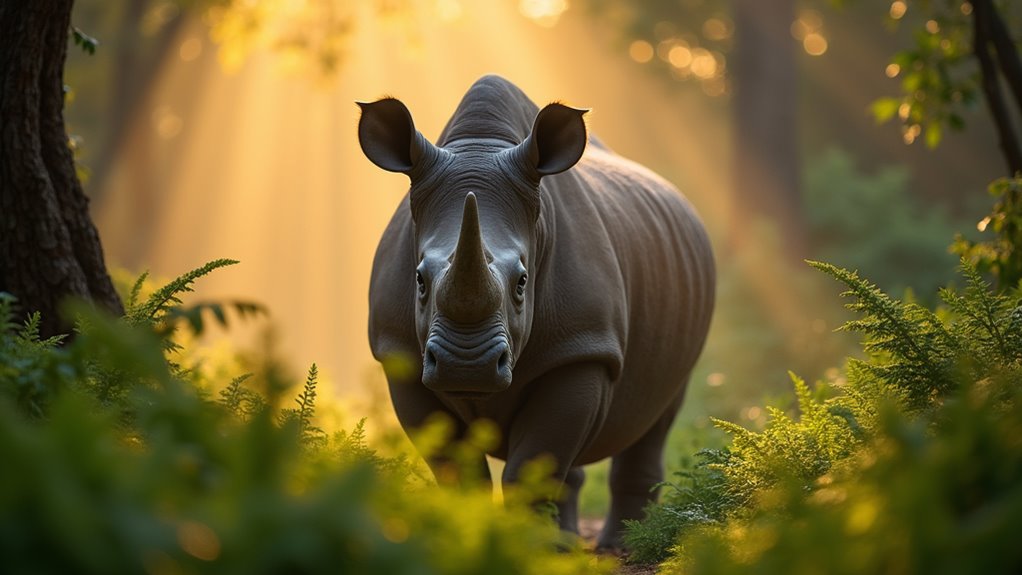
From mountain rapids to lowland jungles, Nepal’s adventure spectrum shifts dramatically in Chitwan National Park, where budget travelers can track Bengal tigers and one-horned rhinos for $30-60 per day. This UNESCO World Heritage site offers multiple safari options: elephant-back rides provide elevated rhino spotting, jeep safaris cover vast terrain quickly, and canoe trips along rivers reveal crocodiles and aquatic birds. Walking safaris deliver intimate wildlife encounters while maintaining safety protocols.
Established in 1973, Chitwan protects over 700 species across diverse Terai ecosystems. Early morning and late afternoon maximize tiger sightings, though rhino encounters prove more frequent. Local guides enhance experiences through cultural insights and wildlife tracking expertise. While Chitwan offers incredible lowland adventures, visitors often combine their safari experience with exploring Kathmandu’s ancient temples before or after their jungle expedition.
Budget guesthouses in nearby villages offer authentic stays, while community engagement programs ensure tourism directly supports conservation efforts protecting these magnificent creatures. The park’s landscapes range from lowland river plains to Churia Hills reaching elevations of 815 meters.
High-Altitude Mountaineering: Conquering Nepal’s 6,000+ Meter Peaks
Beyond wildlife encounters, Nepal’s towering 6,000+ meter peaks offer ambitious adventurers the chance to test mountaineering skills without Everest’s astronomical costs. Island Peak and Mera Peak serve as excellent introductions, classified as moderate Group B climbs requiring basic technical skills. These 16-25 day expeditions combine cultural trekking along established routes like Annapurna Circuit with serious alpine challenges.
Budget-conscious climbers should target spring and autumn seasons when permit costs remain reasonable and weather conditions optimize safety. Acclimatization becomes vital above 6,000 meters, with staged camps preventing altitude sickness. Like the vibrant chaos of Ho Chi Minh City’s bustling streets, Nepal’s base camps buzz with international climbers preparing for their summit attempts.
Technical peaks like Lobuche East demand ice axe proficiency, while moderate options like Pisang Peak blend culture with mountaineering fundamentals. Each region offers distinct advantages: Everest’s dramatic glacier views versus Annapurna’s rich cultural experiences. The Nepal Mountaineering Association regulates safety standards for these expeditions, ensuring proper oversight for climbing permits and guide requirements.
Bardia National Park: Wild Elephant and Wildlife Adventures
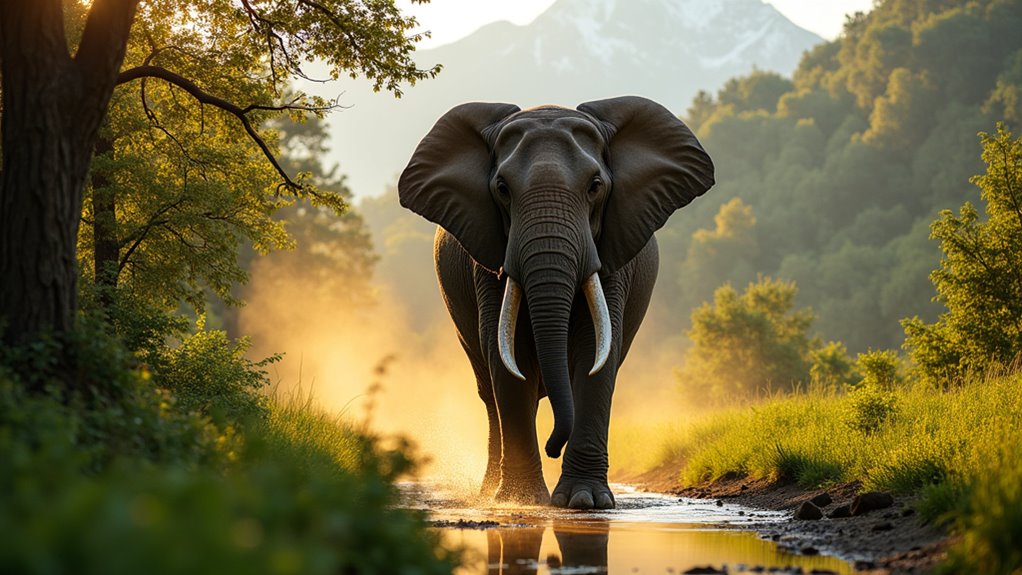
Nepal’s remote Bardia National Park delivers raw wildlife encounters that rival Africa’s best game reserves at a fraction of the cost. This 968 km² sanctuary houses Nepal’s largest elephant population (120-140 individuals) and second-largest tiger population (125 cats), creating unparalleled viewing opportunities.
Budget travelers can spot endangered one-horned rhinos, gharial crocodiles, and 400 bird species including rare Bengal floricans. Like Bohol’s famous Chocolate Hills, Nepal offers unique geological and biological treasures that create unforgettable adventure experiences for nature enthusiasts.
Stay in community homestays with local Tharu families for authentic culture while supporting conservation efforts. Morning elephant walks and evening jeep safaris offer the best wildlife spotting.
The park’s sal forests and Karnali riverine corridors provide prime habitats for megafauna movement. The park experiences a sub-tropical monsoon climate with distinct seasons, where 90% of annual rainfall occurs during July to September, making timing crucial for optimal wildlife viewing. Visitors contribute directly to anti-poaching programs while experiencing Nepal’s most pristine wilderness ecosystem away from crowded mountain trails.
Spiritual Trekking: Buddhist Monasteries in Mountain Settings
While most trekkers chase summit views, spiritual seekers discover Nepal’s Buddhist monasteries offer profound mountain experiences that cost nothing beyond trek permits and basic accommodation.
The Khumbu region houses ancient gems like 350-year-old Pangboche Monastery at 3,900m and Tengboche at 3,867m, both offering Everest views alongside spiritual practices. Budget-conscious travelers can participate in daily prayers, meditation sessions, and festivals like Dumji without fees.
Manaslu’s remote monasteries provide deeper culture. Mu Gompa, the region’s largest 17th-century monastery at 3,700m, maintains strict monastic discipline while welcoming respectful visitors. Sacred Gumba Lungdang offers panoramic Ganesh Himal views at 3,200m. For ultimate spiritual retreat, Nakarjung Hermitage sits dramatically at 4,800m on the sacred peak Nakarjung-Ri, offering meditation facilities with spectacular views of Ama Dablam and Makalu.
These high-altitude sanctuaries combine affordable trekking with authentic Buddhist experiences, where morning prayers echo across peaks and ancient traditions remain vibrantly alive. Similar to Sri Lanka’s ancient kingdom sites, these mountain monasteries preserve centuries of religious heritage within their sacred walls.