
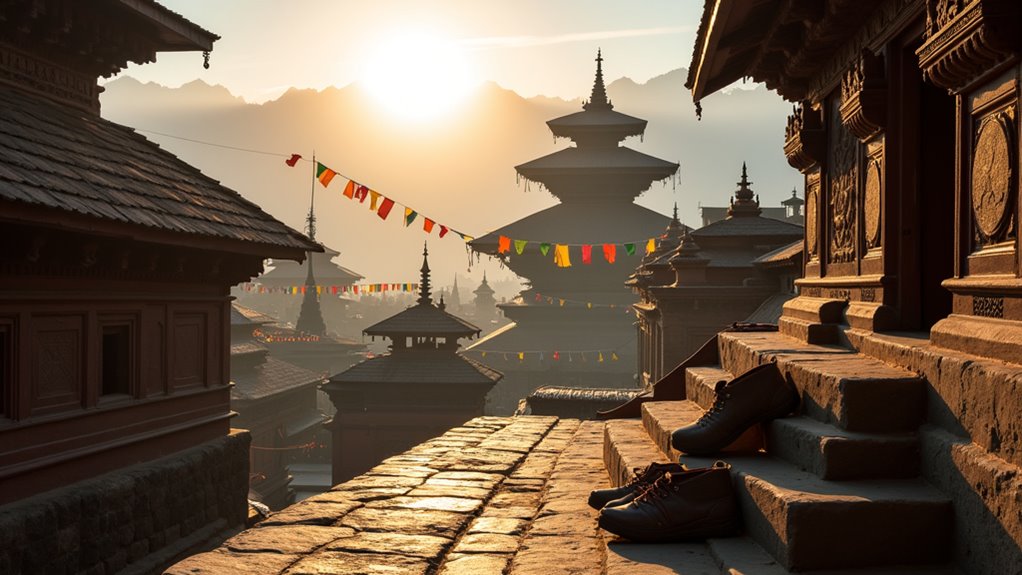
Travelers seeking authentic experiences in Nepal’s capital discover that Kathmandu offers far more than crowded markets and tourist traps. The city serves as both a spiritual sanctuary filled with ancient temples and a gateway to some of the world’s most accessible Himalayan treks. Budget-conscious adventurers can explore sacred sites in the morning and plan multi-day mountain excursions in the afternoon. However, knowing which temples warrant a visit and which trails offer the best value requires careful planning.
- Visit the Sacred Pashupatinath Temple on the Bagmati River
- Experience Spiritual Serenity at Boudhanath Stupa
- Climb to Swayambhunath Monkey Temple for Panoramic Views
- Explore Ancient Changunarayan Temple’s Newari Architecture
- Witness Traditional Rituals at Dakshinkali Temple
- Trek Through Langtang Valley’s Glaciers and Villages
- Discover Sacred Lakes on the Gosainkunda Trek
- Challenge Yourself on the Manaslu Circuit Trek
- Conquer High Passes on the Everest Three Passes Trek
- Time Your Visit for Major Temple Festivals and Celebrations
Visit the Sacred Pashupatinath Temple on the Bagmati River
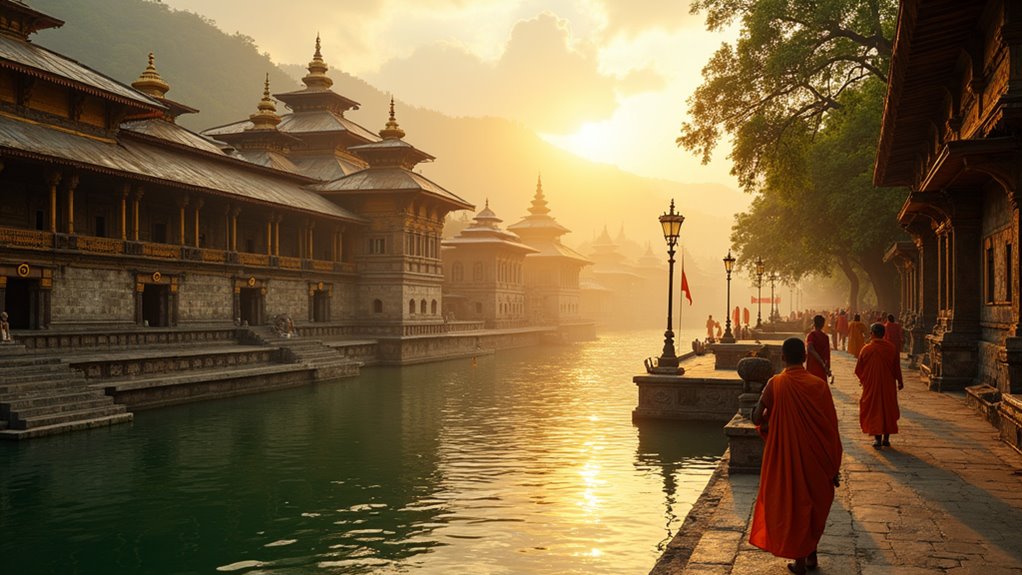
While many travelers rush through Kathmandu’s tourist highlights, those who venture to Pashupatinath Temple discover Nepal’s most sacred Hindu site without spending a rupee on entrance fees for the outer complex. This UNESCO World Heritage Site sits on the Bagmati River’s banks, where its two-tiered pagoda houses a massive four-faced Shiva Lingam.
The temple’s spiritual significance draws millions seeking moksha, while its cultural importance becomes evident during open-air cremation ceremonies along the riverbanks. Budget-conscious visitors can explore the outer courtyards, observe daily rituals, and witness sadhus in meditation.
The complex’s gold-plated roofs and intricate silver doors showcase traditional Nepalese architecture spanning centuries, making it essential for understanding Nepal’s Hindu heritage. For those seeking a deeper cultural experience away from the typical tourist path, this sacred site offers an authentic glimpse into Nepal’s spiritual traditions. Each evening, the temple comes alive with the evening Aarti ceremony, where priests perform devotional rituals with oil lamps and incense along the riverbanks.
Experience Spiritual Serenity at Boudhanath Stupa
Just eight kilometers northeast of Kathmandu’s bustling center, Boudhanath Stupa rises 36 meters into the sky as one of the world’s largest spherical stupas and Tibet’s most sacred Buddhist site outside its homeland.
Dating back to the 5th century, this UNESCO World Heritage Site houses relics of Kassapa Buddha within its mandala-designed structure.
Visitors can walk the circumambulation path for free, spinning prayer wheels while observing monks in daily prayer.
The surrounding Tibetan refugee community creates an authentic cultural experience, with affordable handicrafts and traditional artifacts available in nearby shops. The area became known as Little Lhasa after the 1959 Tibetan uprising brought an influx of refugees who established monasteries and cultural centers around the stupa.
Early morning and late afternoon visits offer the most peaceful atmosphere.
The site’s accessibility from central Kathmandu makes it perfect for budget travelers seeking spiritual reflection without expensive tours. Like Taiwan’s historic capital Tainan, which preserves centuries of cultural heritage, Boudhanath represents a living connection to ancient Buddhist traditions.
Climb to Swayambhunath Monkey Temple for Panoramic Views
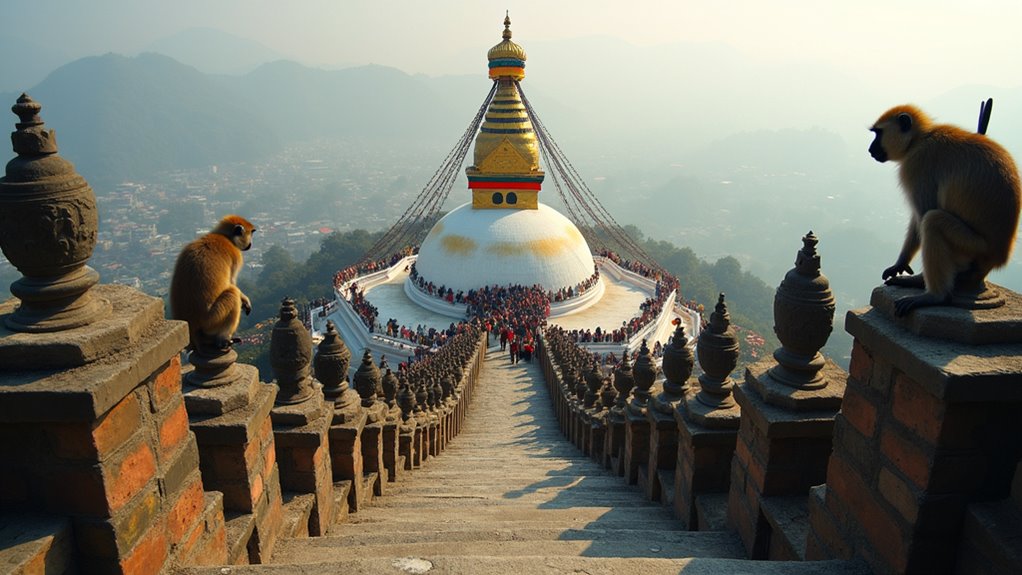
From the peaceful plains of Boudhanath, travelers can venture to Kathmandu’s most iconic hilltop temple for an entirely different spiritual experience. Swayambhunath’s 300-step climb challenges visitors with stone stairways dating back to the 17th century, but the reward’s worth every step.
The ancient complex, over 2,500 years old, features a stunning white dome stupa topped with Buddha’s all-seeing eyes facing four directions. Sacred rhesus macaques roam freely throughout the site, earning it the nickname “Monkey Temple.” These playful creatures are considered holy protectors, so don’t be surprised when they inspect your belongings. Much like Krabi’s dramatic limestone cliffs that rise from emerald waters, Swayambhunath’s elevated position creates an equally breathtaking natural monument.
At the summit, panoramic views stretch across Kathmandu Valley’s sprawling cityscape. The site seamlessly blends Buddhist and Hindu traditions, with prayer wheels, monasteries, and multiple shrines creating an authentic spiritual atmosphere that’s both budget-friendly and culturally immersive. According to legend, the monkeys are believed to be disciples of Manjushri, the bodhisattva who originally drained the ancient lake that once covered the valley.
Explore Ancient Changunarayan Temple’s Newari Architecture
Beyond Kathmandu’s bustling center, Changunarayan Temple stands as Nepal’s oldest Hindu sanctuary, where 1,500 years of continuous worship have created an extraordinary showcase of Newari craftsmanship.
Dating to the 5th century, this UNESCO World Heritage Site displays unique multi-story architecture that’s survived countless earthquakes through ingenious engineering—a tall stone plinth and flexible timber construction that most pagodas can’t match.
Visitors can explore intricate wood carvings depicting Vishnu’s avatars and guardian statues of lions, elephants, and serpents guarding four cardinal doorways. The temple’s brass-crowned roofs and terracotta tiles demonstrate ancient Newar artistry that’s influenced valley architecture for centuries. The temple holds significant spiritual importance as it’s dedicated to Vishnu, the Hindu deity of cosmic preservation, with numerous statues and carvings serving as focal points for daily worship rituals.
Located just outside Kathmandu, it’s easily accessible by local bus, making this architectural marvel an affordable day trip for budget travelers seeking authentic cultural experiences. When planning your visit, consider exploring other must-see highlights throughout the Kathmandu Valley to maximize your culture.
Witness Traditional Rituals at Dakshinkali Temple
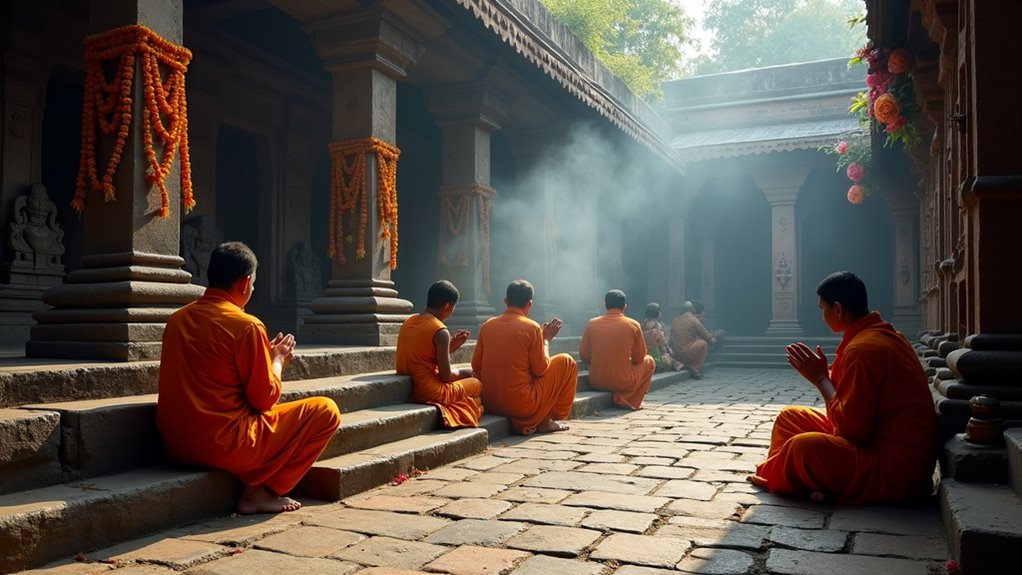
While most visitors to Kathmandu stick to the valley’s famous temples, those seeking an authentic glimpse into Nepal’s spiritual intensity should venture 22 kilometers south to Dakshinkali Temple. This roofless shrine dedicated to fierce Goddess Kali offers travelers a raw, unfiltered look at Hindu tantric traditions that’ve remained unchanged for centuries.
The temple’s most striking feature isn’t its architecture—it’s the regular animal sacrifices performed twice weekly and during major festivals like Dashain. Devotees offer uncastrated male goats and cockerels to invoke Kali’s protection from death and evil. These rituals, though intense for some visitors, represent authentic religious practices that connect worshippers to ancient beliefs about power and rebirth.
Before entering the sacred grounds, devotees perform ritual purification at a sacred stream located near the temple, washing away impurities in preparation for worship. The temple operates 6 AM to 9 PM with free entry, making it an accessible cultural experience. Much like Hue’s imperial experiences, this temple provides visitors with an unmissable glimpse into Nepal’s most profound cultural traditions.
Trek Through Langtang Valley’s Glaciers and Villages
Just 70 kilometers north of Kathmandu’s spiritual intensity lies Nepal’s most accessible high-altitude adventure—the Langtang Valley trek. This moderate 5-7 day journey starts from Syabrubesi (1,460m) and climbs through traditional Tamang villages to Kyanjin Ri’s summit at 4,773m.
Trekkers cover 65-86 kilometers total, hiking 4-8 hours daily through rhododendron forests that transform into alpine meadows. The route passes Langtang Village and Kyanjin Gompa, where Buddhist monasteries and a local cheese factory offer culture alongside spectacular Himalayan views.
Budget-friendly tea houses provide accommodation and meals throughout the valley. Spring and autumn offer the clearest mountain vistas, while gradual altitude gains help prevent altitude sickness. Proper hydration and carbohydrate intake are essential for managing the 2,460-meter total altitude gain throughout the trek.
The trek delivers glacier views, suspension bridge crossings, and close encounters with Langtang Lirung’s 7,227-meter peak—all without requiring technical climbing skills. Like many adventurous travelers exploring destinations with rich cultural heritage, trekkers often discover that the journey through traditional villages reveals as much about Ryukyu culture and local traditions as the dramatic mountain landscapes themselves.
Discover Sacred Lakes on the Gosainkunda Trek
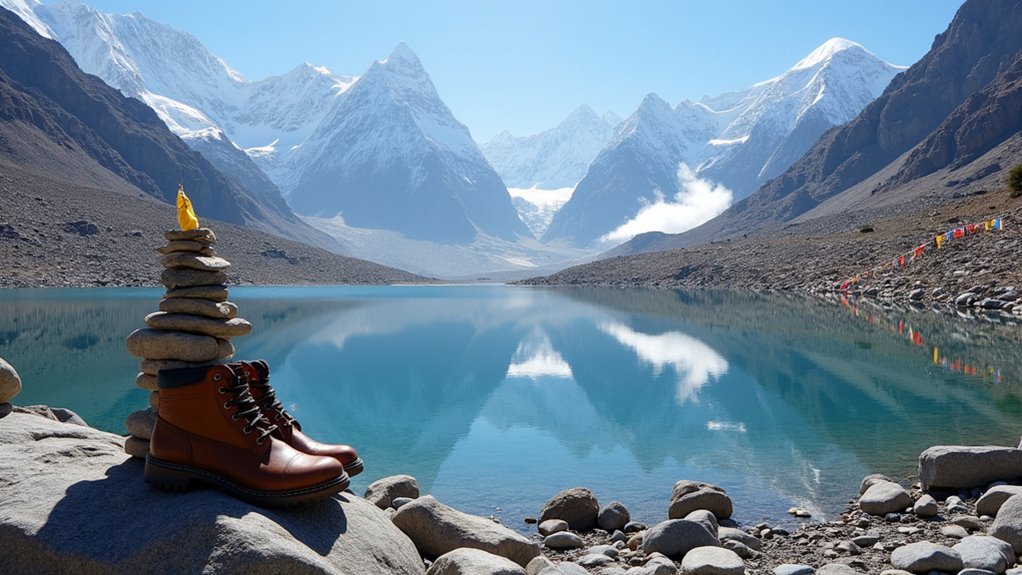
Though the Gosainkunda Trek spans only 4-5 days, it delivers one of Nepal’s most intense spiritual and physical experiences. Starting with a 7-8 hour drive from Kathmandu to Dhunche, trekkers tackle steep paths through pine forests and alpine meadows to reach the sacred glacial lake at 4,380 meters.
The rapid altitude gain makes this trek physically demanding but budget-friendly. Hindus and Buddhists consider Gosainkunda Lake sacred, believing Lord Shiva created it. Pilgrims flock here during Janai Purnima festival for religious rituals.
Daily treks range 5-9 hours with stunning views of Langtang and Ganesh Himal ranges. The moderate difficulty suits experienced trekkers, though proper acclimatization prevents altitude sickness. While the Maldives offers overwater bungalows suspended above crystal-clear lagoons, Nepal’s high-altitude lakes provide an entirely different but equally magical experience.
Expect cascading streams, mountain temples, and panoramic vistas from Lauribina Pass. Trekkers will encounter cemented trails through sections of the route, particularly when passing through pine forests on the way to Lauribinayak.
Challenge Yourself on the Manaslu Circuit Trek
For trekkers seeking Nepal’s ultimate challenge without the Everest price tag, the Manaslu Circuit Trek delivers 11-16 days of raw Himalayan adventure around the world’s eighth-highest peak.
This demanding 160-200km circuit pushes experienced hikers through remote Gurung villages, ancient monasteries like Pungyen Gompa, and glacial terrain culminating at Larkya La Pass (5,213m).
Daily treks average 6-8 hours with altitude gains reaching 1,200 meters, demanding excellent fitness and careful acclimatization.
The route starts near Machha Khola (850m) after an 8-10 hour drive from Kathmandu, winding through the protected Manaslu Conservation Area. Three essential permits are required including the Manaslu Restricted Area Permit costing USD 100 for the first seven days.
Budget around £1,600-£1,700 for packages including permits, teahouse accommodation, and guides. Like Sapporo’s famous Snow Festival, this trek offers spectacular winter mountain views that attract adventurers from around the world.
Trek during autumn or spring for ideal conditions, and don’t forget altitude sickness medication—this isn’t a beginner’s playground.
Conquer High Passes on the Everest Three Passes Trek
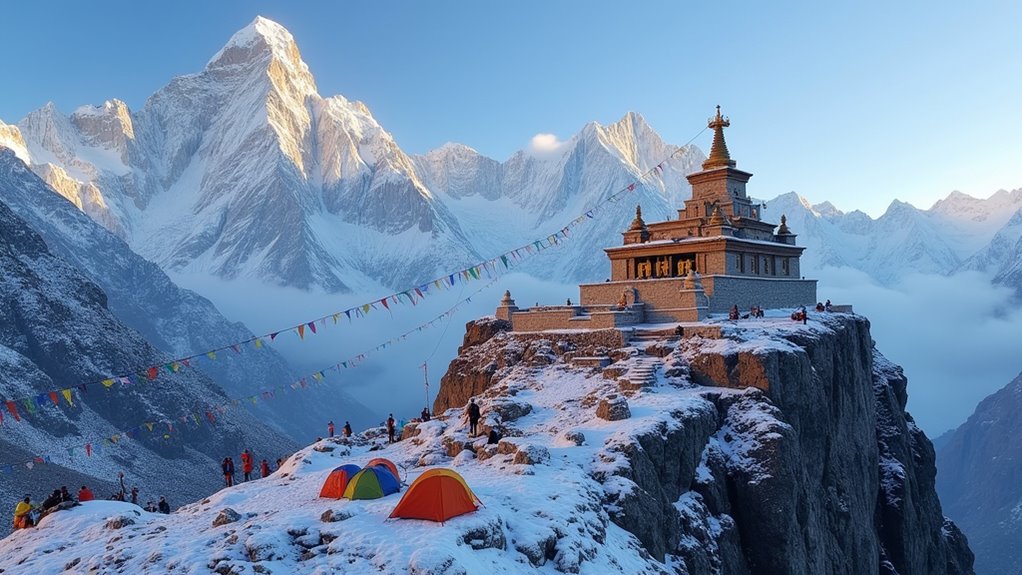
While Manaslu tests trekkers with its remote wilderness, the Everest Three Passes Trek cranks up the difficulty with Nepal’s most demanding high-altitude circuit. This 14-21 day odyssey covers 160+ kilometers through three major passes: Renjo La (5,360m), Cho La (5,420m), and Kongma La (5,535m).
Trekkers face 5-8 hours of daily hiking across rugged terrain, glaciers, and steep climbs with serious altitude sickness risks. The circuit connects Khumbu, Imja, and Gokyo valleys, offering spectacular views of Everest, Lhotse, and Cho Oyu. Like Ahmedabad serves as Gujarat’s cultural capital, Kathmandu acts as the gateway to Nepal’s most challenging mountain adventures.
Budget-minded adventurers should plan for spring or autumn seasons and include acclimatization days. Previous high-altitude experience and excellent fitness are essential.
Hiring local guides enhances safety on this remote trail where medical access is limited and self-sufficiency becomes essential. The trek offers less crowded trails compared to standard Everest base camp routes, providing a more secluded mountain experience.
Time Your Visit for Major Temple Festivals and Celebrations
After conquering Nepal’s mountain passes, travelers can enjoy Kathmandu’s spiritual heart by timing their visit with the valley’s most spectacular temple festivals. February’s Maha Shivaratri transforms Pashupatinath Temple into a pilgrimage epicenter, where thousands gather for night-long vigils honoring Lord Shiva.
Spring brings Buddha Jayanti celebrations at Boudhanath and Swayambhunath stupas, while the massive Rato Machhendranath chariot festival fills Patan’s streets. Like Ho Chi Minh City’s vibrant chaos of motorbikes and street life, Kathmandu’s festival atmosphere creates an energetic tapestry of movement and celebration.
September’s Indra Jatra showcases Kathmandu’s grandest spectacle, featuring the Living Goddess Kumari’s procession and traditional masked dances.
August’s Ganesh Chaturthi adds ten days of vibrant temple festivities throughout the city. The valley also hosts unique festivals like Gai Jatra, where families honor the dead by leading decorated cows or boys dressed as cows through the streets, combining traditional death rituals with modern celebrations.
Smart travelers book accommodations months ahead during festival seasons, as crowds can reach hundreds of thousands. Since most festivals follow the lunar calendar, checking specific yearly dates guarantees perfect timing for these unforgettable cultural experiences.