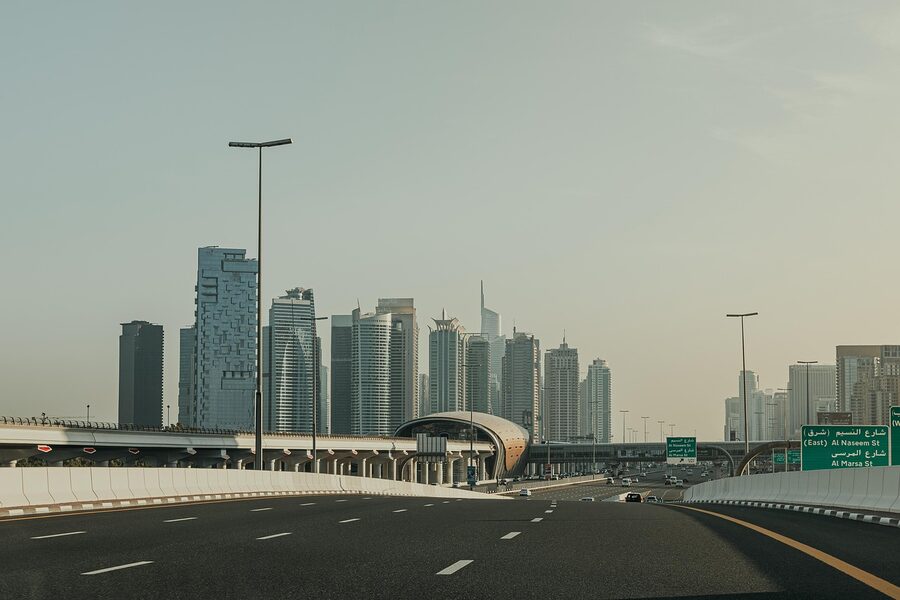
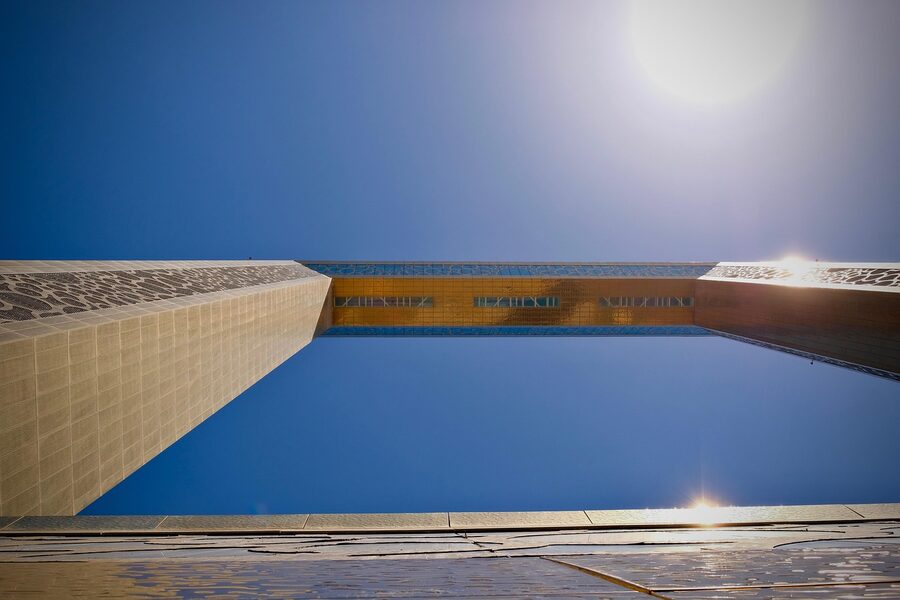
Someone in Dubai’s planning department looked at the skyline and thought: “What if we built a 150-meter-tall picture frame so travelers could photograph both halves of the city at once?” And then they actually did it.
The Dubai Frame is the most beautifully absurd landmark in a city full of absurd landmarks. It’s a giant gold rectangle standing in Zabeel Park, and from the top, you see Old Dubai on one side and New Dubai on the other. It costs $14 to visit. I’ve paid more for a sandwich.
At $14, the Dubai Frame is the cheapest observation experience in the city. It’s also one of the most interesting, because instead of just looking at a skyline, you’re looking at two completely different cities separated by a park and 50 years of history.
In a Hurry? Our Top Picks
Standalone entry to the Frame. The cheapest observation deck in Dubai at just $14.
Frame entry plus a guided tour of Old Dubai — souks, creek, and the Jumeirah Mosque. Best combo deal.
- What You’ll Experience Inside the Dubai Frame
- Ground Floor — Dubai Past
- The Elevator and Bridge — Dubai Present
- Descending Tower — Dubai Future
- Our Recommended Tickets
- 1. Dubai Frame Entry Ticket with Deck Access —
- 2. Dubai Frame + Creek, Souks & Blue Mosque Tour —
- Practical Tips
- The History Behind the Dubai Frame
- Best Time to Visit
- Who Is the Dubai Frame Best For?
- How the Frame Compares to Other Observation Decks
- Getting There
- Photography Tips for the Dubai Frame
- What Else to Do in Dubai
What You’ll Experience Inside the Dubai Frame
The visit follows a three-part journey: past, present, and future. Here’s what each section involves.
Ground Floor — Dubai Past
The entrance leads into a multimedia exhibition about Dubai’s history. Interactive screens and projections show the city’s transformation from a fishing village to a global metropolis. The before-and-after comparisons are staggering.
The Elevator and Bridge — Dubai Present
The elevator takes you to the top in about 75 seconds. The bridge walkway at 150 meters connects the two towers and is where the magic happens.
The floor of the bridge has transparent glass sections. You can look straight down 150 meters to Zabeel Park below. It’s less extreme than Sky Views’ glass floor but still enough to make most people pause before stepping on it.
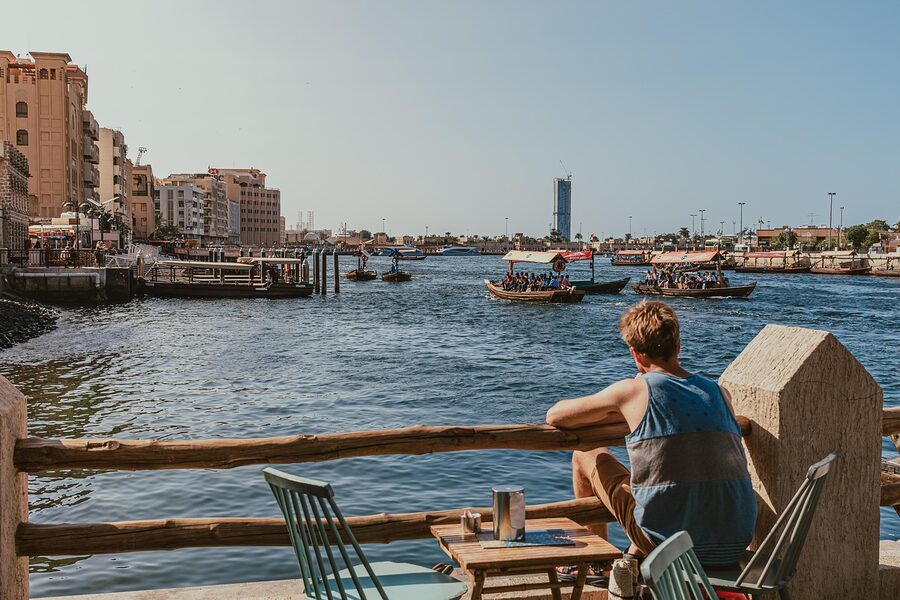
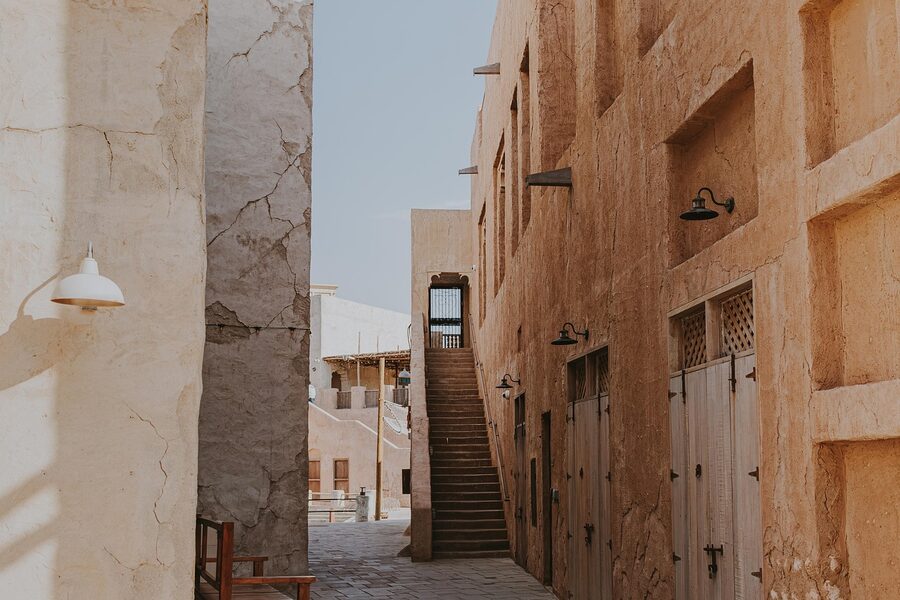
The Old Dubai view (north side) shows the Creek, the traditional souks, the Deira skyline, and the wind towers of Al Fahidi. If you’ve already done an Old Dubai walking tour, you’ll recognize the landmarks from above.
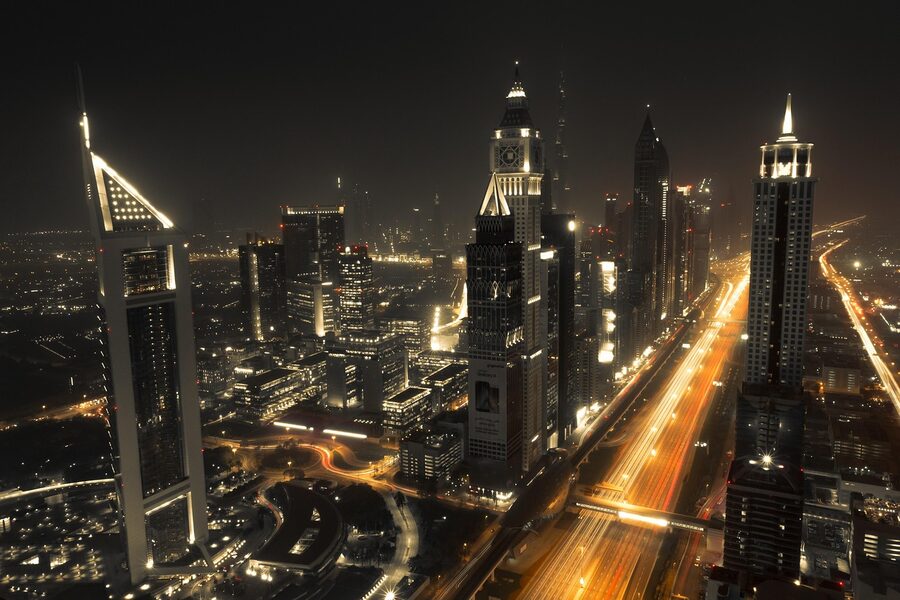
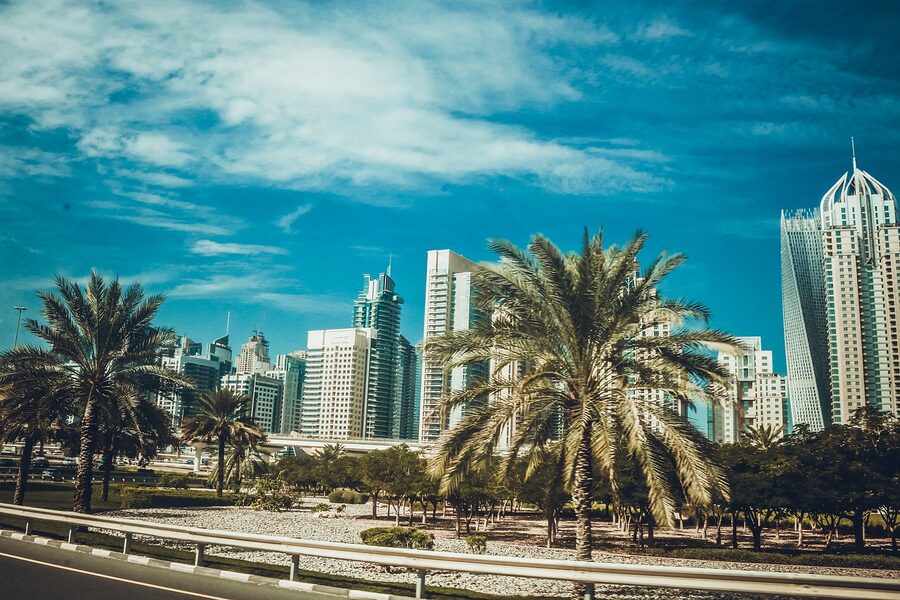
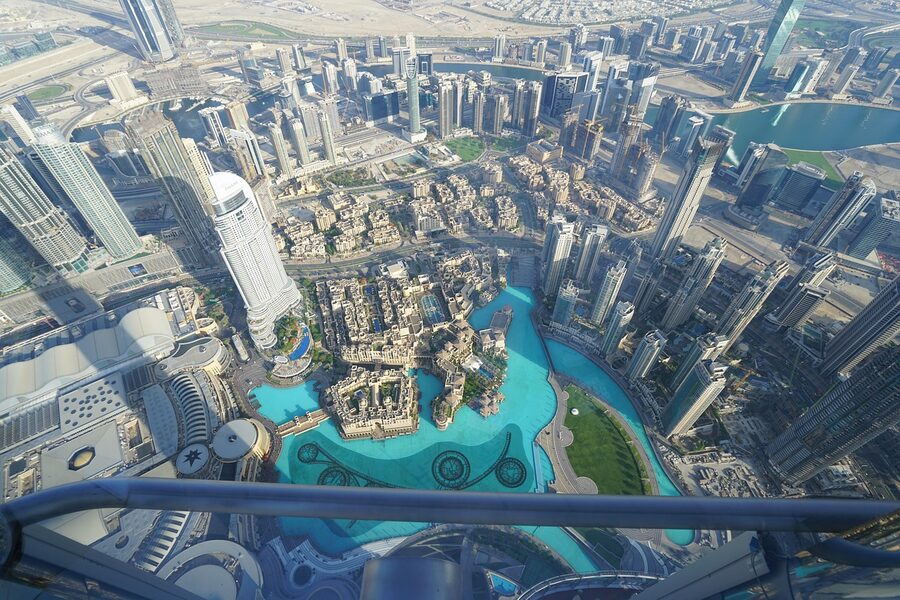
The New Dubai view (south side) shows the Burj Khalifa, Downtown Dubai, the Dubai Canal, and the towers of Business Bay. On a clear day, you can see all the way to the Marina and the Palm Jumeirah.
Descending Tower — Dubai Future
The second elevator takes you down through a virtual reality gallery imagining Dubai in 2050. It’s shorter and less impressive than the Museum of the Future’s exhibits, but it’s a nice bookend to the past-present-future journey.
Our Recommended Tickets
1. Dubai Frame Entry Ticket with Deck Access — $14
The standalone ticket is all most visitors need. At $14, it includes the ground-floor history exhibition, the elevator ride, the bridge walkway with glass floor, and both viewing galleries. No VIP upgrades, no tiers — everyone gets the same experience.
Book online to select your time slot and skip the ticket counter queue. Walk-up tickets are available but the queue can be 20+ minutes during weekends. Read our full review of the Dubai Frame.
2. Dubai Frame + Creek, Souks & Blue Mosque Tour — $49
This combo pairs the Frame entry with a half-day guided tour of Old Dubai — the Creek, Gold Souk, Spice Souk, and Jumeirah Mosque. At $49, it’s a significant markup over the standalone ticket, but you’re getting a guided walking tour that would cost $18-$21 separately.
The combination works brilliantly — you look down at Old Dubai from the Frame, then walk through it at ground level. The perspective shift makes both experiences richer. See our full review of the Frame + Old Dubai combo.
Practical Tips
Visit in the late afternoon. The sunset light on the Frame’s gold cladding is spectacular, and you get to see both Old and New Dubai in golden hour. The Burj Khalifa side catches the last sun beautifully.
Allow 45-60 minutes. The exhibition is quick (15 min), the elevator ride is fast (75 sec), and the bridge walk takes as long as you want. Most people spend 20-30 minutes on the bridge taking photos and soaking in both views.
The glass floor is optional. You don’t have to walk on it. There’s a solid-floor path around the glass sections for anyone who’d rather not. No judgment — even the people who step on it tend to stick to the edges.
Zabeel Park entry is separate. The park charges a small entry fee (about $1.50). The Frame ticket doesn’t include park access — you’ll need to buy a park ticket at the gate. It’s worth it for the green space and the exterior photos of the Frame.
The Frame photographs better from outside than inside. The most iconic photos are taken from the park, framing the Frame itself against the skyline. Bring your camera into the park before or after your visit for the exterior shot.
The History Behind the Dubai Frame
The Dubai Frame has a controversial backstory. The original concept was submitted by Mexican architect Fernando Donis to a 2009 design competition. He won the competition but claims the government built the design without properly compensating him. The dispute made international headlines.
The Frame took over 8 years from concept to completion, opening in January 2018. It cost approximately $44 million to build — a fraction of the Burj Khalifa’s $1.5 billion price tag. The ROI in tourist revenue has already exceeded the construction cost several times over.
The name is literal and metaphorical. Literally, it frames the skyline. Metaphorically, it frames the conversation about Dubai’s identity — a city caught between its pearl-diving past and its AI-powered future, with nothing in between except ambition.
Best Time to Visit
Late afternoon (4-5pm) is the golden slot. You arrive in daylight, watch the sunset paint both sides of the city, and leave as the Burj Khalifa’s evening light show begins. The Frame’s own LED lighting activates at dusk and the structure glows against the darkening sky.
Mornings (10-11am) are good for photos of the New Dubai side. The south-facing glass catches the morning sun and the Burj Khalifa is front-lit. The Old Dubai side is slightly backlit but still clear.
Weekdays are significantly quieter. The Frame is popular with weekend visitors and school groups. Tuesday and Wednesday mornings are consistently the emptiest. You’ll have the glass floor to yourself.
Who Is the Dubai Frame Best For?
First-time visitors to Dubai. The Frame gives you the best orientation to the city’s geography. Seeing Old and New Dubai side by side, from above, immediately helps you understand how the city is laid out and what to prioritize.
Budget travelers. At $14, the Frame is by far the cheapest observation experience. If you can only afford one viewing platform, this gives you the most context per dollar.
History and architecture enthusiasts. The ground-floor exhibition, the past-present concept, and the park setting make this more than just a viewing platform. It tells a story that the other observation decks don’t attempt.
Families with children. The glass floor is exciting without being terrifying (unlike Sky Views). The exhibition is visual and engaging for kids. The park surrounding the Frame has playgrounds and open space. And at $14, taking a family of four costs less than a single Burj Khalifa ticket.
How the Frame Compares to Other Observation Decks
The Dubai Frame isn’t the tallest, the scariest, or the most expensive observation deck in the city. But it might be the most interesting.
At $14, it’s less than a third of the Burj Khalifa price and half the cost of the View at the Palm. What it lacks in height (150m vs 452m), it makes up for in concept. The past-present framing device gives you a story to tell, not just a view to photograph.
For a comprehensive heights experience, do the Frame in the morning ($14), the View at the Palm in the afternoon ($29), and the Burj Khalifa at sunset ($43). Three observation decks, three completely different views, $86 total. That’s a full day of Dubai from above.
Getting There
Metro: Al Jafiliya station on the Red Line is the closest. The Frame is a 10-minute walk through Zabeel Park from the station.
Taxi: Ask for “Dubai Frame, Zabeel Park.” Budget $10-15 from most central hotels. The drop-off point is at the park entrance nearest the Frame.
Photography Tips for the Dubai Frame
The Frame is one of the most photographed landmarks in Dubai, both from inside and outside. Here’s how to get the best shots.
From inside: Press your phone against the glass to eliminate reflections. The north-facing gallery is best in afternoon light. The south-facing gallery is best in morning light. The glass floor photos need a wide-angle lens or ultra-wide phone setting.
From outside: The south side of Zabeel Park gives you the most iconic angle — the Frame with the Burj Khalifa visible through it. Morning light is best for this shot. Walk along the park paths to find the angle where the Khalifa sits centered inside the Frame.
What Else to Do in Dubai
The Frame is a perfect morning activity before heading to the Old Dubai souks — you’ve seen them from above, now walk through them. Or head south to the Museum of the Future on Sheikh Zayed Road, visible from the Frame’s south gallery.
The hop-on hop-off bus has a stop near Zabeel Park, making it easy to combine the Frame with other attractions on the bus route. And the desert safari in the evening is the perfect complement to a day of urban sightseeing.