
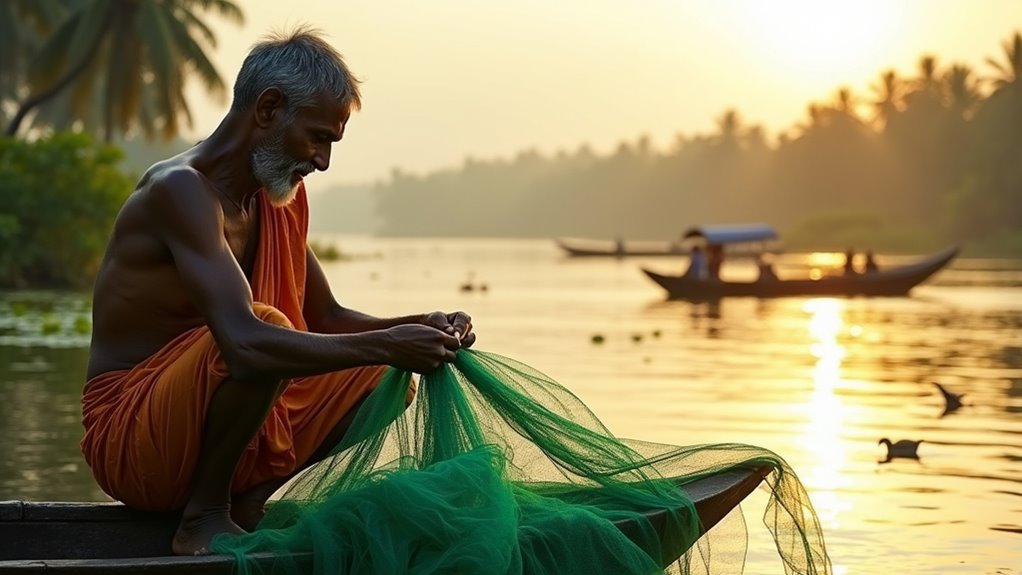
Seasoned travelers know that India’s most memorable moments happen away from tourist crowds and polished itineraries. The subcontinent rewards those who venture beyond guidebook recommendations with experiences that can’t be replicated elsewhere. From sunrise rituals at iconic monuments to intimate village encounters, fourteen distinct adventures reveal India’s authentic character without breaking the bank. Smart explorers understand that the real magic unfolds when they embrace the unfiltered chaos and discover what makes this destination truly unforgettable.
- Witnessing Sunrise Over the Taj Mahal in Agra
- Cruising Through Kerala’s Enchanting Backwaters
- Trekking the Himalayan Trails of Himachal Pradesh
- Experiencing Royal Grandeur in Rajasthan’s Desert Palaces
- Discovering Ancient Buddhist Monasteries in Ladakh
- Safari Adventures in Ranthambore National Park
- Exploring the Cultural Melting Pot of Mumbai’s Streets
- Finding Spiritual Solace Along the Ganges in Varanasi
- Beach Hopping and Portuguese Heritage in Goa
- Temple Hopping Through Tamil Nadu’s Architectural Marvels
- Witnessing Traditional Arts and Crafts in Gujarat Villages
- Following the Footsteps of Tigers in Madhya Pradesh
- Celebrating Festival Colors During Holi in North India
- Ayurvedic Wellness Retreats in Karnataka’s Hill Stations
Witnessing Sunrise Over the Taj Mahal in Agra
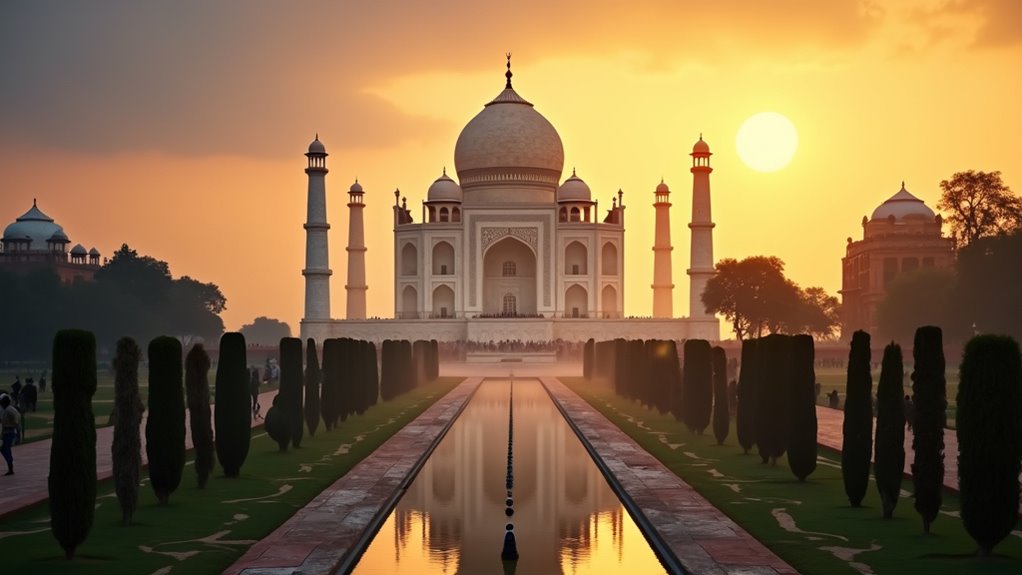
When travelers witness the Taj Mahal at sunrise, they’re experiencing one of India’s most magical moments without the crushing crowds that’ll arrive by mid-morning. The monument opens thirty minutes before sunrise, with gates opening between 5:15-6:00 AM depending on the season. Early arrivals enjoy soft golden light that creates perfect photography conditions while avoiding harsh shadows.
Smart visitors purchase tickets online beforehand and arrive before 5:30 AM to secure prime spots. The western gate typically has fewer tour groups than the eastern entrance. Morning fog often shrouds the marble structure initially, creating mystical photo opportunities as it clears within an hour.
The Char Bagh gardens‘ central platform offers the best frontal views, while comfortable year-round temperatures make extended exploration pleasant during these peaceful dawn hours. Much like the dramatic limestone cliffs found in other renowned destinations, the Taj Mahal’s marble architecture creates stunning silhouettes against the morning sky. For an alternative perspective, visitors can head to Mehtab Bagh across the Yamuna River to capture panoramic views of the Taj Mahal’s rear facade against the rising sun.
Cruising Through Kerala’s Enchanting Backwaters
Drifting through Kerala’s legendary backwaters aboard a traditional houseboat reveals India’s most serene landscape, where emerald rice paddies stretch below sea level and coconut palms sway along 900 kilometers of interconnected canals and lagoons.
Over 1,200 kettuvallams—traditional houseboats crafted from jackfruit wood and bamboo—offer affordable floating accommodations ranging from basic to luxury options.
Alleppey serves as the main hub, earning its “Venice of the East” nickname through extensive waterway networks.
Travelers can witness traditional coir making, visit fishing villages, and explore bird sanctuaries while cruising past Vembanad Lake, India’s largest. Three distinct Ramsar Convention wetlands including Vembanad-Kol, Ashtamudi Lake, and Sasthamkotta Lake provide internationally recognized biodiversity sanctuaries throughout the region.
The experience includes stops in Kuttanad’s unique below-sea-level farmlands and opportunities to witness the famous Nehru Trophy Boat Race featuring traditional snake boats with 100+ rowers. While Kerala’s backwaters offer tranquil escapes, travelers seeking urban exploration can venture to nearby Karnataka to discover hidden gems throughout Bengaluru beyond its renowned tech industry.
Trekking the Himalayan Trails of Himachal Pradesh
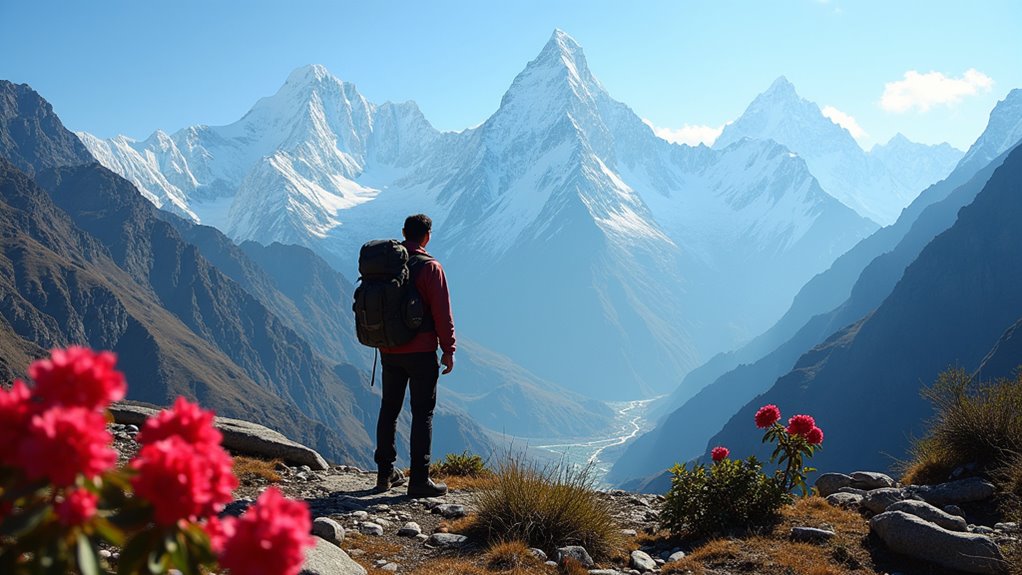
While Kerala’s tranquil backwaters offer peaceful contemplation, Himachal Pradesh’s towering peaks challenge adventurers with some of India’s most spectacular mountain trails. Budget-conscious trekkers can choose from diverse options spanning 1-12 days.
Beginners should start with Bhrigu Lake or Chandrakhani Pass – both offering stunning wildflower meadows and panoramic mountain views without breaking the bank.
Moderate trekkers can tackle Hampta Pass, which dramatically shifts from lush Kullu Valley to arid Spiti landscapes over five days. Like Japan’s Kagoshima region near its active volcano, these mountain areas offer thrilling adventures for outdoor enthusiasts.
Experienced adventurers shouldn’t miss Pin Parvati Pass, though this demanding 110km route requires serious preparation and fitness.
May through September provides ideal trekking conditions, avoiding monsoon risks.
Expect encounters with Himalayan wildlife, ancient deodar forests, and sacred sites like Shiva temples. Weather conditions change rapidly throughout the day, with sunny mornings often giving way to afternoon clouds or unexpected mountain showers.
Most trails pass through traditional villages, offering authentic cultural experiences alongside breathtaking glacial lakes and towering peaks.
Experiencing Royal Grandeur in Rajasthan’s Desert Palaces
From the rugged mountain trails of Himachal Pradesh, travelers can journey southwest to Rajasthan, where centuries-old palaces and fortresses showcase India’s most spectacular royal architecture without requiring a maharaja’s budget.
Amber Palace demonstrates how Hindu and Islamic styles merge beautifully, featuring layered arches and elephant brackets alongside Mughal gardens and marble work. The Hawa Mahal’s 953 lattice windows reveal ingenious climate design that kept royals cool while hidden from public view. These architectural must-see highlights represent some of the most photographed monuments in all of India.
Jaisalmer Fort’s golden sandstone walls rise dramatically from the Thar Desert, while Mehrangarh Fort towers 125 meters above Jodhpur. Udaipur’s City Palace complex spans four centuries of construction, with peacock mosaics predating Art Deco by over 100 years. The palace’s maze-like design features narrow winding passageways that once protected royal families from invaders.
These red sandstone monuments offer affordable glimpses into royal life through their intricate carvings, mirrored halls, and innovative stepwell systems.
Discovering Ancient Buddhist Monasteries in Ladakh
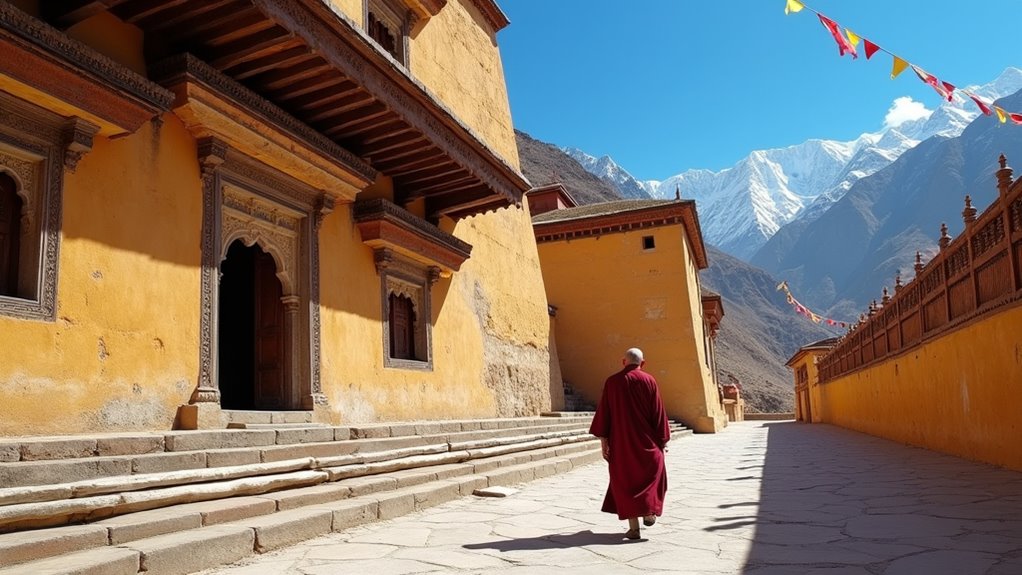
Beyond Rajasthan’s desert palaces, Ladakh’s high-altitude monasteries offer travelers an equally mesmerizing glimpse into India’s spiritual heritage at surprisingly affordable costs. These ancient Buddhist centers, dating from the 8th to 15th centuries, showcase remarkable Indo-Tibetan architecture without expensive entry fees.
Alchi Monastery’s 10th-century murals blend Kashmiri and Tibetan styles, while Lamayuru’s “moonland” setting provides dramatic backdrops for budget photography. Tsemo Gonpa houses a three-story Maitreya Buddha statue, and Likir’s imposing 75-foot Buddha dominates the landscape. Hemis Monastery stands out as one of the largest Buddhist monasteries in Ladakh, founded in 1630 and hosting the spectacular Hemis festival each June.
Most monasteries charge minimal entrance fees, and travelers can witness authentic mask dances and religious festivals throughout the year. When planning your monastery visits, consider the essential experiences that showcase Ladakh’s unique Buddhist heritage and spiritual traditions. These active spiritual centers preserve sacred texts, offer meditation experiences, and maintain Ladakh’s Buddhist traditions amid the challenging Himalayan terrain, making them accessible cultural treasures.
Safari Adventures in Ranthambore National Park
Although Ranthambore National Park doesn’t guarantee tiger sightings, its 84 resident tigers and budget-friendly safari options make it India’s most accessible big cat destination. The park’s conservation success story shows remarkable growth from just 25 tigers in 2005 to today’s thriving population.
Only 15 tigers roam the tourist zones within the 275 km² core area, but smart timing improves your odds. Visit between November and April when dry conditions force wildlife toward water sources in zones three and four.
Half-day safaris cost less than full-day options, though twelve-hour expeditions offer better flexibility for sightings. Safari permits become available 90 days in advance and often sell out quickly due to limited availability.
Local naturalists bring generations of jungle knowledge to guide visitors through this 1,334 km² reserve that’s home to 40 mammal species, 320 bird varieties, and over 40 reptiles beyond its famous striped residents.
Exploring the Cultural Melting Pot of Mumbai’s Streets
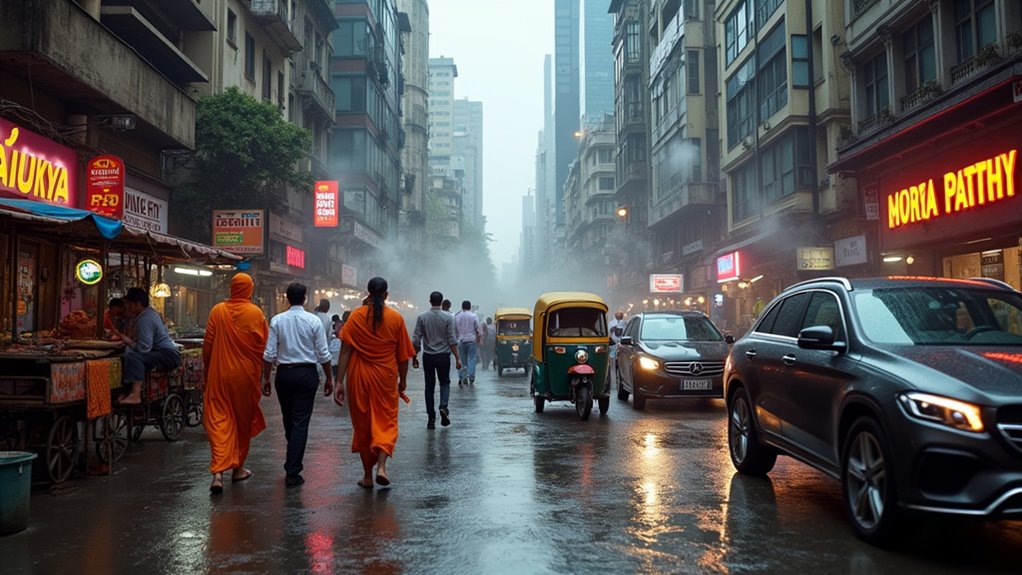
While most travelers rush between Mumbai’s famous landmarks, the city’s true character emerges in its bustling streets where over 65% Hindu residents mix with diverse Muslim communities in a symphony of languages spanning Marathi, Hindi, and English. Street food vendors showcase this diversity while providing affordable meals and creating employment opportunities throughout the financial capital.
In neighborhoods like Bandra, youth culture thrives through skateboarding communities and fashion expression that builds authentic connections. Local spaces foster community bonding where physical environments actively shape social interactions and cultural development. Just as Ahmedabad stands as Gujarat’s cultural capital, Mumbai represents the pinnacle of India’s urban diversity and economic dynamism. However, Mumbai’s streets also reveal stark contrasts—41.8% of residents live in slums occupying just 7% of the land, while the city houses Asia’s highest concentration of billionaires.
Exploring these streets on foot costs nothing but offers invaluable insights into India’s most complex urban landscape.
Finding Spiritual Solace Along the Ganges in Varanasi
From Mumbai’s urban chaos to ancient spiritual rhythms, India’s sacred geography shifts dramatically along the banks of the Ganges in Varanasi. This holy city offers budget travelers profound spiritual experiences without expensive admission fees.
Wake early for sunrise bathing rituals at the ghats—it’s free and deeply moving. Watch devotees perform daily Aarti ceremonies, lighting lamps and floating flower offerings into the sacred waters.
Varanasi’s stepped embankments buzz with activity as pilgrims seek purification in goddess Ganga’s waters. The famous Manikarnika Ghat reveals life’s cycle through cremation rituals, while bathing ghats welcome visitors seeking spiritual cleansing. This sacred city has belonged to Shiva for over three millennia, making it one of the world’s most enduring spiritual centers. Like the vibrant chaos of Ho Chi Minh City’s streets, Varanasi pulses with its own energy as spiritual seekers navigate through temple bells, incense smoke, and endless devotional activities.
Even skeptical travelers find themselves moved by the city’s raw spirituality. Carry home some Ganga Jal—locals believe this blessed water brings divine grace to any household shrine.
Beach Hopping and Portuguese Heritage in Goa
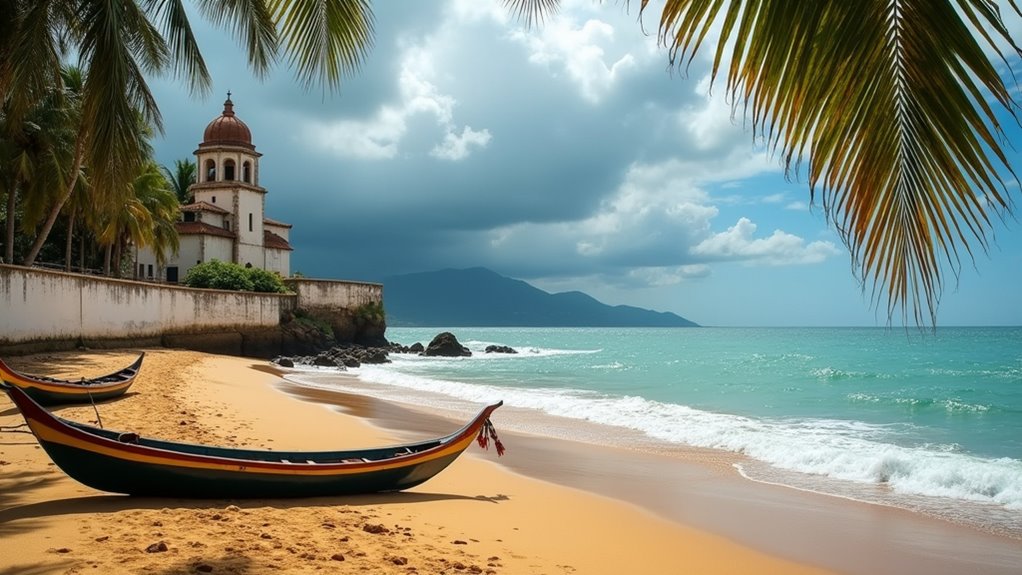
When spiritual intensity becomes overwhelming in Varanasi, Goa’s sun-soaked coastline offers the perfect antidote with its 125-kilometer stretch of diverse beaches and laid-back Portuguese charm.
Over 50 beaches split between North and South Goa cater to every traveler’s mood—from Baga’s vibrant nightlife to Palolem’s tranquil shores.
Budget-conscious travelers can explore hidden gems like Kakolem and Cola for secluded experiences without crowds. Like Thailand’s north to south diversity, Goa offers varied experiences from bustling beach towns to peaceful coastal retreats.
Beyond beaches, Goa’s 450-year Portuguese legacy creates unique cultural adventures. Wander Fontainhas’ colorful Latin Quarter, admire the Basilica of Bom Jesus, or explore Fort Aguada—all free or affordable activities. The state’s tourism strategy now emphasizes hinterland trails and wellness retreats, diversifying experiences well beyond traditional coastal attractions.
With tourism growing 6.23% in 2025 and monsoon season now attracting visitors, Goa’s evolved from a seasonal destination into year-round value, blending beach relaxation with rich heritage exploration.
Temple Hopping Through Tamil Nadu’s Architectural Marvels
Beach relaxation rejuvenates the body, but Tamil Nadu’s ancient temples feed the soul with over 1,000 years of architectural evolution spanning four major dynasties.
Start with Mahabalipuram’s UNESCO-listed rock-cut temples from 610-690 CE – they’re free to explore and showcase monolithic granite carvings.
Next, visit Thanjavur’s Brihadisvara Temple, built around 1010 CE by Raja Raja I. It’s India’s tallest temple from that era and costs just ₹30 for foreigners.
Don’t miss Madurai’s Meenakshi Amman Temple with its towering gopurams and intricate sculptures – entry’s free but camera fees apply.
Budget travelers can easily temple-hop using local buses connecting these architectural marvels. Tamil Nadu houses approximately 33,000 ancient temples scattered across the state, many dating back 800-2000 years.
Each site demonstrates distinct Dravidian features: pyramidal vimanas, elaborate mandapas, and decorated pillars that define South Indian temple design. For those seeking spiritual depth alongside architectural beauty, consider exploring the sacred mountains of the Himalayas after your temple tour through Tamil Nadu.
Witnessing Traditional Arts and Crafts in Gujarat Villages
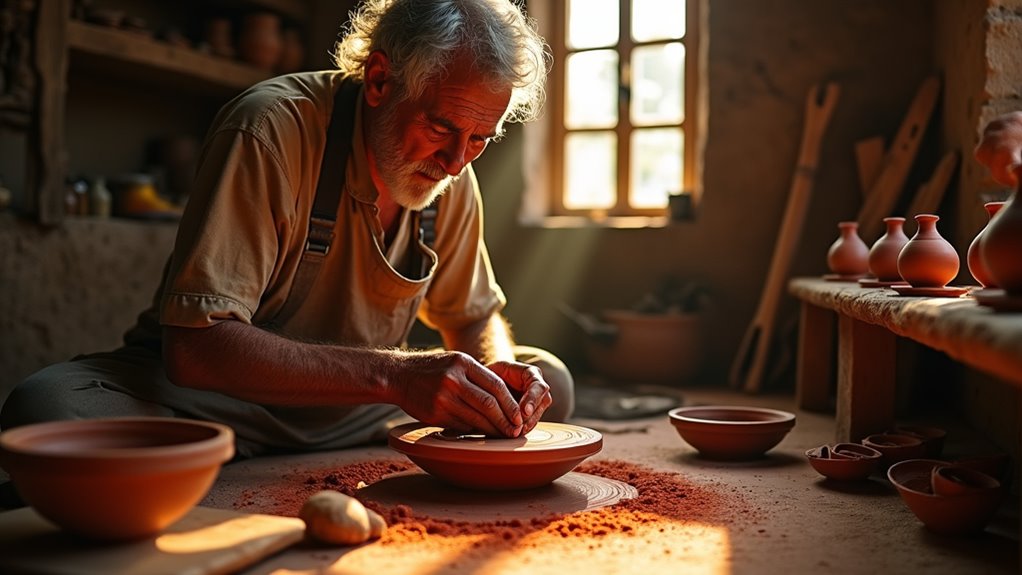
Three hundred years of Persian-influenced artistry lives on in Gujarat’s remote villages, where master craftspeople practice traditions that exist nowhere else on Earth. In Nirona village, the Khatri family keeps Rogan art alive using castor seed paint and metal needles to create intricate patterns on fabric—the same craft once gifted to President Obama.
Kutch villages buzz with textile activity where Rabari and Vankar tribes weave colorful carpets and shawls on 500-year-old pitlooms. Women and children earn income through mirror-work embroidery, while the Vaghari community creates portable goddess shrines called Mata Ni Pachedi using reed pen brushwork. Beyond these traditional crafts, visitors can discover unique experiences that showcase the authentic cultural heritage of these artisan communities.
The nomadic Vadha tribe crafts lacquered wooden toys and kitchen tools from babool wood, and local potters shape elegant clay vessels using organic materials for decoration. In nearby Ajrakhpur, over 100 families from the Khatri community produce traditional Ajrakh textiles, maintaining the ancient resist-dyeing block print technique that their ancestors brought from Sindh in the 16th century.
Following the Footsteps of Tigers in Madhya Pradesh
Deep in Madhya Pradesh’s forests, travelers can track India’s most magnificent predator through a state that’s home to 785 tigers—more than anywhere else in the country.
Budget-conscious wildlife enthusiasts can explore key tiger blocks like Kanha-Pench-Achanakmar, where 360 tigers roam, or Bandhavgarh-Sanjay-Guru Ghasidas with 226 tigers.
The state’s 9,000 camera traps and advanced M-STRiPES tracking technology make tiger spotting more reliable than ever. Forest officers now use specialized training sessions to master wildlife documentation techniques and real-time data transmission that ensures more accurate tiger tracking for visitors.
Visitors can witness conservation success stories at Panna Tiger Reserve, where reintroduction programs brought tiger populations back from near-extinction with 79 tigers now thriving. After experiencing the wilderness, travelers can continue south to Kerala’s coast to explore traditional Chinese fishing nets in historic Kochi.
Surprisingly, tigers are expanding into new territories around Indore and Mhow, offering unique urban-edge wildlife experiences for adventurous travelers seeking authentic encounters.
Celebrating Festival Colors During Holi in North India
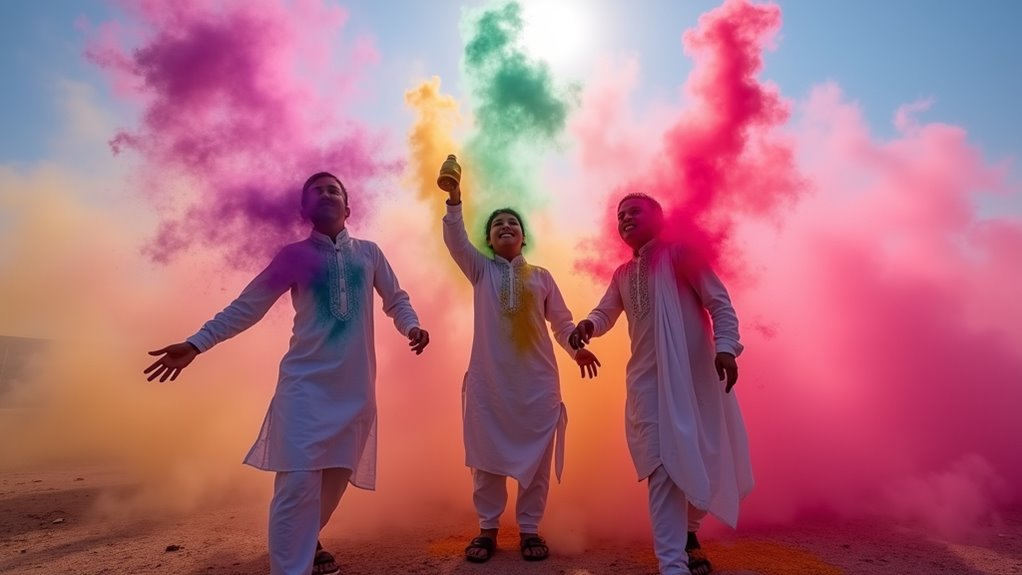
While Madhya Pradesh offers incredible wildlife encounters year-round, North India’s cultural calendar reaches its most vibrant peak during Holi, when entire cities transform into living canvases of color and joy. Budget travelers can experience this spring festival’s spiritual significance across Krishna’s birthplace in Mathura and Vrindavan, where temple celebrations last multiple days without entrance fees.
Each color carries deep meaning—red symbolizes love and fertility, yellow represents prosperity, blue embodies Krishna’s divine nature, and green signifies new beginnings. Traditional natural pigments from turmeric, beetroot, and medicinal herbs create safer alternatives to synthetic powders. The act of splashing colors symbolizes joy, unity, and the breaking down of social barriers during the festivities. Beyond the colorful festivities, travelers can explore the region’s magnificent temples and coastal areas that offer spiritual retreats throughout the year.
Gujarat’s two-day festivities and West Bengal’s “Dol Yatra” parades offer regional variations that won’t strain tight budgets.
Punjab’s “Hola Mohalla” adds martial arts displays, providing additional cultural experiences during the celebrations.
Ayurvedic Wellness Retreats in Karnataka’s Hill Stations
Karnataka’s misty hill stations harbor some of India’s most authentic Ayurvedic wellness retreats, where ancient healing traditions meet stunning natural landscapes without the premium prices found in touristy destinations.
SwaSwara near Om Beach and Shreyas Retreat in Mysuru offer in-depth Panchakarma detoxification programs alongside daily yoga and meditation sessions.
Budget-conscious travelers can’t beat SDM Yoga and Naturopathy Hospital in Dharmasthala for affordable, authentic treatments.
Most retreats provide personalized Ayurvedic consultations, herbal therapies, and sattvic meals tailored to individual needs.
Nira Wellness in Sakleshpur combines traditional treatments with modern amenities like swimming pools and spa facilities.
The serene forest settings and cool mountain air naturally enhance the healing process, making these retreats perfect for genuine wellness seekers rather than luxury spa enthusiasts. Like the imperial experiences in Vietnam’s ancient capital, these Karnataka retreats offer immersive cultural encounters that connect visitors with centuries-old traditions. These centers emphasize drug-free approaches that focus on natural healing methods and lifestyle correction for comprehensive wellness.