
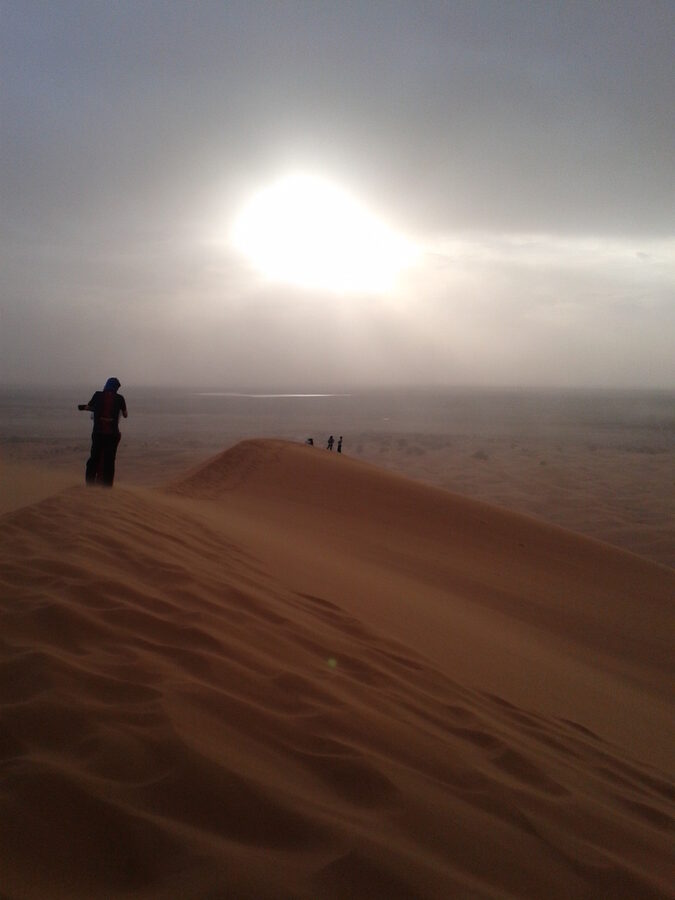
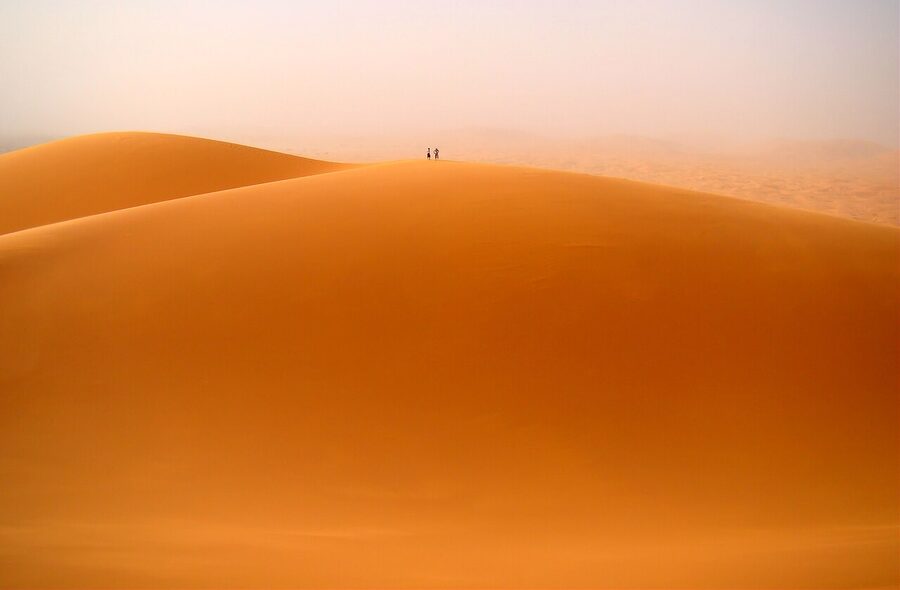
The dune was maybe 80 metres high and I was climbing it in sand that slid out from under each step. Three steps up, two steps back. By the top, my lungs were burning, my legs were shaking, and the wind at the ridgeline carried fine sand that lodged in every crease of clothing. Then I turned around.
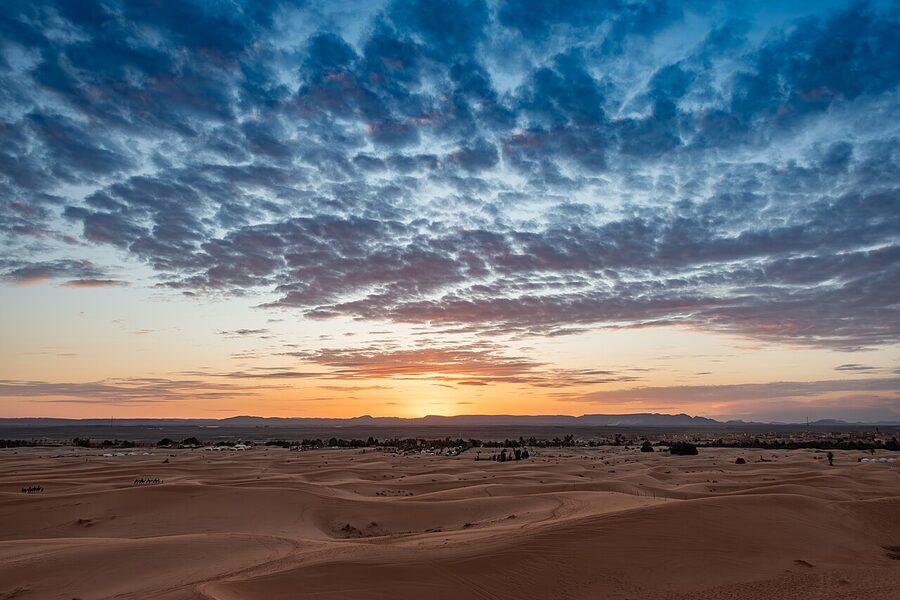
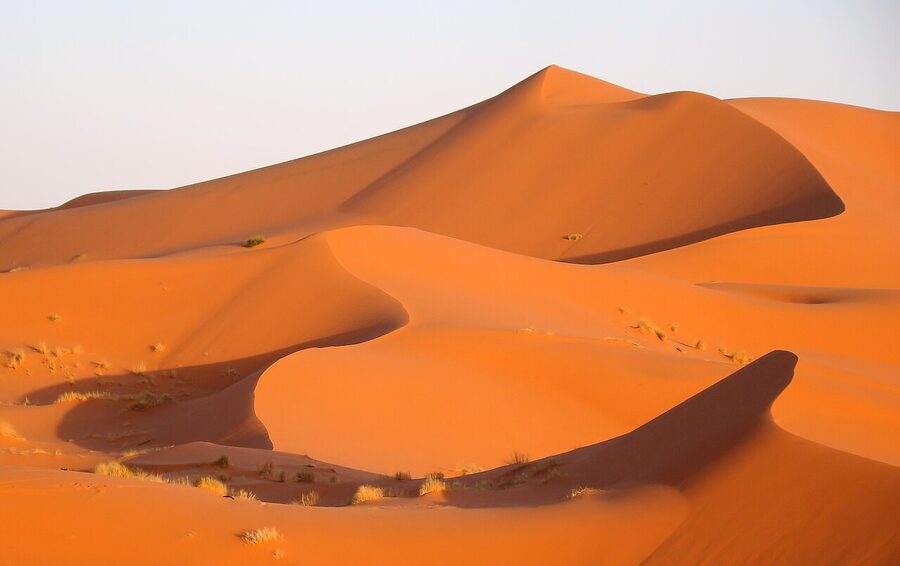
The Sahara at sunset looks the way you imagined it when you were eight years old and dreaming of Lawrence of Arabia. The dunes roll to the horizon in overlapping arcs. The light is liquid gold. The silence is total. It’s worth the 10-hour drive from Marrakech. It’s worth the 80 metres of sand wall. It’s worth everything the brochures promise.
.jpg)
The 3-day Sahara tour from Marrakech is the benchmark Moroccan adventure. Day 1 drives across the Atlas Mountains to Aït Benhaddou and Ouarzazate. Day 2 continues through the Draa Valley to Merzouga, finishes with a sunset camel trek into the dunes and an overnight at a Berber camp. Day 3 returns to Marrakech with stops at Todra Gorge and other landmarks.
Prices range from $116 for the group tour (most popular by far) up to $756 for the luxury private version. The sweet spot is the $116 option — Viator’s highest-reviewed Moroccan desert tour with 147 five-star ratings.
In a Hurry? Our Top Picks
The most-booked 3-day Sahara tour. 147 five-star ratings. Group size 8-16. Unbeatable value.
Full private luxury version. Ends in Marrakech. Private vehicle, premium camp, curated stops.
Middle-tier private option. Better than group, cheaper than the full luxury version. Flexible pacing.
- The Three-Day Itinerary
- Day 1: Marrakech — Aït Benhaddou — Ouarzazate — Dades Valley
- Day 2: Dades — Todra Gorge — Merzouga — Sunset Camel Trek
- Day 3: Sunrise — Camel Trek Back — Long Drive Home
- The Dunes — What to Expect
- The Camels — What to Know
- Our Recommended Tours
- 1. 3-Day Group Tour Marrakech to Merzouga — 6
- 2. Private Merzouga Tour 3 Days / 2 Nights — 7
- 3. Private Luxury Tour (Ending in Marrakech) — 6
- When to Go
- Practical Tips
- The 3-Day Sahara vs Other Morocco Options
- Is the 3-Day Sahara Tour Worth It?
- Building the Sahara Into Your Morocco Trip
The Three-Day Itinerary
Most 3-day Marrakech-to-Merzouga tours follow a near-identical route. Minor variations, but the spine is consistent.
Day 1: Marrakech — Aït Benhaddou — Ouarzazate — Dades Valley
Early morning pickup (7-8am). Drive over the Tizi n’Tichka pass in the High Atlas Mountains — a dramatic climb to 2,260 metres with stops for photos.

The pass descends into the Ounila Valley and reaches Aït Benhaddou — the UNESCO-listed kasbah that’s featured in more films than any other Moroccan location (Lawrence of Arabia, Gladiator, Game of Thrones). Stop for lunch and a guided walk through the fortified village.
Afternoon continues to Ouarzazate (the “Hollywood of Morocco” — home to Atlas Studios), then the Dades Valley for overnight at a riad or kasbah hotel. For more detail on this stretch, see our Ouarzazate and Aït Benhaddou guide — the 3-day Sahara tour effectively wraps that day trip into its first day.
Day 2: Dades — Todra Gorge — Merzouga — Sunset Camel Trek
Morning drive through the Rose Valley and into the Todra Gorge — a dramatic limestone canyon where the walls rise 300 metres on either side of a narrow road. Quick walking stop (about 30 minutes) before continuing east.

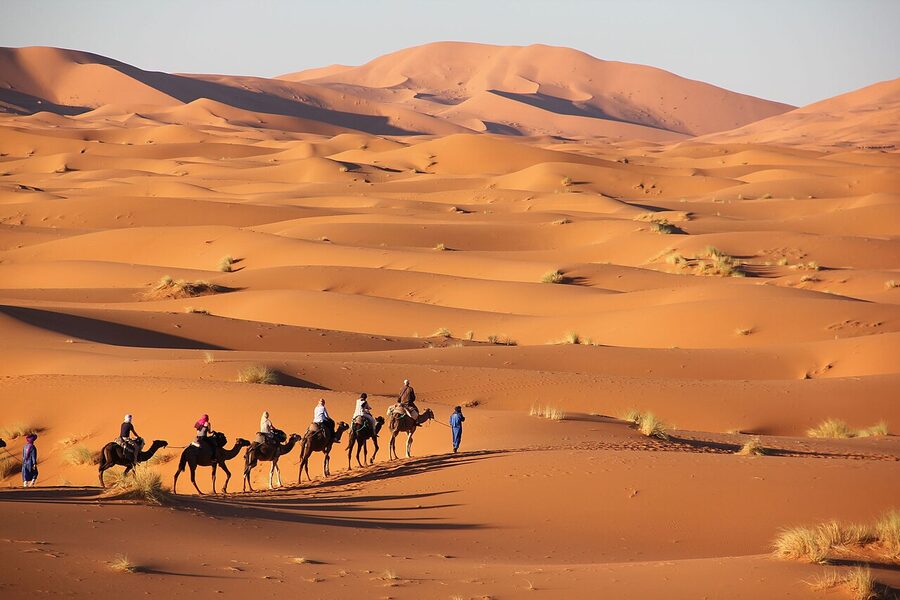

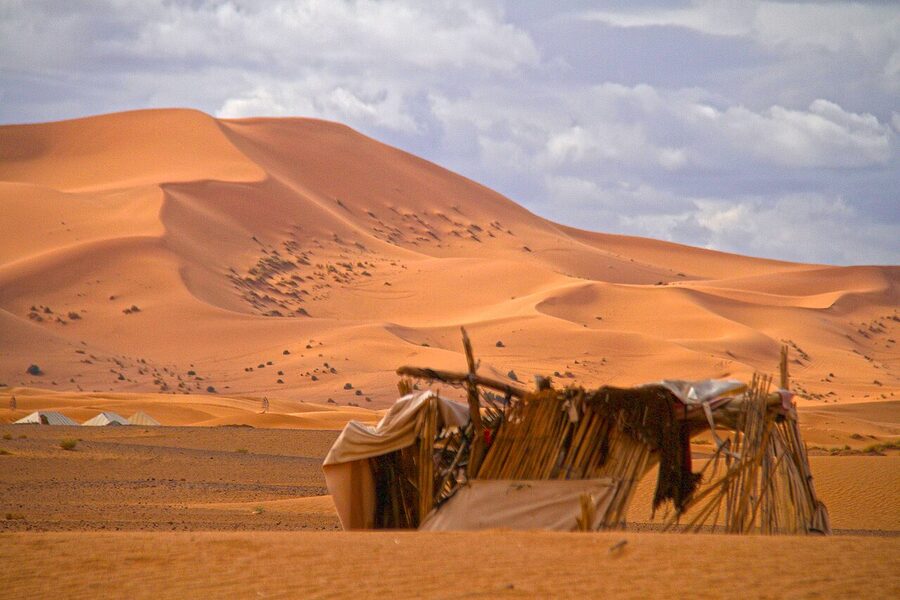
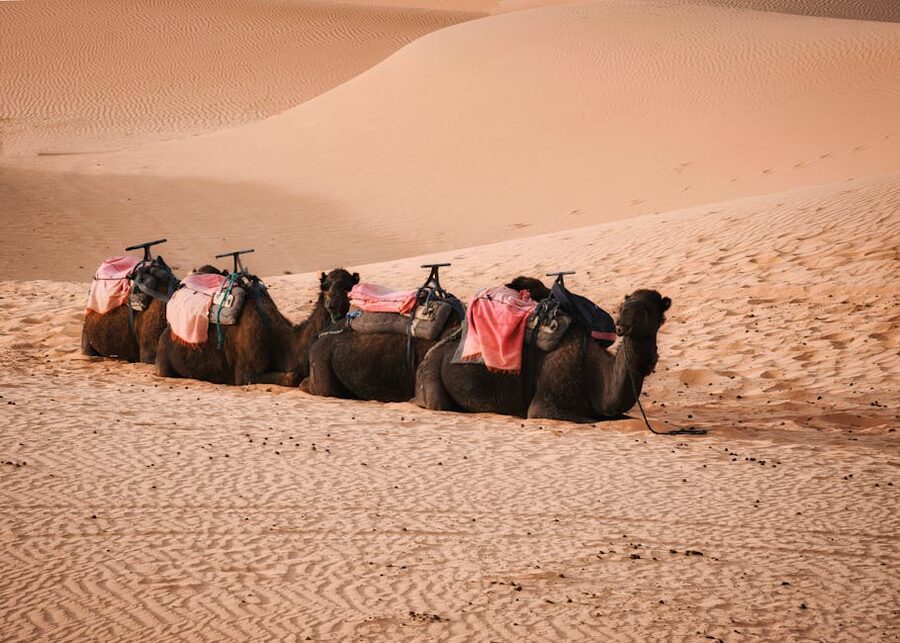
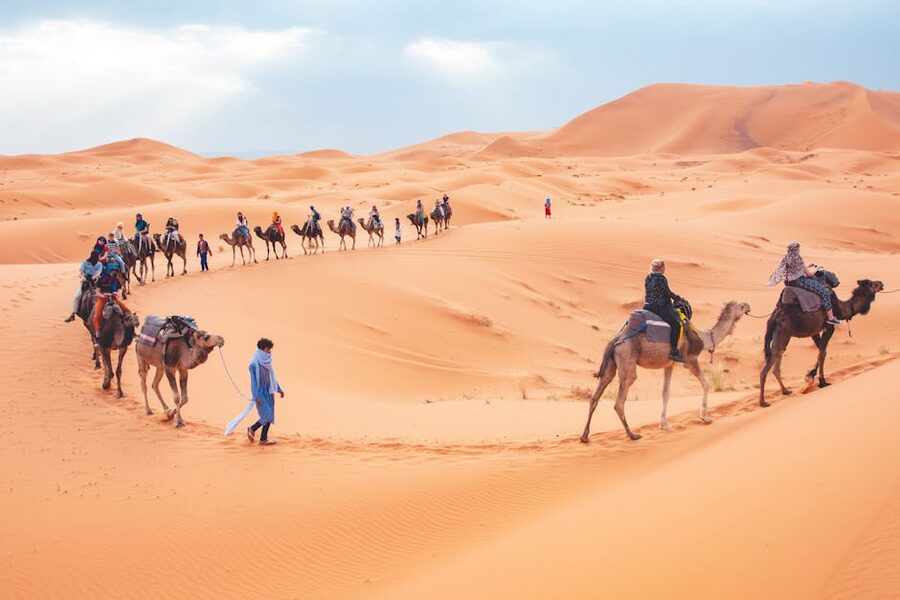
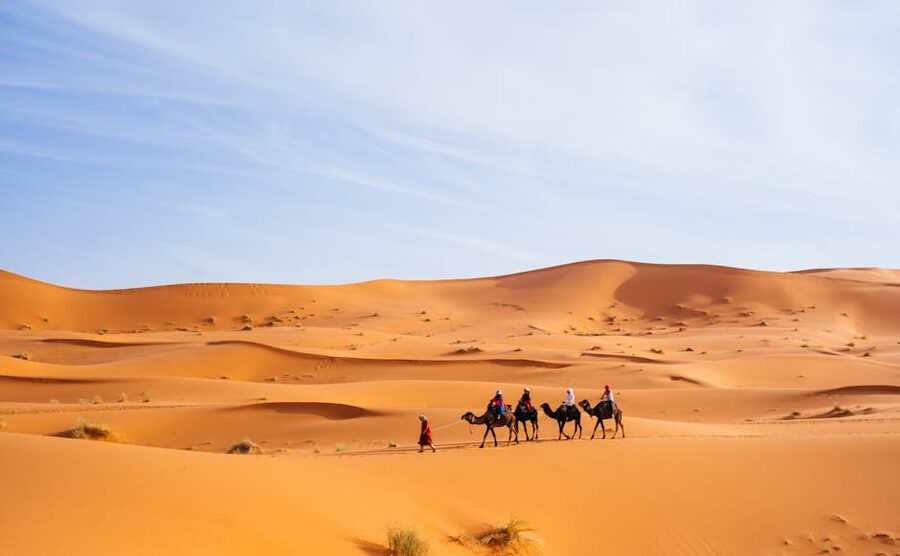
Afternoon arrival at Merzouga around 3-4pm. Drop bags at the hotel, change into desert gear, and meet the camels at the edge of the dunes around 4:30pm. The sunset camel trek begins — roughly 60-90 minutes riding into the dunes to the overnight camp.
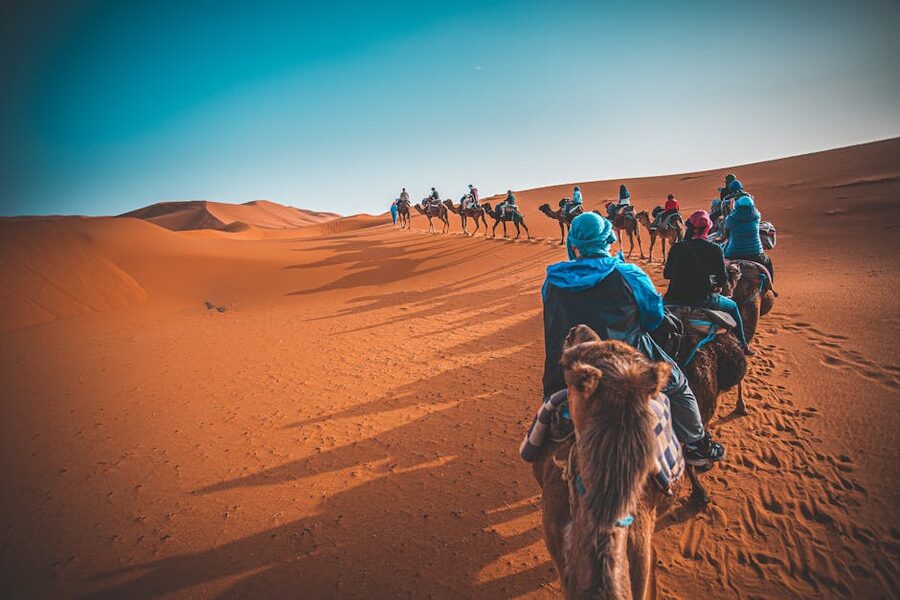
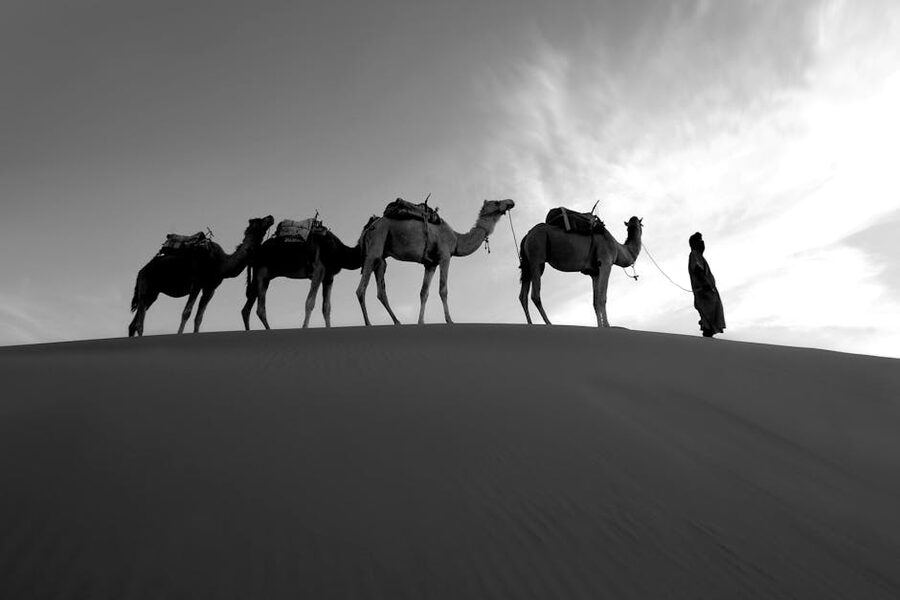
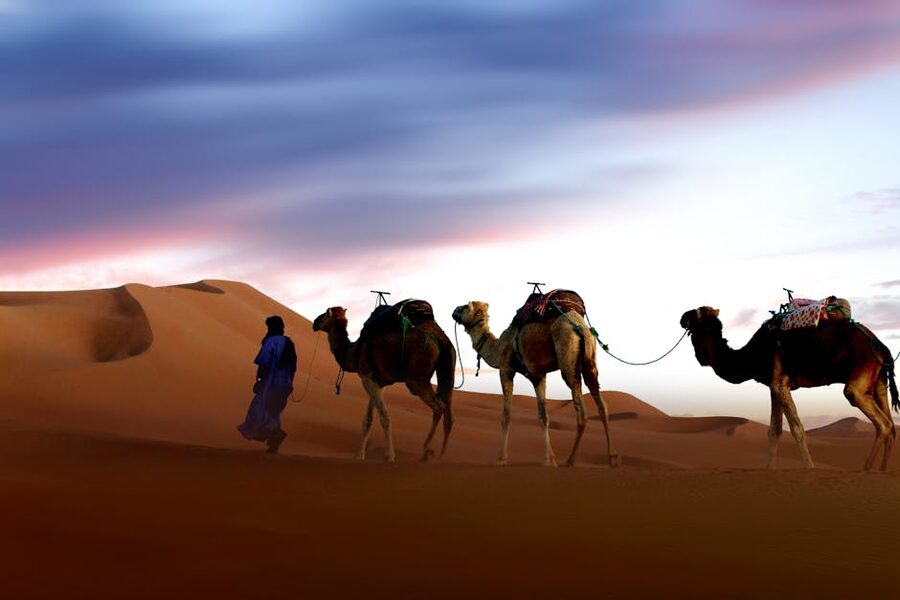
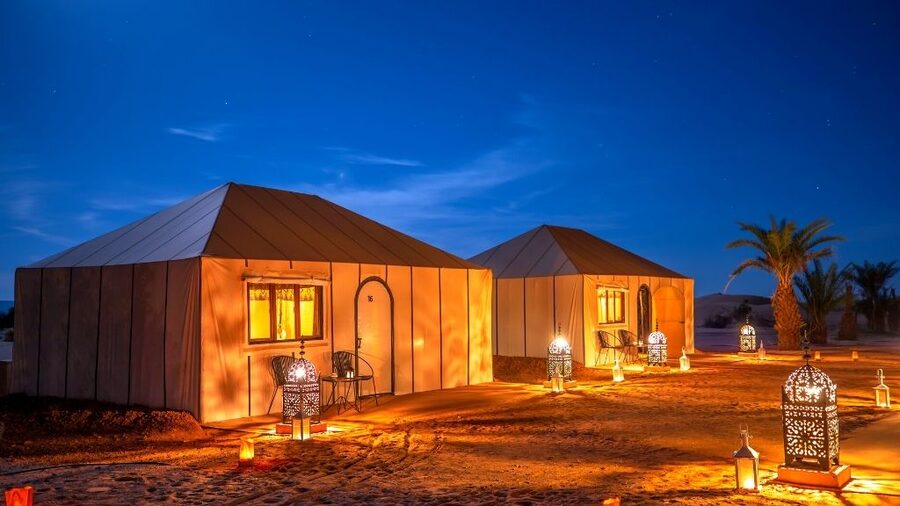
Overnight at a Berber-style desert camp. Traditional dinner (tagine, bread, tea) followed by drumming and songs around a fire. Tents vary from basic (shared, communal toilets) to luxury (private bathrooms, proper beds). Check which tier your tour includes.


Day 3: Sunrise — Camel Trek Back — Long Drive Home
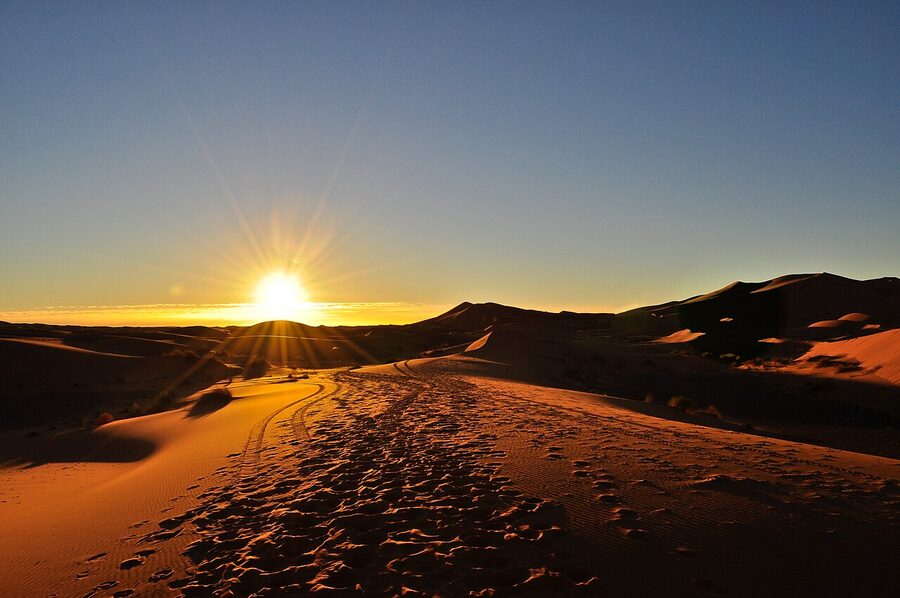
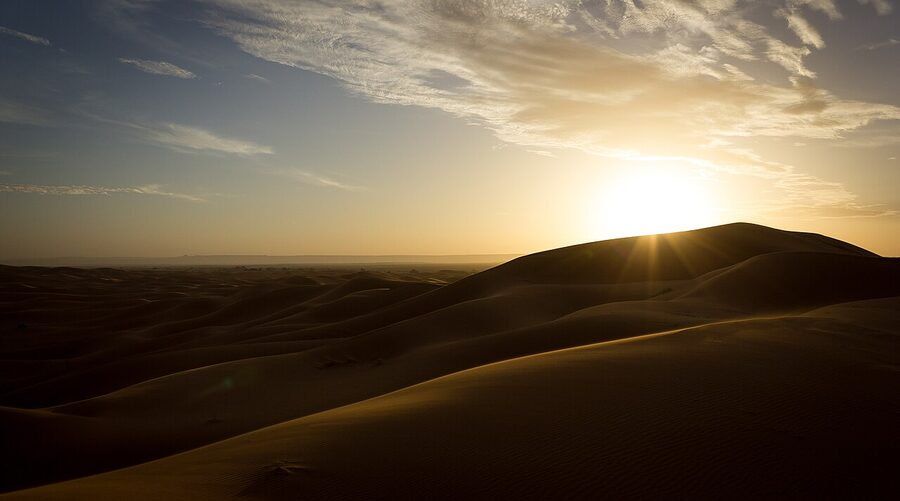
Pre-dawn wake-up (around 5:30am). Climb the nearest dune for sunrise. This is, for most travellers, the single best moment of the trip — the sand turning from grey to gold, the silence, the temperature still cool, the adrenaline of the climb offset by the view at the top.


Breakfast at the camp, then the return camel trek back to the hotel around 7:30-8:30am. Quick shower and change, then the long drive back to Marrakech — 9-10 hours including lunch stop.
The day 3 drive is the most tiring part of the whole trip. Long, hot, windy road. Bring water, snacks, a book or podcast. Most drivers stop for bathroom breaks every 2-3 hours.
The Dunes — What to Expect
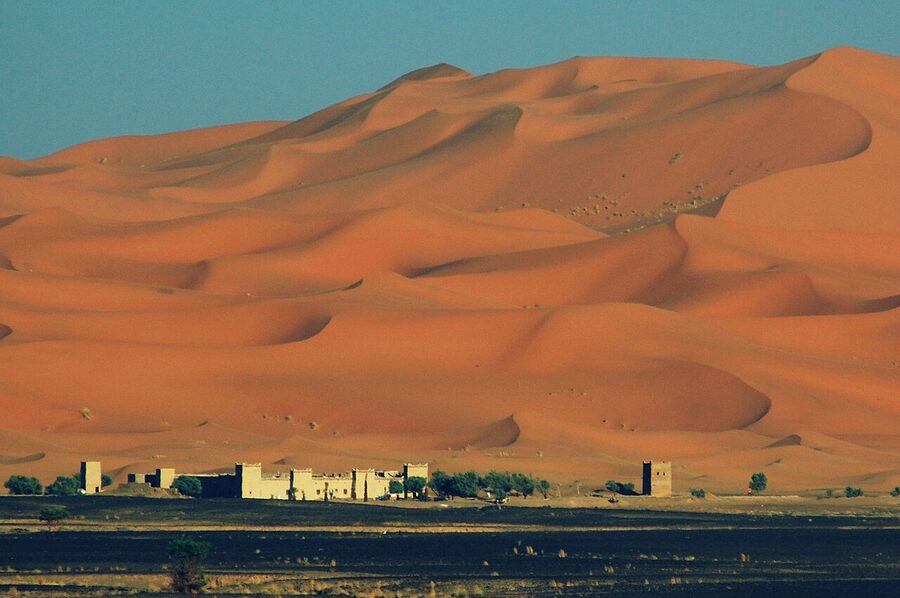
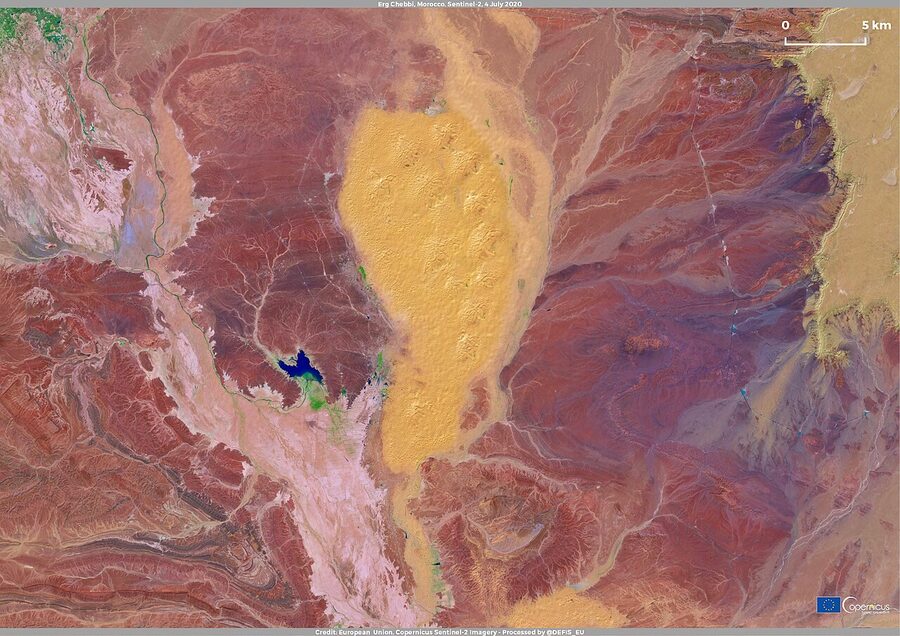
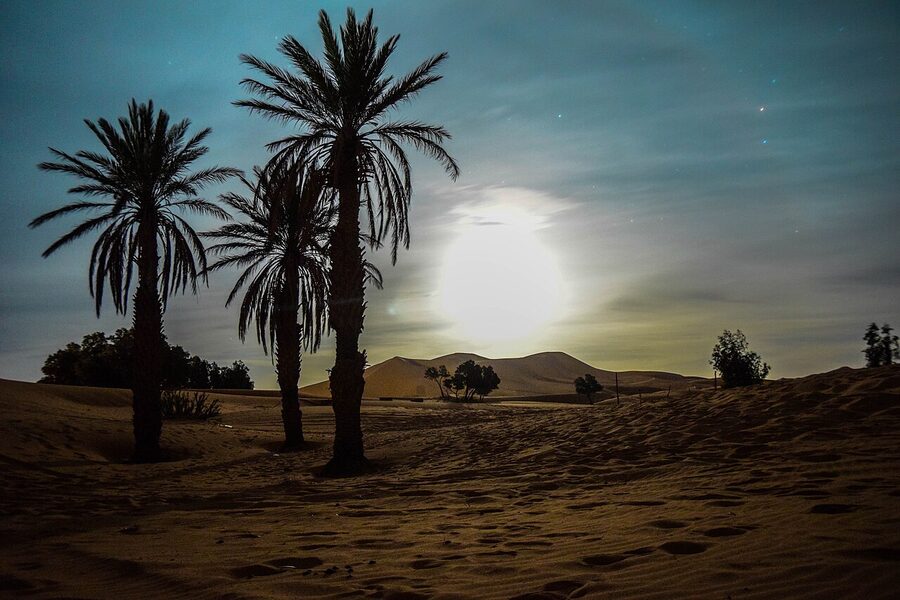
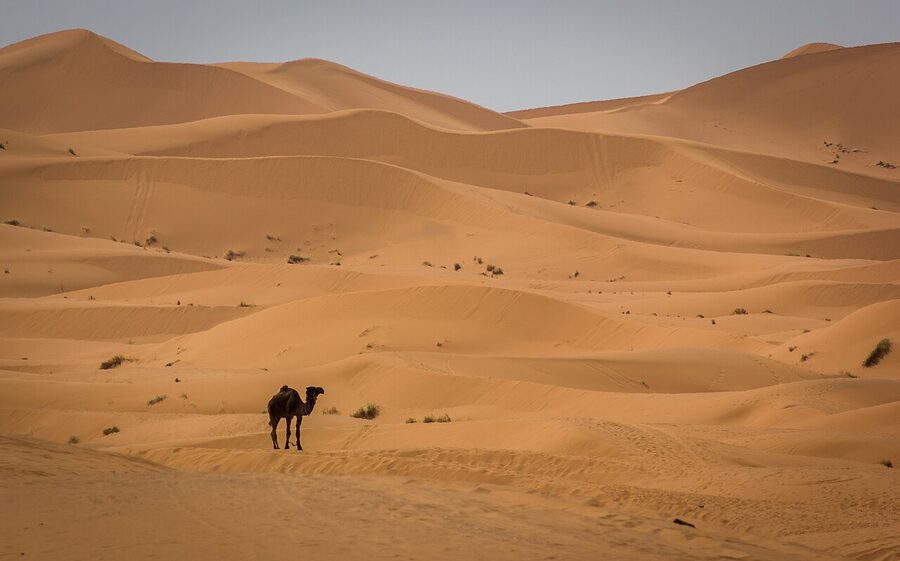
Erg Chebbi is one of only two true erg (sand sea) formations in Morocco. The other is Erg Chegaga, further southwest and less accessible. Erg Chebbi is the standard Merzouga destination.






The Camels — What to Know
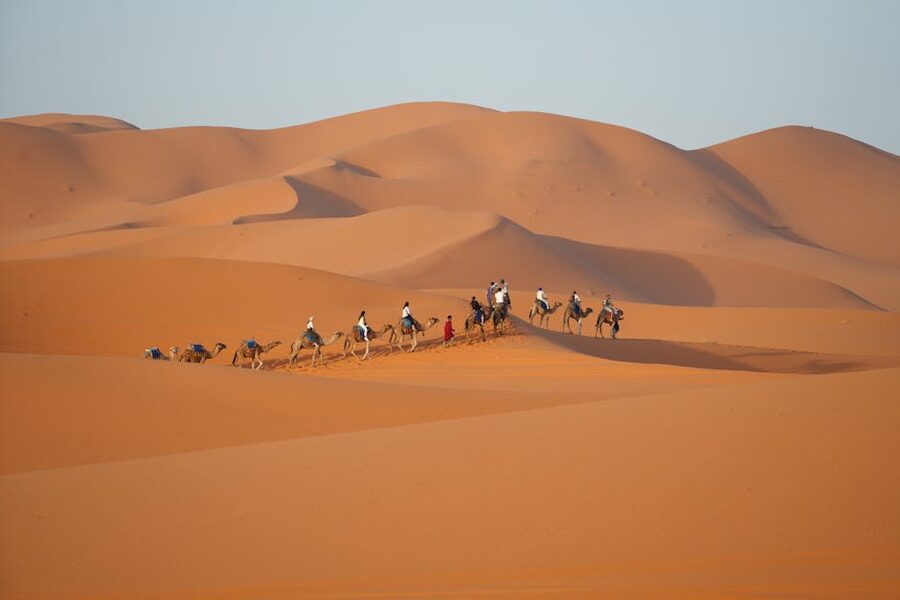
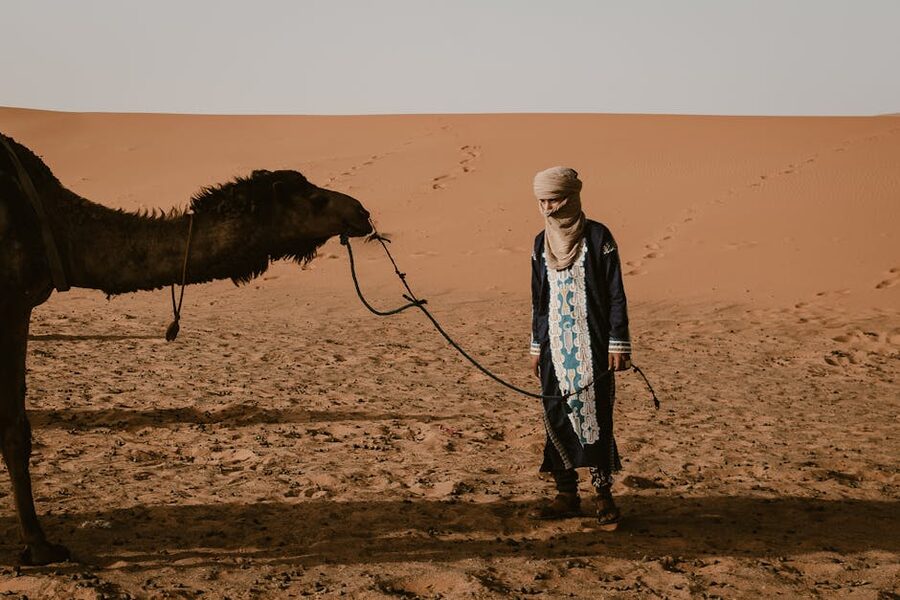
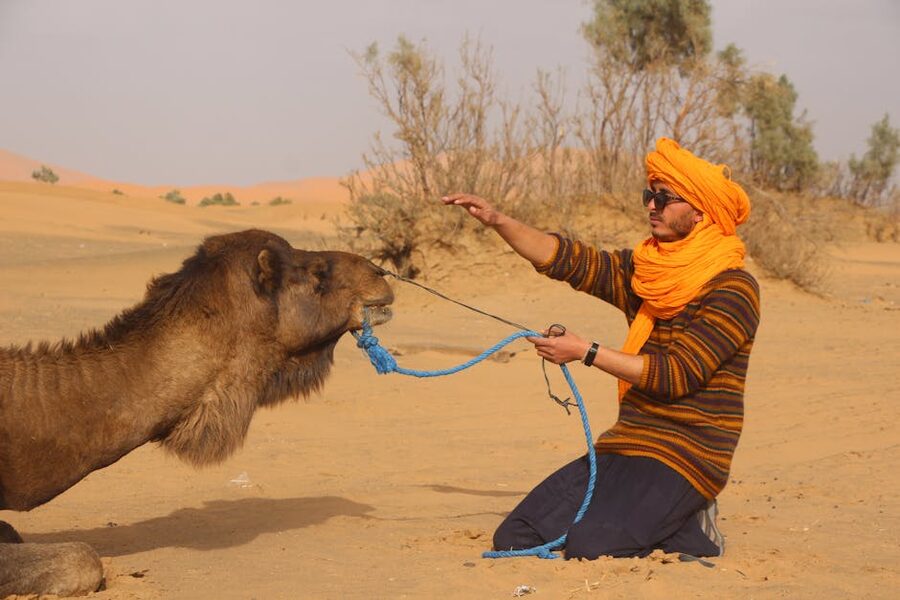
The camel trek is the iconic Sahara experience. One-hour trek to camp at sunset, one-hour return at sunrise. Most tour groups have 8-16 camels in caravan formation.

Our Recommended Tours
1. 3-Day Group Tour Marrakech to Merzouga — $116
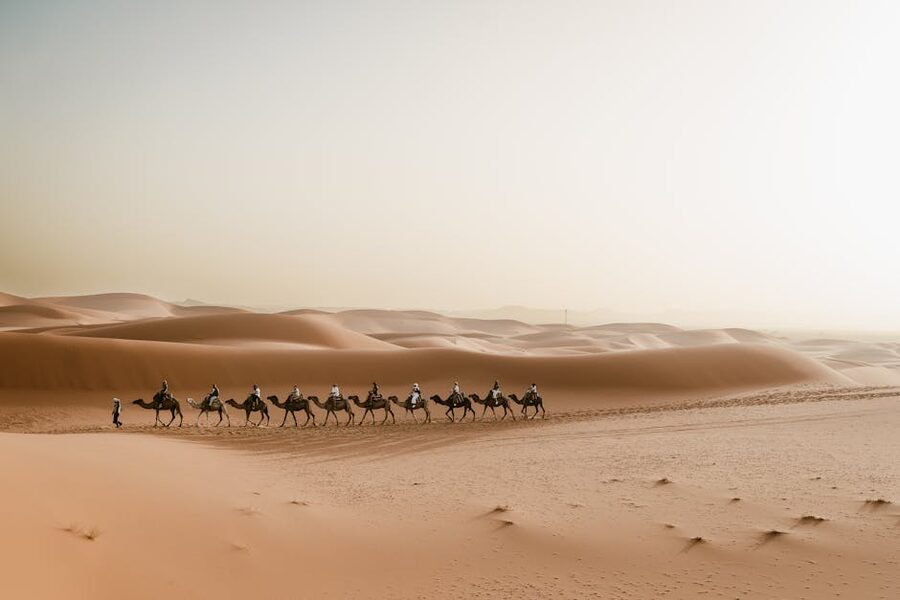
The highest-reviewed 3-day Sahara tour on Viator — 147 five-star ratings at time of writing. Group tour format (8-16 people), shared vehicle, basic Berber camp. At $116 it’s one of the best-value multi-day experiences in the entire Viator catalogue.
Group means you don’t control pacing, and you’re at the mercy of the slowest bathroom-break user. But the price makes it worth it for most travellers. Our full review of this group tour breaks down the itinerary day by day and what to expect at the basic camp.
2. Private Merzouga Tour 3 Days / 2 Nights — $427
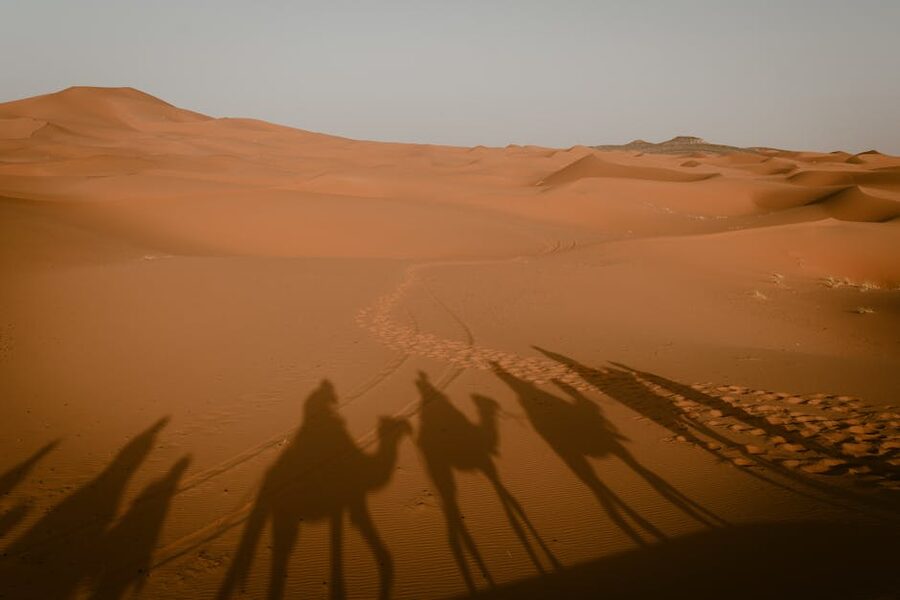
Private version of the 3-day itinerary. You get your own vehicle and driver/guide, which means you can stop where you want and spend more time at the places you find interesting. Same general itinerary, flexibly paced.
Worth the premium over the group tour if you’re a couple or small family who values privacy and flexibility. Not worth it if you’re happy to go with the group flow. Our review of this private option covers what the extra spend actually gets you.
3. Private Luxury Tour (Ending in Marrakech) — $756
Full luxury version. Private 4×4 with a driver-guide, en-suite luxury tent in the desert, upgraded meals, more time at each stop. This is the “honeymoon or milestone” version of the Sahara tour.
At $756 it’s 6.5x the group tour price. Whether it’s worth it depends on your priorities — the landscape is identical, but the comfort level and photo opportunities (you can linger for the perfect light) are materially different. Our review of the luxury tour breaks down exactly what the premium buys.
When to Go
October to April (peak season): The standard Sahara tour season. Daytime temperatures 20-25°C, nights cold (5-10°C, occasionally below freezing in January). Comfortable camel trekking, good photography light.
May and September (shoulder): Hotter days (30-35°C) but still bearable. Fewer crowds. Good compromise if you can’t avoid these months.
June to August (summer): Daytime temperatures 40-45°C. The tours still run but camel treks shift to early morning and evening only — midday is unbearable. Some luxury camps close during the peak heat weeks.
Practical Tips
Pack light. You’ll bring a small overnight bag into the desert; main luggage stays at the hotel in Merzouga. 15-20 litres total is enough — clothes for two days, toiletries, camera, water.
Layers for temperature swings. Daytime can be 25°C, nighttime 5°C. Long trousers, long sleeves, a warm jacket, a wool beanie. Also a scarf or cheche (Berber wrap) for wind-blown sand.
Closed-toe shoes. Trainers or hiking shoes. Sandals fill with sand instantly. Flip-flops for the camp only.
Sunglasses and sunscreen non-negotiable. The sand reflects sunlight; cumulative UV is higher than anywhere else in Morocco. Lip balm with SPF for the cracked lips.
Camera, not just phone. Phones work but a real camera with 24-70mm range gives you better range for landscapes and portraits. Pack extra batteries — cold desert nights drain them fast.
Cash for extras. Camp tips, Berber crafts, extra drinks, optional activities. 500-1000 MAD ($50-100) covers most Sahara spending. ATMs don’t exist past Ouarzazate.
Water. Bring a 1-litre bottle refillable; the camp provides drinking water. Dehydration is the #1 cause of trip-ruiners. Drink more than you think you need.
Camera storage. Sand gets into everything. Sealed bags or dry sacks for electronics. Don’t change lenses in the open desert.
The 3-Day Sahara vs Other Morocco Options
vs Agafay Desert Day Trip: Agafay is a half-day rocky-desert experience near Marrakech. Sahara is a three-day dune-desert experience. Completely different scale. Do Agafay if short on time; Sahara if you have three days to spare.
vs Ouarzazate Day Trip: The Ouarzazate day trip covers day 1 of the Sahara tour but returns to Marrakech rather than continuing east. Good if you want the Atlas crossing and kasbah but not the desert overnight.
vs Atlas Mountains Day Hike: Atlas is the mountain experience; Sahara is the desert. Do both on a longer Morocco trip — they’re complementary. Atlas for green valleys and hiking, Sahara for sand dunes and overnight in the desert.
vs Essaouira Day Trip: Essaouira is the coastal experience. Sahara is the inland experience. The “Morocco complete” itinerary covers both — coast, mountains, desert — in 7-10 days with Marrakech as the base.
Is the 3-Day Sahara Tour Worth It?
If you have three days in Marrakech: absolutely. This is the bucket-list Moroccan experience. The $116 group tour delivers the same landscape as the $756 luxury version — just with less comfort.
Skip only if you genuinely can’t commit three days to a single experience. Agafay gives you a taste of desert in a half-day, but it’s not the Sahara. If you’re in Morocco and the Sahara is on your list, book the full 3-day trip. Half-measures disappoint.
Building the Sahara Into Your Morocco Trip
The 3-day Sahara is a major commitment from Marrakech — you lose three full days, and day 3 especially is exhausting (9-10 hours driving).
Plan it for the middle of your Marrakech stay, not the end. Day 1-2 in Marrakech, day 3-5 Sahara tour, day 6-7 recovery in Marrakech with lighter activities like the Majorelle Garden or a hammam. The post-Sahara day 6 is almost always used for laundry, a hammam, and a slow lunch.
For a week-long Morocco trip, the Sahara is the centrepiece. Pair with an Atlas Mountains hike on one end and Essaouira or the Medina walking tour on the other. That covers Morocco’s three main landscapes — mountains, desert, coast — plus the urban medina experience. For shorter trips (4-5 days), you have to choose: Sahara or everything else. My strong vote is for the Sahara.