
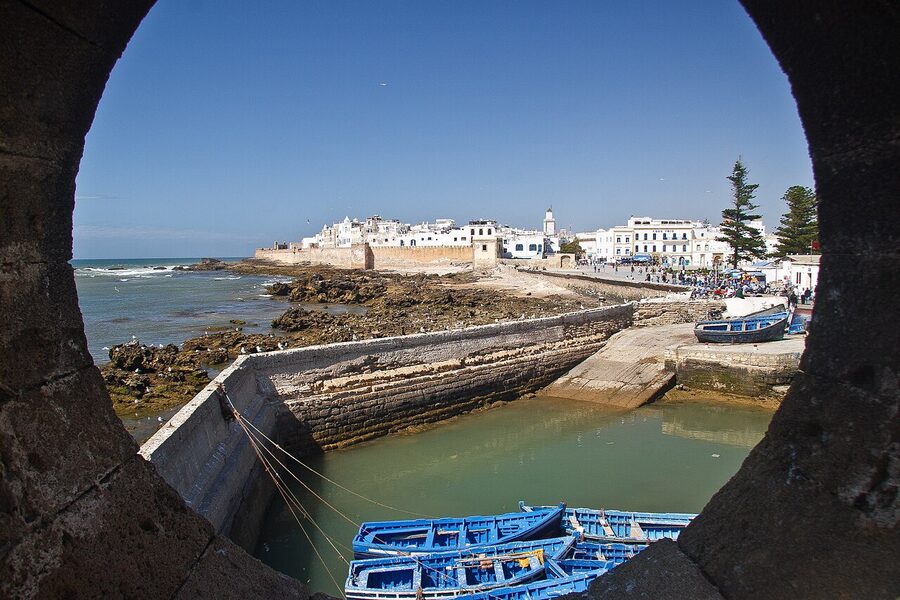
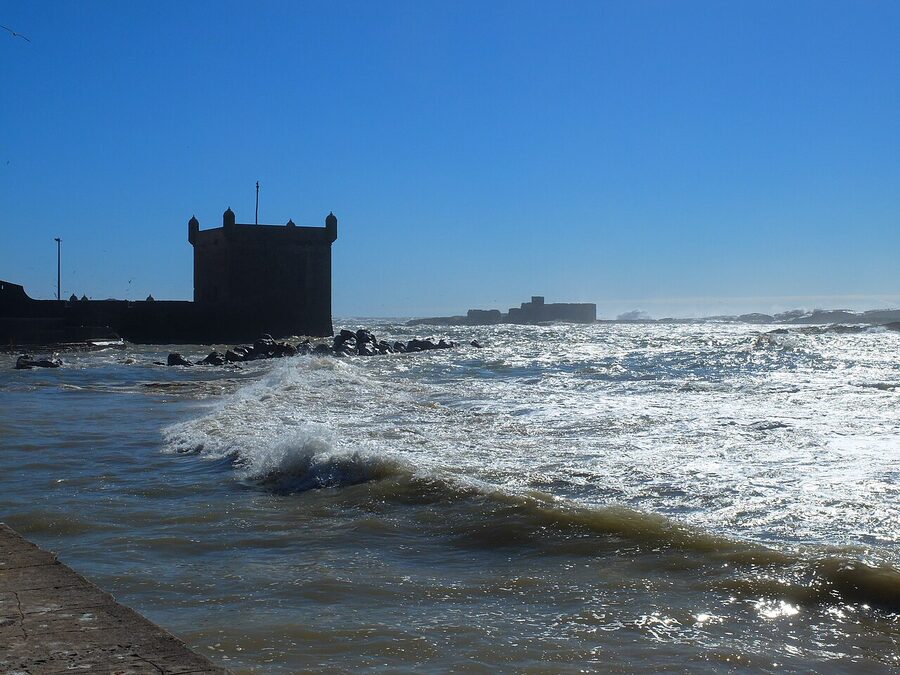
The wind in Essaouira has its own personality. It arrives from the Atlantic by mid-morning and doesn’t stop. It’s why the fishing boats return before noon, why the medina cafés have wind-blocking windbreaks, and why the city has been the Moroccan surf and kitesurfing capital for three decades. Unlike Marrakech — which cooks in still summer heat — Essaouira stays cool, breezy, and distinctly Atlantic.
The city is an easy day trip from Marrakech — 3 hours each way on the N8 road, through the argan forests and a stretch of agricultural plain. Tours depart Marrakech around 7am, arrive in Essaouira by 10:30am, give you 4-5 hours in town, and return by 7pm.
.jpg)
Prices are excellent. The cheapest Viator small-group day trip is $16 per person, including transport. Premium private tours go up to $60 with argan forest stops included. Most visitors book the $16-22 tier and pay separately for lunch at one of the port’s seafood restaurants.
The appeal is the contrast with Marrakech. If Marrakech is heat, chaos, and earth tones, Essaouira is wind, calm, and whitewash. A day here resets your sensory palette — and the seafood lunch is the best in Morocco.

In a Hurry? Our Top Picks
Best value — 59 five-star reviews. Small group, transport only, full 4-5 hours in Essaouira.
Alternative at similar price with slightly different pacing. Transport-only model.
Premium version with argan forest stop — see the tree-climbing goats and cooperatives.
- The Medina — Essaouira’s UNESCO Heart
- The Port and the Boats
- The Seafood — Why You Eat in Essaouira
- Our Recommended Tours
- 1. Small Group Essaouira Day Trip —
- 2. Essaouira Full-Day Trip from Marrakech —
- 3. Essaouira with Argan Forests —
- The History — From Mogador to Essaouira
- Practical Tips
- Essaouira vs Other Marrakech Day Trips
- Getting There
- Is an Essaouira Day Trip Worth -?
- Building Essaouira Into Your Marrakech Trip
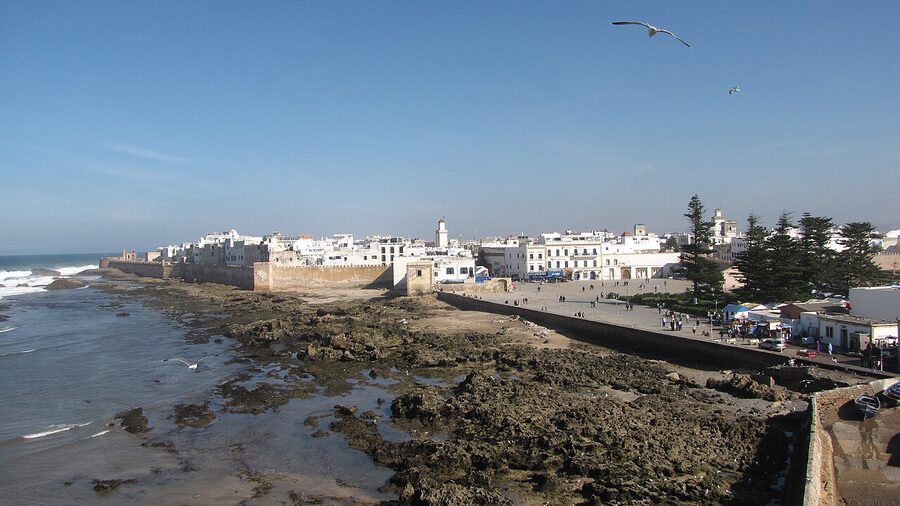
The Medina — Essaouira’s UNESCO Heart
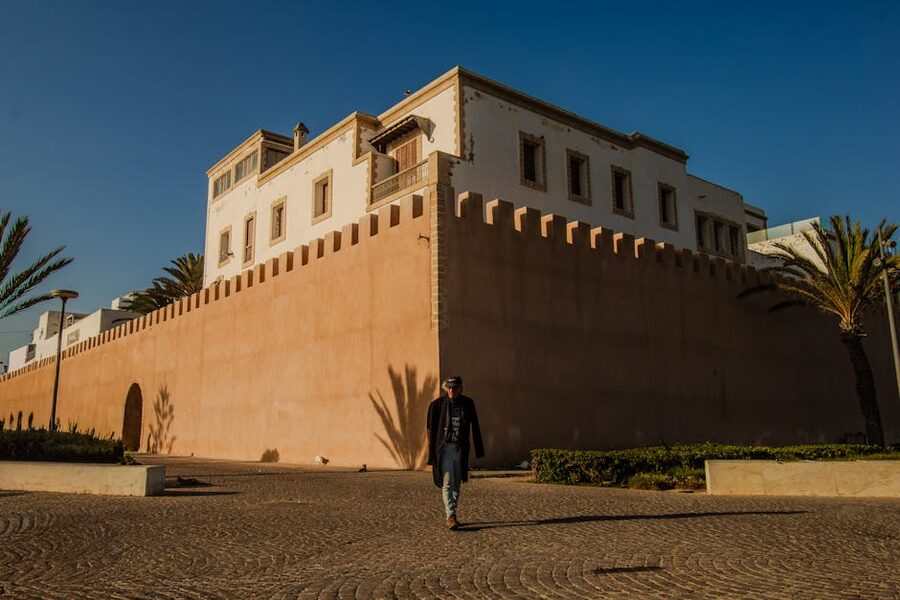
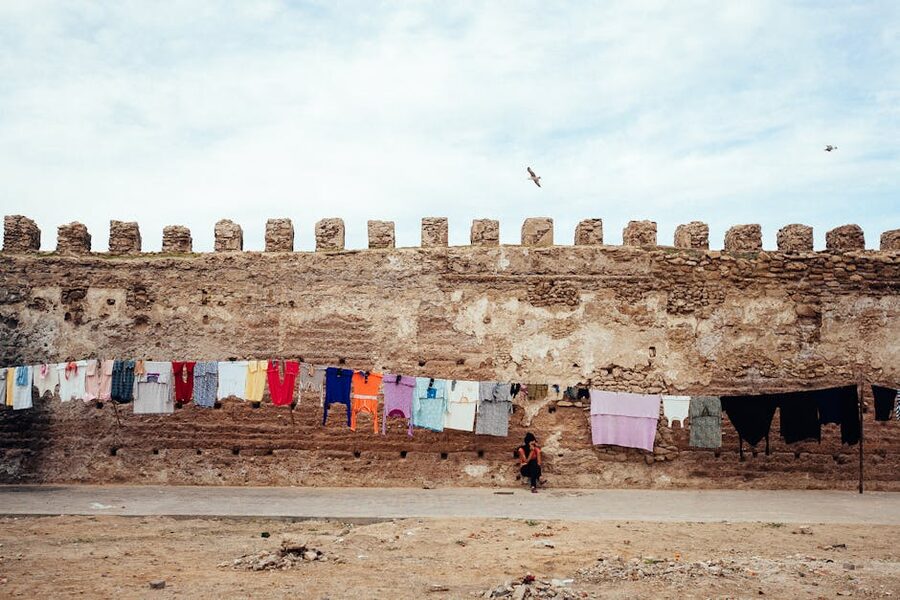
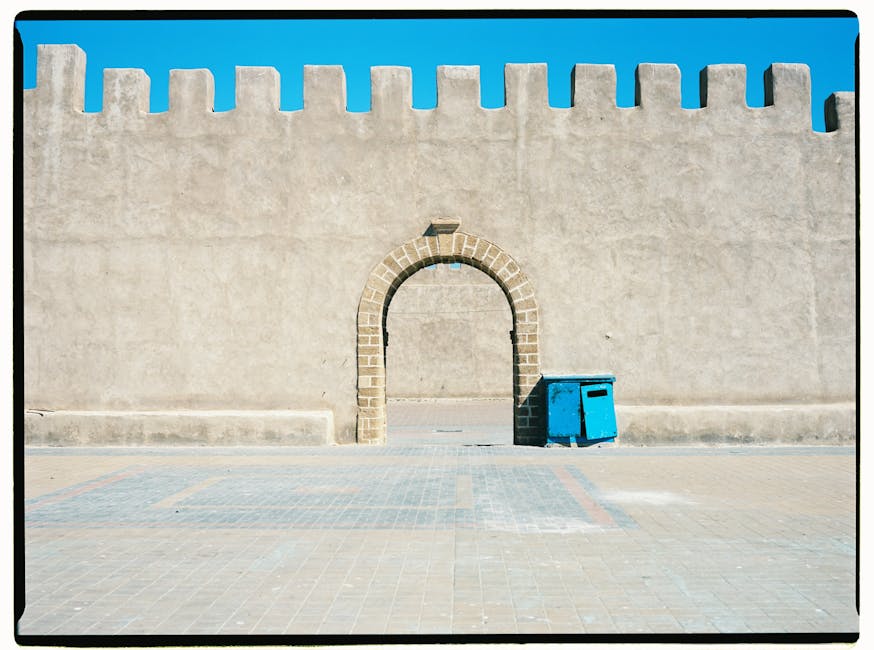
The medina (old town) is UNESCO-listed and small enough to explore in 2-3 hours. It’s laid out on a grid — unusual for a Moroccan medina, which are usually maze-like — because the European architect in the 1760s imposed straight-line streets.


The Port and the Boats
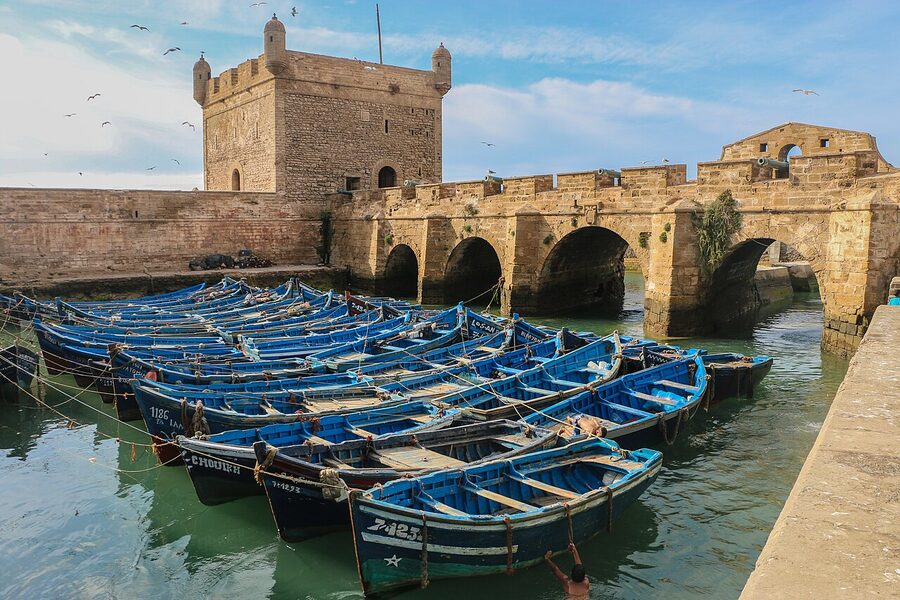
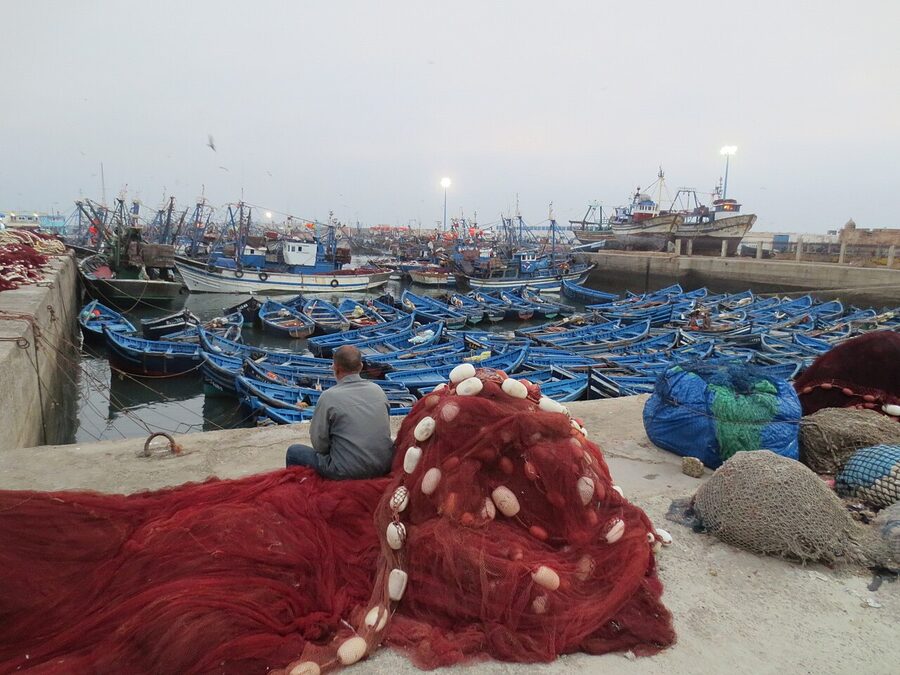
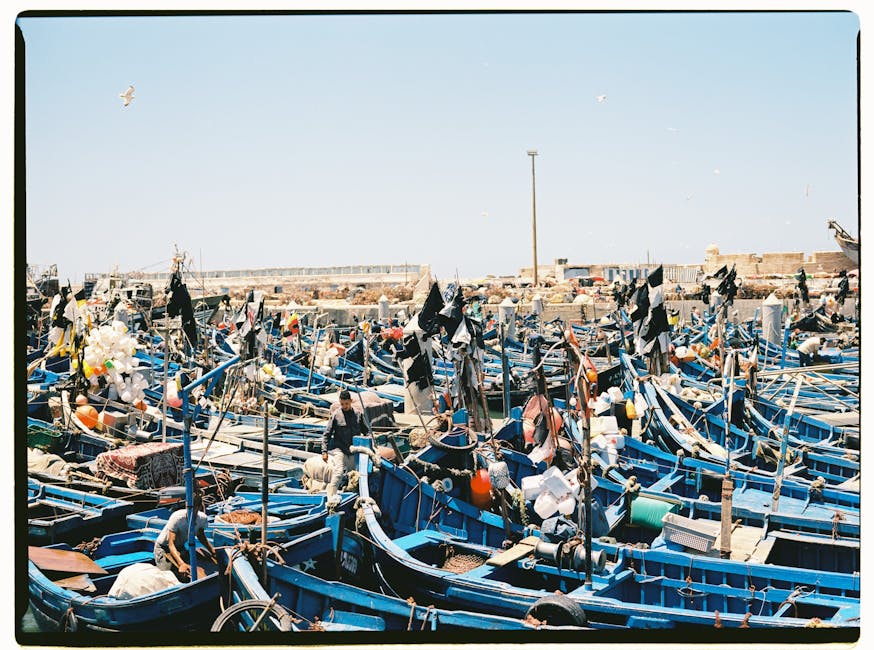
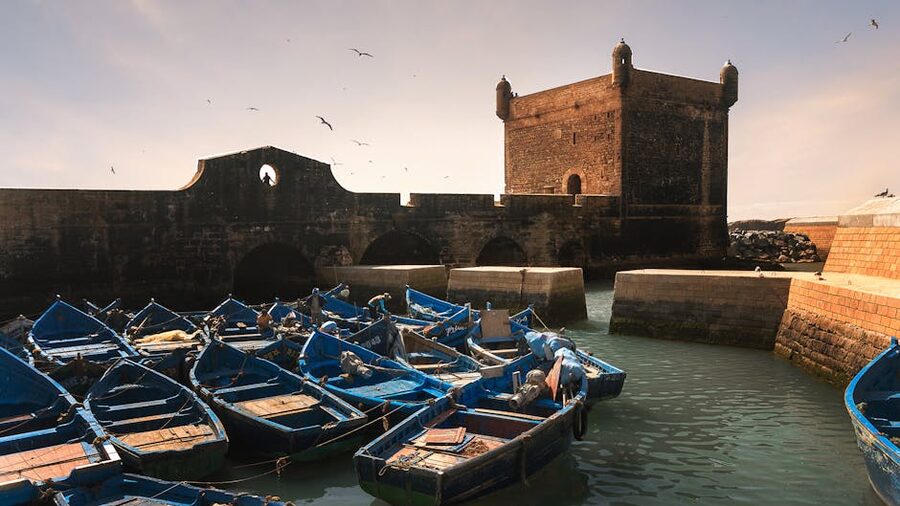
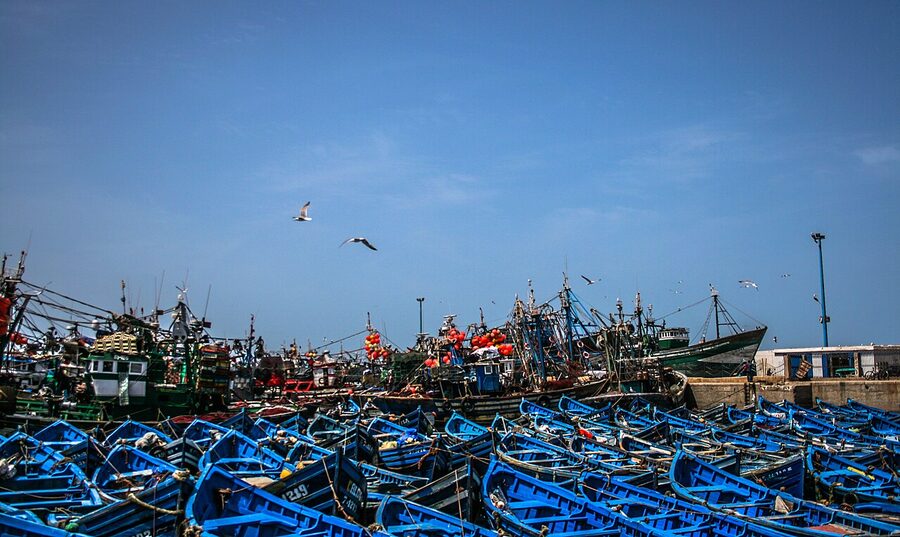
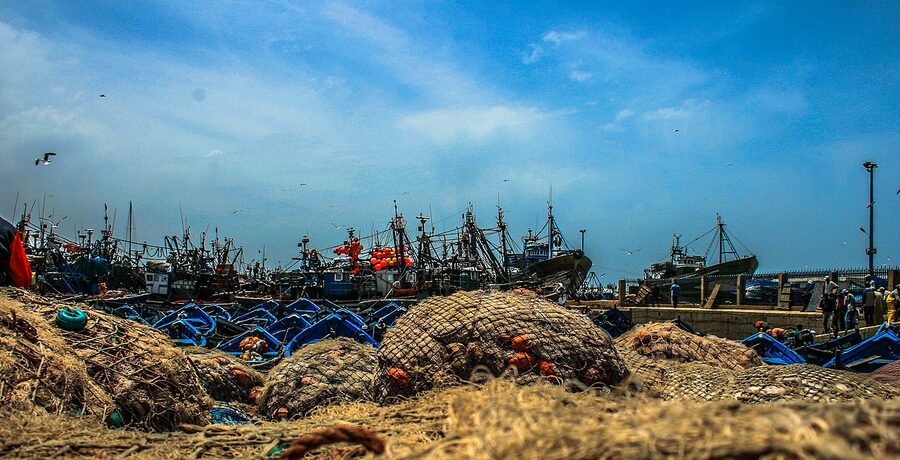
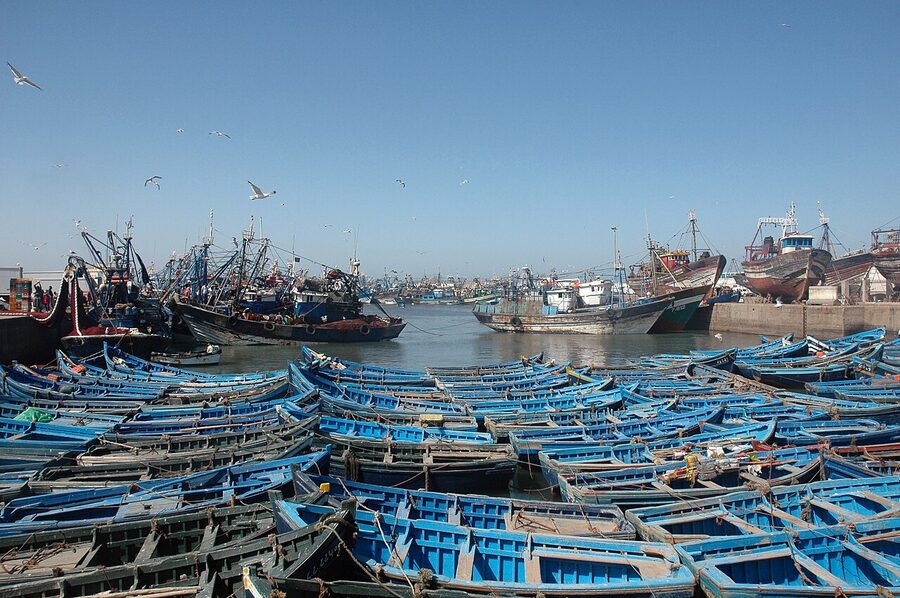
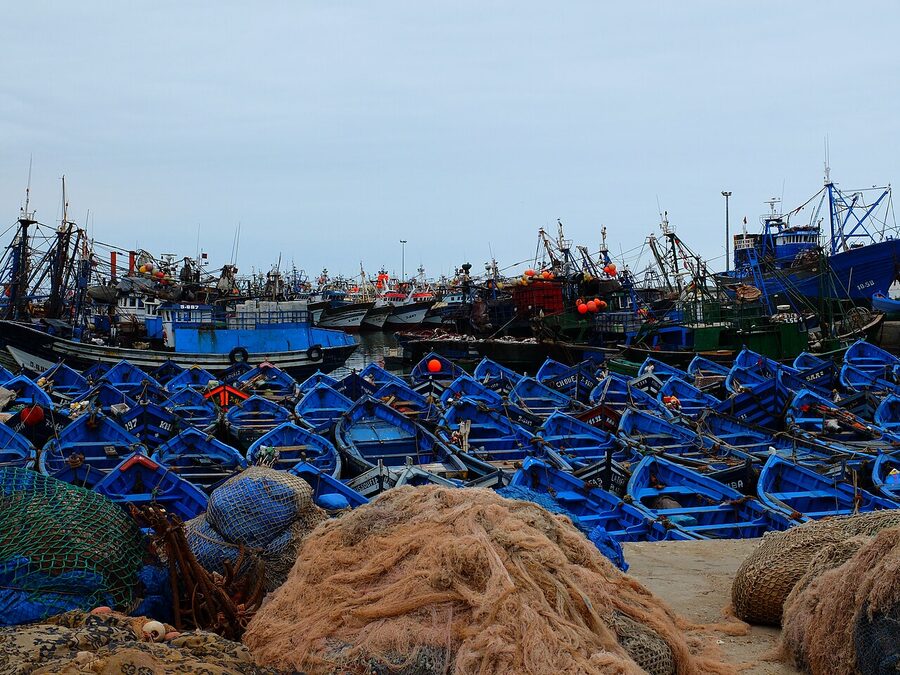
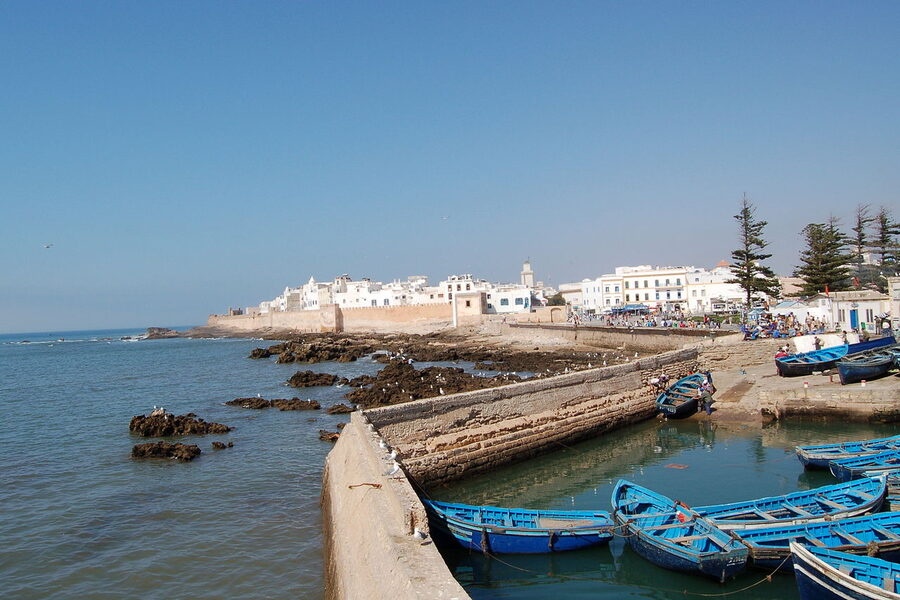
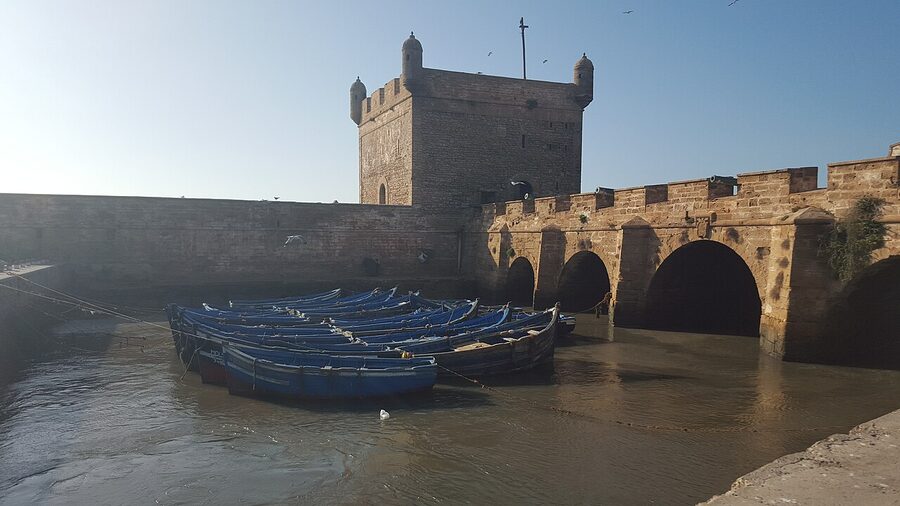
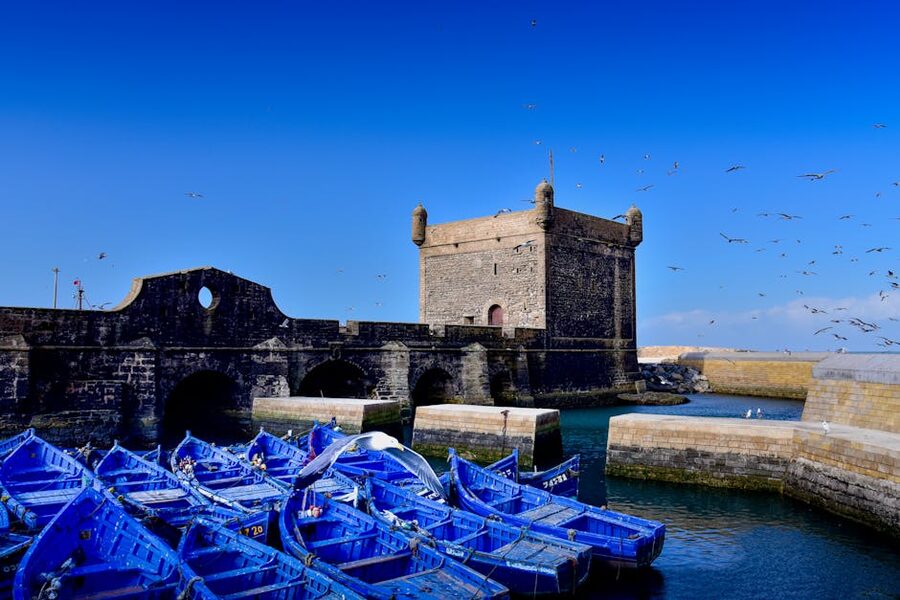
The fishing port is the second must-see after the medina. Maybe 200 active boats, painted in the distinctive Essaouira blue, moored in a sheltered harbour at the south end of the city walls.







The Seafood — Why You Eat in Essaouira
Essaouira’s seafood is the best in Morocco. The port’s fishermen unload directly at the grill stalls, which cook whatever came in that morning. Typical catch: sardines, hake, sea bass, prawns, cuttlefish, spider crab. Prices are by weight — expect 80-150 MAD ($8-15) per person for a full seafood meal.
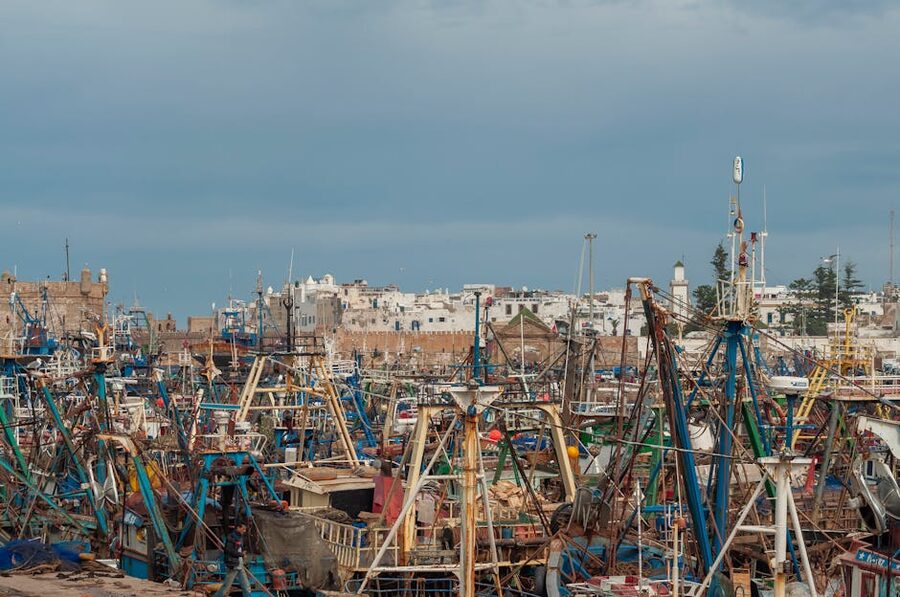
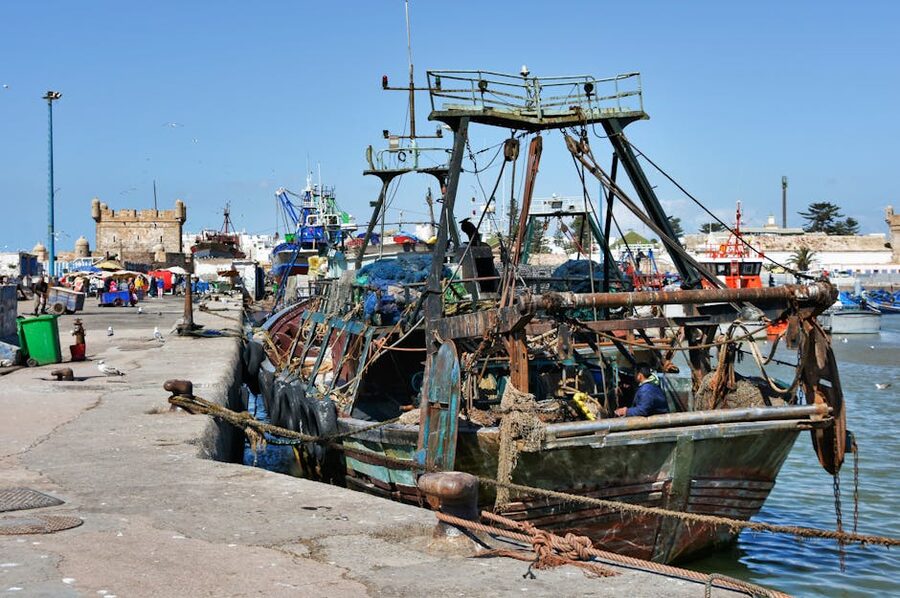
The port grill row is a row of low stalls with open grills. Walk the line, look at the displayed catch, pick what you want. The vendors weigh it, quote you a price, grill it, and serve it with bread and a simple salad.
For a sit-down restaurant, try Triskala Café or L’Océane. Both are in the medina, both do seafood with more sophistication than the port grills, and both come in at around 150-200 MAD ($15-20) per person. If you want a multi-course Moroccan meal rather than grilled fish, that’s the tier to book.
Our Recommended Tours
1. Small Group Essaouira Day Trip — $16
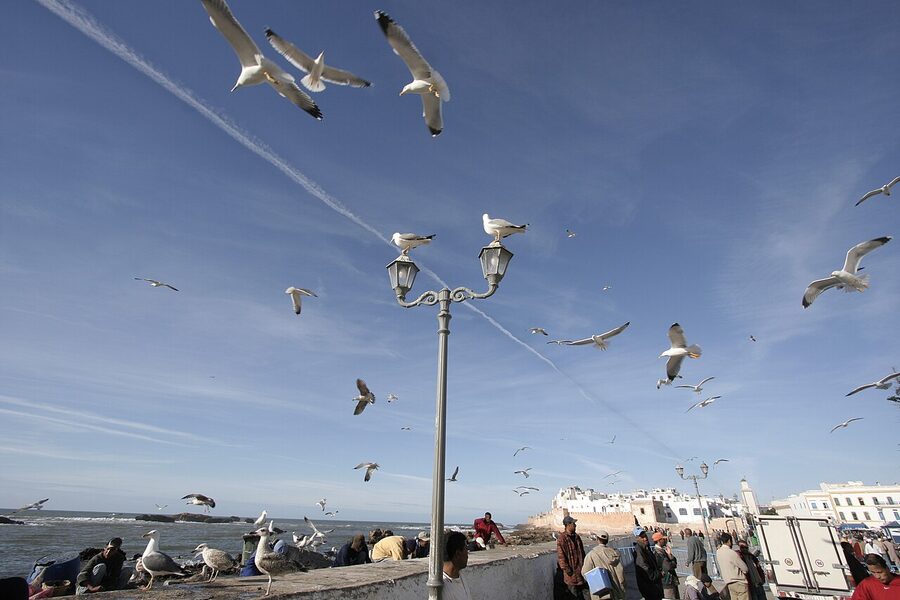

The highest-rated Essaouira day trip on Viator — 59 five-star ratings. Group size stays around 12-15. Transport only (van from Marrakech), 4-5 hours in Essaouira, return by evening.
At $16, it’s the cheapest legitimate tour option. You eat independently in Essaouira (budget 100-150 MAD for lunch at the port). Our full review of this group tour covers the van logistics and what to do once you arrive.
2. Essaouira Full-Day Trip from Marrakech — $20
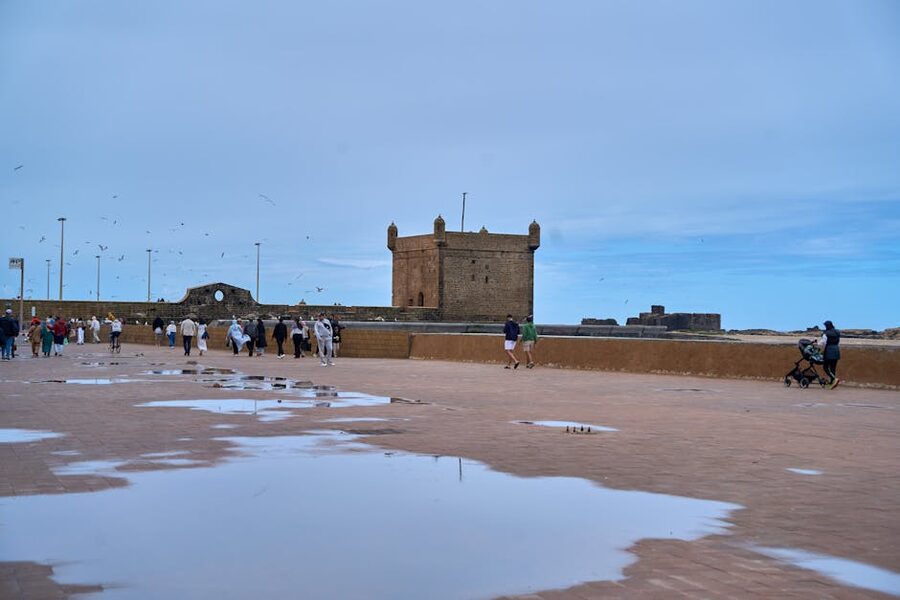
A similar tour at slight premium. Same core offering — transport from Marrakech, 4-5 hours in Essaouira, return. Slightly larger vans (bigger groups), but often has more availability on short notice than the $16 option.
Worth the $4 premium if the $16 tour is sold out for your date. Our review of this alternative full-day trip compares the two options directly.
3. Essaouira with Argan Forests — $60
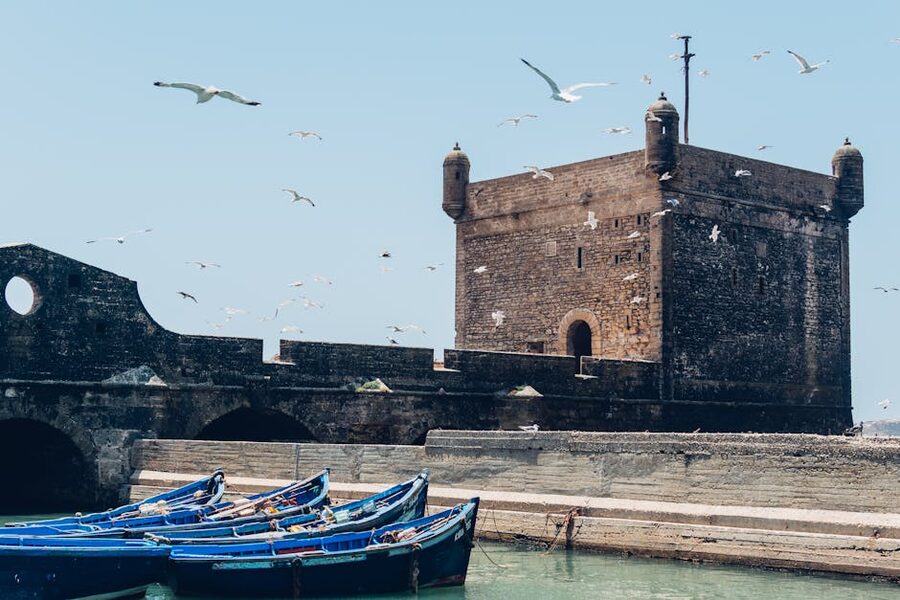
The premium version. Adds a stop at the argan forests en route — you see the famous tree-climbing goats, visit a women’s cooperative where argan oil is produced traditionally, and get a bottle of oil included.
Worth the premium if you’re genuinely interested in the argan story. The goats are a tourist attraction (they’re often placed in the trees for photos, not spontaneously climbing) but the cooperative visit is authentic and the product quality is genuinely high. Our review of this argan-inclusive tour explains which cooperatives are reliable and which to avoid.
The History — From Mogador to Essaouira
The site has been inhabited since the 7th century BC (Phoenician traders). The Portuguese occupied it in the 16th century, building fortifications and naming it Mogador. The modern city was founded in 1764 when Moroccan Sultan Mohammed III commissioned a deep-water port to serve Marrakech.
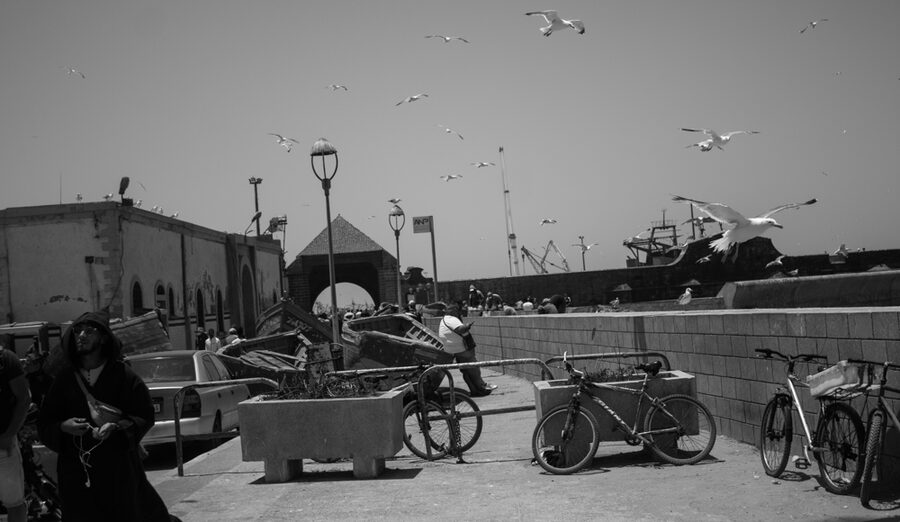

The Sultan brought in a French military engineer specifically because he wanted European fortification design. The result is the unique medina grid you see today — straight streets, right-angle intersections, ordered layout. Unlike any other Moroccan medina.
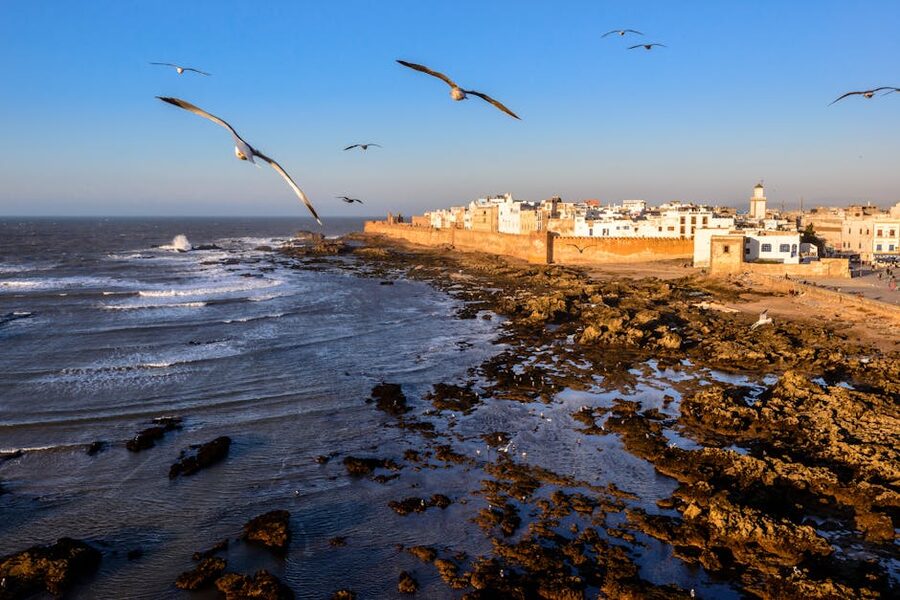
The port handled sugar, spices, and slaves historically. The city’s Jewish community (at its peak, 40% of the population) handled much of the international trade. The Jewish quarter (mellah) is now partially restored and open to visit.
In the 1960s and 70s, Essaouira became a hippie destination — Jimi Hendrix spent time here, reportedly wrote parts of his later work. The town embraced this cultural shift and has remained a bohemian-creative hub ever since.
Practical Tips
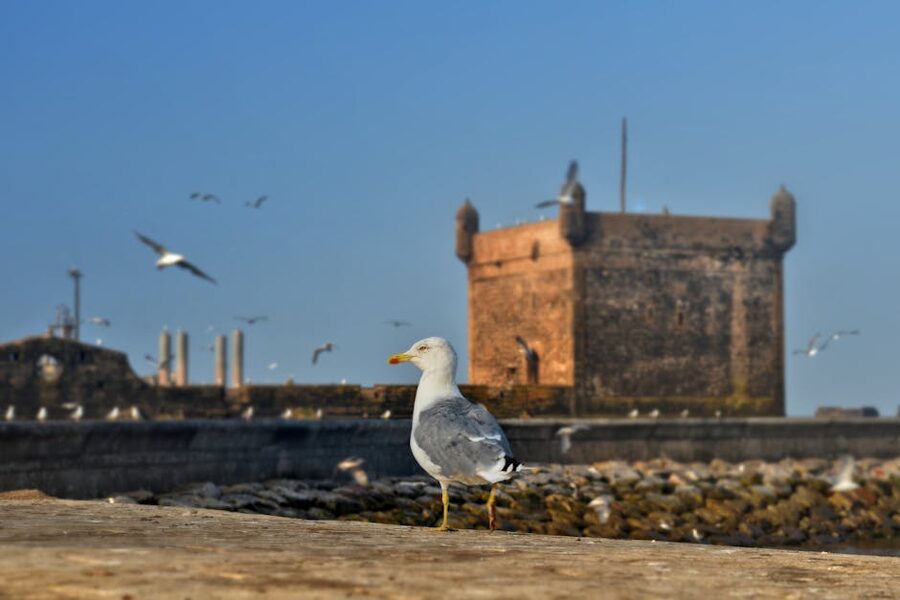
Dress for wind. A light windbreaker or sweatshirt is essential even on hot days. Essaouira’s winds are no joke — some days you literally can’t keep a hat on.
Eat at the port grills, not the medina tourist restaurants. The grill row at the port is authentic and cheaper. The medina restaurants are decent but priced for tourists.
Visit Skala de la Ville late afternoon. The fortress ramparts at the northwest corner get the best light around 4-6pm. Cannon emplacements, sea views, and the chance to see the sunset over the Atlantic.
The Gnawa music scene. Essaouira hosts an annual Gnawa World Music Festival in June. Even outside the festival, Gnawa musicians perform in medina cafés and squares. A live Gnawa set is one of the best cultural experiences in Morocco.
Beach is there but windy. Essaouira’s main beach stretches north from the medina for 2 kilometres. Good for walks and kitesurfing; less good for sunbathing (the wind sends sand everywhere). If you want a beach day, go to nearby Sidi Kaouki instead.
Tipping. 10% at sit-down restaurants, round up at grill stalls. 10-20 MAD for the guide on tours.
Essaouira vs Other Marrakech Day Trips
vs Agafay Desert: Agafay is stone desert at sunset; Essaouira is Atlantic coast. Opposite landscapes. Both cheap ($15-60). Book both on a longer Marrakech stay.
vs Ouzoud Waterfalls: Ouzoud is inland nature (waterfalls, monkeys). Essaouira is coastal culture (fishing port, medina). Different experiences entirely.
vs Atlas Mountains Day Hike: Atlas is mountain hiking. Essaouira is a walking city day. Both work as day trips; Atlas is more physical.
vs Sahara 3-Day Tour: Sahara is the multi-day commitment. Essaouira is a one-day break. If you have 5+ days in Marrakech, book both; if 3-4 days, pick one.
vs Marrakech Food Tour: The food tour is urban; Essaouira seafood is coastal. Essaouira’s port grills are the best seafood in Morocco. If food is your priority, a Marrakech food tour plus an Essaouira day covers the full range.
Getting There
Location: Essaouira, Atlantic coast of Morocco. 175 km (3 hours) from Marrakech on the N8 road.
Tour transport: All day trips include pickup from your riad and drop-off in the evening.
Supratour bus: Public bus service runs 3-4 times daily from Marrakech. Cheap (100 MAD / $10 each way) but slower and less flexible.
Driving yourself: Very doable on the N8. Parking in Essaouira costs about 30 MAD for the day; use the secure car park outside the medina walls.
Is an Essaouira Day Trip Worth $16-$60?
At $16, essentially a no-brainer. You get transport, 4-5 hours in a UNESCO-listed coastal town, and the best seafood lunch in Morocco. Almost any other Marrakech day trip costs more for less.
Caveats: the 3-hour drive each way is tiring, and Essaouira is small enough that 4 hours feels slightly rushed. If you have the flexibility, an overnight stay in Essaouira (200-400 MAD per night at decent riads) would give you the town at its best.
Building Essaouira Into Your Marrakech Trip
Essaouira fills a full day. Plan it for mid-week when you’ve acclimatized to Marrakech and want a contrast.
The natural pair: a Marrakech Medina walking tour one day, Essaouira the next. The two medinas are strikingly different — comparing them back-to-back is illuminating. For a longer Morocco itinerary: Marrakech as base (3 days), Essaouira day trip (1 day), Agafay evening (1 day), Atlas hike (1 day). Seven days covers the full south-Morocco spread.
For food-focused travellers, Essaouira pairs well with a Marrakech food tour — the two cities offer the Moroccan coastal and interior cuisine ranges. After all the heavy tagines in Marrakech, the grilled seafood in Essaouira resets your palette. And if you’re heading north after Marrakech, Essaouira makes a natural stopover en route to Casablanca rather than a return day trip.