
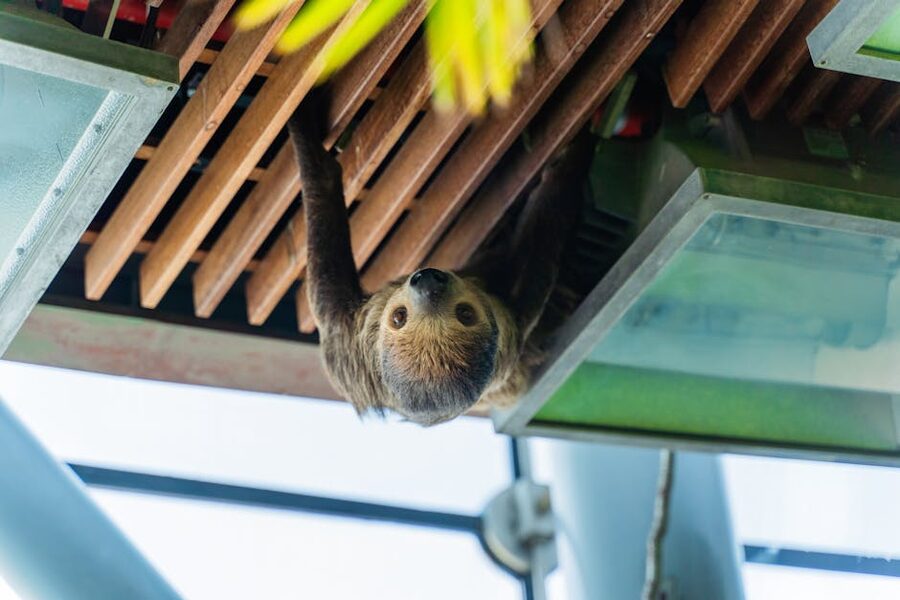
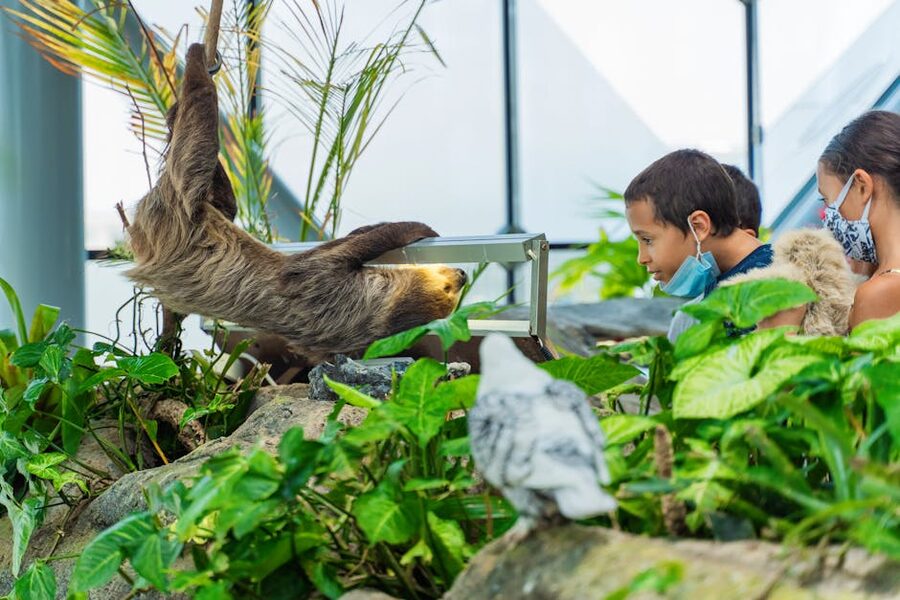
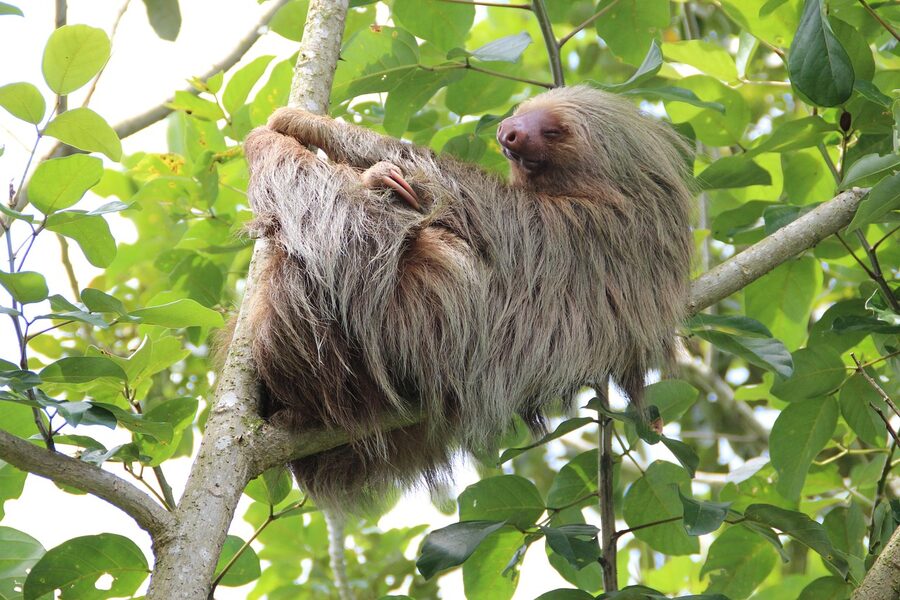
A sloth reached out and touched my hand. Slowly — because everything a sloth does is slow — its three-toed grip wrapped around my index finger with surprising gentleness. We held hands for about 10 seconds. Then it yawned, revealing a set of teeth I wasn’t expecting, and went back to doing absolutely nothing.
I’m pretty sure I peaked as a human in that moment.
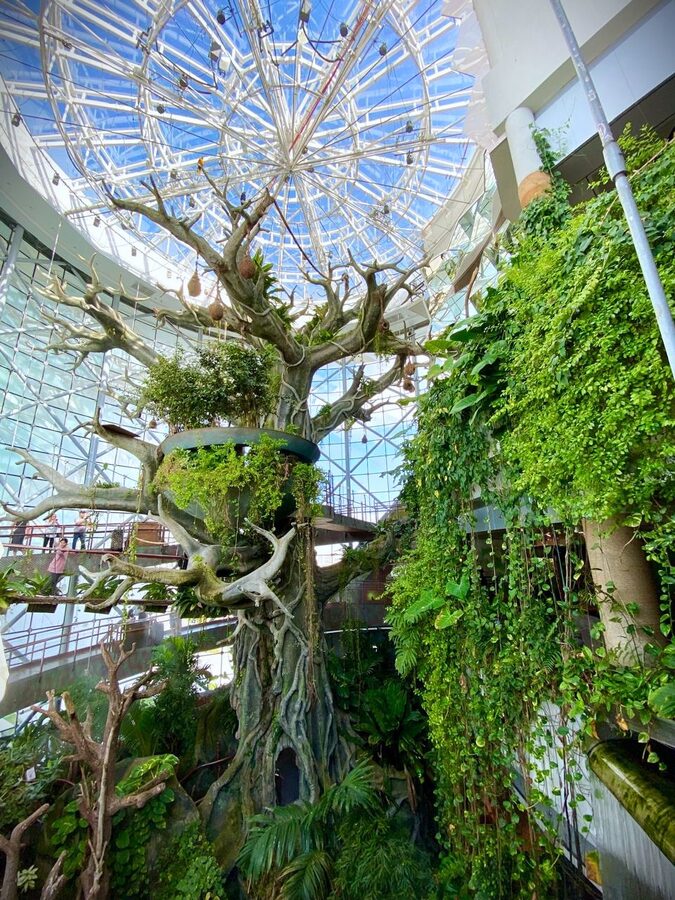
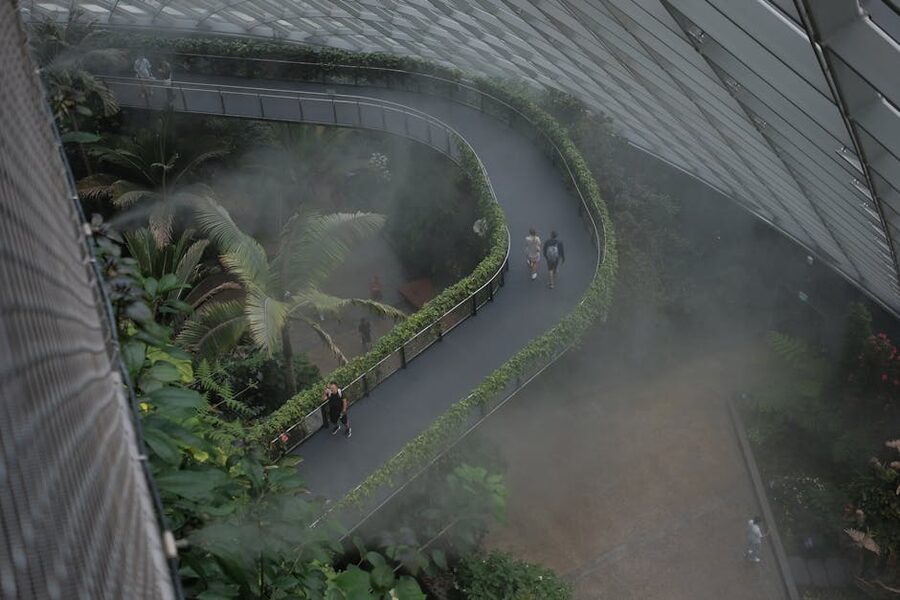
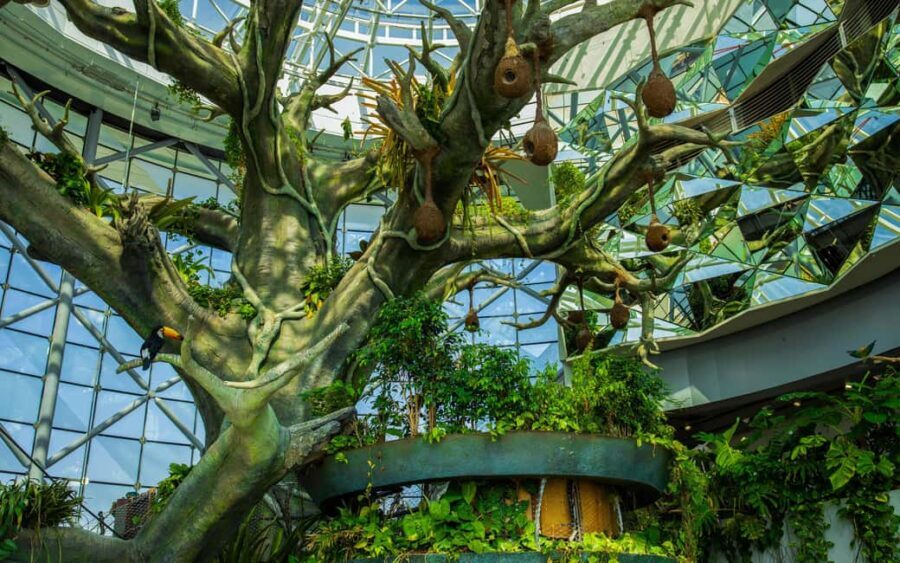
The Green Planet is a four-storey indoor tropical rainforest in the middle of Dubai. A single 25-metre-tall tree forms the centrepiece, surrounded by 3,000+ animals and plants across four themed floors — Canopy, Midstory, Forest Floor, and Flooded Rainforest. The whole thing is enclosed in a climate-controlled biodome maintained at tropical temperatures while the desert outside bakes at 45°C.
At $42 for general admission, it’s one of the more moderately priced attractions in Dubai. But the experience delivers significantly more than the price suggests — this isn’t a walk-through aquarium with a few fish tanks. It’s a fully recreated tropical ecosystem with free-flying birds, free-roaming animals, and the kind of immersive environment that makes children forget their phones exist.
In a Hurry? Our Top Picks
Access to all four floors and the aquarium. The most booked option.
Standard entry with additional experience options and flexible cancellation.
Premium package with hotel pickup, drop-off, and VIP experience. For convenience-first visitors.
- The Four Floors — What Lives Where
- The Canopy (Top Floor)
- The Midstory (Second Floor)
- The Forest Floor (Ground Level)
- The Flooded Rainforest (Basement)
- Our Recommended Tickets
- 1. The Green Planet Entry Ticket —
- 2. The Green Planet Dubai with Options —
- 3. Green Planet Day Ticket with Pickup and Drop-off — 0
- The Story Behind Dubai’s Indoor Rainforest
- Practical Tips — Making the Most of Your Visit
- How The Green Planet Compares to Other Dubai Nature Attractions
- Getting There
- Is The Green Planet Worth ?
- Planning the Rest of Your Dubai Trip
The Four Floors — What Lives Where
The Green Planet is organized vertically. You start at the top (the Canopy) and work your way down to the bottom (the Flooded Rainforest). Each floor recreates a different layer of a tropical ecosystem, with the appropriate temperature, humidity, and animal residents.
The Canopy (Top Floor)
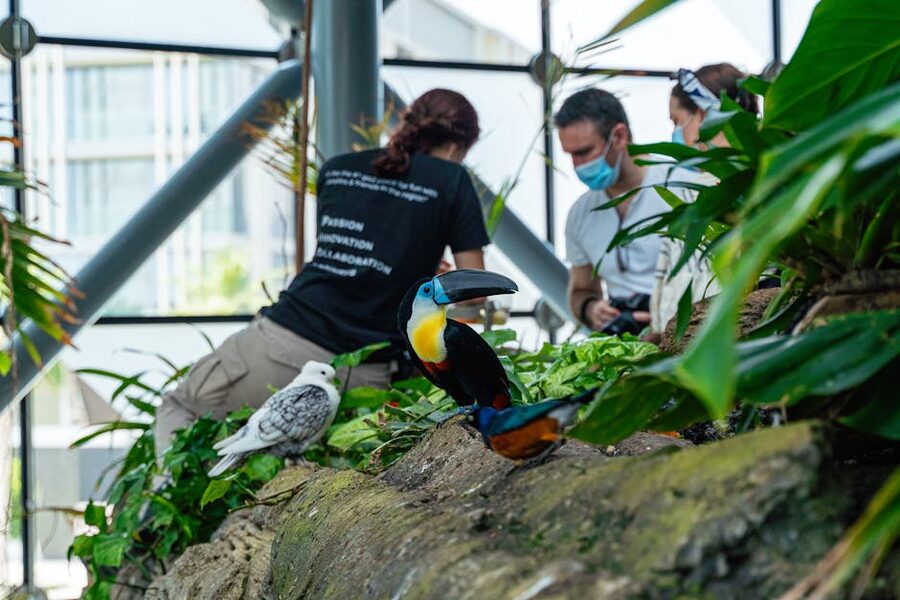
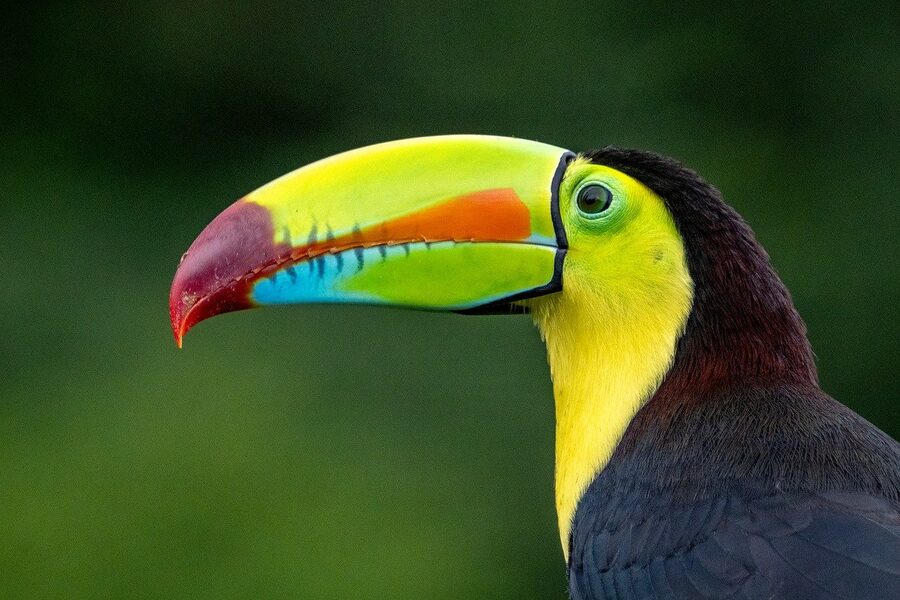
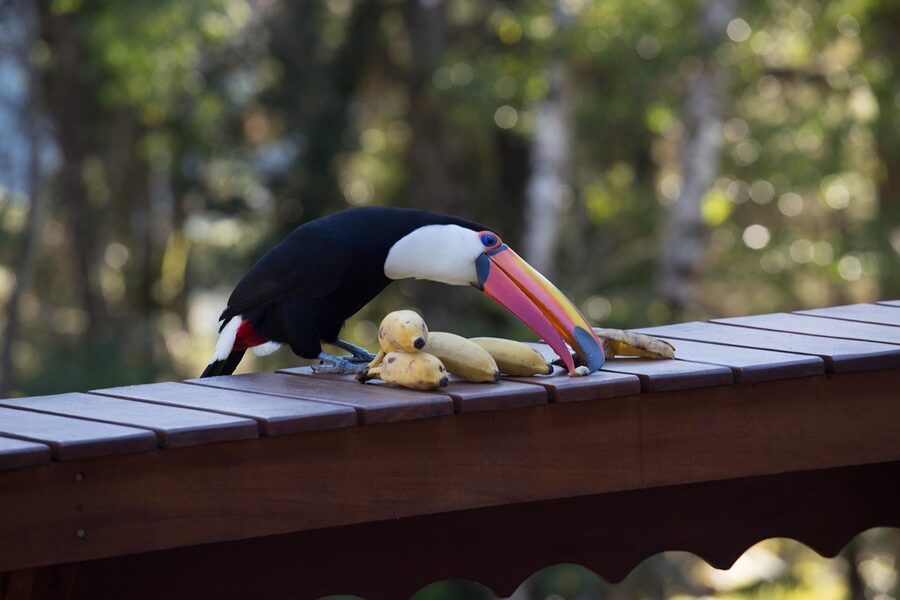
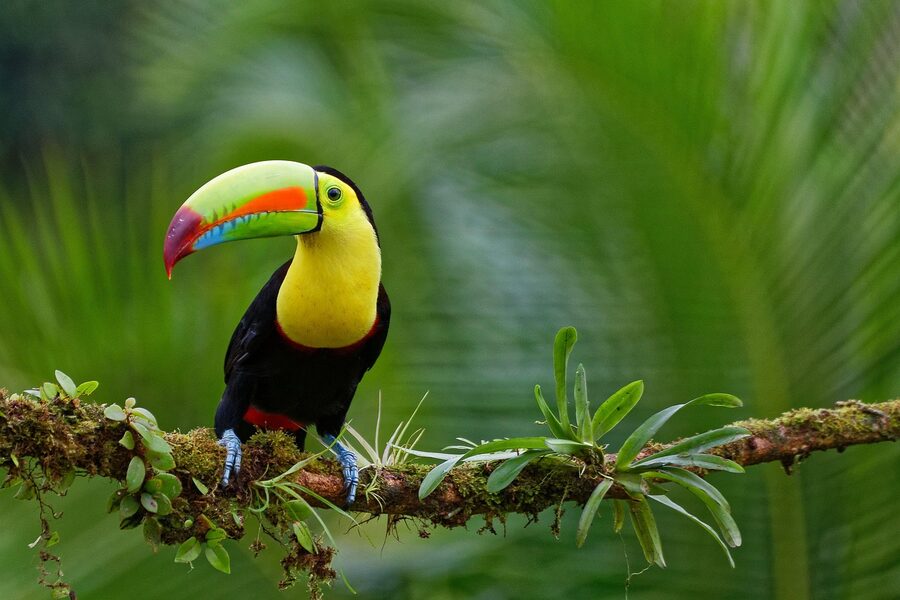
The highest level, where the tree canopy meets the ceiling. This is where the birds live — toucans, macaws, parakeets, and sugar gliders. The birds fly freely through the space, which means they occasionally land on the railings next to you, or on your head, or on your sandwich if you’re not paying attention.
The Midstory (Second Floor)
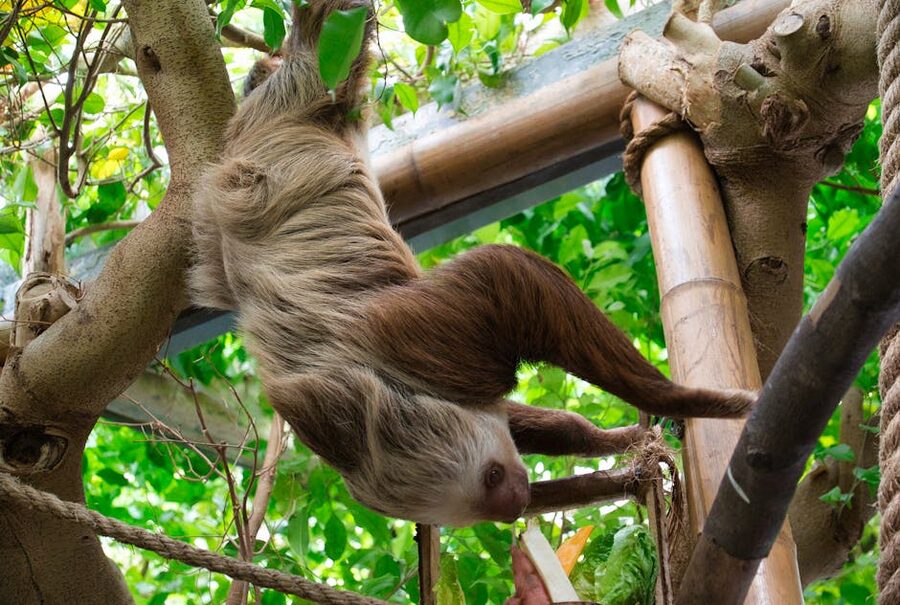
This is where the sloths live. Two-toed sloths hang from the structures at this level, moving so slowly that the time-lapse videos on the info screens are necessary to prove they actually move at all. The keeper talks (check the daily schedule at the entrance) bring the sloths to a lower perch where visitors can interact — carefully and under supervision.
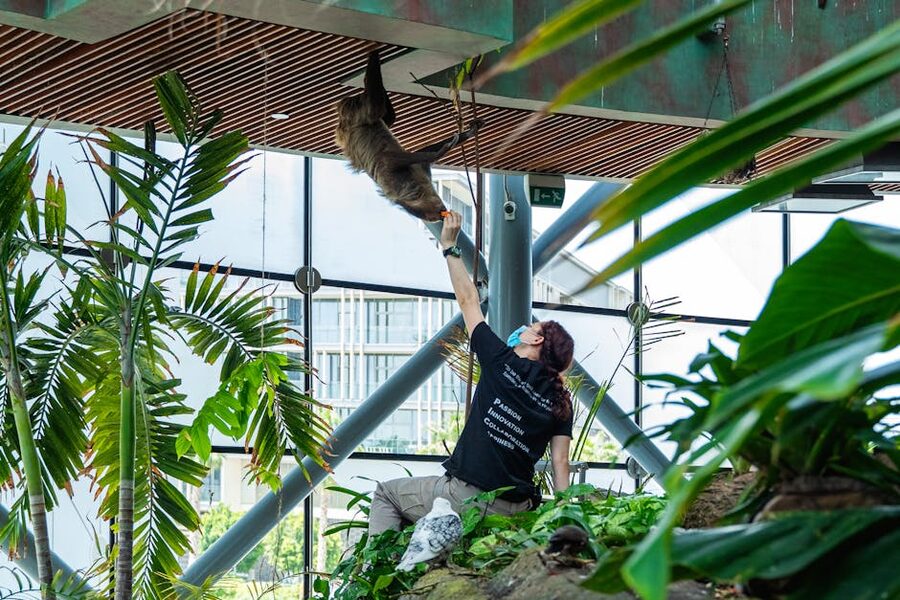
The midstory also houses porcupines, tree frogs, and various reptiles. The tree frogs are tiny — some are smaller than a thumbnail — and brilliantly coloured. The poison dart frogs are behind glass (for obvious reasons) but the tree frogs in the open habitats are accessible and fascinating to watch.
The Forest Floor (Ground Level)
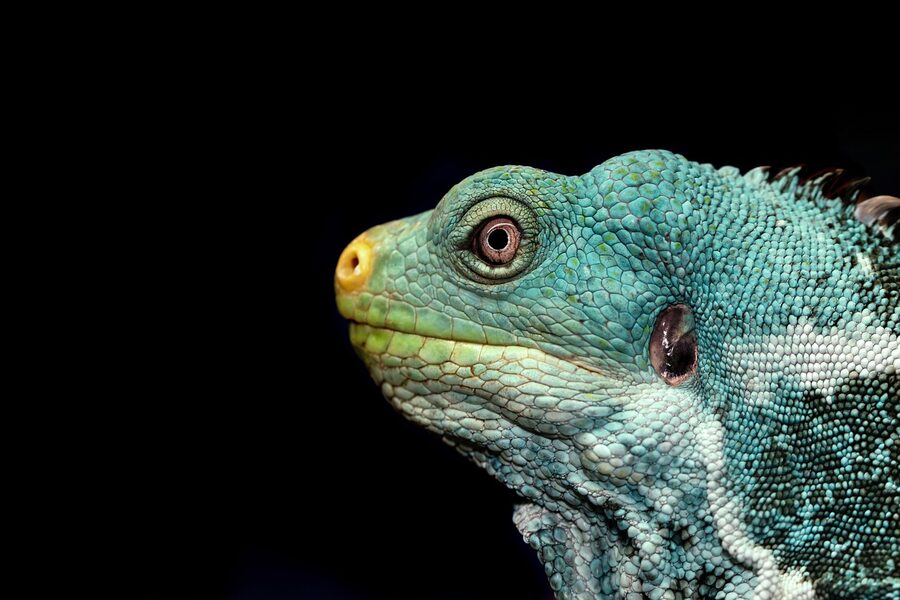
The ground level is where the big reptiles live. Green iguanas bask under heat lamps. A ball python curls in a terrarium. Tarantulas sit motionless in their enclosures. And a massive leaf-cutter ant colony — visible behind glass — operates a highway of leaf fragments being carried from one chamber to another with organisational efficiency that would shame most logistics companies.
The Flooded Rainforest (Basement)
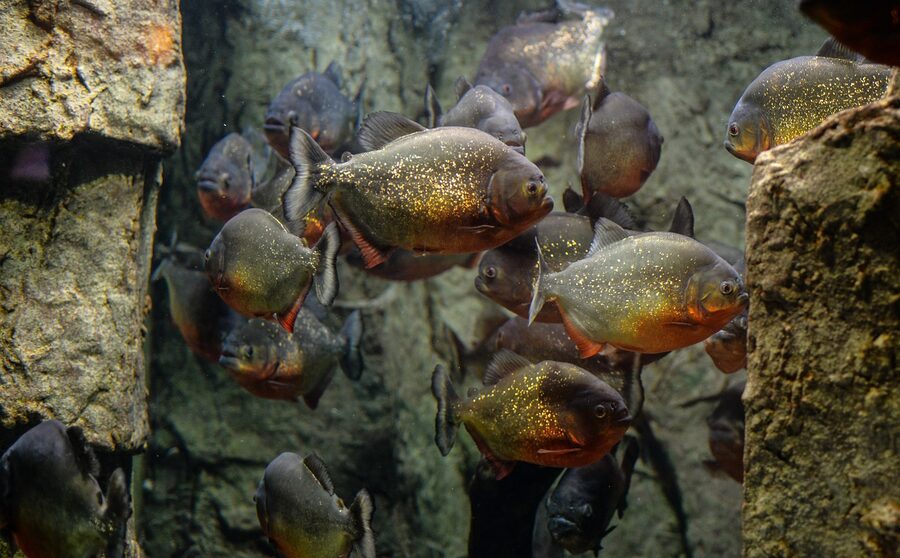
The lowest level is an aquarium section recreating a tropical river ecosystem. Piranhas, arapaima (one of the largest freshwater fish in the world — up to 3 metres long), freshwater rays, and various other Amazonian species swim in walk-through tanks.
The arapaima is the sleeper hit. It’s a 2-3 metre fish that looks like a submarine with scales. It cruises past the glass with the indifference of an animal that has been the apex predator in its environment for 20 million years. Most visitors walk past it without registering its size. Stop. Look at this fish. It’s genuinely remarkable.
Our Recommended Tickets
1. The Green Planet Entry Ticket — $42
General admission to all four floors, the aquarium, and the keeper talks. At $42, it’s priced between the budget attractions (Dubai Frame at $14) and the premium ones (Museum of the Future at $46). The content justifies the price — 3,000+ animals across four distinct ecosystems, with educational talks included.
The optional animal encounter upgrades (VIP sloth interaction, behind-the-scenes tour) cost extra and need to be booked separately. For most visitors, the standard ticket provides more than enough interaction — the keeper talks bring animals close enough to touch. Our full review covers each floor in detail.
2. The Green Planet Dubai with Options — $48
The same Green Planet experience on Viator with additional experience options and flexible cancellation. At $48 — $6 more than the GYG ticket — the premium covers the platform’s cancellation policy and any optional add-ons selected at booking.
Choose this if you value cancellation flexibility or want to bundle additional experiences through the Viator platform. The core Green Planet experience is identical to the GYG ticket. See our full review of this option.
3. Green Planet Day Ticket with Pickup and Drop-off — $170
The VIP option with private hotel transfers. At $170, it’s 4x the base ticket price. The Green Planet experience is identical — same building, same animals, same floors. The premium covers door-to-door service in a private vehicle.
This makes sense for visitors staying in distant areas (JBR, the Palm) who want the logistics handled. For visitors staying in Downtown or Business Bay, a taxi to City Walk costs $5-$10 — making the $42 base ticket far better value. Check our full review of the premium package.
The Story Behind Dubai’s Indoor Rainforest
The Green Planet opened in September 2016 as part of the City Walk development by Meraas. The concept was simple but ambitious: recreate a complete tropical rainforest ecosystem inside a building in the Arabian Desert.
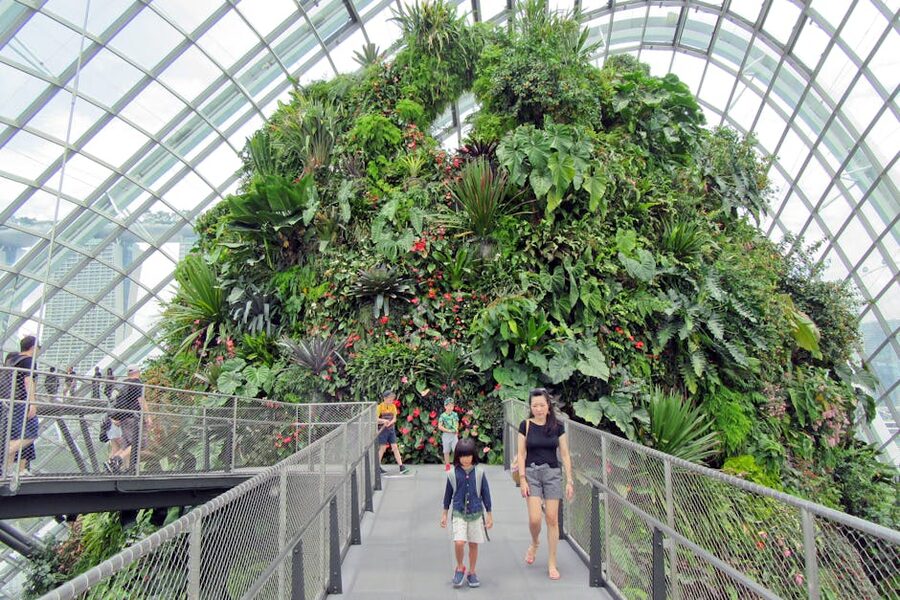
The building was designed by UK-based Barr Gazetas architects as a “bio-dome” — a sealed, self-sustaining ecosystem where the climate, the vegetation, and the animals all interact. The 3,000+ animals were sourced from conservation programs and certified breeders worldwide. The breeding programs at The Green Planet have since contributed offspring to other institutions.
The central tree is an engineering marvel. It’s a steel-and-concrete structure wrapped in living vegetation — epiphytes, ferns, orchids, and bromeliads grow on its surface exactly as they would on a real rainforest tree. The tree supports the canopy-level walkways and provides the vertical structure that the whole ecosystem depends on.
The educational mission is genuine. The Green Planet partners with conservation organisations and runs school programs that bring thousands of students through the facility each year. The keeper talks are designed to be both entertaining and informative — the staff are trained biologists who know their animals individually and can discuss the conservation status of every species on display.
Practical Tips — Making the Most of Your Visit
Plan around the keeper talks. The daily schedule is posted at the entrance. The sloth talk (usually 11am and 2pm) and the bird feeding (12pm and 3pm) are the highlights. These are when the animals come to eye level and when the handlers share the best stories. Missing the keeper talks is like visiting a concert hall and skipping the performance.
The humidity fogs everything. Camera lenses, phone screens, sunglasses — all fog instantly when you enter from the air-conditioned mall. The humidity is maintained at 70%+ for the animals’ health. Carry a microfibre cloth and wipe your lens every time you enter a new section. Anti-fog sprays (for glasses) work if you have them.
Visit on a weekday morning. The Green Planet is a popular school trip destination. Weekday afternoons see groups of excited children running between exhibits, which is charming but loud. Weekday mornings before 11am are the quietest. Weekend mornings are moderately busy. Weekend afternoons are packed.
Allow 90 minutes to 2 hours. The space is compact — four floors in a single building — but the animal density is high. You’ll spend more time watching than walking. The aquarium section at the bottom alone can hold your attention for 20 minutes. Add the keeper talks and you’re easily at 2 hours.
The gift shop is curated, not generic. Unlike the typical museum gift shop filled with plastic toys, The Green Planet’s shop stocks nature books, wildlife photography prints, and sustainable products. The stuffed animal sloths are the bestseller. The rainforest-themed children’s books are genuinely good.
It’s air-conditioned and fully indoor. This is one of Dubai’s best rainy-day and summer-day options. When the outside temperature hits 45°C and outdoor activities become dangerous, The Green Planet’s 24°C interior is a refuge. No sunscreen needed. No dehydration risk. Just comfortable indoor exploration.
How The Green Planet Compares to Other Dubai Nature Attractions
Dubai has several indoor nature experiences. Each serves a different audience and covers different ecosystems.
vs The Butterfly Garden ($20): The Butterfly Garden is outdoor (domed but not climate-controlled to the same degree) and seasonal. It focuses exclusively on butterflies — 15,000 from 50+ species. The Green Planet covers the full rainforest ecosystem — mammals, birds, reptiles, fish, and insects. Both are excellent. The Butterfly Garden is cheaper and more focused. The Green Planet is more varied and year-round.
vs The Dubai Aquarium ($56): The Dubai Mall Aquarium focuses on marine life — sharks, rays, and the tunnel experience. The Green Planet has a freshwater aquarium section but also covers terrestrial animals. The Dubai Aquarium is bigger and more dramatic (the tunnel is spectacular). The Green Planet is more intimate and educational.
vs The Safari Park ($13): The Safari Park is a traditional zoo — lions, giraffes, elephants in outdoor enclosures. The Green Planet is a biodome — a recreated ecosystem in a sealed building. The Safari Park is larger, cheaper, and covers African/Asian megafauna. The Green Planet is smaller, more intimate, and covers tropical rainforest species.
Getting There
Location: City Walk, Al Safa Street, Jumeirah. City Walk is a pedestrian-friendly shopping and dining district about 10 minutes from Downtown Dubai.
Taxi: Ask for “The Green Planet, City Walk.” Budget AED 20-30 ($5-$8) from Downtown Dubai or the Marina. City Walk has a taxi drop-off area near the entrance.
Metro: Business Bay station on the Red Line is the closest, about 15 minutes’ walk. Alternatively, take a taxi from the station — it’s $3-$4.
If you’re already at City Walk: The Green Planet is centrally located within the development. The restaurants and shops of City Walk make for a natural extension — visit The Green Planet, then eat at one of the 50+ restaurants in the complex.
Is The Green Planet Worth $42?
For families with children — absolutely. The combination of interactive animal encounters, educational content, and the sheer novelty of a rainforest in a desert creates an experience that children remember for years. The keeper talks are engaging enough for adults and accessible enough for 5-year-olds. The sloths alone are worth the entry fee for most kids.
For adults without children — it depends on your interest in nature and animals. If a sloth touching your finger sounds like a peak life experience (it was for me), then yes. If you’d rather spend $42 on a desert safari or a dinner cruise, those offer more dramatic entertainment value. The Green Planet is quiet, intimate, and educational. It’s not a thrill ride. It’s a slow, warm, humid immersion in a world that shouldn’t exist in the Arabian Desert but does.
Planning the Rest of Your Dubai Trip
The Green Planet fills 2 hours. Pair it with other indoor attractions if the weather is extreme — the Museum of the Future is 15 minutes by taxi. The Dubai Aquarium at the Mall adds marine life to your rainforest experience. And the AYA Universe in Wafi City Mall is another immersive indoor experience, though with technology rather than biology.
For outdoor contrast, the desert safari takes you from the manufactured tropical humidity of The Green Planet to the genuine arid heat of the Arabian Desert. The Old Dubai souks are 10 minutes from City Walk and offer culture alongside the natural immersion of the biodome.
In the evening, the dinner cruises on the Marina and the La Perle show round out a full day. And if The Green Planet sparked an interest in Dubai’s wilder side, the Butterfly Garden in Dubailand is the natural next visit — 15,000 butterflies in 10 domes, a 2-minute walk from the Miracle Garden.