
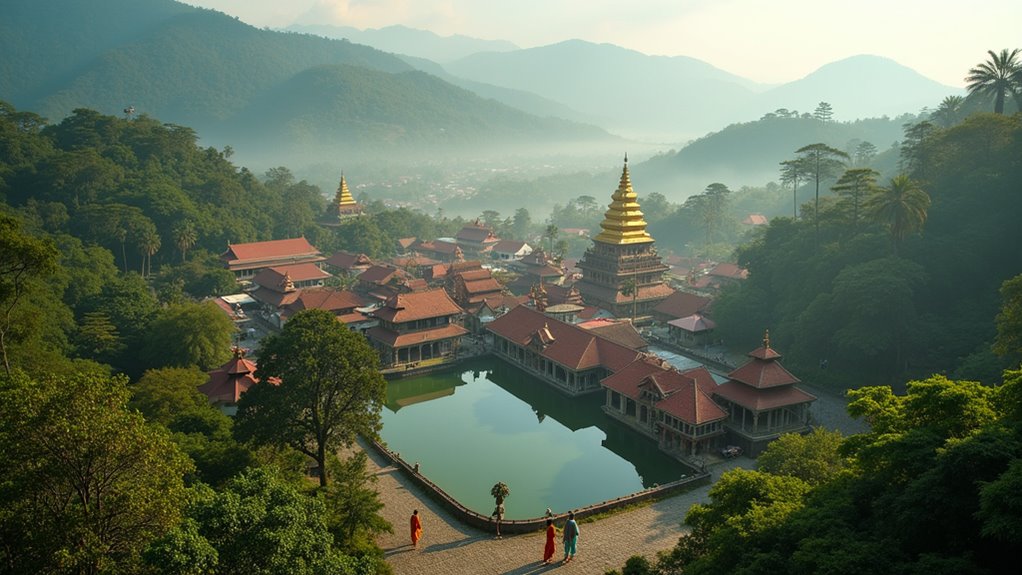
Travelers often rush through Kandy’s famous temple without discovering the city’s hidden gems that locals treasure most. This ancient hill capital offers far more than its renowned Buddhist shrine—from secret viewpoints that cost nothing to explore, to wildlife encounters just outside the city limits. Smart visitors who venture beyond the typical tourist trail find experiences that don’t break the budget but create memories that last a lifetime. Here’s what they’re discovering.
- Temple of the Sacred Tooth Relic: Sri Lanka’s Most Sacred Buddhist Shrine
- Kandy Lake: A Peaceful Walk Around the Sea of Milk
- Bahiravakanda Vihara Buddha Statue: The Giant White Guardian of Kandy
- Royal Botanic Gardens: 147 Acres of Natural Wonder
- Kandy Viewpoint: Panoramic Views Over the Historic City
- Dambulla Cave Temples: Ancient Buddhist Art in Stone Caves
- Sigiriya Rock: The Eighth Wonder of the World
- Minneriya National Park: Elephant Watching Adventures
- The Royal Palace Complex: Exploring Kandy’s Regal Heritage
Temple of the Sacred Tooth Relic: Sri Lanka’s Most Sacred Buddhist Shrine
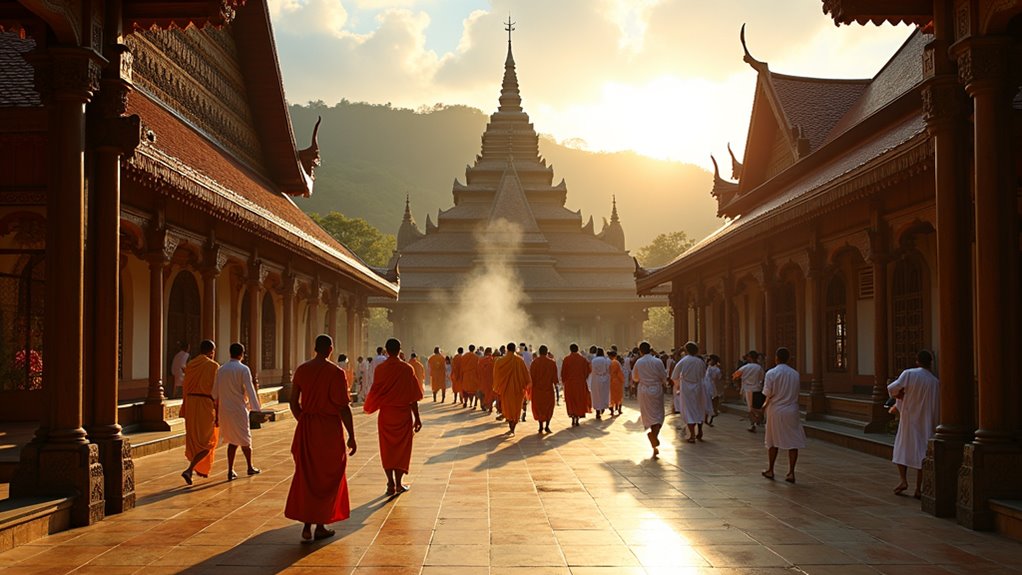
While most travelers visit Kandy for its scenic beauty, they’d be missing the city’s true heart without exploring the Temple of the Sacred Tooth Relic. This UNESCO World Heritage site houses Buddhism’s most precious artifact—Buddha’s actual tooth, brought from India in the 4th century.
The temple’s stunning Kandyan architecture features intricate gold, silver, and ivory carvings that’ll leave you speechless.
Don’t miss the daily worship ceremonies where you can witness authentic Buddhist rituals. The temple conducts rituals thrice daily at 5:30 am, 9:30 am, and 6:30 pm, accompanied by traditional drums and flower offerings. If you’re lucky enough to visit during July-August, you’ll catch the spectacular Esala Perahera festival—one of Asia’s grandest religious processions.
Entry costs just a few hundred rupees, making it an incredibly affordable cultural experience. The temple’s location near Kandy Lake makes it perfect for combining with other nearby attractions. For those seeking adventure beyond cultural sites, the region also offers opportunities for island hopping and exploring dramatic natural formations.
Kandy Lake: A Peaceful Walk Around the Sea of Milk
Just steps away from the Temple of the Sacred Tooth Relic, Kandy Lake—locally known as Kiri Muhuda or the Sea of Milk—offers travelers a free escape from the city’s bustling streets. This artificial reservoir, built in 1807 by Sri Lanka’s last king, provides over three kilometers of shaded walking paths perfect for morning jogs or sunset strolls.
The lake’s centerpiece is a small island that once served as the royal summer house. You’ll spot the partly submerged Ulpange pavilion, where queens once bathed. Like many destinations that seamlessly blend history with modern attractions, Kandy offers visitors the chance to experience both ancient traditions and contemporary conveniences in one location.
While fishing isn’t allowed to preserve the site’s sanctity, visitors can enjoy affordable boat rides from 8 AM to 6 PM. The peaceful waters and surrounding hill views make this historic landmark an ideal spot for budget-conscious travelers seeking tranquility. The lake was originally designed as a water reservoir for the royal palace complex, highlighting its important role in the daily life of Kandyan royalty.
Bahiravakanda Vihara Buddha Statue: The Giant White Guardian of Kandy
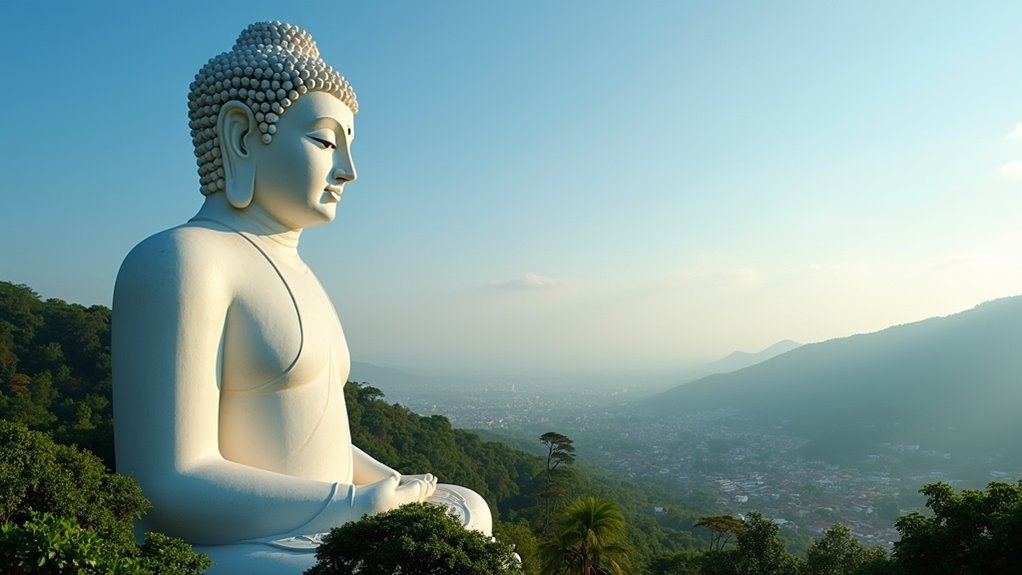
Rising 88 feet above Kandy’s skyline, the Bahiravakanda Vihara Buddha statue commands attention from virtually every corner of the city. Perched atop Devil Hill, this white concrete giant depicts Buddha in meditation posture and houses a small gallery showcasing his life story.
The statue’s illuminated nighttime presence creates a stunning visual impact that’s perfect for photography enthusiasts. Located just 2 km from both the railway station and Temple of the Tooth, it’s easily accessible by tuk-tuk or on foot.
Entry costs 250 LKR, and the site opens daily from 6 a.m. to 6 p.m. Beyond its spiritual significance, visitors enjoy panoramic views of Kandy Lake, surrounding forests, and tea plantations. The elevated position offers glimpses of the famous tea plantations that flourish in Sri Lanka’s cooler highland climate.
The statue was officially opened on January 1, 1993, marking its hotel as a significant landmark in Kandy’s religious and cultural landscape. It’s an affordable must-see that combines culture with spectacular scenery.
Royal Botanic Gardens: 147 Acres of Natural Wonder
Sprawling across 147 acres just 5.5 kilometers west of Kandy, the Royal Botanic Gardens house over 4,000 plant species in one of Asia’s most impressive botanical collections.
Dating back to 1371 as a royal court, these gardens were formally established in 1843 and now attract around 2 million visitors annually.
You’ll find fascinating attractions like the Orchid House, Spice Garden featuring cinnamon and nutmeg, and the Double Coconut Palm producing the world’s largest seeds.
The Avenue of Palms showcases Cook’s Pine and Royal Palms, while historical trees bear plaques marking plantings by British royalty and foreign dignitaries. The gardens feature an impressive bamboo collection with species that can grow over 30 meters tall.
Like the vibrant chaos of Ho Chi Minh City’s streets filled with motorbikes, the gardens pulse with life as visitors navigate winding paths through diverse plant collections.
Entry fees apply, but guided tours help maximize your visit.
The gardens stay open year-round, though expect frequent rainfall.
Kandy Viewpoint: Panoramic Views Over the Historic City
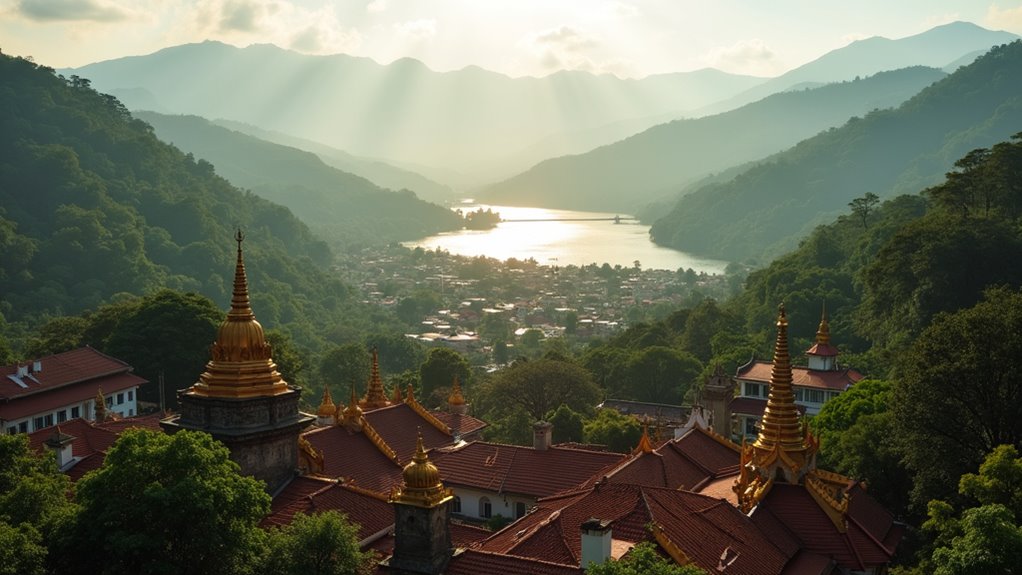
Perched atop Rajapihilla Mawatha hill just 1.7 kilometers from Kandy’s bustling center, the Kandy Viewpoint offers sweeping panoramic views that’ll make the uphill journey worthwhile. Also known as Arthur’s Seat, this elevated vantage point sits 550 meters above sea level, providing stunning vistas of Kandy Lake, the Temple of the Tooth Relic, and the Royal Palace surrounded by lush green hills.
The steep but scenic road requires moderate fitness levels if walking. Smart travelers opt for affordable tuk-tuks or taxis instead of limited public buses.
Visit during sunrise or sunset for golden lighting and dramatic colors. The newly constructed observation deck ensures comfortable viewing and unobstructed photography opportunities. Like Okinawa’s famous Ryukyu culture, Sri Lanka’s cultural heritage adds rich historical context to your panoramic viewing experience. December to April provides the most pleasant weather for your visit.
Combine your visit with nearby attractions for maximum value.
Dambulla Cave Temples: Ancient Buddhist Art in Stone Caves
Just an hour’s journey from Kandy’s scenic viewpoints, the Dambulla Cave Temples showcase over 2,000 years of Buddhist artistry carved into living rock. Five main caves house more than 157 statues and 2,100 square meters of murals depicting Buddha’s life and Sri Lankan history.
The complex dates back to the 1st century BCE when King Valagamba used these natural shelters as refuge before transforming them into sacred temples.
Visitors explore caves beneath a 160-meter rock overhang, each featuring unique artwork spanning multiple centuries. The largest cave, Maharaja Vihara, contains the most impressive collection. The site contains over eighty documented caves in total, though visitors primarily access the five major temple caves. Beyond visiting traditional temples, travelers can discover unique experiences that showcase the rich cultural heritage of this ancient region.
As a functioning monastery and UNESCO World Heritage site, it remains an active pilgrimage destination. Entry fees are modest, making it an affordable cultural experience within Sri Lanka’s Cultural Triangle.
Sigiriya Rock: The Eighth Wonder of the World
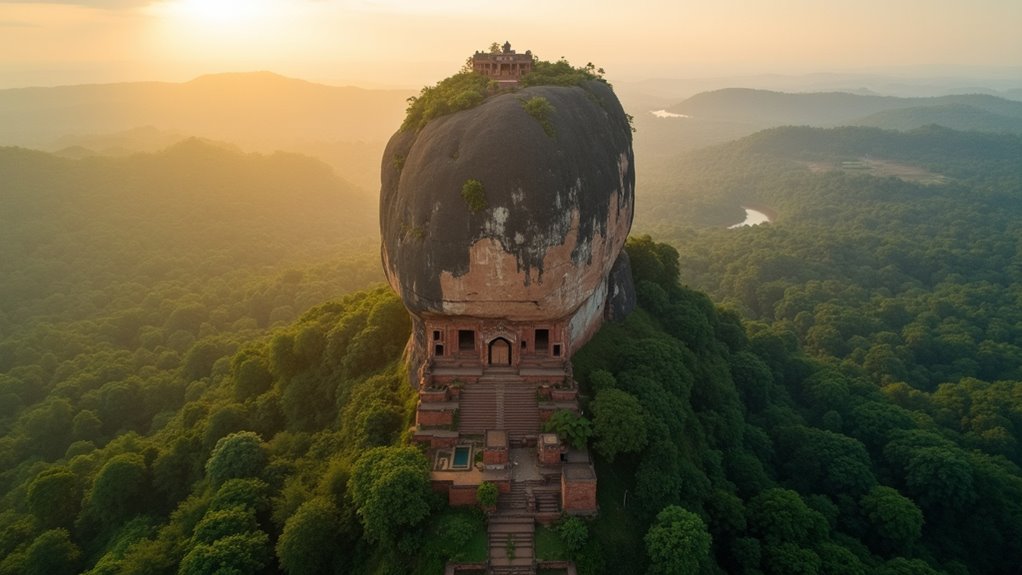
Why do travelers from around the globe make the pilgrimage to climb a 180-meter rock fortress in central Sri Lanka? Sigiriya Rock delivers an unforgettable experience that justifies its “Eighth Wonder of the World” nickname. This UNESCO World Heritage Site showcases King Kashyapa I‘s 5th-century masterpiece, where ancient urban planning meets breathtaking engineering.
The climb reveals stunning frescoes of celestial dancers, the famous mirror wall with centuries-old graffiti, and the iconic Lion Gate marked by massive stone paws. At the summit, palace ruins and panoramic views reward your effort.
Below, intricate water gardens demonstrate sophisticated hydraulic systems that still function today. The fortress was abandoned after Kashyapa’s defeat in 495 CE, transforming from royal palace into a pilgrimage destination.
Located near Dambulla, Sigiriya’s perfectly preserved fortress complex offers budget-conscious travelers exceptional value for an archaeological adventure that’s both physically challenging and historically fascinating. For those seeking more Himalayan adventures after exploring Sri Lanka, the towering peaks of Nepal provide an entirely different but equally spectacular mountaineering experience.
Minneriya National Park: Elephant Watching Adventures
When the dry season arrives in Sri Lanka’s North Central Province, nature stages one of Asia’s most spectacular wildlife events at Minneriya National Park. Up to 350 wild Asian elephants gather around the ancient Minneriya Tank from June through September, creating the world’s largest congregation of these magnificent creatures.
The $30 entry fee delivers incredible value during afternoon game drives, when visitors can witness entire herds drinking, bathing, and socializing with their calves. The park’s well-maintained tracks and certified drivers ensure ethical viewing experiences without disturbing the animals.
Peak season runs August through September, though May and November offer fewer crowds with smaller elephant numbers. The gathering is notably not a migration but a seasonal congregation around the manmade lake created in the 5th century. Like Xi’an’s famous Terracotta Warriors, this ancient engineering marvel continues to draw visitors from around the world centuries after its creation.
Beyond elephants, spotted deer, macaques, and exotic birds enhance the two-hour safari adventure around this 5th-century reservoir.
The Royal Palace Complex: Exploring Kandy’s Regal Heritage
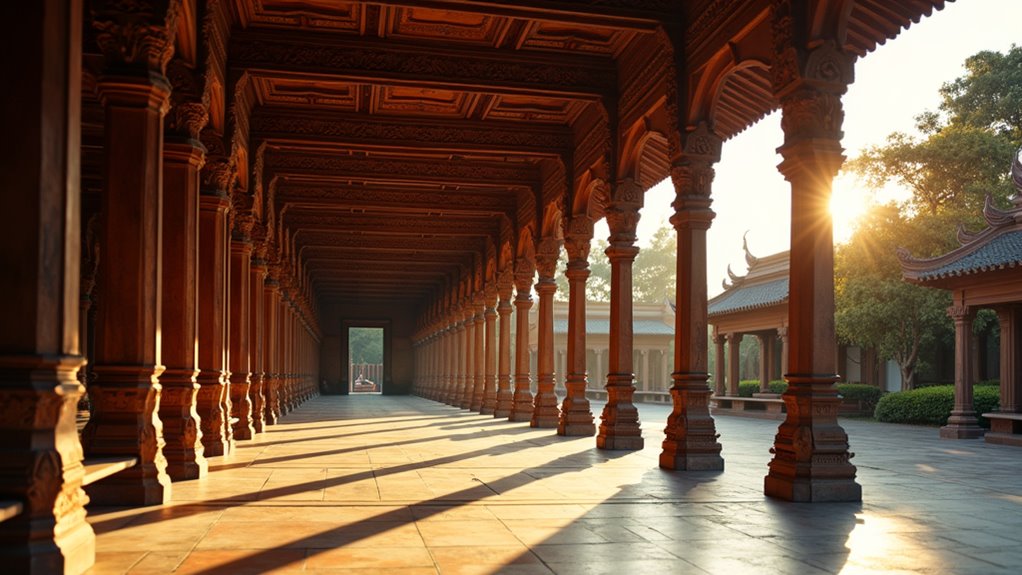
While most visitors flock to Kandy’s Temple of the Tooth, the adjoining Royal Palace Complex offers an equally fascinating glimpse into Sri Lanka’s regal past at no extra cost. The centerpiece, Magul Maduwa (Audience Hall), showcases 64 intricately carved wooden pillars where Kandyan kings once held court. Built in the 1780s, this architectural marvel witnessed the historic 1815 Kandyan Convention that ended Sri Lanka’s last independent kingdom.
Don’t miss the Queen’s Bathing Pavilion beside Kandy Lake, constructed in 1806 with elegant two-level design. The complex now houses the National Museum of Kandy, displaying royal artifacts and historical treasures. Originally constructed in the 14th century under Vickramabahu III, the palace complex has endured centuries of invasions and reconstructions. Like Taiwan’s tropical regions, this historical site offers visitors a unique cultural experience that showcases the rich heritage of the area. Visitors can explore the Queens’ Palace ruins and interior courtyards while learning about Sri Vikrama Rajasinha, the final monarch who ruled from these very halls.