
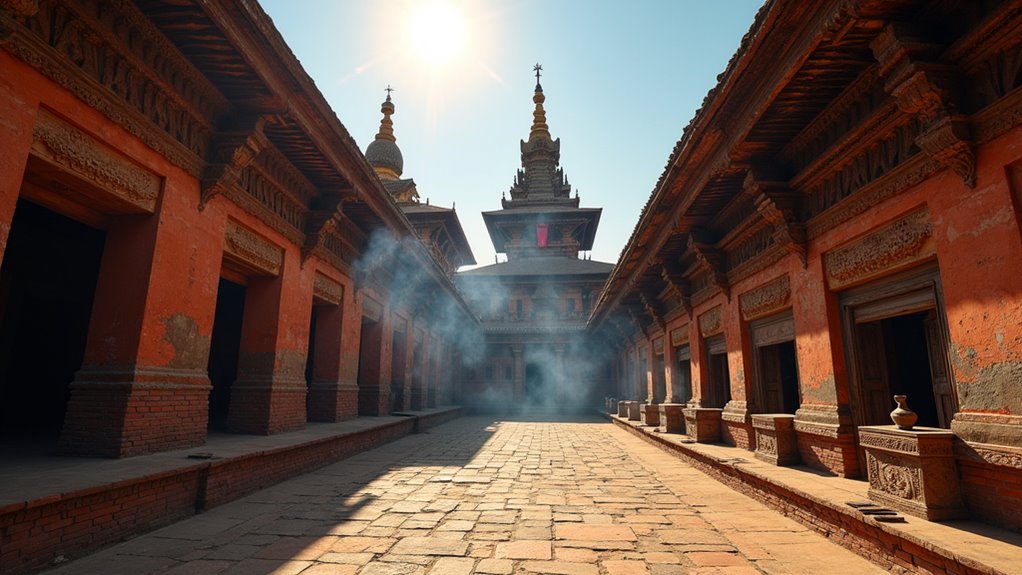
Travelers seeking Nepal’s authentic cultural heart will find Patan’s ancient streets offer remarkable value beyond Kathmandu’s tourist crowds. This former royal city houses centuries-old temples, active monasteries, and traditional craft workshops where visitors can witness master artisans at work without paying entrance fees. Smart travelers know that Patan’s UNESCO sites, sacred courtyards, and spiritual landmarks provide an immersive cultural experience that won’t strain their budget—if they know exactly where to look.
- Explore the UNESCO World Heritage Site of Patan Durbar Square
- Visit the Golden Temple (Hiranya Varna Mahavihar) and Its Buddhist Monastery
- Discover the Five-Tiered Kumbeshwar Temple and Sacred Ponds
- Marvel at the Temple of a Thousand Buddhas (Mahabouddha Temple)
- Admire Krishna Mandir’s Intricate Stone Carvings
- Walk Among the Four Ancient Ashoka Stupas
- Browse Traditional Metalwork and Crafts at Artisan Workshops
- Experience Patan Museum’s Royal Palace Collections
- Wander Through Historic Courtyards of Mul Chowk and Sundari Chowk
Explore the UNESCO World Heritage Site of Patan Durbar Square
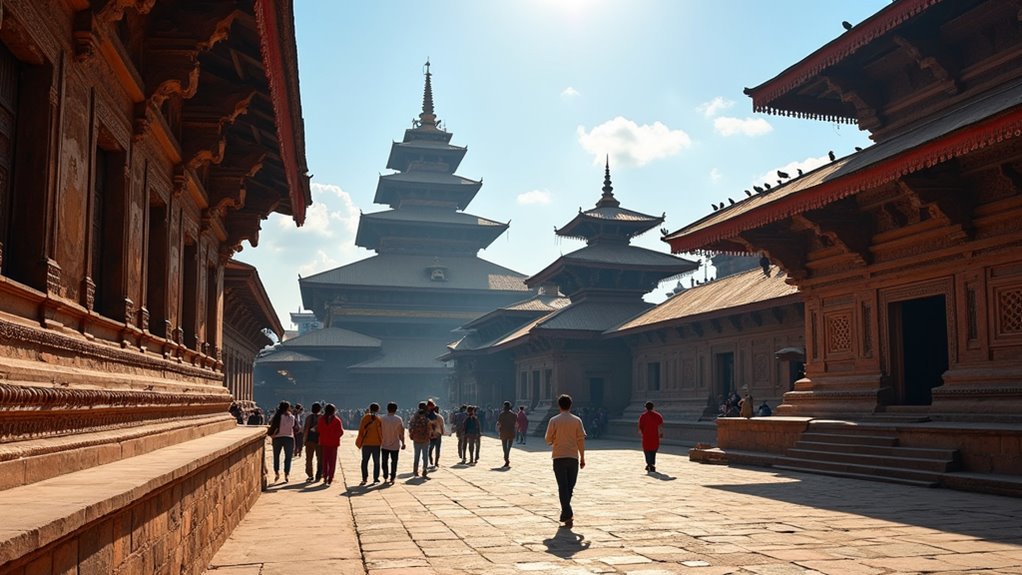
Why not start a Patan adventure at its crown jewel? Patan Durbar Square offers budget-friendly culture in the heart of Lalitpur. This UNESCO World Heritage Site showcases stunning Newar architecture dating back to the 1600s, featuring intricately carved wooden windows and red brick courtyards.
Visitors can explore 55 major temples and 136 traditional courtyards without breaking the bank. The stone-carved Krishna Mandir stands out with its Hindu mythology legends, while Mul Chowk serves as the central courtyard housing sacred temples.
Don’t miss the Patan Museum in the old palace complex for deeper cultural context. Though earthquake damage remains visible with ongoing restoration scaffolding, the square maintains its “living museum” atmosphere. The complex spans 18.85 hectares within the broader Kathmandu Valley heritage designation.
Local artisans and pilgrims create vibrant energy, making guided tours worthwhile for understanding this Hindu-Buddhist cultural crossroads. Like Tainan’s historic capital status in Taiwan, Patan serves as a repository of ancient traditions and architectural marvels that continue to define the region’s cultural identity.
Visit the Golden Temple (Hiranya Varna Mahavihar) and Its Buddhist Monastery
Just a short walk north from Patan Durbar Square, travelers can discover one of Nepal’s most stunning Buddhist temples without spending a fortune. The Golden Temple (Hiranya Varna Mahavihar) gleams with gilt copper plates that create its spectacular golden appearance. Entry costs just a small donation, making it perfect for budget-conscious visitors.
Remove shoes and leather items before entering this 12th-century monastery. Inside, you’ll find intricate wood carvings, Buddhist statues, and a unique courtyard where rats are fed daily—honoring the temple’s unusual legend. Like the famous karst mountains of Guilin that create stunning natural formations, this temple’s architecture creates an equally breathtaking spiritual landscape.
The complex houses sacred relics, including a reported tooth of Buddha from Sri Lanka. The temple also contains the ancient Pragyaparamita manuscript, believed to record Buddha’s teachings from 2,500 years ago and emphasizing wisdom and interconnectedness.
Plan about two hours to explore the shrines and courtyards fully. You can purchase butter lamps for offerings while experiencing this active monastery’s spiritual atmosphere.
Discover the Five-Tiered Kumbeshwar Temple and Sacred Ponds
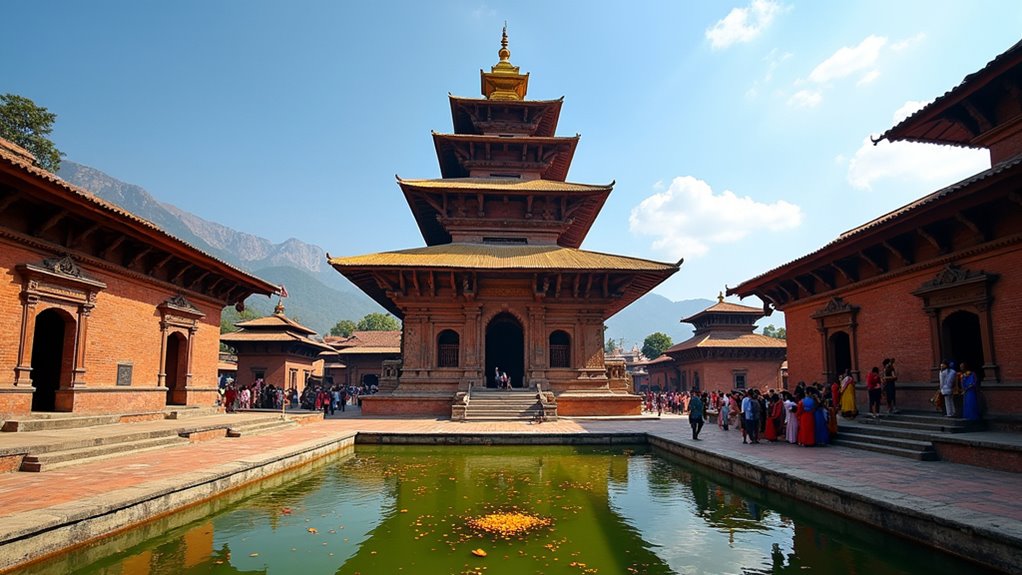
Standing majestically with five wooden tiers reaching toward the sky, Kumbeshwar Temple offers visitors one of Patan’s most impressive architectural experiences without any entrance fee.
Built in 1392, it’s the oldest temple in Patan and one of only two five-tiered temples in the Kathmandu Valley.
The temple’s intricate wood carvings showcase masterful Newar craftsmanship, while the large Nandi bull statue marks its dedication to Lord Shiva. Located just 200m north of Patan Durbar Square, the temple provides easy access for visitors exploring the historic city center.
Don’t miss the two sacred ponds within the complex – locals believe their waters connect to distant Gosainkunda Lake, making ritual bathing here spiritually significant.
Visit during Janai Purnima festival to witness ceremonial activities, though the temple’s peaceful atmosphere and stunning architecture make it worthwhile year-round for budget travelers seeking authentic cultural experiences. Like Sapporo’s renowned Snow Festival, this temple celebrates seasonal traditions that draw both locals and travelers together in cultural appreciation.
Marvel at the Temple of a Thousand Buddhas (Mahabouddha Temple)
Moving beyond Shiva temples, Patan’s Buddhist heritage shines through the remarkable Mahabouddha Temple, where visitors can admire thousands of miniature Buddha images covering every inch of its terracotta facade. This 16th-century architectural gem showcases intricate tilework that creates visual narratives of Buddhist teachings while demonstrating exceptional Newari craftsmanship.
Built during the Malla period and inspired by India’s Mahabodhi Temple, this devotional site survived the 1934 earthquake through careful reconstruction. The temple’s unique terracotta construction makes it one of Nepal’s earliest examples of this architectural style. The structure features Buddhist symbols integrated throughout its design, reflecting the religious significance and spiritual devotion of its creators. As part of your journey through this historic region, you’ll discover how the temple represents centuries of cultural exchange between Nepal and India.
Located within UNESCO-listed Patan Durbar Square, it’s easily accessible during your temple-hopping adventure. Budget travelers can explore freely, as entry fees remain affordable. The surrounding area features additional stupas and murals that enhance the spiritual atmosphere without extra costs.
Admire Krishna Mandir’s Intricate Stone Carvings
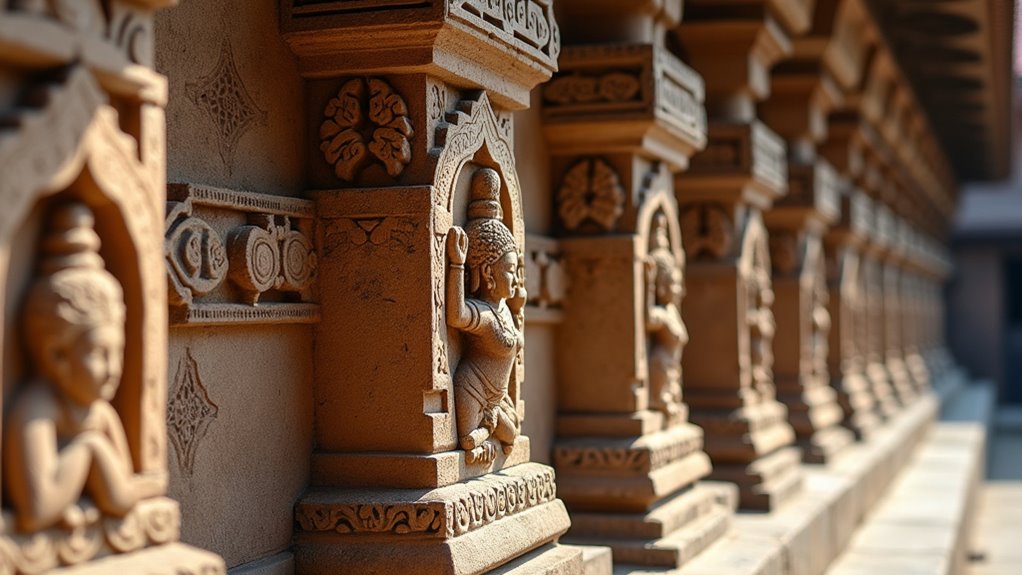
While most temples in Patan blend brick with timber, Krishna Mandir stands apart as Nepal’s first entirely stone temple, showcasing extraordinary craftsmanship that’ll leave budget travelers mesmerized without spending extra rupees.
Built between 1631-1637 during King Siddhi Narsingh Malla’s reign, this architectural marvel features intricate carvings depicting scenes from the Ramayana on its upper beams and countless Hindu deities adorning every surface. The temple originated from the king’s divine vision involving gods Krishna and Radha, inspiring this magnificent tribute to Krishna.
The temple’s three-story Shikhara style structure, carved from single dark stone, demonstrates exceptional 17th-century masonry skills. Look for the prominent Garuda statue positioned in front and detailed floral motifs throughout. Like other must-see highlights across Asia, this temple represents an essential cultural experience that defines Patan’s spiritual heritage.
Located within UNESCO-listed Patan Durbar Square, visitors can admire these masterful stone carvings while exploring the broader cultural heritage site at no additional cost.
Walk Among the Four Ancient Ashoka Stupas
Beyond Patan’s ornate temple architecture lies an ancient Buddhist trail that predates the city’s Hindu monuments by centuries. The Four Ashoka Stupas, built around 250 BC during Emperor Ashoka’s visit, mark the original boundaries of ancient Patan at each cardinal direction.
These aren’t museum pieces—they’re living spiritual sites embedded in bustling neighborhoods. You’ll find the western stupa at Pulchowk intersection and the eastern one near Gwarko Chowk, both easily walkable from the city center. Like Xi’an’s famous ancient walls that once protected the imperial city, these stupas served as sacred markers defining the perimeter of ancient Patan.
Each dome contains Buddha relics and features classical elements like square harmikas and decorative railings with Tathagata figures. The largest southern stupa stands nearly 12 meters tall with a diameter of over 47 meters, making it the most impressive of the four ancient monuments.
During August’s full moon, devoted pilgrims circumambulate all four stupas in one day. This free walking tour connects you to Nepal’s oldest Buddhist heritage while exploring Patan’s authentic neighborhoods beyond tourist zones.
Browse Traditional Metalwork and Crafts at Artisan Workshops
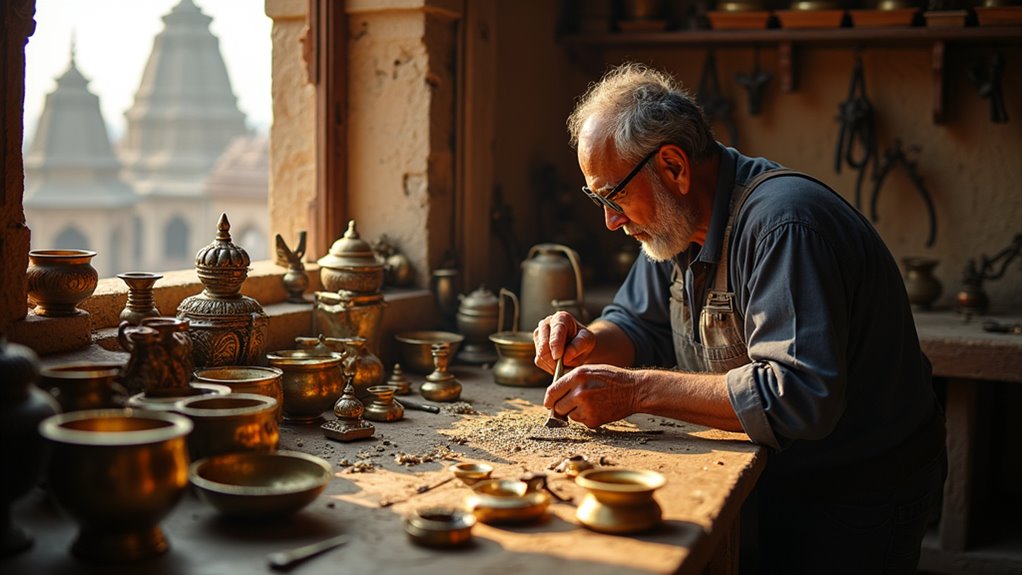
After exploring Patan’s ancient Buddhist heritage, visitors can plunge into the city’s renowned metalworking traditions that have flourished for over a thousand years. Tucked behind narrow alleyways near Patan Durbar Square, small courtyard workshops offer hands-on repoussé classes where skilled artisans teach the ancient technique of hammering intricate designs into copper and bronze.
These intimate workshops, capped at five participants, provide authentic culture while supporting local craftspeople economically. Full-day sessions typically include creating a bronze alms bowl, sharing traditional Newari lunch, and hearing stories about the craft’s spiritual significance. Half-day options work for tighter schedules.
Many workshops welcome drop-ins for casual observation, though booking ahead guarantees personalized instruction. The experience includes step-by-step guidance from master craftsmen who demonstrate the precise metal raising and engraving techniques passed down through generations. Like other historic capitals in Asia, Patan preserves these traditional crafts as living cultural heritage rather than museum pieces. Transportation from Kathmandu takes 20-30 minutes, often arranged through workshop organizers.
Experience Patan Museum’s Royal Palace Collections
A short walk from the metalworking workshops leads visitors to Patan Museum, housed within the former royal palace of the Malla kings at Patan Durbar Square. This 17th-century palace showcases over 1,100 artifacts spanning thirteen centuries of Nepal’s sacred art history, making it the country’s premier religious art museum.
Visitors can explore intricate wood carvings, golden gateways, and three historic courtyards for a reasonable entrance fee. The permanent collection features 200 bronze sculptures of Hindu and Buddhist deities, paubha scroll paintings, and ritual objects crafted in local Patan workshops. The museum serves as an excellent starting point for those planning to explore the broader temples and treks that Kathmandu valley has to offer.
Don’t miss Tusha Hiti, the ornate royal stone bath decorated with Hindu gods and Nāgas. The museum’s detailed interpretive labels help budget travelers understand the cultural significance without needing expensive guided tours. The palace underwent significant restoration work following the devastating 2015 Nepal earthquake that heavily damaged the historic structure.
Wander Through Historic Courtyards of Mul Chowk and Sundari Chowk
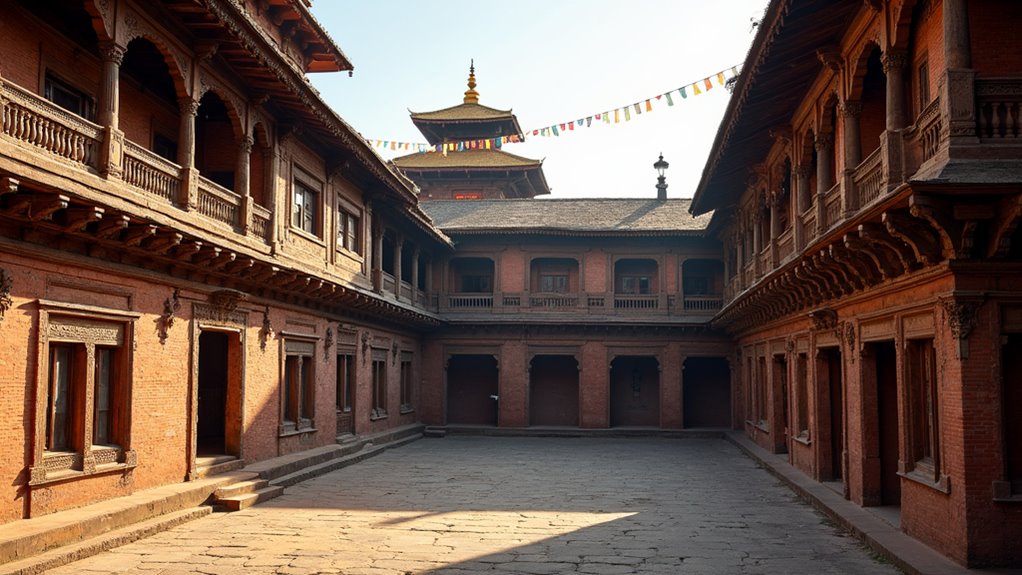
While most visitors focus on Patan’s famous Golden Temple, the historic courtyards of Mul Chowk and Sundari Chowk offer equally impressive architecture without the crowds.
Mul Chowk, established in 1666, serves as the oldest central courtyard where travelers can explore intricate wooden carvings and original 17th-century tile paving. The Vidya Temple sits at its center, surrounded by significant Taleju temples that showcase centuries of royal craftsmanship. Recent restoration work has removed layers of paint to reveal the intricate relief carvings hidden beneath, offering visitors a more authentic glimpse of Malla-period artistry.
Sundari Chowk, built in 1628, features distinctive triple-bayed windows and rare Malla-period interior details accessible through first-floor galleries. Don’t miss the ceremonial stone water taps and Tusha-Hiti sunken tank. These courtyards represent some of Nepal’s best-kept secrets for travelers seeking authentic cultural experiences.
Both courtyards are included in the Patan Museum entrance fee, making this an excellent value for budget-conscious visitors seeking authentic historical experiences.