
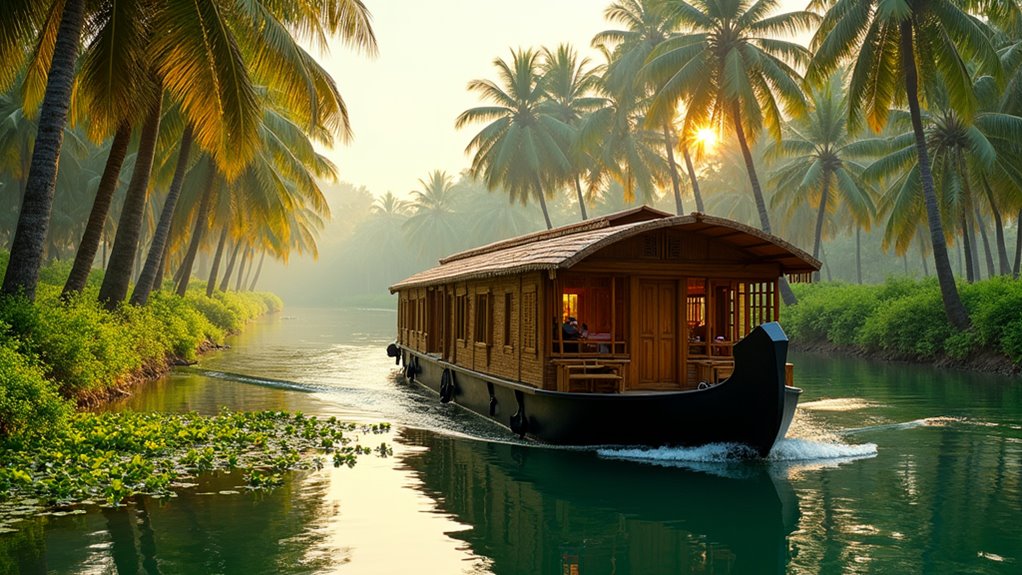
Kerala’s backwaters offer travelers an authentic glimpse into South India’s waterborne culture without breaking the bank. Visitors can choose from traditional houseboats, government ferries, or local canoes to explore this intricate network of canals, lakes, and lagoons. Each waterway reveals something different—from bird sanctuaries and spice villages to ancient forts and toddy shops. The key lies in knowing which routes provide the most rewarding experiences for every type of budget and travel style.
- Cruise the Venice of the East in Alleppey’s Traditional Kettuvallams
- Experience Luxury Houseboat Stays on Vembanad Lake in Kumarakom
- Explore Pristine Ashtamudi Lake’s Unique Wetland Ecosystems
- Discover Hidden Gems in Kasaragod’s Less Crowded Northern Backwaters
- Navigate Narrow Waterways by Canoe for Intimate Village Encounters
- Savor Authentic Kerala Cuisine Freshly Prepared Onboard Your Houseboat
- Spot Exotic Birds at Kumarakom Bird Sanctuary During Your Journey
- Visit Traditional Villages to Witness Toddy Tapping and Local Crafts
- Take Budget-Friendly Government Cruises Between Kollam and Alleppey
- Combine History and Nature With Coastal Routes Near Bekal Fort
Cruise the Venice of the East in Alleppey’s Traditional Kettuvallams
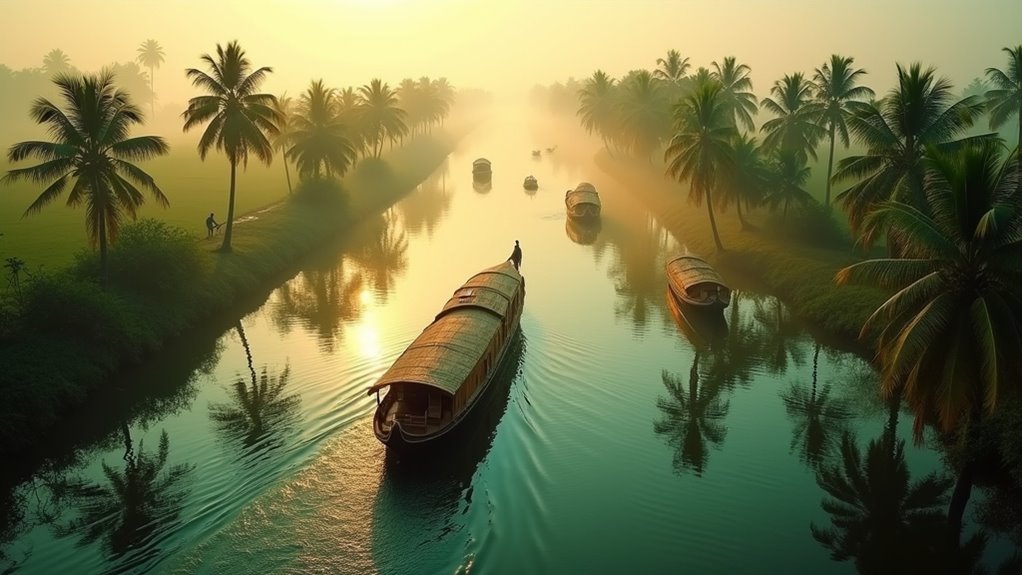
While modern transportation has transformed Kerala’s landscape, travelers can still experience the region’s maritime heritage aboard traditional Kettuvallams—the iconic houseboats that once served as the economic lifeline of these waterways.
These “tied boats,” constructed entirely without nails using jackfruit wood, bamboo, and coir ropes, now offer an authentic glimpse into Kerala’s past while providing comfortable accommodations.
Alleppey’s converted cargo vessels maintain their traditional aesthetics while featuring modern amenities like bedrooms, kitchens, and bathrooms.
Originally carrying 30 tons of rice and spices between remote villages, these 100-foot boats now transport visitors through the same winding backwaters their ancestors navigated centuries ago. The traditional construction method, known as Kettu, ensures flexibility and water resistance that has made these vessels seaworthy for hundreds of years.
This transformation preserves Kerala’s boat-building heritage while creating affordable tourism opportunities that directly benefit local craftsmen and communities. Like the Tohoku region’s cultural preservation efforts, Kerala’s houseboat industry demonstrates how traditional practices can be successfully adapted for sustainable tourism development.
Experience Luxury Houseboat Stays on Vembanad Lake in Kumarakom
For travelers seeking an elevated backwater experience, Kumarakom’s luxury houseboats on Vembanad Lake offer premium accommodations without abandoning the traditional kettuvallam design. These fully air-conditioned vessels feature modern amenities like flat-screen TVs and electronic safes while maintaining Kerala’s authentic architectural charm.
Guests enjoy personalized services including twice-daily housekeeping, dedicated crew with chef, and freshly prepared local cuisine emphasizing regional flavors.
The experience extends beyond the houseboat itself. Visitors can access nearby Kumarakom Lake Resort facilities like swimming pools and Ayurveda spas. These premium vessels also provide excellent venues for hosting special celebrations, including family reunions, wedding anniversaries, and corporate conferences with customizable packages.
The location provides easy access to Kumarakom Bird Sanctuary, where migratory Siberian birds and native species thrive. Like other renowned destinations across India that showcase cultural heritage, Kerala’s backwaters offer visitors an authentic glimpse into traditional maritime life and local customs.
Transportation remains convenient with Kottayam Railway Station just 12 minutes away and Cochin International Airport 56 kilometers distant, making luxury backwater stays accessible for various budgets.
Explore Pristine Ashtamudi Lake’s Unique Wetland Ecosystems
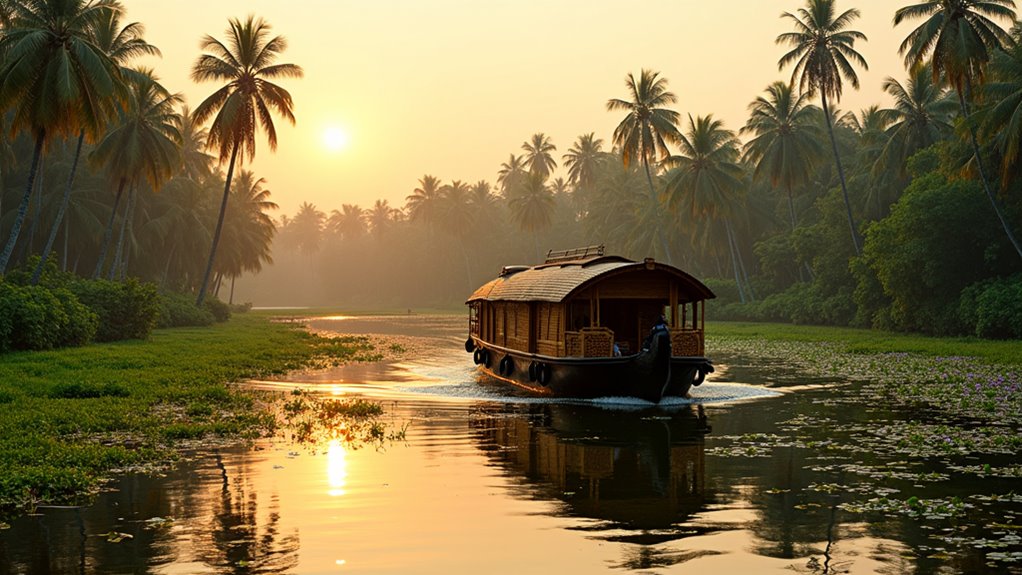
Beyond the popular houseboat circuits, Ashtamudi Lake in Kollam district offers travelers an authentic wetland experience where pristine ecosystems remain largely untouched by mass tourism. This 38-square-kilometer estuary, Kerala’s deepest at 6.4 meters, hosts remarkable biodiversity including 97 fish species and 57 bird varieties.
Traditional fishing communities welcome visitors to witness coconut husk retting for coir production, providing culture opportunities at minimal cost.
Budget travelers can explore via local canoes or affordable motorboats from Neendakara port, avoiding expensive tourist packages. The lake’s mangrove forests and natural clam beds create unique photography opportunities. Like the Old Quarter districts found in historic Asian cities, these traditional fishing villages offer an enchanting glimpse into authentic local life away from commercialized tourist zones.
Early morning visits offer the best wildlife sightings when migratory birds are most active. As Kerala’s second largest estuary, Ashtamudi connects directly to the Arabian Sea, creating dynamic tidal environments that support diverse marine ecosystems. Local fishermen often serve as knowledgeable guides, sharing ecological insights while supporting community-based tourism initiatives that benefit conservation efforts.
Discover Hidden Gems in Kasaragod’s Less Crowded Northern Backwaters
Tucked away in Kerala’s northernmost district, Kasaragod’s Valiyaparamba Backwaters remain invigoratingly free from the tourist crowds that overwhelm southern destinations like Alleppey and Kumarakorom. Located 30 kilometers from Bekal, these pristine waterways offer authentic experiences at budget-friendly rates.
Four rivers feed this 24-kilometer stretch, creating interconnected islands accessible only by traditional wooden boats.
Visitors can witness sustainable mussel farming supporting 6,000 local families and observe centuries-old fishing techniques using wooden kayaks. The clean waters allow safe swimming in both backwaters and virgin beaches.
Combine water activities with cultural exploration at nearby Bekal Fort and Ananthapura Lake Temple. The historic Ananthapura Lake Temple stands as Kerala’s only lake temple and serves as the original seat of Sri Padmanabha Swami. Malom Wildlife Sanctuary and Ranipuram hills provide excellent trekking opportunities.
Oyster Opera island offers pristine accommodations while maintaining minimal environmental impact and supporting local communities. Like Thailand’s diverse journey from north, Kerala’s backwaters showcase distinct regional characteristics that change dramatically as you travel through different districts.
Navigate Narrow Waterways by Canoe for Intimate Village Encounters
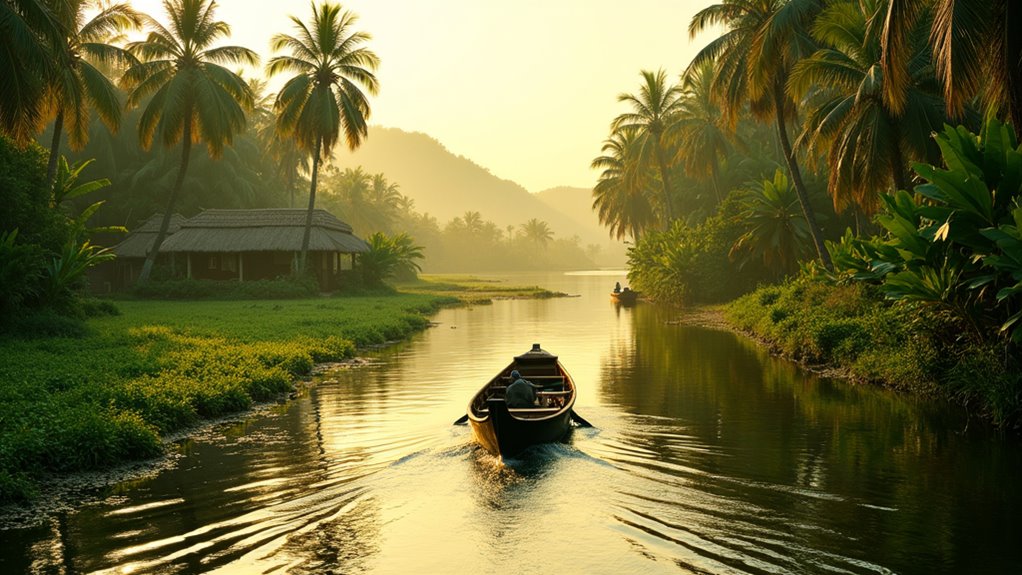
While motorized houseboats navigate only the wider channels, traditional canoes slip effortlessly through Kerala’s maze of narrow waterways, offering travelers an intimate glimpse into village life that larger vessels simply can’t reach. These silent journeys through palm-fringed canals reveal fishermen casting nets, farmers tending rice paddies, and children waving from waterside homes.
Alleppey and Munroe Island provide excellent starting points for guided canoe tours, while northern destinations like Kavvayi offer less crowded routes. Early morning trips avoid midday heat and capture villages awakening to daily routines. Paddlers often spot kingfishers and egrets along the waterways, adding wildlife encounters to the culture.
At a fraction of houseboat costs, canoeing delivers authentic cultural encounters without motor noise disturbing the peaceful atmosphere. Many tours include village market visits and traditional Kerala lunches, creating meaningful connections with local communities along these hidden waterways. Like Kathmandu’s blend of temples and treks, Kerala offers its own unique combination of culture and natural exploration through these pristine backwater channels.
Savor Authentic Kerala Cuisine Freshly Prepared Onboard Your Houseboat
After exploring the backwaters by paddle, travelers can enhance their houseboat experience through Kerala’s extraordinary culinary traditions served fresh onboard. Skilled local chefs prepare signature dishes like karimeen pollichathu—pearl spot fish marinated and steamed in banana leaves—using daily catches from surrounding waters.
Meals follow traditional structures: fluffy appams with coconut stew for breakfast, steamed rice with sambar and avial for lunch, and spiced beef ularthiyathu with pathiri bread for dinner. Fresh ingredients come directly from local fishermen and organic farms, while spices arrive from regional gardens. Coconut oil and freshly grated coconut create authentic flavors. The aromatic cooking area fills with the scents of clove, cardamom, pepper, and coconut as chefs prepare each dish.
The banana leaf serving style enhances culture while cruising scenic waterways. Similar to how Krabi offers limestone cliffs and coastal adventures, Kerala’s backwaters provide their own unique natural wonders paired with exceptional cuisine. This culinary journey offers exceptional value, combining accommodation, transportation, and restaurant-quality Kerala cuisine in one budget-friendly package.
Spot Exotic Birds at Kumarakom Bird Sanctuary During Your Journey
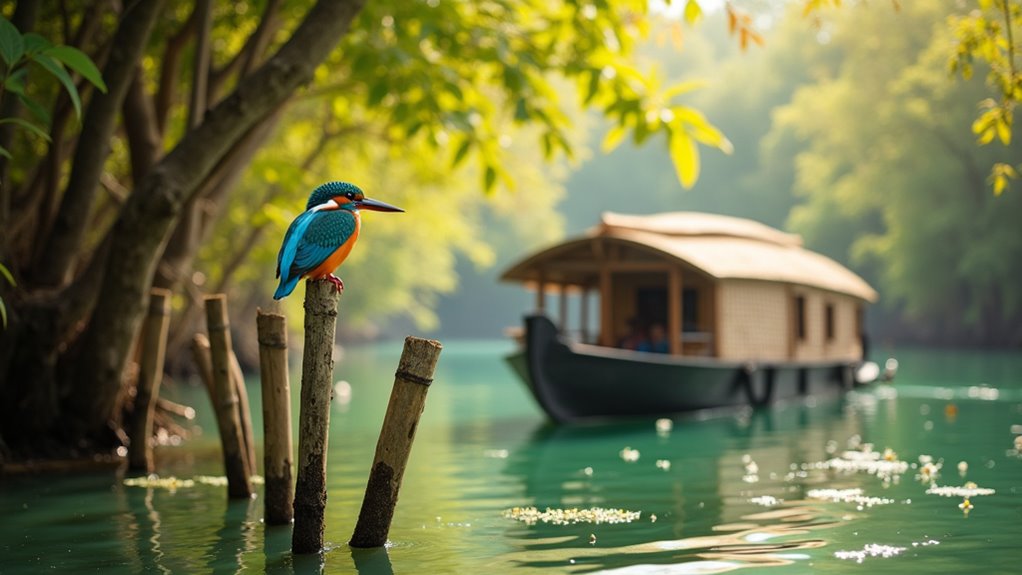
As houseboats drift past Kumarakom’s wetland shores, travelers can witness one of Kerala’s most spectacular wildlife displays at the renowned bird sanctuary. This 14-acre haven on Vembanad Lake hosts around 25,000 birds from 180 species, making it an essential stop during backwater journeys.
November through February offers the best bird-watching opportunities when migratory species from Siberia and the Himalayas arrive. Visitors can spot Siberian cranes, marsh harriers, and black-tailed godwits alongside resident waterfowl, herons, and kingfishers. Over 90 species make seasonal migrations to this sanctuary, dramatically increasing the diversity during peak months.
Budget-conscious travelers can observe birds directly from their houseboats or take affordable motorboat cruises for closer views. While Kerala focuses on wildlife conservation, other destinations like Chengdu offer their own unique animal encounters with giant pandas and local culinary adventures.
The sanctuary’s strategic location within Kerala’s backwater network means birding seamlessly integrates into traditional houseboat itineraries, offering authentic culture without additional accommodation costs.
Visit Traditional Villages to Witness Toddy Tapping and Local Crafts
Beyond the waterways, traditional villages like Ambalappuzha and Kainakary offer travelers authentic glimpses into Kerala’s living heritage through hands-on experiences with toddy tapping and local crafts.
Visitors can watch skilled climbers demonstrate toddy tapping twice daily, using traditional palm-cutting knives to collect fresh sap from coconut palms.
Local toddy taverns serve this mildly alcoholic drink alongside affordable Kerala snacks, creating budget-friendly cultural experiences.
These villages showcase hereditary crafts like coir making from coconut husks, handloom weaving of kasavu sarees, and bamboo furniture creation.
Travelers can engage directly with artisans, learning traditional techniques while supporting local livelihoods. The villages are surrounded by paddy fields and coconut groves, creating a picturesque rural landscape that epitomizes Kerala’s agricultural heritage.
Similar to Xi’an’s ancient walls that preserve China’s historical legacy, these Kerala villages maintain their cultural traditions through generations of skilled craftsmanship.
Homestays provide immersive experiences with traditional meals and farming activities, offering economical alternatives to hotels while preserving authentic village customs.
Take Budget-Friendly Government Cruises Between Kollam and Alleppey
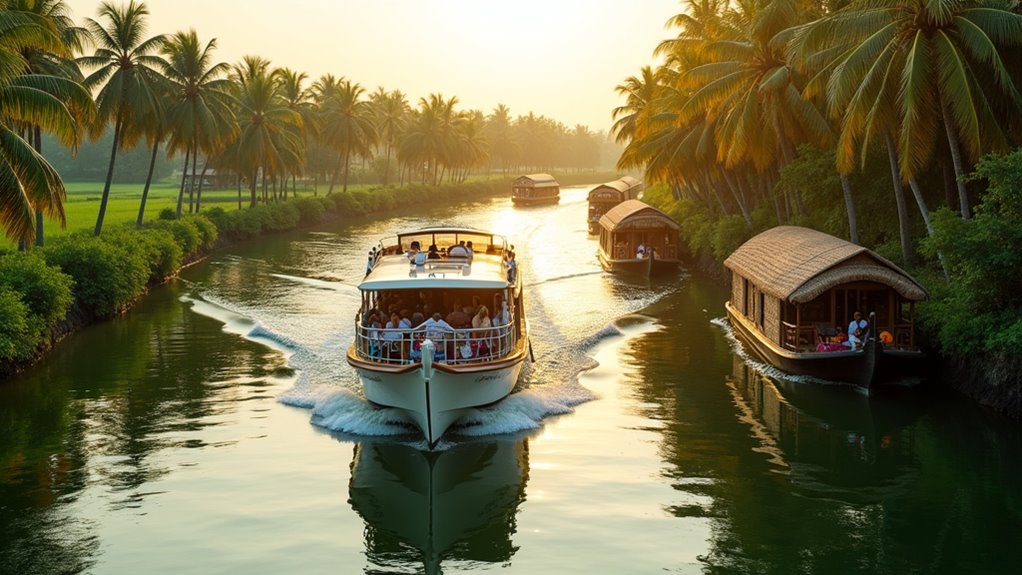
While private houseboats command premium prices, Kerala’s government-operated cruises between Kollam and Alleppey deliver the same stunning backwater scenery for just Rs 600 per person. These daily 8-hour journeys depart at 10:30 AM from DTPC jetties, steering Asia’s largest freshwater lake, Vembanad, plus Kayamkulam and Ashtamudi lakes.
Travelers witness dense coconut plantations, water-bound villages, and traditional fishing operations while stopping at cultural highlights like Amrithapuri Ashram and coir-producing villages. The route includes Punnamads Canal, famous for the Nehru Trophy Boat Race, and Mangalassery Jetty where the Pampa River meets Vembanad Lake. Beyond the serene backwaters, Ko Samui offers adventure activities for travelers seeking more active pursuits during their Southeast Asian journey.
Operating year-round with peak season schedules Monday through Sunday, these government ferries accommodate large groups on two-deck vessels. For the most comfortable experience, plan your journey during the ideal weather months from October to late February when temperatures remain pleasant and rainfall is minimal. Arrive early to secure upper deck seating for panoramic views of Kerala’s most scenic waterways.
Combine History and Nature With Coastal Routes Near Bekal Fort
Perched on Kerala’s northernmost coast where the Arabian Sea meets ancient battlements, Bekal Fort offers travelers an unbeatable combination of 17th-century military architecture and pristine coastal scenery for just Rs 25 entry fee.
Built in 1650 by Shivappa Nayaka, this 40-acre keyhole-shaped fortress maximizes panoramic views from its observation towers, where visitors can spot coconut groves stretching toward Kanhangad and Pallikkara.
Walk the extensive ramparts for free coastal vistas while exploring zigzag entrances and defensive bastions that once withstood Tipu Sultan’s campaigns. The fort houses an active Hanuman temple where devotees continue centuries-old worship traditions, especially on Tuesdays and Saturdays.
The fort’s unique position—three-quarters surrounded by water—creates stunning photography opportunities as ancient laterite walls appear to rise directly from the sea. Like other essential experiences across India’s historic destinations, Bekal Fort provides visitors with unforgettable memories that showcase the region’s cultural significance.
Combine your visit with nearby beaches and local eateries for an affordable day exploring Kerala’s rich maritime heritage.