
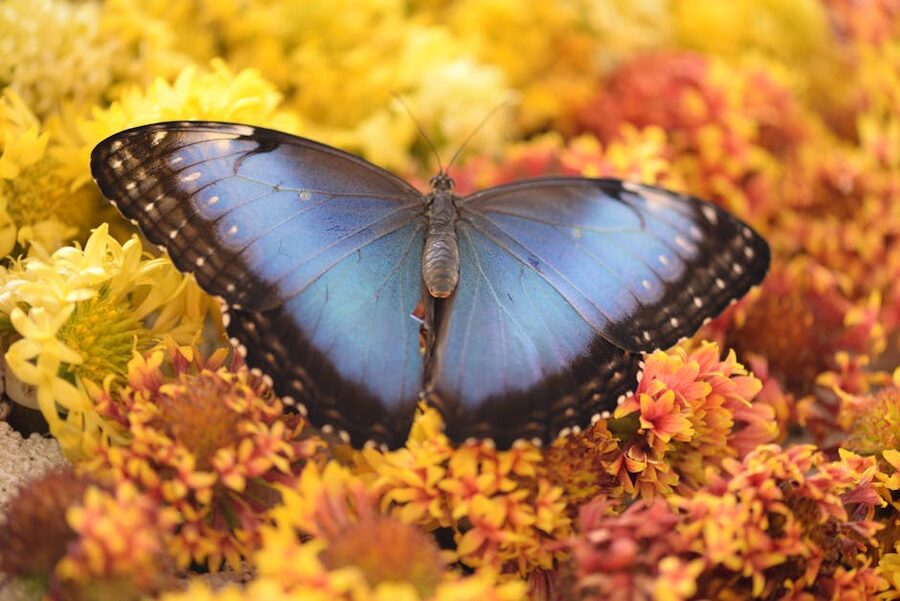
The blue morpho landed on my daughter’s shoulder and opened its wings. The iridescent blue was so intense it looked like someone had photoshopped it onto reality. She froze. “Don’t move,” I whispered. She didn’t move for four full minutes.
The butterfly eventually flew to a nearby hibiscus flower, and my daughter turned to me with the kind of expression that makes you glad you dragged a 9-year-old to a garden instead of another waterpark.
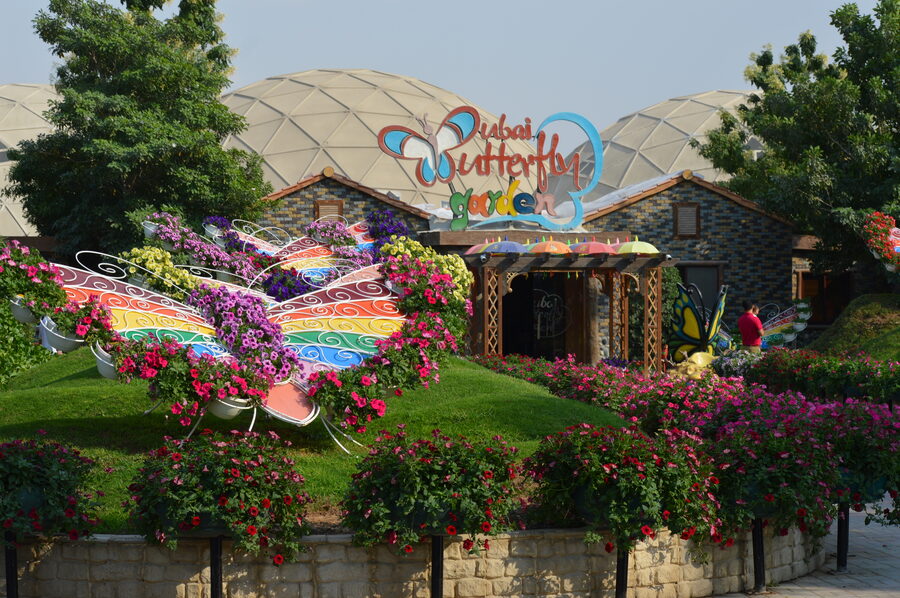
The Dubai Butterfly Garden is the world’s largest covered butterfly garden. Fifteen thousand butterflies from over 50 species fly freely inside 10 interconnected domes. They land on your clothes, your hands, your hair. They don’t care that you’re a tourist. They care that you’re warm and might be a flower.
The entry price is AED 70 ($19) for adults and AED 50 ($14) for children aged 3-12. Under 3 is free. The garden is open seasonally from October to June — it closes during the brutal summer months when maintaining the dome temperatures becomes impossible.
In a Hurry? Our Top Picks
Skip the queue at the gate. All 10 domes and the butterfly museum included.
Miracle Garden entry plus hotel pickup. Combine with the Butterfly Garden next door for a full day.
The flower garden next door. 150 million flowers including a life-size Emirates A380.
- The 10 Domes — What You’ll Actually See
- The Stars of the Collection
- The Feeding Stations
- The Butterfly Museum
- Our Recommended Tickets
- 1. Dubai Butterfly Garden Skip-the-Line Ticket —
- 2. Dubai Miracle Garden Entry Ticket with Hotel Transfer —
- 3. Dubai Miracle Garden Skip-the-Line Ticket —
- A Brief History of Dubai’s Unlikely Gardens
- Practical Tips from Someone Who Got It Wrong (and Then Right)
- Combining Butterfly Garden with Miracle Garden
- Getting There
- Is the Butterfly Garden Worth ?
- Planning the Rest of Your Dubai Trip
The 10 Domes — What You’ll Actually See
The garden is organized into 10 climate-controlled domes connected by walkways. Each dome houses different butterfly species in environments designed to mimic their natural habitats. You walk through at your own pace — there’s no guided route, no time pressure, and no right or wrong order.
The Stars of the Collection
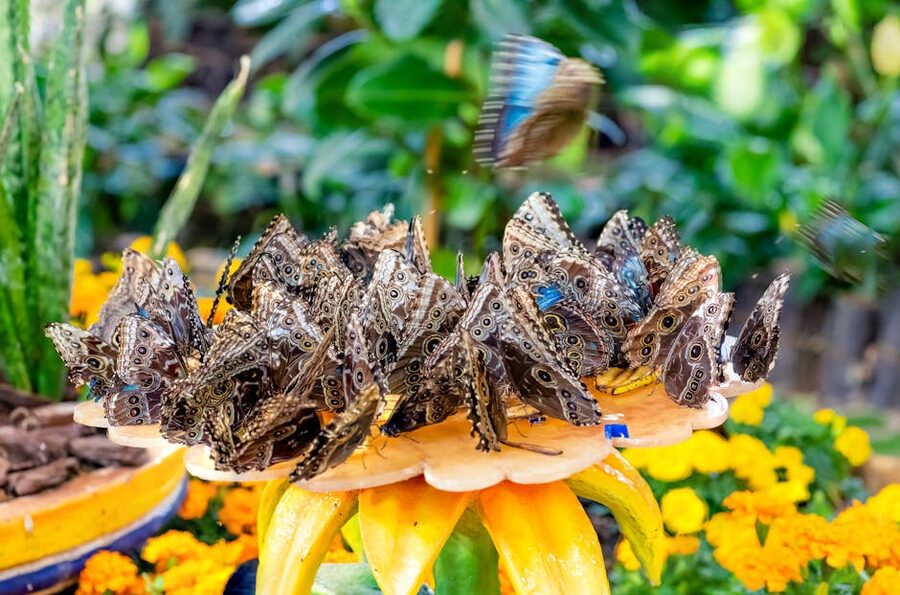
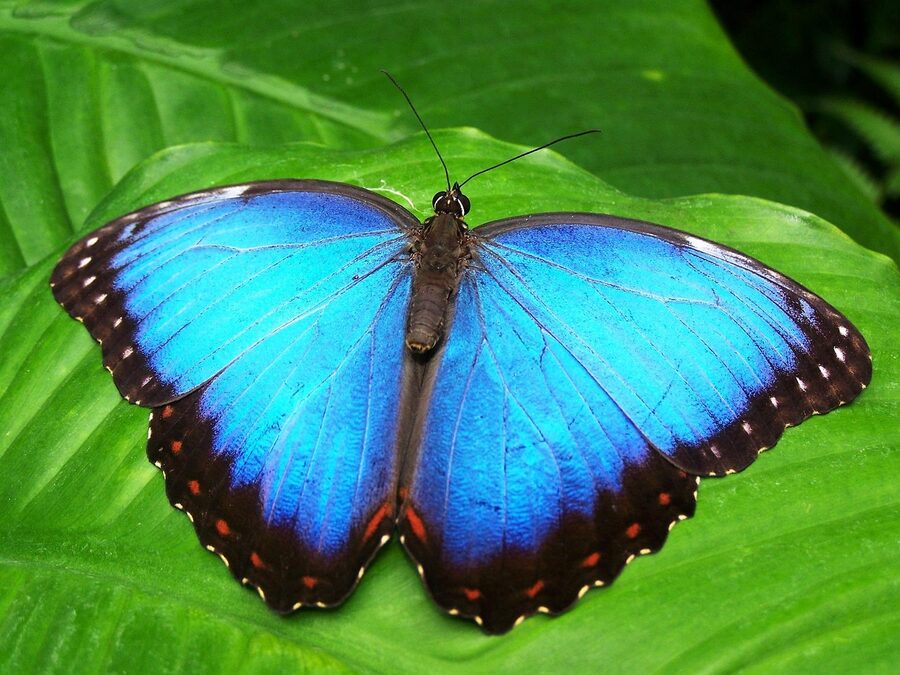
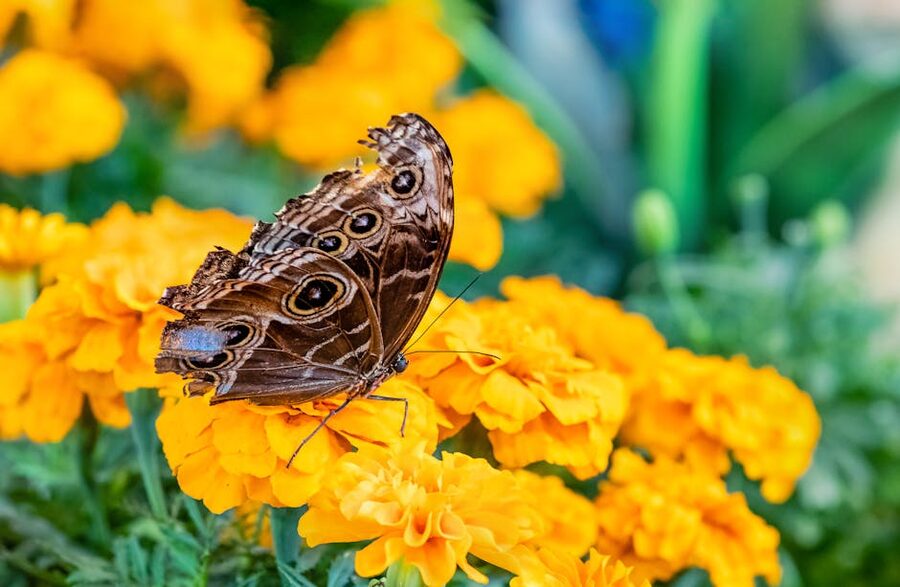
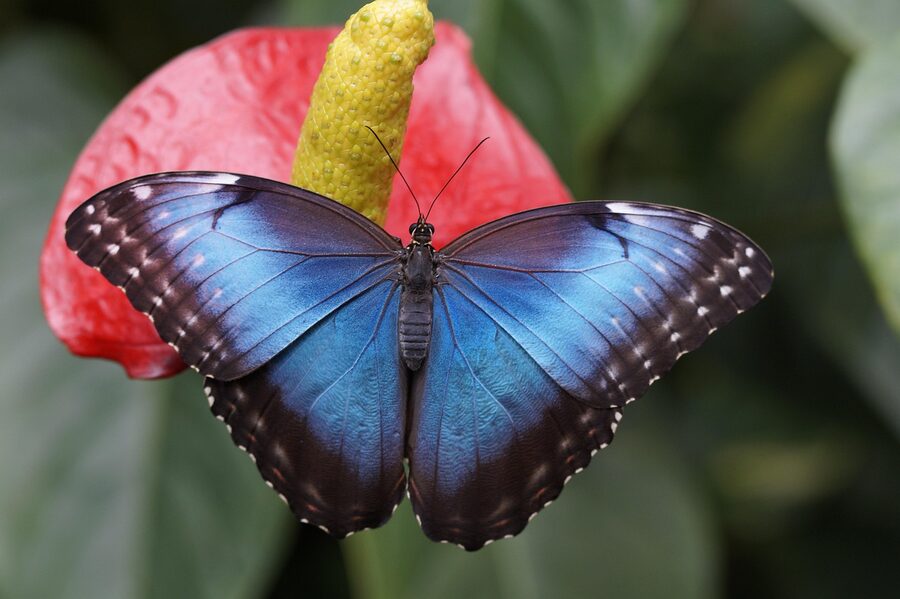
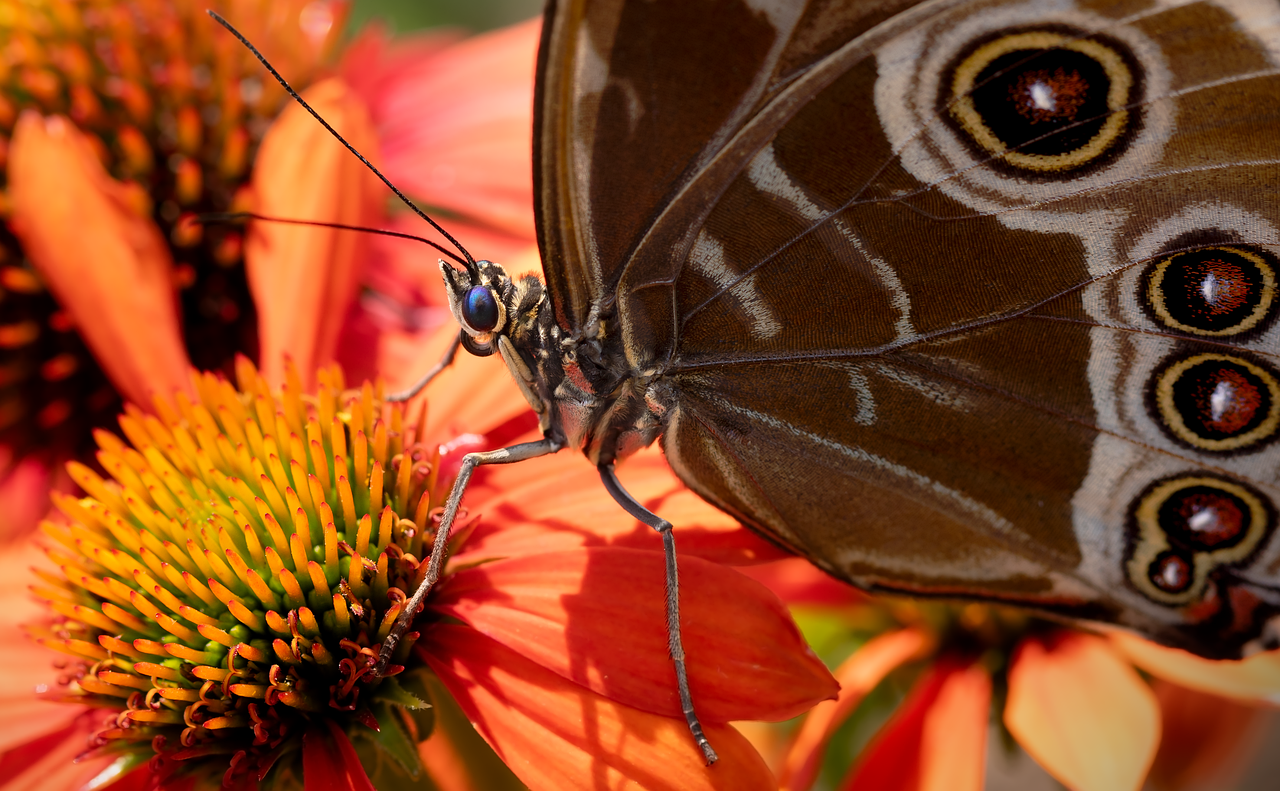
Blue Morpho — the showstopper. Native to Central and South America, these butterflies have wings that flash iridescent blue in flight. The colour isn’t pigment — it’s caused by microscopic scales that refract light, which is why the blue seems to shift and shimmer as the wings move. When they close their wings, they’re dull brown with eyespots. Open, they’re electric blue. The transformation is mesmerizing.
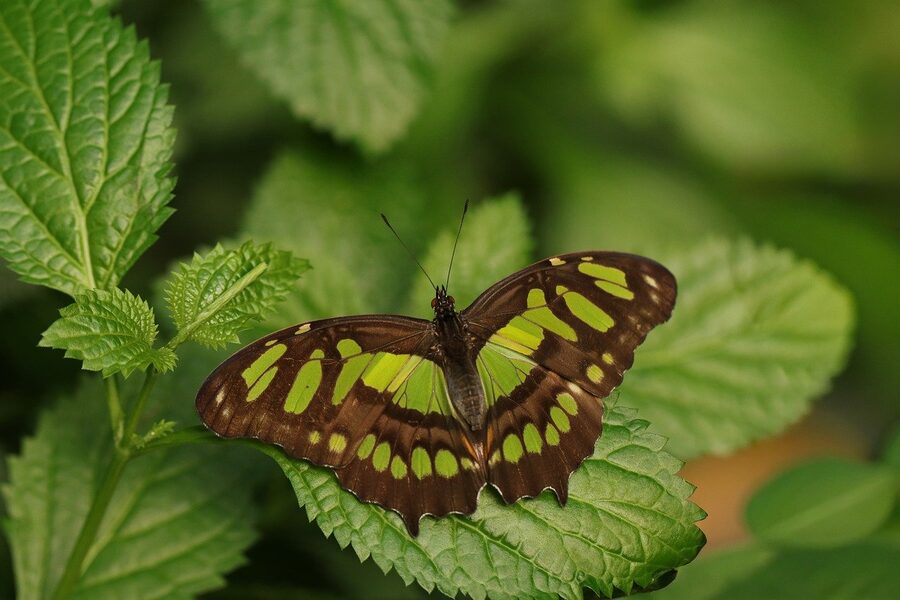
Malachite Butterfly — named for the green mineral, with striking black-and-green patterns. These are calmer than the Morphos and more likely to land on visitors. They’re common in the Dubai garden and children love them because they’re approachable and beautiful without being overwhelming.
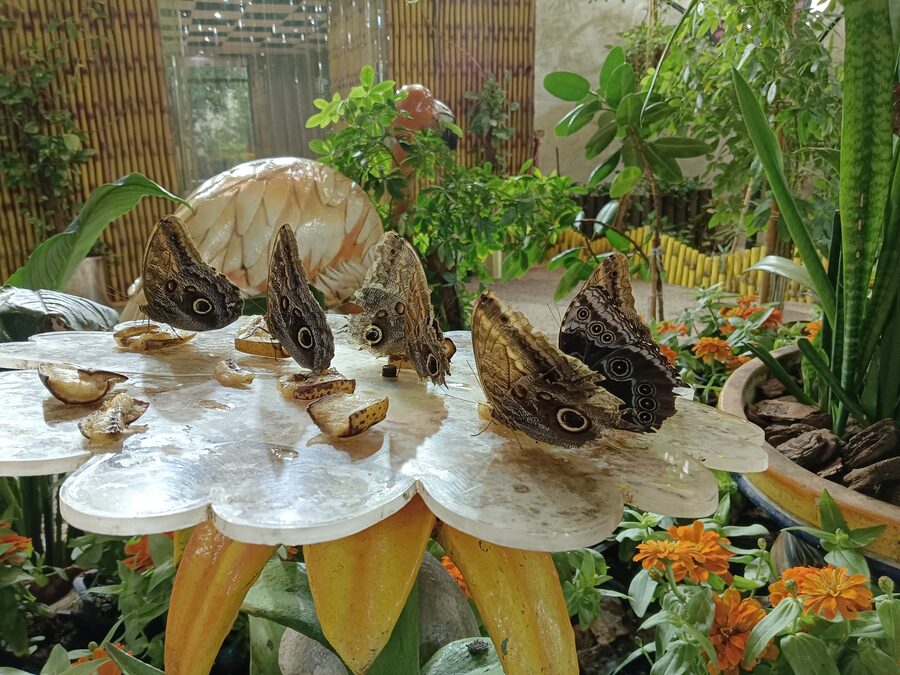
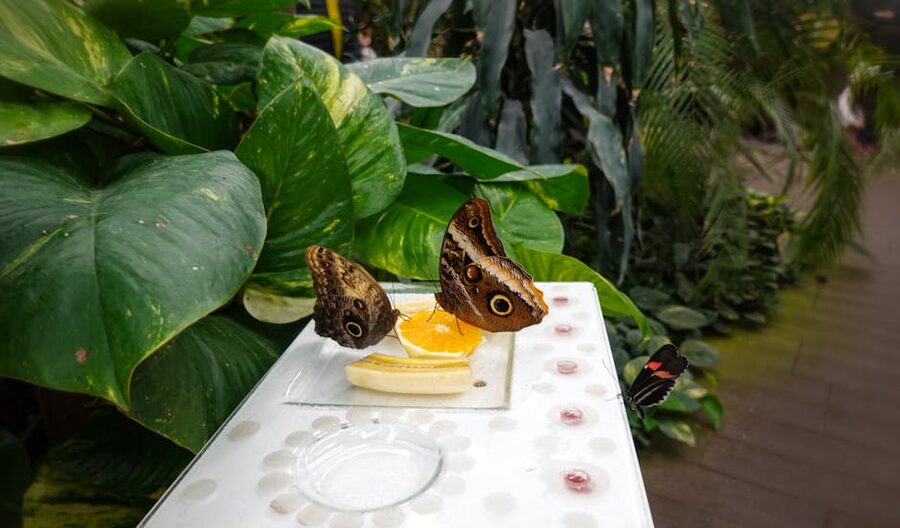
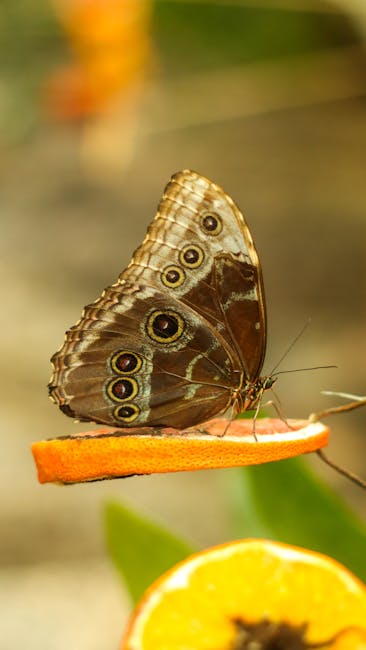
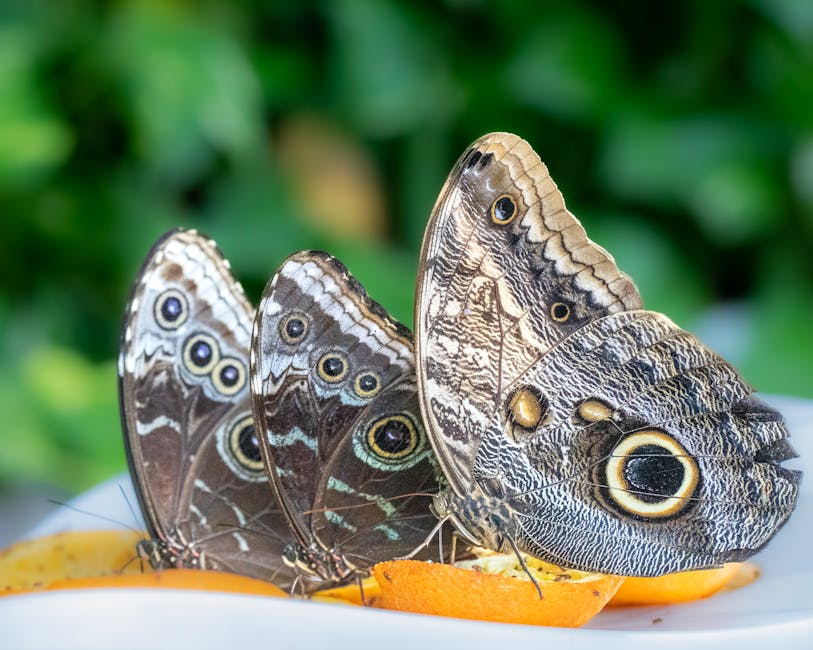
Owl Butterfly — named for the large eyespots on the underside of their wings, which look like owl eyes and scare predators. These are among the largest butterflies in the garden, with wingspans up to 20cm. They’re most active in the early morning and prefer to feed on rotting fruit rather than nectar.
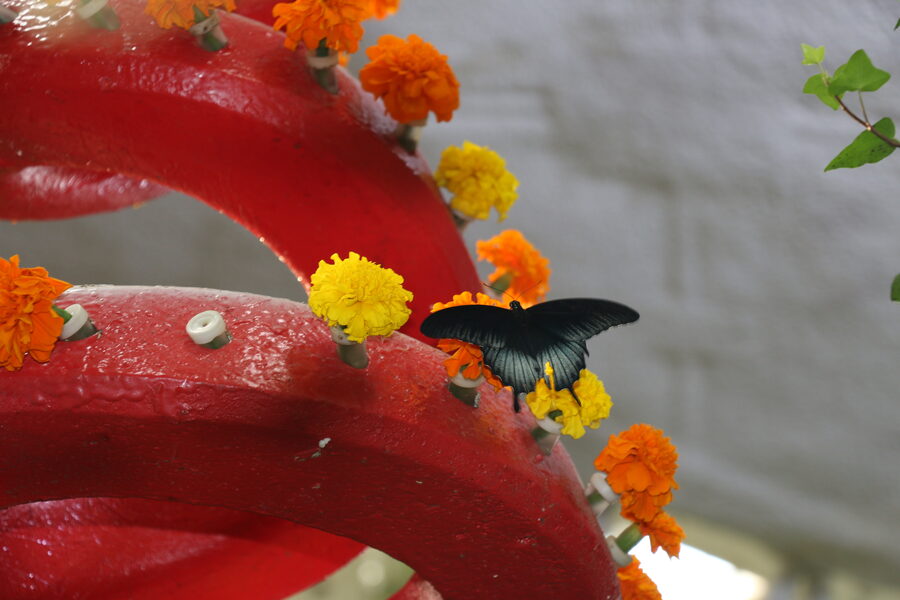
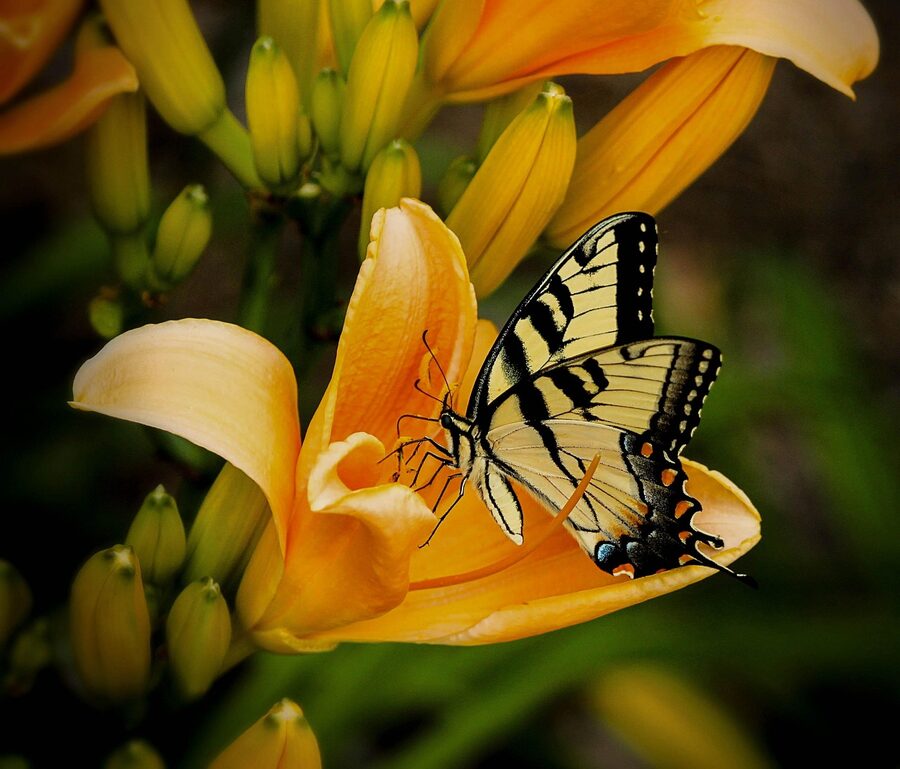
Swallowtail — elegant, long-tailed butterflies that come in dozens of colour variations. The garden has several swallowtail species from Asia and Africa. They’re faster and more acrobatic fliers than the Morphos, and they prefer flower nectar to fruit.
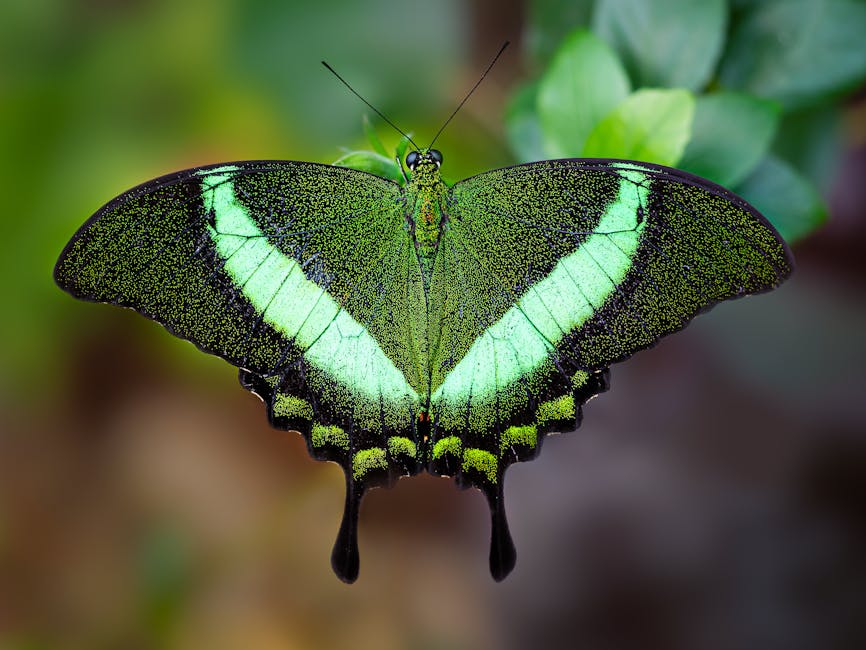
Emerald Swallowtail — one of the most striking butterflies in the collection. Black wings with bands of iridescent green that shift colour depending on the angle of light. Native to Southeast Asia, they’re rarer in the garden than the Morphos but worth seeking out in the Asian-themed domes.
The Feeding Stations
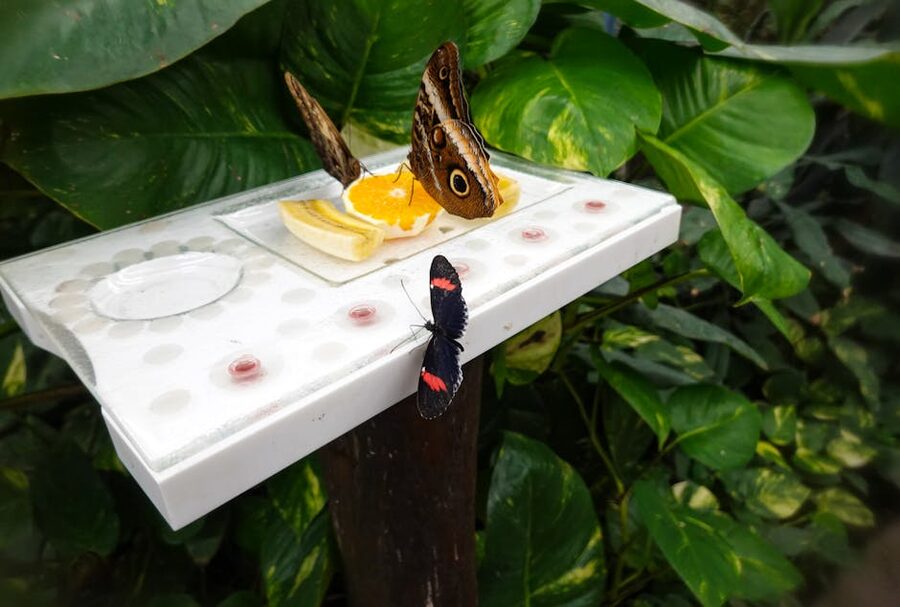
Each dome has feeding stations — trays of sliced oranges, bananas, and watermelon placed at eye level along the walkways. The butterflies cluster on these trays, sometimes 20-30 at a time, creating the most photogenic moments in the garden.
The Butterfly Museum
At the end of the walkthrough, a small museum explains the butterfly lifecycle — egg, larva (caterpillar), pupa (chrysalis), and adult. The chrysalis display is the highlight: rows of pupae at different stages, some of them visibly moving as the butterfly inside prepares to emerge. If your timing is right, you can watch a butterfly emerge from its chrysalis in real time. It takes about 5 minutes and it never gets old.
Our Recommended Tickets
1. Dubai Butterfly Garden Skip-the-Line Ticket — $20
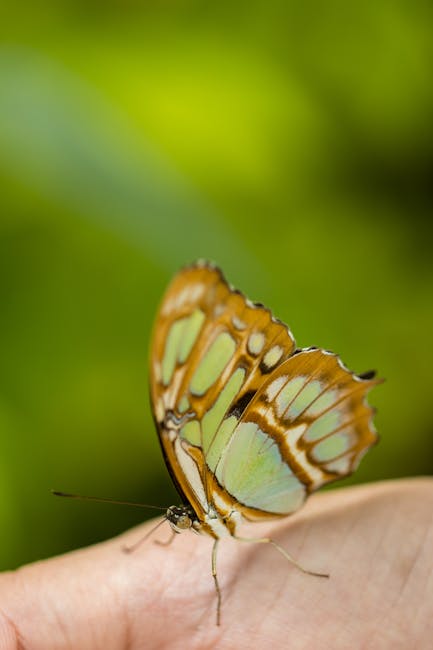
The standard entry ticket covers all 10 domes, the butterfly museum, and the educational displays. The skip-the-line feature saves 15-20 minutes on weekends and holidays — the garden is popular with families and school groups, especially during the cooler months.
At $20, this is one of the cheapest attractions in Dubai. Allow 60-90 minutes for the full experience. Children under 3 enter free. The garden is fully accessible — the walkways are flat and wide enough for wheelchairs and strollers. We cover the full dome-by-dome breakdown in our complete review of the Butterfly Garden.
2. Dubai Miracle Garden Entry Ticket with Hotel Transfer — $57
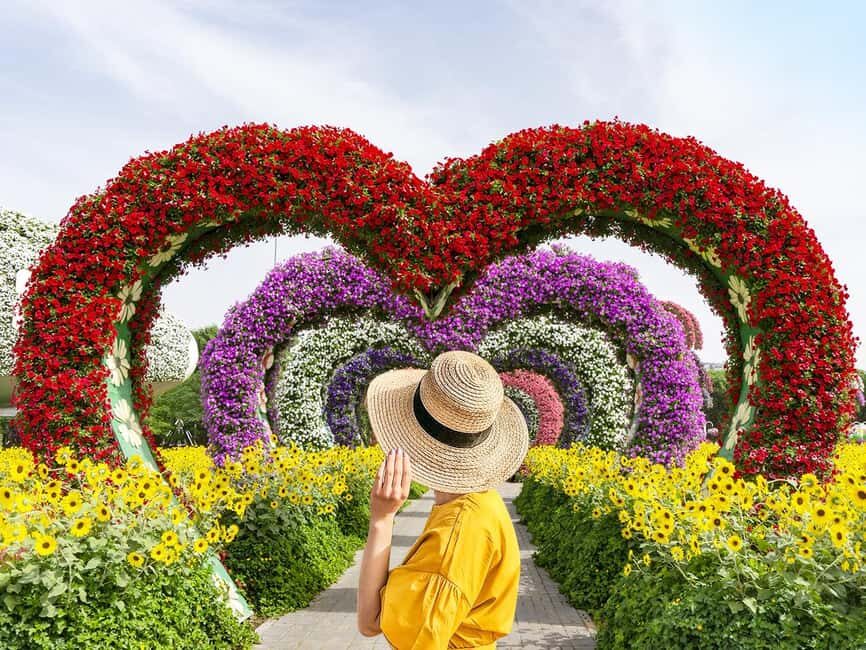
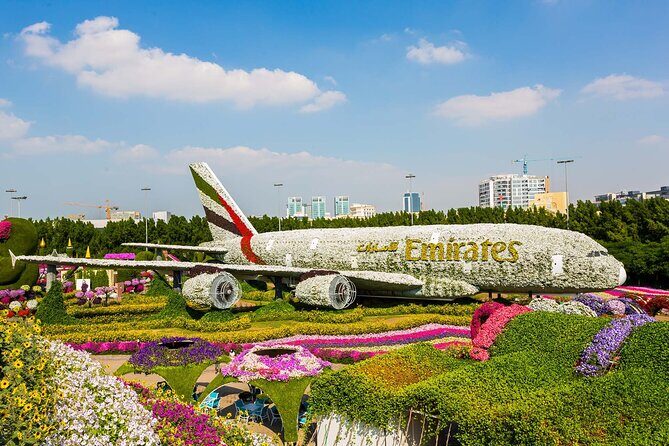
The Miracle Garden is 150 million flowers arranged in elaborate sculptures, arches, and displays — including a life-size Emirates A380 airplane made entirely of flowers. It changes its displays every season, so repeat visits show different arrangements. The garden covers 72,000 square meters and takes about 2 hours to explore thoroughly.
The $57 includes hotel pickup and drop-off, which is valuable since the Dubailand area has no metro access. A taxi from the Marina costs $15-20 each way, so the transfer effectively costs $17-27 — reasonable for the convenience. See our full review of the Miracle Garden.
3. Dubai Miracle Garden Skip-the-Line Ticket — $28
The budget Miracle Garden option — entry only, no transfers. At $28, it’s half the price of the hotel transfer package. You arrange your own transport, which is straightforward by Uber or taxi. The garden is open 9am-9pm (sometimes later on weekends) and the evening visit has its own appeal — the floral displays are illuminated after dark.
The Miracle Garden ticket is separate from the Butterfly Garden — you need both tickets if you want to visit both. Budget $48 total ($20 + $28) for the combination. Both gardens share a parking area and entrance plaza. See our full review of the Miracle Garden.
A Brief History of Dubai’s Unlikely Gardens
The Dubai Butterfly Garden opened in 2015 as part of a larger development that includes the Miracle Garden (opened 2013). Both were conceived by Jordanian-born developer Abdel Nasser Rahhal, who saw the Dubai desert as a canvas for what he called “green entertainment.”
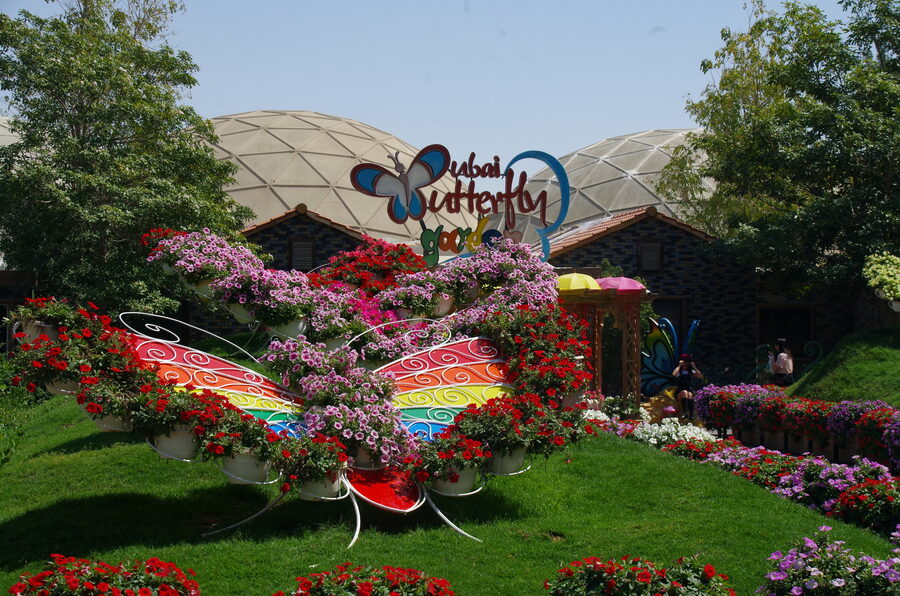
The concept of a covered butterfly garden isn’t unique — London, Singapore, and Kuala Lumpur all have them. What makes Dubai’s special is the scale (the largest in the world by covered area) and the absurdity of the location. Growing tropical butterflies in a desert where summer temperatures hit 50°C requires engineering that borders on defiance.
The garden houses butterflies from over 26 countries. They’re bred on-site and in partner facilities, with new chrysalises arriving regularly to maintain the population. The average butterfly lives 2-4 weeks, which means the garden is in a constant state of renewal — what you see today won’t be exactly what visitors see next month.
Practical Tips from Someone Who Got It Wrong (and Then Right)
Visit at opening (9am). I made the mistake of arriving at 1pm on a Saturday. The domes were packed with families, the feeding stations were surrounded three-deep, and the butterflies were resting rather than flying. I went back on a Tuesday at 9:15am. Different world. The domes were quiet, the butterflies were active, and I had feeding stations to myself.
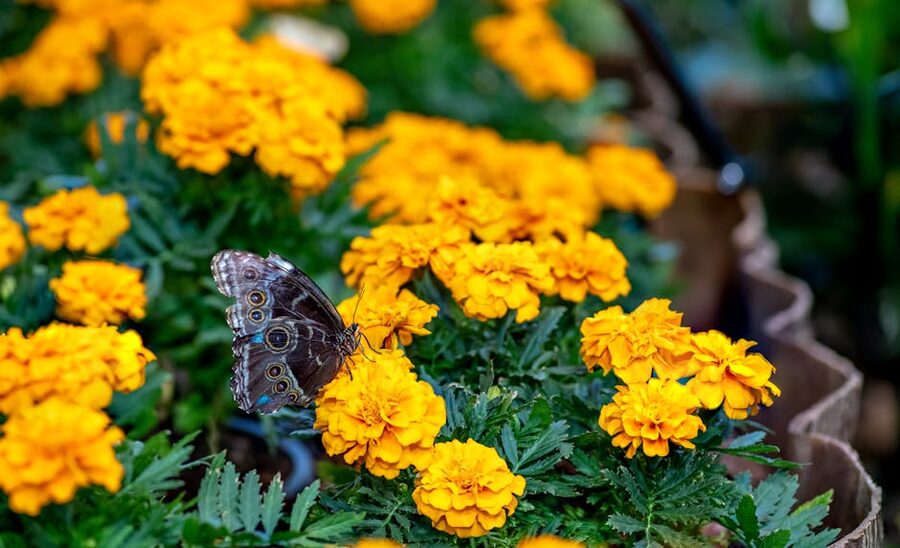
Wear bright colours — especially red, yellow, and orange. Butterflies are attracted to bright colours because they associate them with flowers. I wore a red t-shirt and had butterflies landing on me constantly. My friend wore black and was invisible to them. The difference was dramatic enough that she bought a yellow scarf from the gift shop and immediately started attracting landings.
Don’t touch the butterflies. Their wings are covered in microscopic scales that rub off easily. If one lands on you, let it stay until it decides to leave. Don’t pick them up, don’t brush them off, and don’t try to move them. The staff are strict about this and will politely but firmly remind anyone who reaches for a butterfly.
Photography tips: Use your phone’s portrait mode for close-ups — the shallow depth of field blurs the background and makes the butterfly pop. Turn off your flash — it startles them and washes out the wing colours. The natural light inside the domes is excellent but the humidity fogs lenses instantly when you move between domes. Carry a microfibre cloth and wipe your lens every time you enter a new dome.
The garden is seasonal. Open from October to June, closed July through September. The exact dates shift slightly each year — check the official website before planning your visit. The garden closes during Dubai’s hottest months because maintaining the dome temperatures becomes prohibitively expensive.
Allow 60-90 minutes for the butterfly garden alone. If you’re combining with the Miracle Garden next door (and you should — it’s a 2-minute walk), budget 3-4 hours total. The Butterfly Garden is air-conditioned and comfortable. The Miracle Garden is entirely outdoors — do it first in the morning while it’s cool, then retreat to the butterfly domes.
No food or drinks inside the domes. The butterflies are attracted to sweet liquids and will dive-bomb your juice or ice cream. Water bottles are fine but keep them sealed. The café outside the domes serves coffee, snacks, and light meals.
Combining Butterfly Garden with Miracle Garden
The two gardens share a parking area and are connected by a short walkway. Most visitors do both in a single visit, and the combination is one of the best half-day experiences in Dubai — especially for families.
Recommended order: Miracle Garden first (outdoor, do it while it’s cool), then Butterfly Garden (indoor, air-conditioned, perfect for the afternoon heat). Buy separate tickets — there’s no combo ticket. Budget $48 total ($20 Butterfly + $28 Miracle).
The Miracle Garden highlights: The Emirates A380 airplane made of 500,000+ flowers (Guinness World Record), the floral castle, the heart-shaped arches, and the Disney character sculptures. It’s the most photographed garden in the Middle East and the displays change every season.
Getting There
Location: Dubailand, Al Barsha South 3. About 25 minutes from Dubai Marina, 20 minutes from Downtown Dubai.
Taxi or Uber: The easiest option. Ask for “Dubai Butterfly Garden, Dubailand” or “Dubai Miracle Garden.” Budget $15-20 from central Dubai each way. There’s a taxi rank at the gardens for the return trip.
No metro access. The nearest metro station is Mall of the Emirates, which is still a $10 taxi ride away. Dubailand is not well-served by public transport — taxis or the hotel transfer packages are the way to go.
Parking is free if you’re driving. The parking area is shared between both gardens and is large enough to handle weekend crowds.
Is the Butterfly Garden Worth $20?
For nature lovers and families — without question. At $20, it’s one of the cheapest attractions in Dubai (the Burj Khalifa is $43, Museum of the Future is $46). The 90 minutes you spend here will be the most peaceful of your entire Dubai trip.
For couples without children, it depends on your interest in nature. If you’ve ever lingered in a butterfly exhibit at a zoo and wished it were bigger, this is your place. If butterflies leave you cold, your $20 and 90 minutes are better spent at the Dubai Frame or the Old Dubai souks.
Planning the Rest of Your Dubai Trip
The Butterfly Garden fills a morning or afternoon. The evening pairs beautifully with an Agafay Desert dinner — wait, wrong country. In Dubai, the evening options near Dubailand include the Global Village (open October-April, evenings only) which is a 15-minute drive away. The desert safari picks up from this side of the city too.
For a completely different kind of nature, the Green Planet indoor rainforest in City Walk has sloths, toucans, and piranhas in a 4-storey biodome. The Dubai Aquarium at the Mall offers marine life. And the Dubai Safari Park has giraffes, lions, and 3,000 other animals across 119 hectares.
If the butterfly garden ignites an interest in Dubai’s quieter side, the Majorelle Garden in Marrakech is the most famous garden in the broader region — Jacques Majorelle’s blue paradise that Yves Saint Laurent saved. Different country, same principle: beauty in unexpected places.