
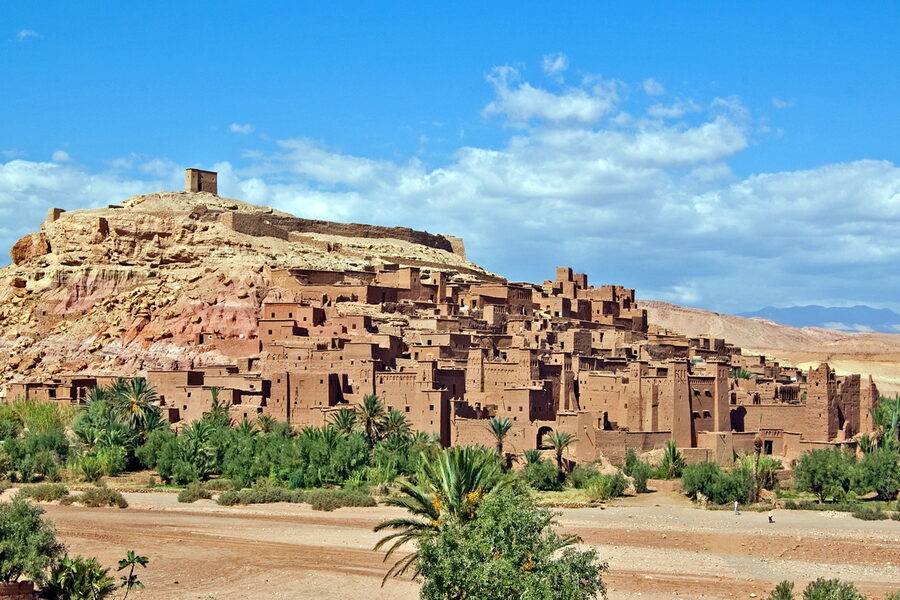
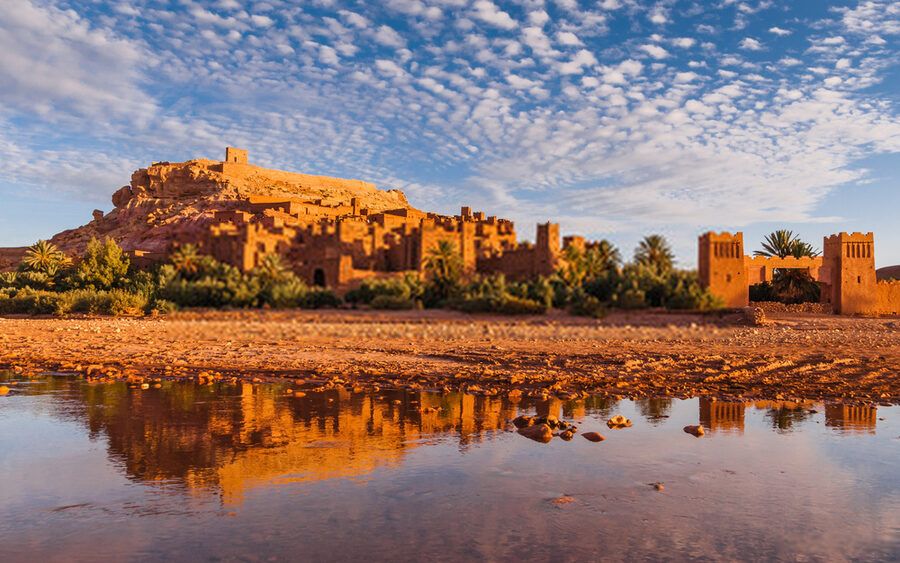
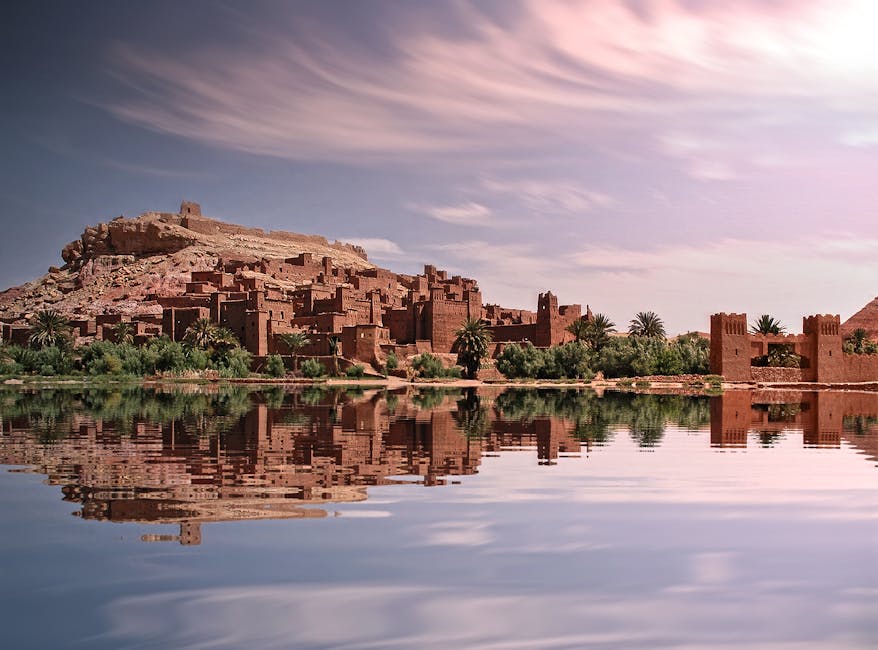
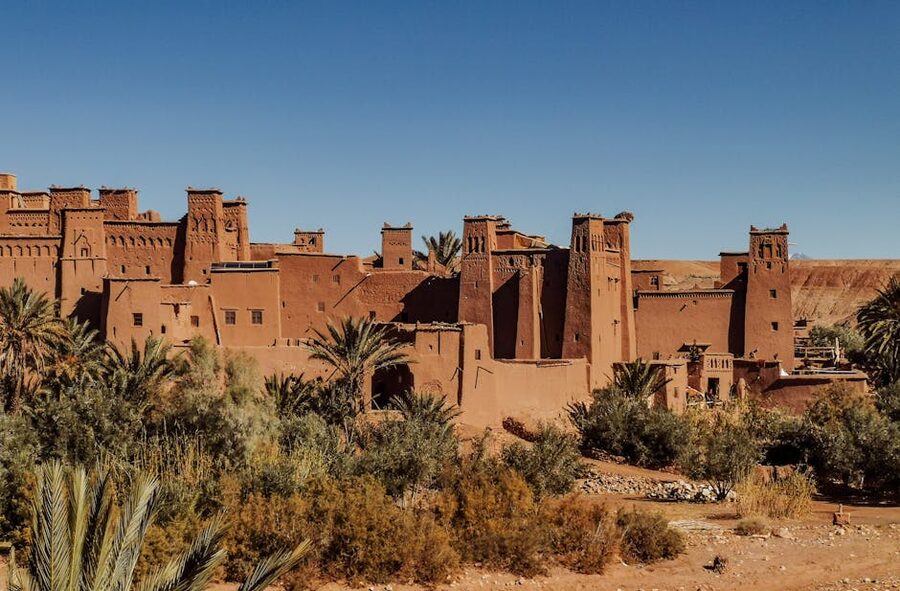
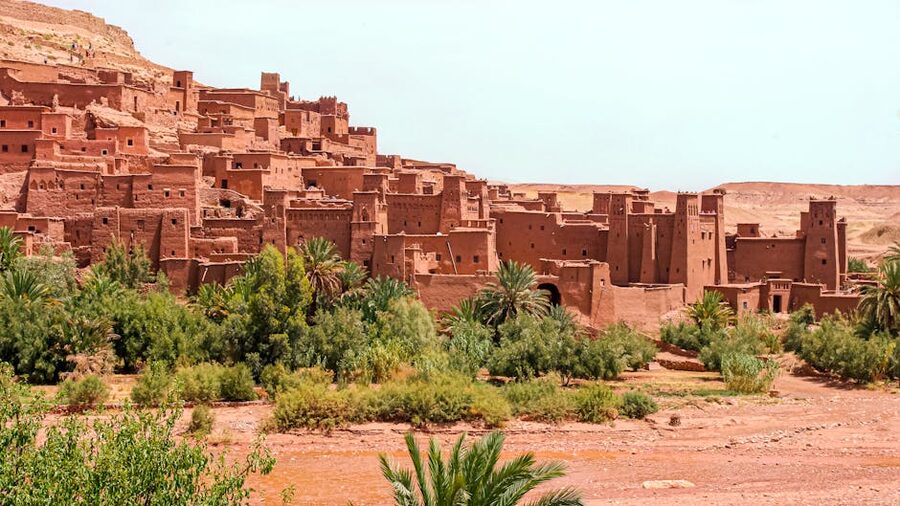
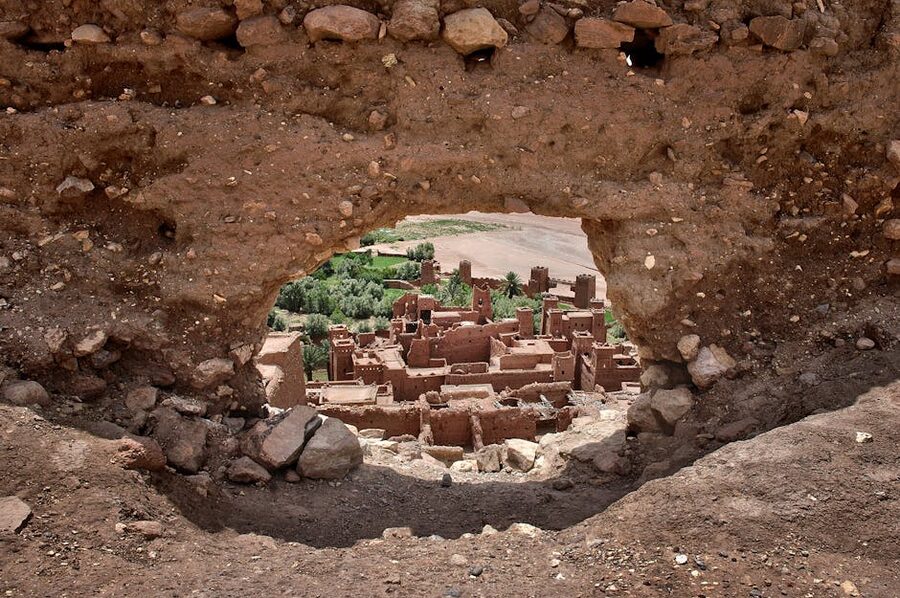
The first time I saw Aït Benhaddou, I’d been in a van for 3.5 hours crossing the High Atlas. The kasbah emerged around a bend — a fortified ochre pile rising out of a riverbank, palms at its base, looking exactly like every Saharan film you’ve ever seen. That’s because several of those films were shot here.
The Ouarzazate and Aït Benhaddou day trip from Marrakech crosses the Tizi n’Tichka pass (2,260 metres), descends through the Ounila Valley, and reaches Morocco’s most famous kasbah — a 1,000-year-old fortified village that’s now both a UNESCO site and a working film set.
.jpg)
Tour prices range from $116 for a private one-day tour up to $150 for a 2-day Fez-Marrakech route that includes Aït Benhaddou. The most popular option is the $129 full-day Aït Benhaddou + Ouarzazate + Atlas Studios with lunch.
The drive is long — 3.5-4 hours each way from Marrakech. Day trips are 10-12 hours total. If you’re considering a 2-day alternative to break up the drive, the Fez-Marrakech version works well because it doesn’t double back.
.jpg)
In a Hurry? Our Top Picks
Full-day tour with lunch. Covers all three key stops — the best single-day option.
Private tour including the Telouet Kasbah detour. 10 five-star reviews.
Two-day version for travellers going Fez to Marrakech. Includes Ait Benhaddou plus overnight.
- The Route — Over the Atlas, Into the Desert
- The Kasbah — Walking Through 1,000 Years
- The Cinema Connection
- Ouarzazate — “The Hollywood of Morocco”
- Telouet — The Lesser-Known Kasbah
- Our Recommended Tours
- 1. Aït Benhaddou + Ouarzazate + Atlas Studios with Lunch — 9
- 2. Private Tour AÏT BENHADDOU + Telouet — 6
- 3. Fez-Marrakech 2-Day via Ait Benhaddou — 0
- When to Go
- Practical Tips
- Ouarzazate vs Other Marrakech Day Trips
- Getting There
- Is the Ouarzazate Day Trip Worth 6-0?
- Building Ouarzazate Into Your Morocco Trip
The Route — Over the Atlas, Into the Desert
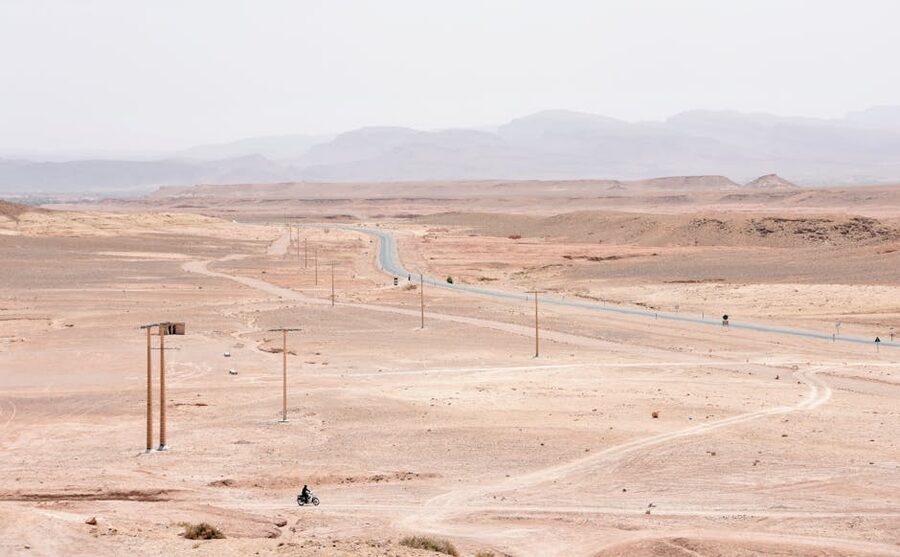
The drive from Marrakech to Ouarzazate is one of Morocco’s classic routes. You cross the High Atlas at the Tizi n’Tichka pass — 2,260 metres, switchbacks for 25 km, dramatic shifts in terrain and climate.
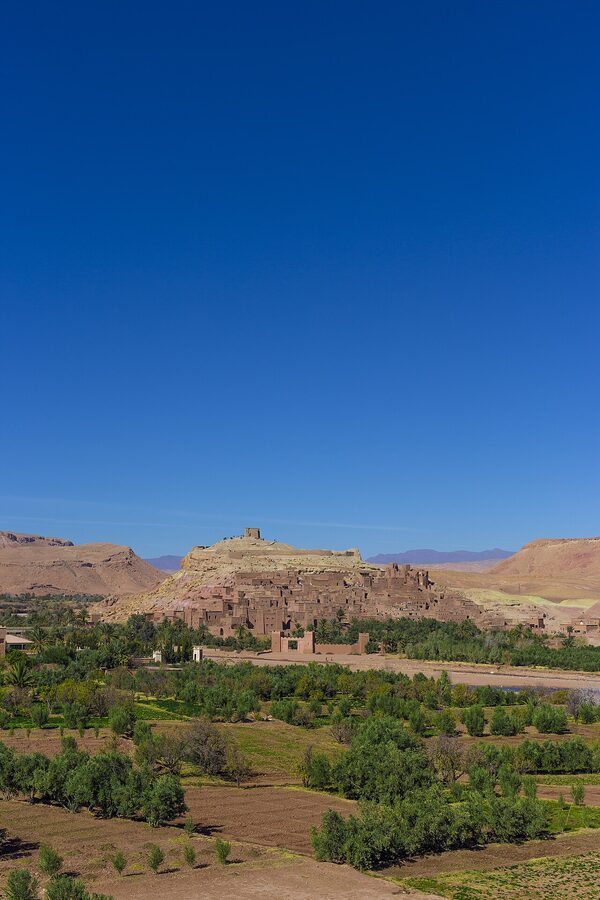

On the north side (Marrakech side), the landscape is green — pine forests, olive groves, snow-capped peaks. On the south side, it shifts within 30 km to arid pre-desert — red soil, sparse vegetation, palm oases in the valleys.

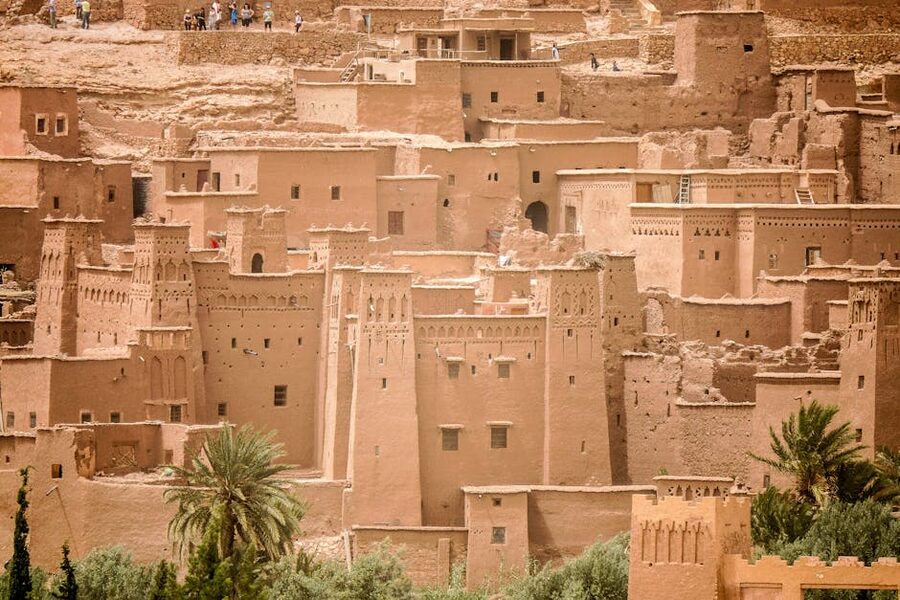
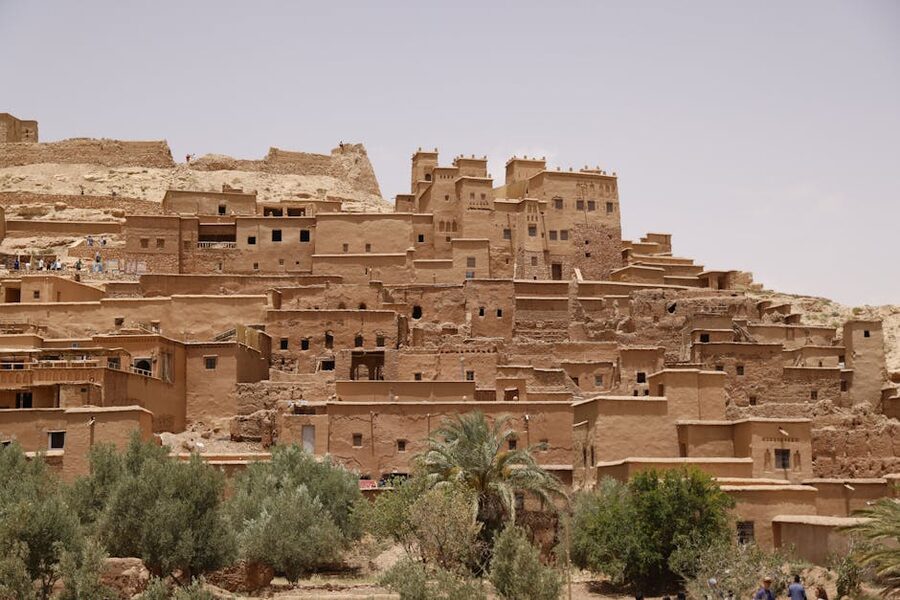
The Kasbah — Walking Through 1,000 Years
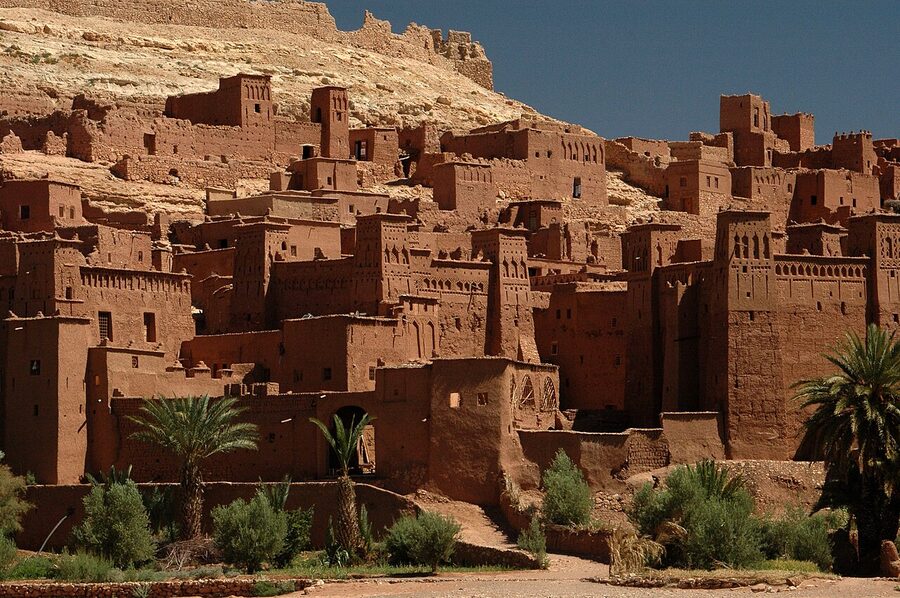
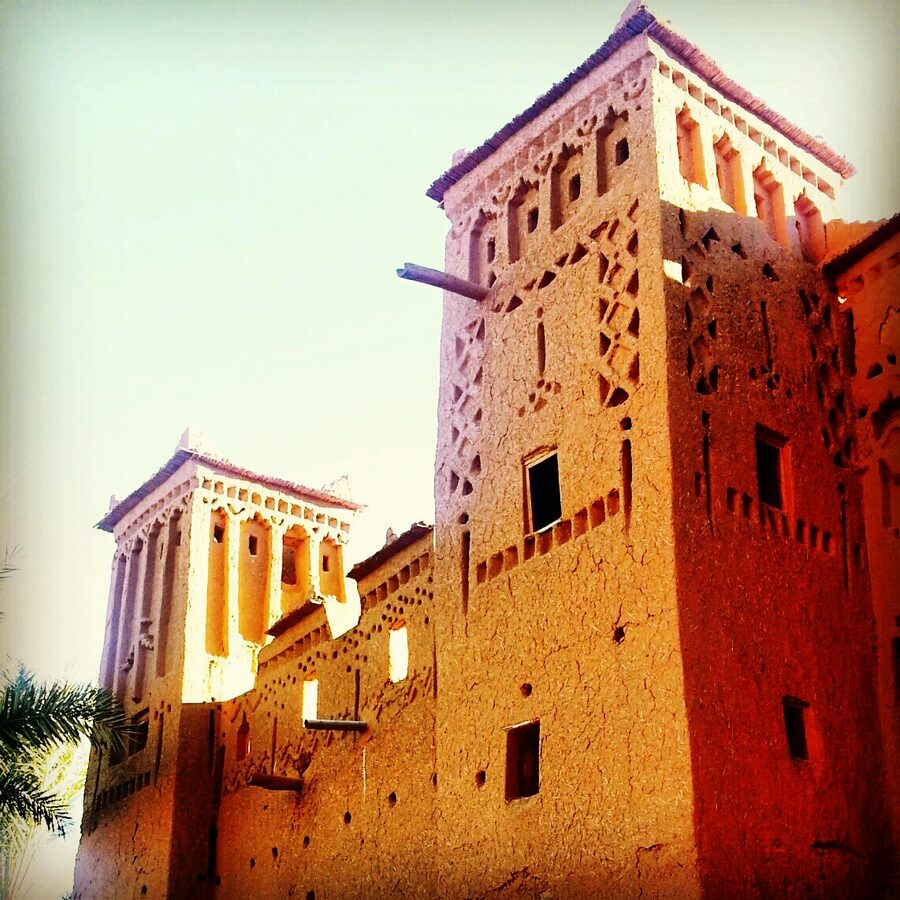
Aït Benhaddou has been inhabited since at least the 11th century. It was a trading post on the trans-Saharan caravan route between Marrakech and Timbuktu — salt, gold, and slaves passed through for about 500 years.
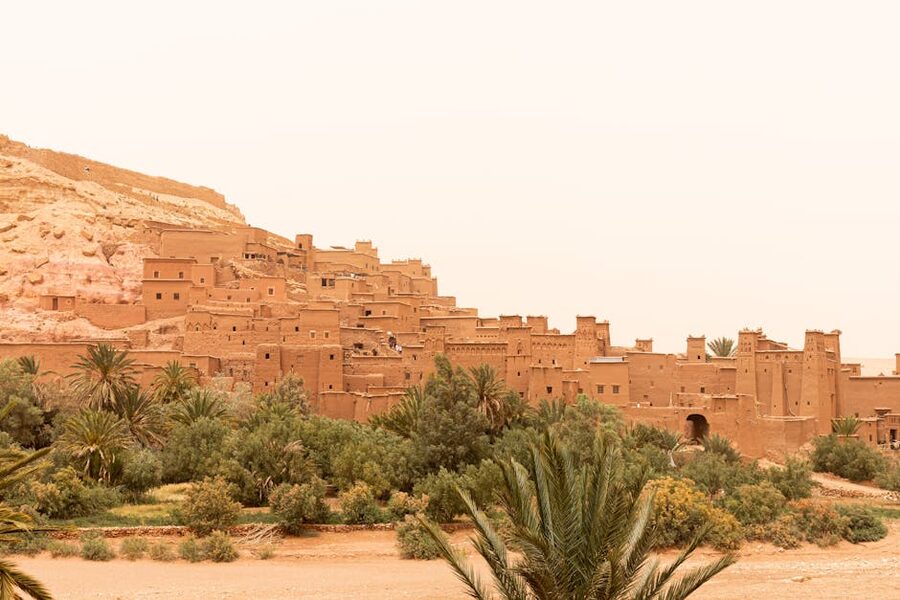
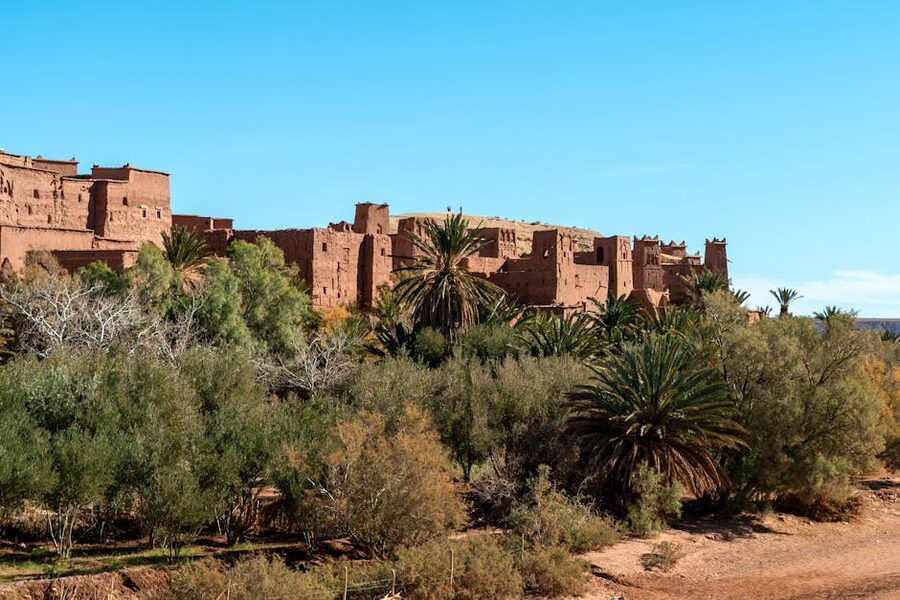
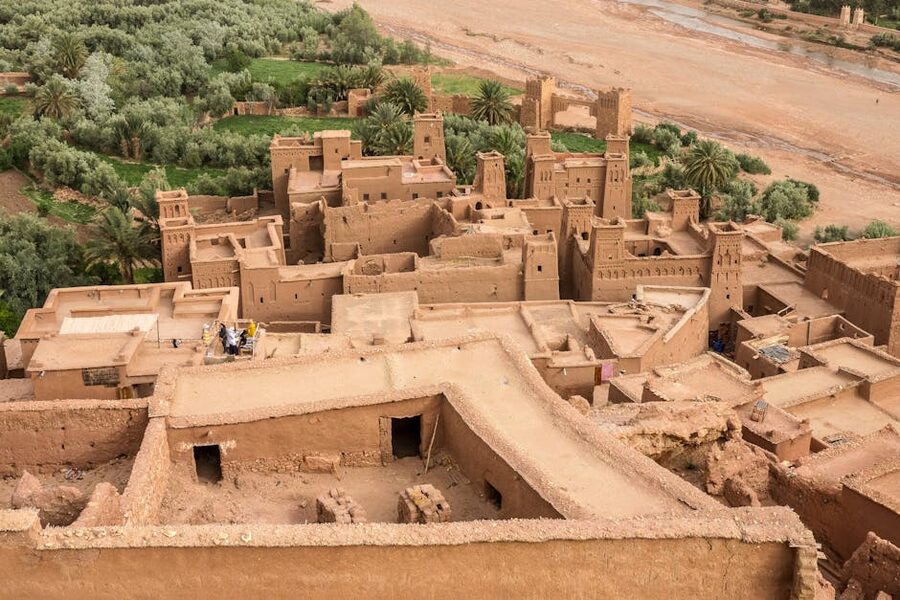
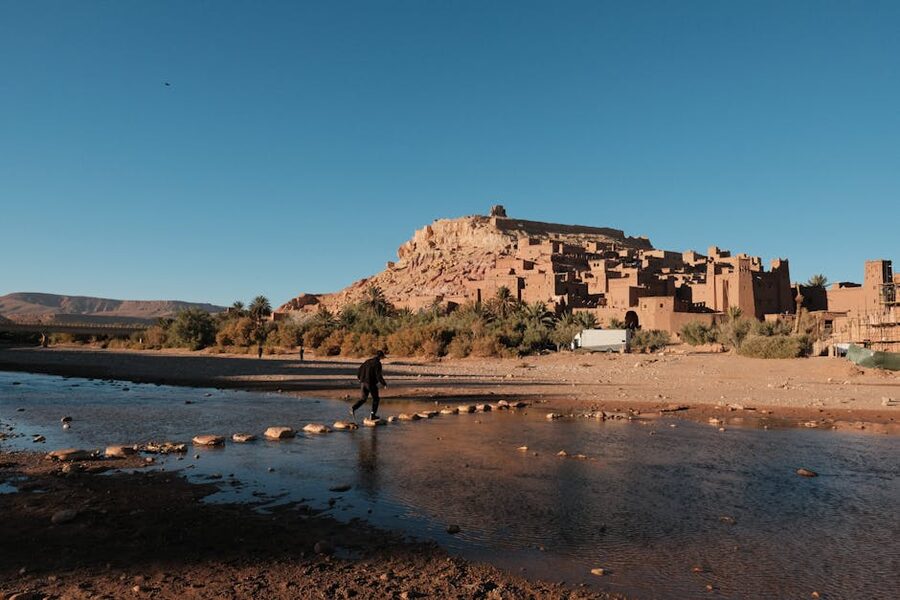
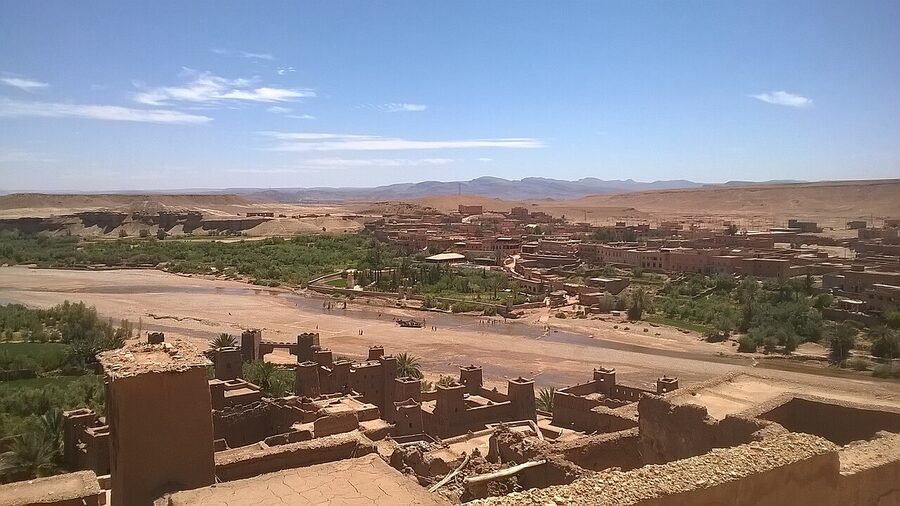
Walking up through the village takes 30-45 minutes depending on pace. The path is steep in places, uneven underfoot, and unshaded. The view from the top — across the wadi toward the Atlas — is the payoff.


The Cinema Connection
Aït Benhaddou has been a filming location since the 1960s. Over 30 major productions shot here — Lawrence of Arabia (1962), Jesus of Nazareth (1977), The Living Daylights (1987), Kingdom of Heaven (2005), Gladiator (2000), Babel (2006), The Mummy (1999), Game of Thrones (multiple seasons as Yunkai and Pentos).
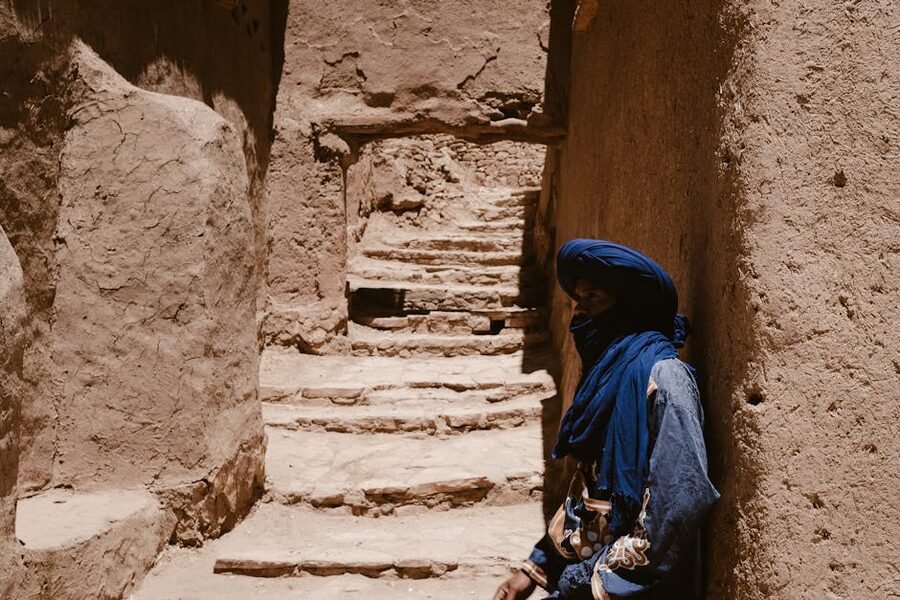
Film productions have left physical traces. Some set additions have been preserved; some have been removed over decades. The Moroccan government now requires productions to restore the site after filming.
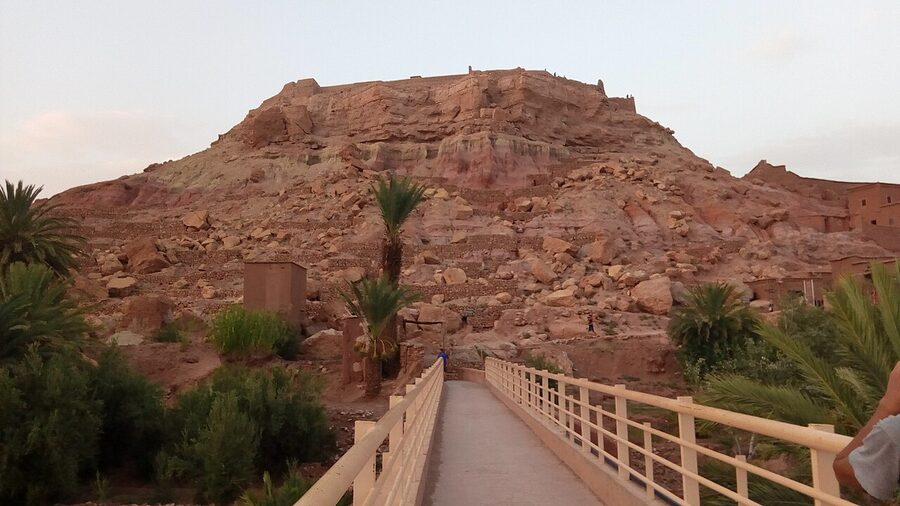

Ouarzazate — “The Hollywood of Morocco”
Ouarzazate is the regional capital, about 30 km east of Aït Benhaddou. It’s nicknamed “the Hollywood of Morocco” because of the film studios established here.
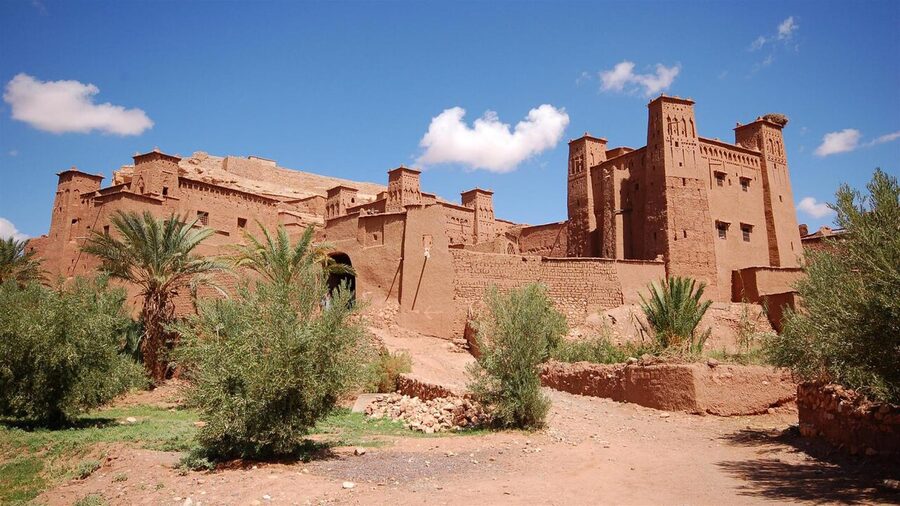

Two major studios operate here: Atlas Film Studios (the largest film production facility in the world by area) and CLA Studios. Both have visitor tours showing film sets from various productions.
The Atlas Studios tour costs about 80 MAD separately, 150 MAD combined with a film museum visit. Most day tours from Marrakech include this as part of the package.
Telouet — The Lesser-Known Kasbah
Telouet is 40 km north of Aït Benhaddou, off the main Marrakech-Ouarzazate road. It’s less visited but arguably more dramatic — a former Glaoui family stronghold that dominated southern Morocco until independence in 1956.
The private Ouarzazate tour from Marrakech (the $116 option) includes Telouet; the standard $129 day trip does not. If you want the Glaoui palace experience, book the private tour specifically.
Our Recommended Tours
1. Aït Benhaddou + Ouarzazate + Atlas Studios with Lunch — $129
The classic Ouarzazate day trip. Van from Marrakech at 7am, Atlas pass in mid-morning, Aït Benhaddou at midday, lunch at a local restaurant (tagine or couscous), Atlas Studios visit in the afternoon, return to Marrakech by 8-9pm.
At $129, the best comprehensive option. Our full review of this combo tour covers the exact itinerary, the lunch venue, and whether Atlas Studios is worth the visit.
2. Private Tour AÏT BENHADDOU + Telouet — $116
Private tour with the Telouet detour. Skip Atlas Studios (which is a movie-set tourist attraction rather than a historical site), trade for the 40-minute side trip to the Glaoui palace at Telouet.
Cheaper than the standard tour because it cuts the studio visit. Better if you’re history-focused rather than film-focused. Our review of this private tour explains what the Telouet stop actually involves.
3. Fez-Marrakech 2-Day via Ait Benhaddou — $150
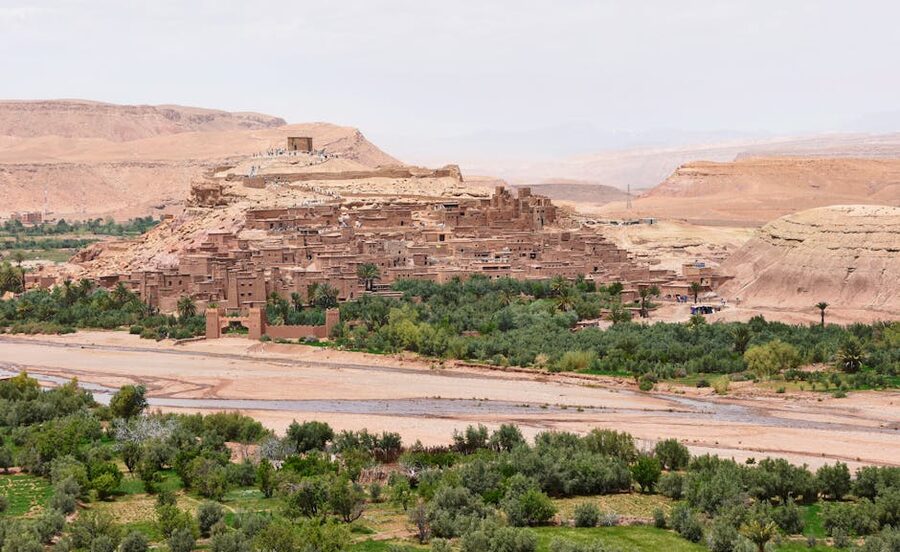
The 2-day version. Instead of a Marrakech return, the tour ends in Marrakech (or Fez depending on direction). Day 1 drives from Fez through the Middle Atlas, overnight in Ouarzazate. Day 2 visits Aït Benhaddou, crosses the Atlas, arrives in Marrakech.
Ideal for travellers moving between Fez and Marrakech anyway — turns a logistics drive into a proper tour. Our review of this 2-day route compares it to flying between cities.
When to Go
October to April (peak season): Best weather. Cool days, cold nights. Snow on the Atlas December-March adds dramatic photos. This is the main visiting window.
May-September: Hot to brutally hot. July-August temperatures in Aït Benhaddou can hit 45°C. Tours still run but uncomfortable. Plan early start to beat the heat at the kasbah.
Practical Tips
Long day — 10+ hours. 7am pickup, 8-9pm return. Eat breakfast and pack snacks. The van stops for bathroom breaks every 2 hours.
Closed-toe shoes for the climb. The path up to Aït Benhaddou is steep and uneven. Hiking shoes or trainers; no sandals.
Sun protection. The kasbah has almost no shade. Hat, sunglasses, sunscreen mandatory regardless of season.
Water. Carry 1+ litre. Cafés exist on the way up but prices are tourist-level and the climb dehydrates fast.
Cash for crafts. Aït Benhaddou has craft shops inside the ksar — traditional rugs, leatherwork, paintings. Bargaining expected; prices start high. 200-500 MAD for small quality pieces.
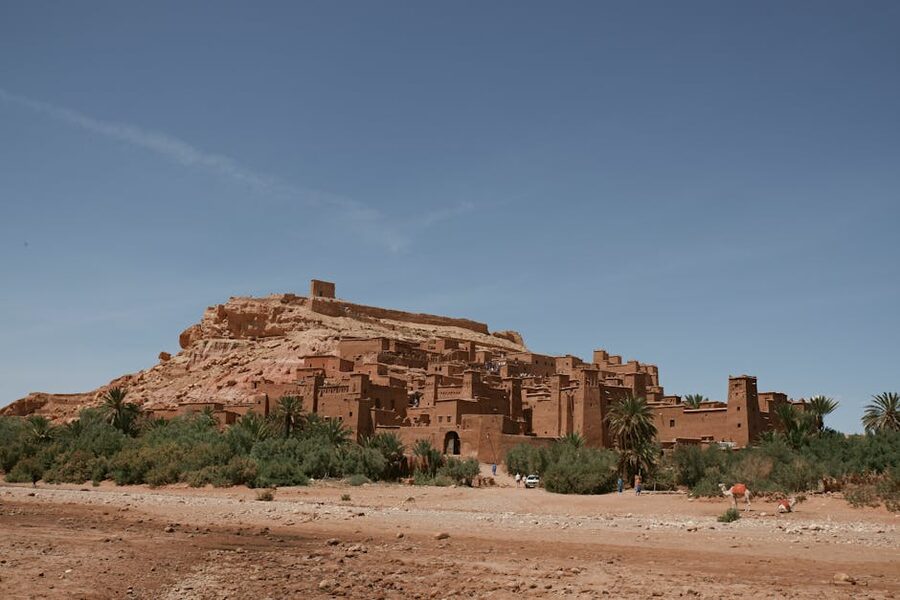
Photo etiquette. Residents in traditional dress sometimes charge for photos (20-50 MAD per image). Ask first. Landscape photos are free.
Consider overnighting. If you can take 2 days rather than one, overnighting in Ouarzazate lets you see Aït Benhaddou at sunrise (incredible) and sunset (equally incredible). Day tours only catch midday light, which is the worst.
Ouarzazate vs Other Marrakech Day Trips
vs Sahara 3-Day Tour: The 3-day Sahara tour covers Aït Benhaddou as part of day 1. If you’re doing the full Sahara, the separate Ouarzazate day trip is redundant.
vs Atlas Mountains Day Hike: Atlas hike is physical and pastoral — villages, valleys, shorter drive. Ouarzazate is cinematic and historical — kasbahs, long drive. Complementary rather than competing.
vs Ouzoud Waterfalls: Ouzoud is northern Atlas waterfall territory; Ouarzazate is southern Atlas desert territory. Different directions and landscapes from Marrakech.
vs Agafay Desert: Agafay is half-day stone desert near Marrakech. Ouarzazate is full-day historical site far from Marrakech. No overlap; do both on a longer trip.
vs Essaouira: Essaouira is coastal and cultural; Ouarzazate is inland and historical. Opposite directions from Marrakech.
Getting There
Location: Aït Benhaddou is 190 km south-east of Marrakech. Ouarzazate is 220 km. Both via the N9 over the Tizi n’Tichka pass.
Transport: All day tours include van transport with pickup and drop-off. The road is good but winding; motion-sickness-prone travellers should take a travel-sickness pill before departure.
Self-drive: Possible but long. 4-hour drive each way plus the site time. Only worthwhile if you have specific itinerary needs that tours can’t meet.
Is the Ouarzazate Day Trip Worth $116-$150?
Yes for most visitors. Aït Benhaddou is one of Morocco’s most photogenic sites and the drive itself is part of the experience. At $129 for the standard tour, you’re getting one of Morocco’s great landscape drives plus a UNESCO site for about $25 per hour of activity.
Skip only if you’re already planning the 3-day Sahara tour — that covers the same ground as day 1, so doubling up is wasteful.
Building Ouarzazate Into Your Morocco Trip
If you’re only visiting Marrakech (not doing the multi-day Sahara trip), the Ouarzazate day trip is how you get a taste of southern Morocco without committing multiple days.
Good pairing: Ouarzazate on day 3-4 of your Marrakech stay (after acclimatization), hammam the evening after to recover from the long drive, then gentler activities like Majorelle and Medina walking on subsequent days.
If you’re combining with the Fez route, the 2-day Fez-Marrakech version covers it efficiently — you see Aït Benhaddou while genuinely moving between the two major northern/southern Moroccan cities. For the complete Morocco highlights tour, pair Ouarzazate day trip with Atlas hike, Essaouira coast, and an Agafay sunset for four contrasting Moroccan landscapes in under a week.