
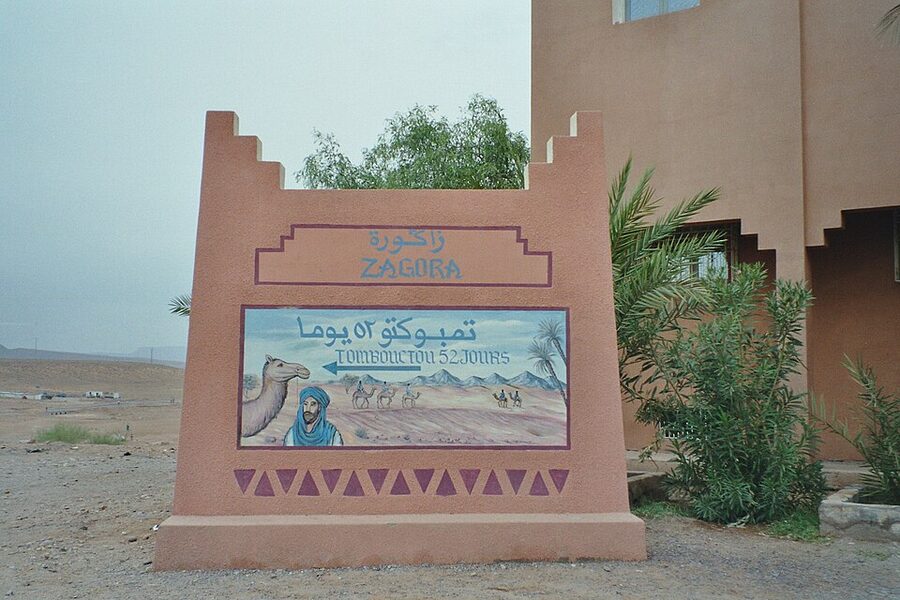
Zagora isn’t the real Sahara. The locals will tell you so before you’ve finished breakfast — there’s a famous sign outside town reading “Timbuktu, 52 days” that gently mocks how far away you still are from the proper dunes. But for 48 hours, Zagora does an excellent impression: camel trains at sunset, an 11th-century kasbah on the route in, Berber drummers around a campfire, and the moment when silence falls on the desert at 10pm and you realise how noisy your normal life has been.


The 2-day Zagora tour is the shorter, cheaper, and more accessible alternative to the 3-day Merzouga trip. It’s 8 hours driving each way with scenic stops, one overnight in a Berber camp, and a full circle back to Marrakech on day two. The dunes are smaller. The drive is shorter. The price is lower. For most travellers on a week in Morocco, it’s the right call.

This guide walks through what you’ll actually see (the stops, the drive, the camp), which of the bookable tours are worth the money, how Zagora compares to Merzouga, and how to survive 16 hours of mountain driving across two days without wanting to quit on day two. I’ve done this trip and I’ll tell you honestly where it drags and where it shines.
In a Hurry? Our Top Picks
The standard 2-day tour, shared minivan, Berber camp. 1,900+ reviews, the default choice.
Only $5 more — upgraded tent with private bathroom, better food, 4.9 rating.
Higher-end option with larger group meals and fuller camp programme.
- What You’re Actually Paying For
- The Best Tours and Tickets
- 1. From Marrakech: 2-Day Sahara Tour to Zagora & Ait Ben Haddou —
- 2. From Marrakech: 2-Days Luxurious Experience to Zagora Desert —
- 3. From Marrakech: Zagora 2-Day Desert Safari with Food & Camp — 3
- Day One — The Drive South
- Aït Ben Haddou — The UNESCO Kasbah Stop
- Ouarzazate — “The Door of the Desert”
- The Draa Valley — The Long Corridor of Palms
- The Camel Trek to Camp
- The Berber Desert Camp
- Sunrise and the Drive Home
- Zagora vs Merzouga — Which to Pick
- Best Time to Go
- What to Pack
- Practical Details at a Glance
- Other Marrakech and Morocco Guides
What You’re Actually Paying For

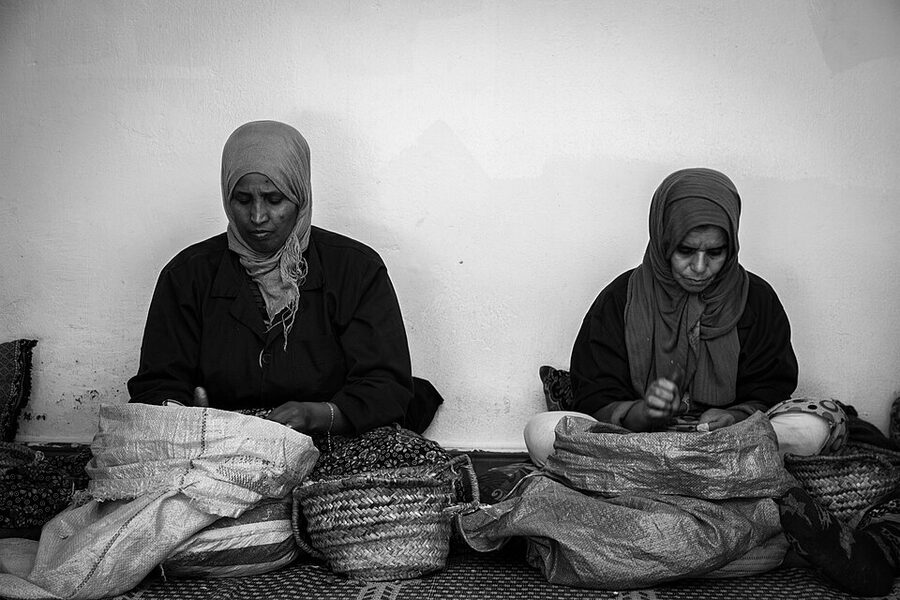
The standard 2-day package is $84 on GetYourGuide, which gets you: shared air-conditioned minivan with a driver-guide, all transport, a photo stop at a Berber argan oil cooperative, an hour at Aït Ben Haddou, a lunch stop (food not included), a photo stop in Ouarzazate, the drive down the Draa Valley, the camel trek from the road to the desert camp, dinner at the camp, the overnight stay in a shared tent, breakfast, the camel trek back in the morning, and the full drive home.
What’s included in every tour: transport both ways, all entry fees for kasbahs and cooperatives, camel trek, accommodation at the camp, dinner and breakfast at the camp, a driver who speaks enough English to point things out.
What’s not included: lunches on both days (15-40 dirhams at the roadside restaurants), drinks at the camp (alcohol is sometimes unavailable — check before you book if it matters to you), tips for the driver (150-200 dirhams is normal at the end of day two), and any extra activities like quad biking or sandboarding at the camp.
Upgrades worth paying for: the luxury tent option. For $5-40 more depending on tour, you get a private bathroom inside your tent, a proper bed rather than a camp mat, and usually better food. On a two-day trip where you’re already tired from driving, the luxury upgrade is the difference between sleeping well and not. Pay it.

The Best Tours and Tickets
1. From Marrakech: 2-Day Sahara Tour to Zagora & Ait Ben Haddou — $84
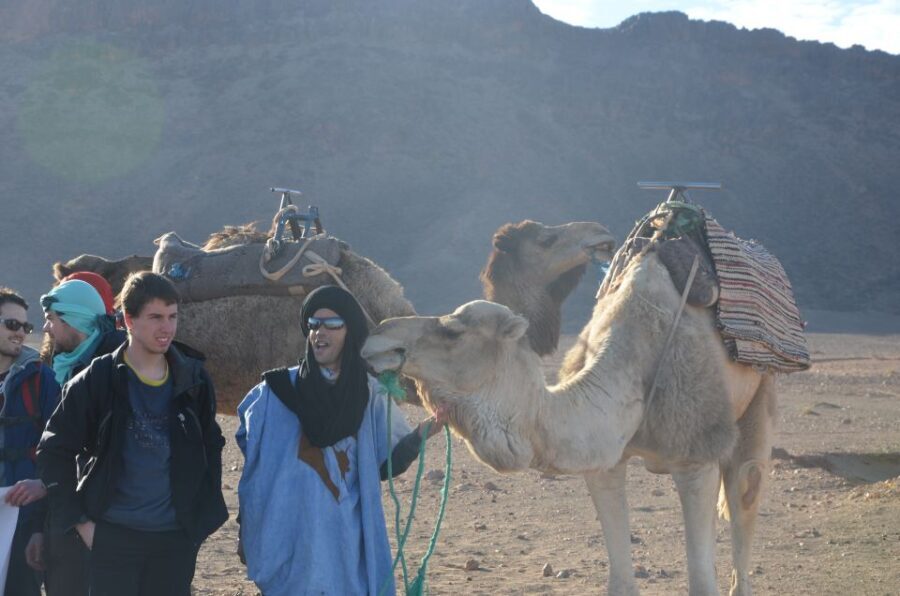
The most-booked 2-day Zagora trip on the market. Shared minivan, full-itinerary stops, standard Berber camp. It’s the default choice and the one I’d send a friend on who is asking for a recommendation. Our full review walks through the day-by-day in detail. Book early for weekend dates from October to April — it sells out.
2. From Marrakech: 2-Days Luxurious Experience to Zagora Desert — $89
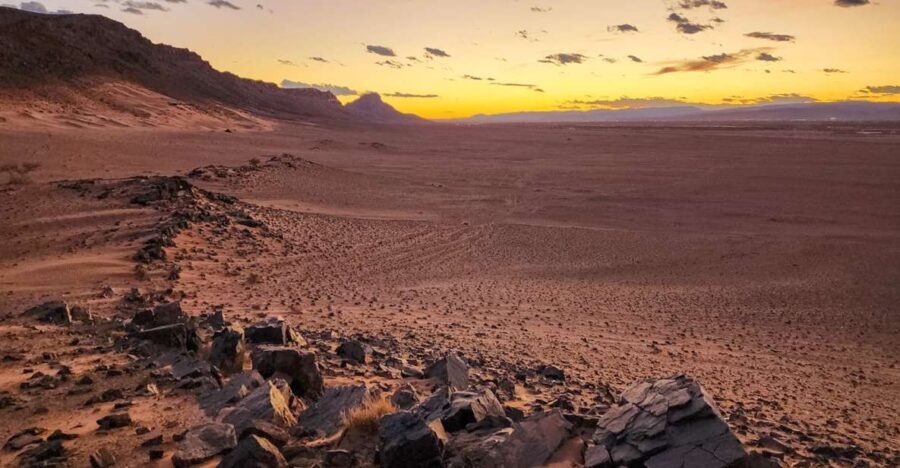
The upgrade you should take. Same itinerary, same drive, same kasbah stops — but you sleep in a proper luxury tent with a real bed and a private bathroom. Food is also noticeably better. Our review explains the tent options; the 4.9 rating on 1,500+ reviews is not a fluke.
3. From Marrakech: Zagora 2-Day Desert Safari with Food & Camp — $113
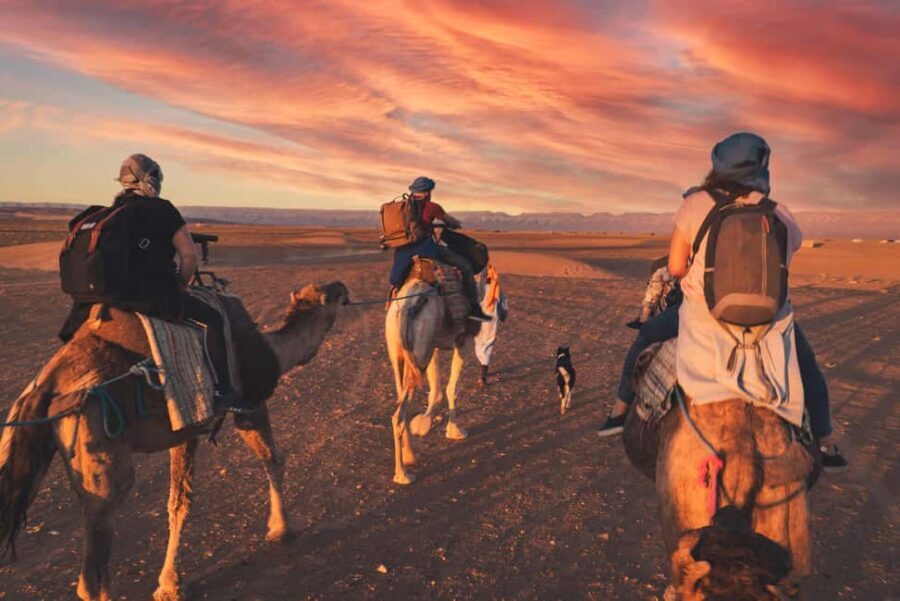
The full-production version of the trip. Smaller group, better food at the camp, a more engaged camp programme with live Berber music and drumming around the fire. Some dates include a 4×4 ride at the camp rather than just camels. Our review covers what the $113 buys you versus the $84 option.
Day One — The Drive South
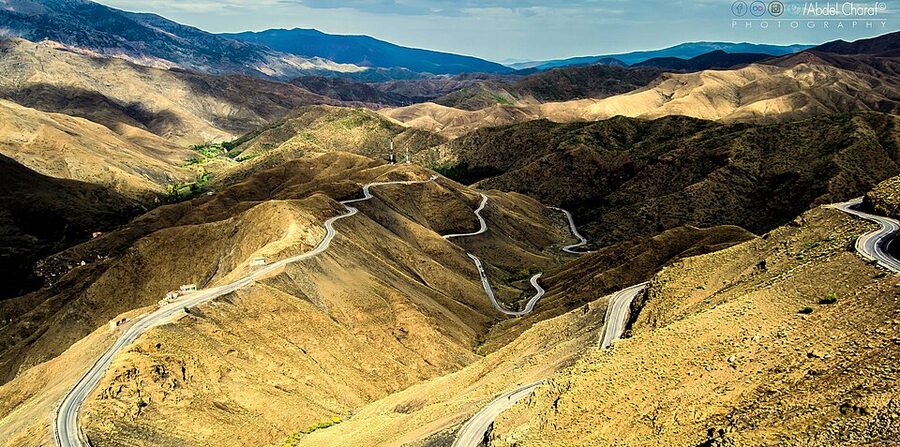

Pick-up is 7am from your hotel. Expect a bit of a shuffle — the same van will collect 8-12 other people from different riads before leaving the city. It’s normal to not actually leave Marrakech until 8am.
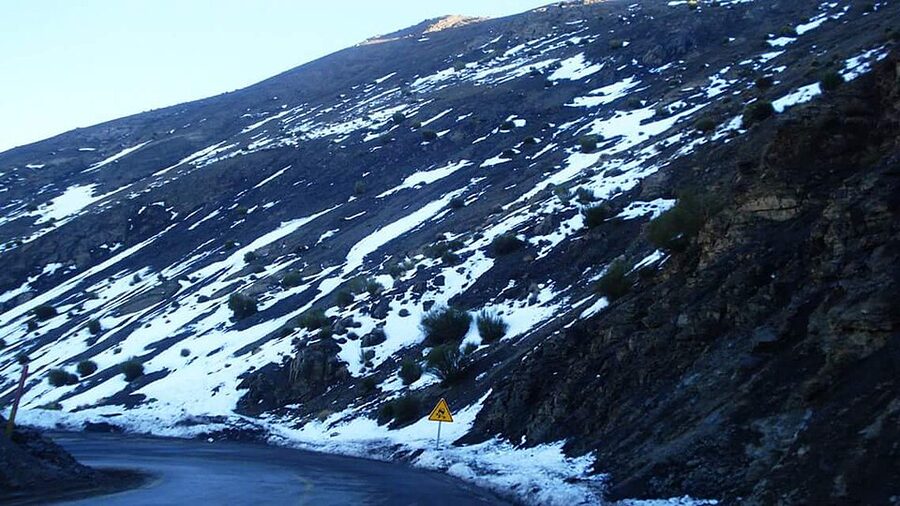
The first three hours are the Tizi-n-Tichka Pass. 2,260 metres at the summit, switchback after switchback, and genuinely stunning scenery. The van will stop once or twice for photos and tea at a roadside viewpoint. Cold mornings on the pass can be proper cold — bring a fleece even in July, because the van’s air con plus the altitude will make you shiver.
Motion sickness is real here. If you know you’re prone, take a tablet at breakfast. The road snakes for hours and the van driver will not be slow on the corners. Some travellers ask for the front seat — rotate if you’re in a group, first come first served in general.
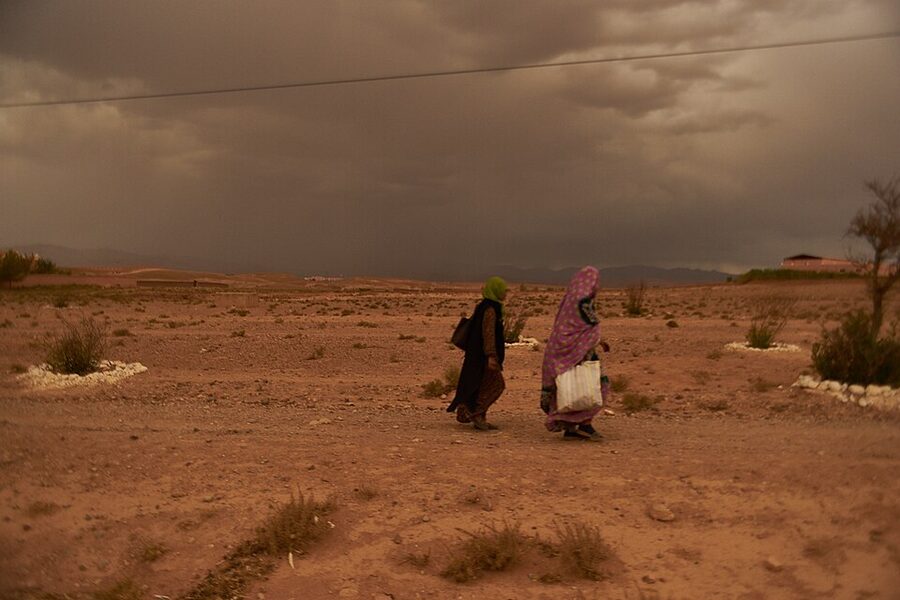
Coming down the south side of the pass, the landscape shifts dramatically. The green of the north face gives way to rust-coloured rock, scattered argan trees, and the first adobe villages. By the time you reach the town of Taddert, you’re in a different Morocco from the one you left at Jemaa el-Fnaa.
Aït Ben Haddou — The UNESCO Kasbah Stop

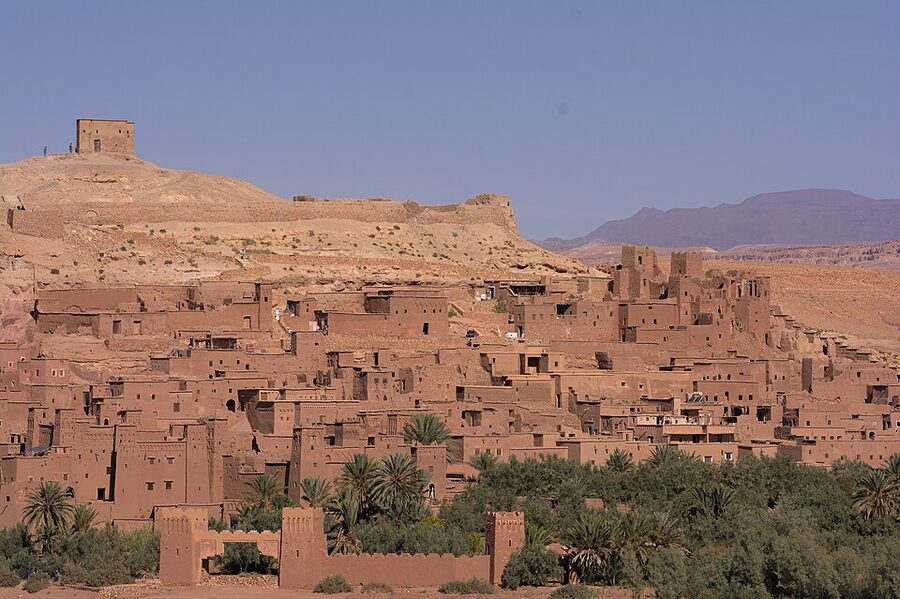
This is the cultural high point of the outbound drive and you get roughly an hour. The guide will walk you across the modern footbridge over the Ounila River, up the main path through the ksar, and to a viewpoint near the top. Whether you get a proper guided explanation or just a “meet back here in an hour” depends heavily on the driver.
What to do with your hour: walk all the way to the top. Most people turn back after the first two kasbahs — it’s hot, it’s uphill, and the path is dusty. But the summit has the widest view and you’ll get the photo that every other tourist is missing. Take water.
The ksar has been used as a filming location for dozens of productions — most famously Gladiator, The Mummy, Game of Thrones, Jewel of the Nile, and Lawrence of Arabia. Guides love pointing out specific spots from specific films, and it’s actually quite fun once you’re in the mood for it.

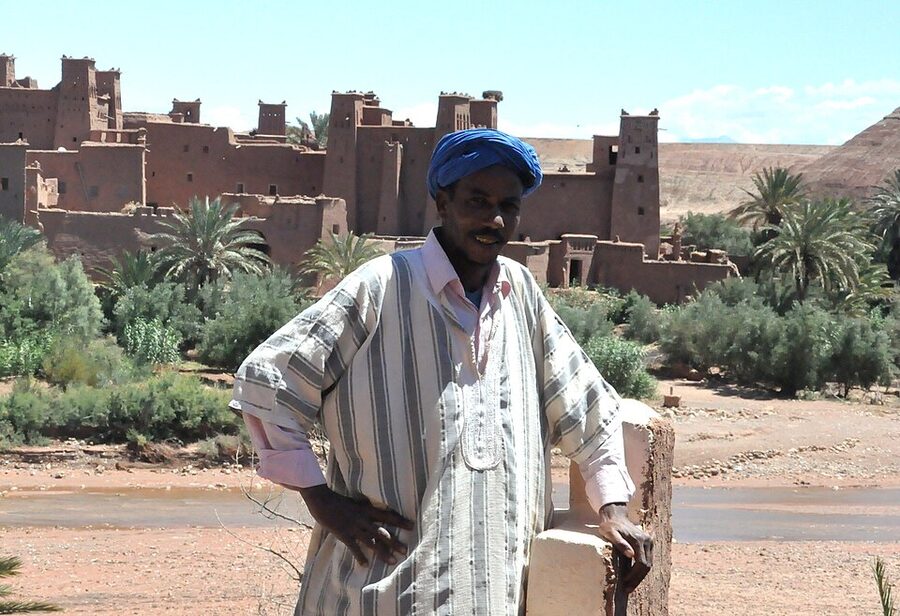
Bring small notes. Children at the entrance will hop on your shoulder for a photo and then ask for 10-20 dirhams. Shop-stall owners inside the ksar will do the same — one will offer you “free” mint tea and then sell you a carpet you didn’t come for. It’s friendly, it’s touristy, and a few dirhams here and there makes everyone’s day smoother.

Ouarzazate — “The Door of the Desert”
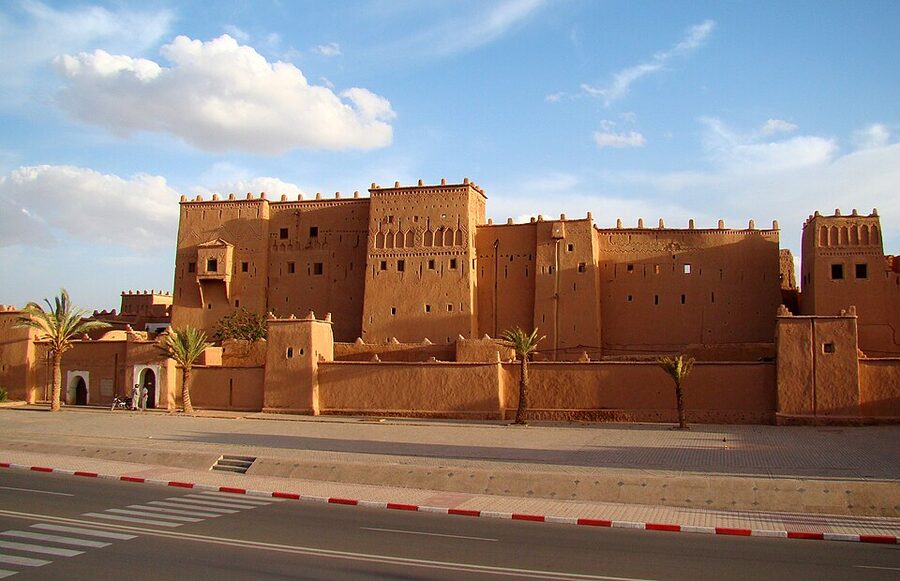

Ouarzazate is the regional capital on this drive, and it’s mostly a brief photo stop on the 2-day trip. The town itself is big (around 80,000 people), modern, and home to the Atlas Film Studios where much of the Hollywood Morocco work is filmed. Some tours drive past the studios without stopping; others will pause for 10 minutes. It’s not the main event.
If you want to spend more time here, book a separate Ouarzazate day trip or the 3-day Merzouga tour, which usually spends a night in Ouarzazate. Two-day tours are genuinely just using it as a lunch-and-toilet stop.
Lunch is usually in Ouarzazate. The driver will take you to a specific restaurant on a rooftop — food is fine, portions are generous, and the prices are reasonable (50-80 dirhams for a tagine). You’re not required to eat there; there are cheaper places down the street if you’re watching budget. Card payment is accepted at the tour-favoured restaurants.
The Draa Valley — The Long Corridor of Palms
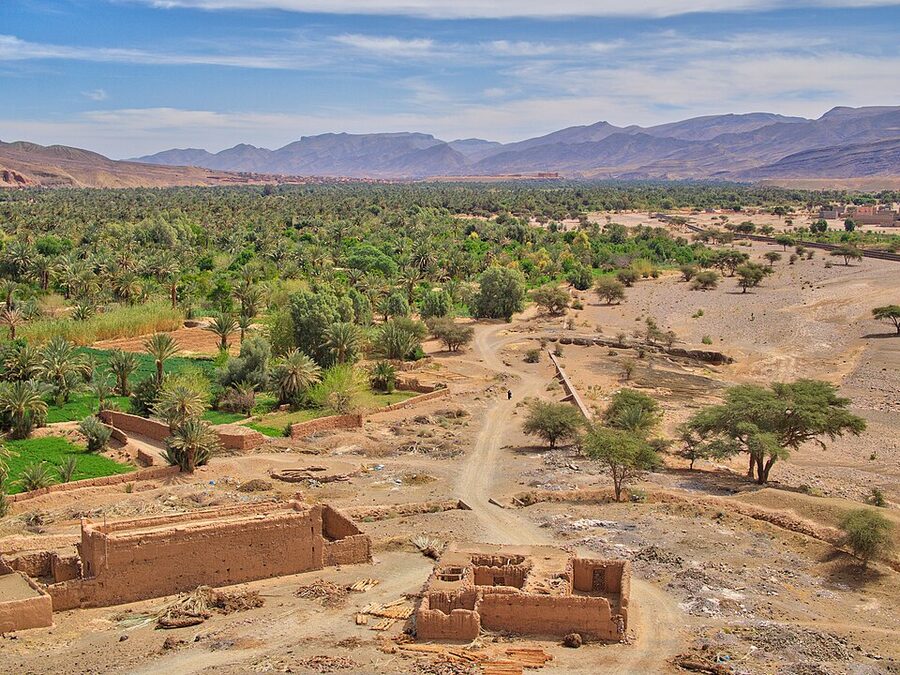

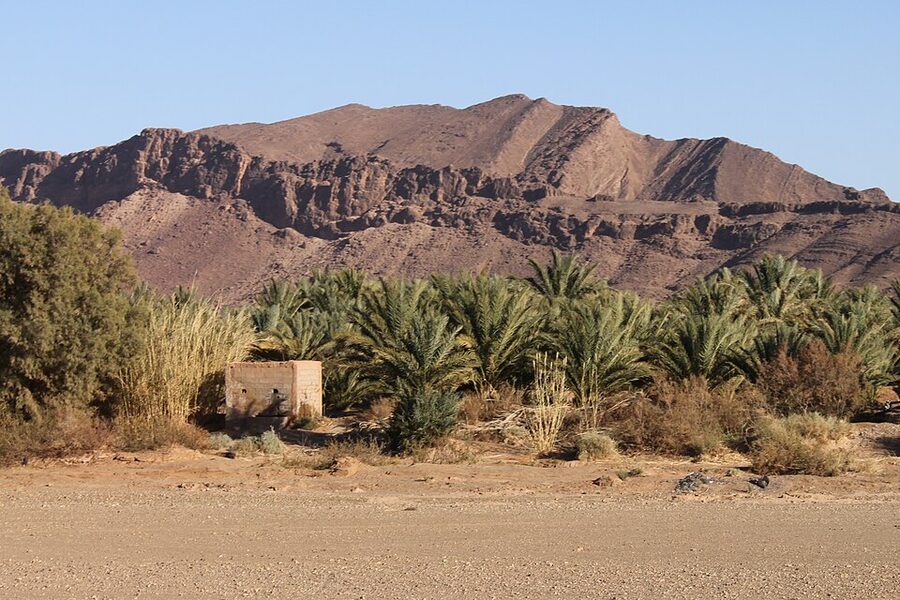
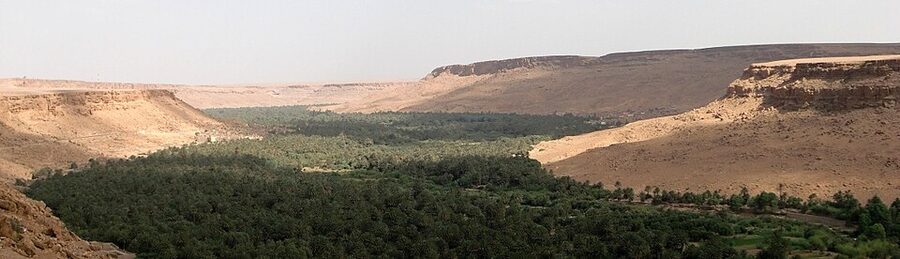
From Ouarzazate the road drops south through the Draa Valley — a 200-kilometre corridor of date palms that runs most of the way to Zagora. This is the most visually striking part of the drive. Red-brown mountains on both sides, a narrow ribbon of green along the river, and adobe villages tucked against every bend.
The driver will typically stop at Agdz (pronounced Ag-dez) for 15 minutes for a photo at the main viewpoint over the palms. It’s the most photographed stretch of the Draa. If you’re lucky with light you’ll get a shot; if you’re not, it’s still worth stretching your legs.
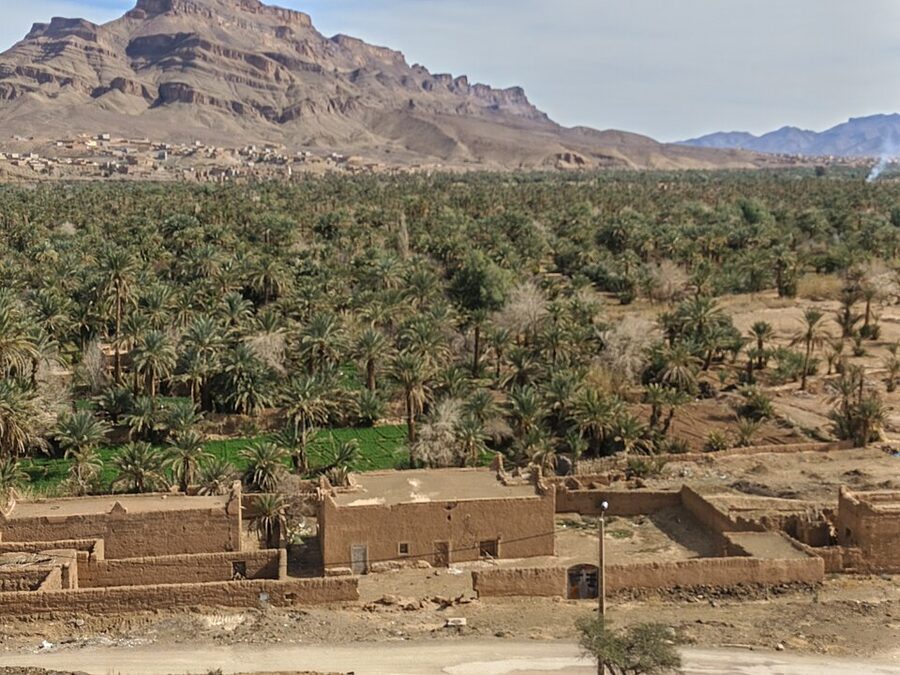

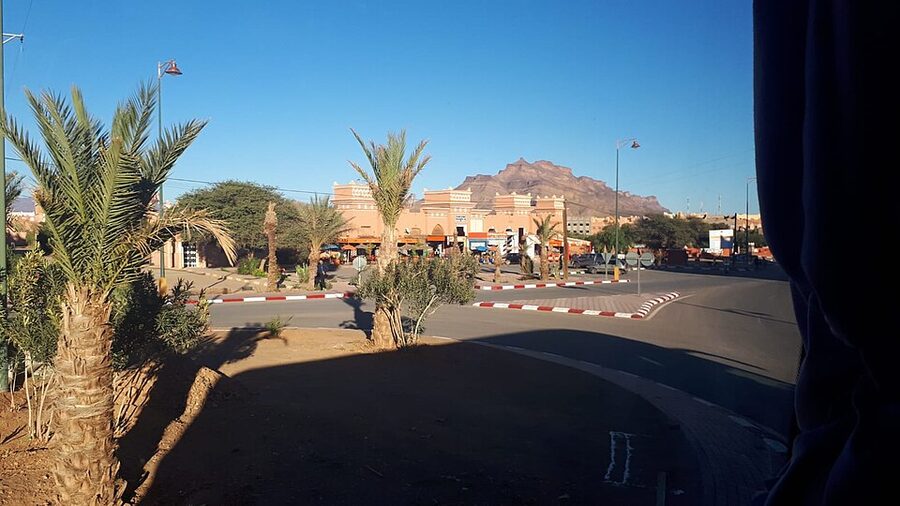

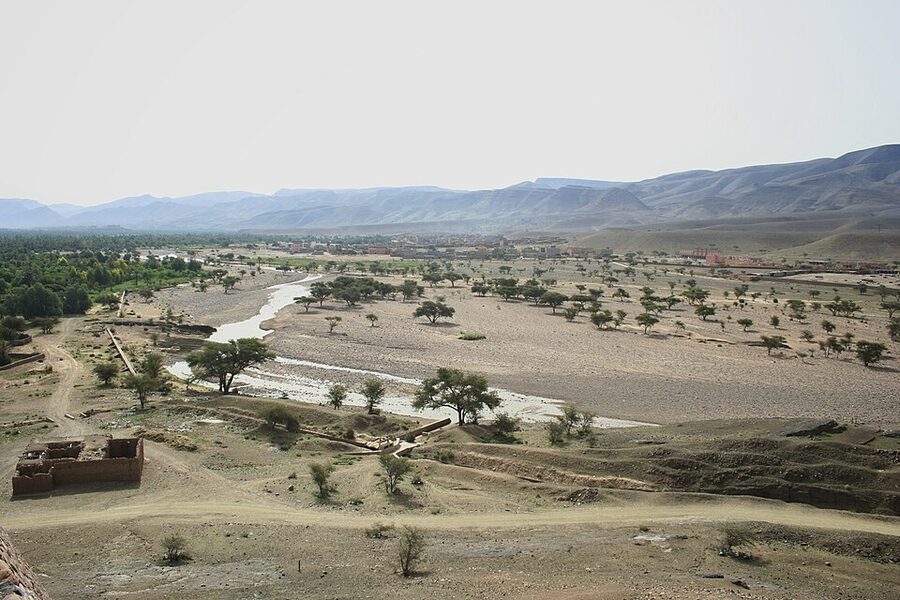

By the time you arrive in Zagora town itself you’ve been in the van for roughly 7-8 hours with stops. Most tours pause for a final toilet break and bottle-water refill in town, then the driver takes you to the edge of the dunes where the camels are waiting.

The Camel Trek to Camp
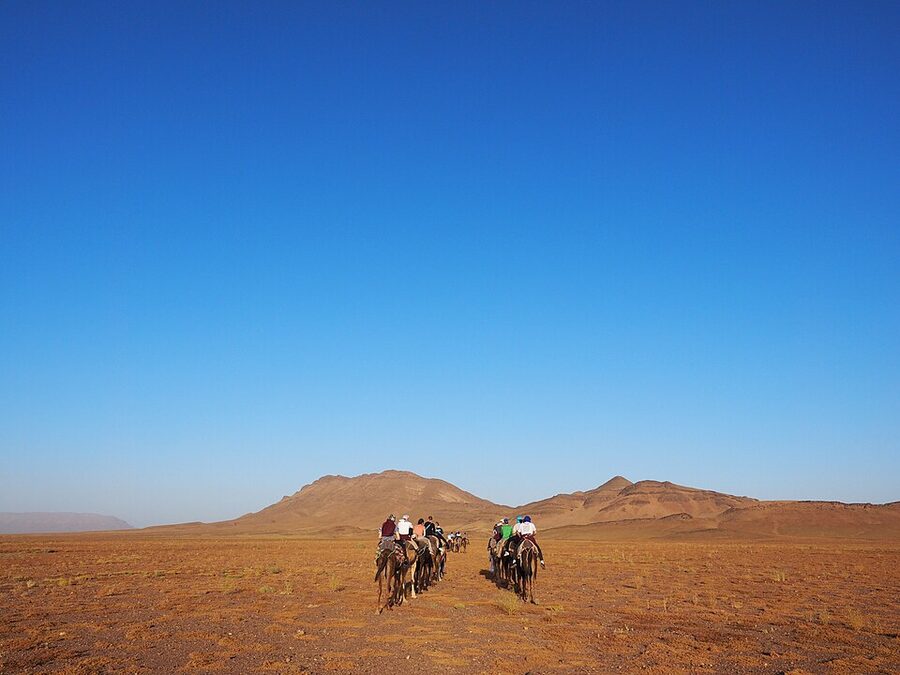

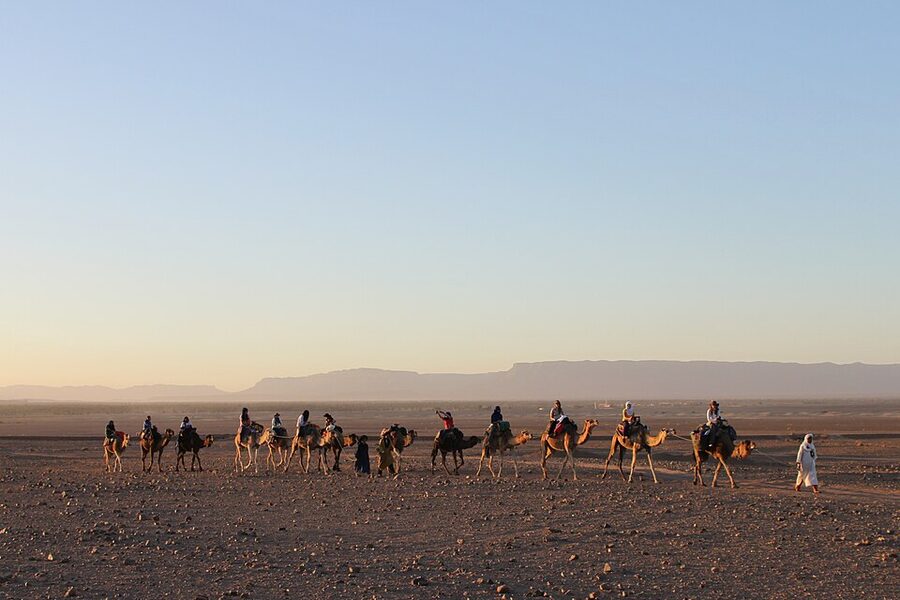
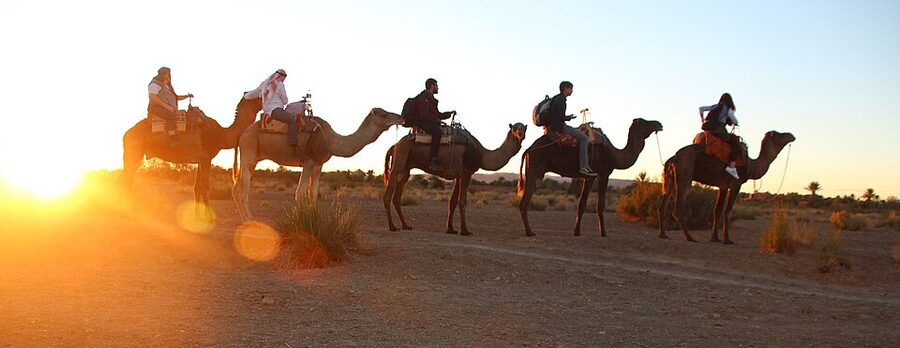
The camel trek from the end of the road to your camp runs about an hour in each direction. It’s timed to hit sunset on the way in, which means you leave the road around 5pm in winter and 7pm in summer. The light on the dunes during this hour is genuinely unreal — gold turning to rose to violet.
What you’ll notice about camels: they’re taller than you think (you sit roughly three metres up), they move slowly, and the saddle is harder than it looks. After an hour most people’s backs and inner thighs are complaining. Twenty minutes in you’ll realise why camel trains traditionally stopped for tea every couple of hours. One hour is the right dose.
What to leave in the van: valuables, non-essential electronics, and anything fragile. The camel handler will load a small bag for you onto a separate pack camel — this is where to put overnight essentials — but don’t assume your luggage will arrive dust-free. Zipped hard bags beat backpacks for this.
The Berber Desert Camp
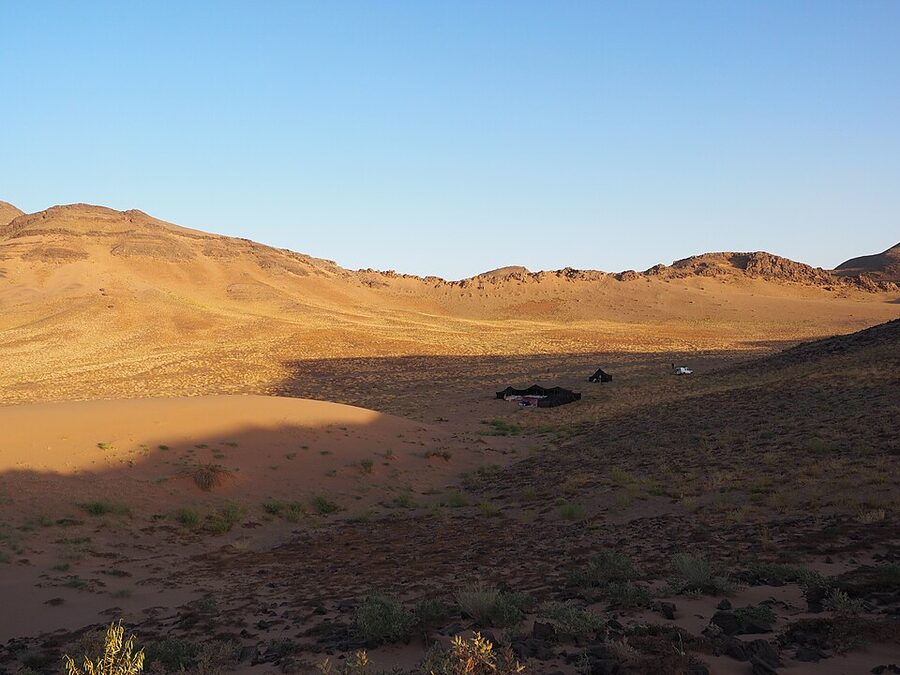

Arrival at camp is usually just before sundown. You’ll be shown to your tent — and this is where the luxury vs standard difference hits hardest. Standard tents have a carpeted sand floor, camp mats, pillows, and a heavy blanket. There’s a shared toilet block. Luxury tents have a double bed, plumbed bathroom with a shower (cold water, mostly), and electric lighting from solar panels.
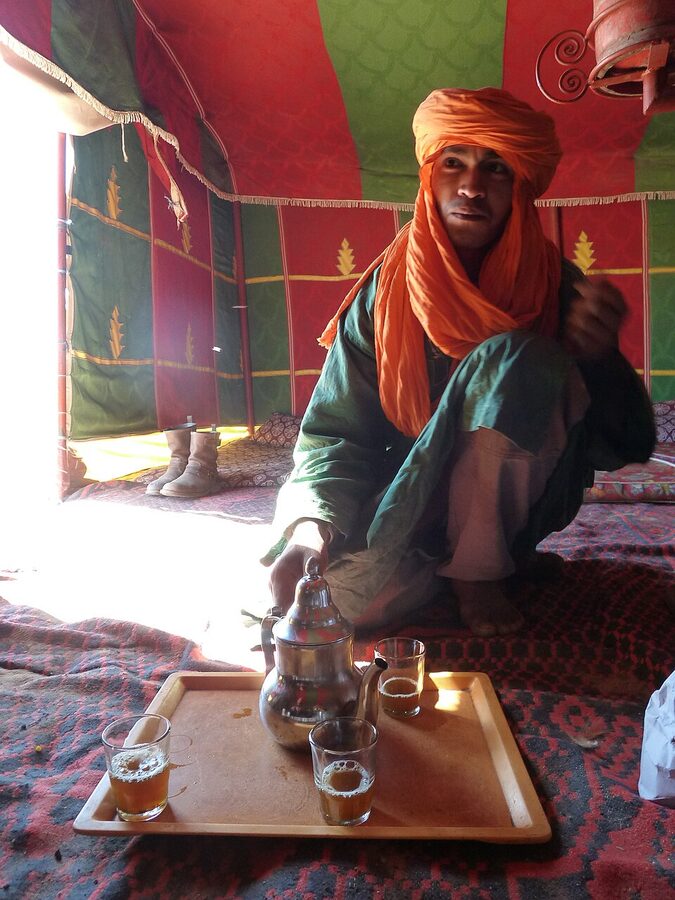
Dinner is served around 8pm in a communal dining tent. Expect Moroccan classics — harira soup to start, then a tagine (often chicken or lamb with dried fruits), bread, and mint tea. Vegetarians should mention it at booking time; the camps handle it fine if forewarned.
After dinner, the campfire. This is the bit that makes the whole trip worthwhile. The Berber hosts will drum, sing, and sometimes dance around a wood fire in the sand. Guests join in — there are always extra hand drums passed around. It’s touristy, it’s genuine, and both things are true at once. Get involved. The guides love it when the group does.
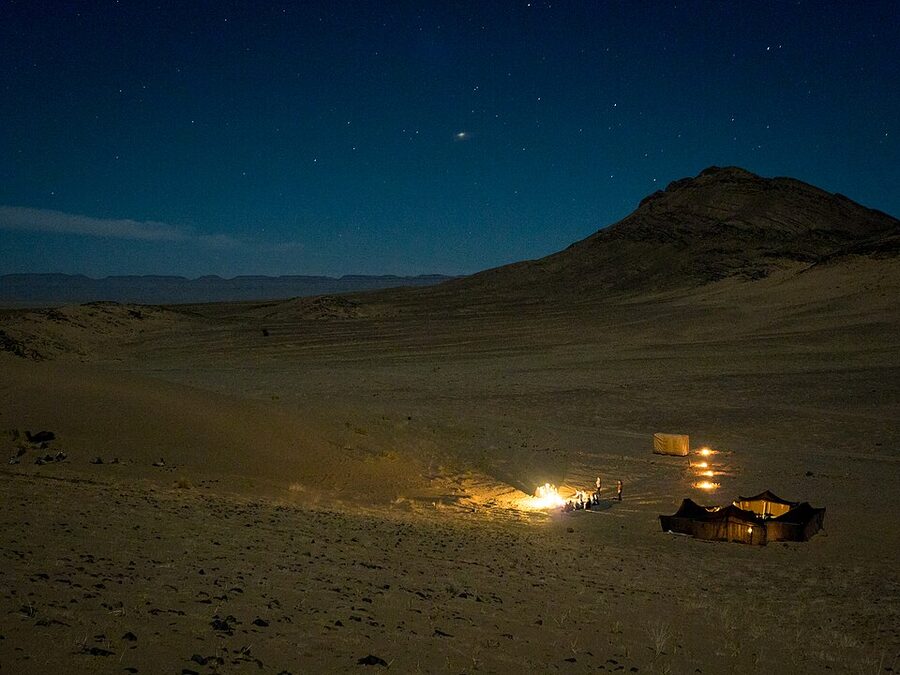

The stars are the sleeper hit of this trip. Zagora has effectively zero light pollution. The Milky Way is visible with the naked eye on most clear nights, and satellites are constantly passing overhead. Some camps provide blankets to drag out into the dunes; others expect you to figure it out. Either way, do not go to bed before lying in the sand for at least 20 minutes with the sky.

Sunrise and the Drive Home

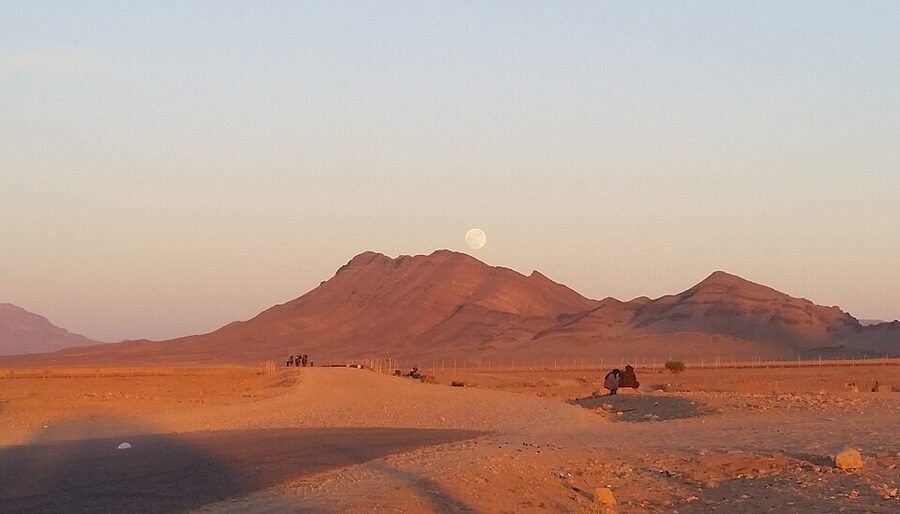
Wake up call is early — sunrise over the dunes is the one-time offer, don’t sleep through it. Most camps have mint tea available at the dining tent from about 30 minutes before sunrise. Grab a cup and head out into the dunes on foot.
Breakfast runs around 7:30-8am in the dining tent. Bread, jam, honey, butter, boiled eggs, sometimes crêpes, lots of mint tea. It’s a proper breakfast — fuel up because the drive back is long.
Camels leave the camp between 8 and 9am for the hour-long ride back to the road. By 10am you’re in the van and the long return begins. Same route, reverse order — Zagora, Draa Valley, Ouarzazate for lunch, Aït Ben Haddou photo stop (usually shorter this time), Tizi-n-Tichka, Marrakech.

Arrival back in Marrakech is usually between 7pm and 9pm — a full 11-12 hour day. Don’t plan anything for the evening. If you have dinner reservations, push them to the following day.
Zagora vs Merzouga — Which to Pick
This is the single most common question for Morocco first-timers. Both are “Sahara” trips from Marrakech. Here’s the honest breakdown.
Choose Zagora if: you have less than a week in Morocco, you want to keep costs down, you’re not dead-set on towering dunes, or you’d rather spend more time elsewhere. Zagora is 8 hours of driving each way, one night in the camp, and you’re back in Marrakech by the evening of day two.
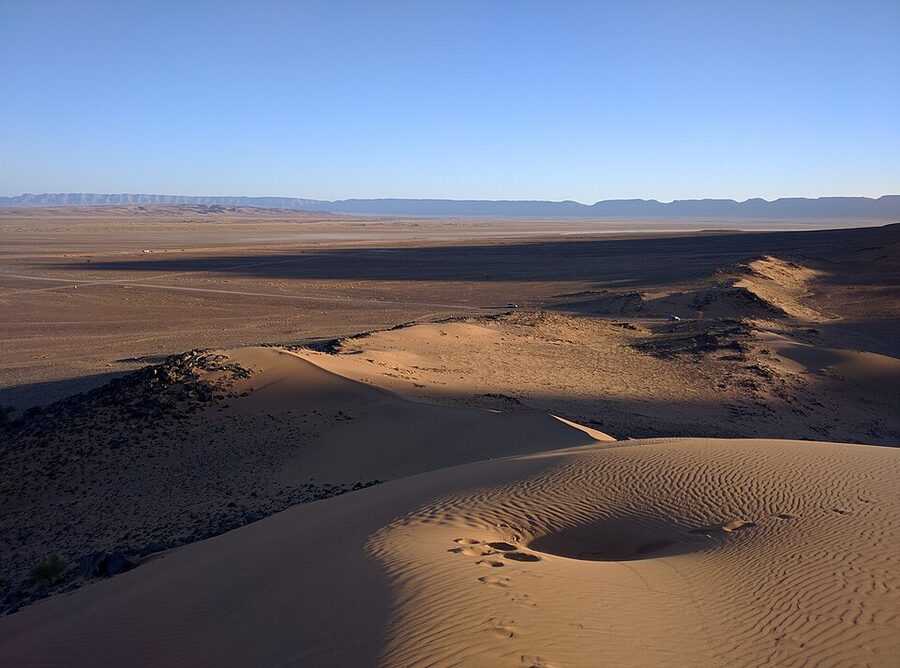
Choose Merzouga if: you’re a desert obsessive, you want the classic Sahara dune photos, you have 3 days to spend, and the extra $100-150 doesn’t bother you. Merzouga’s Erg Chebbi dunes are 150 metres tall — significantly more dramatic than Zagora’s gentler slopes. The 3-day trip spaces out the driving (5-6 hours each day rather than 8), and usually includes a night in Ouarzazate plus the Dades or Todra gorges en route.

My honest take: if you have 3 days, pick Merzouga. If you have 2 days, pick Zagora and know you’re getting an abbreviated version. Either way you’ll see camels, Berbers, a kasbah, and stars. The experience at camp is roughly equivalent — it’s the scale of the dunes and the drive time that genuinely differ.
Best Time to Go
October to April is the comfortable window. Daytime temperatures in Zagora range from 18-28°C, nights are cool enough for a blanket. This is when most of the camp programme runs smoothly.
November to February specifically: be ready for cold nights. Temperatures in the desert drop close to zero by 3am, and the tents are not insulated. Pack a proper jumper, a beanie, and thermal base layers. The camps provide heavy blankets but you still feel it in the early hours.
May to September is the brutal season. Zagora hits 45°C+ in the summer afternoons, and the camel trek can be genuinely dangerous for anyone elderly or in poor health. Many tour operators shift departures earlier to avoid the worst heat, or add afternoon breaks. If you must do the trip in summer, take the earliest pick-up time available.
Ramadan: the trip runs as usual, but some roadside restaurants and cafés operate reduced hours during daylight. Camp programmes continue normally — meal service at the camps is adapted for fasting guests but tourists are fed regularly.
What to Pack
For a 2-day trip you need one small bag, not a suitcase. Most riads will store your main luggage while you’re gone. Pack:
Essentials: passport (for potential checkpoints on the route), a bottle of water, cash in dirhams (card payments are rare once you leave Ouarzazate), sunscreen, sunglasses, a hat, a headscarf or light shawl (useful for sun and dust).
Clothing: long trousers for the camel ride (essential — not optional), a fleece for the pass and the desert night, a warm layer for November-February, comfortable closed shoes for walking at the kasbah, flip-flops for the camp. Swimsuit is not needed; there’s no pool.
Nice to have: a headlamp for the camp toilet at 3am, a power bank (camp electricity is solar and limited), a travel pillow for the van, earplugs if you’re a light sleeper, any motion sickness medication you respond to.
Don’t bother with: hair dryers, makeup, multiple outfits, anything white. The desert is dusty and nothing stays clean for two days. Pack one set of “camp clothes” and accept they’ll need washing.
Practical Details at a Glance
Pick-up: 7am from your Marrakech riad/hotel.
Total duration: ~36 hours door to door.
Distance each way: about 360km, 7-8 hours with stops.
Major stops: Tizi-n-Tichka Pass, Aït Ben Haddou, Ouarzazate, Draa Valley, Zagora, Berber camp.
Camel trek: approximately 1 hour each direction.
Overnight: shared Berber tent (standard) or private luxury tent (upgrade).
Meals included: dinner at camp, breakfast at camp.
Meals not included: lunches on both days, drinks at camp.
Tip for driver/guide: 100-200 dirhams at the end.
Group size: typically 8-14 in a shared minivan.
Card payments: rare — bring 500-1000 dirhams cash.
Cancellation: free up to 24 hours before on most GetYourGuide bookings.
Other Marrakech and Morocco Guides
If the 2-day Zagora tour whets your appetite for more desert, the next step up is the 3-day Sahara tour to Merzouga — more driving, bigger dunes, a night at Ouarzazate included. It’s the definitive Moroccan desert trip if you have the time.
For culture closer to base, the Aït Ben Haddou day trip covers the same UNESCO site in a single long day without the overnight desert element — good for travellers who want the kasbah but not the camels. Or combine Marrakech’s other iconic day trips: the Ouzoud Waterfalls and Atlas Mountains day hike both run from Marrakech and make better pre-desert warm-ups than post-desert recovery trips.
If you’re flying into or out of Fez, the Chefchaouen day trip and Fez medina walking tour are the two obvious add-ons to build a 10-day Morocco loop. And for travellers still deciding between desert trips, the Agafay desert sunset tour is the half-day option — stony desert rather than sandy, 45 minutes from Marrakech, easy to fit in around other sightseeing.
On the slower side, after an intense 2-day drive you’ll want a rest day. Book a hammam and spa for the day after you get back — the combination of hot tile, exfoliation, and oil massage is exactly what your body needs after 16 hours in a van. Follow that up with a Marrakech food tour that evening, when you’ve rejoined the living.